
Medical Tourism Blog
Inverted Nipples and How to Treat Them with Doctor Cho
Table of contents
- Understanding Inverted Nipples (And Why People Worry)
- What Counts as an Inverted Nipple?
- Causes of Inverted Nipples: Congenital vs. Acquired
- Potential Issues If Inverted Nipples Are Left Untreated
- How Inverted Nipples Are Diagnosed and Graded
- Non-Surgical Options: When Devices May Help
- Surgical Correction: Releasing the Tissue That Pulls the Nipple Inward
- Breastfeeding After Inverted Nipple Surgery: What to Know
- Moving Forward With Confidence
- More about Okay Plastic Surgery Clinic
Considering treatment in Korea? Everything you need to know e.g. — how to avoid scams, visas, interpreters, recovery tips — in our Medical Tourism Master Guide. Plan with confidence in minutes, not weeks!
Disclaimer: The following is a guest post. The information and opinions expressed are not of koreaclinicguide.com but of Okay Plastic Surgery Clinic
Understanding Inverted Nipples (And Why People Worry)
Inverted nipples are one of those concerns many people carry quietly, sometimes for years. In consultations, Dr. Cho often meets patients who have been feeling anxious—especially those thinking ahead to pregnancy and breastfeeding. The good news is that inverted nipples are common, and in most cases they are very treatable.
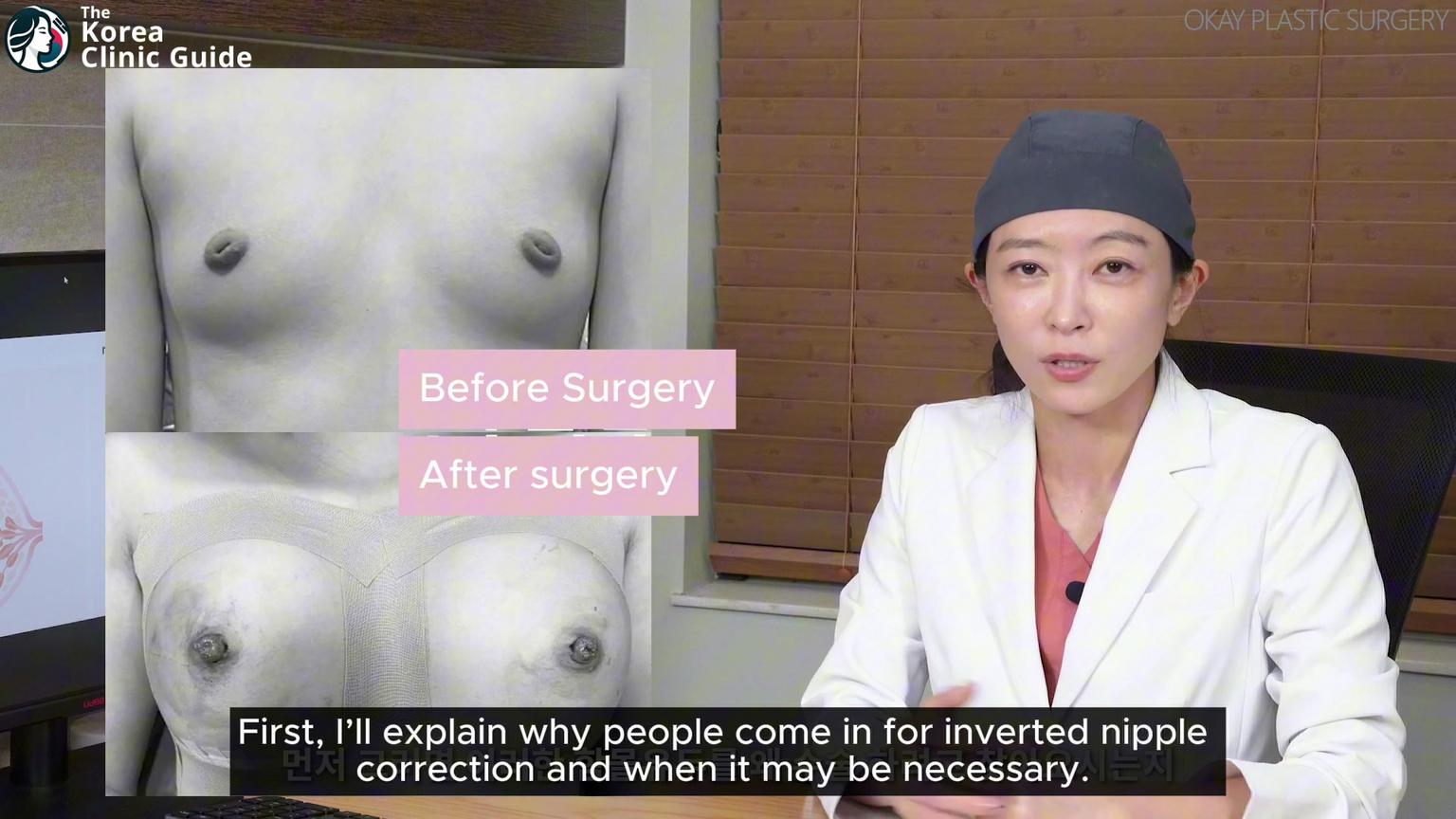
An inverted nipple is exactly what it sounds like: instead of projecting outward, the nipple is pulled inward. A typical nipple sits above the areola (the darker skin around the nipple) and protrudes beyond it. With inversion, however, the nipple may sit at the same level as the areola or even below it, which can make the area look flat or sunken. Dr. Cho emphasizes that while this usually isn’t dangerous on its own, there are practical reasons people consider correction—appearance, hygiene, and planning for smoother breastfeeding later.
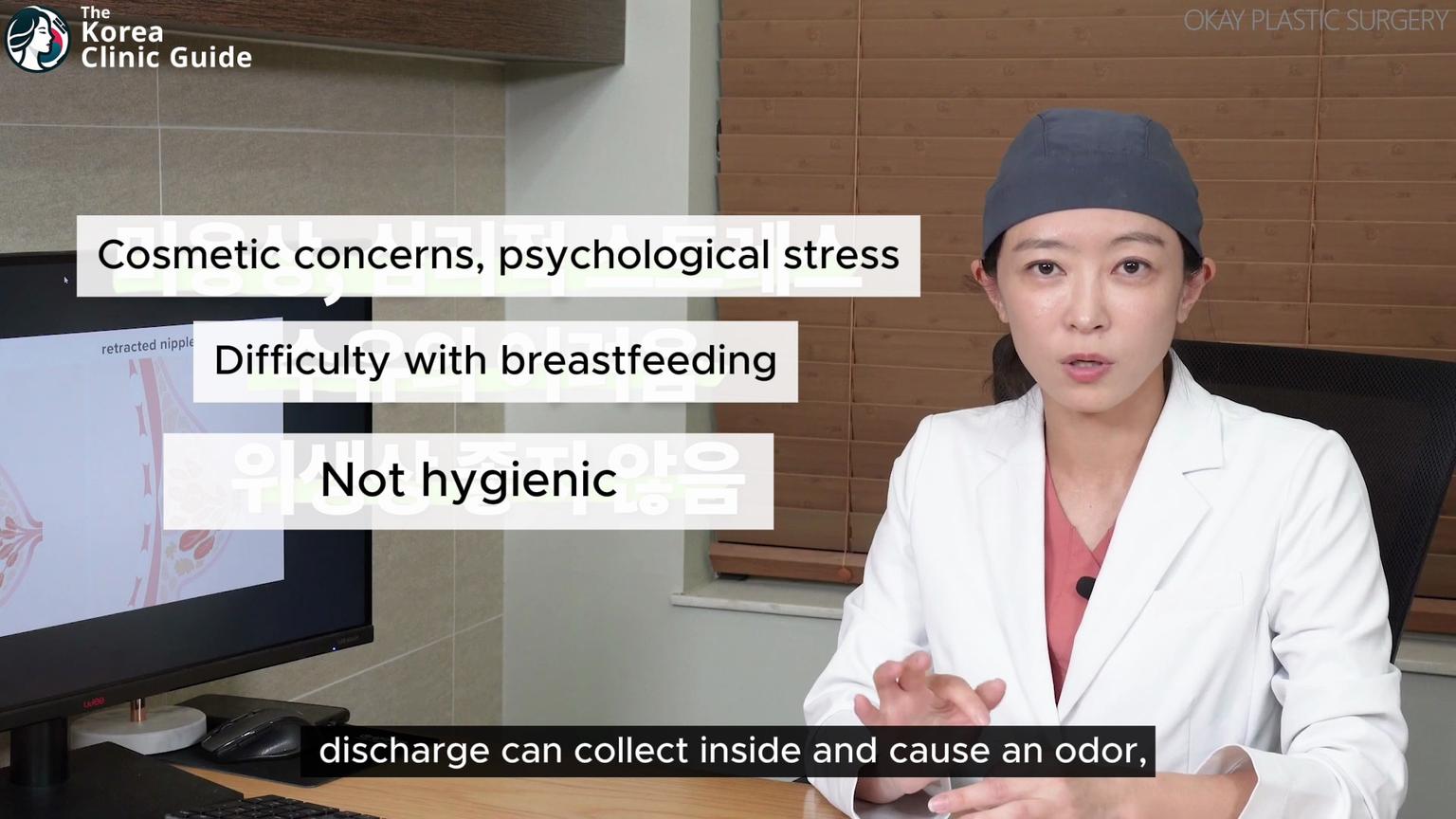
What Counts as an Inverted Nipple?
Inverted nipples can look very different from person to person. Some nipples are only mildly inverted and will pop out easily with gentle stimulation—touch or a change in temperature, for example. Others are more firmly tethered and won’t come out no matter how much they are stimulated or gently pulled.
This range matters because it helps determine both the “grade” of inversion and how likely non-surgical methods are to help. Dr. Cho’s main point is reassuring: most inverted nipples do not cause serious health problems by themselves. Still, many patients prefer to address them early, particularly if the inversion is significant or if it causes ongoing stress.
Causes of Inverted Nipples: Congenital vs. Acquired
Dr. Cho divides the causes into two broad categories: congenital (present from development) and acquired (developing later due to other factors).
Congenital inverted nipples happen during fetal development. As the nipple forms, the underlying support structures are supposed to develop in a way that helps the nipple project outward. If that development is incomplete or unbalanced, the “support” can be weak, and the nipple may be pulled inward instead of being held outward.
Acquired inversion, on the other hand, can be related to breast disease, inflammation, previous surgery, or significant injury. Dr. Cho also notes that temporary inversion may occur after rapid weight loss, when changes in tissue and support can pull the nipple inward.
Because acquired inversion can be associated with underlying issues, determining whether the inversion is congenital or acquired is an important part of evaluation.
Potential Issues If Inverted Nipples Are Left Untreated
Although inverted nipples usually don’t directly threaten overall health or breast health, Dr. Cho explains that they can create real-life challenges that affect comfort, confidence, and daily routines.
One of the biggest concerns is breastfeeding. For breastfeeding to work well, a baby must latch effectively. If inversion is severe, latching can be difficult, which may make breastfeeding more challenging. Dr. Cho notes that some patients may still breastfeed successfully with assistive devices, but the level of difficulty often depends on how severe the inversion is.
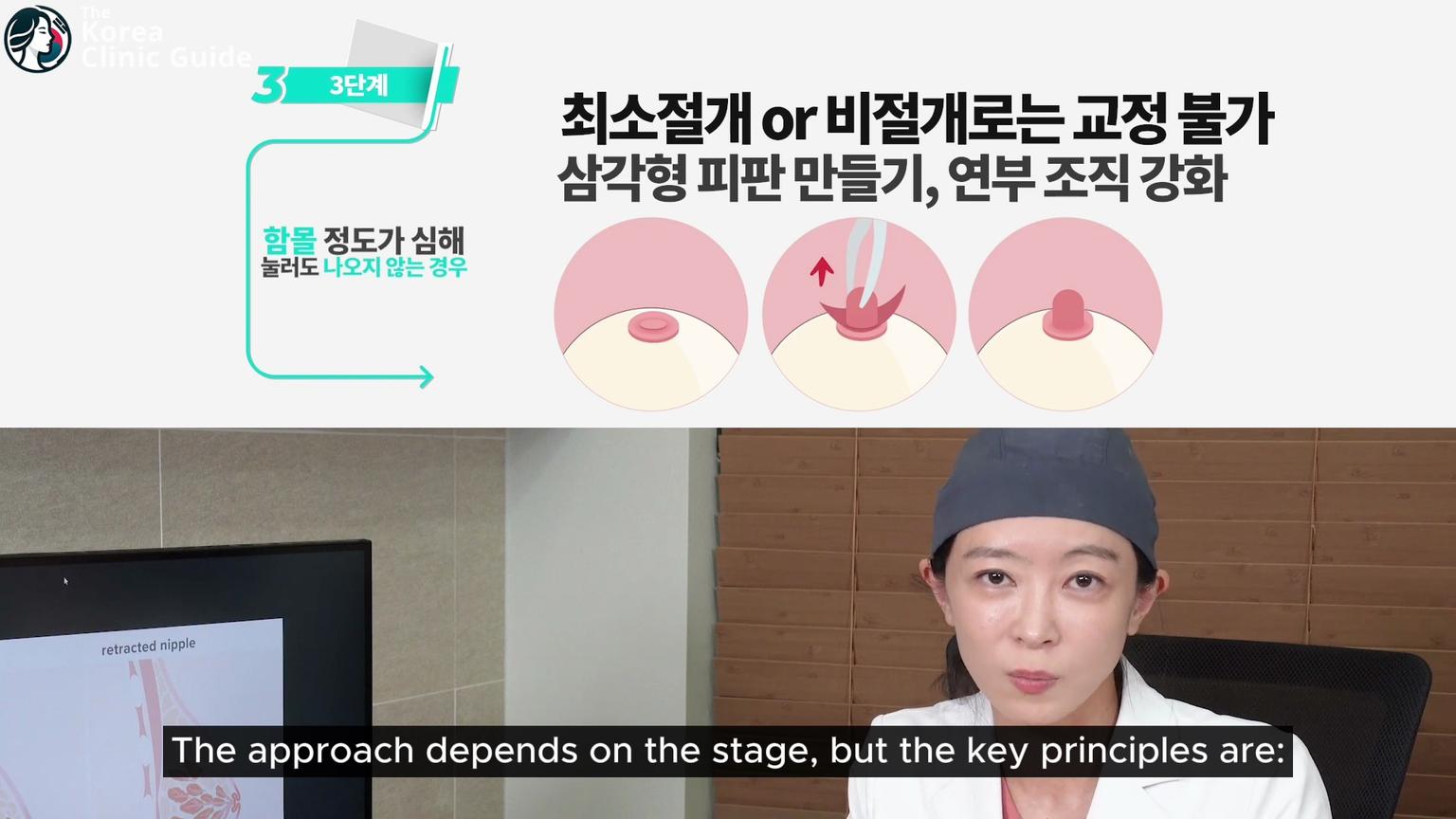
Hygiene is another common issue. The nipple has many tiny openings, and when the nipple is pulled inward, secretions can become trapped inside. This can lead to odor or discharge, making hygiene more difficult than it would be with a normally projecting nipple.
Finally, Dr. Cho points out that breast cancer screening can sometimes be more difficult when nipples are inverted. This doesn’t mean screening can’t be done—it simply means it helps to inform medical staff ahead of time so they can interpret and perform the exam appropriately.
How Inverted Nipples Are Diagnosed and Graded
Diagnosis is usually straightforward. In most cases, Dr. Cho can confirm inversion visually, and a simple physical exam is enough. The next step is typically grading the inversion based on how easily the nipple comes out with gentle stimulation.
Clinically, it can be described as mild, moderate, or severe. A nipple that pops out easily with light stimulation tends to be milder, while a nipple that cannot be drawn out even with effort is considered more severe. During an exam, Dr. Cho can often also get a sense of whether the condition is congenital or acquired.
If there are signs that suggest inflammation or another issue, additional imaging may be recommended—such as breast ultrasound or mammography. Dr. Cho also compares both sides and checks for any related findings, because symmetry and recent changes can offer important clues.
Non-Surgical Options: When Devices May Help
Treatment options fall into non-surgical and surgical approaches. For patients who want a simple, temporary method, non-surgical tools such as nipple correctors can be tried.
Dr. Cho explains that these devices may provide some improvement, but results are limited—especially in more moderate to severe cases where the nipple is firmly pulled inward by fibrous tissue. For that reason, while non-surgical options can be a starting point, Dr. Cho generally recommends surgery when a patient wants a more reliable, lasting correction.
Surgical Correction: Releasing the Tissue That Pulls the Nipple Inward
The surgical goal is simple: release what is tethering the nipple inward so it can project outward naturally. In many cases, Dr. Cho corrects inversion by releasing the fibrous tissue beneath the nipple that is responsible for pulling it inward.
The procedure is typically performed under local anesthesia and usually takes about 30 to 40 minutes, sometimes up to around an hour. Depending on the technique and the individual case, correction may be performed without an incision or may require a small incision.
After correction, preventing recurrence is a key part of care. Dr. Cho has patients wear a specialized nipple protector for about one to two weeks—similar in concept to wearing a cast. This supports the nipple outward while the tissues heal, helping reduce the chance that it will pull back in.
Daily life is usually manageable during recovery. Patients can generally still shower and continue routine activities, and Dr. Cho reassures patients that there is typically no need to worry excessively about downtime.
Breastfeeding After Inverted Nipple Surgery: What to Know
One of the most frequent questions Dr. Cho hears is whether breastfeeding will still be possible after inverted nipple correction. Fortunately, in most cases, it is.
During surgery, Dr. Cho aims to avoid damaging the main milk ducts and to preserve the mammary glands, minimizing injury to glandular tissue. This approach is especially important for patients planning pregnancy and breastfeeding in the future.
Dr. Cho strongly encourages patients to discuss future breastfeeding plans before surgery. That conversation helps guide the choice of surgical method and ensures the treatment plan aligns with long-term goals—not just immediate cosmetic correction.
Moving Forward With Confidence
Inverted nipples are not uncommon, and many people share the same concerns—about appearance, hygiene, and future breastfeeding. Dr. Cho’s message is that patients do not have to carry that anxiety alone. Diagnosis is typically straightforward, and treatment—especially surgical correction—can often be performed relatively easily with reliable results.
For anyone unsure about the cause or severity of their inversion, a specialist evaluation can clarify whether it’s congenital or acquired, determine the grade, and map out the safest and most effective plan. With the right approach, inverted nipples can be corrected in a way that supports both confidence now and important life plans later.
More about Okay Plastic Surgery Clinic
Okay Plastic Surgery Clinic in Korea offers inverted nipple correction and treatment with a transformative philosophy that goes beyond a single procedure, emphasizing sincerity, precision, and truly individualized care so each plan reflects the patient’s anatomy, comfort concerns, and aesthetic goals. Guided by a team of specialized professionals, including a renowned female plastic surgeon with extensive experience, the clinic combines technical expertise with empathy and up-to-date medical techniques to support patients through a comprehensive, confidence-restoring journey. Inverted nipple correction is provided through the clinic’s dedicated Breast Augmentation Center (Floating Room/Inverted Nipple), supported by broad, integrated surgical capabilities across breast, body contouring, lifting, eye, rhinoplasty, and scar/keloid-focused care—an advantage for patients who may benefit from coordinated treatment planning, meticulous detail work, and thoughtful recovery support.
Find more about this clinic here: Okay Plastic Surgery Clinic
Frequently Asked Questions
Related Blogs
Implant Removal in Korea: Revision Breast Surgery Solutions for Desire for Implant Removal
Updated: Aug 18, 2026
Lateral Breast Fullness: Breast Reduction Procedures in Korea for Contoured Results
Updated: Aug 18, 2026
Male Chest Enlargement Solutions: Gynecomastia Surgery Procedures in Korea for Effective Results
Updated: Aug 18, 2026
Ptotic Breasts Solutions: Breast Lift Procedures in Korea for Youthful, Firm Results
Updated: Aug 18, 2026
Clinics offering Nipple Surgery

THEPLUS Plastic Surgery Korea | Eye, Nose, Face & Body Surgery
Sinsa

Seojin Plastic Surgery Clinic Korea: Pioneering Advanced Cosmetic Procedures for Personalized Aesthetic Transformation
Apgujeong

Okay Plastic Surgery Clinic in Korea: Comprehensive Aesthetic Procedures with Sincerity and Care
Cheongdam
Evita Clinic Korea: Body Contouring, Breast & Gender-Affirming Surgery in Seoul (Apgujeong)
Apgujeong