
Medical Tourism Blog
Rejuvenate Deep Forehead Creases with Forehead Lift Procedures in Korea
Table of contents
- Understanding Deep Forehead Creases
- The Forehead Lift Procedure: A Detailed Overview
- Medical Tourism in South Korea: Your Guide to a Forehead Lift
- Which Are the Best Clinics in Korea for Deep Forehead Creases?
- Costs and Value: Forehead Lift in South Korea vs. Other Countries
- Patient Experiences and Outcomes: Addressing Deep Forehead Creases
- Conclusion
- References
Considering treatment in Korea? Everything you need to know e.g. — how to avoid scams, visas, interpreters, recovery tips — in our Medical Tourism Master Guide. Plan with confidence in minutes, not weeks!
Understanding Deep Forehead Creases
What are Deep Forehead Creases? Definition and Appearance
Deep forehead creases are pronounced horizontal grooves that commonly appear on the forehead as a visible sign of skin aging. These folds or ridges develop over time and can range from mild, superficial lines to deeply etched furrows. As they become more prominent with age, they often affect facial appearance by giving a tired, aged, or even worried or angry expression.
Common Pseudonyms and Medical Terms
People often call these horizontal lines "forehead lines" or "worry lines." It’s important to distinguish them from "frown lines," also known as "glabellar lines" or "11 lines," which are vertical wrinkles between the eyebrows. While a forehead lift can treat both, knowing the difference helps patients communicate clearly with doctors and find the right information. The medical term for all wrinkles, lines, folds, or creases is "rhytids." Understanding this term can improve patient-doctor conversations and help patients better navigate treatment options.
Why Do They Form? Causes and Contributing Factors
Wrinkles, including deep forehead creases, naturally form as part of aging. Over time, skin loses elasticity, thins, and becomes more fragile due to reduced collagen and elastin production and the shifting of fat pads beneath the skin. Repeated facial muscle movements—like frowning, squinting, or raising eyebrows—also contribute by creating dynamic wrinkles that eventually become permanent.
Environmental factors accelerate this process. Sun exposure damages collagen and elastin, speeding up skin aging. Smoking restricts blood flow and harms skin fibers, further reducing skin’s ability to recover. Genetics, pollution, poor hydration, nutrition, and hormonal changes also play roles. While a forehead lift can correct existing creases, it doesn’t stop aging. Healthy habits like sun protection, quitting smoking, and good hydration help maintain results and prevent new wrinkles.
The Forehead Lift Procedure: A Detailed Overview
What is a Forehead Lift (Brow Lift)? Purpose and Goals
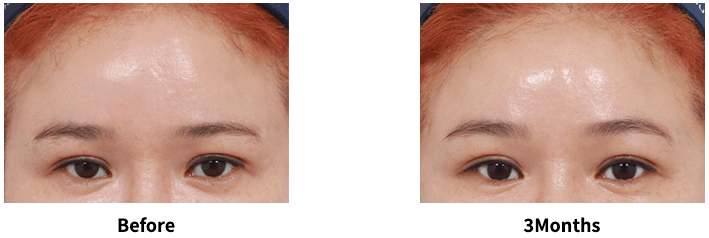
A forehead lift, or brow lift, is a surgical procedure aimed at rejuvenating the upper third of the face. It lifts sagging eyebrows, smooths deep horizontal forehead wrinkles, and reduces vertical frown lines between the eyebrows. The goal is to create a more open, alert, and refreshed look that enhances facial harmony and boosts confidence.
Besides cosmetic benefits, a forehead lift can improve peripheral vision if drooping brows obstruct sight and relieve chronic forehead aches caused by constant brow raising. This highlights the procedure’s functional as well as aesthetic value.
Who is an Ideal Candidate?
Ideal candidates are healthy individuals with noticeable wrinkles, frown lines, creases, or sagging in the forehead or brow area. Those wanting to reduce upper face aging signs without extensive surgery benefit most. Candidates should be non-smokers or willing to quit before and after surgery, as smoking impairs healing and raises complication risks.
Types of Forehead Lift Techniques
Surgeons tailor the approach based on each patient’s anatomy, goals, and surgeon expertise. Forehead lift is not one-size-fits-all but a range of techniques, each with specific benefits and recovery profiles. A thorough consultation with an experienced surgeon is essential to choose the best method.
Common techniques include:
- Traditional/Coronal Lift (Open or Classic Brow Lift): A long incision across the scalp behind the hairline allows comprehensive lifting, ideal for significant corrections or older patients. It offers lasting results but may involve longer recovery and risks like scalp numbness or hair loss.
- Endoscopic Lift: The most common minimally invasive method using small incisions and a camera to lift and adjust muscles. It causes less swelling, scarring, and faster recovery, suitable for moderate sagging.
- Temporal or Limited Incision Lift: Small incisions near the temples lift the outer brow subtly, with minimal scarring and quick recovery, but limited effect on the central forehead.
- Mid-forehead Brow Lift: Incisions hidden in forehead lines allow a short recovery period.
- Trichophytic Brow Lift: A wavy incision at the hairline junction suits those with high hairlines, avoiding further hairline elevation and sometimes moving it forward.
- Direct Brow Lift: Incisions above the eyebrows remove excess skin and lift the brow, effective for severe drooping but with more visible scars.
- Transblepharoplasty Brow Lift: Lifts brows through upper eyelid surgery incisions, ideal for combined eyelid and brow improvements but doesn’t address forehead wrinkles directly.
The Surgical Process: Step-by-Step
Forehead lift surgery usually takes 1 to 2 hours and is outpatient, allowing same-day discharge.
- Anesthesia: General anesthesia or local with sedation ensures comfort.
- Preparation: The face is cleansed, and hair tied back or trimmed.
- Incisions and Tissue Adjustment: Incisions depend on technique and are hidden in hairline or natural lines. The skin is lifted, and muscles causing wrinkles (glabella and frontalis) are altered or removed. Brows are lifted and fixed in place, and excess skin trimmed.
- Closure: Incisions are closed with sutures or adhesives. Drains may be placed to remove fluid and are removed within 1-2 days. Bandages help reduce swelling.
Recovery and Post-Operative Care
Patients are monitored as anesthesia wears off and usually go home the same day. Swelling, bruising, and discomfort are common for 1-2 weeks. Keeping the head elevated and using cold compresses helps. Pain is managed with medication. Bandages come off in 1-3 days; stitches or staples are removed within 5-10 days.
Light activities and work can resume in 1-2 weeks, but strenuous exercise and heavy lifting should be avoided for 3-6 weeks. Avoid alcohol, smoking, saunas, and certain hair treatments for at least a month. Final results appear over several months as swelling subsides, with full healing taking up to six months. Protect incisions from sun with hats or sunscreen. Following surgeon instructions is crucial for optimal recovery.
Potential Risks and Complications
Forehead lifts carry risks that surgeons must discuss openly. Understanding these helps patients make informed decisions.
Risks include:
- General Surgical Risks: Bleeding (hematoma), infection, and scarring, though scars are usually hidden.
- Anesthesia Risks: Allergic reactions or breathing issues.
- Forehead Lift Specific:
- Nerve Damage: Temporary or permanent numbness or altered sensation; rare facial nerve injury causing temporary paralysis or spasms.
- Hair Loss (Alopecia): Possible near incisions, especially in those with hair loss history.
- Eyebrow Asymmetry: Slight differences in brow position due to healing variations.
- Over-correction: Brow lifted too high causing unnatural expression.
- Fluid Collection (Seroma): Fluid buildup under skin.
- Blood Clots: Rare but serious risk of clots traveling to lungs (pulmonary embolism).
Medical Tourism in South Korea: Your Guide to a Forehead Lift
Why Choose South Korea for Your Procedure? Reputation, Quality, Expertise
South Korea is a top global destination for cosmetic medical tourism, offering high-quality care at more affordable prices than Western countries like the USA. Its advanced medical facilities use cutting-edge technology, and surgeons are highly skilled, often internationally trained.
Clinics such as THE PLUS Clinic provide personalized treatment plans tailored to each patient’s facial features, ensuring natural, harmonious results. South Korea’s cultural emphasis on beauty influences the aesthetic outcomes, delivering refined and balanced facial rejuvenation.
Many clinics use less invasive techniques, resulting in minimal downtime and faster recovery. Comprehensive patient care—from consultation to post-op support—is standard. The government supports medical tourism with streamlined visas and international healthcare desks. Multilingual services and accommodation assistance make the experience smooth for international patients.
The Patient Journey: A Step-by-Step Process for International Patients
The journey typically includes:
- Initial Consultation and Evaluation: Online consultations help international patients discuss goals before arrival. In-person assessments finalize plans. Medical tourism agencies assist with clinic selection and communication.
- Pre-operative Preparations: Patients undergo health evaluations, blood tests, and eye measurements. Instructions on fasting, medication, and recovery support are provided.
- Procedure Day: Anesthesia is administered, incisions made to minimize scarring, muscles and skin lifted and adjusted, brows secured, and incisions closed. Surgery lasts 1-3 hours.
- Immediate Post-Operative Care: Patients are monitored as anesthesia fades. Cold compresses and head elevation reduce swelling. Pain meds and antibiotics are prescribed. Bandages removed in 1-3 days; stitches in 7-10 days. Physical activity is limited, and alcohol, smoking, saunas, and certain hair treatments avoided for a month.
- Follow-up and Departure Timeline: 2-3 follow-ups monitor healing. Patients stay 7-10 days post-surgery for recovery and stitch removal. Light activities resume within 7-10 days; strenuous exercise avoided for weeks. Full healing takes up to six months.
Navigating Visa Requirements for Medical Tourists
South Korea offers specific visas for medical tourists:
- Short-term Medical Visa (C-3-3 or C-3(M)): For treatments and stays up to 90 days, suitable for procedures like forehead lifts.
- Long-term Medical Visa (G-1-10 or G-1(M)): For stays over 91 days, up to one year, allowing family accompaniment.
Many countries have visa-waiver agreements allowing visa-free entry for up to 90 days (e.g., USA, Japan, most European countries). Some have shorter periods (e.g., 30 days for Brunei).
How to Apply for a Medical Visa:
-
Direct Application:
- Consult and reserve at a Korean medical institution.
- Receive reservation documents.
- Apply in person at Korean consulate with required documents (application form, passport copy, diagnosis, appointment confirmation, financial affidavit).
- Receive visa.
-
Agency Application:
- Consult and reserve.
- Medical institution or agency applies for visa issuance certificate online.
- Patient submits certificate and documents to consulate.
- Receive visa.
This streamlined process and support from medical tourism agencies ease the logistical challenges of international surgery, making South Korea a patient-friendly destination. Note that visa approval does not guarantee entry; immigration criteria must be met upon arrival.
Which Are the Best Clinics in Korea for Deep Forehead Creases?
Listed below are some of the best clinics in Korea for deep forehead creases.
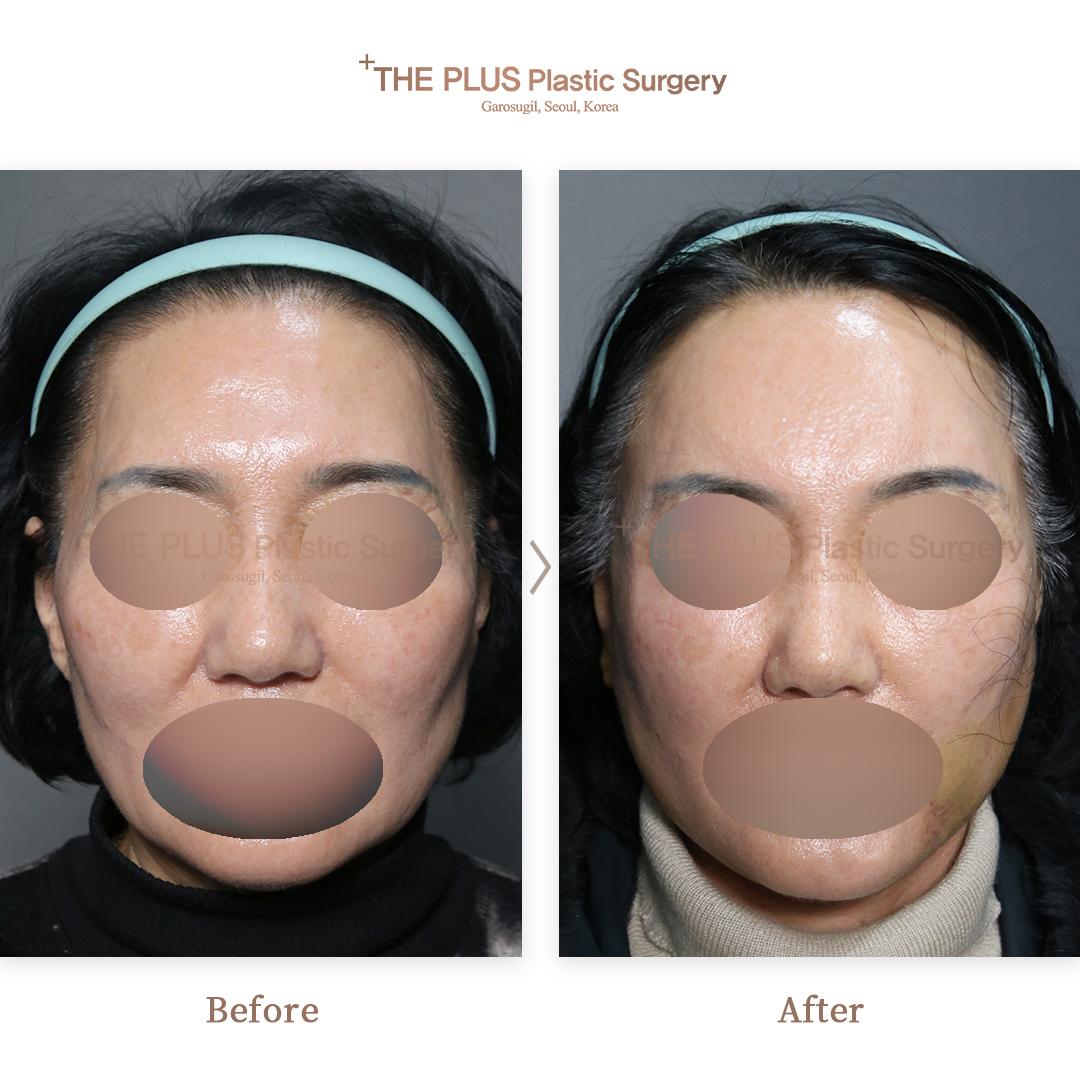
1. THEPLUS Plastic Surgery
For deep forehead creases, you can discuss whether THEPLUS Plastic Surgery’s facial rejuvenation options—particularly facelift, thread lift, or facial fat grafting—fit your concerns and overall facial balance. The clinic’s available information emphasizes individualized aesthetic planning and maintaining natural expression rather than describing a dedicated forehead-lift technique.
- URL: THEPLUS Plastic Surgery Website
- Location: Gangnam-gu, Seoul
- Facial rejuvenation options:
- Facelift repositions sagging facial tissue to improve facial contours while aiming to preserve natural expression.
- Thread lift uses dissolvable threads for a less invasive approach to mild facial sagging and contour definition.
- Facial fat grafting uses your own fat to restore volume in hollow or flattened facial areas.
- Surgical expertise:
- Dr. Kim is a board-certified plastic surgeon whose stated areas of expertise include facial contouring and rhinoplasty; he has received research awards related to 3D implants and conducts educational sessions for other plastic surgeons.
- Dr. Jeong is identified as President of the Korean Society of Plastic Surgeons and has presented and taught in professional rhinoplasty forums.
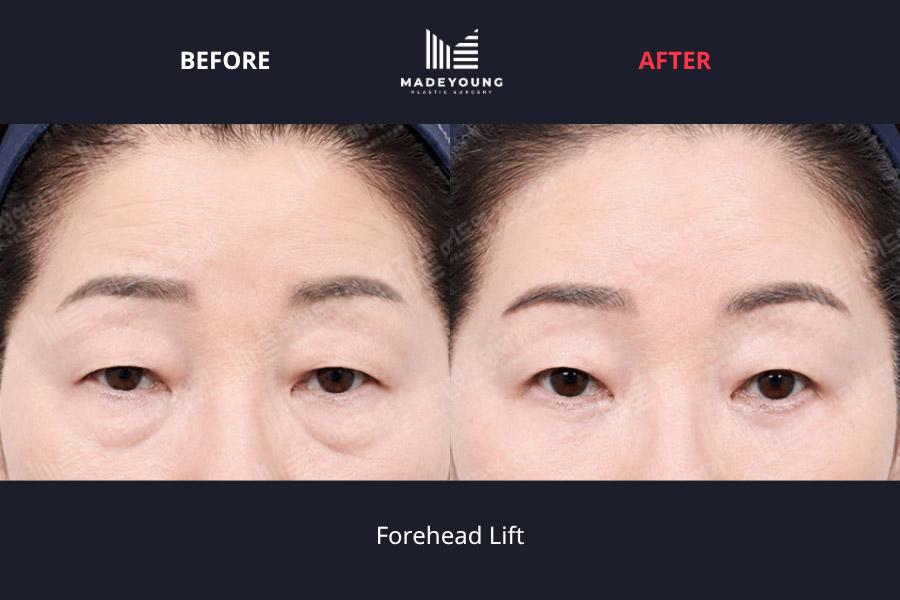
2. Made Young Plastic Surgery
You may consider Made Young Plastic Surgery for deep forehead creases if you are looking at a forehead lift designed to address forehead, brow, and glabellar wrinkles alongside drooping eyelids. Its described surgical approach uses a full-HD endoscopic system for precise dissection and can include lifting the skin, periosteum, and muscle, with procerus muscle resection where indicated.
- URL: Made Young Plastic Surgery Website
- Location: Seocho-gu, Seoul
- Forehead-lift approach:
- The clinic describes comprehensive improvement of forehead, brow, and glabellar wrinkles, as well as drooping eyelids.
- A full-HD endoscopic system is used for detailed dissection around nerves, vessels, and muscles.
- The procedure description includes lifting the skin, periosteum, and muscle; it may include procerus muscle resection.
- The clinic states that it uses authentic Endotine products for fixation.
- Safety and monitoring:
- Full-time board-certified anesthesiologists are stated to be on site.
- The clinic describes one-to-one anesthesiologist monitoring during procedures and a cross-check system for emergency response.
- It reports CCTV coverage of procedures and a separate dedicated aftercare center.
- Related options:
- Forehead lifting is also listed among its non-surgical lifting services.
- Sub-brow lift, [upper blepharoplasty](/blog/upper-blepharoplasty-korea), ptosis correction, thread lift, Shurink, and Ultherapy are listed options for related brow, eyelid, and lifting concerns.
3. LABOM Plastic Surgery
For deep forehead creases accompanied by frown lines, low brows, or a heavy-looking eye area, LABOM Plastic Surgery describes an endoscopic forehead lift that repositions sagging tissue through minimal incisions. The treatment is designed around your facial proportions and brow position, with the stated aim of improving forehead and glabellar lines while preserving natural eyebrow shape and expression.
- URL: LABOM Plastic Surgery Website
- Location: Gangnam-gu, Seoul
- Procedure details:
- The endoscopic technique is described as improving forehead wrinkles, glabellar lines, sagging eyebrows, eyelid drooping, and the tendency to strain your forehead to open your eyes.
- Rather than simply pulling skin, the approach is intended to reposition sagging tissue at a deeper level.
- Incisions are placed within the hairline to reduce visible scarring concerns.
- Endotine may be used when needed for stable tissue fixation; the clinic states it is naturally absorbed over time.
- Recovery considerations:
- The clinic states that significant swelling generally lasts about one to two weeks.
- Return to daily activities may be possible after about one week, according to the provided information.
- Structured programs for swelling, bruising, scar management, and postoperative progress checks are described.
- Planning and care:
- Plastic surgery specialists are stated to perform procedures directly, with more than 30 years of clinical experience across facial and hand anti-aging procedures.
- Planning is described as one-to-one and anatomy-based, taking account of your facial structure and degree of aging.
- The clinic reports high-definition endoscopic equipment, preoperative diagnosis, anesthesia monitoring, and individualized aftercare plans, including a system for international visitors.
Costs and Value: Forehead Lift in South Korea vs. Other Countries
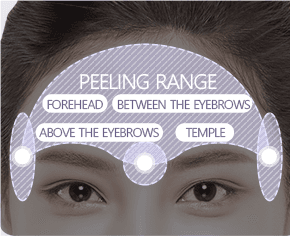
Estimated Costs of a Forehead Lift in South Korea
Forehead lifts in South Korea are competitively priced, often more affordable than in the USA. Prices range from approximately $4,600 to $8,400 USD (₩6,130,000 to ₩11,180,000 KRW). Related procedures like eyebrow lifts cost less ($2,200–$2,900 USD), and forehead reduction surgery ranges from $2,500 to $7,000 USD.
| Procedure | Low Price (KRW) | High Price (KRW) | Low Price (USD) | High Price (USD) |
|---|---|---|---|---|
| Forehead Lift | ₩6,600,000 | ₩12,000,000 | $4,600 | $8,400 |
Exchange rate as of 2025-04-30: 1 KRW = 0.0007 USD
What's Included in the Cost?
The quoted price usually covers a comprehensive package, offering transparency and predictability:
- Surgical Fees: Surgeon, team, and anesthesiologist fees.
- Anesthesia: Local or general anesthesia costs.
- Medical Tests: Pre-surgery health assessments.
- Post-Operative Care: Follow-ups and stitch removal.
- Facility Fees: Operating room and clinic infrastructure; possible overnight stays.
- Medications: Pain relief and antibiotics.
- Support Garments: Compression garments or dressings.
- Consultation Fees: Initial surgeon consultation.
Factors Influencing the Price
Costs vary based on:
- Surgeon’s expertise and reputation.
- Clinic location and facilities.
- Surgical technique complexity.
- Patient-specific needs and extent of correction.
Cost Comparison: South Korea vs. Other Popular Medical Tourism Destinations
South Korea offers a strong balance of affordability and quality compared to other countries:
| Country | Estimated Cost Range (USD) | Notes |
|---|---|---|
| South Korea | $4,600 - $8,400 | High quality, advanced technology, comprehensive care |
| Mexico | $3,500 - $5,500 | Lower cost but requires careful credential verification |
| Turkey | $3,000 - $4,500 | Competitive prices, qualified surgeons |
| USA | $8,000+ | Generally higher costs |
South Korea’s value lies in combining competitive pricing with high safety standards, advanced technology, and aesthetic excellence, offering patients a risk-adjusted advantage over cheaper but less regulated options.
The Value Proposition for Medical Tourists
South Korea’s appeal is its unique mix of affordability, expert surgeons, modern technology, personalized plans, and comprehensive care. This makes it a top choice for those seeking forehead lifts with excellent outcomes and a smooth patient experience.
Patient Experiences and Outcomes: Addressing Deep Forehead Creases
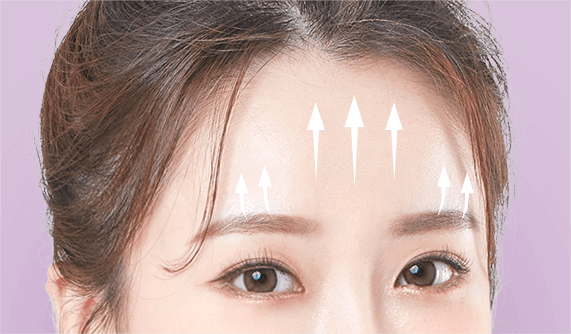
How Forehead Lifts Address Deep Creases and Related Concerns
Forehead lifts effectively smooth fine and deep horizontal wrinkles, reduce brow sagging, and create a more youthful, alert eye area. By lifting skin and modifying muscles responsible for frown and forehead lines, the procedure enhances facial balance and can improve vision obstructed by excess skin.
Expected Results and Longevity
Results typically last 7 to 10 years. Endoscopic lifts show about 10-12 mm elevation of the lateral brow and 6 mm medially, stable at 12 months. Minor relaxation occurs in the first 4-6 weeks but then stabilizes. Final subtle results appear over months as swelling fades. While the procedure reverses aging signs, it doesn’t stop natural aging, so realistic expectations are important.
Limitations of the Procedure
A forehead lift cannot change core facial features or reverse all sun damage. It doesn’t fully eliminate fine lines around eyes or mouth. Deep wrinkles may require additional treatments like dermal fillers or fat grafting. Brow lifting can sometimes make upper eyelids look hollow, which can be addressed by combining with eyelid fat grafting.
Insights from Patient Journeys
Though individual stories are limited, overall patient feedback is positive. Forehead lifts significantly improve deep horizontal and frown lines, enhance facial harmony, and boost confidence. Recovery is generally smooth within two weeks, with success linked to surgeon skill and thorough care.
Conclusion
Deep forehead creases result from aging, facial expressions, and environmental factors. While mild cases may respond to non-surgical options, a forehead lift offers a comprehensive, long-lasting solution for pronounced lines and brow sagging. South Korea stands out as a leading medical tourism destination, combining expert surgeons, advanced facilities, competitive pricing, and patient-focused care. Understanding the procedure, risks, costs, and realistic outcomes is essential for a satisfying experience. Maintaining healthy habits post-surgery helps preserve the rejuvenated look over time.
References
1, 2, 3, 4, 5, 6, 7, 8, 9, 10, 11, 12, 13, 14, 15, 16, 17, 18, 19, 20, 21, 22, 23, 24, 25, 26, 27, 28, 29, 30, 31, 32
Frequently Asked Questions
Related Blogs
Renuvion in Korea: Methods, Recovery, Risks, and Travel Planning
Renuvion uses helium-plasma radiofrequency energy beneath the skin, alone or after liposuction, to address mild-to-moderate localized laxity; Dermal resurfacing treats surface wrinkles with an external ablative handpiece. The article covers candidacy, alternatives, preparation, recovery, risks, Korea travel planning, and the need for surgeon clearance before flying.
Updated: Oct 13, 2026
Temporal Lift in Korea: Methods, Recovery, Risks and Travel Planning
A temporal lift elevates the outer brow through temporal scalp incisions, using open, subcutaneous, endoscopic, or combined techniques chosen for brow position, hairline, and eyelid anatomy. The article covers candidate screening, Korea facility and surgeon verification, a 10–14-day stay, recovery restrictions, aftercare, warning signs, and alternatives such as forehead lift, blepharoplasty, and p
Updated: Oct 13, 2026
Premature aging face treatment in Korea: Face Lift options for younger-looking skin
Early onset facial laxity and wrinkles are rising among 30s–40s. Our Korea medical tourism guide explains rhytids and how a rhytidectomy (face lift) can refresh the lower face and neck. Explore options: Deep Plane Facelift, SMAS Facelift, Mini Facelift, Lower Facelift and Neck Lift, plus non-surgical adjuncts. Learn candidacy, recovery timelines, costs, certifications, and tips for planning surger
Updated: Oct 12, 2026
Brow Ptosis in Korea: Forehead Lift and Subbrow Lift Treatment Options
Thinking about Brow Ptosis surgery in Korea? This expert guide explains diagnosis, functional vs cosmetic concerns, and compares a Forehead Lift with a Subbrow Lift—indications, scars, recovery, and costs. It maps the South Korea medical tourism journey (planning, visas, surgery day, follow-ups), highlights surgeon credentials and safety, and shares real outcomes, risks, and patient stories so you
Updated: Oct 12, 2026
Clinics offering Forehead Lift
RINE Plastic Surgery Clinic | Facelift and Eye Rejuvenation Surgery
Nonhyeon

SH Clinic: Comprehensive Women's, Men's & Couples' Health Services in Korea
Sinsa

THEPLUS Plastic Surgery Korea | Eye, Nose, Face & Body Surgery
Sinsa

Made Young Plastic Surgery: Rejuvenating Aesthetic Excellence in Korea for Face Lifts, Contouring and More
Gangnam Station