
Medical Tourism Blog
Bell's Palsy Treatment in Korea: Ptosis Correction Procedures for Effective Recovery

Table of contents
- Ptosis Correction: A Detailed Medical Overview
- Ptosis Correction in South Korea: A Comprehensive Guide for Patients
- Addressing Ptosis Related to Bell's Palsy
- Which Are the Best Clinics in Korea for Bells Palsy?
- Conclusion and Key Considerations for Patients
- References
Considering treatment in Korea? Everything you need to know e.g. — how to avoid scams, visas, interpreters, recovery tips — in our Medical Tourism Master Guide. Plan with confidence in minutes, not weeks!
Bell's palsy is a neurological condition that causes temporary facial paralysis and can sometimes result in a drooping eyelid, known as ptosis. If you're researching solutions online, this guide offers a clear overview of Bell's palsy, explains ptosis correction surgery, outlines how to get this procedure in South Korea, highlights the benefits of choosing South Korea, and shares patient experiences with this treatment.
Bell's palsy causes sudden weakness or paralysis on one side of the face due to damage to the facial nerve (the seventh cranial nerve). Symptoms usually appear quickly and may worsen over about 48 hours. You might notice a droop on one side of your face, difficulty closing the eye on that side, or an uneven smile. Other symptoms can include jaw or ear pain, increased sensitivity to sound, headaches, loss of taste, and changes in tear and saliva production.
The exact cause of Bell's palsy is often unknown (idiopathic), but it’s strongly linked to viral infections. Viruses like herpes simplex (which causes cold sores) and herpes zoster (which causes shingles) can inflame the facial nerve as it passes through a narrow bone canal. Factors increasing your risk include pregnancy (especially in the third trimester or just after birth), upper respiratory infections like colds or flu, diabetes, high blood pressure, and obesity. The good news is that most people recover well, with significant improvement in weeks and full recovery within three to six months, though it can sometimes take up to a year. Younger patients tend to recover more fully.
Common Pseudonyms and Alternative Names for Bell's Palsy
Bell's palsy is also called facial palsy, idiopathic peripheral facial palsy, cranial mononeuropathy - Bell palsy, or simply Bell palsy. In some cultures, it’s known as facial hemiplegia, Abu Al-Wajih, or Abu Wajeh, and sometimes referred to as the Seventh Nerve issue. The condition is named after Sir Charles Bell, the neurologist who first described it. While "facial paralysis" is a broader term for facial weakness from various causes, Bell's palsy specifically refers to facial paralysis with an unknown cause.
Diagnosis and Management of Bell's Palsy
Doctors diagnose Bell's palsy by examining your facial muscles for weakness on one side, asking you to perform facial movements. There’s no specific test for Bell's palsy, but tests like electromyography (EMG) can check nerve involvement, blood tests can rule out conditions like Lyme disease or diabetes, and imaging (MRI or CT scans) can exclude other causes.
Treatment usually involves oral corticosteroids like prednisone to reduce nerve inflammation, ideally started within 72 hours of symptom onset. Sometimes antivirals such as acyclovir or valacyclovir are added if a viral cause is suspected. Protecting the affected eye is crucial, especially if the eyelid doesn’t close fully—using lubricating eye drops during the day, ointment at night, and sometimes an eye patch helps prevent corneal damage. Physical therapy, facial exercises, massage, and alternative treatments like acupuncture may support recovery. Since Bell's palsy symptoms can mimic a stroke, immediate medical attention is essential to rule out stroke, which requires different treatment.
Potential Long-Term Effects and Complications
Most people recover fully, but some may experience lasting effects. Rarely, permanent facial nerve damage occurs. Synkinesis, where regenerating nerves miswire causing involuntary muscle movements (like the eye closing when smiling), can happen and may be treated with Botox. If the eyelid can’t close fully, chronic dryness and corneal damage may lead to vision problems. Some patients have persistent facial asymmetry, and Bell's palsy can recur in a small number of cases.
Ptosis Correction: A Detailed Medical Overview

Ptosis, or blepharoptosis, is the drooping of the upper eyelid. It can range from a slight sag to covering the pupil and blocking vision. People with ptosis often look tired or sleepy.
Causes of Ptosis
Ptosis can be congenital (present at birth) or acquired later in life. The most common acquired cause is aging, which weakens or stretches the levator muscle aponeurosis—the tendon that lifts the eyelid (involutional ptosis). Other causes include nerve damage from Bell's palsy, stroke, or third cranial nerve palsy (neurogenic ptosis); muscle disorders like myasthenia gravis or muscular dystrophy (myogenic ptosis); trauma; long-term contact lens use; complications from eye surgeries like cataract or LASIK; and rarely, tumors causing mechanical ptosis.
Medical Procedures for Ptosis Correction
Ptosis surgery aims to raise the upper eyelid to improve vision and appearance. The technique depends on the cause, severity, and levator muscle strength.
-
External Approach (Levator Advancement/Resection): For patients with good levator function, a small incision is made in the eyelid crease to shorten or advance the levator muscle, lifting the eyelid.
-
Internal Approach (Müller's Muscle-Conjunctival Resection - MMCR, Levator Resection): Suitable for mild to moderate ptosis with good response to phenylephrine eye drops. This is done from the eyelid’s underside without external incisions, removing part of Müller's muscle and conjunctiva.
-
Frontalis Sling Fixation: For severe ptosis with poor levator function, the eyelid is connected to the forehead’s frontalis muscle using a sling (silicone rod or fascia), allowing the forehead to lift the eyelid.
Other less common techniques include the Whitnall sling, tarsoaponeurectomy, and tarsomullerectomy (Fasanella-Servat procedure). Surgery is often done under local anesthesia with sedation, allowing adjustments during the procedure for optimal eyelid position.
Recovery Process After Ptosis Correction Surgery
Healing takes weeks to months for swelling to subside and eyelid position to stabilize. Early on, expect swelling, bruising, and mild discomfort, managed with cold compresses, head elevation, and pain medication. Eye drops and ointments protect the eye, especially if eyelid closure is temporarily impaired. Non-dissolvable stitches are usually removed within 5–10 days. Avoid strenuous activity, heavy lifting, rubbing eyes, makeup, and contact lenses for a few weeks. Temporary blurry vision or light sensitivity may occur. Final eyelid symmetry may take weeks to months to appear.
Potential Risks and Complications Associated with Ptosis Correction
Risks include bleeding, infection, poor wound healing, and eyelid asymmetry (over- or undercorrection), which may require revision surgery. Dry eye and irritation are common due to increased eye exposure. Lagophthalmos (incomplete eyelid closure) can raise corneal damage risk, especially in Bell's palsy patients. Rare complications include corneal damage, ptosis recurrence, suture granulomas, and extremely rarely, vision loss.
Ptosis Correction in South Korea: A Comprehensive Guide for Patients
South Korea is a leading destination for medical tourism, especially for cosmetic and elective surgeries like ptosis correction. This is thanks to its advanced healthcare system, cutting-edge technology, and highly skilled surgeons specializing in oculoplastic surgery. Many surgeons in Seoul have extensive experience and training in advanced eyelid procedures.
Cost is another major advantage—ptosis surgery in South Korea is often about 30% cheaper than in the US, UK, or Australia, while maintaining high standards of care. South Korea is known for high patient satisfaction and natural-looking results that blend well with facial features. Clinics often provide services tailored to international patients, including online consultations, travel and accommodation help, and multilingual staff.
Step-by-Step Process for International Patients Seeking Ptosis Correction in South Korea
-
Research and Select a Clinic: Review websites, before-and-after photos, surgeon credentials, and patient reviews. Check for experience with international patients and support services.
-
Online Consultation: Many clinics offer initial remote consultations to discuss your condition and treatment options.
-
In-Person Consultation: Upon arrival, the surgeon will examine your eyes, assess levator muscle function, and discuss surgical options, risks, and expected outcomes.
-
Pre-Operative Planning: The surgeon creates a personalized plan and provides instructions on medication avoidance and lifestyle changes.
-
Surgery: Typically lasts 1–2 hours under local anesthesia with sedation.
-
Post-Operative Care: Instructions on managing swelling, using eye drops, and follow-up visits for stitch removal and healing monitoring.
Seoul districts like Gangnam and Apgujeong offer convenient accommodations near clinics. Many clinics provide concierge services for airport pickup, lodging, and transportation. Medical visas (short-term C-3-3 or long-term G-1-10) are usually required, with documents including passport, visa form, photos, medical reports, treatment confirmation, and proof of funds. Check with your local Korean embassy for details. Some countries’ citizens may use Korea Electronic Travel Authorization (K-ETA) for short stays.
Benefits of Choosing South Korea for Ptosis Correction Over Other Countries
South Korea offers:
-
Highly experienced, board-certified oculoplastic surgeons with advanced training.
-
State-of-the-art medical facilities meeting international safety standards.
-
Cost-effective surgery often including comprehensive care packages.
-
High patient satisfaction and natural, subtle aesthetic results.
-
Extensive support services for international patients, easing travel and recovery.
Cost Comparison of Ptosis Correction Surgery: South Korea vs. Other Countries
| Country | Average Cost (USD) |
|---|---|
| South Korea | $1,000 - $3,100 |
| USA | $3,000 - $5,000 |
| UK | $3,100+ |
| Australia | $3,800+ |
| Europe | $2,500 - $4,500 |
| Thailand | $1,500 - $2,500 |
| Turkey | $1,400 - $2,500 |
| Mexico | $3,420 |
| Poland | ~$950 |
| India | ~$740 |
Note: Costs vary by clinic, surgeon expertise, and procedure complexity.
Addressing Ptosis Related to Bell's Palsy
Bell's palsy can cause ptosis on the affected side due to facial nerve involvement in eyelid muscle control.
Specific Considerations and Challenges in Ptosis Correction for Bell's Palsy Patients
A key concern is lagophthalmos—impaired eyelid closure—which ptosis surgery might worsen by lifting the eyelid higher. This can cause eye dryness, irritation, and corneal damage. Surgeons carefully assess eyelid closure ability and corneal health using tools like slit lamp microscopes before surgery.
Eyelid synkinesis, involuntary eyelid movement during other facial expressions, may also complicate surgery. In such cases, Botox may be preferred over surgery.
Tailoring Ptosis Correction Techniques for Individuals with Facial Paralysis
A conservative approach is often best, aiming to improve eyelid position without compromising closure. For severe closure issues, surgeons may implant a small gold or platinum weight in the eyelid to help it close by gravity. Brow lifts can also address brow drooping that contributes to eyelid sagging.
Importance of Assessing Eyelid Closure and Bell's Phenomenon
Before surgery, evaluating eyelid closure and Bell's phenomenon—the reflex upward and outward eye movement when closing the eyelid—is critical. Poor Bell's phenomenon increases corneal exposure risk after surgery, so this assessment guides surgical decisions.
Potential for Combining Ptosis Correction with Other Facial Reanimation Procedures
Sometimes ptosis correction is part of a broader facial reanimation plan to restore symmetry and function. This may include brow lifts, lower eyelid repair, nasal airway correction, mouth corner reanimation, and lower lip adjustments. These decisions are personalized by experienced surgeons.
Patient Testimonials and Case Studies: Experiences of Individuals Undergoing Ptosis Correction for Bell's Palsy
Patient stories and case studies show positive outcomes from surgeries like levator aponeurosis advancement combined with orbicularis oculi muscle resection for ptosis and related conditions after Bell's palsy. These highlight the importance of choosing surgeons skilled in both oculoplastic surgery and facial paralysis complexities.
Which Are the Best Clinics in Korea for Bells Palsy?
Listed below are some of the best clinics in Korea for bells palsy.
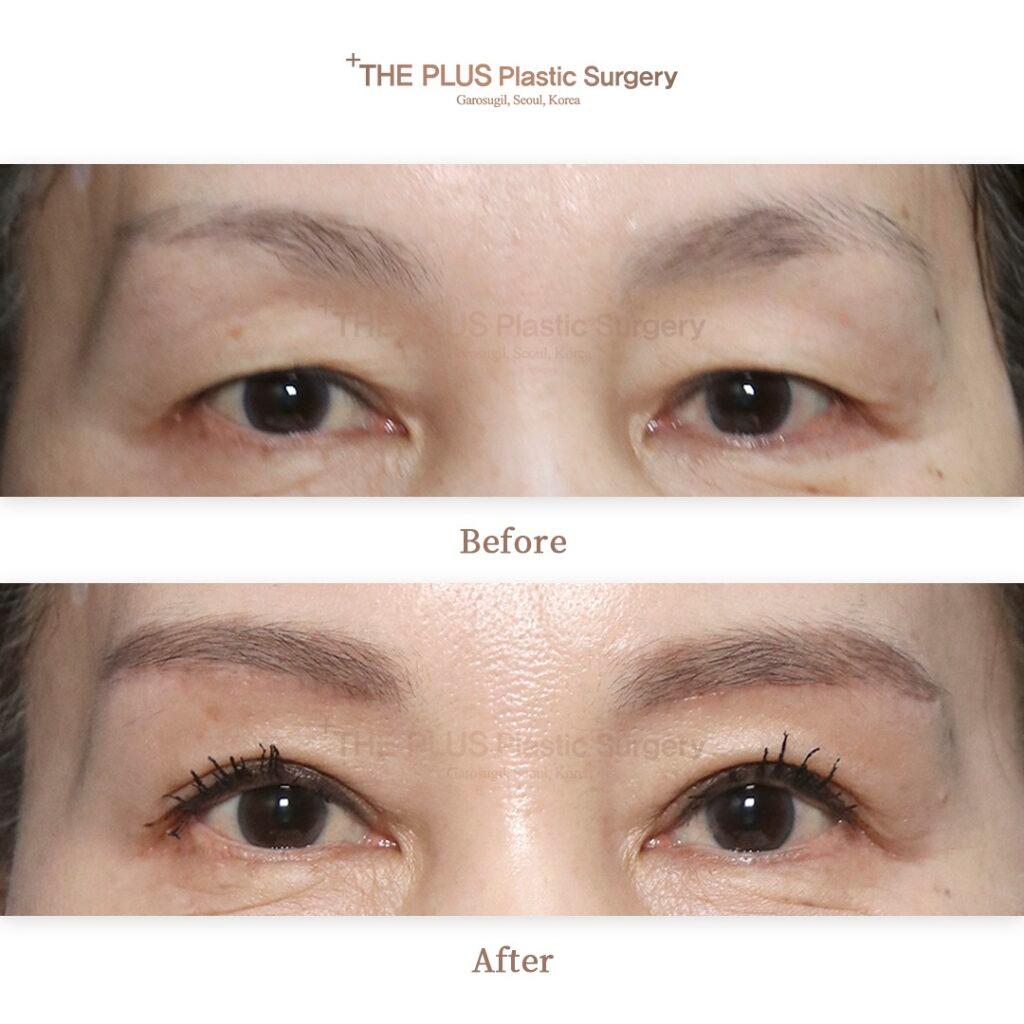
1. THEPLUS Plastic Surgery
If Bell’s palsy has left you with a drooping upper eyelid or a heavy-looking eye area, you may consider THEPLUS Plastic Surgery for its ptosis-correction offering, which is described as adjusting the muscles that open the eyes. The clinic also emphasizes facial balance and provides related eyelid procedures, though the supplied information does not describe Bell’s palsy-specific evaluation or treatment.
- URL: THEPLUS Plastic Surgery Website
- Location: Gangnam-gu, Seoul
- Eye-area procedures:
- Ptosis correction is offered to lift drooping upper eyelids by correcting the muscles involved in opening the eyes.
- Double-eyelid surgery and blepharoplasty are also available for eyelid crease creation and adjustment of excess eyelid skin or tissue.
- Surgical team:
- Dr. Kim is described as a board-certified plastic surgeon with research awards related to 3D implants and expertise in rhinoplasty and facial contouring.
- Dr. Jeong is described as President of the Korean Society of Plastic Surgeons and as focusing on rhinoplasty with an approach that combines function and aesthetics.
- Other services: The clinic offers rhinoplasty and revision rhinoplasty, facial contouring, facelift and thread-lift procedures, fat grafting, breast surgery, liposuction, and stem-cell-based regenerative treatment.
2. Made Young Plastic Surgery
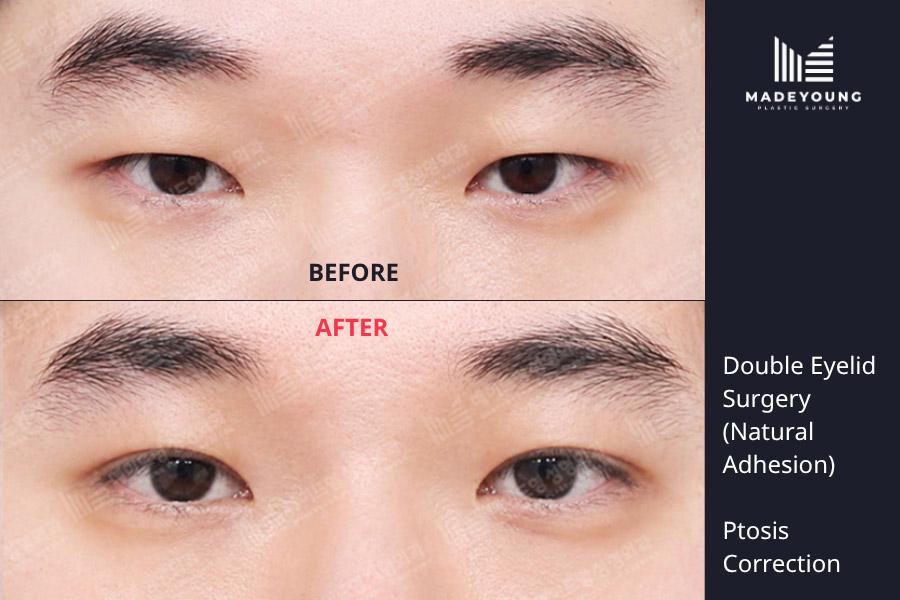
If Bell’s palsy has contributed to eyelid drooping, you may consider Made Young Plastic Surgery for ptosis correction, which the clinic describes as tightening the muscle that lifts the eyelid. Dr. Park Byung-Chan is noted for 15 years devoted exclusively to eye surgery, with individualized planning of eyelid lines, height, thickness, and overall eye shape; the provided information does not specify Bell’s palsy-focused care.
- URL: Made Young Plastic Surgery Website
- Location: Seocho-gu, Seoul
- Eye surgery focus:
- Ptosis correction is offered for drooping eyelids.
- Available eye procedures also include non-incisional and incisional double-eyelid surgery, upper and lower blepharoplasty, canthoplasty, and dark-circle treatments.
- The clinic states that Dr. Park Byung-Chan has 15 years of experience exclusively in eye surgery and customizes key eyelid-design elements.
- Safety and monitoring:
- The clinic reports full-time board-certified anesthesiologists, including one-to-one anesthesiologist monitoring during procedures.
- It describes a cross-check emergency response system and CCTV coverage of procedures.
- A separate aftercare center is reported for post-procedure care.
- Additional facial services: Services include facelift, forehead and neck lifting, facial contouring, rhinoplasty and revision or reconstructive rhinoplasty, thread lifting, ultrasound-based lifting, and skin boosters.
3. RINE Plastic Surgery Clinic
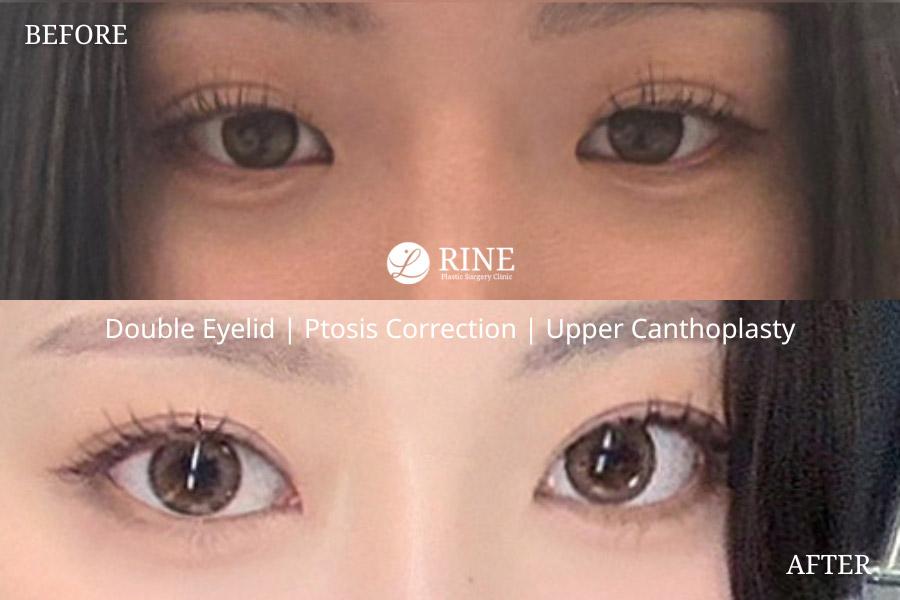
If you are seeking surgical correction of a drooping eyelid associated with Bell’s palsy, you may consider RINE Plastic Surgery Clinic for its ptosis correction, described as strengthening the levator muscle to improve eyelid position and iris exposure. Director Jang Nam personally manages consultation, surgery, and recovery, and the clinic reports more than 10,000 eye surgeries performed; the supplied information does not describe Bell’s palsy-specific diagnosis or treatment.
- URL: RINE Plastic Surgery Clinic Website
- Location: Seocho-gu, Seoul
- Ptosis and eye procedures:
- Ptosis correction is described as levator-muscle strengthening and may be combined with double-eyelid surgery.
- The clinic also offers non-incisional double-eyelid surgery, canthoplasty, under-eye fat repositioning, and revision eyelid procedures.
- Customized planning is based on facial proportions, skin condition, and individual characteristics.
- Director-led care:
- Board-certified plastic surgeon Director Jang Nam is described as personally handling consultation, surgery, treatment, and recovery.
- The clinic reports more than 15 years of clinical experience in eye surgery and anti-aging procedures.
- A one-person recovery room is available for private recovery.
- Equipment and aftercare:
- The clinic reports use of a full-HD Stryker endoscope, FDA-approved genuine Endotine, and WhiteLite bipolar equipment.
- It describes ongoing postoperative care, infection-control measures, surgical safety protocols, and emergency preparedness.
Conclusion and Key Considerations for Patients
Bell's palsy can sometimes cause ptosis that persists beyond facial paralysis. For those considering ptosis correction, especially in South Korea, understanding both conditions and surgical options is vital. South Korea offers expert surgeons, advanced facilities, and cost-effective care. Patients with Bell's palsy should seek surgeons experienced in managing ptosis with facial paralysis, ensuring thorough evaluation of eyelid closure and Bell's phenomenon to protect eye health. Combining ptosis correction with other facial reanimation procedures may provide the best functional and aesthetic results. Clear communication with your surgeon about expectations and risks is essential for success.
References
1, 2, 3, 4, 5, 6, 7, 8, 9, 10, 11, 12, 13, 14, 15, 16, 17, 18, 19, 20, 21, 22, 23, 24, 25, 26, 27, 28, 29, 30
Frequently Asked Questions
Related Blogs
Fox Eye Surgery in Korea: Methods, Recovery, Risks and Travel Planning
Fox eye surgery may involve lateral canthopexy, canthoplasty, or a brow lift, selected after assessment of eyelid support, ocular surface health, and facial anatomy. The guide covers candidacy, recovery, travel planning for Korea, aftercare, alternatives, and urgent symptoms requiring in-person care.
Updated: Oct 21, 2026

Upper Blepharoplasty in Korea: Methods, Recovery, Risks, and Travel Planning
Upper blepharoplasty conservatively removes excess upper-lid skin and, when indicated, limited muscle or fat after assessment of ptosis, brow position, eyelid closure, and eye health. International patients should plan a 7–10-day stay in Korea, attend early follow-up, arrange flexible travel and aftercare, and seek urgent assessment for vision changes or severe swelling.
Updated: Oct 13, 2026
Lower Canthoplasty in Korea: Methods, Recovery, Risks, and Travel Planning
Lower canthoplasty includes lower-eyelid-lowering and lateral canthal techniques, with candidacy based on lid support, ocular-surface health, and realistic anatomical goals. International patients can find guidance on technique clarification, 8–10 day travel planning, follow-up, aftercare, and urgent eye symptoms.
Updated: Oct 13, 2026
Upper Canthoplasty in Korea: Methods, Recovery, Risks and Travel Planning
Upper canthoplasty releases or redrapes the upper-medial epicanthal fold to improve visibility of an upper-eyelid crease, often alongside double-eyelid surgery. The article covers candidacy, surgical approaches, recovery, aftercare, travel planning for Korea, and warning signs requiring urgent eye care.
Updated: Oct 13, 2026
Clinics offering Ptosis Correction
RINE Plastic Surgery Clinic | Facelift and Eye Rejuvenation Surgery
Nonhyeon

SH Clinic: Comprehensive Women's, Men's & Couples' Health Services in Korea
Sinsa

THEPLUS Plastic Surgery Korea | Eye, Nose, Face & Body Surgery
Sinsa

Made Young Plastic Surgery: Rejuvenating Aesthetic Excellence in Korea for Face Lifts, Contouring and More
Gangnam Station