
Medical Tourism Blog
Hairline Microblading in Korea: Methods, Healing, Travel Planning and Alternatives
Table of contents
- Hairline Microblading at a Glance
- What Is Hairline Microblading?
- Who Is a Good Candidate for Hairline Microblading?
- How Is Hairline Microblading Performed?
- Why Visit Korea for Hairline Microblading?
- Key Information for International Patients
- Which Are the Best Clinics in Korea for Hairline Microblading?
- Hairline Microblading From Start to Finish
- Alternatives to Hairline Microblading
- How Can I Prepare for Hairline Microblading?
- Aftercare Advice
Considering treatment in Korea? Everything you need to know e.g. — how to avoid scams, visas, interpreters, recovery tips — in our Medical Tourism Master Guide. Plan with confidence in minutes, not weeks!
Last updated: September 2026
Hairline Microblading at a Glance
- What it does — Hairline microblading is a cosmetic scalp tattoo that places superficial pigment along the frontal or temporal hairline to make sparse areas look denser; it does not regrow hair, create follicles, or stop progressive hair loss.
- Best candidates — Suitable candidates generally have a healthy scalp, stable or slowly changing frontal thinning, existing hair to blend with the pigment, and realistic expectations about camouflage rather than true hairline restoration.
- Treatment time — A small frontal-hairline treatment commonly takes about 1–3 hours, using manual hair-like strokes, machine-placed follicle-like dots, or a hybrid technique.
- Healing and results — Pigment looks darker at first, with flaking or apparent lightening often occurring on days 3–10; assess the healed color and density at about 4–6 weeks, when a refinement session may be considered.
- Durability and touch-ups — Results can fade, shift in color, or look different as underlying hair loss progresses, so touch-ups may be needed after years; no universal maintenance interval is supported by strong evidence.
- Key limitation and risks — Manual hair-stroke microblading has sparse scalp-specific long-term evidence, and risks include infection, allergic or inflammatory pigment reactions, blurred pigment spread, fading, asymmetry, and a hairline that becomes unnatural if hair loss advances.
- Korea travel planning — Plan 2–3 nights for one small session and allow 24–48 hours before a long-haul flight when possible; because Korea’s Tattooist Act is scheduled to take effect on October 29, 2027, verify the provider’s current legal scope, single-use needle practices, pigment lot records, and medical referral plan before booking.
What Is Hairline Microblading?
Hairline microblading is a cosmetic scalp tattoo that places superficial pigment along a sparse or receding frontal hairline to create the appearance of hair density. It helps soften temporal recession and reduce scalp-to-hair contrast, but does not regrow hair or stop ongoing hair loss. It is a minimally invasive, non-surgical cosmetic procedure.
Who Is a Good Candidate for Hairline Microblading?
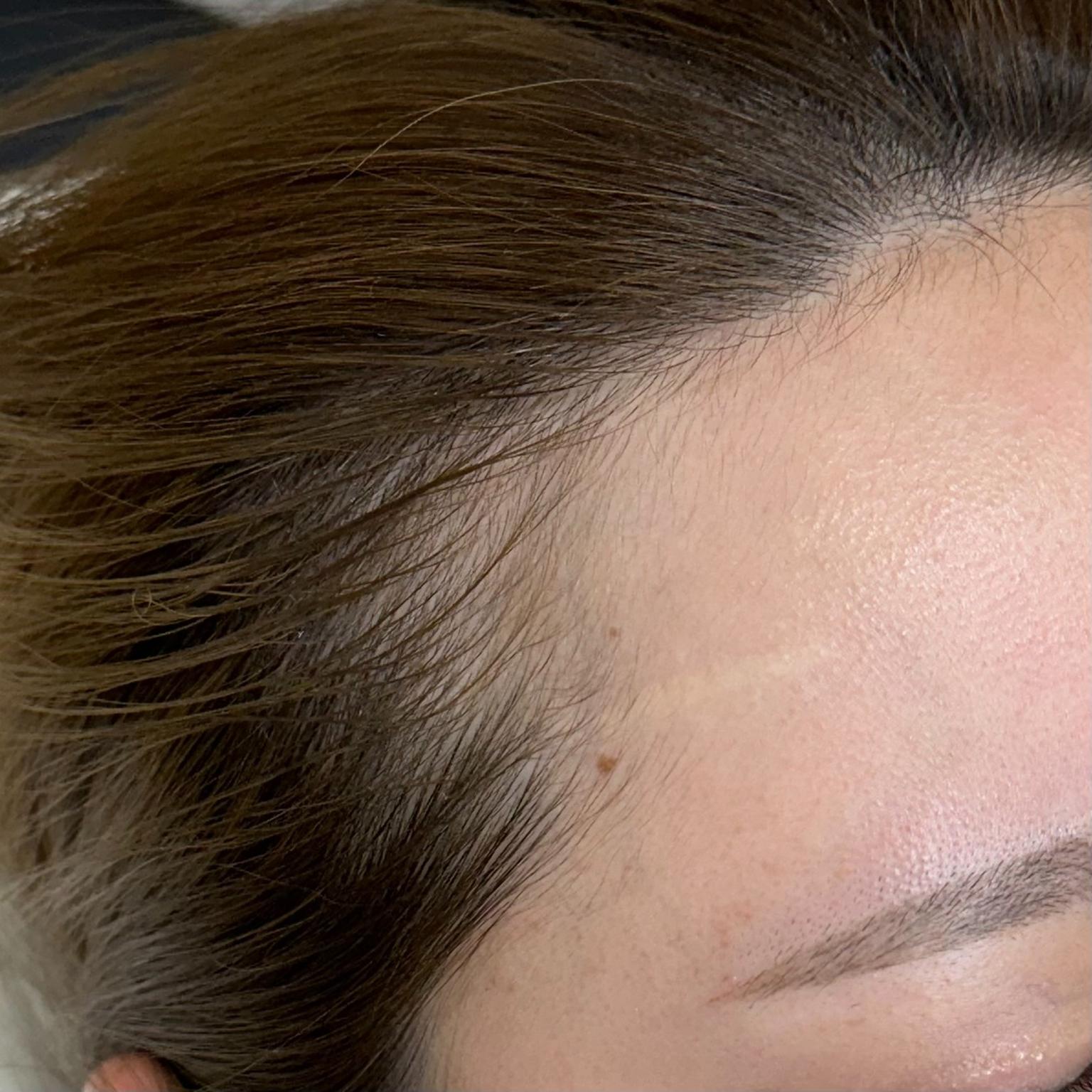
- Stable frontal thinning — Good candidates want to soften temporal recession, blend sparse frontal hair into existing density, or reduce the scalp-to-hair contrast at a stable or slowly changing hairline.
- Healthy scalp skin — The intended area should be free of scaling, itching, pustules, open wounds, sunburn, folliculitis, and active eczema, psoriasis, seborrheic dermatitis, or contact dermatitis.
- Realistic camouflage goals — Hairline microblading can create the appearance of density; it does not grow follicles, lower the true hair-bearing scalp, stop androgenetic alopecia, or replace medical diagnosis of hair loss.
- Conservative design preference — A natural result needs an age-appropriate, slightly irregular frontal edge that can still look plausible if surrounding hair thins later.
Avoid or defer treatment with sudden, patchy, rapidly progressive, painful, or symptomatic hair loss until a dermatologist identifies the cause. Active cicatricial or inflammatory alopecia requires specialist clearance because pigment retention can be uneven and camouflage can obscure disease assessment. Pregnancy and breastfeeding are reasons to defer an elective cosmetic tattoo because procedure-specific safety data are inadequate. Previous serious reactions to tattoo pigment, hair dye, latex, anesthetics, antiseptics, or adhesives, as well as keloid history, bleeding disorders, poorly controlled diabetes, immunosuppression, and anticoagulant or antiplatelet use require individualized medical assessment; never stop warfarin, apixaban, rivaroxaban, clopidogrel, or prescribed aspirin independently.
How Is Hairline Microblading Performed?
“Hairline microblading” is not a standardized clinical term. Ask whether the proposed treatment uses manual strokes, machine-placed dots, or both; the published scalp literature mainly concerns machine-assisted scalp micropigmentation (SMP), not manual blade strokes.
- Manual hair-stroke microblading — A handheld multi-needle blade creates fine superficial strokes. It is often promoted for a soft frontal edge, but scalp-specific clinical evidence for outcomes and long-term retention is sparse.
- Machine-assisted hairline SMP — A tattoo machine places tiny, stippled pigment dots to imitate follicles or visually thicken sparse scalp. A 45-person observational technical study described single-prong needles for hairline work and multi-prong needles for broader coverage; it did not compare methods or establish a best technique.
- Hybrid placement — Short strokes and dots can blend a conservative hairline into longer existing hair. Pigment shade, spacing, density, needle angle, and implantation depth determine whether the result looks soft or artificial.
- Scar camouflage — Mature, stable scalp scars can sometimes be pigmented, but retention is less predictable than in unaffected scalp. A staged test area is sensible before broader treatment.
Pigment is intended to remain in the superficial dermis. Too-shallow placement can fade quickly, while overly deep placement can cause blurred pigment spread, often called blowout, as described in an SMP clinical review.
Why Visit Korea for Hairline Microblading?
Korea has published clinical experience with scalp micropigmentation, but this does not prove that Korean hairline microblading is superior to treatment elsewhere. The most important practical issue is provider verification: confirm the technique, hygiene standards, pigment traceability, and medical referral pathway before booking.
- Documented Korean SMP experience — An uncontrolled Korean series of 43 people with pattern hair loss or scalp scars reported high satisfaction and no adverse effects during its study follow-up. It supports feasibility, not long-term safety, durability, or superiority over other countries, as summarized in the published SMP review.
- Relevant hair-loss treatment context — A Korean retrospective study of 40 women examined factors associated with choosing hair transplantation or SMP for female-pattern hair loss. It was not a randomized comparison and did not assess manual hairline microblading, pigment safety, or long-term color retention, so its evidence has clear limits.
- Regulatory transition — Korea enacted the Tattooist Act on October 28, 2025, with commencement scheduled for October 29, 2027. Until it takes effect, directly verify the practitioner’s present lawful scope, single-use needle or cartridge policy, infection-control protocol, pigment brand and lot records, and complication referral arrangements under the Tattooist Act framework.
Key Information for International Patients
- Minimum stay — Plan 2–3 nights for a small frontal-hairline session: consultation and design, treatment, and an early in-person check when the provider offers one.
- Repeat-session planning — Healed color and density are best assessed at about 4–6 weeks. If a refinement is essential, expect a second Korea trip, remote photograph review, or a later touch-up with a qualified provider at home.
- Flight timing — No procedure-specific evidence sets a mandatory delay before commercial flying after uncomplicated superficial scalp pigmentation. Avoid same-day long-haul travel and allow 24–48 hours when possible; this is cautious logistics, not a medical flight restriction.
- Itinerary impact — Social downtime is usually limited, but the pigment initially appears darker and more sharply defined. Schedule low-key activities for the first several days and avoid pools, saunas, hot tubs, strenuous sweating, direct sun, and scalp friction during early healing.
- Remote follow-up — Arrange English-language photo or video review before treatment. Obtain an English record listing the pigment brand, color, lot number, placement method, treatment map, aftercare plan, and a direct contact route for complications.
- Transport and companion — A companion is usually unnecessary with topical anesthetic alone. Use private transport and have a responsible companion available if oral anxiolytics, sedating pain medicine, or procedural sedation is used.
Travel note: Spreading redness, warmth, pus, fever, severe pain, open sores, or a widespread itchy rash need prompt in-person assessment locally. Do not wait for an overseas clinic to respond.
Which Are the Best Clinics in Korea for Hairline Microblading?
Listed below are some of the best clinics in Korea for hairline microblading.
1. Three Wishes Clinic - Myeongdong
For hairline microblading, you can expect semi-permanent pigment implantation along your hairline or scalp to mimic natural hair and create the appearance of greater density. This option may suit you if you want to make a sparse hairline look fuller or help conceal thinning areas.
- URL: Three Wishes Clinic - Myeongdong Website
- Location: Jung-gu, Seoul
- Procedure details:
- Hairline and scalp microblading uses pigment placed to imitate natural-looking hairs.
- The stated goals include creating a denser-looking hairline and camouflaging thinning areas.
- Related services:
- Semi-permanent makeup options also include eyebrow microblading and lip microblading.
- The clinic lists skin-focused treatments including CO2 laser resurfacing, chemical peels, Rejuran Healer, and customized skin care.
2. Seojin Plastic Surgery Clinic
You may consider Seojin Plastic Surgery Clinic if you want to discuss a hairline-focused pigmentation approach alongside broader hair-restoration options: its listed microblading service includes scalp micropigmentation for adding the appearance of density in thinning areas, while it also offers hair transplantation and hair-loss treatment. Care is described as end-to-end with Dr. Lee Hyungmin in a one-doctor clinic, and the provided information notes more than 16 years of experience.
- URL: Seojin Plastic Surgery Clinic Website
- Location: Gangnam-gu, Seoul
- Hair-focused options:
- Scalp micropigmentation is listed to create the look of a short buzz cut or add density to thinning areas.
- Hair transplantation is available for women and men, along with medical and surgical hair-loss treatment options.
- Care approach:
- The clinic describes a one-doctor model in which Dr. Lee Hyungmin provides comprehensive care.
- The provided information states that Dr. Lee Hyungmin was recognized as one of the 100 Good Doctors in Korea.
3. VandS Clinic - Pangyo
The available information for VandS Clinic - Pangyo does not list hairline microblading or scalp pigmentation, so you cannot confirm this procedure from the provided services. Its stated offerings instead focus on aesthetic injections, laser lifting, skin boosters, laser hair removal, acne and pigmentation care, and skincare.
- URL: VandS Clinic - Pangyo Website
- Location: Seongnam-si Bundang-gu, Gyeonggi
- Listed aesthetic services:
- Injectable services include Botox, contour injections, fillers, thread lifting, and Zero Fat Injection for the face or body.
- Skin-oriented options include laser lifting, skin boosters, acne and spot treatment, whitening and pigmentation correction, and skincare.
- Laser hair removal and IV therapy are also listed.
Hairline Microblading From Start to Finish
- Remote consultation and records review — Send clear daylight photographs of the front, sides, and top of the scalp; pre-hair-loss photographs when available; a hair-loss diagnosis; medication and supplement lists; allergy history; and details of prior scalp, laser, or tattoo procedures. Ask whether English consultation is available and request the proposed method, expected number of sessions, pigment information, aftercare, and complication plan in writing.
- In-person assessment and hairline design — The provider examines scalp health, existing density, hair direction, temporal recession, and signs of hair loss that need dermatologist review. A conservative hairline is drawn; review it seated, standing, and with the hairstyle normally worn.
- Scalp preparation and anesthesia — Hair is trimmed or parted as needed, and the skin is cleansed. Topical anesthetic can be used; disclose prior reactions to lidocaine/prilocaine, chlorhexidine, povidone-iodine, latex, adhesives, hair dye, or tattoo pigment.
- Pigment placement — A machine needle, manual blade, or hybrid technique deposits pigment through the marked frontal and temporal region. Small hairline work commonly takes about 1–3 hours, while extensive SMP can require multiple appointments and 20–30 total procedural hours, according to an SMP treatment report.
- Discharge and early healing — Expect a darker initial appearance, pinpoint redness, mild tenderness, swelling, or small amounts of clear fluid. Leave with written aftercare and documentation of the pigment and technique used.
- Healed review and refinement decision — Flaking, superficial crusting, and apparent lightening are common around days 3–10. Review healed retention at about 4–6 weeks rather than judging the result during the first week; staged density-building is common, although standardized protocols and long-term data remain limited.
- Overseas follow-up — Send standardized photographs under agreed lighting and confirm whether remote review is available. Keep the treatment record for a home dermatologist, tattoo-removal clinician, or future touch-up provider.
Alternatives to Hairline Microblading
The right alternative depends on whether the priority is treating active hair loss, adding living hair, creating reversible coverage, or changing a naturally high but stable hairline. Surgical choices can offer structural or living-hair change but involve greater recovery; non-surgical camouflage is less invasive but does not stop alopecia.
Dermatologic Hair-Loss Treatment
- Best for — New shedding, patchy loss, scalp symptoms, suspected androgenetic alopecia, alopecia areata, traction alopecia, nutritional deficiency, thyroid disease, or inflammatory/scarring alopecia.
- Tradeoff — Diagnosis and medical treatment address a possible cause rather than merely covering the scalp, but results depend on the condition and require ongoing medical follow-up. See hair loss treatment.
Machine-Assisted Scalp Micropigmentation
- Best for — Patients seeking follicle-like dot camouflage of a thinning hairline, diffuse scalp thinning, shaved scalp, or stable scars.
- Tradeoff — This technique has more scalp-specific published evidence than manually bladed strokes, but it remains a tattoo camouflage procedure and cannot produce growing hair. See scalp tattooing.
Hair Transplantation
- Best for — People with stable hair loss, adequate donor supply, and a diagnosis that supports transplantation.
- Tradeoff — Follicular unit extraction or transplantation can place living hair in selected frontal areas, but it is surgery with donor-site considerations, a longer recovery, and delayed growth results. See hair transplant.
Forehead Reduction Surgery
- Best for — Selected patients with a congenitally high, stable hairline and adequate scalp laxity rather than progressive alopecia.
- Tradeoff — Surgery can lower the hairline position but leaves an incision and does not prevent future thinning. See forehead reduction.
Laser Pigment Removal or Revision
- Best for — An unsatisfactory, overly dark, discolored, or poorly positioned previous hairline tattoo.
- Tradeoff — Removal or revision often requires multiple treatments and can be incomplete; scarring and altered pigment response are possible. See laser microblading removal.
How Can I Prepare for Hairline Microblading?
- Get the hair-loss diagnosis first — Arrange dermatology assessment before camouflage for sudden, patchy, rapidly progressive, itchy, painful, pustular, or scarring-pattern hair loss.
- Disclose medicines and supplements — Provide a complete list, including warfarin, apixaban, rivaroxaban, clopidogrel, aspirin, NSAIDs, corticosteroids, isotretinoin, minoxidil, finasteride/dutasteride, fish oil, vitamin E, ginkgo, garlic, ginseng, turmeric/curcumin, and St John’s wort. Do not stop prescribed anticoagulants, antiplatelet medicines, or other medication unless the prescriber gives explicit instructions.
- Report allergy and scar history — Tell the provider about reactions to tattoo ink, permanent makeup, hair dye or PPD, black henna, lidocaine/prilocaine, latex, chlorhexidine, povidone-iodine, antibiotics, and adhesives; ask for pigment ingredient and lot documentation. Patch testing can be considered after a prior reaction but cannot exclude delayed pigment allergy.
- Protect the treatment area — Avoid tanning and arrive without sunburn, active irritation, hair fibers, dry shampoo, scalp oils, or heavy styling products. Do not schedule chemical scalp treatments, aggressive exfoliation, microneedling, or laser procedures near the area without a clinician-specified interval.
- Plan food, alcohol, and smoking — Eat and hydrate normally unless sedation is planned; fasting is generally unnecessary without sedation. Avoid alcohol for at least 24 hours and avoid smoking or vaping where possible.
- Prepare travel documents — Bring photographs, dermatology reports or biopsy results, medication and allergy lists, and details of previous scalp procedures. Keep flights flexible enough to allow 24–48 hours after treatment before a long-haul journey.
Travel note: Ask in advance whether the provider can provide an English treatment certificate containing pigment brand, shade, lot number, method, treatment map, aftercare, and emergency contact details.
Confirm the treating provider’s individualized preparation requirements, which take precedence over general guidance.
Aftercare Advice
Protect the fresh pigment from contamination, friction, soaking, overheating, and picking until the scalp has healed.
- Keep it clean and hands off — Follow the written cleansing plan and use only approved aftercare products. Do not touch, scratch, pick flakes, or pull superficial crusts; early pigment loss and patchiness can result.
- Avoid sweat, water immersion, and heat — Avoid strenuous exercise and heavy sweating for at least 24–48 hours, or longer when instructed. Avoid swimming pools, hot tubs, saunas, steam rooms, and prolonged soaking for about one week.
- Avoid scalp trauma and active products — Do not shave directly over tender skin or apply retinoids, exfoliating acids, bleaching products, unapproved antibiotic ointments, or other irritants to the fresh area.
- Prevent fading — Avoid direct sun and tanning while healing. Once the skin has healed, use shade and a scalp-compatible broad-spectrum SPF 50 sunscreen where practical to reduce ultraviolet-related fading.
- Know when to seek care — Obtain urgent in-person assessment for spreading or worsening redness, increasing warmth, severe or escalating pain, pus, fever or chills, open sores, rapidly increasing swelling, or a widespread itchy and painful bumpy rash. Infection and allergic or inflammatory tattoo reactions require local medical assessment.
- Judge the result at the right time — Initial darkness commonly softens, then flaking and apparent lightening occur around days 3–10. Assess retained color and density at roughly 4–6 weeks; fading, pigment shift, implantation depth, ultraviolet exposure, and continuing hair loss can lead to touch-ups years later.
Follow the treating doctor’s or provider’s instructions where they differ from general advice, and contact the clinic promptly when anything appears wrong.
Frequently Asked Questions
Related Blogs
Microblading in Korea: Methods, Healing, Risks, and Travel Planning
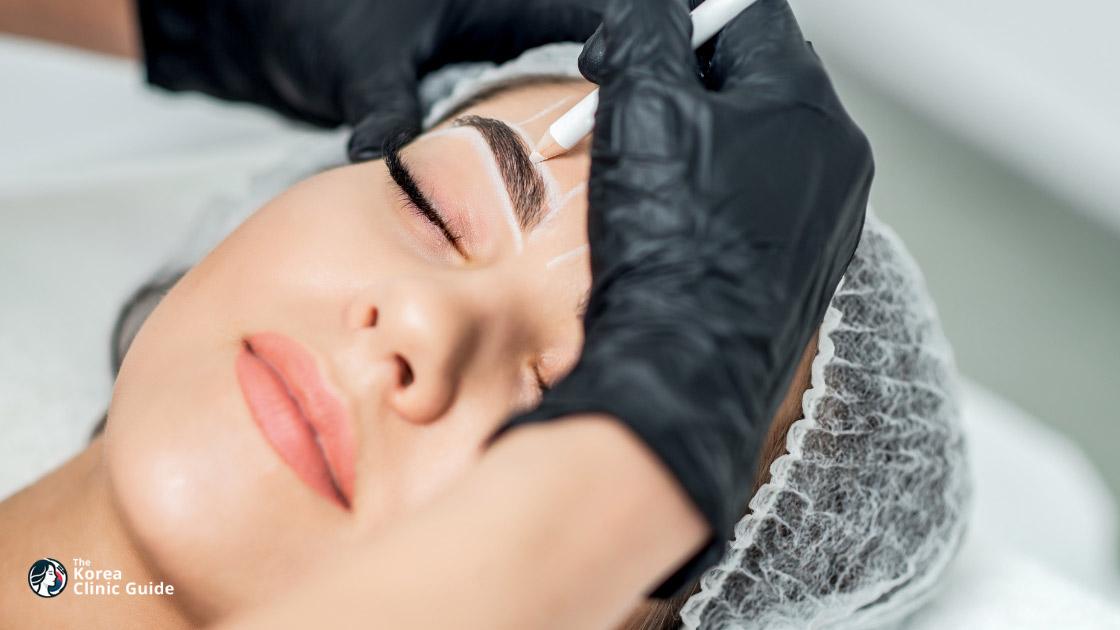
Microblading is cosmetic eyebrow tattooing that uses manual strokes, shading, combination work, or machine techniques to camouflage sparse brows; it does not regrow hair or treat eyebrow loss. In Korea, costs range from ₩600,000–₩2,000,000 (about US$400–$1,500), with guidance on provider verification, healing, travel planning, aftercare, and touch-up timing.
Updated: Sep 28, 2026
Laser Microblading Removal: Why Korea Excels and How Costs Compare Globally
Discover the costs and intricacies of laser microblading removal in Korea, a popular procedure for those seeking to erase semi-permanent eyebrow tattoos. Learn about the factors influencing pricing, the latest technology, and what to expect during the removal process.
Updated: Sep 26, 2026
Lip Microblading in Korea: Methods, Recovery, Risks, and Travel Planning
Lip microblading, also called lip blushing or cosmetic lip tattooing, uses a needle-driven device to place pigment for longer-lasting lip color or border definition. The article covers candidacy, Korea travel planning, provider verification, healing timelines, aftercare, warning signs, and alternatives.
Updated: Sep 23, 2026
Lip Blushing in Korea: Safety, Healing, Travel Planning and Results
Lip blushing is an outpatient cosmetic tattoo that implants pigment for subtle lip color and definition, with healing over 3–7 days and color assessment at 4–6 weeks. The guide covers candidate screening, Korea travel planning, provider verification, preparation, aftercare, risks, and touch-up arrangements.
Updated: Sep 23, 2026
Clinics offering Hairline Microblading

Three Wishes Clinic - Myeongdong, Korea: Advanced Botox, Fillers, Laser, and Skin Treatments for Confidence and Care
Myeongdong

Seojin Plastic Surgery Clinic Korea: Pioneering Advanced Cosmetic Procedures for Personalized Aesthetic Transformation
Apgujeong

VandS Dermatology Clinic - Dongtan, Korea: Comprehensive Skin Care and Cosmetic Procedures for Youthful, Radiant Skin
Hwaseong
VandS Clinic - Pangyo: Leading Advanced Medical Procedures in Korea for Enhanced Beauty and Health
Pangyo