
Medical Tourism Blog
Thyroid Disease and Ptosis Correction Procedures in Korea: Advanced Solutions for Eye Health
Table of contents
- Eyelid Correction for Thyroid Eye Disease: Addressing Functional and Aesthetic Concerns
- Considering South Korea for Eyelid Correction: A Medical Tourist's Guide
- Which Are the Best Clinics in Korea for Thyroid Disease?
- Costs of Eyelid Correction: South Korea vs. Global Perspectives
- Patient Stories: Real-World Outcomes and Life After Eyelid Correction for TED
- Conclusions
- References
Considering treatment in Korea? Everything you need to know e.g. — how to avoid scams, visas, interpreters, recovery tips — in our Medical Tourism Master Guide. Plan with confidence in minutes, not weeks!
You may come across various names for TED online, such as Thyroid Associated Orbitopathy (TAO), Graves' Eye Disease, Graves' Orbitopathy, and Thyroid Orbitopathy. Knowing these alternate names can make researching your condition easier.
How TED Affects the Eyes and Eyelids: Key Symptoms
The inflammation from TED can cause a variety of symptoms that impact vision as well as physical appearance:
- Eyelid Retraction: This hallmark of TED is when the upper eyelid pulls up, showing too much of the white part of the eye and creating a wide-eyed appearance.
- Exophthalmos/Proptosis: Swollen tissues and fat behind the eyes push them forward, making the eyes bulge outward.
- Dry, Irritated, Watery Eyes: Because the eyelids can’t close completely, especially at night, the eyes can become dry, irritated, and overly teary.
- Double Vision (Diplopia): Swollen eye muscles can become misaligned, resulting in double vision.
- Pain/Pressure: Patients often feel discomfort or pressure around the eyes.
- Vision Loss (Rare but Serious): Severe swelling may compress the optic nerve or cause corneal ulcers, risking permanent vision loss.
TED symptoms can change from week to week and often move through an “active” inflammatory phase before stabilizing. Treatment, including surgical intervention, is typically timed for the stable “quiescent” phase. This dynamic progression means ongoing monitoring and adjustments are essential.
Beyond the physical, TED affects daily life—ranging from discomfort and light sensitivity to changes in appearance that can impact self-esteem and mental health. That’s why effective care must consider both the medical and emotional needs of patients.
Diagnosing TED and Initial Management Approaches
TED is usually diagnosed based on its telltale eye symptoms and examination findings. Blood tests for thyroid function (T3, T4, TSH) and antibodies help confirm the autoimmune nature of the disease. Imaging like CT or MRI scanning may be used when the diagnosis is unclear or to track disease progression.
For mild TED, initial management is conservative: cool compresses, sunglasses, artificial tears, lubricating ointments at bedtime, and elevating the head while sleeping. There is some evidence that selenium supplements help reduce swelling in mild cases. More active TED may require corticosteroids (oral or IV), especially if there is optic nerve compression. Teprotumumab, an FDA-approved medication, shows promise for active TED. Keeping thyroid hormone levels stable is important, and patients should know that post-hyperthyroidism hypothyroidism increases TED risk. Smoking significantly worsens TED, so quitting is strongly advised.
Eyelid Correction for Thyroid Eye Disease: Addressing Functional and Aesthetic Concerns

When searching for “Ptosis Correction” in the context of thyroid-related eye muscle problems, it’s helpful to clarify that TED usually causes eyelid retraction (lid pulled up, not drooping), though true ptosis (drooping) can happen but is uncommon. Eyelid surgery in TED is often about lowering the overly retracted lid, not just lifting a droopy one—so the surgical techniques differ from standard ptosis repairs.
Whether treating retraction, true ptosis, or excess eyelid tissue, eyelid surgery for TED is tailored to each patient’s specific anatomy, aiming to restore a more normal and functional eyelid.
Why Eyelid Surgery is a Key Part of TED Rehabilitation
Eyelid surgery is essential after the active TED phase and once thyroid levels are stabilized. Surgery addresses:
- Functional Improvement: Better eyelid closure protects the eyes, relieves dryness, irritation, and sensitivity, and can also widen the visual field.
- Aesthetic Improvement: Bringing the eyelids closer to their natural position reduces the “staring” look and restores facial symmetry, positively affecting confidence and daily life.
Timing surgery after inflammation has subsided is important to achieve stable, long-lasting results. That’s why care involves both an endocrinologist and an oculoplastic surgeon.
Detailed Overview of Eyelid Surgical Techniques for TED
Eyelid surgery for TED is customized depending on whether the issue is retraction, ptosis, or excess skin/fat:
- Eyelid Recession Surgery: Most common for retraction; the surgeon lengthens the eyelid by loosening or cutting the elevating muscles (Müller’s muscle or levator aponeurosis). Upper eyelid surgery may use blepharotomy or adjustable sutures, while lower lid corrections often require grafts for support.
- Ptosis Repair Surgery: For real eyelid droop—tightens or reattaches the levator muscle, sometimes with hidden incisions for better cosmetic outcomes.
- Blepharoplasty: Removes or rearranges extra skin and fat, combating tired or heavy lid appearance.
- Orbital Decompression Surgery: If severe eye bulging or optic nerve compression is present, bone or fat removal allows the eye to sink back. Eyelid surgery comes after decompression, as earlier steps can change eyelid position.
The Surgical Procedure: What to Expect on the Day of Surgery
Most eyelid surgeries for TED are outpatient, meaning patients return home the same day. Sedation combined with local anesthesia is common; patients may briefly open and close their eyes during surgery to help the surgeon fine-tune results and symmetry. Incisions often follow the natural eyelid crease to minimize scarring, and surgery typically lasts 40 to 60 minutes. Arrange to have someone drive you home, and consider some support for the first day after surgery.
Your Recovery Journey: A Detailed Guide
Recovery is usually smooth, but careful aftercare is a must:
- Days 1–3: Swelling and bruising are normal; use cold compresses, sleep with your head up, and use all prescribed drops/ointments. Driving isn’t allowed for at least 24 hours.
- Day 7–2-3 Weeks: Sutures are usually removed at 7 days, and most swelling/bruising are resolving by 2 weeks. Avoid heavy exercise, bending, or makeup until cleared. Computer-based jobs can often resume quickly.
- Months 3–12: Full healing can take several months. Some mild lid asymmetry is normal, and occasional touch-up surgery may be needed. Any severe pain, vision loss, or significant changes should prompt a call to the surgeon.
Table: Eyelid Surgery Recovery Timeline and Care Instructions
| Timeframe | Expected Symptoms | Key Care Instructions | Activity Restrictions | Milestones | Warning Signs (Call Doctor) |
|---|---|---|---|---|---|
| Immediately Post-Op (24–48h) | Mild swelling, bruising, soreness, blurred vision | Cold compresses, head elevated, pain meds, use prescribed drops, wipe tears | No driving, no rubbing | Discharge from clinic | Severe pain, bleeding, vision loss |
| Days 1–3 | Continued swelling, manageable discomfort | Continue cold compresses & elevation, wash eyelids, use meds | No heavy lifting or exercise, avoid bending | Back to desk work possible | Persistent pain, redness, discharge |
| Days 4–7 | Swelling/bruise reducing, comfort improving | Continue medications, eyelid hygiene | Still restrict exercise, no contacts or makeup | Suture removal (~Day 7), marked swelling reduction | Recurring droop, new/persistent double vision |
| Weeks 2–3 | Most swelling gone, better eye movement | Prescribed drops as needed | Ease back into normal activity with caution | Appearance stabilizing | New/worsening symptoms, infection |
| Months 1–3 | Mostly healed, subtle improvements | Follow surgeon’s advice | Normal activity resumes | Evaluation of results | Persistent troubling asymmetry, stiffness |
| Months 3–12 | Final result visible, fully healed | Continue follow-ups as advised | No restrictions | Full recovery, final assessment | Any new eyelid concerns |
Considering South Korea for Eyelid Correction: A Medical Tourist's Guide
South Korea is a recognized hub for plastic and reconstructive eye surgeries, drawing medical tourists worldwide. Many surgeons there have 15–30 years’ experience, use innovative techniques and technology, and clinics often offer bundled packages that include everything from consults to post-op medication. Fast recovery and natural results are a hallmark of Korean surgical methods. Clinics register to cater to international visitors, providing bilingual staff or translators and support for all stages of the process.
The Process of Getting Eyelid Surgery in South Korea (Step-by-Step)
- Online Consultations: Research reputable clinics online and arrange video consults to discuss needs, outcomes, recovery, and costs.
- Prepare for the Trip: Provide full medical history, stop blood thinners and smoking two weeks before surgery, and organize travel, accommodation, and essential packing.
- Arrival in Korea & Clinic Consults: See at least three surgeons in person for comparison, negotiate prices, and secure your date with a deposit (often 10%). Complete pre-surgery exams as needed.
- Surgery Day: Local anesthesia and sedation are standard. Swelling post-surgery is normal, and patients are advised not to touch bandages or incisions prematurely.
- Recovery and Follow-up: Return for suture removal at day 7. Many can resume desk work quickly, but jobs involving heavy lifting may require a longer break.
Leveraging Medical Tourism Agencies for a Seamless Experience
Navigating care in Korea is simplified with a medical tourism agency like GoWonderfully, Shin Medical, or Beauty Hopper. Around 60% of foreign patients use agencies, with a 90% satisfaction rate. Agencies:
- Introduce top clinics and doctors
- Help negotiate and compare prices
- Manage flights, lodgings, airport transfers, and recovery support
- Provide translators and 24/7 assistance
- Streamline booking and paperwork
- Ensure clinics are licensed and prioritize patient safety
Which Are the Best Clinics in Korea for Thyroid Disease?
Listed below are some of the best clinics in Korea for thyroid disease.
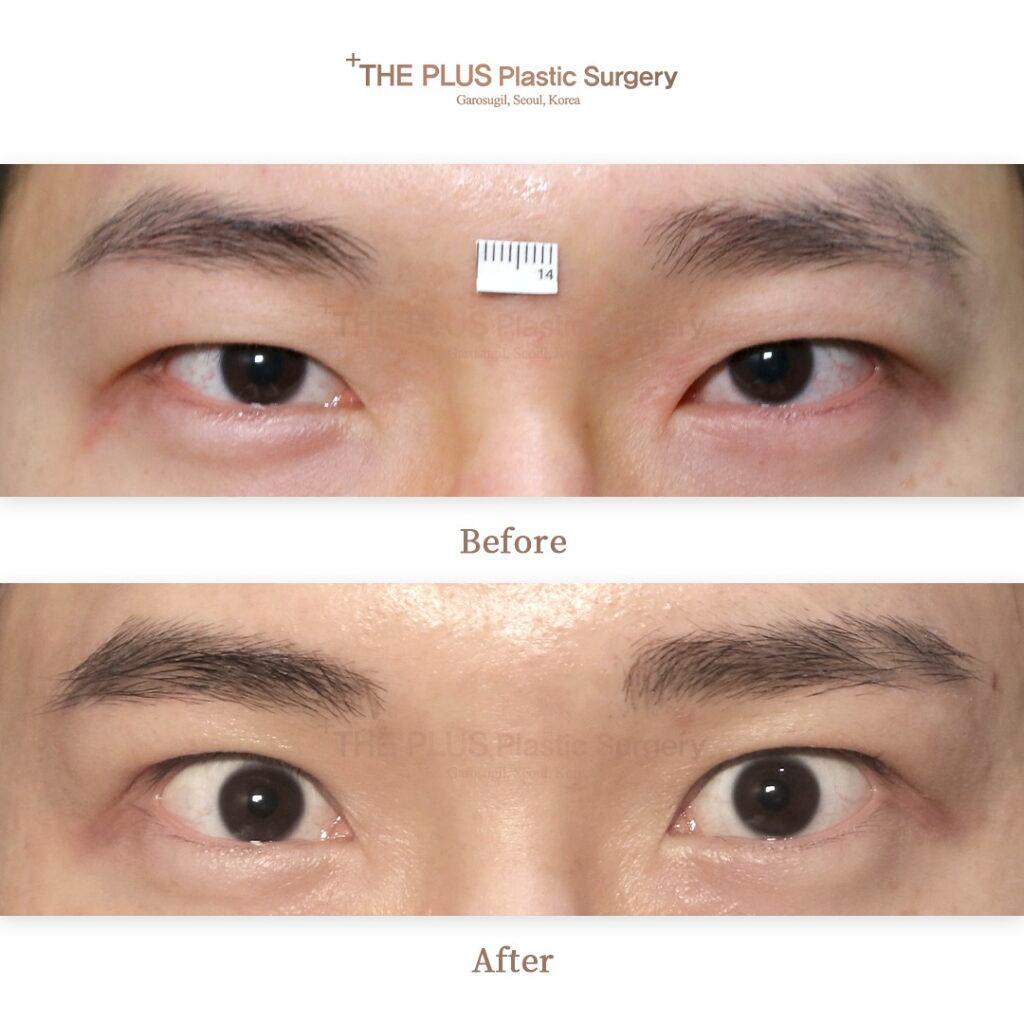
1. THEPLUS Plastic Surgery
You may consider THEPLUS Plastic Surgery if your thyroid-related concerns include an aesthetic eye or facial issue you wish to discuss separately, particularly ptosis correction, blepharoplasty, rhinoplasty, or facial contouring. The provided information does not identify thyroid diagnosis, endocrine care, thyroid surgery, or thyroid-specific treatment at this clinic, so you would need to confirm whether it can address your particular thyroid condition.
- URL: THEPLUS Plastic Surgery Website
- Location: Gangnam-gu, Seoul
- Eye and facial procedures:
- Offers ptosis correction to address drooping upper eyelids, along with double-eyelid surgery and blepharoplasty.
- Provides rhinoplasty, revision rhinoplasty, facial contouring procedures, facelift options, and facial fat grafting.
- Surgical expertise:
- Dr. Kim is described as a board-certified plastic surgeon with research recognition for 3D implants and a focus on rhinoplasty and facial contouring.
- Dr. Jeong is identified as President of the Korean Society of Plastic Surgeons and has a rhinoplasty practice emphasizing both function and appearance.
- Dr. Lee is a board-certified plastic surgeon specializing in breast augmentation, with prior experience as a Surgery Specialist at Seoul National University Hospital.
2. Made Young Plastic Surgery
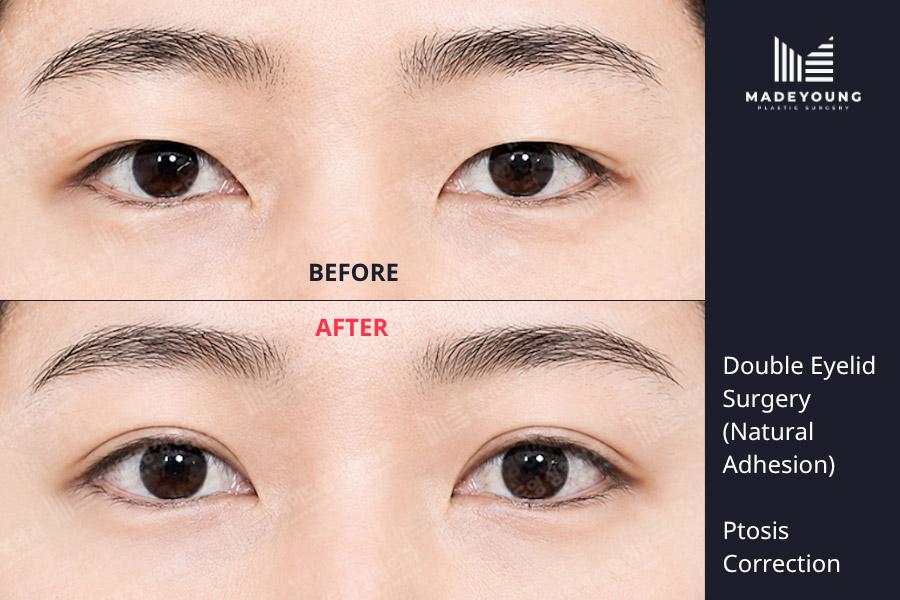
You may consider Made Young Plastic Surgery if you are seeking evaluation of thyroid-related eyelid drooping as an aesthetic or functional eye concern, since the clinic offers ptosis correction and Dr. Park Byung-Chan is described as having 15 years of dedicated eye-surgery experience. However, the supplied information does not show thyroid medical management, endocrine testing, or thyroid surgery, so you should confirm that your thyroid disease is being assessed and treated by an appropriate thyroid specialist.
- URL: Made Young Plastic Surgery Website
- Location: Seocho-gu, Seoul
- Eye surgery:
- Offers ptosis correction by tightening the muscle that lifts the eyelid.
- Provides incisional and non-incisional double-eyelid surgery, upper and lower blepharoplasty, canthoplasty, and dark-circle treatments.
- Dr. Park Byung-Chan is described as customizing incision lines, eyelid height, eyelid thickness, and overall eye shape.
- Safety and aftercare:
- Lists full-time board-certified anesthesiologists, including one-to-one anesthesiologist monitoring during procedures.
- Describes emergency cross-check coverage by multiple anesthesiologists and CCTV coverage of procedures.
- Operates a separate aftercare center for systematic post-procedure care.
3. RINE Plastic Surgery Clinic
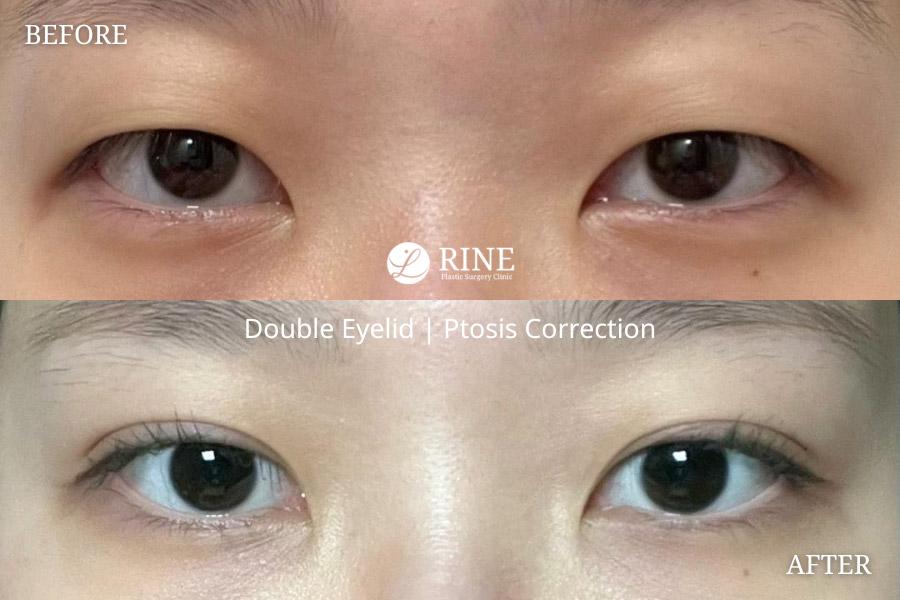
You may consider RINE Plastic Surgery Clinic if thyroid-related changes have left you with drooping eyelids and you are exploring a separate ptosis or eyelid procedure: its director personally manages consultation through recovery and is described as having performed more than 10,000 eye surgeries. The available information does not establish thyroid disease diagnosis, endocrine treatment, or thyroid surgery at RINE, so your underlying thyroid condition should be evaluated and managed by an appropriate medical specialist.
- URL: RINE Plastic Surgery Clinic Website
- Location: Seocho-gu, Seoul
- Ptosis and eyelid options:
- Provides ptosis correction by strengthening the levator muscle to improve drooping lids and iris exposure; it may be combined with double-eyelid surgery.
- Offers non-incisional double-eyelid surgery, canthoplasty, under-eye fat repositioning, upper and lower blepharoplasty, and subbrow lift.
- Provides revision double-eyelid and epicanthoplasty procedures after analysis of concerns such as asymmetry, loosened folds, multiple folds, or scarring.
- Director-led care:
- Director Jang Nam personally handles consultation, surgery, treatment, and recovery.
- The clinic describes more than 15 years of clinical experience, individualized line design based on facial proportions and skin condition, and over 10,000 eye surgeries performed by the director.
- Facility and recovery considerations:
- Lists a full-HD Stryker endoscope, FDA-approved genuine Endotine, and WhiteLite bipolar equipment.
- Provides private one-person recovery rooms and describes ongoing postoperative care, infection-control measures, surgical safety protocols, and emergency preparedness.
Costs of Eyelid Correction: South Korea vs. Global Perspectives
Understanding the Cost Components in South Korea
Ptosis correction in Korea usually costs $1,032 to $3,096 USD (1.5–4.5 million KRW), but some broader quotes place eyelid surgery between $2,000 and $7,000 USD, depending on surgeon reputation, procedure complexity, and package inclusions. Package deals usually cover consults, the surgical fee, anesthesia, hospital stay (if needed), pre-op tests, follow-ups, and medications, reducing hidden expenses. In some cases, even airport transfers and accommodations are included.
Factors Influencing the Price of Eyelid Surgery in Korea
Surgical fees can vary based on:
- Surgeon’s experience and reputation
- Clinic location (upmarket areas like Gangnam may cost more)
- Surgical technique and case complexity
- Extent of correction (unilateral or bilateral, combined procedures)
- Package inclusions (e.g., accommodation, aftercare)
Comparative Costs: South Korea vs. Other Popular Medical Tourism Destinations
| Country | Approximate Price Range (USD) | Notes on Value Proposition |
|---|---|---|
| South Korea | $1,032–$7,000 | High expertise, advanced tech, bundled services, natural results, efficient recovery, transparent pricing |
| USA | $3,000–$15,000+ | Highest cost, local follow-up, established oversight |
| Turkey | $1,353–$5,900 | Affordable, but clinics and qualifications vary |
| Thailand | $1,000–$3,500 | Cost-effective, developed health tourism, some limitations on aftercare |
| India | $1,000–$2,500 | Affordable, skilled surgeons, caution needed with facility standards |
While the lowest prices are seen in India and Thailand, many patients value Korea's consistent safety standards, quality, technology, and comprehensive approach over just savings.
Patient Stories: Real-World Outcomes and Life After Eyelid Correction for TED
People with TED frequently struggle with double vision, difficulty closing their eyes, severe dryness, and trouble with daily activities. Eyelid surgery, often after other interventions like orbital decompression or strabismus correction, dramatically relieves these symptoms. For some, double vision fades quickly after systemic treatment; for others, surgery restores comfort and the ability to enjoy reading, driving, and working again.
The aesthetic changes in TED—bulging eyes, retracted lids—can deeply impact self-esteem. Eyelid correction softens the “staring” look and restores symmetry, leading many patients to say they feel “refreshed,” “rested,” and “back to who I was.” Surveys consistently find around 80% of patients are highly satisfied after combined TED surgeries.
Beyond the physical transformation, patients describe tremendous relief and restored confidence. Peer support communities and seeing other TED survivors’ stories further help heal the emotional toll. While complete symmetry may not always be possible and touch-up procedures are sometimes necessary, the boost to daily functioning and self-image is often life-changing.
Important Considerations: Potential for Further Procedures and Long-Term Outlook
TED is a chronic condition, and treatment is often staged: orbital decompression (if needed), muscle surgery for double vision, and finally eyelid correction. Surgery timing is crucial for the best results, and some small degree of asymmetry may remain. A minority of patients may require repeat procedures or further corrections. Nevertheless, most patients find substantial improvements in their function, comfort, and quality of life after surgery.
Conclusions
Thyroid Eye Disease (TED) is a complex autoimmune condition that requires specialized care, as it affects both vision and appearance. Eyelid correction plays a crucial role in restoring comfort, function, and confidence for TED patients. South Korea stands out as a leading destination for these procedures, offering expertise, advanced technology, and comprehensive support for medical tourists. Patients are encouraged to seek care from experienced specialists, carefully follow all pre- and post-operative instructions, and understand the stepwise nature of TED rehabilitation.
References
Frequently Asked Questions
Related Blogs
Discover How Laser Canthoplasty Costs in Korea Compete Globally: A Detailed Comparison with US, Australia, Turkey & Mexico
Discover the ins and outs of Laser Canthoplasty in Korea, where advanced techniques meet affordability. Explore the cost factors, benefits, and why this procedure is gaining popularity among international patients seeking subtle enhancements.
Updated: Oct 22, 2026
Fox Eye Surgery in Korea: Methods, Recovery, Risks and Travel Planning
Fox eye surgery may involve lateral canthopexy, canthoplasty, or a brow lift, selected after assessment of eyelid support, ocular surface health, and facial anatomy. The guide covers candidacy, recovery, travel planning for Korea, aftercare, alternatives, and urgent symptoms requiring in-person care.
Updated: Oct 21, 2026

Upper Blepharoplasty in Korea: Methods, Recovery, Risks, and Travel Planning
Upper blepharoplasty conservatively removes excess upper-lid skin and, when indicated, limited muscle or fat after assessment of ptosis, brow position, eyelid closure, and eye health. International patients should plan a 7–10-day stay in Korea, attend early follow-up, arrange flexible travel and aftercare, and seek urgent assessment for vision changes or severe swelling.
Updated: Oct 13, 2026
Lower Canthoplasty in Korea: Methods, Recovery, Risks, and Travel Planning
Lower canthoplasty includes lower-eyelid-lowering and lateral canthal techniques, with candidacy based on lid support, ocular-surface health, and realistic anatomical goals. International patients can find guidance on technique clarification, 8–10 day travel planning, follow-up, aftercare, and urgent eye symptoms.
Updated: Oct 13, 2026
Clinics offering Ptosis Correction
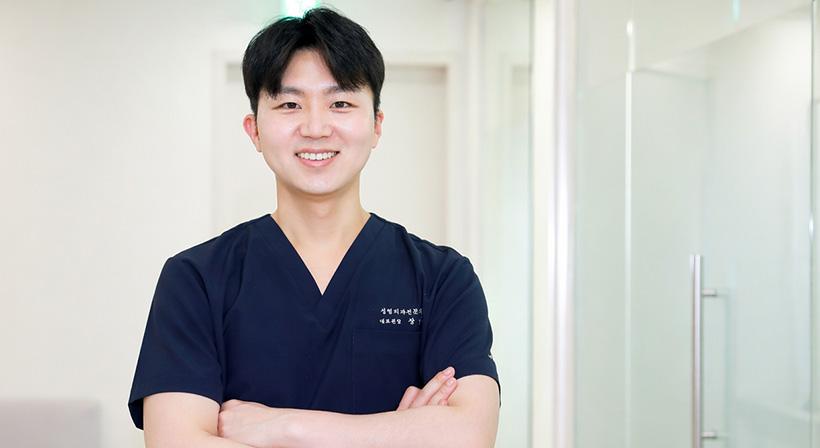
RINE Plastic Surgery Clinic | Facelift and Eye Rejuvenation Surgery
Nonhyeon

SH Clinic: Comprehensive Women's, Men's & Couples' Health Services in Korea
Sinsa

THEPLUS Plastic Surgery Korea | Eye, Nose, Face & Body Surgery
Sinsa

Made Young Plastic Surgery: Rejuvenating Aesthetic Excellence in Korea for Face Lifts, Contouring and More
Gangnam Station