
Medical Tourism Blog
Lip Microblading in Korea: Methods, Recovery, Risks, and Travel Planning
Table of contents
- Lip Microblading at a Glance
- What Is Lip Microblading?
- Who Is a Good Candidate for Lip Microblading?
- How Is Lip Microblading Performed?
- Why Visit Korea for Lip Microblading?
- Key Information for International Patients
- Which Are the Best Clinics in Korea for Lip Microblading?
- Lip Microblading From Start to Finish
- Alternatives to Lip Microblading
- How Can I Prepare for Lip Microblading?
- Aftercare Advice
Considering treatment in Korea? Everything you need to know e.g. — how to avoid scams, visas, interpreters, recovery tips — in our Medical Tourism Master Guide. Plan with confidence in minutes, not weeks!
Last updated: September 2026
Lip Microblading at a Glance
- What it is — Lip “microblading” usually means needle-device lip micropigmentation, also called lip blushing or permanent lip makeup, which implants pigment for a soft tint or sharper natural border.
- Best suited for — It is intended for adults with healthy, intact lips who want longer-wear improvement in pale or uneven color or border definition—not added volume, major asymmetry correction, or treatment of a lip condition.
- Healing timeline — Expect swelling, tenderness, and a much darker initial color immediately; flaking commonly lasts 1–2 weeks, while color may look pale or patchy before settling over the following weeks.
- Touch-up planning — Pigment retention should not be judged during early healing; a review or possible touch-up is commonly considered around 4–6 weeks and generally requires a separate trip.
- Travel requirement — International patients should plan at least 2–3 nights in Korea after one uncomplicated session to allow for early swelling, cold-sore symptoms, or an in-person review if needed.
- Key risk — Needle trauma can reactivate cold sores, so anyone with a lifetime history of oral herpes should disclose it before booking and discuss individualized prescription antiviral prevention with a clinician.
- Korea-specific check — Korea’s Tattooist Act is scheduled to take effect on October 29, 2027; until then, verify the actual operator’s current legal and clinical arrangement, sterile single-use supplies, pigment lot details, and post-departure complication plan.
What Is Lip Microblading?
Lip microblading, more accurately called lip blushing or lip micropigmentation, is cosmetic tattooing that places pigment in the lips for longer-lasting color and definition. It addresses pale or uneven lip tone and softens the appearance of the natural border, without adding volume or correcting major structural asymmetry. It is a minimally invasive cosmetic procedure because pigment is implanted with a needle-driven device.
Who Is a Good Candidate for Lip Microblading?
- Color and definition goals — Good candidates want longer-wear enhancement of pale or uneven-looking lip color, a more defined vermilion border, or a soft makeup effect.
- Healthy lip tissue — The lips should be intact, free of active inflammation, and without sores, fissures, infection, or an unexplained lesion.
- Realistic expectations — Lip micropigmentation changes color and visual contour; it does not add volume, reliably correct major asymmetry, or treat a lip condition.
- Commitment to healing — Candidates must accept early swelling, flaking, an initially dark result, possible uneven retention, and the possibility of a later touch-up.
Avoid treatment during an active cold sore, tingling or burning prodrome, lip infection, significant dermatitis, open fissure, or until an undiagnosed lip lesion has been medically assessed. Pregnancy and breastfeeding, immunosuppression, poorly controlled diabetes, bleeding disorders, current oral isotretinoin, and a history of keloid or serious tattoo reaction require deferral or clinician-led assessment. Do not stop prescribed warfarin, apixaban, rivaroxaban, clopidogrel, or aspirin independently for cosmetic tattooing. Adults are the appropriate population for this elective, long-lasting procedure, and the practitioner should distinguish a color goal from a volume or structural goal before treatment.
How Is Lip Microblading Performed?
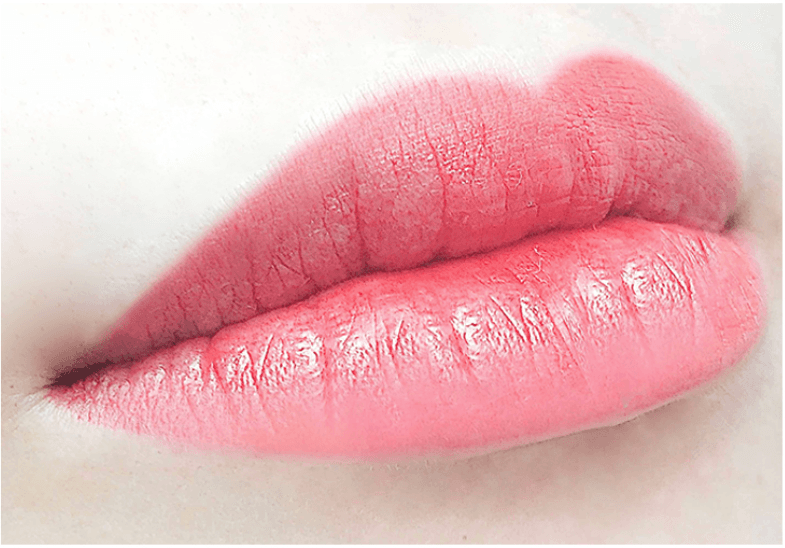
“Lip microblading” is a marketing term; most lip work is more accurately called lip blushing, cosmetic lip tattooing, or lip micropigmentation and uses a needle-driven tattoo device rather than manual blading. Clinical literature describes this terminology distinction, but does not establish that one branded technique is superior.
- Full-lip blush — Soft low- to medium-density pigment is placed across most visible vermilion for an overall tint rather than opaque lipstick coverage.
- Contour emphasis — Pigment concentrates along the natural vermilion border and cupid’s bow, sometimes blending inward. Extending pigment beyond the natural border is not a reliable way to enlarge lips and can heal unpredictably.
- Gradient or ombré blush — Color is denser near the border and lighter toward the center, creating a conventional makeup-style gradient.
- Needle-device micropigmentation — The operator deposits pigment in multiple passes with a tattoo needle device while checking contour and symmetry. Pigment depth, tissue response, UV exposure, aftercare, and pigment selection influence fading, color shift, and uneven uptake.
- Evidence limits — No high-quality comparative studies show that machine micropigmentation, “microblading,” ombré methods, particular pigments, or depth strategies have better safety, retention, or satisfaction outcomes. Published lip-tattoo literature is largely limited to complication reports and observational material.
Why Visit Korea for Lip Microblading?
Korea-specific superiority claims for lip micropigmentation are not supported by published comparative outcome data. The practical advantage for an international visitor is the ability to verify the provider, treatment setting, product records, and escalation pathway before travel. Treat this as a permanent-makeup decision with medical risk, not simply a beauty appointment.
- Regulatory status requires checking — Korea’s Tattooist Act was promulgated in October 2025 but is scheduled to take effect on October 29, 2027. The enacted law provides for licensing, examinations, hygiene and safety duties, health examinations, and business registration; until then, confirm the operator’s current legal and clinical arrangement rather than relying on advertising alone. Read the enacted law and effective date.
- Foreign-patient institution verification — When treatment is arranged through a Korean medical institution, check its current status through the official Medical Korea foreign-patient registration system. Registration does not prove that every practitioner has equivalent permanent-makeup training or complication-management experience.
- Traceability matters — Request the actual operator’s identity and qualifications, written consent in a language understood, confirmation of sterile single-use needles and ink caps, and the pigment manufacturer, shade, batch or lot number, and Color Index information where available.
- Documented follow-up route — Obtain a named contact for suspected infection, allergic reaction, or herpes outbreak after departure. Korea-specific published outcomes for international lip-micropigmentation patients have not been identified, so claims about better retention or safety should be treated cautiously.
Key Information for International Patients
- Minimum stay — Plan at least 2–3 nights in Korea after a single uncomplicated session. This buffer allows time for early swelling, cold-sore symptoms, or an in-person review if needed.
- Flight timing — No evidence-based no-fly interval exists for uncomplicated lip micropigmentation performed with topical anesthetic alone. Do not fly with worsening swelling, fever, spreading redness, severe pain, blistering, or a need for urgent assessment.
- Repeat visits — Do not schedule a touch-up a few days after the first session. A 4–6 week review is common permanent-makeup practice, but this is not a rigorously validated lip-specific interval and normally requires a separate trip.
- Itinerary impact — Expect visible swelling, tenderness, and a darker-than-final shade immediately after treatment. Superficial flaking can occur for 1–2 weeks, so avoid scheduling major photos, beach activities, sauna visits, or food-focused events immediately afterward.
- Cold-sore planning — Disclose any lifetime history of oral herpes before booking. Cosmetic tattoo trauma can reactivate herpes simplex, and antiviral prevention, when appropriate, requires an individualized prescription plan.
- Remote follow-up — Arrange a photo check with the provider, but identify a dermatologist, primary-care clinician, or urgent-care service at home. Remote messages cannot safely replace local assessment for infection, extensive blistering, or a severe reaction.
- Companion and transport — A companion is not medically required after topical anesthetic alone, but is sensible for severe anxiety, a language barrier, prior fainting, or planned oral sedating medication. Do not drive after sedating medicine.
Travel note: Retain consent documents, treatment photographs, pigment and device details, and product lot numbers. These records are important if a clinician at home later evaluates a reaction or discusses removal.
Which Are the Best Clinics in Korea for Lip Microblading?
Listed below are some of the best clinics in Korea for lip microblading.
1. Three Wishes Clinic - Myeongdong
For lip microblading, you can choose a semi-permanent lip blush treatment designed to enhance your natural lip color and shape, giving your lips a fuller, more defined look without daily makeup.
- URL: Three Wishes Clinic - Myeongdong Website
- Location: Jung-gu, Seoul
- Procedure details:
- Lip microblading, also described as lip blush, uses semi-permanent pigment to enhance natural lip color and definition.
- The stated aesthetic goal is a fuller-looking, more clearly shaped lip appearance.
- Related services:
- Semi-permanent makeup options also include eyebrow microblading and hairline and scalp microblading.
- Other aesthetic services listed include lip and facial fillers, Botox, thread lifting, skin treatments, and laser hair removal.
2. VandS Clinic - Hongdae
For lip microblading, you can explore the clinic’s semi-permanent makeup service, which includes long-lasting makeup for the lips and is intended to maintain a natural-looking result without frequent reapplication.
- URL: VandS Clinic - Hongdae Website
- Location: Mapo-gu, Seoul
- Procedure details:
- Semi-permanent makeup is available for lips, as well as eyebrows and eyeliner.
- The clinic describes these services as long-lasting makeup solutions with a natural look.
- Related services:
- Lip filler is available if you are also considering injectable volume enhancement.
- Skincare treatments, laser lifting, skin boosters, acne care, pigmentation and redness treatments, and laser hair removal are also listed.
- Practical note: The Hongdae branch is described as open every day of the week without a lunch break.
3. Rejuel Clinic
If you are considering lip microblading, Rejuel Clinic offers dermatologist-led aesthetic care and medical semi-permanent makeup; however, its provided service information specifically lists micropigmentation for brows, lash line, and scalp rather than lips, so you should confirm lip treatment availability directly.
- URL: Rejuel Clinic Website
- Location: Seoul
- Semi-permanent makeup:
- Medical micropigmentation is described as placing medical-grade pigment in the dermis.
- Listed treatment areas are brows, lash line, and scalp, with aims that include restoring definition and camouflaging gaps.
- Related aesthetic care:
- Dermal fillers are listed for natural shaping of areas including the lips, cheeks, chin, and tear troughs.
- Skin boosters, collagen-stimulating injectables, laser dermatology, energy-based lifting, and acne and pigmentation care are also listed.
Lip Microblading From Start to Finish
- First contact and remote consultation — Share clear, makeup-free photographs in neutral lighting, state whether the goal is color, border definition, or both, and ask whether English-language consultation and written aftercare are available. Disclose cold sores, prior tattoos, pigment reactions, keloids, medical conditions, medicines, prior filler, and lip surgery.
- Provider and travel verification — Confirm the identity of the actual operator, the setting, sterile single-use needle and ink-cap practice, pigment traceability, cancellation policy for an active cold sore, and the post-departure escalation plan. If booking through a medical institution, verify its current Medical Korea registration.
- In-person lip assessment — The practitioner examines the lips for active herpes, infection, unexplained pigmentation, significant dermatitis, tissue injury, or inflammation. Treatment should be postponed when the lips are unsuitable that day.
- Design, shade, and consent — Agree on a conservative shade and the natural lip border. Review that the result is long-lasting but not reliably reversible, and complete written consent and baseline photographs before pigment placement.
- Medical review and preparation — The provider reviews medicines, allergies, bleeding risk, healing risk, and cold-sore history. The lips are cleansed, and topical anesthetic is commonly used; follow the clinic’s directions if oral medication or sedation is proposed.
- Micropigmentation session — A sterile needle-driven device places pigment in several passes across the agreed contour or lip surface. The operator checks symmetry and color distribution during treatment. Ask the provider directly about appointment duration because robust lip-specific evidence does not define a standard treatment time.
- Discharge and early recovery — Leave with written aftercare, approved lip products only, contact details, and a complete record of pigments and materials used. Expect swelling, tenderness, and a much darker initial shade.
- Healing and color assessment — Superficial crusting or flaking commonly occurs during the first 1–2 weeks. Tattooed skin generally re-epithelializes over roughly 2–3 weeks, while color can look pale or uneven before it settles; early fading in the first six weeks has been reported, so do not judge retention while healing.
- Overseas follow-up — Send agreed photographs to the provider, but seek local medical care for warning signs. Discuss any correction only after healing has declared itself, commonly at about 4–6 weeks in practice.
Alternatives to Lip Microblading
Choose an alternative based on the actual treatment goal. Cosmetic tattooing is long-lasting but carries pigment-related and wound-healing risks; non-tattoo makeup is reversible, while fillers and surgery address volume or structure rather than color.
Conventional Lip Makeup
- Best for — Testing shades, border definition, and full-lip color without implanting pigment.
- Tradeoff — Lip liner, tint, lipstick, and stain are the most reversible choices but require regular reapplication.
Lip Fillers and Augmentation
- Best for — Volume, projection, hydration-related appearance, or selected contour concerns.
- Tradeoff — Fillers do not replace pigment where the main concern is pale or uneven color, and augmentation has different risks and maintenance needs. See lip fillers and lip augmentation.
Lip Plastic Surgery
- Best for — Selected structural concerns that cannot be addressed with pigment, such as certain shape or lip-position concerns.
- Tradeoff — Surgery is invasive, involves a longer recovery, and does not correct pigment or color concerns. See lip plastic surgery.
Laser Pigment Correction or Removal
- Best for — Unwanted prior cosmetic tattoo pigment after specialist evaluation.
- Tradeoff — Multiple sessions can be required, and treatment can cause scarring or unexpected pigment darkening. Complete removal without color change cannot be guaranteed. See laser microblading removal.
Medical Lip Assessment
- Best for — Persistent inflammation, recurrent sores, a changing pigmented spot, actinic damage, or suspected allergy.
- Tradeoff — Treat or diagnose the condition rather than camouflage it with pigment.
How Can I Prepare for Lip Microblading?
- Medical disclosure — Provide a complete list of medical conditions, allergies, prior tattoo reactions, keloids, past cold sores, diabetes status, immune-suppressing treatment, prior filler, lip surgery, and recent dental or oral infection.
- Prescription medicines — Tell the provider about warfarin, apixaban, rivaroxaban, clopidogrel, prescribed aspirin, systemic corticosteroids, immunosuppressants, and isotretinoin. Do not stop prescription anticoagulants, antiplatelet drugs, antivirals, or other medicines without the prescriber’s approval.
- NSAIDs and supplements — Report ibuprofen, naproxen, and supplements that can affect bleeding or healing. Follow the treating clinician’s individualized instructions on whether any non-prescription product needs adjustment.
- Cold-sore prevention — Report any lifetime history of oral herpes, even when outbreaks are rare. Postpone treatment for tingling, burning, or an active lesion; discuss clinician-prescribed antiviral prevention well before travel when relevant.
- Food and fasting — Fasting is generally unnecessary for topical anesthetic alone. Eat and hydrate normally unless the clinic gives different instructions for oral medication or sedation.
- Lips and sun exposure — Arrive with clean lips and no lipstick, gloss, balm, exfoliant, self-tanner, or sunburn. Defer treatment for severely chapped, inflamed, recently injured, or recently treated lips.
- Alcohol, nicotine, and drugs — Avoid alcohol and recreational drugs before treatment. Avoid smoking and vaping around the procedure because nicotine exposure can impair healing.
- Travel logistics — Schedule 2–3 nights after treatment, keep flights flexible, and avoid booking the session immediately before departure. Arrange a companion when anxiety, fainting history, language barriers, or sedating medication are concerns.
Travel note: Save the clinic’s English-language contact details and locate an urgent-care or dermatology option near home before leaving Korea.
Confirm the treating doctor’s or provider’s clinic-specific requirements before treatment; individualized instructions take precedence over general guidance.
Aftercare Advice
Protect the healing lip surface and respond early to signs of infection, herpes reactivation, or a significant inflammatory reaction.
- Hands and products — Wash hands before touching the lips. Use only the aftercare product specifically supplied or approved by the provider, and do not pick, scratch, or peel flakes.
- Contact and contamination — Avoid kissing, sharing drinks, utensils, or lip products while the surface is open. Keep the area clean and avoid unapproved cosmetics until healed.
- Water, heat, and exercise — Avoid pools, hot tubs, sauna and steam rooms, and non-potable-water exposure until the surface has healed. Avoid activities that create heavy sweating or friction during the early healing period.
- Active skincare and sun — Keep retinoids, exfoliating acids, bleaching products, and strong active skincare away from the mouth while healing. Once healed, use a tolerated SPF 30+ lip product because UV exposure contributes to pigment fading; MRI-related burning or swelling from cosmetic tattoos appears uncommon but has been reported, so disclose permanent makeup before MRI.
- Normal healing — Expect an initially dark shade, swelling, tenderness, and possible flaking for 1–2 weeks. Color can then appear patchy, pale, or uneven before stabilizing over following weeks; do not arrange correction based on the immediate result.
- Warning signs — Seek urgent medical assessment for rapidly increasing swelling, severe pain, fever, spreading redness or warmth, pus, red streaking, extensive blistering or ulceration, breathing or swallowing difficulty, or a generalized rash. Seek prompt care for clustered painful blisters, tingling, or burning suggestive of herpes reactivation.
- Delayed reactions — Arrange dermatology assessment for persistent itchy, scaly, raised, nodular, discolored, or inflamed areas. Patch testing cannot reliably rule out delayed tattoo-pigment allergy, so do not self-diagnose a persistent reaction as a simple pigment allergy.
- Follow-up and final color — Send agreed photographs to the provider and consider retention only after healing. A 4–6 week review is common practice, but not a validated lip-specific rule.
Follow the treating doctor’s or provider’s written instructions over general advice, and contact the clinic promptly when anything appears wrong.
Frequently Asked Questions
Related Blogs
Discover the Real Cost of Lip Blushing: Is Korea the Ultimate Destination for a Vibrant Smile?
Discover the rising trend of lip blushing in Korea, where semi-permanent makeup enhances lip color and definition. Explore the costs associated with this popular beauty treatment and what to expect when opting for a lip blush in South Korea.
Updated: Oct 26, 2026
Global Hairline Microblading Costs: Why Korea's Expertise and Pricing Shine Compared to Other Countries
Discover the latest trends and costs of hairline microblading in Korea, where precision and innovation meet beauty enhancement. Explore how this popular treatment offers natural-looking results and compare prices to make an informed decision.
Updated: Oct 26, 2026
Scalp Micropigmentation Cost: Korea vs. Global Averages for Hair Loss Solutions
Discover the cost of scalp micropigmentation in Korea, a popular non-surgical hair restoration technique gaining global attention. This article explores the factors influencing prices and compares them to international standards.
Updated: Oct 25, 2026
Discover Why Korea's Microblading Costs Outshine the USA, Turkey, and Thailand: A Comprehensive Price Guide
Discover the latest trends in microblading in Korea and explore the costs associated with this popular beauty treatment. Learn how prices vary across regions and what factors influence the final expense, ensuring you're informed before booking your appointment.
Updated: Oct 24, 2026
Clinics offering Lip Microblading

Three Wishes Clinic - Myeongdong, Korea: Advanced Botox, Fillers, Laser, and Skin Treatments for Confidence and Care
Myeongdong

Seojin Plastic Surgery Clinic Korea: Pioneering Advanced Cosmetic Procedures for Personalized Aesthetic Transformation
Apgujeong

VandS Dermatology Clinic - Dongtan, Korea: Comprehensive Skin Care and Cosmetic Procedures for Youthful, Radiant Skin
Hwaseong
VandS Clinic - Pangyo: Leading Advanced Medical Procedures in Korea for Enhanced Beauty and Health
Pangyo