
Medical Tourism Blog
Eyebrow Microblading in Korea: Methods, Healing, Travel Planning, and Safety
Table of contents
- Best Clinics in Korea for Eyebrow Microblading
- Getting Eyebrow Microblading in Korea
- What Is Eyebrow Microblading?
- Who is Eyebrow Microblading for?
- Cost of Eyebrow Microblading in Korea
- Alternatives to Eyebrow Microblading
- Conclusion
Considering treatment in Korea? Everything you need to know e.g. — how to avoid scams, visas, interpreters, recovery tips — in our Medical Tourism Master Guide. Plan with confidence in minutes, not weeks!
Considering eyebrow microblading in Korea? This guide explains what microblading is—how it works, how long results last, and potential risks—then walks you through getting the procedure in Korea, including how to choose qualified practitioners, what to expect during consultation and treatment, and typical aftercare standards. We also outline who microblading is best suited for and who should avoid it, based on skin type, medical history, and cosmetic goals. You’ll find an overview of costs in Korea and the factors that influence price, from clinic reputation to pigment quality and touch-up policies. Finally, we compare popular alternatives—such as microshading, combination brows, brow lamination, tinting, and traditional tattooing—so you can decide which option aligns with your desired look, budget, and maintenance preferences.
Best Clinics in Korea for Eyebrow Microblading
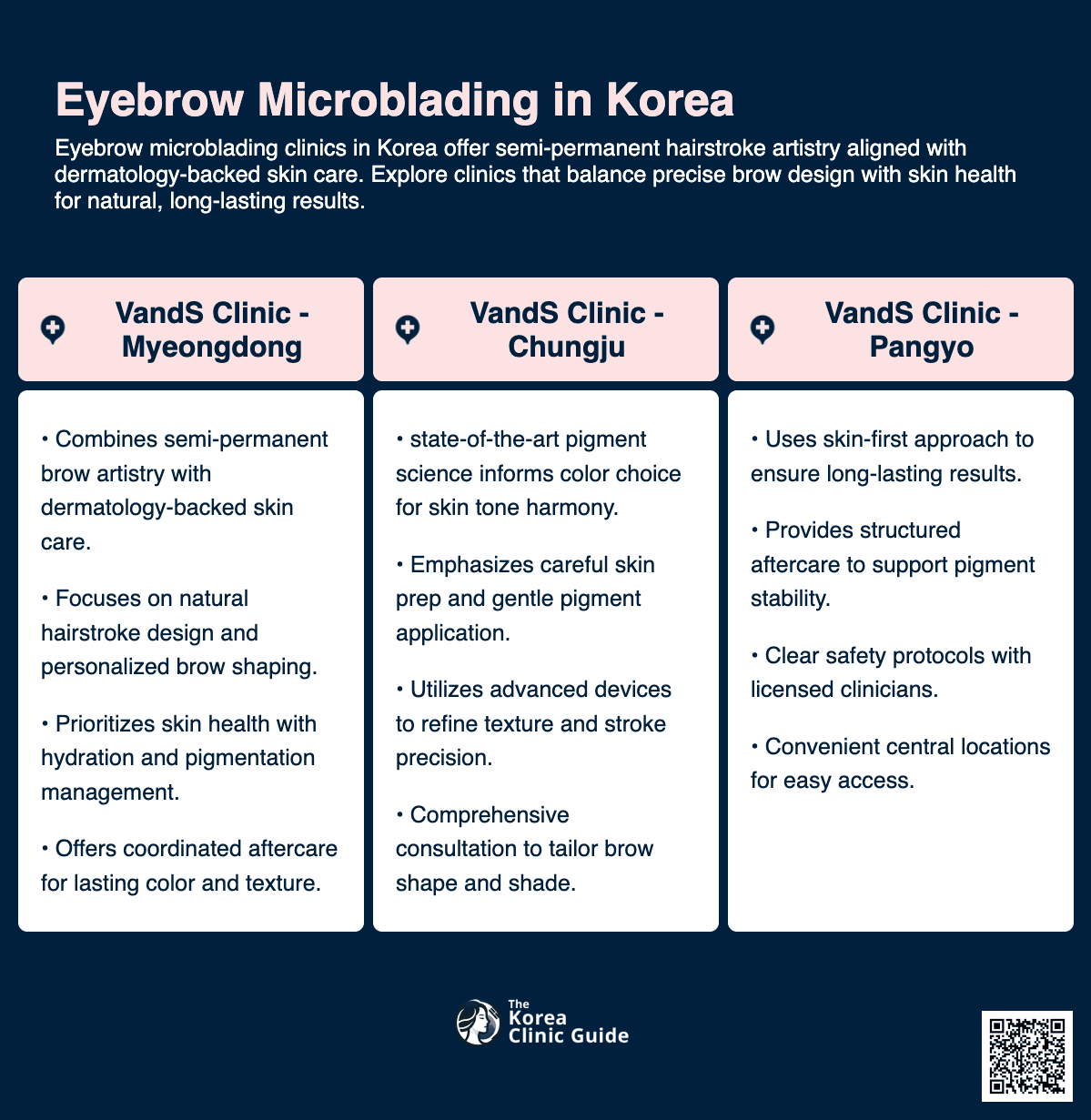
Listed below are the best clinics in Korea for eyebrow microblading:
| Clinic Name | Key Features | Special Techniques |
|---|---|---|
| VandS Clinic - Myeongdong | Semi-permanent makeup integrated with comprehensive dermatological care; personalized, professional services aligned to individual aesthetic goals; convenient central location (1 minute from Myeongdong Station Exit 5); whole-person approach with complementary treatments to optimize skin health | Skincare; acne/spot removal; whitening/freckles/redness/pigmentation care; laser lifting; skin boosters; precise hair removal; Botox/contour injections; fillers; thread lifting; IV therapy |
| VandS Clinic - Chungju | State-of-the-art technology with personalized, professional care; skin-first readiness for crisp strokes; pigment science guidance; faster, calmer recovery support; natural facial harmony; smart correction plans; regenerative skin quality focus; aesthetic precision in a medical setting; one-stop convenience in Chungju | Laser Therapy; Veloche Laser; Chemical Peels; Rejuran Healer; LDM (Local Dynamic Micro‑Massage); Shring Lift (HIFU); Inmode RF/Inmode Lift; pigment-targeting laser options |
| VandS Clinic - Pangyo | Comprehensive medical aesthetics with tailored plans by experienced medical professionals; skin readiness and recovery; facial harmony optimization; medical-grade safety; comprehensive aftercare ecosystem; permanent hair removal convenience | Zero Fat Injection (face/body); Botox/contour injections; fillers; thread lifting; laser lifting; skin boosters; permanent laser hair removal; IV therapy; acne/spot solutions; whitening/pigmentation correction |
VandS Clinic - Myeongdong
VandS Clinic - Myeongdong is an outstanding choice for eyebrow microblading in Korea because it combines semi-permanent makeup expertise with comprehensive, medically grounded skin care under one roof, just a minute’s walk from Myeongdong Station Exit 5. As a cosmetic and dermatological center, VandS Clinic Myeongdong Branch delivers professional, personalized services that align each client’s brow design with their aesthetic goals, while its wide range of complementary treatments helps optimize skin health for refined, natural-looking results: skincare and acne/spot removal to clarify the canvas, whitening/freckles/redness/pigmentation care to even tone, laser lifting and skin boosters to enhance texture and elasticity, and precise hair removal to define the brow area. For clients seeking broader facial balance, options like Botox/contour injections, fillers, and thread lifting can harmonize features around newly perfected brows, and supportive options such as IV therapy underscore the clinic’s whole-person approach. This integration of semi-permanent makeup with full-spectrum dermatologic care, delivered in a convenient central location with a focus on individualized outcomes, makes VandS Clinic - Myeongdong a premier destination for eyebrow microblading.
Find more about this clinic here: VandS Clinic - Myeongdong Website
VandS Clinic - Chungju
VandS Clinic – Chungju is a comprehensive dermatology and aesthetic center known for pairing state-of-the-art technology with personalized, professional care. The clinic’s portfolio spans skin rejuvenation and pigment management (Laser Therapy, Veloche Laser), texture refinement (Chemical Peels), regenerative injectables (Rejuran Healer), advanced skin-healing support (LDM ultrasonic micro-massage), and non-surgical lifting (Shring Lift HIFU, Inmode RF). This whole-face, skin-first expertise makes VandS Clinic an exceptional choice for anyone seeking beautiful, long-lasting eyebrow microblading outcomes through meticulous skin preparation, complementary treatments, and guided aftercare.
- Skin-first readiness for crisp strokes: Dermatology-led evaluations and appropriately timed texture-refining treatments create a balanced, calm canvas so microbladed hairstrokes adhere cleanly and age well.
- Pigment science you can trust: Deep experience with pigmentation issues via Laser Therapy and Veloche Laser informs precise advice on color selection, melanin behavior, and sun-care to support brow color stability.
- Faster, calmer recovery: LDM (Local Dynamic Micro‑Massage) uses ultrasonic waves to enhance regeneration and hydration, supporting comfort and healing after microblading when scheduled to protect fresh pigment.
- Natural facial harmony, not just great brows: Shring Lift (HIFU) and Inmode Lift subtly tighten the forehead and temple, complementing brow shape and arch so results look lifted and balanced without overdoing the brow design.
- Smart correction plans: If previous brow pigment needs softening, the clinic’s pigment-targeting laser options can be integrated into a staged fade-and-redisign plan for cleaner, more natural new brows.
- Regenerative skin quality: Rejuran Healer improves texture, elasticity, and hydration—key factors that help microbladed strokes look sharper and maintain definition over time.
- Aesthetic precision in a medical setting: From gentle chemical peels to advanced devices, every step is delivered in a professional clinical environment dedicated to safety, customization, and meticulous care around the delicate brow area.
- One-stop convenience in Chungju: Consultation, skin prep, complementary treatments, and follow-up are coordinated under one roof, streamlining your microblading journey and long-term maintenance.
Find more about this clinic here: VandS Clinic - Chungju Website
VandS Clinic - Pangyo
VandS Clinic Pangyo Branch is a comprehensive medical aesthetics destination in Korea, offering advanced treatments across injectables (Zero Fat Injection for face/body, Botox/contour injections, fillers with minimally invasive thread lifting), laser lifting, skin boosters, permanent laser hair removal, IV therapy, targeted acne and spot solutions, whitening and pigmentation correction, and full-spectrum skincare—delivered by experienced medical professionals using modern technology and tailored plans to help you look and feel your best.
- Why it’s the best clinic for eyebrow microblading candidates:
- Skin readiness and recovery: Skin boosters to improve hydration and elasticity, acne/spot care to calm inflammation, and pigmentation/reds correction to create an even-toned canvas—so microbladed strokes can look crisp and natural.
- Facial harmony optimization: Botox/contour injections, fillers, and thread or laser lifting to refine the upper face and support a lifted, defined look that complements beautifully shaped brows.
- Medical-grade safety: Treatments are performed by experienced medical professionals with modern technology—ideal for coordinating semi-permanent brow enhancements with high standards of hygiene and precision.
- Comprehensive aftercare ecosystem: Ongoing skincare, pigmentation management, and wellness-supporting IV therapy help maintain skin quality and color stability; permanent hair removal on face and body streamlines grooming around the brow area and beyond.
- Tailored treatment plans: Personalized strategies align procedures with your features, skin type, and timeline, enabling efficient, results-focused visits at the Pangyo branch.
Find more about this clinic here: VandS Clinic - Pangyo Website
Getting Eyebrow Microblading in Korea
Eyebrow microblading—often called semi-permanent brows or, in Korea, “반영구 눈썹” and “아트메이크업”—is a form of cosmetic tattooing that implants pigment into the superficial dermis to simulate natural eyebrow hair and shape. Korea is a popular destination due to its K-beauty emphasis on natural aesthetics, high procedural volume, and meticulous approach to hygiene and design.
What microblading is (and isn’t)
- Microblading uses a hand-held tool tipped with very fine, single-use micro-needles arranged as a slant or “U” blade to create micro-incisions that are filled with pigment, producing hair-like strokes.
- It is semi-permanent. Pigment gradually fades over 12–24 months and needs periodic refresh.
- Related techniques:
- Nano-stroking: machine-driven hair strokes with ultra-fine needles for very crisp, stable lines.
- Powder/ombre/mist brows (popular in Korea): a machine technique that creates a soft, powdered makeup effect.
- Combo brows: hair strokes in the front with powder shading through the body and tail.
Why Korea is a sought-after destination
- Aesthetic style: Korean brow design tends to favor clean, soft, natural lines (straight or soft-arched) that harmonize with facial proportions rather than bold, heavily defined shapes.
- Technique: High adoption of refined shading (mist/ombre) and nano-stroking for oily or sensitive skin types common among East Asian patients.
- Workflow discipline: Strong emphasis on mapping, symmetry, and photography; widespread use of digital brow-mapping tools.
Note on legality and setting: Under long-standing interpretations of Korean law, tattooing has been regarded as a medical act. As a result, many reputable services are performed within dermatology/plastic surgery clinics or in partnership with medical professionals. International visitors commonly choose medical clinics or medical-affiliated studios for standards in sterilization and complication management.
Choosing a clinic or practitioner
- What to look for:
- Medical setting or medical oversight; clear hygiene protocols; single-use needles; barrier protection; documented sterilization.
- Portfolio with healed results (not just immediately post-procedure photos).
- Pigment transparency: brand, SDS, lot numbers recorded in your chart.
- Informed consent in your language; patch testing availability if indicated.
- Clear aftercare instructions and access for questions/complications.
- Questions to ask:
- What technique(s) do you recommend for my skin type and goals (strokes vs powder vs combo)?
- How many procedures like mine do you perform monthly? May I see healed results on similar skin tones?
- What is included in the price (touch-up, aftercare kit, follow-up)?
- What are your sterilization protocols? Are blades 100% single-use?
- What pigments do you use, and how do you manage color stability over time?
- How do you handle complications or dissatisfaction?
- Red flags:
- No medical questionnaire or consent form; reluctance to discuss sterilization.
- Reuse of tools/needles or unsealed equipment.
- Only immediate “after” photos; lack of healed outcomes.
- Guarantees of “permanent” results or one-size-fits-all brows.
Pre-procedure consultation and planning
- Medical review: Disclose medical conditions, medications (especially anticoagulants), allergies, previous cosmetic tattoos, tendency to scar, and skin sensitivities.
- Patch testing: Sensitivity test for pigments and topical anesthetic 48–72 hours prior is often offered, particularly for sensitive skin or allergy history.
- Aesthetic design:
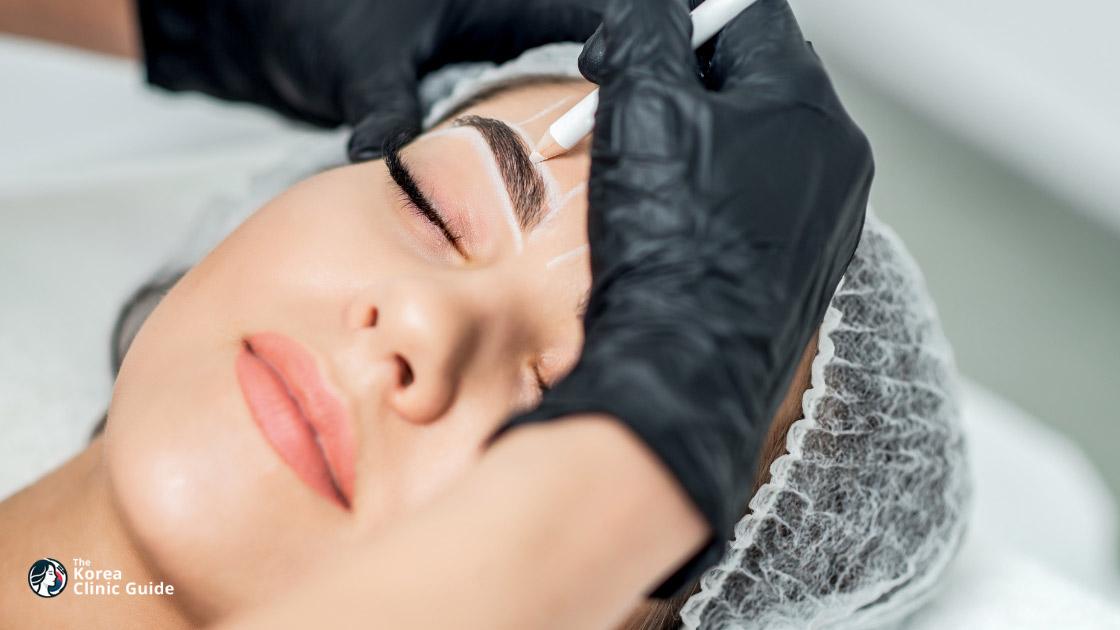
- Facial analysis, brow mapping (calipers and/or digital apps), and photography.
- Consider face shape, brow bone structure, natural hair direction, and desired density.
- For many Korean-style results: straighter brows with a gentle, natural head and softened tails.
- Skin type assessment:
- Oily or very sebaceous skin may blur fine hair strokes; powder/mist or combo brows often yield better longevity and crispness.
- Fitzpatrick III–V (common in East Asians) may have higher risk of post-inflammatory hyperpigmentation (PIH); practitioners adjust pressure and pigment load accordingly.
- Pre-visit instructions (typical):
- Avoid alcohol, caffeine, aspirin/ibuprofen, fish oil, and intense exercise for 24–48 hours before the appointment (to reduce bleeding).
- Stop retinoids/strong acids near the brows 1–2 weeks pre-procedure.
- Avoid brow tinting/waxing/threading for several days.
- Space neuromodulators (Botox) and fillers away from your appointment by 2–4 weeks.
How the procedure is performed
- Duration: 2–3 hours total, including mapping and consents; the microblading pass itself often takes 45–90 minutes.
- Anesthesia: Topical anesthetics (lidocaine/tetracaine; sometimes with epinephrine to minimize bleeding). A secondary numbing gel may be applied after the first pass.
- Sterility and setup:
- Single-use, pre-sterilized microblades and cartridges, barrier films on surfaces, medical-grade disinfectants.
- Hand hygiene, disposable gloves, and proper sharps/biowaste disposal; many clinics use autoclaves for any reusable components and maintain spore-testing logs.
- Technique:
- The skin is cleansed; the mapped outline is lightly marked.
- The artist creates micro-incisions following natural hair direction and growth patterns, depositing pigment into the superficial papillary dermis (a few tenths of a millimeter deep).
- Wipe, evaluate, and repeat in layers for density and symmetry.
- For combo or mist brows, a low-power tattoo machine softly shades the brow body and tail for a powder effect.
- Pigments:
- High-quality, cosmetic-grade pigments (often iron oxides, carbon black, titanium dioxide blends) matched to hair and skin undertones.
- Documentation of brand, color, lot number, and SDS (safety data sheet) is best practice.
Typical discomfort is mild to moderate; with numbing, many patients rate pain as low to moderate and tolerable.
Aftercare and healing timeline
- First 24–48 hours:
- Keep the area clean and mostly dry; some clinics advise gentle blotting of lymph fluid with sterile gauze.
- Depending on protocol, a thin film of a recommended ointment may be applied; others prefer “dry heal.” Follow your clinic’s specific instructions.
- Days 3–7:
- Flaking/peeling begins. Do not pick or scratch; this can pull out pigment and increase scarring risk.
- Avoid makeup on brows, heavy sweating, saunas, swimming, and sun exposure.
- Days 7–14:
- Brows may look patchy or “too light” (the “ghosting” phase) as the epidermis renews. Color gradually returns as the skin settles.
- Weeks 4–8:
- Final color and shape emerge; expect about 30–50% lightening from day 1 intensity.
- A perfecting session (touch-up) is typically scheduled at 6–8 weeks to adjust density, color, or shape.
- Ongoing:
- Daily SPF after healing to slow fading.
- Avoid applying retinoids, strong acids, or exfoliants directly over the brows.
For international visitors planning a trip to Korea
- Timing: Plan to remain in Korea long enough for at least the initial healing check, or arrange a virtual check-in; the perfecting touch-up is ideally at 6–8 weeks. If you cannot return, confirm how a local practitioner will handle your touch-up.
- Activities: Avoid saunas, jjimjilbangs, intense workouts, and swimming for 7–10 days post-procedure.
- Communication: Request English (or your language) consent/aftercare forms; bring translation support if needed.
- Payments and scheduling: Many clinics require deposits and offer online booking; confirm what’s included (touch-up, aftercare kit, revisions).
What Is Eyebrow Microblading?
Eyebrow microblading is a form of semi‑permanent cosmetic tattooing designed to create the appearance of fuller, well‑defined eyebrows by implanting pigment into the upper layer of the skin in fine, hair‑like strokes. Unlike traditional body tattooing, which places ink deeper into the dermis for permanence, microblading deposits specialized pigments more superficially so the results fade gradually over time, typically requiring periodic maintenance.
In South Korea, microblading falls under the broader category of semi‑permanent makeup (also called cosmetic tattooing or “PMU”). Tattooing has historically been interpreted as a medical act under Korean law, and high‑quality services are often delivered in clinical or medical‑grade aesthetic settings with strong emphasis on hygiene, sterility, and natural‑looking results aligned with K‑beauty aesthetics.
Key concepts behind the procedure:
- Purpose: To enhance eyebrow shape, symmetry, and density by mimicking natural hair growth patterns.
- Technique: A manual hand tool fitted with a configuration of ultra‑fine needles (“microblade”) creates micro‑incisions that carry pigment into the skin, producing crisp strokes that resemble individual hairs.
- Semi‑permanence: Placement in the upper dermis, the body’s immune response, skin turnover, and UV exposure contribute to gradual fading. Results generally last 12–24 months before refreshers are needed, though longevity varies by skin type, lifestyle, and pigment choice.
How microblading works at the skin level:
- Skin layers: The epidermis renews quickly; the papillary dermis beneath it is more stable. Microblading aims for pigment placement around the upper dermis so strokes remain visible yet not permanent.
- Pigments: Most artists use cosmetic‑grade pigments (often iron oxides and other approved compounds) formulated to fade predictably. Color selection considers undertone and the Fitzpatrick skin type scale to reduce unwanted color shifts (e.g., ashy or reddish tones) as fading occurs.
- Stroke design: Artists align strokes with natural hair direction, density, and growth patterns. Korean styles commonly prioritize soft, straight or gently arched “natural” brows with a lighter front and more definition from the body to the tail.
Who may benefit:
- People with sparse, asymmetrical, over‑plucked, or thinning brows (including age‑related hair loss).
- Those seeking a low‑maintenance, natural enhancement that reduces daily makeup time.
- Individuals with hair loss from medical conditions (e.g., alopecia areata) may consider microblading after individualized medical evaluation.
Who may not be suitable or may require extra caution:
- Active skin conditions at the brow area (dermatitis, eczema, psoriasis, acne flares).
- History of keloids or hypertrophic scarring.
- Uncontrolled diabetes, bleeding disorders, significant immunosuppression, or current use of isotretinoin.
- Pregnancy and early postpartum/breastfeeding periods are often deferred.
- Known allergies to pigments or topical anesthetics (e.g., lidocaine).
- Fitzpatrick IV–VI skin types can be good candidates but may require adjusted techniques and pigment choices to minimize post‑inflammatory hyperpigmentation or ashy fading.
- Very oily skin or large pores can blur fine strokes; alternatives like microshading (powder/ombre brows) may yield better definition and longevity.
What happens during a typical microblading course:
- Consultation and assessment
- Review of medical history, medications, and prior cosmetic tattoos.
- Discussion of goals, face shape, brow symmetry, and lifestyle (e.g., sun exposure, exercise).
- Shade selection based on hair color, skin undertone, and long‑term fading behavior.
- Brow mapping and design
- Measurements and proportional guidelines to outline an individualized brow shape.
- Pre‑drawn design previewed and refined with the client for symmetry and style (K‑beauty looks often emphasize soft, balanced contours).
- Preparation and anesthesia
- Skin cleansing and antisepsis.
- Topical anesthetics (e.g., lidocaine combinations) may be applied for comfort.
- Single‑use needles and sterile, disposable consumables are standard.
- Pigment implantation
- The artist uses a microblade to create controlled, shallow strokes aligned with hair growth, depositing pigment along each micro‑incision.
- Multiple passes may be made to achieve density while minimizing trauma.
- Immediate post‑procedure
- Brows appear darker and more defined initially; mild redness and tenderness are common.
- A thin film of lymphatic fluid can form; light scabbing and flaking occur as the skin heals.
- Touch‑up session
- Typically scheduled 4–8 weeks later to perfect shape, adjust tone, and reinforce strokes after initial healing and pigment settling.
Healing and what to expect:
- Early phase (days 1–7): Color looks 20–40% darker; swelling and light scabbing can occur. As the epidermis renews, flaking reveals lighter strokes.
- Mid phase (weeks 2–4): Brows may look lighter or “patchy” as pigment resettles and the skin normalizes.
- Maturation (weeks 4–8): True color and stroke clarity emerge. Final adjustments are usually made at the touch‑up.
- Longevity: Sun exposure, exfoliating treatments, skin type, and immune response influence fading. Maintenance refreshers are commonly done every 12–24 months.
Potential risks and complications:
- Infection if aseptic technique is not followed (rare in reputable clinics using strict sterilization).
- Allergic contact dermatitis to pigments or topical anesthetics; patch testing may be considered for sensitive individuals.
- Inflammatory reactions or foreign body granulomas, especially with deeper or improper pigment placement.
- Color shifts over time (e.g., cool ashiness or warm undertones) influenced by pigment chemistry, UV exposure, and skin biology.
- Scarring or keloid formation in predisposed individuals.
- Uneven retention, blurred strokes (more likely in oily or sebaceous skin), or asymmetry requiring correction.
Variations and related techniques:
- Microshading (powder/ombre brows): Uses a stippled or machine‑shaded gradient for a soft “makeup” effect; often better for oily skin or to camouflage old work.
- Combination brows: Hair‑like strokes in the front with shading through the body and tail.
- Nanoblading/nanostrokes: Uses ultra‑fine blades or machine nano‑needles for very delicate strokes.
- Machine hairstrokes: Achieves a similar hair‑stroke look using a digital device instead of a manual microblade.
- Traditional tattooed brows: Deeper placement with more permanent results but less natural fading and greater risk of long‑term color change.
Provider, setting, and quality considerations in Korea:
- Regulatory context has traditionally treated tattooing as a medical act; reputable services often operate with medical oversight and robust infection‑control protocols.
- Look for evidence of single‑use, sterile needles; medical‑grade disinfection; proper sharps disposal; and thorough consent and aftercare information.
- Training and portfolio quality matter: Consistency of fine strokes, color selection aligned with undertone, and healed‑result photographs are more informative than immediate post‑procedure images.
- For clients with medical conditions or on complex medications, collaboration between the artist and a healthcare professional can help tailor timing, anesthetic choices, and risk mitigation.
Who is Eyebrow Microblading for?
- People with naturally sparse, thin, or patchy eyebrows who want fuller-looking brows
- Those who overplucked or over-waxed and have limited regrowth
- Individuals with hair loss from conditions like alopecia areata, postpartum shedding, or chemotherapy (after medical clearance)
- Anyone with asymmetrical brows seeking a more balanced, defined shape
- People with scars or gaps in the brow area that interrupt hair growth
- Busy professionals and students who want low-maintenance, “wake-up-and-go” brows
- Athletes, swimmers, and people in humid climates who want sweat- and smudge-resistant results
- Individuals sensitive or allergic to conventional brow makeup who want a semi-permanent alternative
- People with visual or dexterity challenges that make daily makeup application difficult
- Men seeking subtle, natural-looking enhancement to fill in sparse areas
- Those aiming for a soft, natural aesthetic that complements Korean beauty trends
- Individuals wanting to refresh faded brow tattoos or correct minor shape issues from previous PMU
- People who prefer a semi-permanent option to “try on” a new brow shape before committing to something longer-lasting
- Clients with realistic expectations who value professional mapping and customization for their face shape and skin tone
Cost of Eyebrow Microblading in Korea
Below are typical consumer price ranges for eyebrow microblading, using South Korea as the baseline. Conversions are approximate and assume roughly 1 USD ≈ 1,300 KRW; actual prices vary by city, artist experience, and what’s included (initial session vs. touch-up).
-
South Korea (baseline)
- Typical: ₩250,000–₩700,000 (about $190–$540)
- Premium/celebrity artists: ₩700,000–₩1,200,000+ ($540–$920+)
- Notes: Many clinics bundle a 4–8 week touch-up; Seoul’s top-tier studios price at the higher end.
-
United States
- Typical: $400–$900
- Premium/celebrity artists: $1,000–$2,000+
- Relative to Korea: Generally higher, about 1.3×–2.5× Korea’s mainstream prices; major metros (NYC/LA) skew to the top end.
-
Canada
- Typical: CAD 450–1,000 (≈ $330–$750)
- Premium: CAD 1,200–2,000 (≈ $900–$1,500)
- Relative to Korea: Similar to the U.S., commonly higher than Korea.
-
United Kingdom
- Typical: £250–£600 (≈ $320–$760)
- Premium: £700–£1,200 (≈ $890–$1,520)
- Relative to Korea: Often higher than Korea, especially London and top-name artists.
-
Australia
- Typical: A$500–A$1,200 (≈ $320–$780)
- Premium: A$1,500–A$2,500 (≈ $980–$1,630)
- Relative to Korea: Frequently higher; big-city studios price at the top end.
-
Singapore
- Typical: S$400–S$1,200 (≈ $290–$880)
- Premium: S$1,500–S$2,500 (≈ $1,100–$1,850)
- Relative to Korea: Similar to or higher than Korea; premium salons trend high.
-
Japan
- Typical: ¥40,000–¥100,000 (≈ $270–$680)
- Premium: ¥120,000–¥200,000 (≈ $820–$1,360)
- Relative to Korea: Overlaps with Korea’s range; premium pricing can be higher.
-
Thailand
- Typical: ฿5,000–฿12,000 (≈ $135–$330)
- Premium: ฿15,000–฿25,000 (≈ $410–$680)
- Relative to Korea: Typically lower than Korea for mainstream studios; premium tiers can overlap.
-
United Arab Emirates (e.g., Dubai)
- Typical: AED 1,200–AED 3,000 (≈ $330–$820)
- Premium: AED 3,500–AED 5,500 (≈ $950–$1,500)
- Relative to Korea: Often higher, particularly in luxury salons.
-
Germany
- Typical: €300–€700 (≈ $320–$750)
- Premium: €800–€1,200 (≈ $860–$1,290)
- Relative to Korea: Comparable to or higher than Korea; premium artists trend higher.
-
Brazil
- Typical: R$800–R$2,000 (≈ $150–$380)
- Premium: R$2,500–R$4,500 (≈ $480–$860)
- Relative to Korea: Often lower for mainstream services; premium can overlap.
What affects price across countries:
- Artist expertise and portfolio, clinic brand, and sanitation standards
- City/area cost of living and demand
- Complexity (virgin brows vs. correction/cover-ups), technique (microblading vs. combo/ombre), and pigment selection
- What’s included: consultation, initial session, 1st touch‑up, and additional revisions or aftercare products
Alternatives to Eyebrow Microblading
1) Powder/Ombre Brows (Microshading)
Powder brows use a PMU device to implant tiny dots of pigment, creating a soft, shaded “makeup” effect that is lighter at the front and deeper toward the tail.
- How it differs from microblading: Instead of cutting hair-like strokes with a blade, microshading builds a pixelated tint. It’s generally gentler on the skin and more stable on oily or sensitive skin types, where microbladed strokes can blur.
- Ideal candidates: Anyone wanting a fuller, softly defined brow; particularly good for oily or mature skin, or those who wear brow makeup daily.
- Longevity and upkeep: About 1.5–3 years with a perfecting session at 6–8 weeks; color refresh every 12–24 months.
- Comfort and downtime: Mild discomfort; initial healing 7–10 days with light flaking.
- Risks and considerations: As with any tattooing/PMU, risk of infection, allergic reaction to pigments, or color shift over time. Choose single-use needles and medical-grade pigments.
- In Korea: Common in dermatology and aesthetic clinics. Typical cost in major cities: roughly 300,000–700,000 KRW, varying by artist experience and clinic setting. Note: Tattooing/PMU in Korea is regulated as a medical act; verify the provider’s credentials and hygiene protocols.
2) Nano Brows (Machine Hair-Strokes)
Nano brows use an ultra-fine single needle and a digital PMU machine to create individual hair-like strokes with less trauma than manual microblading.
- How it differs from microblading: Produces similar “hair-stroke” realism but uses a machine rather than a blade, allowing more controlled depth and potentially less scarring risk.
- Ideal candidates: Those with sparse or patchy brows who want a natural, hair-by-hair look; suitable for thinner or delicate skin that doesn’t tolerate blading well.
- Longevity and upkeep: About 1.5–3 years; touch-up at 6–8 weeks, then color boosts as needed every 12–24 months.
- Comfort and downtime: Comparable to powder brows; minimal bleeding; typical healing in 7–10 days.
- Risks and considerations: Similar to other PMU methods (infection, pigment reactions, fading). Results rely heavily on artist skill and skin type.
- In Korea: Increasingly available at PMU-specialized medical aesthetics. Expect 400,000–900,000 KRW depending on complexity (full reconstruction vs. partial fill) and practitioner expertise.
3) Brow Lamination with Tint
Brow lamination uses a gentle chemical process to relax and set your natural brow hairs into a uniform, lifted shape. Adding a tint deepens color and increases the appearance of density—no tattooing involved.
- How it differs from microblading: Non-invasive and temporary; reshapes the hairs you already have rather than implanting pigment under the skin.
- Ideal candidates: People with adequate natural brow hair that grows downward, is unruly, or has gaps that can be brushed over; great for testing a fuller look before committing to PMU.
- Longevity and upkeep: Typically 6–8 weeks. Maintenance sessions are quick and can be paired with periodic tinting.
- Comfort and downtime: No needles; immediate results with minimal downtime. Avoid moisture and heavy sweating for the first 24 hours.
- Risks and considerations: Possible skin or eye irritation and hair dryness if over-processed. Ask for a patch test, avoid over-lamination, and use nourishing brow conditioners between sessions.
- In Korea: Widely offered at salons and some clinics; typical price range 70,000–150,000 KRW depending on location and whether tinting/shaping is included.
Conclusion
In summary, eyebrow microblading is a semi-permanent technique that can deliver natural-looking, hair-like strokes, and Korea offers a compelling setting to get it done thanks to skilled artists, rigorous hygiene standards, and tech-forward clinics; still, it’s essential to confirm you’re a good candidate (for example, not pregnant, keloid-prone, or managing active skin conditions) and to follow professional guidance on shape, pigment, and aftercare. Expect pricing that typically falls within the mid-range compared to Western markets, with costs varying by artist reputation, clinic location, and whether a touch-up is included. If you’re unsure whether microblading suits your skin type, lifestyle, or budget, consider alternatives such as powder/ombre brows, microshading, nanoblading, brow lamination, tinting, makeup, or even a brow transplant for a more permanent result. A thorough in-person consultation at a reputable Korean clinic remains the best way to assess candidacy, align expectations, and choose the right path for your brows.
Frequently Asked Questions
Related Blogs
Laser Microblading Removal: Why Korea Excels and How Costs Compare Globally
Discover the costs and intricacies of laser microblading removal in Korea, a popular procedure for those seeking to erase semi-permanent eyebrow tattoos. Learn about the factors influencing pricing, the latest technology, and what to expect during the removal process.
Updated: Jun 7, 2026
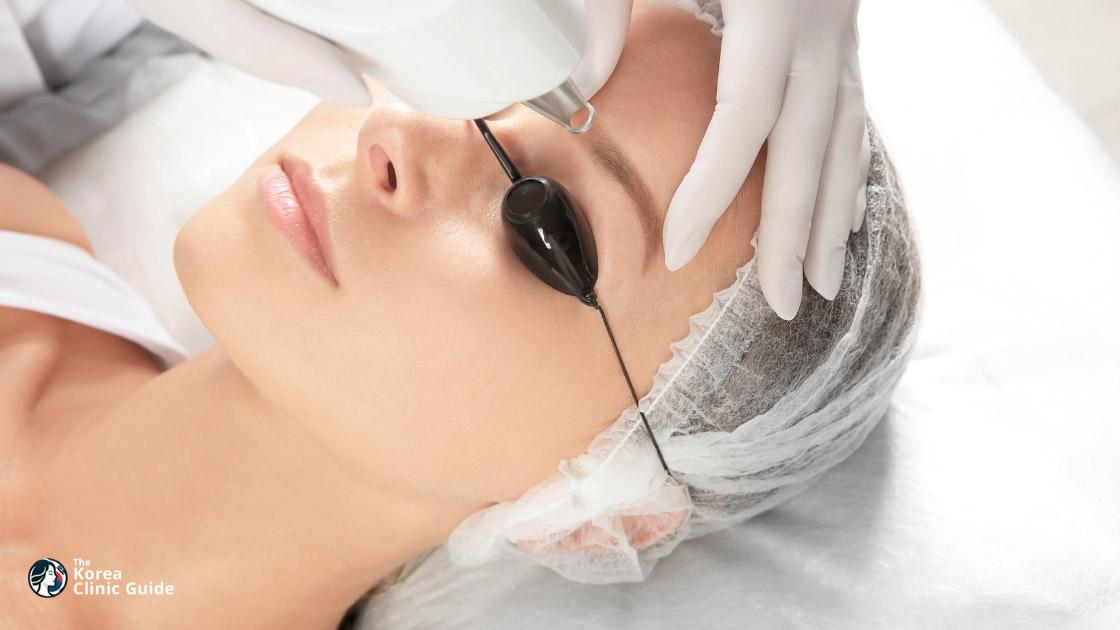
Laser Microblading Removal in Korea: Methods, Color Changes, Recovery and Travel Planning
Laser microblading removal uses pigment-selective Nd:YAG laser treatment, often with a test spot for uncertain pigments, and typically requires several sessions at least six weeks apart. The article covers candidate screening, travel planning, procedure steps, recovery, aftercare, risks, alternatives, and documentation for international follow-up.
Updated: Jun 7, 2026
Discover Why Korea's Microblading Costs Outshine the USA, Turkey, and Thailand: A Comprehensive Price Guide
Discover the latest trends in microblading in Korea and explore the costs associated with this popular beauty treatment. Learn how prices vary across regions and what factors influence the final expense, ensuring you're informed before booking your appointment.
Updated: Mar 8, 2026
Microblading in Korea: Methods, Healing, Risks, and Travel Planning
Microblading is cosmetic eyebrow tattooing that uses manual strokes, shading, combination work, or machine techniques to camouflage sparse brows; it does not regrow hair or treat eyebrow loss. In Korea, costs range from ₩600,000–₩2,000,000 (about US$400–$1,500), with guidance on provider verification, healing, travel planning, aftercare, and touch-up timing.
Updated: Mar 7, 2026
Clinics offering Eyebrow Microblading

Seojin Plastic Surgery Clinic Korea: Pioneering Advanced Cosmetic Procedures for Personalized Aesthetic Transformation
Apgujeong

VandS Dermatology Clinic - Dongtan, Korea: Comprehensive Skin Care and Cosmetic Procedures for Youthful, Radiant Skin
Hwaseong
VandS Clinic - Pangyo: Leading Advanced Medical Procedures in Korea for Enhanced Beauty and Health
Pangyo
VandS Clinic - Hongdae: Comprehensive Beauty and Skincare Procedures in Korea for Radiant Skin and Confident You
Hongdae