Medical Tourism Blog
Scalp Tattoo in Korea: SMP Types, Sessions, Recovery, Risks, and Travel Planning
Table of contents
- Scalp Tattoo at a Glance
- What Is a Scalp Tattoo?
- Who Is a Good Candidate for a Scalp Tattoo?
- What Are the Different Types of Scalp Tattoo?
- Why Visit Korea for a Scalp Tattoo?
- Key Information for International Patients
- Which Are the Best Clinics in Korea for Scalp Tattoo?
- Scalp Tattoo From Start to Finish
- Alternatives to a Scalp Tattoo
- How Can I Prepare for a Scalp Tattoo?
- Aftercare Advice
Considering treatment in Korea? Everything you need to know e.g. — how to avoid scams, visas, interpreters, recovery tips — in our Medical Tourism Master Guide. Plan with confidence in minutes, not weeks!
Last updated: September 2026
Scalp Tattoo at a Glance
- What it does — Scalp micropigmentation (SMP) places follicle-like pigment dots to simulate a buzz cut, reduce scalp show-through in thinning hair, or camouflage stable scars; it does not regrow hair or treat hair-loss disease.
- Best candidates — It suits stable pattern hair loss, diffuse thinning, or fully healed FUE/FUT and other scars, especially for people comfortable maintaining a closely clipped style or using pigment as a density illusion.
- Sessions and Korea stay — Initial treatment commonly involves three staged sessions; plan about 14–21 days in Korea if sessions are weekly. A refinement about one month later may require a return trip or qualified follow-up at home.
- Recovery and result timing — Redness and tenderness usually settle within hours to 1–2 days, but the scalp must heal like a fresh tattoo. Dots look darker initially; assess pigment retention and refinement needs around 3–4 weeks after the final session.
- Long-term maintenance — Pigment can fade or shift in tone over years, so touch-ups may be needed. Long-term durability is not predictable for every pigment, skin type, scalp condition, or treatment plan.
- Key limitation and risk — SMP cannot reproduce growing hair, texture, or movement, and poor depth or design can cause blurred dots, patchiness, an overly dark result, or an unnatural hairline that is difficult to correct. Defer treatment for active scalp disease or unexplained hair loss.
- Korea-specific check — Korea’s Tattooist Act is scheduled to take effect on October 29, 2027, so travelers in 2026 should verify a provider’s current lawful practice status, sterile single-use needle protocol, pigment documentation, English aftercare, and complication follow-up plan.
What Is a Scalp Tattoo?
A scalp tattoo, also called scalp micropigmentation, places tiny pigment dots on the scalp to resemble closely clipped hair follicles or reduce contrast from thinning hair or stable scars. It provides cosmetic camouflage for a fuller-looking scalp or buzz-cut appearance but does not regrow hair or treat hair loss. It is a minimally invasive cosmetic tattooing procedure performed in stages.
Who Is a Good Candidate for a Scalp Tattoo?
- Stable pattern hair loss — Good candidates have stable androgenetic alopecia and want a closely clipped “buzz-cut” effect or less visible scalp contrast; scalp micropigmentation (SMP) is camouflage, not hair restoration.
- Diffuse thinning — Low-contrast pigment between existing hairs can make show-through at the part line, crown, temples, or top of the scalp less noticeable.
- Stable scars — Suitable FUE, FUT, surgical, traumatic, or burn scars can be camouflaged once fully healed and stable, although scar tissue retains pigment less predictably than normal scalp.
- Post-transplant density enhancement — SMP can complement a hair transplant after growth and density have stabilized, including camouflage of transplant scars.
- Realistic maintenance expectations — Good candidates accept staged sessions, healing-related pigment loss, possible future touch-ups, and the fact that pigment can fade or change tone over years. Small studies support short-term cosmetic improvement, but do not establish uniform long-term durability or outcomes for every scalp type and pigment plan.SMP is an optical camouflage technique rather than a hair-regrowth treatment
Avoid or defer treatment with an active scalp infection, open wound, sunburn, folliculitis, dermatitis, substantial psoriasis or eczema flare, or sudden, painful, itchy, scaly, patchy, or rapidly progressive unexplained hair loss. Active or unstable alopecia areata and inflammatory or scarring alopecia need diagnosis, treatment, and stability before cosmetic camouflage. A known keloid tendency, prior tattoo-pigment allergy, uncontrolled diabetes, major immunosuppression, bleeding disorders, or anticoagulant or antiplatelet treatment requires individualized medical review; never stop prescribed medicines independently. Defer elective SMP during pregnancy or breastfeeding because procedure-specific safety data are inadequate, and wait until hair-transplant growth and density stabilize—commonly about 11–12 months—before post-transplant pigmentation. A sharply defined bald patch next to long, dense hair can be difficult to blend naturally with dots alone; a transplant, hair system, or temporary concealer can be a better anatomical fit.
What Are the Different Types of Scalp Tattoo?
SMP plans differ by the visual problem being addressed. The same technique does not suit a fully shaved scalp, diffuse thinning, and a fibrotic scar.
- Shaved-head or buzz-cut SMP — Follicle-like dots are distributed across bald scalp to simulate a closely clipped hairstyle. A conservative, age-appropriate frontal hairline is essential because the pigment is long-lasting.
- Density SMP — Subtle dots are placed between existing hairs to reduce scalp-to-hair color contrast. This approach suits diffuse thinning but requires continued hair length and careful shade matching.
- Hairline and temple enhancement — Pigment creates a restrained visual refinement of a receded or thinned frontal hairline. It cannot create growing hair or reproduce the movement and texture of transplanted hair.
- Scar-camouflage SMP — Pigment reduces contrast in stable FUE, FUT, surgical, traumatic, or burn scars. Use a staged approach because thick, pale, raised, or fibrotic scars can retain pigment unevenly.
- Transplant-adjunct SMP — SMP can make transplanted hair appear denser or reduce the visibility of a donor or recipient-area scar after the transplant result has matured.
Why Visit Korea for a Scalp Tattoo?
Korea has a large international medical-services infrastructure, but SMP is cosmetic tattooing rather than hair-restoration surgery. Do not assume that a future tattoo licensing framework is already operating: Korea’s Tattooist Act is scheduled to take effect on October 29, 2027, not in September 2026. Verify the provider’s current lawful practice status, hygiene protocol, complication pathway, and ability to provide records in English.The enacted Tattooist Act sets out future licensing, registration, hygiene, record-keeping, adverse-event reporting, and insurance provisions
- Local clinical literature — A 2024 Seoul retrospective study examined 40 women with female-pattern hair loss who had undergone either hair transplantation or SMP. It assessed factors associated with treatment selection, not comparative success, so it does not show that Korean SMP is superior to transplantation or that outcomes in Korea are better.Read the Seoul study and its limitations
- Staged technical planning — Published SMP work emphasizes that needle depth, angle, pigment behavior, scalp resistance, and dot distribution affect retention and diffusion. Ask the practitioner to explain their plan for conservative layering rather than expecting maximum darkness at the first session.A technical clinical report describes the consequences of overly superficial and overly deep pigment placement
- International-care planning — Korea’s national Medical Korea platform provides a central resource for international medical visitors, but confirm directly whether a specific SMP provider offers an English consultation, written aftercare, pigment documentation, and remote follow-up.Medical Korea’s international-patient platform
- Provider verification matters — Request sterile single-use needle practices, pigment brand and lot documentation where available, baseline photographs, a written design agreement, and a clear plan for infection, allergy, or poor retention. These safeguards matter more than destination marketing because SMP protocols and long-term outcomes are not internationally standardized.
Key Information for International Patients
- Minimum stay — Plan about 14–21 days to complete an initial three-session course when sessions are scheduled weekly. A published series used three weekly treatments followed by a touch-up one month later, so a final refinement can require a return trip or coordination with a qualified practitioner at home.Published SMP scheduling and healing observations
- Repeat visits — Confirm the number, spacing, and cost of initial sessions and touch-ups before paying a deposit. Do not assume a three-session plan includes a one-month refinement.
- Flying home — No validated SMP-specific no-fly interval exists. Because SMP is normally a local outpatient treatment, base flight timing on the ability to keep the fresh tattoo clean, dry as directed, protected from friction and sun, and within reach of medical care if a reaction develops.
- Downtime and itinerary — Pinpoint redness and tenderness usually settle within hours to 1–2 days, but each treatment creates a healing tattoo wound. Schedule quiet indoor activities rather than swimming, beach visits, sauna, strenuous sightseeing, or gym sessions immediately after treatment.
- Remote follow-up — Before departure, obtain English written aftercare, session photographs, direct contact details, a pigment brand/color/lot record where available, and instructions for sending healing photographs. Arrange where to seek medical assessment at home for infection or an allergic reaction.
Travel note: Build flexibility into flights and accommodation. A delayed or poorly retained result is not a reason to add unplanned pigment immediately; the scalp needs the provider’s stated healing interval before refinement is judged.
Which Are the Best Clinics in Korea for Scalp Tattoo?
Listed below are some of the best clinics in Korea for scalp tattoo.
1. Seojin Plastic Surgery Clinic
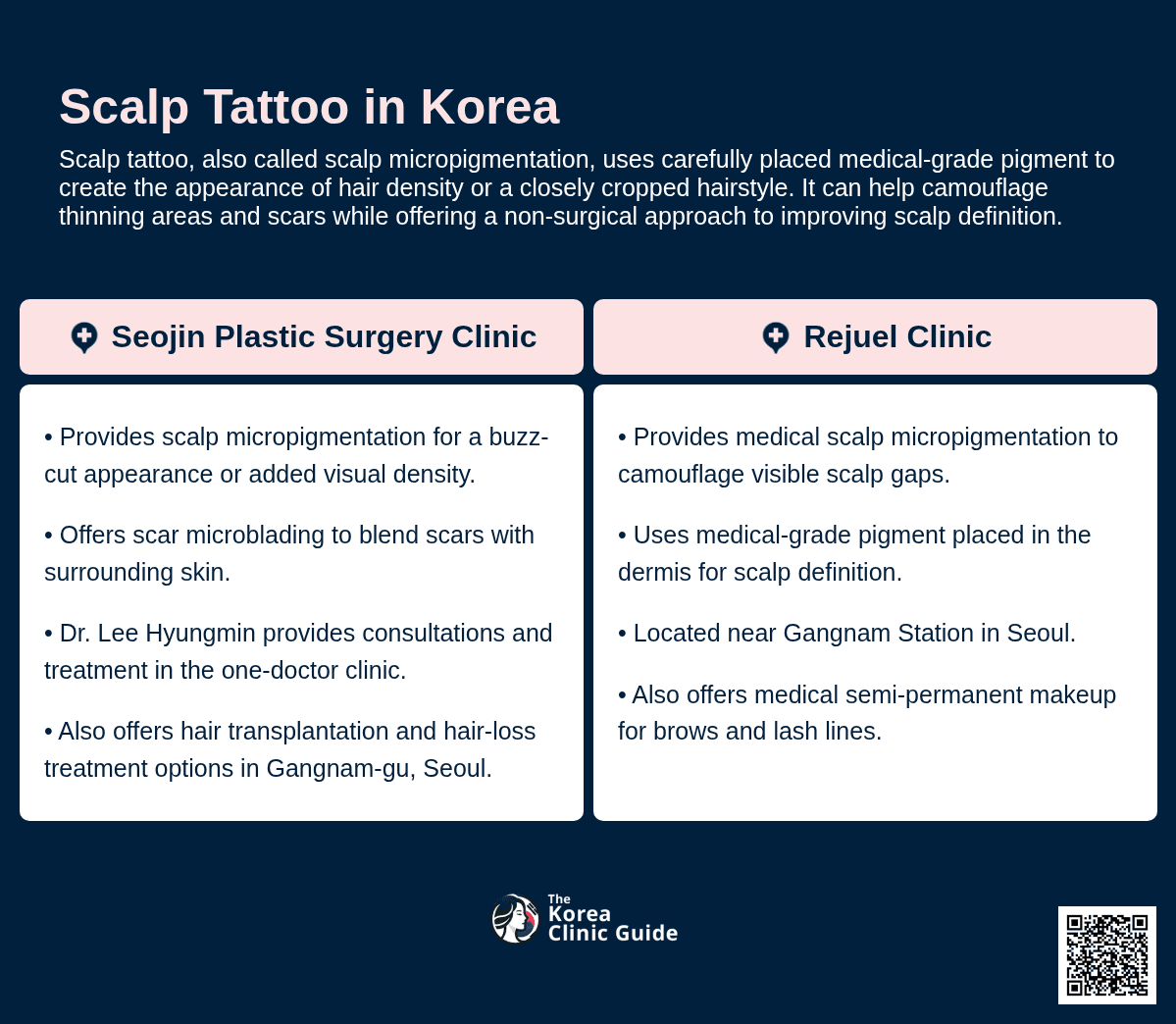
You may consider Seojin Plastic Surgery Clinic for scalp tattooing because it offers scalp micropigmentation to create the look of a closely cropped haircut or add visual density in thinning areas, with care provided end to end by Dr. Lee Hyungmin in a one-doctor clinic setting.
- URL: Seojin Plastic Surgery Clinic Website
- Location: Gangnam-gu, Seoul
- Scalp micropigmentation:
- Uses tattooing to mimic a short buzz-cut appearance or increase the appearance of density in thinning areas.
- Also offers scar microblading to help blend scars with surrounding skin.
- Your care team:
- Dr. Lee Hyungmin provides consultations and care throughout treatment as the clinic’s single doctor.
- Dr. Lee has more than 16 years of experience and has been recognized among the 100 Good Doctors in Korea.
- Related hair services:
- Hair transplantation for women and men.
- Hair-loss treatment options.
2. Rejuel Clinic
You can expect medical scalp micropigmentation at Rejuel Clinic, where medical-grade pigment is placed in the dermis to camouflage scalp gaps and restore visual definition. The clinic is located at Gangnam Station and is described as dermatologist-led.
- URL: Rejuel Clinic Website
- Location: Seoul
- Procedure details:
- Medical micropigmentation can be used on the scalp to camouflage gaps.
- Medical-grade pigment is placed in the dermis.
- Related micropigmentation: Medical semi-permanent makeup is also available for brows and lash lines.
Scalp Tattoo From Start to Finish
- Remote inquiry and consultation — Send clear photographs of the frontal hairline, temples, top, crown, sides, back, and any scars in natural light. State the diagnosis or pattern of hair loss, planned hair length, prior transplant history, scalp conditions, medicine and supplement use, scar history, and tattoo reactions. Confirm whether the consultation and written consent are available in English.
- Design and travel plan — Agree in writing on the hairline shape, density target, pigment shade, scar-coverage limits, number and spacing of sessions, touch-up policy, correction or removal options, and aftercare. Take standardized baseline photographs in consistent lighting with the hairstyle or clipped length intended after treatment.
- In-person assessment — The practitioner examines scalp integrity, existing-hair density and caliber, scar texture, color contrast, and disease stability. Routine blood tests are not inherently required for a healthy person having superficial outpatient SMP, but medical clearance can be appropriate for diabetes, immunosuppression, bleeding risk, anticoagulant or antiplatelet use, or unexplained inflammatory hair loss.
- Treatment setup and comfort — Arrive with a clean, intact scalp. SMP is generally an outpatient procedure; topical numbing can be used when needed. Extensive coverage can take several hours, while a smaller density or scar area takes less time.
- Pigment placement — A tattoo device places many small dots at controlled depth, angle, and spacing. The practitioner builds density gradually instead of creating a very dark result in one session; superficial dots can be lost, while overly deep pigment can spread and look blotchy.Technical variables influence dot retention and diffusion
- Discharge and first healing period — Expect dots to look darker, sharper, and denser before healing. Receive written instructions covering washing, exercise, heat, sun, shaving, products, and warning signs before leaving the clinic.
- Subsequent sessions and assessment — Return at the agreed interval for layering and refinement. Judge pigment retention and the need for adjustment at roughly 3–4 weeks after the final session rather than on the treatment day.
- Overseas follow-up — Send standardized photographs as requested and report persistent rash, swelling, bumps, or possible infection promptly. Keep the treatment record and tell MRI personnel about the scalp tattoo in the future; tattoo-site warmth, burning, swelling, or irritation during MRI is uncommon but reported with tattoos.FDA MRI guidance for people with tattoos
Alternatives to a Scalp Tattoo
SMP is less invasive and gives immediate visual camouflage, but it does not grow hair or treat hair-loss disease. Surgical transplantation can produce growing hair in suitable candidates but has donor-area limits, a longer recovery, and a months-long growth timeline; medical and removable options serve different goals.
Medical hair-loss treatment
- Best for — People with androgenetic alopecia, alopecia areata, nutritional or endocrine contributors, infection, or inflammatory/scarring disease that needs diagnosis and treatment rather than concealment.
- Tradeoff — Treatment addresses the cause where possible, but response depends on diagnosis and often requires ongoing care. Start with this route for sudden, inflamed, patchy, or rapidly progressive loss.
- Related procedure — Hair loss treatment.
Hair transplantation
- Best for — Patients with stable hair loss, adequate donor supply, and a goal of actual growing hair at the hairline, temples, or thinning scalp.
- Tradeoff — FUE or FUT is more invasive than SMP and requires surgical recovery, but it can better address the texture and movement that pigment cannot create.
- Related procedures — Hair transplant and hair transplant on a scar.
Hair systems and topical camouflage
- Best for — People wanting immediate, reversible coverage or who are not ready for permanent pigment.
- Tradeoff — Fibers, powders, sprays, wigs, and hair systems need repeat application or maintenance and can be affected by sweat, rain, swimming, and styling.
SMP correction or laser removal
- Best for — Unsatisfactory, overly dark, poorly positioned, or discolored prior scalp pigment.
- Tradeoff — Correction often takes staged lightening or reworking; complete selective removal is not guaranteed and can require multiple sessions.
- Related procedure — Laser tattoo removal.
How Can I Prepare for a Scalp Tattoo?
- Disclose scalp and health history — Report all hair-loss diagnoses, prior transplantation, scalp disease, scars, keloid or hypertrophic scarring, diabetes, immune suppression, bleeding disorders, medication use, and previous tattoo or permanent-makeup reactions. Postpone treatment for sunburn, rash, pustules, infection, open skin, active dermatitis, or major flaking.
- Review medicines early — Do not stop prescribed anticoagulants, antiplatelets, or other medicines without the prescribing clinician’s approval. One published SMP protocol asked participants to avoid aspirin, NSAIDs, vitamin E, ginkgo, and ginseng for one week, but the treating clinician must individualize this plan.The reported one-week medicine and supplement restriction protocol
- Prepare the scalp — Wash the scalp as directed and arrive with intact skin, free of unapproved styling products or camouflage. Confirm whether the clinic wants the hair clipped to the intended long-term length before the appointment.
- Food and alcohol — Fasting is usually unnecessary when no sedation is planned. Avoid alcohol according to the clinic’s instructions, particularly if it could increase bleeding or impair aftercare decisions.
- Sun and heat exposure — Avoid sunburn before treatment. Do not schedule outdoor sports, swimming, sauna visits, or beach activities during the immediate healing period.
- Transport and companion — A companion is usually unnecessary after topical anesthesia alone. Arrange one if oral sedation is planned or if medical conditions make independent travel difficult.
- Travel logistics — Keep flights and accommodation flexible enough for staged sessions and an unexpected review. Pack clean loose headwear only if the practitioner approves it; avoid friction and contamination of the fresh scalp.
Travel note: Book the final session early enough to allow calm indoor recovery and access to the clinic if redness, swelling, or rash develops.
Confirm the clinic’s specific medication, washing, shaving, and travel requirements before treatment; the treating doctor’s or practitioner’s instructions take precedence over general guidance.
Aftercare Advice
Protect the treated scalp as a fresh tattoo wound, even when redness is mild and social downtime is short.
- Keep it dry and clean as instructed — Follow the clinic’s exact timing for wetting and washing. Do not scrub, pick, scratch, or apply unapproved scalp products while dots are healing.
- Pause sweat, heat, and water exposure — Avoid strenuous exercise, heavy sweating, swimming, hot baths, saunas, steam rooms, and direct sun for the period specified by the practitioner. These restrictions protect healing skin and pigment retention.
- Avoid shaving and irritants — Do not shave across freshly treated skin or use hair dye, exfoliants, acids, retinoids, or strong anti-dandruff products until the clinic clears them.
- Use sun protection after healing — Once the skin has healed and the practitioner approves, protect exposed scalp with SPF 50 sunscreen and suitable headwear to limit fading and color change.
- Know when to seek care — Seek urgent medical assessment for spreading redness, worsening pain, warmth or swelling after initial improvement, pus or pustules, fever, red streaking, or a rapidly spreading rash. Contact the provider and a physician promptly for persistent itching, hives, blisters, marked swelling, or new bumps, which can indicate an allergic or foreign-body reaction.
- Assess results at the right time — Fresh dots initially look darker and crisper. Reassess retention and refinement needs about 3–4 weeks after the final session; pigment can fade or shift over years, so maintenance can be needed.Current SMP evidence has limited long-term data on color stability, touch-ups, and delayed reactions
Follow the treating doctor’s or practitioner’s instructions over general advice, and contact the clinic promptly when healing looks or feels wrong.
Frequently Asked Questions
Related Blogs

Eyebrow Microblading in Korea: Methods, Healing, Travel Planning, and Safety
Eyebrow microblading uses manual or machine-assisted pigment implantation to create hair-like strokes, shading, or combination brows, with healing and color retention assessed after 4–6 weeks. The article covers candidate screening, Korea travel planning, hygiene checks, aftercare, warning signs, and alternatives such as cosmetics, brow transplant, laser removal, and brow lift.
Updated: Oct 12, 2026
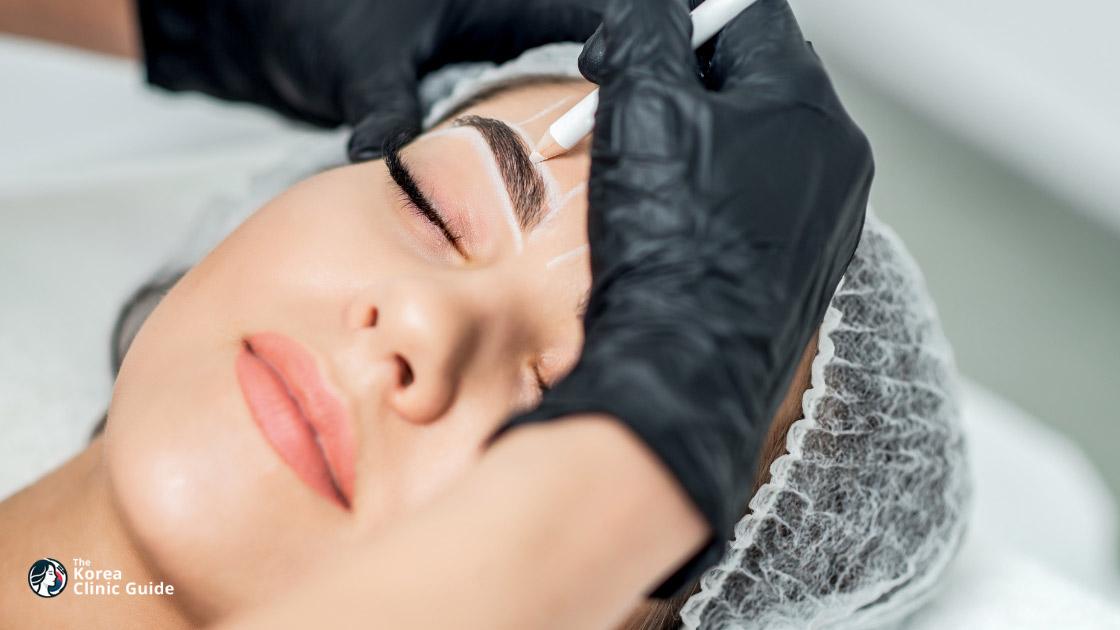
Microblading in Korea: Methods, Healing, Risks, and Travel Planning
Microblading is cosmetic eyebrow tattooing that uses manual strokes, shading, combination work, or machine techniques to camouflage sparse brows; it does not regrow hair or treat eyebrow loss. In Korea, costs range from ₩600,000–₩2,000,000 (about US$400–$1,500), with guidance on provider verification, healing, travel planning, aftercare, and touch-up timing.
Updated: Sep 28, 2026
Laser Microblading Removal: Why Korea Excels and How Costs Compare Globally
Discover the costs and intricacies of laser microblading removal in Korea, a popular procedure for those seeking to erase semi-permanent eyebrow tattoos. Learn about the factors influencing pricing, the latest technology, and what to expect during the removal process.
Updated: Sep 26, 2026
Lip Microblading in Korea: Methods, Recovery, Risks, and Travel Planning
Lip microblading, also called lip blushing or cosmetic lip tattooing, uses a needle-driven device to place pigment for longer-lasting lip color or border definition. The article covers candidacy, Korea travel planning, provider verification, healing timelines, aftercare, warning signs, and alternatives.
Updated: Sep 23, 2026