Medical Tourism Blog
Post-Rhinoplasty Irregularities: Nose Sculpting Injection Procedures in Korea for Enhanced Results
Table of contents
- The Science and Process of "Nose Sculpting Injection"
- Best Clinics in Korea for Postrhinoplasty Irregularities
- Medical Tourism to South Korea: The Patient’s Pathway
- Clinical Outcomes and Patient Experiences
- Risks, Safety, and Best Practices
- Conclusion
- References
Considering treatment in Korea? Everything you need to know e.g. — how to avoid scams, visas, interpreters, recovery tips — in our Medical Tourism Master Guide. Plan with confidence in minutes, not weeks!
This guide is designed to help patients who notice minor irregularities after their rhinoplasty procedure. We take a look at non-surgical "nose sculpting" solutions, focusing on injectable dermal fillers and corticosteroid injections as low-risk, cost-effective alternatives to revision surgery. These methods are best for minor cosmetic concerns, offering immediate—and in the case of hyaluronic acid fillers, reversible—results. South Korea's reputation as a leader in medical tourism is also explored, highlighting its skilled practitioners, competitive pricing, and patient-friendly infrastructure. Ultimately, the unique advantages South Korea offers make it an exceptional choice for those seeking high-quality care and satisfying results for post-rhinoplasty refinements.
Defining ‘Subtle Irregularity’ in Plain Terms and Clinical Language
If your nose feels “bumpy” or “uneven” after rhinoplasty, you’re not alone—these everyday descriptions actually correspond to distinct medical conditions. The most frequent is Pollybeak Deformity: a fullness just above the nasal tip, making the profile look a little like a parrot’s beak. There are two main types—Soft Tissue Pollybeak, from scar tissue buildup, and Cartilaginous Pollybeak, from not enough cartilage being removed originally. It’s essential to know that persistent swelling can also mimic pollybeak before healing settles.
Another issue is Saddle Nose Deformity, where a sunken nasal bridge creates a "saddle" look, commonly nicknamed “pug nose” or “boxer’s nose.” This results from loss of cartilage or trauma.
Tip and Nostril Asymmetry—where the tip or nostrils appear pinched or simply mismatched—often comes from scar tissue, swelling, or healing quirks. Related concerns like “pinched nose” or “pig snout” usually mean the tip is too turned up.
Lastly, Dorsal Humps and Dips describe persistent bumps or dips on the bridge—these stem from either leftover cartilage or healing irregularities.
Table 1: Types of Post-Rhinoplasty Irregularities and Their Non-Surgical Solutions
| Patient Description | Clinical Terminology | Likely Cause | Recommended Non-Surgical Solution |
|---|---|---|---|
| A bump on my nose | Dorsal Hump, Residual Cartilage | Residual cartilage/bone, uneven scar tissue | Dermal Filler (camouflage and smooth) |
| A scooped or flattened profile | Saddle Nose Deformity | Aggressive cartilage/bone removal | Dermal Filler (add volume and height) |
| Pinched or uneven tip/nostrils | Tip/Nostril Asymmetry | Uneven swelling, scar tissue | Dermal Filler (contouring), Steroid Injection (scar tissue) |
| Bird-like beak on the bridge | Pollybeak Deformity | Excess scar tissue or insufficient cartilage removal | Steroid Injection (dissolve scar tissue), Dermal Filler |
| Dips or divots on the bridge | Dorsal Irregularities | Post-surgical depressions, minor trauma | Dermal Filler (fill and smooth) |
What Causes These Subtle Irregularities?
Post-rhinoplasty irregularities often stem from the body's natural healing process, particularly lingering Persistent Post-Operative Swelling and Scar Tissue. Swelling can last for months, especially in thicker-skinned nasal tips. Some people simply heal with more scar tissue, especially if they've had revision surgery or have certain skin types.
Surgical technique, individual anatomy, and even genetics play a huge role—sometimes a flawless surgery still yields unexpected results due to these factors. As a result, small imperfections may simply reflect your body's unique way of healing, not necessarily a surgical misstep.
Should You Consider Non-Surgical Correction?
If you’re hesitant to jump into revision surgery after an unsatisfactory rhinoplasty, non-surgical injections can provide a low-risk trial run. These are great for minor cosmetic tweaks—like smoothing a small bump, straightening a slightly crooked bridge, or correcting tip asymmetry. However, significant deformities, functional issues (like breathing problems), or major reductions still require surgical solutions.
The Science and Process of "Nose Sculpting Injection"
What Is a Nose Sculpting Injection?
Despite the trendy name, “Nose Sculpting Injection” typically refers to either a non-surgical rhinoplasty with dermal fillers or the use of corticosteroid injections. Fillers provide cosmetic volume, while steroids manage swelling and scar tissue—each has a distinct role and effect.
The Injectables and How They Work
Dermal Fillers (e.g., Hyaluronic Acid): Non-surgical rhinoplasty (“liquid rhinoplasty”) uses gel-based fillers such as Juvéderm or Restylane to reshape your nose by adding volume. This can camouflage bumps, fill in dips, or give a lift to the tip. Results are fast, and the effects are temporary and reversible with an enzyme called hyaluronidase if needed.
Corticosteroid Injections (e.g., Kenalog): These injections don’t change your nose’s shape—they target lingering swelling or thick scar tissue. By suppressing the cells responsible for inflammation and scar tissue, corticosteroids can gradually refine the nasal contour, especially if the tip feels too thick or firm.
Table 2: Dermal Filler vs. Steroid Injections—Key Comparisons
| Factor | Dermal Filler (Non-Surgical Rhinoplasty) | Steroid Injection |
|---|---|---|
| Primary Purpose | Cosmetic reshaping, contouring | Reduce inflammation, soften scar tissue |
| Mechanism | Adds volume to camouflage irregularities | Inhibits fibroblast (scar tissue) activity |
| Injectable | Hyaluronic Acid (e.g., Juvéderm, Restylane) | Corticosteroids (e.g., Triamcinolone/Kenalog) |
| Longevity | 9 to 18 months (temporary) | Variable, may need repeat sessions |
| Best For | Small humps, asymmetry, subtle changes | Persistent swelling, thick skin, excess scar |
| Post-Rhinoplasty Use | Camouflage, refine contours | Treat pollybeak, swelling |
| Reversible? | Yes (with hyaluronidase) | Not directly; overuse may thin tissue |
Who Is the Right Candidate—and Who Isn’t?
Fillers suit those wanting to add volume or camouflage small irregularities; they can’t shrink or fix major deformities. Steroid injections are best for persistent swelling or scar tissue, not for reshaping. Your unique irregularity will dictate which, if any, non-surgical path to pursue.
Best Clinics in Korea for Postrhinoplasty Irregularities
Listed below are the best clinics in Korea for postrhinoplasty irregularities:
| Clinic Name | Key Features | Special Techniques |
|---|---|---|
| Haru Clinic Website | Haru Clinic in Sinsa, Seoul provides personalized care for patients seeking solutions for postrhinoplasty irregularities, offering both minimally invasive and surgical aesthetic treatments for the face and body. With a focus on harmony and balance, Dr. Jeong carefully designs each patient’s facial plan using non-invasive techniques that aim for a natural, refreshed outcome tailored to the individual’s features and concerns. | Dr. Jeong is an official research physician at Merz, the company behind Belotero Filler, and teaches other doctors the latest filler techniques—an expertise that supports precise, detail-oriented correction when subtle refinement is needed. At Haru, patients can pursue transformative results comparable to invasive surgery through comprehensive non-invasive procedures with effective, long-lasting outcomes and minimal downtime, including options such as fillers, Botox, collagen tightening, and nose thread lift when appropriate. |
| PangPang Clinic Website | PangPang Clinic is a specialized dermatology and aesthetic clinic in Seoul’s Gangnam district, recognized for its singular focus on thread lifting and its research-driven approach to advanced, non-surgical facial refinement. For patients dealing with postrhinoplasty irregularities, PangPang Clinic is a strong option when the goal is to improve overall facial balance and soft-tissue appearance with carefully planned, minimally invasive techniques—especially for those seeking a tailored approach and high technical consistency from a clinic dedicated exclusively to thread lifting and ongoing procedural innovation. | - Exclusive focus on thread lifting: PangPang Clinic concentrates only on thread lifting, building unmatched expertise through focused practice rather than dividing attention across unrelated procedures. - Global credibility through academic activity: The medical team actively participates in international beauty conferences with invited lectures and presentations, reflecting up-to-date technique and recognized clinical know-how. - Industry-leading innovation: PangPang Clinic established the world’s first and only Thread Lifting Research Institute, supporting continuous advancement in methods and outcomes. - Evidence-based refinement: Procedures are continuously developed and upgraded based on research and accumulated clinical data, aiming for consistently high satisfaction. - Personalized planning through a dedicated Consultation Center: The Thread Lifting Consultation Center prioritizes careful listening and individualized treatment design—important for patients seeking nuanced correction after previous surgery. - Highly customized thread selection: The clinic uses 31 specialized, functional threads, enabling more optimized and personalized lifting strategies rather than one-size-fits-all treatment. - Revision-oriented expertise: With a Thread Lifting Revision Center, PangPang Clinic is structured to address dissatisfaction from prior procedures and plan corrections with a comprehensive, case-by-case approach. |
| B.V Clinic Website | B.V Clinic, located near Sinnonhyeon Station in Seoul, provides aesthetic care designed to rejuvenate the face while preserving natural balance—an important priority for patients seeking improvement after rhinoplasty-related concerns. The clinic focuses on individualized treatment planning, combining professional assessment with techniques aimed at refining overall facial harmony and supporting a refreshed, natural appearance. | For postrhinoplasty irregularities where surrounding facial tension, skin laxity, or asymmetry can draw attention to nasal contours, B.V Clinic offers advanced non-surgical lifting and tightening options. These include thread-based procedures such as 3D Thread Lifting, Full Face Lifting, and targeted non-surgical forehead wrinkle restoration, as well as energy-based treatments like Shurink Lifting (HIFU), Potenza radiofrequency lifting, and Thor lifting for skin tightening and contour refinement. Treatment outcomes are supported by a comprehensive aftercare program focused on skin regeneration and elasticity, alongside an optional all-in-one wellness program with detox injections, vitamin drips, and immune-support therapies to promote overall recovery and skin vitality. |
Haru Clinic
Haru Clinic in Sinsa, Seoul provides personalized care for patients seeking solutions for postrhinoplasty irregularities, offering both minimally invasive and surgical aesthetic treatments for the face and body. With a focus on harmony and balance, Dr. Jeong carefully designs each patient’s facial plan using non-invasive techniques that aim for a natural, refreshed outcome tailored to the individual’s features and concerns.
Dr. Jeong is an official research physician at Merz, the company behind Belotero Filler, and teaches other doctors the latest filler techniques—an expertise that supports precise, detail-oriented correction when subtle refinement is needed. At Haru, patients can pursue transformative results comparable to invasive surgery through comprehensive non-invasive procedures with effective, long-lasting outcomes and minimal downtime, including options such as fillers, Botox, collagen tightening, and nose thread lift when appropriate.
You can check out their website here: Haru Clinic Website
PangPang Clinic
PangPang Clinic is a specialized dermatology and aesthetic clinic in Seoul’s Gangnam district, recognized for its singular focus on thread lifting and its research-driven approach to advanced, non-surgical facial refinement. For patients dealing with postrhinoplasty irregularities, PangPang Clinic is a strong option when the goal is to improve overall facial balance and soft-tissue appearance with carefully planned, minimally invasive techniques—especially for those seeking a tailored approach and high technical consistency from a clinic dedicated exclusively to thread lifting and ongoing procedural innovation.
- Exclusive focus on thread lifting: PangPang Clinic concentrates only on thread lifting, building unmatched expertise through focused practice rather than dividing attention across unrelated procedures.
- Global credibility through academic activity: The medical team actively participates in international beauty conferences with invited lectures and presentations, reflecting up-to-date technique and recognized clinical know-how.
- Industry-leading innovation: PangPang Clinic established the world’s first and only Thread Lifting Research Institute, supporting continuous advancement in methods and outcomes.
- Evidence-based refinement: Procedures are continuously developed and upgraded based on research and accumulated clinical data, aiming for consistently high satisfaction.
- Personalized planning through a dedicated Consultation Center: The Thread Lifting Consultation Center prioritizes careful listening and individualized treatment design—important for patients seeking nuanced correction after previous surgery.
- Highly customized thread selection: The clinic uses 31 specialized, functional threads, enabling more optimized and personalized lifting strategies rather than one-size-fits-all treatment.
- Revision-oriented expertise: With a Thread Lifting Revision Center, PangPang Clinic is structured to address dissatisfaction from prior procedures and plan corrections with a comprehensive, case-by-case approach.
You can check out their website here: PangPang Clinic Website
B.V Clinic
B.V Clinic, located near Sinnonhyeon Station in Seoul, provides aesthetic care designed to rejuvenate the face while preserving natural balance—an important priority for patients seeking improvement after rhinoplasty-related concerns. The clinic focuses on individualized treatment planning, combining professional assessment with techniques aimed at refining overall facial harmony and supporting a refreshed, natural appearance.
For postrhinoplasty irregularities where surrounding facial tension, skin laxity, or asymmetry can draw attention to nasal contours, B.V Clinic offers advanced non-surgical lifting and tightening options. These include thread-based procedures such as 3D Thread Lifting, Full Face Lifting, and targeted non-surgical forehead wrinkle restoration, as well as energy-based treatments like Shurink Lifting (HIFU), Potenza radiofrequency lifting, and Thor lifting for skin tightening and contour refinement. Treatment outcomes are supported by a comprehensive aftercare program focused on skin regeneration and elasticity, alongside an optional all-in-one wellness program with detox injections, vitamin drips, and immune-support therapies to promote overall recovery and skin vitality.
You can check out their website here: B.V Clinic Website
Medical Tourism to South Korea: The Patient’s Pathway
A Step-by-Step Journey for International Patients
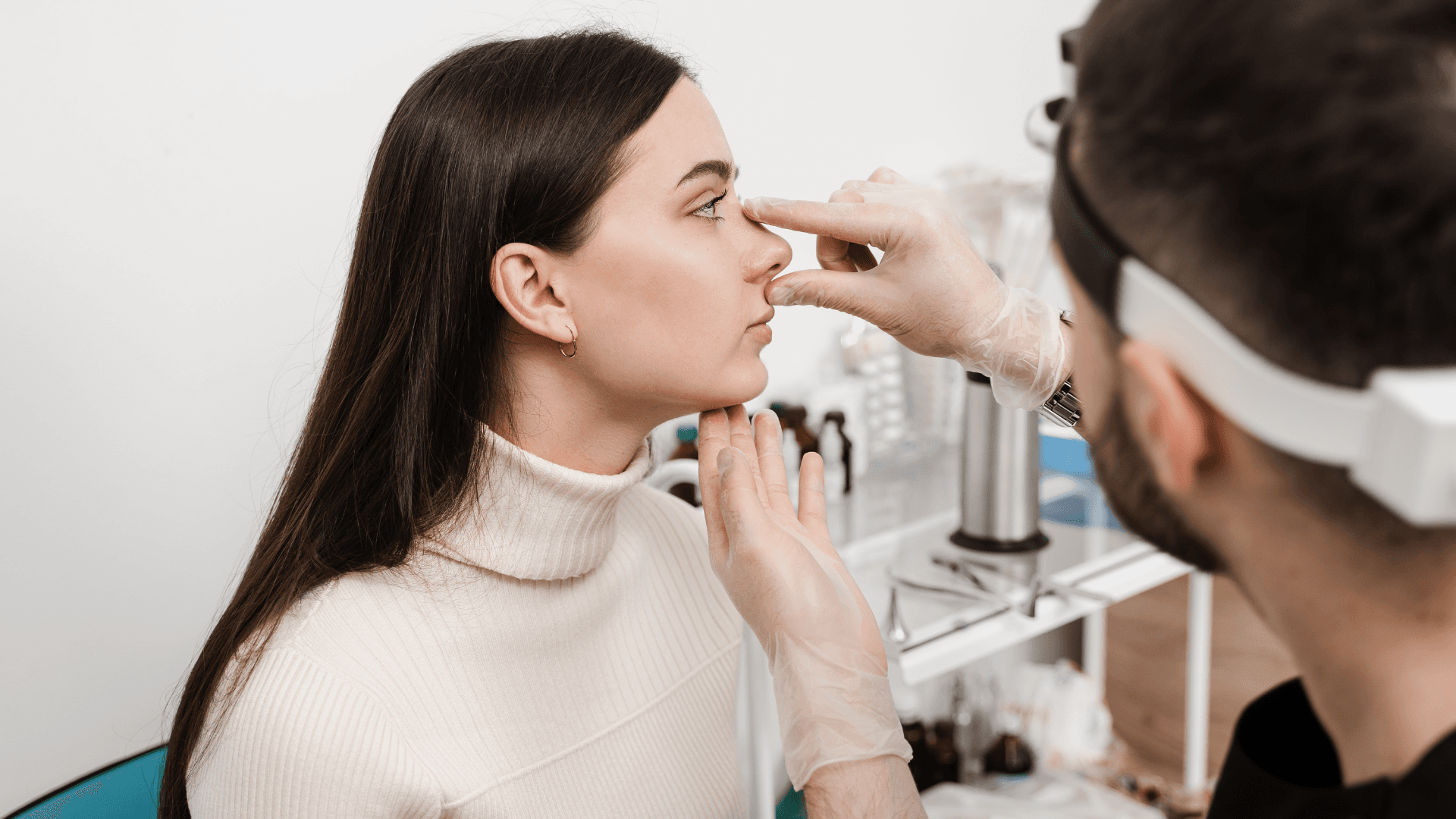
South Korea is a top destination for aesthetic patients, offering a streamlined process:
- Step 1: Online Research & Consultation (2-4 weeks before travel): Find reputable clinics (KHIDI-registered, JCI-accredited) and have preliminary online consultations. Share your photos and get initial feedback on the plan and costs.
- Step 2: Plan Travel/Visa (4-6 weeks before): Secure a C-3 tourist visa, book flights and accommodations (most clinics are in Seoul’s Gangnam/Apgujeong areas).
- Step 3: In-Person Consultation & Procedure: Upon arrival, meet your surgeon, review the plan, and undergo the procedure—usually a quick 15–45 minutes.
- Step 4: Recovery & Local Follow-up (1-2 weeks recommended): Stay in Korea while any minor swelling subsides, and attend a follow-up with your doctor.
- Step 5: Return Home: Receive discharge instructions in English and complete virtual follow-ups as needed for ongoing care.
Cost Advantages for Medical Tourists
South Korea offers top-quality procedures at costs well below most Western countries.
- Non-Surgical Rhinoplasty: $300 to $2,000 in Korea ($330–$700 for brands like Restylane or Juvéderm), compared to $1,500–$2,500+ in the US.
- Surgical Revision Rhinoplasty: $3,340–$15,000 in Korea vs. $12,000–$30,000+ in the US.
- Often, these prices include consultation, local anesthesia, and aftercare.
Table 3: Procedure Cost Comparison for Medical Tourists
| Procedure Type | Cost in South Korea (USD) | Cost in South Korea (KRW) | Cost in US/West (USD) | Savings (%) |
|---|---|---|---|---|
| Non-Surgical Rhinoplasty | $300–$2,000 | ₩412,000–₩2,750,000 | $1,500–$2,500+ | Up to 80% |
| Surgical Rhinoplasty | $4,000–$6,000 | ₩5,500,000–₩8,300,000 | $11,000–$22,000 | 50–70% |
| Revision Rhinoplasty | $3,340–$15,000 | ₩4,600,000–₩20,600,000 | $12,000–$30,000+ | 30–70% |
| Alar Reduction | $1,000–$2,000 | ₩1,400,000–₩2,800,000 | $2,000–$5,000+ | Up to 60% |
Note: Prices are estimates and vary by clinic and case complexity.
Why Choose South Korea?
South Korea's dominance in cosmetic medical tourism comes from its huge domestic demand, high competition, and government support—which all combine to produce skilled surgeons and advanced techniques at competitive prices. Innovations like mandatory operating room CCTV for patient safety add transparency, making South Korea an attractive, reliable option for medical tourists.
Clinical Outcomes and Patient Experiences
Effectiveness in Addressing Subtle Irregularities
For patients with minor post-surgical concerns, non-surgical nose sculpting can yield impressive cosmetic improvements. Dermal fillers can smooth bumps, fill dips, and refine tip shape with immediate results. Corticosteroid injections are especially useful for resolving scar-related issues like pollybeak deformity or stubborn swelling—provided they're administered by an expert aligned with your unique anatomy.
What Do Patients Say?
The vast majority of patients report high satisfaction with both dermal fillers and steroid injections for small irregularities. Many praise the quick results and natural appearance, noting a big boost in self-confidence—especially when returning to social activities or photographs. The temporary effect of HA fillers offers peace of mind, allowing a "trial run" before committing to anything permanent.
The Emotional Benefits of Non-Surgical Revision
Many patients seek non-surgical fixes after a disappointing surgical experience, hoping to avoid the stress, downtime, and financial costs of further surgery. These minimally invasive treatments don’t just improve appearance—they restore a sense of agency, helping patients reclaim their confidence with lower emotional and physical risk.
Risks, Safety, and Best Practices
Minor Side Effects: What to Expect
Most people experience only mild, temporary swelling, bruising, or redness. Steroid injections may infrequently cause localized skin thinning or lightening, especially if overused.
Recognizing Major Complications
While rare, serious complications like vascular occlusion (where filler blocks a blood vessel, risking tissue damage) or even blindness (if filler enters specific blood vessels) can occur. This means that, despite being non-surgical, these procedures require the utmost expertise.
The Importance of Choosing the Right Practitioner
Your injector’s anatomical knowledge and technique are your greatest protections against complications. A qualified, board-certified professional will inject conservatively and be prepared to manage any adverse events immediately. South Korea’s rigorous standards mean you’ll find many such experienced providers there.
Conclusion
For those with minor post-rhinoplasty concerns, non-surgical nose sculpting injections provide safe, effective, and convenient alternatives to revision surgery, particularly when performed by an expert. South Korea leads globally, combining advanced skills, patient safety, and affordability. Thorough research and realistic expectations are vital for patients seeking these procedures abroad.
References
1, 2, 3, 4, 5, 6, 7, 8, 9, 10, 11, 12, 13, 14, 15, 16, 17, 18, 19, 20, 21, 22, 23, 24, 25, 26, 27, 28, 29, 30, 31, 32, 33, 34, 35, 36, 37, 38, 39, 40, 41, 42, 43, 44, 45, 46, 47, 48, 49, 50, 51