
Medical Tourism Blog
Nose Thread Lift in Korea: Candidacy, Recovery, Risks and Travel Planning
Table of contents
- Nose Thread Lift at a Glance
- What Is a Nose Thread Lift?
- Who Is a Good Candidate for a Nose Thread Lift?
- How Is a Nose Thread Lift Performed?
- Why Visit Korea for a Nose Thread Lift?
- Key Information for International Patients
- Which Are the Best Clinics in Korea for Nose Thread Lift?
- Nose Thread Lift From Start to Finish
- Alternatives to a Nose Thread Lift
- How Can I Prepare for a Nose Thread Lift?
- Aftercare Advice
Considering treatment in Korea? Everything you need to know e.g. — how to avoid scams, visas, interpreters, recovery tips — in our Medical Tourism Master Guide. Plan with confidence in minutes, not weeks!
Last updated: September 2026
Nose Thread Lift at a Glance
- What it does — A nose thread lift is an outpatient, local-anesthetic procedure that places absorbable threads in the bridge, tip, or columella for modest temporary definition, mild augmentation, or subtle tip projection or rotation.
- Best candidates — It suits adults seeking a small, temporary cosmetic refinement with healthy nasal skin and realistic expectations, not a major reshaping or a permanent rhinoplasty-level result.
- What it cannot fix — Threads cannot reliably narrow a broad nose, remove a large hump, straighten substantial bone or cartilage deviation, or improve nasal obstruction; rhinoplasty, septoplasty, or functional nasal surgery may be more appropriate.
- Results and longevity — Swelling can obscure the initial appearance, so an early cosmetic assessment is more reliable at about 4–6 weeks; durability is variable, with one 553-patient PLLA/PCL series reporting satisfaction falling from 95% at 6 months to 62% at 1 year.
- Recovery — Soreness, pinpoint entry marks, mild swelling, and bruising are expected initially; most socially noticeable swelling improves by days 7–14, while pressure, massage, heavy glasses, tight masks, and vigorous exercise should be avoided until the clinician clears them.
- Korea travel planning — Plan at least 3–5 nights for consultation, treatment, and an early review; 7–10 days is more cautious before a long-haul flight, and flexibility is important because infection, thread exposure, or contour problems may need in-person care.
- Safety and clinic checks — Infection, irregularity, visible or exposed threads, migration, and difficult revision can occur; verify Medical Korea international-patient registration, the exact thread product and operator, and a written English aftercare and complication plan before treatment.
What Is a Nose Thread Lift?
A nose thread lift uses absorbable threads placed under the skin to temporarily refine the nose’s contour. It aims to add modest bridge definition, subtle tip projection or rotation, or camouflage a mild hump without changing the nasal framework. It is a minimally invasive, non-surgical cosmetic procedure, typically performed with local anesthetic.
Who Is a Good Candidate for a Nose Thread Lift?
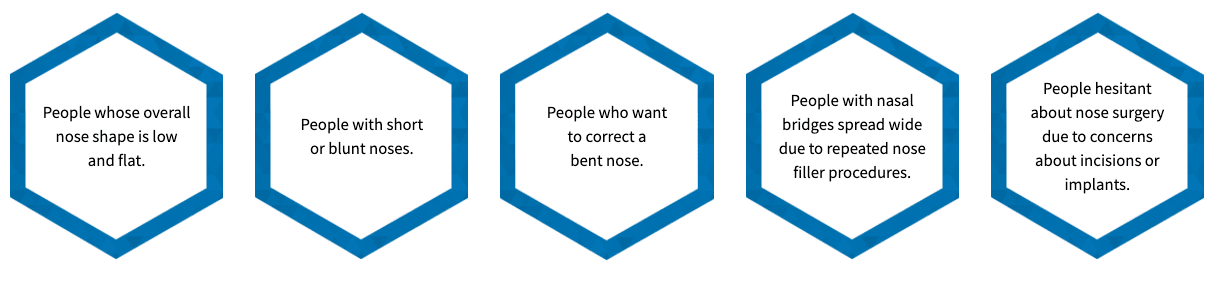
- Subtle bridge or tip refinement — Good candidates are adults seeking modest dorsal definition, mild bridge augmentation, subtle tip projection or rotation, or camouflage of a mild hump rather than major reshaping.
- Temporary-result acceptance — Suitable patients understand that absorbable threads do not create permanent, rhinoplasty-level structural change. In a 553-patient PLLA/PCL series, reported satisfaction declined from 95% at six months to 62% at one year, illustrating the uncertain durability of this approach.
- Healthy nasal skin and realistic anatomy — Adequate soft-tissue coverage, stable skin, and no active infection at planned entry sites support safer assessment and placement.
- Willingness to attend follow-up — International patients need enough time for an early review and must accept that contour concerns, infection, or thread exposure require prompt in-person care.
A nose thread lift is unsuitable for anyone seeking meaningful narrowing, removal of a large bony or cartilaginous hump, correction of a significantly crooked nose, or improvement in breathing; these goals require assessment for rhinoplasty, septoplasty, or functional nasal surgery. Defer treatment for active acne, cellulitis, herpes, dermatitis, open wounds, pregnancy or breastfeeding, uncontrolled bleeding disorders, poorly controlled diabetes, significant immunosuppression, or a known reaction to the proposed anesthetic, antiseptic, suture material, adhesive, or aftercare medicine. Previous rhinoplasty, permanent filler, nasal implants, prior threads, or substantial scar tissue require an in-person structural examination because existing material changes the placement plane and makes complication management harder. Do not stop warfarin, apixaban, rivaroxaban, clopidogrel, prescribed aspirin, or other essential medicines without a plan from the prescribing clinician. Body dysmorphic disorder, acute mental-health instability, coercion, or unrealistic expectations are reasons to defer elective treatment and arrange appropriate support.
How Is a Nose Thread Lift Performed?
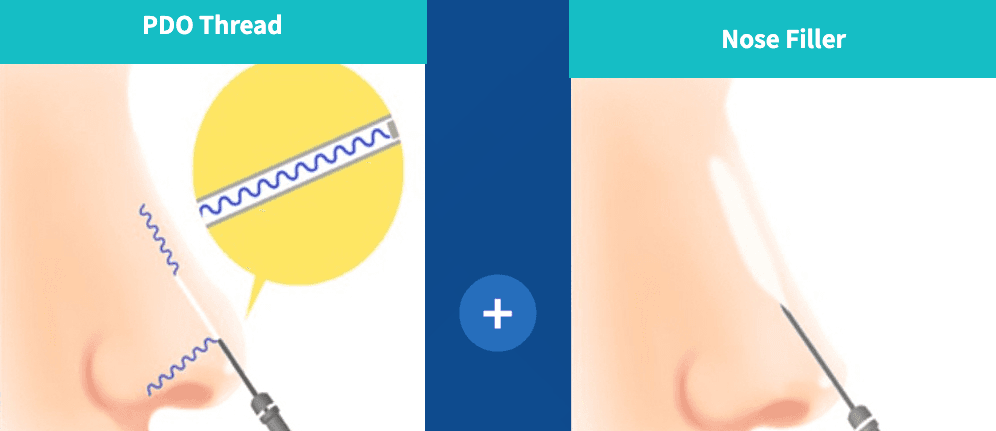
Branded names such as Hiko, Misko, and thread rhinoplasty are not standardized clinical categories. The useful distinctions are the thread material and design, the target area, placement vector, and whether filler or botulinum toxin is added.
- PDO threads — Polydioxanone threads can be smooth, coiled, or barbed/cogged. A small prospective study of 10 adults reported improved patient-reported outcomes at two weeks after PDO treatment for tip rotation or reduced hump appearance, but this is not strong evidence for predictable long-term results.
- PLLA/PCL threads — Poly-L-lactic acid/polycaprolactone products were used in a 553-patient single-team series. That study did not compare PLLA/PCL with PDO, filler, surgery, or no treatment, so it cannot establish that one material performs better.
- Dorsum, tip, and columella vectors — Threads can be directed along the bridge for definition or mild augmentation, the columella for support, or the tip for projection or rotation. Ask for the planned entry points, insertion depth, thread number, and vector in writing.
- Thread-only or combination treatment — Some clinicians combine threads with hyaluronic-acid filler or botulinum toxin. A nonrandomized study of 85 patients reported higher FACE-Q scores in the small triple-treatment group, but its unequal groups cannot prove that combination treatment is superior or appropriate for an individual.
- Filler-specific risk — Adding nasal filler is not a minor extension of a thread procedure. The nose is a high-risk vascular area: intravascular filler injection can cause skin necrosis and, rarely, visual complications.
Why Visit Korea for a Nose Thread Lift?
South Korea can be practical for a minimally invasive treatment when the itinerary allows an in-person examination, an early review, and a defined plan for care after departure. Do not treat procedure popularity or aesthetic-care infrastructure as evidence that Korean nose-thread outcomes are better. No comparative study was located showing superior Korean safety, durability, or results for nose thread lifting.
- International-patient registration check — Verify that the institution is listed through the Medical Korea registered institution system. Registered institutions serving international patients are required to carry malpractice liability insurance.
- Documented treatment details — Ask the clinician to identify the exact thread material, brand or device authorization, thread count, target areas, insertion vectors, anesthetic plan, and the person performing each step. Hiko and Misko labels alone do not provide this information.
- Complication pathway — Confirm how the clinic handles infection, exposed threads, contour irregularity, and removal. Published complication-only series describe infection, extrusion, chronic inflammation, dimpling, and difficult revision work, although they cannot calculate the risk among all patients treated.
- Continuity after return home — Request written English consent and aftercare, procedure photographs or a diagram, thread lot or serial information where available, medicines administered, and a direct emergency contact. Arrange remote photo follow-up before booking treatment.
Key Information for International Patients
- Minimum stay — Plan 3–5 nights for an in-person consultation, treatment, and an early review when requested. A 7–10-day stay is more cautious before a long-haul return flight, especially when bruising, swelling, sedation, an early adjustment, or an infection concern is possible.
- Flight clearance — There is no high-quality nose-thread-specific evidence defining a safe flight interval. Generic NHS advice for cosmetic procedures abroad recommends avoiding flights for 7–10 days after facial cosmetic procedures; obtain written clearance from the treating clinician for the actual departure date.
- Itinerary impact — Expect soreness, pinpoint entry marks, mild swelling, and bruising on the day of treatment. Most socially noticeable swelling improves over days 7–14, but tenderness and shape settling continue; avoid scheduling important photographs or events immediately afterward.
- Activity restrictions — Avoid pressure, rubbing, massage, tight masks, heavy glasses, facials, and trauma to the nose until cleared. Resume vigorous exercise only when the clinician approves, often after the early healing period has been assessed.
- Remote follow-up — Arrange photo reviews at about one week, two to four weeks, and later milestones specified by the clinic. New pain, increasing redness, drainage, fever, skin color change, marked asymmetry, or thread exposure needs in-person assessment rather than remote reassurance.
Travel note: Build flexibility into flights and accommodation. An exposed thread, suspected infection, or substantial contour problem can require examination and treatment in Korea before it is safe to travel.
Which Are the Best Clinics in Korea for Nose Thread Lift?
Listed below are some of the best clinics in Korea for nose thread lift.
1. PangPang Clinic
For a nose thread lift, you can expect PangPang Clinic to draw on its dedicated thread-lifting practice and individualized planning, using specialized threads to refine the nose while aiming for a natural-looking lift. Its Pink Lift thread was developed from the clinic’s procedural data and carries FDA, CE, and KFDA certifications.
- URL: PangPang Clinic Website
- Location: Gangnam-gu, Seoul
- Thread-lifting approach:
- The clinic reports using 31 specialized functional threads and tailoring thread selection and treatment design to your needs.
- Ultrasonic visual checks and pre-procedure design are part of its stated thread-lifting system.
- Thread lifting is described as using barbed, assist, tightening, and volume threads; the appropriate approach depends on the treatment area and goals.
- Comfort and recovery:
- Chill-Lifting uses contact-free cooling anesthesia, which the clinic states is intended to minimize pain, swelling, and bruising and support a quicker recovery.
- Listed anesthesia options for thread lifting include partial, Airnox, and sleep anesthesia.
- Research and follow-up:
- PangPang Clinic states that it collaborates with Seoul National University Bundang Hospital on research into lifting, collagen regeneration, and skin quality.
- The clinic reports a Thread Lifting Research Institute and provides an aftercare package intended to support and prolong thread-lifting effects.
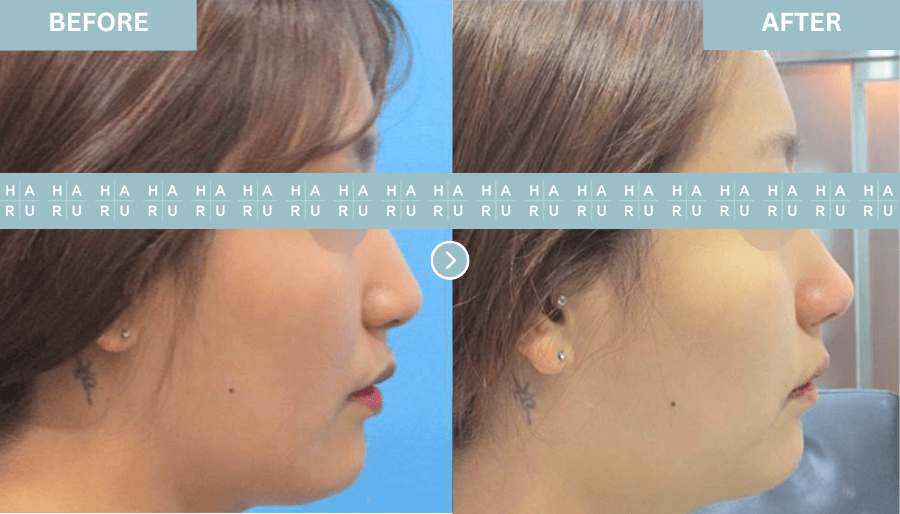
2. Haru Clinic
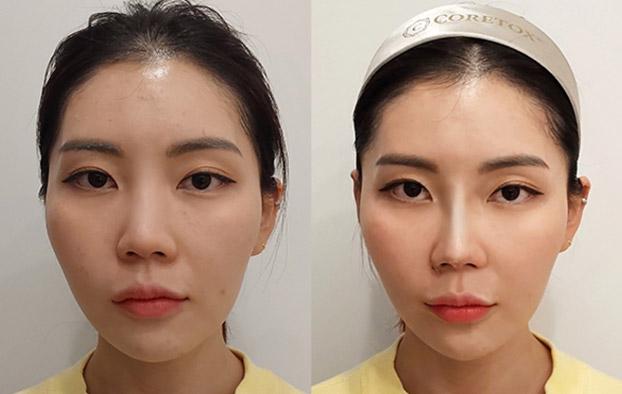
For a non-surgical nose thread lift, you may consider Haru Clinic if you want added bridge and tip definition without implants: it uses PDO or PLLA threads placed through small entry points for an immediate lifting effect. Your plan can be designed around facial harmony by Dr. Jeong, a Merz research physician who also teaches filler techniques, while the clinic’s thread-lifting approach emphasizes fixed points selected to avoid major nerves and blood vessels and help reduce discomfort, pain, and bleeding.
- URL: Haru Clinic Website
- Location: Gangnam-gu, Seoul
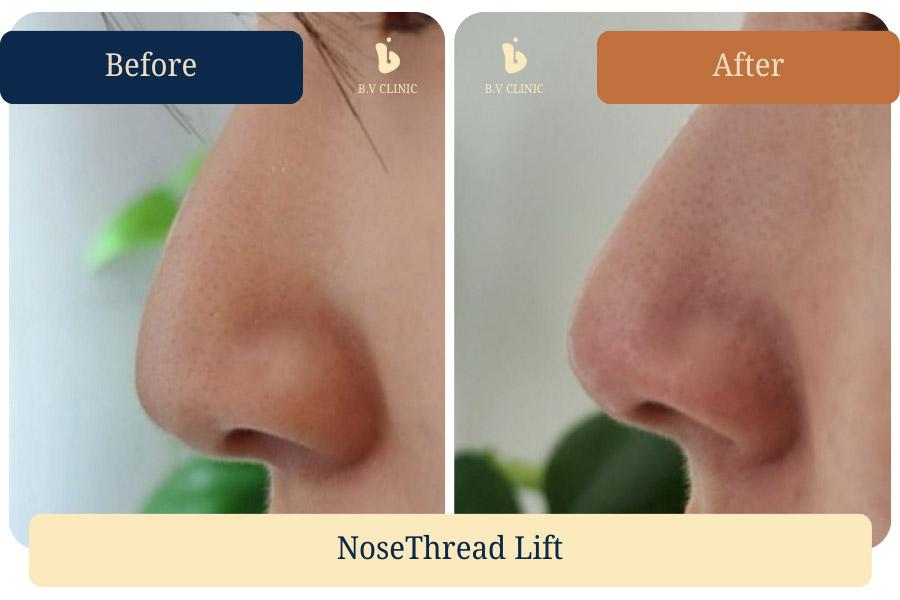
3. B.V Clinic
At B.V Clinic, you can expect a non-surgical nose thread lift designed to improve definition of the bridge and tip without incisions. The clinic describes using a minimal number of threads to create a naturally sharper, elevated nose line, which may suit you if you have a busy schedule or prefer to avoid surgical nose procedures.
- URL: B.V Clinic Website
- Location: Seoul
- Treatment considerations:
- The procedure is intended to refine the nasal tip and bridge without surgical incisions.
- B.V Clinic emphasizes individualized treatment planning aligned with your aesthetic goals.
- Aftercare:
- Its post-treatment program includes skin-regeneration management intended to minimize swelling and support skin elasticity.
- Aftercare may include nutritional skincare products and ultrasound-based collagen-support treatments.
Nose Thread Lift From Start to Finish
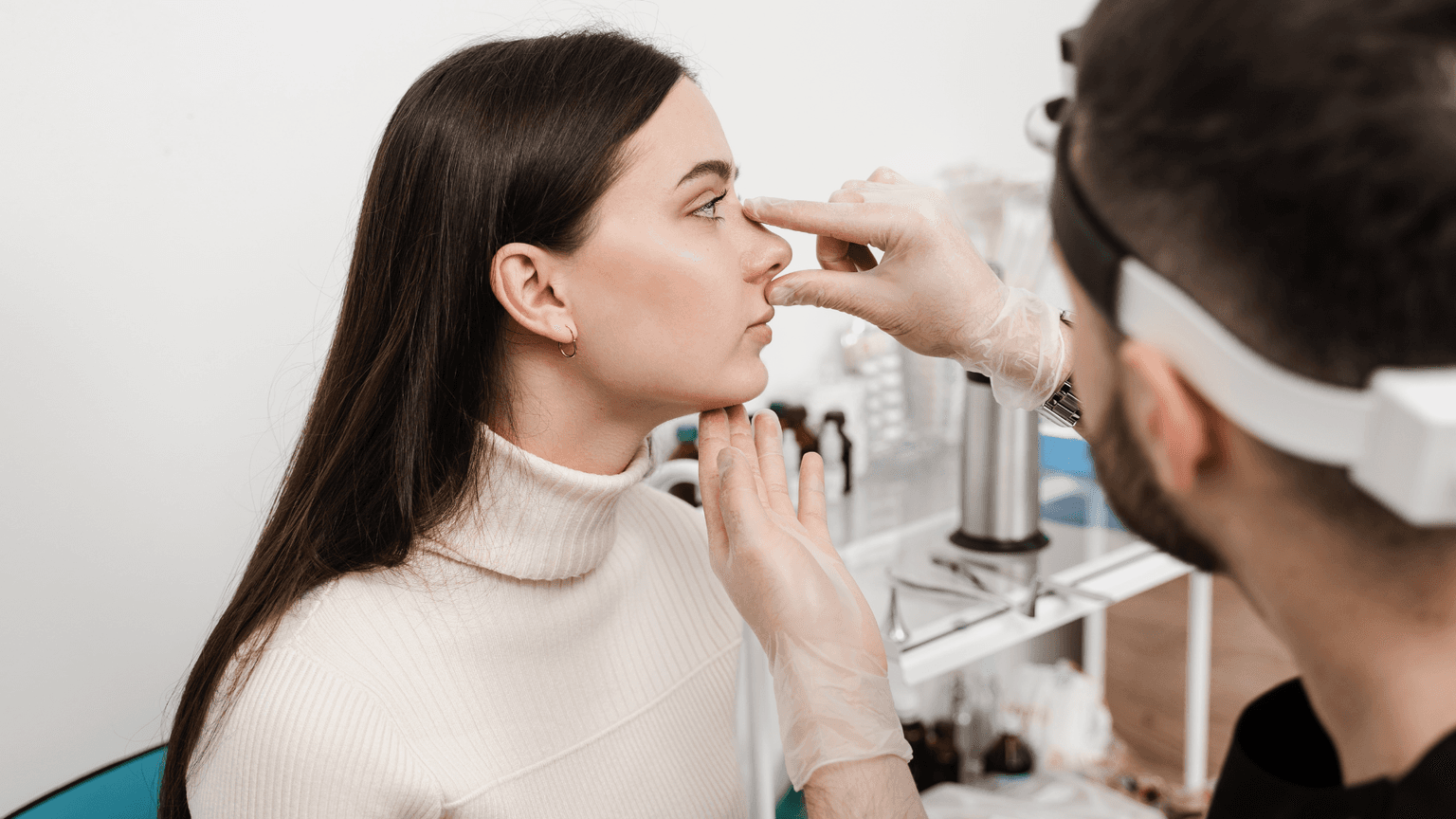
- Remote screening — Send unfiltered front, oblique, profile, and basal photographs through the clinic’s English-language or virtual consultation channel. Disclose previous filler, threads, surgery, implants, breathing symptoms, allergies, bleeding history, smoking or vaping, medicines, supplements, and relevant health conditions.
- Travel coordination — Book enough time for consultation, treatment, and an early review. Confirm the operator’s credentials, the exact thread product, who performs each step, the expected appointment duration, and the written plan for complications after return home.
- In-person assessment and consent — The clinician examines skin thickness, cartilage support, asymmetry, scars, and prior material. Functional symptoms warrant internal nasal assessment and discussion of septoplasty or functional rhinoplasty rather than cosmetic threads alone.
- Testing and treatment planning — Healthy patients often do not need routine laboratory tests for a local-anesthetic office procedure. Bleeding risk, pregnancy possibility, important medical conditions, or planned sedation can require additional assessment or testing.
- Marking and anesthesia — Standardized photographs and treatment markings are made, the skin is cleansed, and local anesthetic is injected. General anesthesia is generally unnecessary; follow the facility’s instructions if oral, inhaled, or intravenous sedation is planned.
- Thread placement — The clinician creates the planned path with a needle or cannula, inserts absorbable threads into the dorsum, tip, and/or columella, then adjusts tension and contour. Thread material, placement depth, number, and vector determine the approach more than the marketing name.
- Discharge — Entry sites are cleaned or dressed. Leave with written English aftercare, prescribed medicines if any, an emergency contact, records of the threads used, and a time for the Korea-based review.
- Early review and overseas follow-up — Review swelling, symmetry, tenderness, and entry sites in person when requested. Continue scheduled photo follow-up after returning home, but seek urgent local care for breathing difficulty, severe allergic symptoms, or any visual symptom.
Alternatives to a Nose Thread Lift
Threads offer modest, temporary contour change with a short initial recovery, but they cannot alter the nasal framework or address obstruction. Non-surgical alternatives can camouflage selected contours but carry their own risks; surgery provides broader and more durable structural change with a longer recovery.
Hyaluronic-Acid Nasal Filler
- Best for — Immediate camouflage of a mild bridge contour issue or selected dorsal and tip contour changes.
- Tradeoff — Hyaluronic-acid filler can sometimes be dissolved, but nasal injection carries rare severe vascular complications, including skin necrosis and visual injury. It does not correct structural deviation or breathing problems.
- Related procedure — Read about nose filler.
Surgical Rhinoplasty
- Best for — Major hump reduction, bridge narrowing, correction of bone or cartilage asymmetry, durable projection changes, or substantial tip reshaping.
- Tradeoff — Surgery changes the nasal framework and has a longer recovery, but it is the option capable of durable structural correction.
- Related procedure — Read about rhinoplasty, tip plasty, or revision rhinoplasty.
Septoplasty or Functional Rhinoplasty
- Best for — Nasal obstruction, septal deviation, valve collapse, or breathing concerns.
- Tradeoff — These procedures address function rather than simply creating a cosmetic thread-lift effect; cosmetic and functional goals can be assessed together.
- Related procedure — Read about septoplasty.
Alar Reduction
- Best for — Nostril width or alar-flare concerns.
- Tradeoff — Threads do not reliably narrow the nostrils. Alar reduction is surgical and leaves incision-related risks.
- Related procedure — Read about alar reduction.
How Can I Prepare for a Nose Thread Lift?
- Medicines and supplements — Provide a complete list well before treatment, including aspirin, ibuprofen, naproxen, warfarin, apixaban, rivaroxaban, clopidogrel, fish oil, vitamin E, ginkgo, garlic supplements, and herbal products. The prescribing clinician—not the aesthetic clinic alone—must decide whether essential anticoagulant or antiplatelet treatment can be changed.
- Alcohol and nicotine — Avoid alcohol for at least 24–48 hours before and after treatment unless instructed otherwise. Stop smoking, vaping, and nicotine when the clinician directs, because nicotine impairs healing.
- Fasting and sedation — Local anesthetic alone generally does not require fasting. Follow the facility’s exact fasting rules when oral, inhaled, or intravenous sedation is planned.
- Skin and infection check — Arrive with clean skin and no makeup around the nose. Postpone treatment for sunburn, acne flare, herpes outbreak, rash, open lesion, or any infection near the entry sites.
- Prior nasal procedures — Disclose all previous nasal filler, permanent filler, implants, surgery, threads, and infections. Bring records and product details when available; permanent material and scar tissue can alter the procedure or rule it out.
- Transport and accommodation — Stay nearby, avoid heavy luggage, and arrange transport rather than driving if sedated, dizzy, or taking sedating medicine. Keep accommodation and flights flexible enough for an unexpected review.
Travel note: Obtain the clinic’s emergency number, remote-follow-up process, and written flight guidance before paying for a non-changeable return ticket.
Confirm all clinic-specific medicine, fasting, companion, and travel requirements with the treating doctor, whose individualized instructions take precedence over general guidance.
Aftercare Advice
Protect the nose from pressure and monitor it closely during the first two weeks; early swelling can hide the true contour and forceful self-correction can worsen a problem.
- Swelling and bruising — Use cold compresses without pressing hard on the nose. Soreness, pinpoint marks, mild swelling, and bruising are expected on the first day and commonly improve over days 1–5; visible swelling is usually substantially improved by days 7–14.
- Pressure and contact — Sleep on the back with the head elevated if advised. Do not rub, pinch, massage, manipulate, or receive facials on the nose, and avoid tight masks, heavy glasses, contact sports, and any trauma until the clinician clears them.
- Entry-site care — Keep entry sites clean and follow the clinic’s directions on washing, makeup, dressings, and soaking. Do not pull, cut, or try to remove a visible or exposed thread.
- Exercise and heat — Defer vigorous exercise, swimming, sauna, steam rooms, and major heat exposure until cleared. The appropriate timeline depends on placement depth, entry sites, swelling, and whether other treatments were performed.
- Sun protection — Protect healing skin from direct sun and use SPF 50 on intact skin when outdoor exposure cannot be avoided; do not apply products over open entry sites unless approved.
- Warning signs — Contact the clinic urgently for worsening pain, rapidly increasing one-sided swelling, spreading redness or warmth, pus or persistent drainage, fever, blanching or darkening skin, marked asymmetry, new numbness, or thread exposure. Seek emergency care for breathing difficulty, severe allergic-reaction symptoms, or any visual change.
- Results and review — Do not judge the result immediately. A more reliable early cosmetic assessment is around 4–6 weeks after residual swelling and tissue settling improve; longevity remains variable, and repeat treatment should be considered only after full review.
Follow the treating doctor’s written instructions over general advice and contact the clinic promptly when healing appears abnormal.
Frequently Asked Questions
Related Blogs

Double Chin Fat Pad Solutions: Double Chin Thread Lift Procedure in Korea for a Defined Jawline
Discover how Korea leads in non-surgical solutions for submental fullness (double chin) with innovative procedures like the Double Chin Thread Lift. This minimally invasive treatment offers instant lifting and long-term skin tightening, making Korea a top destination for medical tourists seeking natural "V-Line" results. Learn about the different thread types, ideal candidates, procedure details,
Updated: Oct 2, 2026
Early Aging Signs Solutions: Thread Lift Procedure in Korea for Youthful Skin Restoration
Discover how Korea leads in minimally invasive aesthetic treatments for early aging signs with procedures like the PDO, PCL, PLA, and APTOS thread lift. This revolutionary procedure effectively addresses fine lines, wrinkles, and mild skin laxity, providing natural-looking, long-lasting results. Korea’s advanced technology and expert practitioners ensure safe, high-quality treatment options at com
Updated: Oct 2, 2026
Enhance Weak Chin Contour with Face Thread Lift Procedures in Korea for Natural Results
Discover how Korea leads in minimally invasive solutions for weak chin contour issues with face thread lift procedures. This blog explores the causes of receding chins, benefits of the Korea-based PDO and PLA thread lifts, and why Korea is a trusted destination for medical tourism. Learn about costs, safety, and real patient outcomes, helping you make informed decisions to achieve facial harmony a
Updated: Oct 2, 2026
Smokers Lines Lips Treatment with Thread Lift in Korea: Effective Solutions for Smoother Skin
Discover the benefits of treating smoker's lines, or perioral rhytides, through innovative thread lift procedures in Korea. This minimally invasive technique uses PDO, PLLA, or APTOS threads to lift, tighten, and stimulate collagen around the lips, resulting in natural, youthful rejuvenation. South Korea's advanced clinics and expert specialists make it an ideal destination for medical tourism, of
Updated: Oct 2, 2026
Clinics offering Nose Thread Lift

Haru Clinic Korea | Fully-Customized Full-Face Non-Surgical Rejuvenation With Threads, Botox & Fillers
Sinsa

Made Young Plastic Surgery: Rejuvenating Aesthetic Excellence in Korea for Face Lifts, Contouring and More
Gangnam Station

PangPang Clinic: Korea's Premier Thread Lifting and Skin Rejuvenation Specialist in Gangnam, Seoul
Sinsa

Seojin Plastic Surgery Clinic Korea: Pioneering Advanced Cosmetic Procedures for Personalized Aesthetic Transformation
Apgujeong