
Medical Tourism Blog
Facial Filler in Korea: Types, Safety, Recovery, and Travel Planning
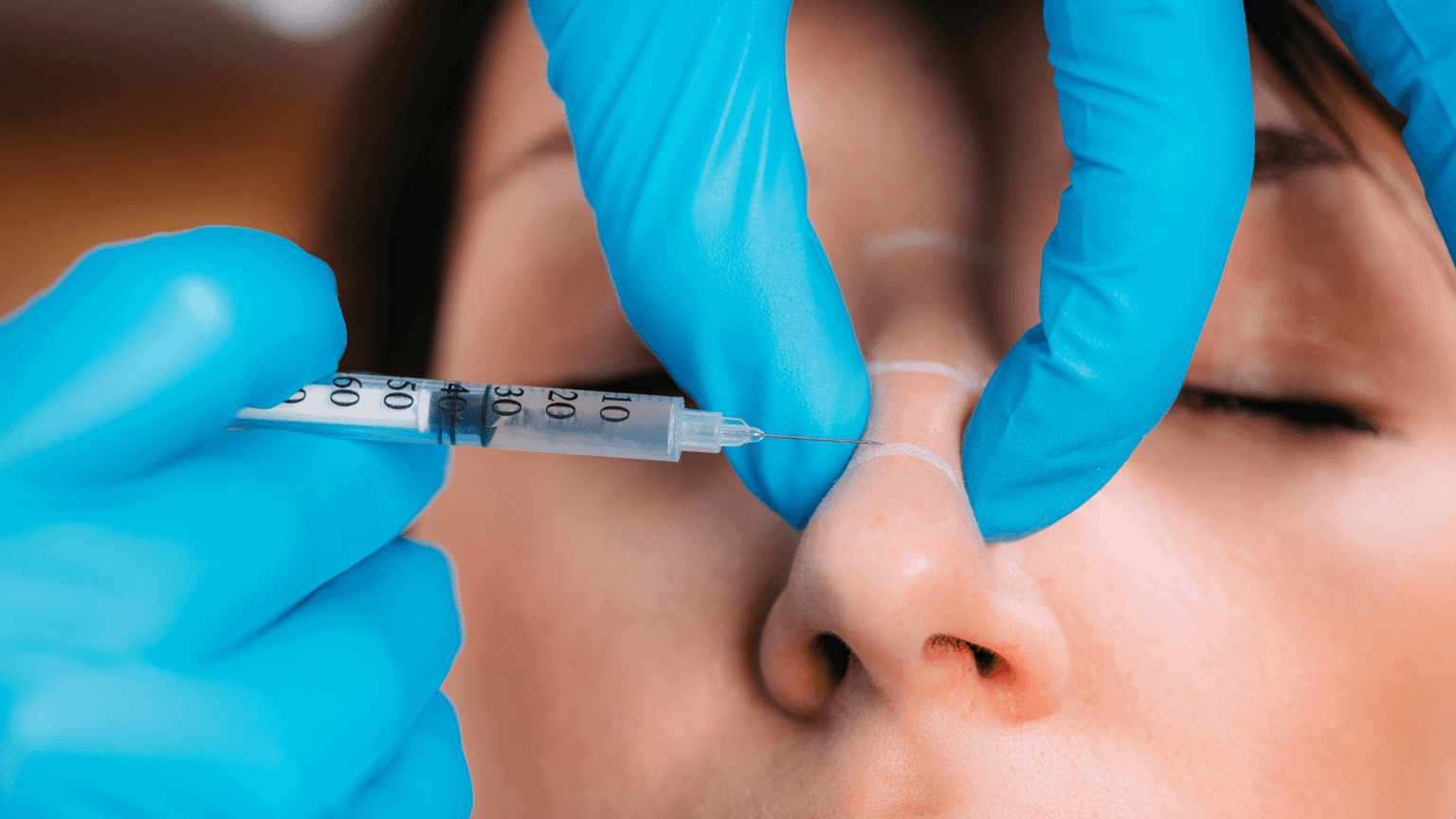
Table of contents
- Facial Filler at a Glance
- What Is Facial Filler?
- Who Is a Good Candidate for Facial Filler?
- What Are the Different Types of Facial Filler?
- Why Visit Korea for Facial Filler?
- Key Information for International Patients
- Which Are the Best Clinics in Korea for Nose Fillers?
- Facial Filler From Start to Finish
- Alternatives to Facial Filler
- How Can I Prepare for Facial Filler?
- Aftercare Advice
Considering treatment in Korea? Everything you need to know e.g. — how to avoid scams, visas, interpreters, recovery tips — in our Medical Tourism Master Guide. Plan with confidence in minutes, not weeks!
Last updated: September 2026
Facial Filler at a Glance
- What it does — Facial filler is an outpatient injectable treatment that restores or adds volume and refines contours in areas such as the cheeks, temples, lips, chin, jawline, and selected folds; it cannot reliably lift major sagging, remove excess skin, or correct substantial skeletal deficiency.
- Results and longevity — Most fillers create immediate visible volume, but the settled result should be judged at about 2 weeks after swelling resolves; hyaluronic-acid filler usually lasts 6–12 months, CaHA about 18 months, while PLLA improves gradually through a series over several months.
- Recovery — Light routine activity is usually possible the same day, but redness, tenderness, swelling, bruising, and temporary asymmetry commonly last 24–48 hours, with visible bruising or swelling sometimes taking 1–2 weeks to settle.
- Best candidates — Suitable candidates have mild-to-moderate hollowing, volume loss, or focal contour concerns and realistic expectations about temporary improvement; treatment is generally postponed for pregnancy, breastfeeding, active acne or skin infection, cold sores, open wounds, or dental infection near the injection area.
- Rare emergency risk — Accidental vascular injection can rarely cause skin necrosis, permanent visual loss, or stroke, especially in high-risk areas including the nose, glabella, forehead, and temple; severe pain, blanching or blue-gray skin, mottling, or any vision symptom requires immediate emergency assessment.
- Korea travel planning — For a first treatment in Korea, plan 3–5 days for an in-person consultation, injection, and early observation, or 7–14 days if an in-person review or time for bruising to settle matters; avoid flying on treatment day when possible and do not travel with warning symptoms.
- Korea-specific verification — Korea’s key distinction is its international-patient registration infrastructure rather than proven better filler outcomes; verify the individual injector, exact product and lot number, English treatment record, and—for HA filler—immediate hyaluronidase and a written vascular-emergency transfer pathway.
What Is Facial Filler?
Facial filler is an injectable gel or collagen-stimulating material used to add or restore soft-tissue volume and refine facial contours. It addresses age-related hollowing, mild contour imbalance, and selected lines, helping create fuller cheeks, lips, chin, jawline, or temples without major surgery. Facial filler is a minimally invasive outpatient procedure.
Who Is a Good Candidate for Facial Filler?
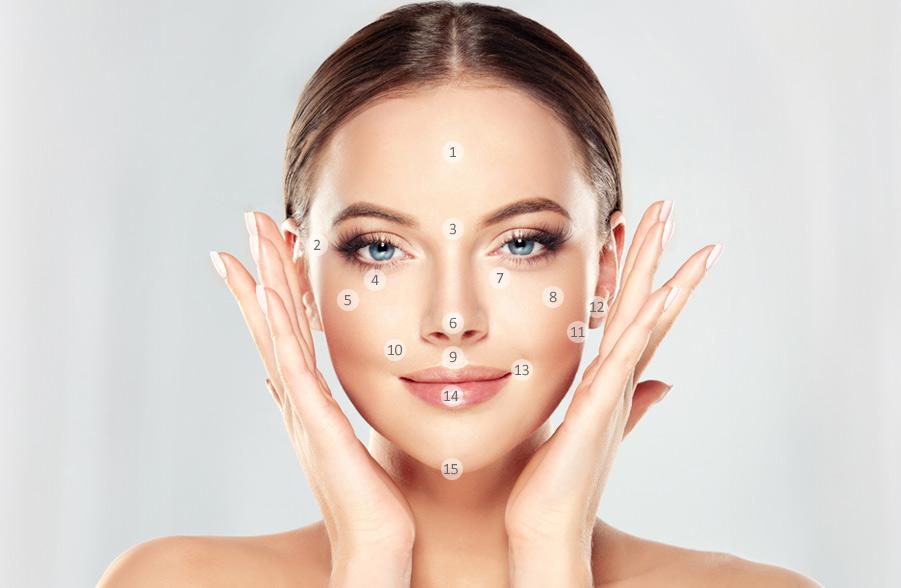
- Volume loss and hollowing — Good candidates want to restore cheek, midface, or temple volume caused by aging or naturally limited soft-tissue volume.
- Focal contour concerns — Filler can refine the lips, chin, jawline, nasolabial folds, marionette lines, and selected under-eye tear-trough concerns when anatomy is suitable.
- Realistic temporary correction — Candidates understand that filler improves mild-to-moderate contour deficiency but does not remove excess skin, reliably lift marked tissue descent, or replace implants or skeletal surgery.
- Prepared international traveler — Overseas patients need enough time for an in-person assessment, early observation, and reliable access to the Korean clinic and medical care at home.
Elective filler is generally deferred during pregnancy and breastfeeding, with active acne inflammation, dermatitis, open wounds, cold sores, dental/oral infection, or other infection near the injection area. Known allergy to the proposed filler or lidocaine, a prior severe filler reaction, persistent nodules, granulomas, unknown or permanent filler, autoimmune disease, immunosuppression, facial implants, or prior facial surgery requires individualized specialist assessment. Adults able to provide informed consent are appropriate; defer treatment where expectations are unrealistic, body-dysmorphic symptoms are present, or another person is applying pressure. High-risk areas including the nose, glabella, forehead, and temple require explicit acceptance of rare but serious risks including tissue necrosis, permanent visual loss, and stroke.
What Are the Different Types of Facial Filler?
Filler selection should follow the treatment area, skin thickness, required structural support, prior filler history, reversibility needs, and willingness to have repeat treatment—not a marketing label.
- Hyaluronic acid (HA) filler — A temporary gel used across many facial areas. Product cross-linking affects firmness, lift, spread, and longevity. HA filler commonly lasts about 6–12 months and has the practical advantage that hyaluronidase can break it down when clinically indicated.
- Calcium hydroxylapatite (CaHA) — Mineral microspheres suspended in gel, generally selected for deeper support or contour in appropriate areas. Results commonly last about 18 months. Hyaluronidase does not dissolve CaHA, and the material can be visible on X-ray.
- Poly-L-lactic acid (PLLA) — A collagen-stimulating biostimulator rather than an immediate volumizer. It is normally given as a series over several months, with gradual improvement over weeks to months; it is not reversible with hyaluronidase.
- Collagen, PMMA, and other materials — Availability and authorized uses differ by jurisdiction. Permanent or difficult-to-reverse materials demand especially conservative selection because delayed complications are harder to manage.
Why Visit Korea for Facial Filler?
For facial filler, Korea’s strongest documented distinction is its international-patient infrastructure, not proven superiority in filler results or complication rates. A registration listing or accreditation is useful for checking an institution, but it does not prove an individual injector’s skill or emergency readiness. Verify the actual clinician and treatment plan before booking.
- Registered international-patient institutions — Medical Korea describes a registration system for institutions treating foreign patients and states that registered institutions have been required to maintain medical-malpractice liability insurance since 2016.
- Language and documentation planning — The same framework can help travelers identify facilities offering language services, accreditation information, and communication support. Request an English treatment record, not simply a receipt.
- Product verification — Korean authorization and indication status are product-specific. Ask for the exact brand, intended use, expiry date, and lot number; a historical MFDS safety communication emphasizes following authorized use and product precautions.
- Emergency preparedness matters more than marketing — For HA treatment, confirm that hyaluronidase is immediately available and ask for the clinic’s written pathway for suspected vascular occlusion, emergency transfer, and urgent ophthalmology referral. Hyaluronidase does not dissolve CaHA, PLLA, or PMMA.
Key Information for International Patients
- Minimum stay — Plan 3–5 days for a first treatment: in-person consultation and injection, time to observe for early complications, and a review or remote check before departure. This is a conservative travel buffer, not an evidence-based mandatory stay.
- Longer itinerary — Stay 7–14 days when a meaningful in-person review, time for bruising or swelling to settle, or staged correction matters. PLLA is poorly suited to a single short trip when the intended plan requires serial sessions.
- Flights — No strong procedure-specific evidence establishes a mandatory no-fly interval after uncomplicated filler. Avoid flying on treatment day when possible, discuss long-haul travel with the injector, and do not fly with escalating pain, blanching or discoloration, visual symptoms, allergic symptoms, or suspected infection.
- Itinerary impact — Light routine activity is usually possible on the day of treatment, but redness, tenderness, swelling, bruising, and temporary asymmetry are common for 24–48 hours. Visible swelling or bruising can take 1–2 weeks to resolve.
- Remote follow-up — Arrange a photo check at 24–72 hours and a settled-result assessment at about 2 weeks. Remote messaging is not adequate for new severe pain, skin colour change, vision symptoms, or suspected infection; obtain urgent in-person assessment.
- Records for care at home — Leave Korea with the injector’s name and credentials, clinic and emergency contact details, product brand, lot number, volume by facial area, injection date, needle or cannula use, photographs, and written aftercare.
Travel note: Stay within practical reach of the clinic or an emergency department for the first 1–2 nights. A companion is not routinely required after topical or local anesthetic, but is sensible with sedation, extensive multi-area treatment, anxiety, or language barriers.
Which Are the Best Clinics in Korea for Nose Fillers?
Listed below are some of the best clinics in Korea for nose fillers.
1. Haru Clinic
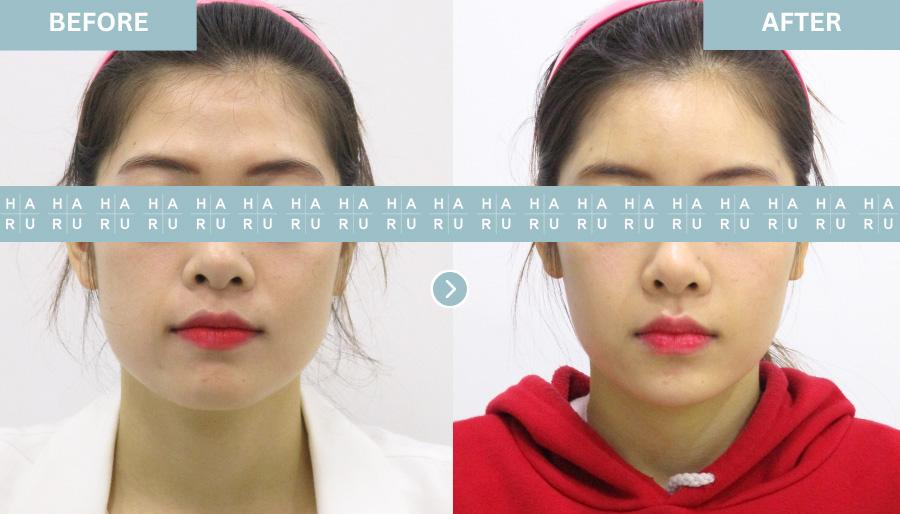
For nose-filler planning, Haru Clinic offers a non-surgical facial-aesthetics approach centered on individualized facial balance. Dr. Jeong’s filler-focused design process aims to harmonize treatment with your existing features, while the clinic also provides nose thread lifting as another non-implant option for bridge and tip definition.
- URL: Haru Clinic Website
- Location: Gangnam-gu, Seoul
- Filler expertise:
- Dr. Jeong is an official research physician at Merz, the company behind Belotero Filler.
- He teaches other doctors the latest filler techniques.
- The clinic describes customized facial design focused on balance and a natural, refreshed result.
- Related non-surgical option:
- Nose thread lifting with PDO or PLLA threads is available to add bridge definition and lift the tip through small entry points.
- The clinic describes immediate thread-lift effects without implants.
- Other facial filler care:
- Fillers are also described for the lips, cheeks, chin, jawline, and tear troughs.
- Haru lists under-eye and lip-asymmetry treatments that may use precise hyaluronic-acid filler placement.
2. B.V Clinic
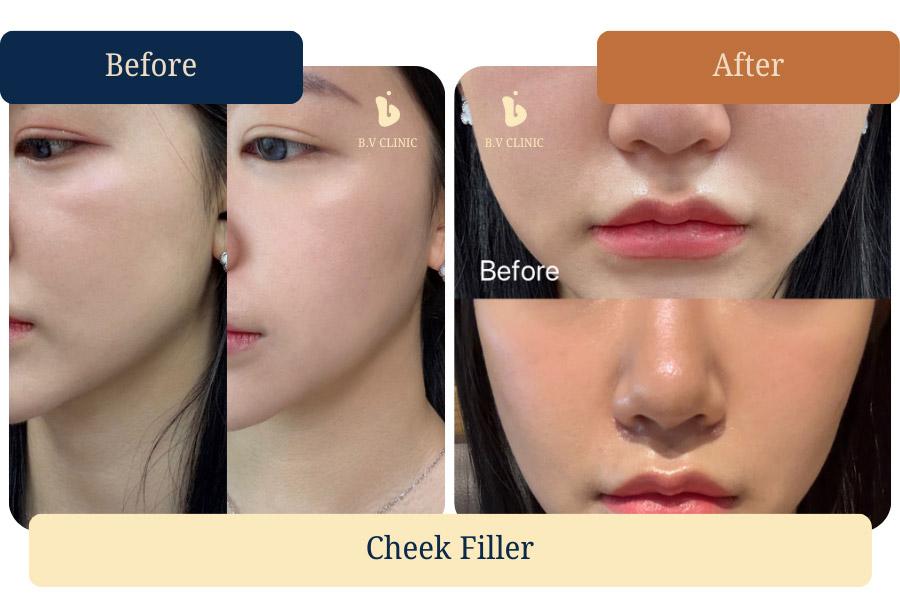
If you are exploring nose fillers, B.V Clinic’s provided information does not specifically list nasal filler treatment. Its documented approach is personalized, non-surgical facial rejuvenation, with thread lifting, skin-tightening technologies, volume-focused care, and post-treatment regeneration management.
- URL: B.V Clinic Website
- Location: Seoul
- Non-surgical facial contouring:
- 3D thread lifting is used to lift and firm sagging skin while supporting collagen production.
- Full-face lifting is described as addressing volume balance, forehead wrinkles, nasolabial folds, and facial asymmetry without surgery.
- Volume lifting focuses on restoring volume and elasticity in depleted facial areas.
- Skin-tightening treatments:
- Shurink Lifting uses high-intensity focused ultrasound for deeper-layer facial tightening and contour refinement.
- Potenza Lifting uses radiofrequency technology tailored to skin needs, including scar and pore-texture concerns.
- Thor Lifting uses radiofrequency for skin tightening and body contouring.
- Aftercare:
- The clinic describes post-treatment skin-regeneration care intended to minimize swelling and support elasticity.
- Aftercare may include nutritional skincare products and ultrasound-based collagen-support treatments.
3. Modelo clinic
For nose-filler inquiries, Modelo Clinic’s supplied information lists facial filler services but does not specifically confirm nasal filler treatment. The clinic emphasizes individualized aesthetics over trends and offers full-face filler for immediate facial volumization alongside tailored contouring and skin-tightening options.
- URL: Modelo clinic Website
- Location: Gangnam-gu, Seoul
- Filler services listed:
- Full-face filler is described for areas including the cheeks, lips, and forehead, with immediate volumizing results.
- Baby Filler targets under-eye hollows and dark circles for a refreshed appearance.
- Individualized aesthetic approach:
- The clinic states that it focuses on your individual features and values rather than following trends.
- Contour Botox is designed to reshape and define facial features with balanced aesthetics in mind.
- Complementary treatments:
- Thread lifting is offered as a minimally invasive option for lifting and tightening sagging skin, with collagen stimulation over time.
- Comfort Thermage uses radiofrequency energy for gradual skin tightening and smoothing.
- Lifting treatments are tailored to individual skin characteristics and aging concerns.
Facial Filler From Start to Finish
- Remote enquiry and screening — Send unfiltered photographs in neutral lighting, medical history, all prior fillers and facial procedures, allergies, medications, and timing goals. Ask whether English or virtual consultation is available. Remote images cannot determine safe injection planes, exact volume, or final suitability.
- Travel coordination — Schedule enough time for post-treatment observation and avoid booking the injection immediately before a domestic connection or long-haul return flight. Confirm local contact methods and the urgent-care pathway before arrival.
- Face-to-face assessment — The injector evaluates facial proportions at rest and in movement, palpates for previous filler or scar tissue, checks for active skin or dental disease, reviews alternatives and risks, and takes standardized photographs. The definitive plan is made in person.
- Consent and product confirmation — Review the proposed material, target areas, expected longevity, reversibility, and risks. Confirm the brand, lot number, expiry date, Korean authorization details, and whether HA filler and hyaluronidase are available.
- Testing and comfort measures — Healthy patients receiving topical or local anesthetic usually do not need routine blood tests. Complex medical history, anticoagulant use, immunosuppression, suspected infection, or planned sedation can require medical clearance or testing. Topical anesthetic, ice, vibration, and filler containing lidocaine are commonly used.
- Injection — After cleansing and marking landmarks, the clinician injects small amounts with a needle and/or blunt cannula, reassessing symmetry and blood-flow warning signs throughout. Neither device eliminates vascular risk; a retrospective survey found fewer reported occlusions per syringe with cannulas, but the observational, self-reported evidence cannot prove universal cannula safety.
- Immediate review and discharge — Treatment is normally outpatient. Avoid trying to perfect minor asymmetry while swelling is evolving. Receive written aftercare, product documentation, and an emergency contact before leaving.
- Early and overseas follow-up — Send requested photographs at 24–72 hours and assess the settled cosmetic outcome at around 2 weeks. Contact the injector immediately for warning symptoms rather than waiting for a planned review.
Alternatives to Facial Filler
The best alternative depends on whether the main concern is volume loss, expression-related lines, tissue descent, or skeletal deficiency. Non-surgical options usually involve less downtime but have limited lifting or structural correction; surgical options can provide more durable structural change with greater recovery and risk.
Botulinum toxin
Facial Botox is better for movement-related forehead, glabellar, and crow’s-feet lines than for static volume loss.
- Best use — Dynamic expression lines caused by muscle movement.
- Tradeoff — Does not replace lost cheek, temple, lip, chin, or jawline volume.
Facial fat grafting
Face fat grafting transfers the patient’s own fat for broader facial volumization.
- Best use — Patients seeking larger-volume restoration and potentially longer-lasting correction.
- Tradeoff — It is surgery; graft survival varies and downtime is greater than with filler.
Collagen boosters
Collagen boosters aim for gradual, diffuse collagen-based improvement.
- Best use — Gradual improvement in generalized volume or skin quality goals.
- Tradeoff — Usually require multiple sessions and are not as readily reversible as HA filler.
Thread lift or facelift
A face thread lift or face lift addresses selected tissue descent rather than simply filling a hollow.
- Best use — Sagging tissue or excess skin is the main concern.
- Tradeoff — Threads have their own complication profile; facelift surgery requires substantially more recovery.
Facial implants
Facial implants or a chin implant can address substantial skeletal deficiency.
- Best use — Structural chin, jaw, or midface underprojection beyond what temporary filler can reasonably camouflage.
- Tradeoff — Invasive surgery, longer healing, and implant-specific risks.
How Can I Prepare for Facial Filler?
- Disclose every injectable history — Provide names and sites of all fillers, including unknown or permanent material, plus prior threads, surgery, implants, laser treatment, radiofrequency, ultrasound, microneedling, chemical peels, and planned dental work.
- Review medicines and supplements early — Tell the injector about aspirin, ibuprofen, naproxen, clopidogrel, warfarin, apixaban, rivaroxaban, fish oil/omega-3, vitamin E, ginkgo, garlic, ginseng, turmeric/curcumin, and St John’s wort. These can increase bruising. Do not stop prescribed aspirin, anticoagulants, or antiplatelet medicines without the prescribing clinician’s instructions.
- Postpone for infection or inflammation — Do not proceed with an acne flare, dermatitis, open wound, cold sore, dental infection, or facial infection in or near the target area. Report recurrent herpes labialis; the clinician can decide whether preventive antiviral medication is appropriate for lip or perioral injections.
- Eat and hydrate normally — Fasting is not usually required for topical or local-anesthetic filler. Follow fasting instructions if sedation or another procedure is planned.
- Avoid alcohol, tanning, and sunburn — Avoid alcohol around treatment, arrive without sunburn or a fresh tan, and avoid smoking or vaping where possible. These measures reduce avoidable swelling, bruising, and healing concerns.
- Plan transport and lodging — Arrange accommodation near the clinic or emergency care for 1–2 nights, keep a working local phone connection, and maintain flexible flights. Taxi or public transport is generally reasonable after uncomplicated local-anesthetic injection; do not drive after sedating medication.
Travel note: Book treatment early enough in the trip that new pain, colour change, or severe swelling can be assessed in Korea rather than managed from an airport or overseas.
Confirm the treating doctor’s clinic-specific medication, fasting, skincare, and travel requirements; individualized instructions take precedence over general guidance.
Aftercare Advice
Protect the treated area and act immediately on symptoms that could signal vascular compromise or infection.
- Swelling and comfort — Use a cool compress intermittently only if advised, without pressing on the injection sites. Sleep with the head elevated when swelling is significant. Ask the clinician which pain medicine is appropriate; acetaminophen/paracetamol is often preferred when avoiding additional bruising is relevant.
- Activity and heat — Avoid strenuous exercise, alcohol, saunas, hot yoga, hot tubs, and excessive heat for at least 24–48 hours. These can worsen swelling and bruising.
- Contact and skincare — Do not massage, press, or try to correct lumps unless directed by the injector. Keep puncture sites clean; use makeup only once sites are closed, often later the same day or the next day according to clinic instructions. Follow product-specific massage advice, particularly after PLLA.
- Sun protection — Once puncture sites have healed, use broad-spectrum SPF 50 and avoid tanning while bruising or inflammation settles.
- Emergency warning signs — Seek urgent injector contact and emergency care for severe or escalating pain; white, gray, dusky, blue, cold, mottled, or net-like skin; blisters; rapidly increasing swelling with colour change; visual disturbance; eye pain; double vision; severe headache; weakness; or speech difficulty. These can indicate vascular compromise, which can cause skin necrosis, irreversible visual loss, or stroke; reported vascular-event reviews stress immediate recognition.
- Prompt assessment signs — Contact the clinic for progressive redness or warmth, pus, fever, persistent painful or hard nodules, ulceration, delayed swelling, suspected migration, or persistent asymmetry. Infection and inflammatory reactions can arise days to months later.
- Result timing and maintenance — Assess the settled result at about 2 weeks, not on injection day. HA filler commonly lasts 6–12 months, CaHA about 18 months, and PLLA develops gradually over a planned series; longevity depends on product, area, injection depth, metabolism, and volume used.
Follow the treating doctor’s instructions over general advice, and contact the clinic promptly whenever something appears wrong.
Frequently Asked Questions
Related Blogs
Neck Wrinkles Solutions: Neck Filler Procedures in Korea for Smoother, Youthful Skin
Discover how Korea leads in neck wrinkle treatments with advanced Neck Filler procedures like hyaluronic acid, calcium hydroxylapatite, and poly-L-lactic acid. This comprehensive guide explores causes of neck aging, treatment techniques, costs, and patient experiences in Korea—a preferred medical tourism destination. Learn about Korea’s expert injectors, affordable pricing, and all-inclusive packa
Updated: Oct 8, 2026
Veiny Hands Solutions: Hand Filler Procedures in Korea for Smooth, Youthful-Looking Hands
Discover how Korea leads in hand rejuvenation treatments to reduce prominent veins and restore youthful hands. This blog covers the causes of veiny hands like aging and genetics, explains popular procedures such as hand fillers—including hyaluronic acid, Radiesse, and fat grafting—and highlights Korea’s affordable, high-quality care for medical tourists. Learn about the step-by-step process of get
Updated: Oct 8, 2026
Under Eye Bags Solutions: Eyelid Filler Procedures in Korea for a Youthful Appearance
Discover effective non-surgical solutions for under eye bags in Korea, featuring eyelid filler procedures such as hyaluronic acid and fat injection treatments. Learn how Korea’s advanced clinics, expert practitioners, and affordable prices make it an ideal destination for medical tourists seeking natural-looking, long-lasting results. This comprehensive guide covers causes of under eye bags, treat
Updated: Oct 7, 2026
Necklace Lines Solutions: Neck Filler Procedures in Korea for Smoother, Youthful-Looking Skin
Discover how Korea leads in neck filler treatments for necklace lines—a common aging concern caused by sun damage, tech neck, and genetics. This blog explores minimally invasive procedures like hyaluronic acid and calcium hydroxylapatite fillers, detailing the process, safety, costs, and patient outcomes in Korea’s top clinics. Learn why Korea’s advanced technology and expert practitioners make it
Updated: Oct 7, 2026
Clinics offering Facial Filler

BongBong Plastic Surgery Dermatology Korea | Body, Breast & Aesthetic Treatments
Nonhyeon

THEPLUS Plastic Surgery Korea | Eye, Nose, Face & Body Surgery
Sinsa

Haru Clinic Korea | Fully-Customized Full-Face Non-Surgical Rejuvenation With Threads, Botox & Fillers
Sinsa

Hev Clinic Korea | Premium Sinsa Clinic for Skin, Laser & Injectables
Sinsa