Medical Tourism Blog
Crepey Arm Skin Solutions: Inmode Body Laser Lifting & Ultracol Procedures in Korea
Table of contents
- Detailed Medical Procedures for Skin Laxity
- Best Clinics in Korea for Crepey Arm Skin
- The Medical Tourism Journey in South Korea
- Financial Analysis and Global Cost Comparison
- Patient Outcomes and Expectations
- References
Considering treatment in Korea? Everything you need to know e.g. — how to avoid scams, visas, interpreters, recovery tips — in our Medical Tourism Master Guide. Plan with confidence in minutes, not weeks!
This guide explores non-surgical solutions for "crepey arm skin," focusing on two cutting-edge treatments: InMode Body Laser Lifting and Ultracol, especially in the context of medical tourism in South Korea. The article covers the definition and root causes of crepey skin, delves into how each procedure works and what patients can expect, then provides a thorough look at planning a treatment trip to Korea. Cost comparisons with the U.S., Canada, Australia, and other destinations highlight South Korea’s affordability. The piece finishes with a balanced overview of patient outcomes and advice for achieving a safe, satisfying treatment experience.
Definition and Etiology: The Science of Skin Laxity
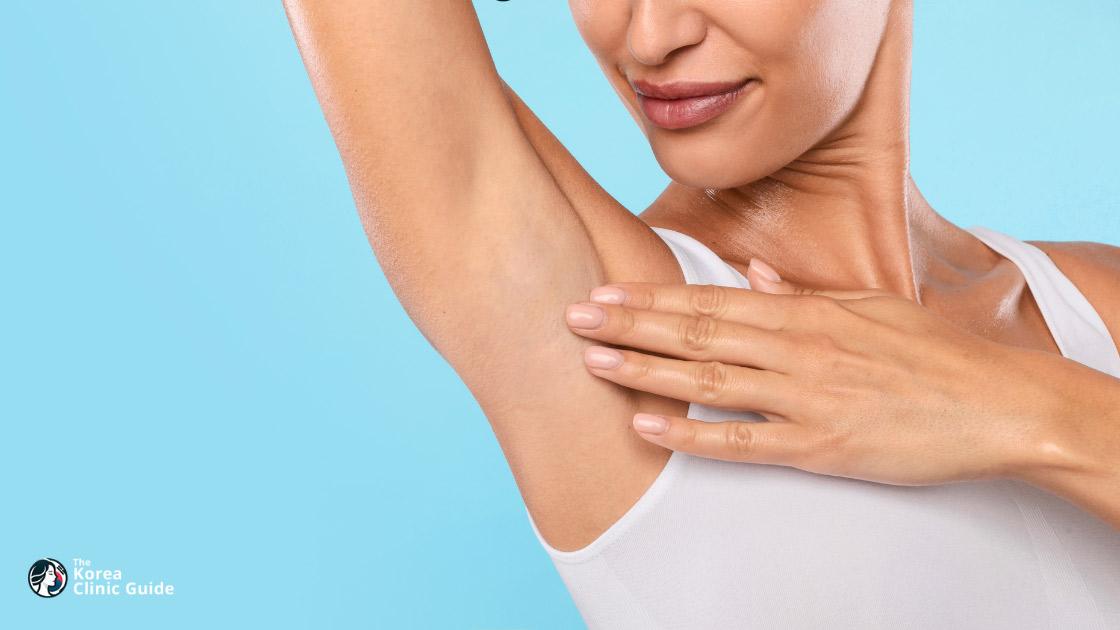
Crepey skin refers to a loss of elasticity that causes the skin to look thin, wrinkled, and delicate—much like crepe paper. While not a medical diagnosis, this term describes a visible and textural change in the skin that's distinct from ordinary wrinkles, affecting larger areas rather than concentrated lines and folds. Medically, crepey skin is best described as a manifestation of skin laxity or thinning skin due to weakened skin structure.
This transformation is largely a product of aging. As early as your twenties, your body gradually produces less collagen, elastin, and hyaluronic acid. Collagen gives skin structure, elastin gives it bounce, and hyaluronic acid maintains suppleness. With time, these components dwindle, and the skin becomes thinner, drier, and looser.
However, aging isn’t the only contributor. Sun exposure (natural or from tanning beds) is the top external accelerator, causing up to 80% of visible skin aging. UV rays break down collagen and elastin, leading to saggy, weak skin. Smoking, weight fluctuations, dehydration, menopause, certain medications like corticosteroids, and genetic factors also play a part in hastening crepey skin.
Common Pseudonyms and Associated Conditions
Besides “crepey skin,” you might encounter terms like “tissue skin,” “thin skin,” or “fragile skin.” These all reference the same underlying loss of support. It’s important to note that crepey skin is different from stretch marks—which are tears in the skin and appear as streaks. Instead, crepey skin points to a deeper issue: skin laxity or sagging skin that calls for rebuilding the skin’s structure.
Foundational Preventative and At-Home Care
Before jumping into advanced procedures, daily habits and prevention are key. Sun protection is the first line of defense: wear SPF 30 or higher every day, seek shade, and use protective clothing. Keeping your skin hydrated is also important—apply thick, emollient moisturizers (ideally when skin is still damp), and choose ones with hyaluronic acid, ceramides, or alpha/beta hydroxy acids for added plumping.
Topical retinoids (vitamin A derivatives) help stimulate collagen growth, bringing back firmness but may cause some initial dryness or peeling. A diet rich in antioxidants, vitamins (A, C, D, E), and omega-3s, with plenty of water and avoidance of smoking and heavy drinking, supports long-term skin health.
Detailed Medical Procedures for Skin Laxity
InMode Body Laser Lifting (BodyFX/MiniFX/Morpheus8)
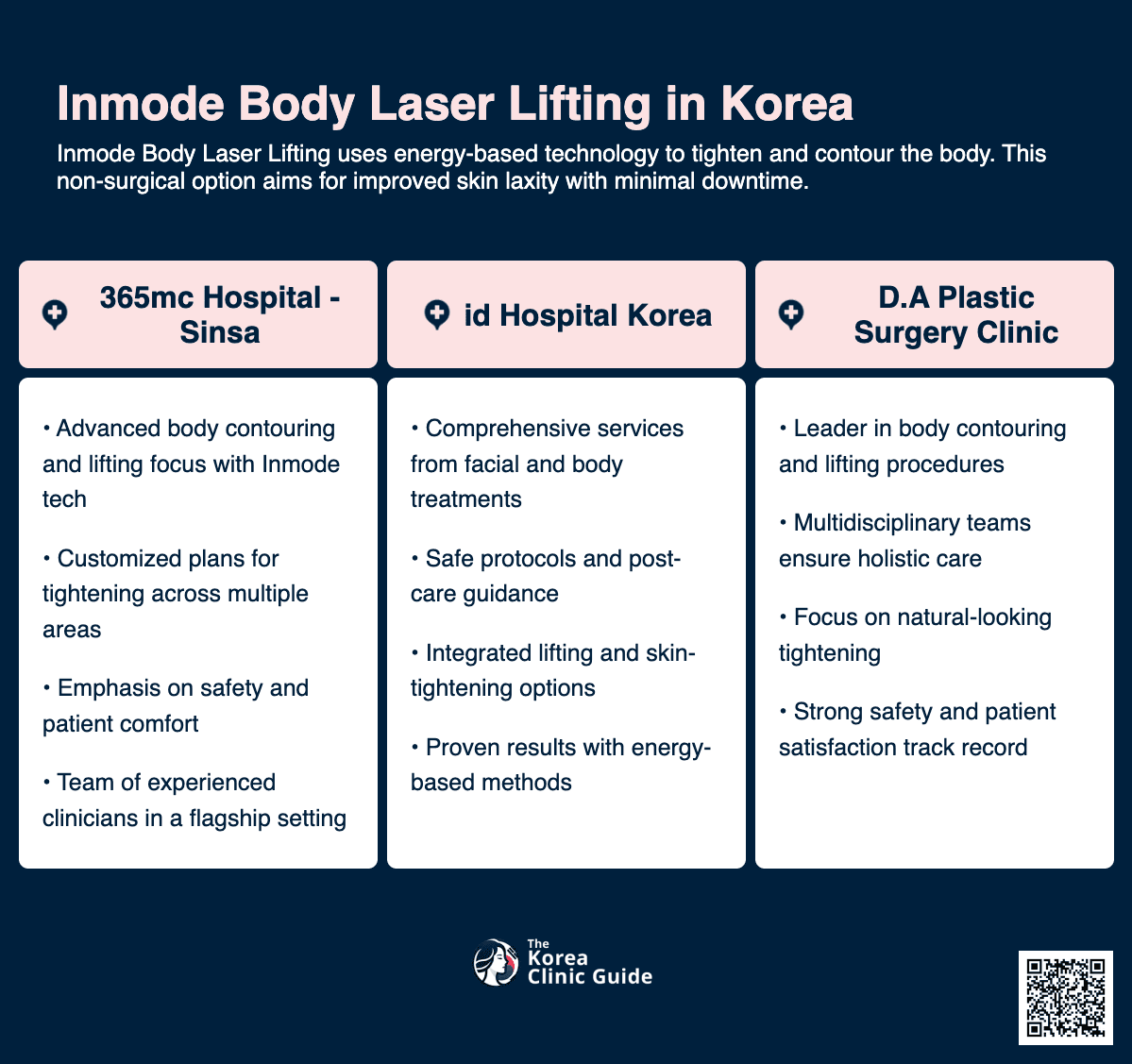
"InMode Body Laser Lifting" represents a suite of technologies—most relevant to crepey arms are BodyFX, MiniFX, and Morpheus8. Here, BodyFX and MiniFX take center stage, specifically targeting both unwanted fat and loose skin.
Mechanism of Action
These devices use a blend of radiofrequency (RF) energy, deep tissue heating, and suction. An applicator pulls the skin and fat upward, bringing it close to RF electrodes. The RF gently heats the area, triggering new collagen and elastin formation for tighter skin, while also pulsing to break down fat cells. The vacuum aspect ensures precise energy delivery and magnifies the effects on both fat loss and skin texture, with each treatment providing incremental improvement.
MiniFX offers pinpoint precision for smaller spots like upper arms. The synergy between tissue heating, suction, and energy pulses makes this technology great for body contouring with minimal side effects.
The Treatment Process and Patient Experience
Sessions are completely non-invasive—no needles, no anesthesia. After an initial assessment, patients are told to keep the treatment area free of lotions on the day of the procedure. During treatment, most people report a warm, gentle tugging, lasting about 20 to 45 minutes per area. Generally, a full series consists of 5 to 8 weekly sessions.
Some see immediate changes in texture, but best results appear 3 to 6 months after the final session. Most experiences are comfortable, resembling a deep-tissue massage; however, in rare circumstances, pain can occur, especially if the clinic isn’t attentive to patient comfort. Choosing a patient-focused provider is crucial.
Downtime is minimal—mild redness, swelling, or occasional bruising clear up in a few days and regular activities can be resumed right after treatment.
Ultracol: The PDO Collagen Stimulator
Ultracol stands out as an injectable collagen stimulator, designed by Ultra V in Korea, utilizing Polydioxanone (PDO) traditionally found in surgical sutures.
Mechanism of Action
Ultracol’s magic lies in its suspension of tiny PDO microspheres—over 2 million in each vial, corresponding in surface area to around 1,400 PDO threads. Once injected, these microspheres provide a scaffold that triggers neocollagenesis—the body’s process of natural collagen formation. The injected PDO is absorbed over six months, gradually leaving new collagen for ongoing skin strengthening and volume enhancement.
A binding agent, carboxymethylcellulose, keeps the product evenly distributed and minimizes clumping or nodules, a common issue with some fillers.
The Treatment Process and Patient Experience
Ultracol treatments are quick (10–15 minutes), following an in-person evaluation. The product is mixed with sterile water and injected with a fine needle into skin or subcutaneous tissue. Results appear gradually—mild improvement within weeks, with optimal results building over two to three months and lasting up to a year with maintenance sessions.
Mild, short-term swelling is common. It’s important to note that although Ultracol is well-documented for facial uses, especially under-eye bags and fine lines, there isn’t direct study data on its use for crepey arm skin—making this an off-label use that should be clearly discussed ahead of time.
Side-by-Side Comparison at a Glance
| Feature | InMode Body Laser Lifting (BodyFX/MiniFX) | Ultracol (PDO Injectable) |
|---|---|---|
| Treatment Type | Energy-based (Radiofrequency) | Injectable (Collagen Stimulator) |
| Mechanism | RF energy, deep tissue heating, suction, and HV pulse | Injected PDO microspheres |
| Primary Function | Fat reduction, cellulite smoothing, skin tightening | Autologous collagen stimulation, volume, lifting |
| Application for Arms | Primary application with MiniFX handpiece | Off-label use; not directly studied |
| Downtime | Minimal to none | Minimal to none |
| Sensation | Gentle warmth, pulling sensation | Mild warmth, pulling sensation |
| Sessions Required | 5-8 weekly sessions | 1-3 sessions for best outcome |
| Onset of Results | 3–6 months gradual improvement | 4–8 weeks gradual improvement |
| Duration of Results | 6–12 months (with maintenance) | 6–12 months (with maintenance) |
Best Clinics in Korea for Crepey Arm Skin
Listed below are the best clinics in Korea for crepey arm skin:
| Clinic Name | Key Features | Special Techniques |
|---|---|---|
| 365mc Hospital - Sinsa | Specialized expertise in arm aesthetics with advanced, safety-focused body contouring techniques addressing residual upper-arm fullness. Arm Liposuction to remove stubborn fat pockets and refine the upper-arm silhouette for a firmer, more sculpted profile, as well as LAMS (Liposuction Assisted Morphological Surgery), a minimally invasive approach that combines liposuction with precise contouring for targeted results and minimal downtime. | Arm Liposuction; LAMS (Liposuction Assisted Morphological Surgery) |
| ID Hospital Korea | ID Hospital Korea is a clinic known for its focus on facial treatments, with an emphasis on achieving safe and beautiful outcomes through plastic surgery. With a patient safety-oriented approach, the clinic provides customized treatment planning designed to match individual needs and goals, making it a trusted option for those seeking professional care for concerns such as crepey arm skin and overall skin quality. In addition to its skin clinic and lifting programs, ID Hospital offers a broad range of aesthetic and reconstructive services, including orthognathic surgery, facial contouring, eye and nose plastic surgery, breast surgery, petit plastic surgery, and dentistry. Patients benefit from systematic post-care designed to support recovery and maintain results, reinforcing the clinic’s commitment to both safety and long-term satisfaction. | Orthognathic surgery; facial contouring; eye and nose plastic surgery; breast surgery; petit plastic surgery; dentistry |
| D.A Plastic Surgery Clinic | DA Plastic Surgery Clinic, conveniently located at Gangnam Station in Seoul, offers a broad range of advanced cosmetic procedures with a focus on enhancing your natural beauty through personalized care. Backed by skilled surgeons and a dedicated staff, the clinic emphasizes a safe, comfortable environment and tailored treatment planning—an important advantage for concerns like crepey arm skin, where outcomes often depend on choosing the right combination of skin-tightening and body-contouring approaches for your specific degree of laxity. | Thermage FLX (radiofrequency-based smoothing and tightening); Ulthera Tuner (ultrasound-based lifting and collagen stimulation); Thread Lifting; Liposuction; Skin Elasticity Treatments |
365mc Hospital - Sinsa
For patients seeking solutions for crepey arm skin in Korea, 365mc Hospital – Sinsa stands out because it pairs specialized expertise in arm aesthetics with advanced, safety-focused body contouring techniques that directly address one of the most common contributors to a “crepey” appearance: residual upper-arm fullness that can make skin look looser and more textured. At this branch, the medical team is dedicated to obesity treatment and appearance enhancement, offering Arm Liposuction to remove stubborn fat pockets and refine the upper-arm silhouette for a firmer, more sculpted profile, as well as LAMS (Liposuction Assisted Morphological Surgery), a minimally invasive approach that combines liposuction with precise contouring for targeted results and minimal downtime. With procedures performed by highly trained professionals using the latest technology and a strong emphasis on responsible care, 365mc Hospital – Sinsa has built a reputation as a leader in South Korea for delivering safe, high-satisfaction outcomes that help the arms look smoother and more toned.
You can check out their website here: 365mc Hospital - Sinsa Website
id Hospital Korea
ID Hospital Korea is a clinic known for its focus on facial treatments, with an emphasis on achieving safe and beautiful outcomes through plastic surgery. With a patient safety-oriented approach, the clinic provides customized treatment planning designed to match individual needs and goals, making it a trusted option for those seeking professional care for concerns such as crepey arm skin and overall skin quality.
In addition to its skin clinic and lifting programs, ID Hospital offers a broad range of aesthetic and reconstructive services, including orthognathic surgery, facial contouring, eye and nose plastic surgery, breast surgery, petit plastic surgery, and dentistry. Patients benefit from systematic post-care designed to support recovery and maintain results, reinforcing the clinic’s commitment to both safety and long-term satisfaction.
Find more about this clinic here: id Hospital Korea Website
D.A Plastic Surgery Clinic
DA Plastic Surgery Clinic, conveniently located at Gangnam Station in Seoul, offers a broad range of advanced cosmetic procedures with a focus on enhancing your natural beauty through personalized care. Backed by skilled surgeons and a dedicated staff, the clinic emphasizes a safe, comfortable environment and tailored treatment planning—an important advantage for concerns like crepey arm skin, where outcomes often depend on choosing the right combination of skin-tightening and body-contouring approaches for your specific degree of laxity.
- Convenient Gangnam Station location, making consultations and follow-up visits more accessible for patients in Korea.
- Personalized treatment planning in a safe and comfortable environment, which is especially valuable for crepey arm skin where severity and skin quality vary widely.
- Comprehensive body-procedure options that can support arm refinement, including liposuction for contouring areas such as the arms.
- Skin-focused solutions designed to address laxity, including Skin Elasticity Treatment options aimed at restoring firmness and elasticity.
- Advanced non-surgical tightening technologies such as Thermage FLX (radiofrequency-based smoothing and tightening) and Ulthera Tuner (ultrasound-based lifting and collagen stimulation), which can be key for improving crepey texture and mild-to-moderate looseness.
- Minimally invasive lifting options like Thread Lifting to support skin for a subtle lift without extensive surgery.
- Broad surgical expertise across facial contouring, lifting, breast, nose, and eye procedures—supporting a high level of aesthetic judgment and precision that benefits natural-looking results in body and skin treatments as well.
Find more about this clinic here: D.A Plastic Surgery Clinic Website
The Medical Tourism Journey in South Korea
South Korea has emerged as a top destination for medical tourists, thanks to its advanced cosmetic technology, excellent care, and competitive pricing. A successful medical trip starts with robust planning.
Pre-Trip Planning: Laying the Foundation
- Research and Initial Consultation: Begin by researching clinics and procedures online. Set up video consultations to ask questions, show your areas of concern, and get quotes. This usually takes a few weeks.
- Clinic Selection: Choose a clinic with the right credentials: look for those accredited by the Korea Health Industry Development Institute (KHIDI) or Joint Commission International (JCI), and confirm the surgeon’s board certification via the Korean Society of Plastic and Reconstructive Surgeons (KSPRS). Consider language services and all-inclusive package options for peace of mind.
- Visa and Travel: Most patients can use visa-free travel or a short-term tourist visa, applying for a Korea Electronic Travel Authorization (K-ETA) about a month in advance. Book hotels close to the clinic—popular locations include Gangnam or Apgujeong—and give yourself 10–14 days for treatments and recovery.
The On-Site Experience: Arrival to Recovery
- Arrival and Consultation: Many clinics offer airport pickups and rapid patient onboarding. The first in-person meeting confirms your plan.
- Procedure Day: For non-surgical options like these, treatments are quick and usually don’t require hospital admission.
- Recovery: Use your clinic’s support for initial aftercare and any needed follow-ups before you depart.
Post-Trip Care and Risk Management
- Records and Home Follow-Up: Secure English-language medical records to share with your home doctor. Top clinics offer remote follow-up by video or email—confirm this is in place ahead of time.
- Risk Awareness: Most issues are rare, but managing aftercare from abroad and bridging language differences can be challenging. Patient testimonials highlight the importance of selecting a clinic with caring staff and strong communication practices.
Financial Analysis and Global Cost Comparison
Medical tourists are often motivated by cost savings—and with good reason when comparing Korea to the West.
Costs in South Korea
InMode Body Laser Lifting sessions in Korea typically cost $275 to $413 USD. Packages for multiple sessions may run from $495 to $895 USD for full-face treatments.
Ultracol injectables are especially affordable—single sessions can start as low as $78.54 USD and go up to $392.70 USD, usually including the procedure and aftercare.
Comparative Global Costs
InMode Lifting
The price gap is stark: the same procedure costs $3,000–$5,000 USD per session in the United States. In Canada, it’s $2,000–$3,500 USD; Australia matches the U.S.; the UAE charges $3,500–$5,000 USD. Turkey and Mexico are lower but may introduce more variability in care standards.
| Country/Region | Average Cost (USD) | Notes |
|---|---|---|
| South Korea | $275–$413 | All-inclusive packages, high-tech clinics, regulated market |
| USA | $3,000–$5,000 | Itemized billing, high care standards, but costly |
| Canada | $2,000–$3,500 | Comparable to U.S., smaller market |
| Australia | $3,000–$4,500 | Pricing similar to U.S. |
| UAE | $3,500–$5,000 | Premium destination, expensive |
| Turkey | $150–$2,000 | Competitive prices, but variable standards |
| Mexico | $1,000–$3,000 | Affordable, but check safety and quality |
Ultracol Injectables
In Korea, the patient cost might be as little as $78.54 USD per session; in the U.S., just the wholesale price is $299 USD, with the final clinic charge much higher.
These numbers reflect more than simple discounts—they represent a patient-centered pricing system with quality aftercare built in, making South Korea especially compelling for international patients.
Patient Outcomes and Expectations
InMode for Crepey Skin
Clinical studies and patient stories indicate InMode technologies can help significantly with crepey skin, smoothing out texture and tightening loose areas over a series of sessions. Reviews stress the importance of the provider’s expertise—some report “painless, effective treatment,” while others cite discomfort due mainly to inattentive staff. A skilled practitioner and supportive clinic are essential to a positive experience.
Ultracol Experience
Ultracol gets high marks for facial rejuvenation—patients frequently see better elasticity, fewer lines, and under-eye improvements. However, no direct evidence currently supports its use on arms, so patients considering it for crepey arm skin should discuss realistic goals and understand that this is an off-label use.
Patient-Centric Advice
Results from InMode and Ultracol are noticeable and can improve texture and tone but are not replacements for surgical arm lifts in cases of severe excess skin. Success comes from the right technology, provider skill, and an informed, proactive approach:
- Confirm practitioner experience with arm treatments.
- Ask about pain management.
- Ensure remote aftercare is available.
By approaching treatment with careful research and clear communication, patients can safely enjoy the benefits of these advanced, non-surgical solutions in Korea or abroad.
References
1, 2, 3, 4, 5, 6, 7, 8, 9, 10, 11, 12, 13, 14, 15, 16, 17, 18, 19, 20, 21, 22, 23, 24, 25, 26, 27, 28, 29, 30, 31, 32, 33, 34, 35, 36, 37, 38, 39, 40, 41, 42, 43, 44, 45, 46, 47, 48, 49, 50, 51, 52, 53