Medical Tourism Blog
LAMS in Korea: Technique, Recovery, Travel Planning, and Alternatives

Table of contents
- LAMS at a Glance
- What Is LAMS?
- Who Is a Good Candidate for LAMS?
- How Is LAMS Performed?
- Why Visit Korea for LAMS?
- Key Information for International Patients
- Which Are the Best Clinics in Korea for Lams?
- LAMS From Start to Finish
- Alternatives to LAMS
- How Can I Prepare for LAMS?
- Aftercare Advice
Considering treatment in Korea? Everything you need to know e.g. — how to avoid scams, visas, interpreters, recovery tips — in our Medical Tourism Master Guide. Plan with confidence in minutes, not weeks!
Last updated: October 2026
LAMS at a Glance
- What it is — LAMS is a Korean-branded, minimally invasive fat-extraction procedure: tumescent/local anesthetic is used while a blunt cannula and syringe remove small localized fat deposits at low pressure, usually with the patient awake.
- Best candidates — It is intended for people at a stable weight with a defined subcutaneous fat pocket, reasonable skin elasticity, and realistic contouring goals; it is not a treatment for obesity, major weight loss, or significant loose skin.
- Early recovery — Walking is often possible the same day once pain and dizziness are controlled, but bruising, swelling, tenderness, numbness, fluid leakage, and temporary unevenness are common; keep activity light for the first 3–7 days.
- Results and longevity — Removed fat is physically gone, but remaining fat cells can enlarge with future weight gain; early swelling can distort the contour, and available LAMS studies assessed patients at 1 and 3 months without establishing a universal final-result or repeat-treatment timeline.
- Korea stay requirement — International patients should plan to remain in Korea for at least 7 days and attend an in-person review before a long-haul flight; a 10–14-day stay is more prudent after multiple areas or when swelling, medical risks, or clot risk are greater.
- Key safety limitation — LAMS is still an invasive cannula-based procedure with risks including infection, bleeding, anesthetic toxicity, contour irregularity, sensory changes, and travel-related blood clots; ask for written anesthetic doses, aspirate volume, and the full ingredients and doses of any post-extraction injection.
- Korea-specific distinction — LAMS was launched by 365mc in Korea in 2014 and its published data come largely from that provider network; observational studies do not prove it has less downtime, fewer complications, or better long-term outcomes than conventional liposuction or other contouring options.
What Is LAMS?
LAMS is a branded body-contouring procedure that removes small, localized fat deposits through tiny skin punctures using local anesthetic and a narrow suction tube. It aims to improve the shape of areas such as the abdomen, thighs, arms, flanks, or under the chin rather than cause weight loss or reliably tighten loose skin. LAMS is minimally invasive, not non-surgical, because it uses a cannula to extract fat.
Who Is a Good Candidate for LAMS?
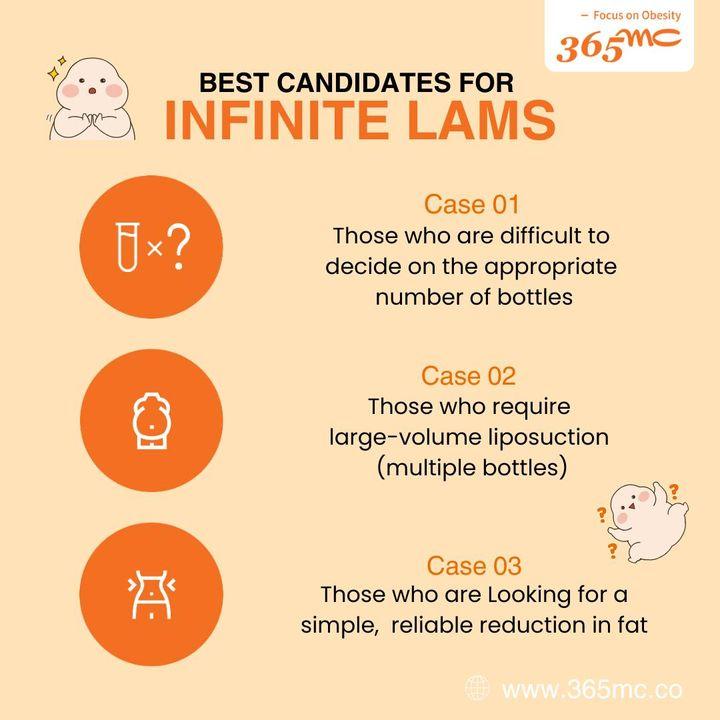
- Localized fat concern — Good candidates want contour improvement in a small, defined subcutaneous fat deposit, such as the abdomen, flanks, thighs, arms, hips, calves, or under-chin area; LAMS is not a weight-loss treatment.
- Stable weight and realistic goals — Candidates are at a stable weight and understand that extracted fat is removed but remaining fat cells can enlarge with later weight gain; LAMS does not reliably tighten loose skin.
- Favorable tissue quality — Adequate skin recoil and limited laxity help reduce the chance that fat removal leaves visible rippling, hollowness, or loose skin.
- Suitable for awake treatment — The procedure is performed with local/tumescent anesthesia, so candidates must be able to remain awake, cooperative, and comfortable during cannula-based extraction.
- Reliable recovery plan — Safe accommodation, a reachable phone number, an in-person Korean follow-up appointment, and ideally a companion for the first night are important for overseas patients.
LAMS should be postponed during pregnancy or breastfeeding and is unsuitable with active infection, fever, open wounds, or uncontrolled medical disease that compromises anesthesia safety or healing. A clinician must assess diabetes, heart, lung, liver, kidney, immune, bleeding, and clotting conditions, as well as prior liposuction, injections, scars, fibrosis, nicotine use, skin laxity, and a history of deep-vein thrombosis or pulmonary embolism. Do not independently stop prescribed warfarin, apixaban, rivaroxaban, clopidogrel, aspirin, or other anticoagulant/antiplatelet medicine; obtain an individualized plan from the prescribing clinician. Major weight-loss expectations, obesity treatment, substantial loose skin, body dysmorphic concerns, or inability to arrange follow-up are reasons to select another approach or defer treatment.
How Is LAMS Performed?
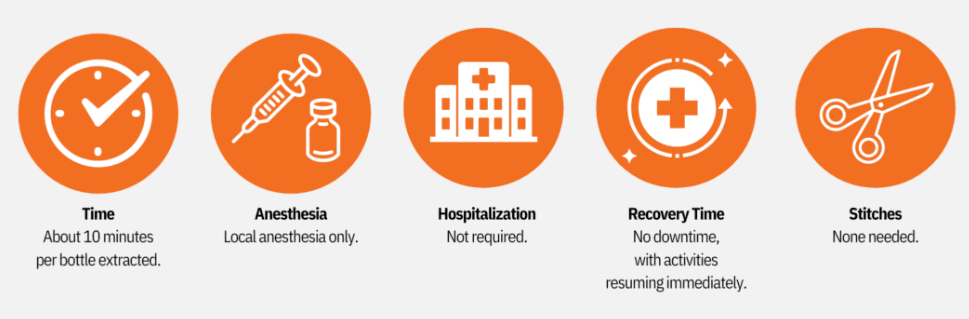
LAMS has no independently validated patient-facing “types.” Meaningful differences concern the treatment extent, tumescent anesthetic formula, aspiration technique, and any injections added after fat extraction.
- Treatment area and extent — The procedure can target limited fat deposits in areas including the abdomen, flanks, thighs, arms, hips, calves, and submental region. Larger or multiple-area treatment increases bruising, swelling, anesthetic exposure, recovery demands, and travel risk.
- Tumescent infiltration — Local anesthetic fluid is infiltrated into the fat before extraction. A 2025 retrospective study of 147 abdominal LAMS patients compared half-saline with normal-saline fluid; its nonrandomized design does not establish that one formula is superior for all patients or body areas.
- Low-pressure syringe extraction — The published description uses a syringe connected to a small blunt catheter, removing fat at low pressure after tumescent anesthesia. This distinguishes the technique from machine-assisted aspiration but does not prove fewer complications than conventional liposuction.
- Post-extraction injections — Some protocols include a named “fat-dissolving” solution after extraction. Request the complete ingredient list, concentrations, total injected volume, intended purpose, and regulatory information in English before consent; do not accept an undisclosed injectable cocktail.
- Commercial package units — “Bottle” counts are provider-specific commercial terms, not standardized measures of aspirate volume or lidocaine exposure. Request the planned areas, estimated fat aspirate, tumescent-fluid volume, anesthetic dose, and every additional injection in writing.
Why Visit Korea for LAMS?
LAMS originated in Korea as a branded procedure developed and marketed by 365mc, rather than a regulator-defined generic technique. Korea is therefore the setting where the named protocol and its provider-network experience are most established. That origin does not establish better safety or outcomes at every clinic or for every patient.
- Korean origin of the branded protocol — 365mc reports that it launched Local Anesthetic Minimal-invasive lipo-Suction (LAMS) in 2014 and describes syringe-based, low-pressure fat extraction through a blunt catheter after local/tumescent infiltration in its provider account of the procedure.
- Published provider-network data — A 2025 observational study of 3,832 LAMS patients across 20 branches provides procedure-specific data from the Korean provider network. It examined self-reported edema and body-composition associations, not independently audited complication rates or comparisons with other treatments.
- Evidence limitations — The identified LAMS studies are observational and provider-network associated. No randomized or independently replicated comparison proves that LAMS produces less downtime, less scarring, fewer complications, or better long-term contour than conventional tumescent liposuction, injection lipolysis, or cryolipolysis.
- Case-by-case safety checks — Confirm the treating clinician’s qualifications, who performs infiltration and extraction, the monitoring and emergency-transfer plan, exact anesthetic and injectable doses, and the plan for complications after returning home.
Key Information for International Patients
- Minimum stay — Plan to remain in Korea for at least 7 days after treatment, including an in-person wound and symptom review before a long-haul flight. This is a conservative liposuction-type travel plan, not a validated LAMS-specific flight protocol.
- Longer-stay situations — Allow roughly 10–14 days after multiple treated areas, substantial bruising or swelling, relevant medical comorbidities, prior venous thromboembolism, or when a long-haul flight is unavoidable.
- Flight timing and clot prevention — Do not book a return flight immediately after treatment. Obtain clinician clearance, walk regularly once cleared, avoid prolonged immobility, and follow a clinician-specific thrombosis plan when clot risk is elevated.
- Early recovery and itinerary — Walking is generally possible on the day of treatment once dizziness and pain are controlled, but tenderness, numbness, fluid leakage from puncture sites, bruising, and swelling can limit sightseeing. Keep the first 3–7 days light.
- Visible swelling — In the 3,832-patient cohort, 90.34% reported mild edema and 5.61% reported moderate-to-severe edema. These are self-reported edema classifications, not audited rates of infection, seroma, hematoma, anesthetic toxicity, clotting events, revision, or satisfaction.
- Remote follow-up — Get complete records before departure: assessment, consent, procedure note, treated areas, aspirate volume, tumescent ingredients and doses, all post-extraction injections, supplied medicines, complications, and urgent-contact details. Remote photos cannot safely rule out a serious complication.
Travel note: Bring a companion for the first night whenever multiple areas are treated, sedating medication is used, language barriers exist, or traveling alone would make urgent help difficult. Do not drive, use a motorcycle, or take public transit alone while dizzy or after sedatives.
Which Are the Best Clinics in Korea for Lams?
Listed below are some of the best clinics in Korea for lams.
1. 365mc Hospital
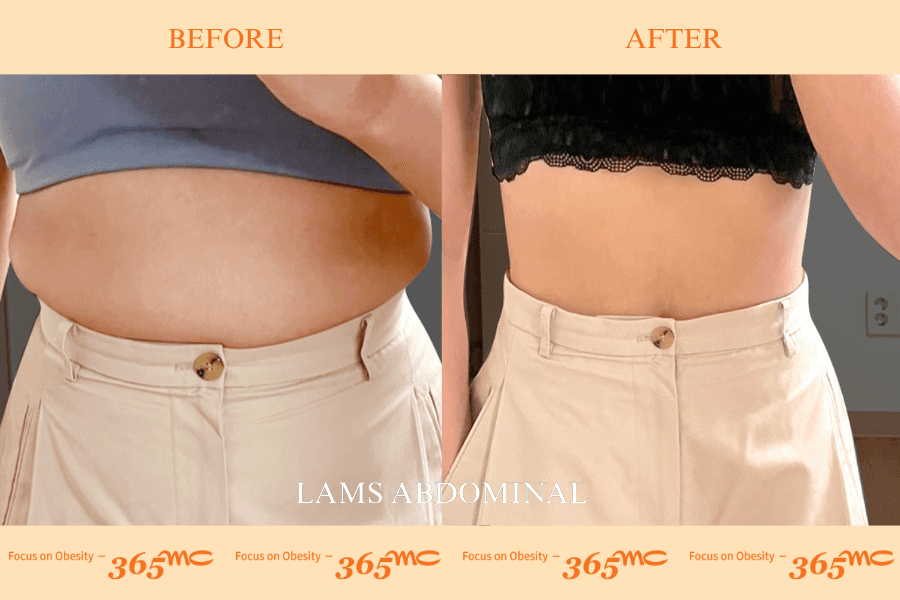
At 365mc Hospital, LAMS is presented as a local-anesthetic, minimally invasive fat-reduction approach that combines targeted fat extraction with fat-dissolving injections. It is intended for areas of localized fat and cellulite when you want visible contour change with minimal downtime and no incision-related scarring described in the clinic materials.
- URL: 365mc Hospital Website
- Location: Gangnam-gu, Seoul
- LAMS approach:
- The clinic describes four stages: tunneling, fat extraction, injection of a fat-dissolving solution, and post-procedure management.
- LAMS is designed to directly remove fat cells while targeting uneven, cellulite-prone areas.
- The cited LAMS clinical-study results report that more than 70% of participants noticed cellulite improvement and more than 60% had a reduction in cellulite grade.
- Recovery support:
- You receive one-to-one intensive care in a dedicated Recovery Center on the day of surgery.
- A structured post-operative program of about six to seven weeks may include hyperbaric oxygen chamber therapy and individualized dietary consultations.
- Dietary counseling is tailored to your lifestyle, eating habits, and nutritional needs, with meal-diary app support for ongoing monitoring.
- Body-contouring services:
- The clinic provides liposuction and contouring for areas including the abdomen, back, chest, hips, neck, thighs, and arms.
- Its M.A.I.L. system, developed in collaboration with Microsoft according to the clinic, uses motion capture and AI-assisted real-time surgical feedback.
- 365mc reports a network of 18 clinics, 22 main doctors, more than 3,000 surgical liposuction cases, and 5 million treatments.
2. 365mc Hospital - Sinsa
At 365mc Hospital - Sinsa, LAMS is described as a minimally invasive body-contouring procedure that combines targeted fat removal with contour refinement, aiming for visible change with minimal downtime. The clinic’s materials also position LAMS for localized fat and cellulite concerns, including areas that may be resistant to diet and exercise.
- URL: 365mc Hospital - Sinsa Website
- Location: Seoul
- LAMS and cellulite:
- The procedure is described as directly removing fat cells while breaking down stubborn cellulite.
- The clinic cites LAMS study findings in which more than 70% of participants reported noticeable cellulite improvement and more than 60% showed a reduced cellulite grade.
- Your treatment is performed by trained professionals using current technology, according to the clinic.
- Areas addressed:
- Available liposuction services include the abdomen, upper arms, thighs, waist and flanks, and facial areas such as the chin and neck.
- These options are intended to refine contours in specific areas rather than provide a one-size-fits-all approach.
LAMS From Start to Finish
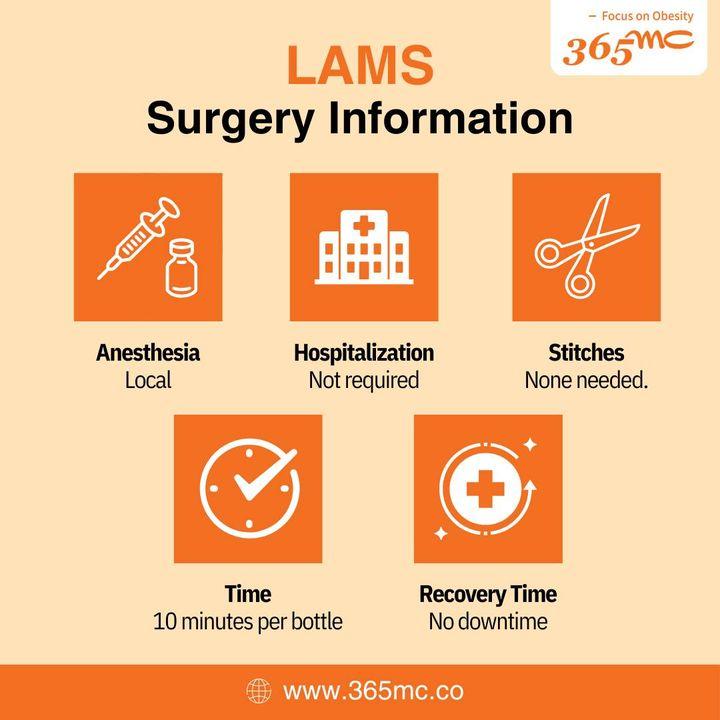
- Remote inquiry and consultation — Submit unedited photographs, current weight and weight-change history, target areas, previous liposuction or injections, medication and supplement list, allergies, nicotine use, pregnancy possibility, medical conditions, and clot history. Ask whether English or virtual consultation is available, who performs each stage, and what emergency support is available.
- Written treatment plan — Obtain the proposed treatment areas, estimated aspirate volume, tumescent-fluid volume, lidocaine and epinephrine doses, post-extraction injectables, anticipated procedure duration, compression plan, and follow-up schedule. Clarify that a package or “bottle” count is not a standardized clinical dose.
- Arrival and in-person assessment — Attend before treatment rather than directly after an overnight flight. The clinician examines skin recoil, fat thickness, scars, fibrosis, asymmetry, and prior treatment changes; photographs and skin markings are commonly used. Testing is ordered only when indicated because no universal LAMS laboratory panel has been established.
- Consent and anesthesia planning — Review local-anesthetic allergies, medication interactions, bleeding and clot risk, and the expected awake experience. The clinic disinfects the area and infiltrates tumescent/local anesthetic; fasting requirements depend on whether sedation is planned.
- Fat extraction — Small skin punctures permit insertion of a narrow blunt cannula into subcutaneous fat. Published LAMS descriptions use manual syringe aspiration at low pressure, and pressure or pulling can still be felt while awake. Some protocols offer an additional injection afterward; consent only after reviewing its exact ingredients and dose.
- Observation and discharge — Leave only when vital signs, pain, nausea, dizziness, and walking are satisfactory and the written wound-care and emergency instructions are understood. Use arranged transport to nearby accommodation.
- Korean review before departure — Attend an in-person review to assess puncture sites, swelling, bruising, contour, pain, mobility, and flight readiness. Escalating pain, asymmetric swelling, fever, wound drainage, or breathing symptoms require in-person assessment, not reassurance by message.
- Home follow-up — Keep the Korean clinic’s records and arrange local medical care if recovery is not straightforward. A 2025 LAMS cohort assessed outcomes at one and three months, but it did not establish a universal final-result or repeat-treatment timeline.
Alternatives to LAMS
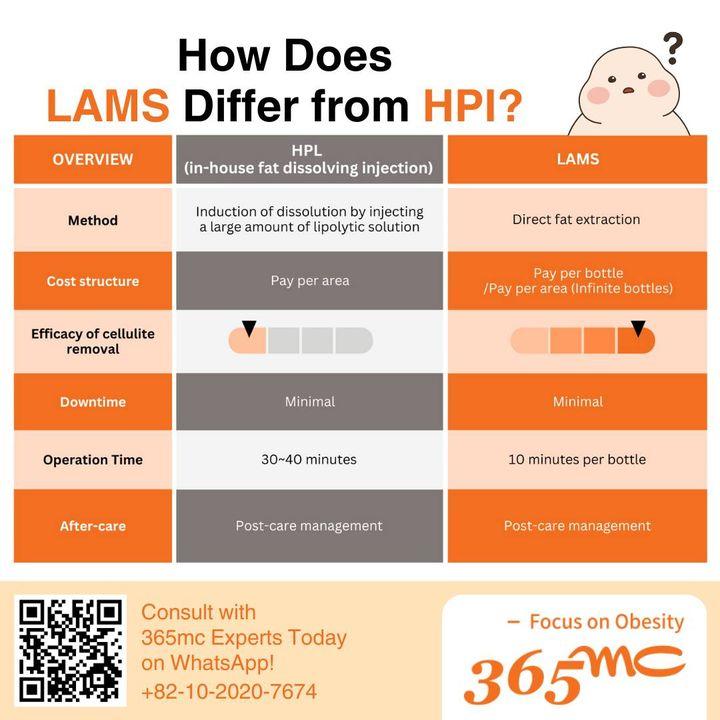
The right alternative depends on whether the main issue is a small fat pocket, generalized weight gain, skin laxity, or a need for more extensive contour change. Direct fat removal is more invasive but generally gives a more immediate structural change; non-surgical options avoid cannula extraction but often require multiple sessions and produce more gradual or limited change.
Mini-Liposuction
- Best fit — Mini-liposuction is the closest established direct-fat-removal alternative for localized deposits when a conventional liposuction approach is preferred.
- Tradeoff — It remains a cannula-based invasive procedure with bruising, swelling, contour irregularity, anesthetic, infection, and travel-related clot considerations.
Abdominal Liposuction
- Best fit — Abdominal liposuction is more appropriate when abdominal fat removal needs to be broader or more precisely planned than a limited LAMS session.
- Tradeoff — Greater treatment extent generally means a more demanding recovery and longer travel buffer.
Fat-Dissolving Injection
- Best fit — Fat-dissolving injection can suit selected small deposits when avoiding cannula extraction is the priority.
- Tradeoff — Multiple sessions are often needed, swelling can be substantial, and the product, approved indication, dose, and safety profile vary by country and treatment area.
Cryolipolysis
- Best fit — CoolSculpting is a noninvasive cooling option for selected, pinchable bulges.
- Tradeoff — Results emerge gradually and the procedure has its own adverse-effect profile; it does not remove fat through aspiration.
Radiofrequency-Assisted Contouring
- Best fit — BodyTite can be considered when modest skin tightening is an important objective alongside fat reduction.
- Tradeoff — Device-based heating introduces thermal injury and other procedure-specific risks, and it does not replace skin excision when laxity is substantial.
Skin-Excision Surgery
- Best fit — A tummy tuck or area-specific lifting surgery is more appropriate when excess skin is the dominant concern.
- Tradeoff — Surgery leaves longer scars and requires more recovery time, but it addresses laxity that fat extraction alone can worsen.
How Can I Prepare for LAMS?
- Disclose medicines and supplements — Provide every prescription medicine, over-the-counter drug, herbal product, vitamin, injectable weight-loss medicine, and recreational substance before the consultation. Do not independently stop warfarin, apixaban, rivaroxaban, clopidogrel, aspirin, diabetes medicine, blood-pressure medicine, or psychiatric medicine; obtain prescribing-clinician advice.
- Review allergies and medical history — Report previous reactions to lidocaine, epinephrine, antiseptics, antibiotics, dressings, sedatives, or injectable products, plus bleeding disorders, diabetes, heart or lung disease, clot history, prior procedures, and healing problems.
- Stop nicotine only on a clinician-set schedule — Cigarettes, vaping, nicotine pouches, and other nicotine exposure can impair healing. Follow the treating clinician’s individualized cessation requirement and disclose recent use honestly.
- Follow fasting instructions exactly — Local-anesthetic treatment does not automatically mean fasting is unnecessary. Ask specifically whether sedation, anti-anxiety medication, or pain medication changes the eating and drinking plan.
- Avoid alcohol and recreational drugs — Avoid them for the clinic-specified period before and after treatment because they can affect bleeding, dehydration, medication safety, judgment, and recovery.
- Plan arrival and lodging — Arrive before, not immediately after, an overnight flight. Stay near the clinic, keep a working phone and data access, arrange private transport after treatment, and choose accommodation suitable for a quiet recovery.
- Build flexibility into travel — Do not schedule a fixed long-haul return before the in-person review. Book flexible flights and leave room for swelling, bruising, wound concerns, or a clinician-directed delay.
- Prepare the treatment area — Follow clinic instructions about bathing, shaving, lotions, self-tanner, and clothing. Wear loose garments that do not rub puncture sites or compress treated areas unless prescribed compression is provided.
Travel note: Arrange a companion for the first night, particularly after multiple areas or sedating medicines. Keep the first week free of strenuous sightseeing and activities that would make a wound review difficult.
Confirm the treating doctor’s medication, fasting, nicotine, compression, transport, and testing requirements before travel; individualized instructions take precedence over general guidance.
Aftercare Advice
Protect the puncture sites, stay mobile without overexertion, and treat early contour changes as healing rather than a final result.
- Walking and activity — Walk gently once cleared to avoid prolonged immobility, but keep activity light for the first 3–7 days. Resume gym exercise, heavy lifting, running, and other strenuous activity only when the treating clinician clears it; firmness, altered sensation, swelling, and unevenness can persist for weeks.
- Wound care — Keep puncture sites clean and dry exactly as instructed. Some fluid leakage after tumescent treatment is expected, but do not apply creams, massage, heat, ice, compression, lymphatic drainage, or devices unless the clinic provides area- and timing-specific directions.
- Heat, water, and alcohol — Avoid swimming, hot tubs, saunas, hot baths, alcohol, and intensive sightseeing until cleared. These restrictions matter because bleeding, swelling, dehydration, wound contamination, and dizziness are harder to manage away from the clinic.
- Swelling and contour expectations — Bruising, tenderness, numbness or tingling, swelling, and temporary firmness are common. Do not judge the contour early: the available LAMS study used one- and three-month assessments but did not establish a universal final-result timeline.
- Flights and follow-up — Attend the Korean in-person review before long-haul travel. Continue the clinician’s mobility and clot-prevention plan during travel, and retain all records for a clinician at home.
- Urgent warning signs — Seek urgent in-person care for fever, spreading redness or warmth, pus or foul drainage, uncontrolled bleeding, rapidly increasing one-sided swelling, severe or worsening pain, fainting, persistent vomiting, rash or facial swelling, confusion, tinnitus or metallic taste, seizures, calf pain or swelling, chest pain, shortness of breath, or coughing blood.
Follow the treating doctor’s instructions over general advice and contact the clinic promptly when recovery appears abnormal; do not rely on remote photographs for severe pain, infection concerns, asymmetric swelling, or cardiopulmonary symptoms.
Frequently Asked Questions
Related Blogs
Male Body Sculpting in Korea: Transform Your Physique with CoreSculpt Procedures
Discover how Korea leads in advanced body contouring for men, featuring both surgical options like liposuction and abdominoplasty, and non-surgical treatments such as Cryolipolysis (CoolSculpting) and HIFEM technology (Emsculpt). Learn how Korea’s cutting-edge procedures target stubborn fat and build muscle effectively, with minimal downtime. Whether seeking quick, non-invasive results or more dra
Updated: Nov 21, 2026

Saddling Jowls Sagging? Top Korea Face Liposuction and BodyTite Procedures to Rejuvenate Your Look
Discover effective solutions for sagging jowls in Korea, including Face Liposuction and BodyTite procedures. Known for cutting-edge technology, skilled surgeons, and affordable prices, South Korea is a top destination for medical tourists seeking jawline rejuvenation. This article explores causes of jowls, detailed procedure insights, recovery, costs, and why choosing Korea guarantees safe, high-q
Updated: Nov 21, 2026

Say Goodbye to Beer Belly: CoolSculpting Procedures in Korea for Effective Belly Fat Reduction
Discover how Korea leads in non-invasive treatment for "beer belly" related to abdominal obesity. This article explores CoolSculpting, a safe and effective body-contouring procedure targeting subcutaneous fat, and explains why it’s ideal for reducing stubborn fat pockets. Learn about the differences between subcutaneous and visceral fat, their health risks, and why Korea is the top destination for
Updated: Nov 20, 2026
Inner Thigh Chafing Solutions: Thigh Liposuction Procedures in Korea for Lasting Comfort and Results
Discover effective solutions for inner thigh chafing, or intertrigo, with Korean thigh liposuction. This permanent procedure removes stubborn fat deposits that cause persistent friction and discomfort, offering lasting relief beyond temporary non-surgical methods. Korea's advanced clinics and expert surgeons ensure safe, high-quality care for international patients seeking body contouring. Learn h
Updated: Nov 20, 2026