
Medical Tourism Blog
Korea's Top Solutions for Dark Circles Under Eyes: Blepharoplasty, Fat Removal & Grafting Procedures

Table of contents
- Detailed Overview of Surgical Procedures for Dark Circles
- Embarking on Treatment in South Korea: A Step-by-Step Guide
- The South Korean Advantage: Benefits Over Other Countries
- Which Are the Best Clinics in Korea for Dark Circles Under Eyes?
- Real-Life Transformations: Patient Experiences and Outcomes
- Conclusion
- References
Considering treatment in Korea? Everything you need to know e.g. — how to avoid scams, visas, interpreters, recovery tips — in our Medical Tourism Master Guide. Plan with confidence in minutes, not weeks!
Dark circles under the eyes are a common concern that many people want to address. These circles can appear in shades of blue, purple, brown, or black, often influenced by a person’s natural skin tone. They tend to become more noticeable when someone is tired. While usually a cosmetic issue rather than a medical one, it’s important to consult a healthcare professional if darkening appears under only one eye or worsens over time to rule out any underlying health problems.
Dark circles develop due to several factors working together. Aging plays a big role as the skin under the eyes thins, making blood vessels more visible. Fatty tissue that supports this area can also decrease with age, creating hollows called tear troughs that cast shadows and deepen the dark appearance. Genetics can make some people more prone to dark circles. Lifestyle habits like lack of sleep, stress, drinking alcohol, smoking, and dehydration can all worsen their appearance by making skin paler and veins more visible. Allergies, asthma, and eczema can cause itchy eyes, leading to rubbing that inflames the skin and increases pigmentation. Hyperpigmentation, or excess melanin production, can result from sun exposure, inflammation, or rubbing, especially in people with brown or Black skin. Medical conditions such as anemia from iron or vitamin B12 deficiency can also cause dark circles by reducing oxygen delivery and making veins stand out. Some medications, including ocular hypotensive drugs for glaucoma, may dilate blood vessels and darken the under-eye area. Less common causes include the natural bone structure around the eyes, muscle prominence, thin eyelid skin, cortisol deficiency, and thyroid issues.
You might see various terms used for dark circles, including periorbital dark circles, infraorbital dark circles, periorbital pigmentation, infraorbital venous stasis, and periorbital hyperpigmentation. Everyday language often calls them dark blemishes around the eyes. While "bags under eyes" refers to puffiness or swelling rather than dark circles, both can appear together. Tear troughs describe the natural hollows beneath the eyes that contribute to shadows. In medical contexts, the condition may be called idiopathic cutaneous hyperchromia of the orbital region. Dark circles often give a "haggard" or tired look. The term "cerns" has appeared online but is not widely recognized.
Detailed Overview of Surgical Procedures for Dark Circles
When non-surgical methods don’t suffice, several surgical options can address the structural causes of dark circles, such as under-eye bags and hollowness.
Under Eye Fat Removal or Repositioning
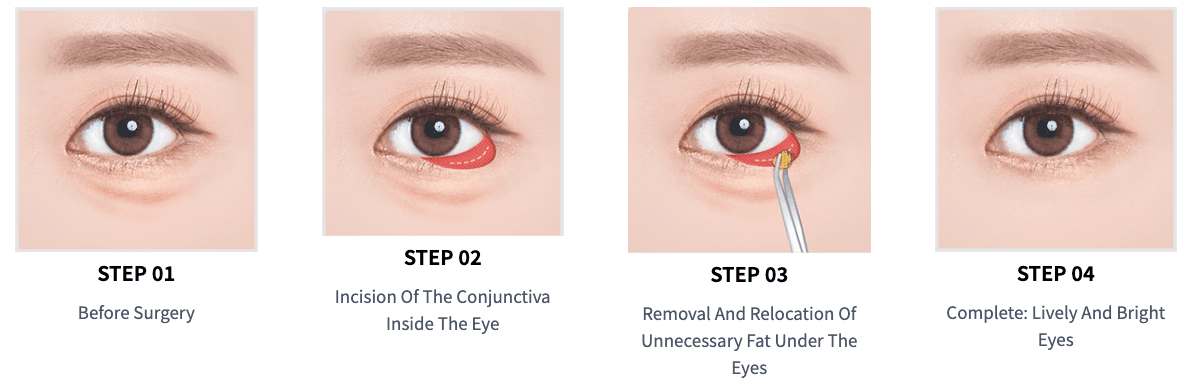
These surgeries improve the under-eye area by removing or repositioning fat. Under Eye Fat Removal targets puffiness caused by excess fat in the lower eyelids. Surgeons access this fat either through the transconjunctival approach (a small incision inside the lower eyelid, leaving no visible scar) or the subciliary approach (an incision just below the lower lash line).
Under Eye Fat Repositioning is more advanced. Instead of removing fat, the surgeon releases and moves fat pads to fill hollow areas like tear troughs, creating a smoother transition between the eyelid and cheek. This can be done via the transconjunctival approach as well. Sometimes, surgeons combine removal and repositioning for the best contour. A specific method called subperiosteal repositioning moves herniated orbital fat into the nasojugal fold (the groove between the cheek and lower eyelid). Barbed sutures may secure the fat during repositioning.
These procedures aim to rejuvenate the under-eye area, brighten the eyes, and reduce the appearance of dark circles by eliminating shadows caused by hollows and bags. They also help prevent or correct tear-trough deformities and cover the bony eye socket outline, reducing a sunken look and enhancing youthfulness.
Blepharoplasty (Eyelid Surgery)
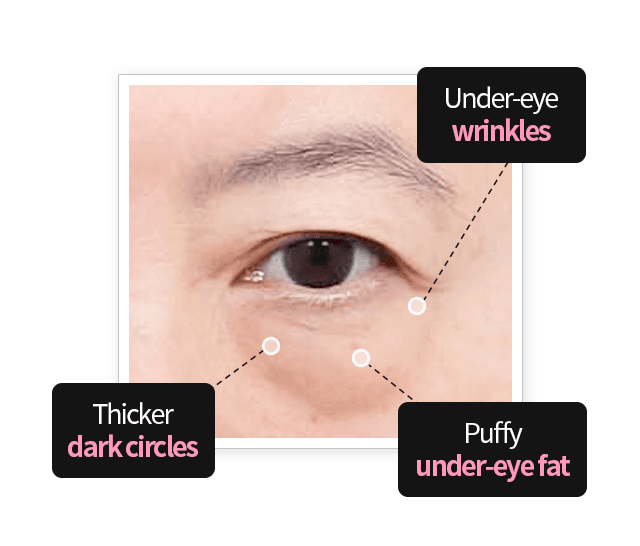
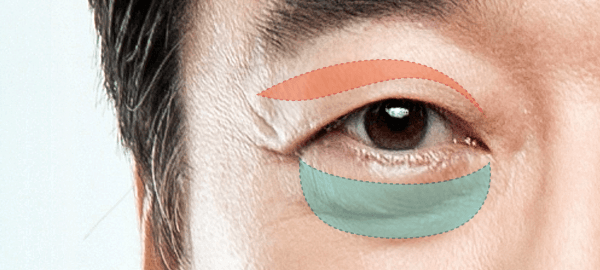
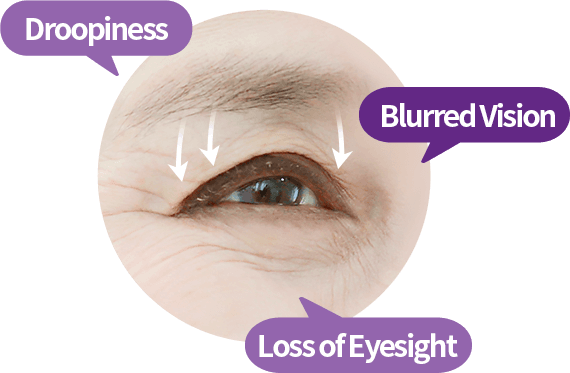
Blepharoplasty improves eyelid appearance and can involve the upper, lower, or both eyelids. Upper Blepharoplasty removes excess skin, muscle, and sometimes fat from the upper eyelids to reduce drooping and tiredness. The incision is hidden in the natural crease and can even improve vision if excess skin blocks sight.
Lower Blepharoplasty addresses lower eyelid bags, excess skin, and wrinkles. Incisions are made either just below the eyelashes (transcutaneous blepharoplasty) or inside the eyelid (transconjunctival approach). When both eyelids are treated, it’s called combined blepharoplasty. The transconjunctival approach is preferred for fat removal or repositioning without visible scars.
Lower blepharoplasty reduces dark circles by removing bags and tightening skin, improving eye alertness. It can also fill tear troughs and hollows through fat repositioning, smoothing the under-eye area and reducing shadows.
Eyelid Fat Grafting (Fat Transfer)
Eyelid fat grafting, or fat transfer, restores volume by injecting fat taken from another body area (abdomen, thighs, hips) into the under-eye region. Fat is harvested via liposuction, purified to remove impurities, and carefully injected beneath the lower eyelids using a thin, blunt cannula in small amounts to ensure good blood supply.
Different fat types are used: structural fat for volume, microfat for fine lines and tear troughs, and nanofat for skin rejuvenation. Local anesthesia is common, with sedation or general anesthesia for larger volumes.
Fat grafting fills sunken hollows, plumps cheeks, reduces dark circles by filling grooves and shadows, cushions veins and discoloration, and improves skin texture and tone. Results can be long-lasting or permanent, with about 50% of fat surviving long-term. It’s often combined with blepharoplasty for comprehensive rejuvenation.
Embarking on Treatment in South Korea: A Step-by-Step Guide
If you’re considering surgical treatment for dark circles under eyes in South Korea, here’s what to expect:
-
Research and select a clinic and surgeon: Look for reputable clinics experienced with international patients and cosmetic surgery. Check surgeon qualifications, certifications, and experience with your desired procedure. Review before-and-after photos to understand their style. Medical tourism agencies in South Korea can help with selection and planning.
-
Initial consultation (online and in-person): Many clinics offer online consultations to discuss concerns, medical history, risks, and expected results. After arriving in South Korea, an in-person consultation finalizes the surgical plan and pre-surgery tests.
-
Plan travel and accommodation: Check visa requirements; a medical visa may be needed for longer stays. Book flights and lodging near the clinic. Some clinics offer accommodation packages. Consider travel insurance covering medical procedures.
-
Pre-operative assessments and preparations: Provide detailed medical history and medications. Complete pre-surgery tests in Korea or submit recent results. Follow fasting and medication instructions.
-
Surgical procedure and immediate post-op care: Procedure times vary: under-eye fat removal/repositioning takes about 30 minutes; blepharoplasty 45 minutes to 2 hours; fat grafting depends on extent. Anesthesia varies, with twilight anesthesia common for fat procedures. Follow post-op care instructions, including medications, cold compresses, and head elevation. Some clinics offer recovery management and after-care services.
-
Follow-up and recovery: Attend all follow-ups. Recovery times differ: under-eye fat removal/repositioning allows return to activities in about a week; blepharoplasty initial recovery is 1-2 weeks with full healing over months; fat grafting swelling and bruising can last weeks to months. Avoid strenuous activities for several weeks.
The South Korean Advantage: Benefits Over Other Countries
South Korea is a top destination for plastic surgery, especially for dark circle treatments, offering several advantages:
-
It has a high concentration of skilled plastic surgeons specializing in facial procedures. Many have advanced international training and perform a large volume of surgeries annually, ensuring expertise and precision, especially around the eyes.
-
Korean clinics lead in adopting advanced surgical techniques and technologies like 3D facial scanning and AI-assisted planning, resulting in precise, natural outcomes. Minimally invasive methods reduce recovery time.
-
Procedures in South Korea are often 40-75% more affordable than in the US or Europe. Many clinics offer all-inclusive medical tourism packages covering consultations, surgery, post-op care, accommodation, and translation services.
-
Korean surgeons focus on natural-looking results that enhance a patient’s unique features rather than creating an artificial look. They cater to diverse ethnicities and aesthetic preferences.
-
South Korea has a well-developed medical tourism infrastructure with multilingual staff and agencies supporting international patients throughout the process. The government actively promotes safe, high-quality medical tourism.
Cost and Expertise Comparison: South Korea vs. Other Countries
| Procedure | South Korea (USD) | Expertise Level | United States (USD) | Expertise Level | Thailand (USD) | Expertise Level | Turkey (USD) | Expertise Level |
|---|---|---|---|---|---|---|---|---|
| Eyelid Surgery | $1,000 - $4,000 | High | $3,000 - $15,000 | High | $1,500 - $2,500 | Medium/High | $1,500 - $2,500 | Medium/High |
| Rhinoplasty | $3,000 - $7,000 | High | $8,000 - $15,000 | High | $3,000 - $5,500 | Medium/High | $2,500 - $4,500 | Medium/High |
| Facelift | $9,000 - $14,000 | High | $15,000 - $50,000 | High | $6,000 - $12,000 | Medium | $5,000 - $10,000 | Medium/High |
| Fat Grafting (Face) | $1,500 - $4,500 | High | $6,500 - $16,000 | High | $1,500 - $4,000 | Medium | $1,500 - $4,000 | Medium |
Summary of Potential Benefits of Plastic Surgery in South Korea
| Benefit Category | Description |
|---|---|
| Surgeon Expertise | High concentration of skilled surgeons with international training specializing in facial procedures. |
| Advanced Technology | Use of cutting-edge techniques like 3D scanning and AI planning for precise results. |
| Cost Savings | Procedures are significantly more affordable than in Western countries. |
| Natural Results | Focus on enhancing natural features with harmonious outcomes. |
| Medical Tourism Support | Comprehensive support for international patients, including multilingual staff and agencies. |
Which Are the Best Clinics in Korea for Dark Circles Under Eyes?
Listed below are some of the best clinics in Korea for dark circles under eyes.
1. THEPLUS Plastic Surgery
For concerns that contribute to a tired-looking under-eye area, you can explore blepharoplasty at THEPLUS Plastic Surgery, where the procedure is described as adjusting excess skin and tissue around the eyelids to refresh the eye contour. The clinic also offers facial fat grafting for areas of facial hollowing or lost volume, which may be relevant when a volume-deficient contour is part of your overall concern.
- URL: THEPLUS Plastic Surgery Website
- Location: Gangnam-gu, Seoul
- Eye-area options:
- Blepharoplasty adjusts excess eyelid skin and tissue to create a smoother, more refreshed eye-area contour.
- Ptosis correction addresses drooping upper eyelids by correcting the muscles that open the eyes.
- Double-eyelid surgery is available for creating an upper-eyelid crease designed to suit your facial features.
- Related facial services:
- Facial fat grafting uses your own fat to restore fullness in areas with hollow or flattened contours.
- Facelift and thread-lift procedures are available for facial sagging and contour definition.
- Clinical background:
- Dr. Kim is described as a board-certified plastic surgeon with research recognition relating to 3D implants and an educational role for other plastic surgeons.
- Dr. Jeong is identified as President of the Korean Society of Plastic Surgeons and regularly participates in professional education and conferences.
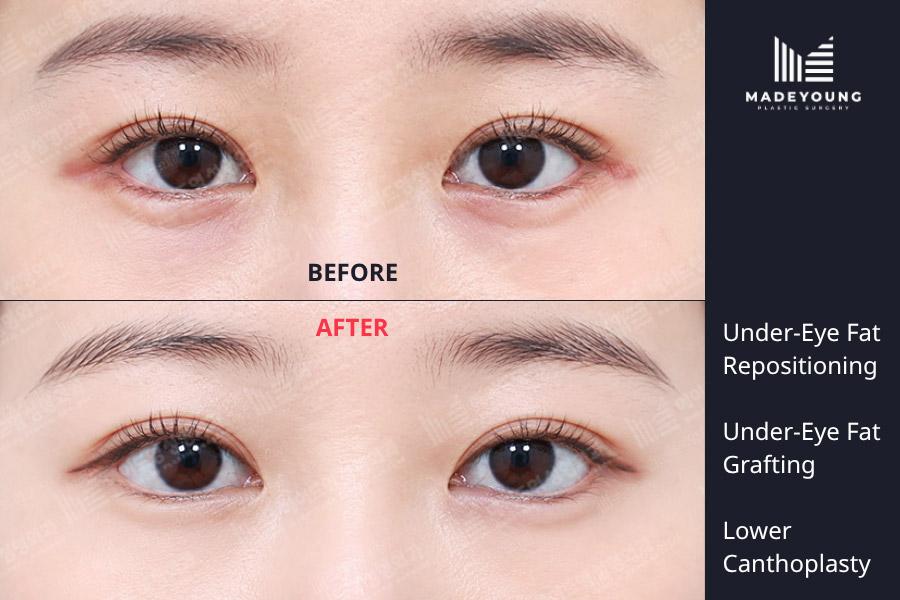
2. Made Young Plastic Surgery
At Made Young Plastic Surgery, you can discuss dark-circle removal alongside lower blepharoplasty, which targets under-eye bags through fat removal or repositioning and may include skin tightening. The clinic lists fillers, fat repositioning, and laser treatments among possible approaches to dark circles, so your plan can be matched to the features contributing to your under-eye appearance.
- URL: Made Young Plastic Surgery Website
- Location: Seocho-gu, Seoul
- Under-eye and eyelid options:
- Dark-circle removal is offered using methods that may include fillers, fat repositioning, or laser treatments.
- Lower blepharoplasty addresses under-eye bags through fat removal or repositioning and can include skin tightening.
- Upper blepharoplasty, ptosis correction, and incisional or non-incisional double-eyelid surgery are also available.
- Eye-surgery experience:
- Dr. Park Byung-Chan is described as having 15 years of experience dedicated exclusively to eye surgery.
- The clinic states that eye-procedure planning can customize incision lines, double-eyelid height, eyelid thickness, and overall eye image.
- Safety and aftercare:
- Full-time board-certified anesthesiologists are on site, with one-to-one anesthesiology monitoring and a cross-check process for emergencies.
- A separate aftercare center provides systematic post-procedure care, and the clinic reports CCTV coverage of procedures.
3. LABOM Plastic Surgery
At LABOM Plastic Surgery, you can discuss whether eyelid surgery or restoring facial volume is appropriate for an under-eye concern, with treatment planning based on your facial anatomy, structure, and degree of aging. Its blepharoplasty options address upper and lower eyelid drooping related to skin-elasticity loss, while autologous facial fat grafting is offered for volume-deficient facial areas.
- URL: LABOM Plastic Surgery Website
- Location: Gangnam-gu, Seoul
- Eyelid and volume options:
- Blepharoplasty can use an incisional technique for significant eyelid sagging or a less invasive natural-adhesion approach with small incisions.
- The clinic states that blepharoplasty can refresh the eye area and may relieve vision obstruction from sagging eyelid skin.
- Facial fat grafting harvests and purifies your own fat before placing it in volume-deficient facial areas; it is described for concerns such as sunken foreheads, deep nasolabial folds, and overall volume loss.
- Individualized planning:
- Specialists directly perform procedures and design surgery one-to-one rather than using a standardized approach.
- Planning is described as anatomy-based and focused on correcting underlying tissue position and structure while preserving natural expression and facial balance.
- Recovery support:
- The clinic reports pre-operative diagnosis, anesthesia monitoring, and use of high-definition endoscopic, fat-purification, and blood-centrifugation systems.
- Aftercare includes regular progress checks and structured swelling, bruising, and scar-management programs, with personalized support for international visitors.
Real-Life Transformations: Patient Experiences and Outcomes
Patients who have had under-eye fat removal or repositioning often report feeling more youthful and refreshed. They appreciate the reduction of bags and dark circles, with many praising the transconjunctival approach for its lack of visible scars and quicker recovery. Those who chose fat repositioning highlight smoother under-eye contours and less shadowing, boosting their confidence.
Blepharoplasty patients generally share positive feedback, noting a younger, less tired look and reduced dark circles and bags. Some upper blepharoplasty patients also experience improved vision. Swelling and bruising usually subside within a couple of weeks.
Eyelid fat grafting patients seek to fill hollows and dark circles for a rested appearance. They value the natural, long-lasting results, though some mention possible lumps or unevenness and a recovery period with swelling and bruising lasting weeks. Combining fat grafting with blepharoplasty can enhance results.
Conclusion
Dark circles under the eyes stem from various causes and can be challenging to treat with home remedies alone. Surgical options like under-eye fat removal or repositioning, blepharoplasty, and eyelid fat grafting effectively address underlying structural issues such as excess fat, sagging skin, and volume loss. South Korea stands out as a premier destination for these procedures, offering expert surgeons, advanced technology, affordable pricing, and a strong focus on natural results within a supportive medical tourism framework. Patient experiences generally reflect satisfaction with improved, youthful, and refreshed appearances. It’s essential to have realistic expectations, understand each procedure’s goals and risks, and consult a qualified surgeon to choose the best treatment for your unique needs.
References
1, 2, 3, 4, 5, 6, 7, 8, 9, 10, 11, 12, 13, 14, 15, 16, 17, 18, 19, 20
Frequently Asked Questions
Related Blogs
Fox Eye Surgery in Korea: Methods, Recovery, Risks and Travel Planning
Fox eye surgery may involve lateral canthopexy, canthoplasty, or a brow lift, selected after assessment of eyelid support, ocular surface health, and facial anatomy. The guide covers candidacy, recovery, travel planning for Korea, aftercare, alternatives, and urgent symptoms requiring in-person care.
Updated: Oct 21, 2026

Upper Blepharoplasty in Korea: Methods, Recovery, Risks, and Travel Planning
Upper blepharoplasty conservatively removes excess upper-lid skin and, when indicated, limited muscle or fat after assessment of ptosis, brow position, eyelid closure, and eye health. International patients should plan a 7–10-day stay in Korea, attend early follow-up, arrange flexible travel and aftercare, and seek urgent assessment for vision changes or severe swelling.
Updated: Oct 13, 2026
Lower Canthoplasty in Korea: Methods, Recovery, Risks, and Travel Planning
Lower canthoplasty includes lower-eyelid-lowering and lateral canthal techniques, with candidacy based on lid support, ocular-surface health, and realistic anatomical goals. International patients can find guidance on technique clarification, 8–10 day travel planning, follow-up, aftercare, and urgent eye symptoms.
Updated: Oct 13, 2026
Upper Canthoplasty in Korea: Methods, Recovery, Risks and Travel Planning
Upper canthoplasty releases or redrapes the upper-medial epicanthal fold to improve visibility of an upper-eyelid crease, often alongside double-eyelid surgery. The article covers candidacy, surgical approaches, recovery, aftercare, travel planning for Korea, and warning signs requiring urgent eye care.
Updated: Oct 13, 2026
Clinics offering Under Eye Fat Grafting
RINE Plastic Surgery Clinic | Facelift and Eye Rejuvenation Surgery
Nonhyeon

SH Clinic: Comprehensive Women's, Men's & Couples' Health Services in Korea
Sinsa

THEPLUS Plastic Surgery Korea | Eye, Nose, Face & Body Surgery
Sinsa

Haru Clinic Korea | Fully-Customized Full-Face Non-Surgical Rejuvenation With Threads, Botox & Fillers
Sinsa