
Medical Tourism Blog
Under Eye Fat Removal or Repositioning in Korea: Methods, Recovery, Risks and Travel Planning
Table of contents
- Under Eye Fat Removal or Repositioning at a Glance
- What Is Under-Eye Fat Removal or Repositioning?
- Who Is a Good Candidate for Under-Eye Fat Removal or Repositioning?
- How Is Under-Eye Fat Removal or Repositioning Performed?
- Why Visit Korea for Under-Eye Fat Removal or Repositioning?
- Key Information for International Patients
- Which Are the Best Clinics in Korea for Under Eye Fat Removal?
- How Much Does Under-Eye Fat Removal or Repositioning Cost in Korea?
- Under Eye Fat Removal or Repositioning From Start to Finish
- Alternatives to Under-Eye Fat Removal or Repositioning
- How Can I Prepare for Under-Eye Fat Removal or Repositioning?
- Aftercare Advice
Considering treatment in Korea? Everything you need to know e.g. — how to avoid scams, visas, interpreters, recovery tips — in our Medical Tourism Master Guide. Plan with confidence in minutes, not weeks!
Last updated: September 2026
Under Eye Fat Removal or Repositioning at a Glance
- What it treats — A lower-eyelid blepharoplasty that conservatively removes protruding orbital fat or repositions it over the orbital rim to smooth under-eye bags, tear troughs, and the lid-cheek transition.
- Best candidates — Medically fit adults with stable under-eye fat bulges and, for repositioning, a hollow groove beneath the bags; the approach depends on skin excess, lower-lid laxity, eye prominence, and dry-eye history.
- Korea cost — Listed pricing is ₩2,200,000–₩2,800,000, approximately US$1,600–$2,100; external skin excision, canthal support, fat grafting, anesthesia, and follow-up needs can change the quote.
- Recovery timeline — Swelling, bruising, tearing, tightness, and temporary blurred vision are common for days 1–3; much visible bruising improves in 7–14 days, while contour refinement can take weeks to months.
- Stay in Korea — Remain at least 7 days for an early examination and removal of external sutures when used; 10–14 days is more prudent after external surgery, canthal support, fat grafting, revision surgery, or dry-eye concerns.
- Important limitation — Surgery does not reliably erase dark circles caused by pigment, visible vessels, allergies, edema, malar bags, festoons, or midface descent, and it cannot create unlimited volume from repositioned fat.
- Key safety concern — Dry eye, eyelid laxity, prominent eyes, pre-existing retraction, and prior eyelid surgery require specialist planning because lower-lid malposition and ocular-surface symptoms are important risks; sudden vision change or rapidly worsening one-sided swelling needs urgent eye care.
What Is Under-Eye Fat Removal or Repositioning?
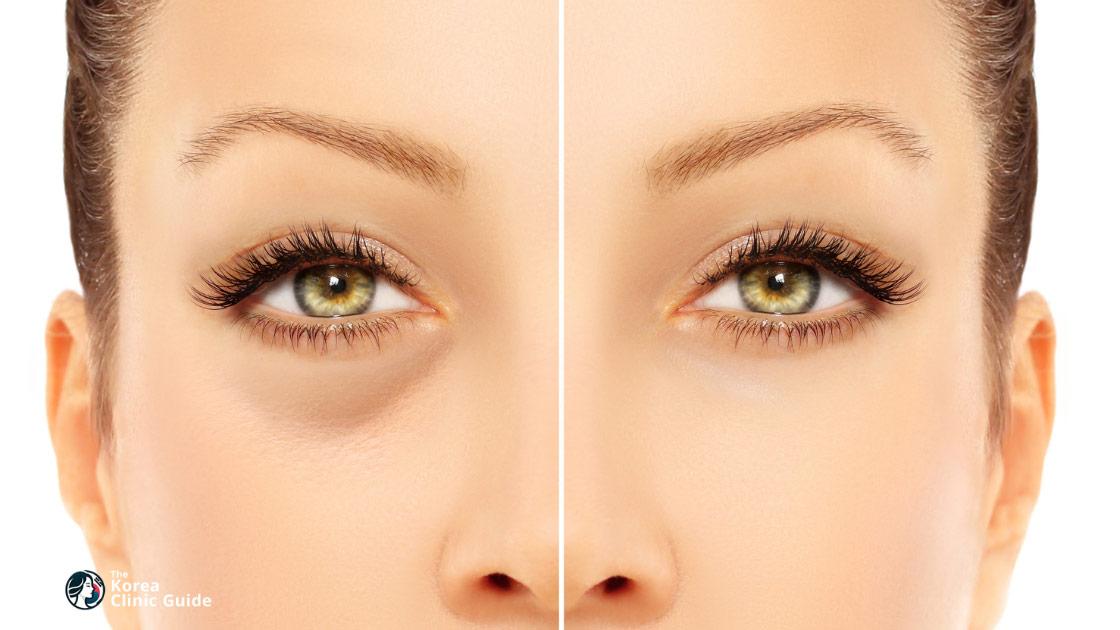
Under-eye fat removal or repositioning is lower-eyelid surgery that reduces protruding fat or redistributes it to improve the contour beneath the eyes. It aims to smooth under-eye bags, soften hollows, and create a more even transition between the lower eyelid and cheek. It is a surgical procedure.
Who Is a Good Candidate for Under-Eye Fat Removal or Repositioning?
- Prominent lower-eye bags — Good candidates have stable bulging from lower-eyelid orbital fat pads and want a smoother lid-cheek transition.
- Tear-trough hollowing with fat prolapse — Fat repositioning can suit people whose bags sit above a hollow groove, creating a shadowed or tired appearance.
- Limited skin excess — People with fat prominence but little loose lower-lid skin are often assessed for an internal transconjunctival approach, which uses an incision inside the eyelid.
- Skin excess or lid laxity — An external lower blepharoplasty can be considered when loose skin, wrinkles, muscle adjustment, or eyelid support is needed.
- Realistic structural goals — Suitable candidates understand that surgery treats fat bulges and selected tear troughs, not every cause of dark circles. Pigment, visible vessels, allergies, edema, malar bags, festoons, and midface descent can remain after surgery, as outlined in this review of dark-circle causes and treatment limits.
Elective lower-eyelid surgery is for medically fit adults after an in-person eye and facial assessment. It should be deferred or reconsidered with uncontrolled dry eye, active blepharitis or eyelid infection, unstable thyroid eye disease, recent LASIK/PRK/LASEK without confirmed ocular-surface recovery, uncontrolled diabetes or hypertension, bleeding disorders, or pregnancy. Prominent eyes, lower-lid laxity, scleral show, pre-existing retraction, marked asymmetry, and prior eyelid surgery require specialist planning because they raise the risk of postoperative malposition and ocular-surface symptoms. Pre-existing dry eye and lid anatomy are clinically important risk factors for postoperative dryness and chemosis in published blepharoplasty data.
How Is Under-Eye Fat Removal or Repositioning Performed?
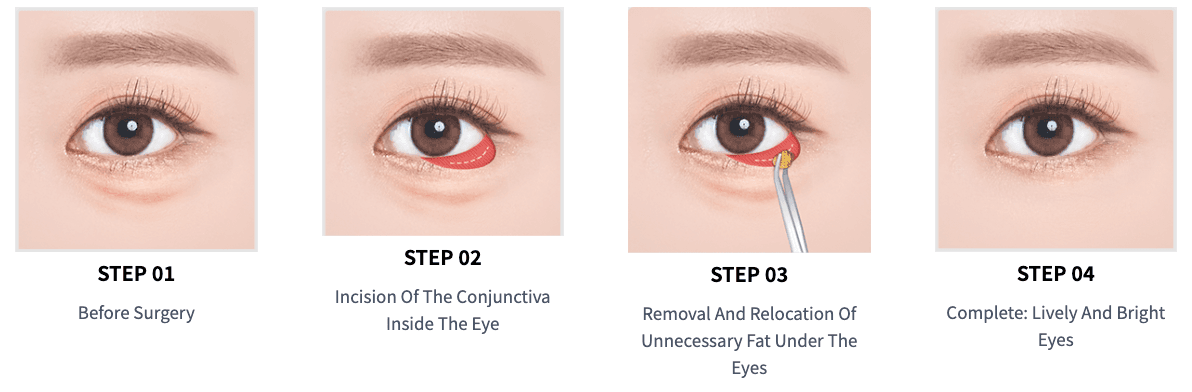
The operation is tailored to the position of the fat pads, skin quality, lower-lid tone, tear-trough depth, eye prominence, and midface volume. No method is universally best; a 2025 systematic review found inconsistent outcome and complication reporting across lower-blepharoplasty studies.
- Transconjunctival fat removal — The incision is inside the lower eyelid, so there is no external skin scar. The surgeon accesses and conservatively trims protruding orbital fat; this approach is most relevant when skin removal is unnecessary.
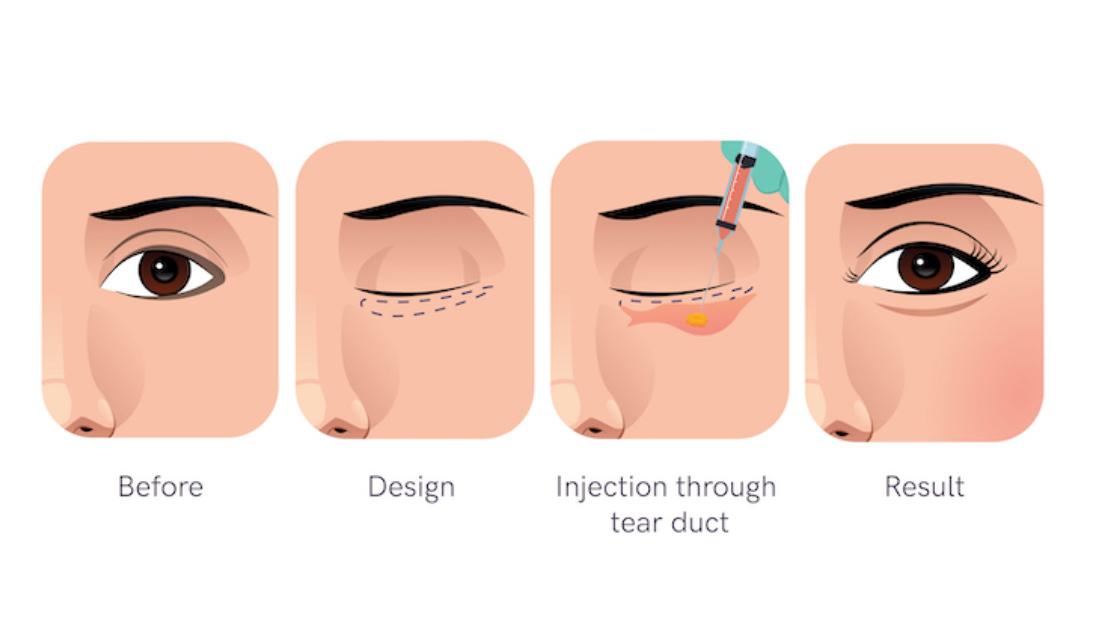
- Transconjunctival fat repositioning — Through the internal incision, orbital fat is released and moved across the infraorbital rim to soften a tear trough or abrupt lid-cheek junction. It redistributes local fat rather than creating unlimited volume. The internal approach and its indications are described in this clinical review.
- External transcutaneous lower blepharoplasty — A subciliary incision just below the eyelashes allows fat work plus selective skin and muscle adjustment. It can address meaningful skin excess, but needs careful planning in lax or prominent eyes because lower-lid retraction, ectropion, scleral show, and dry-eye symptoms are recognized risks.
- Fat-preserving or combined surgery — The surgeon can combine limited fat excision with redraping, a skin pinch, or external skin excision. In a 60-patient retrospective comparison, both excision and transposition improved the nasojugal fold, while transposition produced greater fold effacement; this is useful but not definitive comparative evidence (study details).
- Lower-lid support or added volume — Canthopexy or canthoplasty can support a lax lower lid. Separately harvested fat grafting can address a volume deficit that orbital fat cannot fill. These are additional procedures, not routine interchangeable steps.
Why Visit Korea for Under-Eye Fat Removal or Repositioning?
Korea has an established international-patient care framework and access to surgeons offering lower-eyelid blepharoplasty, fat repositioning, and related periorbital procedures. For this surgery, the practical advantages are coordination, verification resources, and the ability to schedule early in-person review before departure. There is no reliable country-comparative evidence showing that lower-eyelid fat surgery produces better outcomes in Korea than elsewhere.
- International-provider verification — Use the Ministry of Health and Welfare's registered medical institution search to check whether a facility is registered to serve foreign patients. Confirm the named operating surgeon separately; facility registration does not establish surgeon-specific lower-eyelid expertise or guarantee an aesthetic result.
- Credential-focused selection — Korea's plastic-surgery professional directory provides a surgeon search resource. Ask about the surgeon's training, lower-lid case experience, management of dry eye and lid laxity, revision policy, and who provides emergency care.
- Technique availability — Both transconjunctival and external approaches, conservative excision, fat redraping, canthal support, and adjunctive grafting are established surgical options internationally. Selection must follow anatomy, not a clinic's preferred marketing term.
- Evidence limitation — Small comparative studies support several approaches, but follow-up and reporting remain limited. A literature review of 10,698 published patients found mean reported follow-up of 14.8 months among studies reporting it, with extremely limited photographic evidence beyond two years (long-term evidence review).
Key Information for International Patients
- Minimum stay — Remain in Korea for at least 7 days for early postoperative assessment and removal of non-absorbable external sutures when used. Plan 10 to 14 days for a more conservative long-haul itinerary, particularly after external skin excision, canthal support, fat grafting, revision surgery, or significant dry-eye symptoms.
- Repeat visits — Attend the early review even after a transconjunctival procedure with no external sutures. External lower-lid sutures are commonly removed around days 5 to 7.
- Flying home — No universal evidence-based long-haul flight cutoff exists for lower blepharoplasty. Fly only after the surgeon confirms stable vision, wounds, swelling, and ocular-surface symptoms.
- Itinerary impact — Bruising, swelling, tearing, tightness, light sensitivity, and temporary blurred vision are common during days 1 to 3. Many people resume desk work or quiet social activity around days 7 to 14, but residual swelling often remains.
- Activity restrictions — Avoid heavy lifting, vigorous exercise, repeated bending, swimming, hot tubs, eye rubbing, contact lenses, and eye makeup until cleared. External surgery, canthal support, and grafting usually require more cautious recovery planning.
- Remote follow-up — Before departure, obtain an English operative note, anesthesia record, medication list, written aftercare plan, pre- and postoperative photographs, and a direct emergency contact. Agree on photo or video follow-up and identify an ophthalmologist or oculoplastic surgeon near home.
Travel note: Do not schedule this surgery at the end of a short sightseeing trip. Keep accommodation close to the clinic, arrange an adult escort for discharge and the first night, and keep return flights flexible.
Which Are the Best Clinics in Korea for Under Eye Fat Removal?
Listed below are some of the best clinics in Korea for under eye fat removal.
1. THEPLUS Plastic Surgery
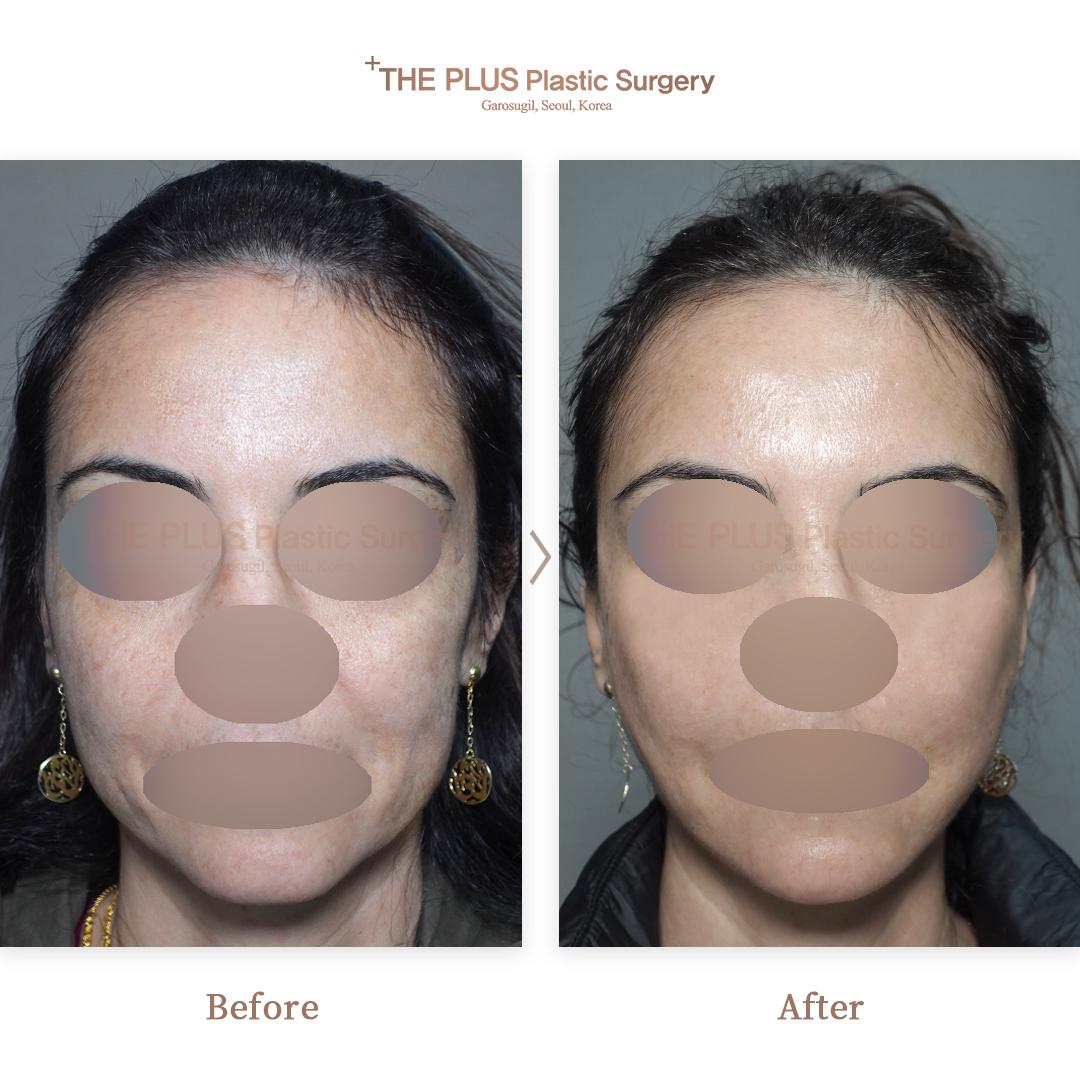
For under-eye fat removal, you can discuss blepharoplasty at THEPLUS Plastic Surgery, where eyelid surgery is used to remove or adjust excess skin and tissue around the eyes for a smoother, refreshed contour designed to remain in balance with your overall facial features.
- URL: THEPLUS Plastic Surgery Website
- Location: Gangnam-gu, Seoul
- Procedure considerations:
- Blepharoplasty is offered to adjust excess skin and tissue around the eyelids.
- The clinic describes its eye-surgery approach as focused on a natural-looking eyelid line and facial harmony.
- Relevant expertise:
- The clinic emphasizes personalized aesthetic care, safety, research, and specialized surgical expertise.
- Dr. Kim is a board-certified plastic surgeon with research recognition for 3D implants and an approach centered on balanced facial features.
- Related services:
- Eye-surgery options include double-eyelid surgery and ptosis correction.
- Facial fat grafting is also offered for areas that need added volume or softened hollow contours.
2. Made Young Plastic Surgery
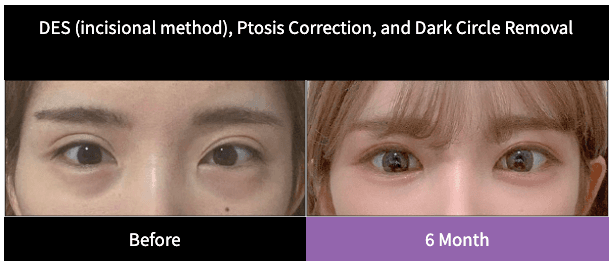
For under-eye fat removal, Made Young Plastic Surgery offers dark-circle surgery using an internal conjunctival incision to remove and reposition under-eye fat, while also addressing tear-trough ligament and double-orbital adhesions associated with hollows and shadowing; because the incision is internal, visible scarring is described as minimal.
- URL: Made Young Plastic Surgery Website
- Location: Seocho-gu, Seoul
- Procedure details:
- The approach combines removal and repositioning of under-eye fat rather than relying on removal alone.
- Treatment is intended to release tear-trough ligament and double-orbital adhesions that can contribute to hollows, dark shadows, and an uneven under-eye transition.
- Lower blepharoplasty is also offered for under-eye bags, with fat removal or repositioning and possible skin tightening.
- Care and monitoring:
- You receive a direct consultation and diagnosis from the medical team before treatment.
- Full-time board-certified anesthesiologists are on site, with one anesthesiologist assigned to continuous one-to-one monitoring.
- The clinic describes a cross-check emergency-response system and CCTV coverage of procedures.
- A separate aftercare center provides systematic post-procedure care.
- Eye-area services:
- Available eye procedures include upper blepharoplasty, ptosis correction, double-eyelid surgery, and canthoplasty.
- Dark-circle treatment options listed by the clinic include fat repositioning, fillers, and laser treatments.
3. RINE Plastic Surgery Clinic
For under-eye fat concerns, RINE Plastic Surgery Clinic focuses on fat repositioning rather than simple removal: orbital fat is redistributed beneath the lower eyelid to smooth eye bags and hollows without reducing volume, with tear-trough filler and septal reinforcement described as part of its approach to durable under-eye support.
- URL: RINE Plastic Surgery Clinic Website
- Location: Seocho-gu, Seoul
- Procedure details:
- Under-eye fat repositioning redistributes lower-eyelid orbital fat to improve the transition between eye bags and hollows.
- The clinic describes combining precise tear-trough filler and fat repositioning to create a more youthful under-eye contour.
- Septal reinforcement is used with the stated goal of long-lasting support and reduced recurrence.
- For sagging skin or reduced mid-face support, lower blepharoplasty with lifting combines lower-eyelid tightening with lifting at the eyelid-cheek junction.
- Surgeon continuity:
- Board-certified plastic surgeon Director Jang Nam personally manages your consultation, surgery, treatment, and recovery.
- The clinic reports more than 15 years of clinical experience in eye surgery and anti-aging procedures.
- Your plan is customized through analysis of facial proportions, skin condition, and individual features.
- Technology and recovery:
- The clinic is equipped with a Stryker full-HD endoscope and WhiteLite bipolar technology.
- Private one-person recovery rooms are available.
- The clinic describes continuous aftercare, infection-control measures, surgical safety protocols, and emergency preparedness.
How Much Does Under-Eye Fat Removal or Repositioning Cost in Korea?
Under-Eye Fat Removal or Repositioning is listed at ₩2,200,000–₩2,800,000 (approximately US$1,600–US$2,100). Individual quotes vary because the operation may range from internal fat treatment alone to a more extensive lower-eyelid reconstruction tailored to skin excess, tear-trough hollowing, and lid support needs.
| Procedure Price | Korean Won (₩) | USD ($) |
|---|---|---|
| Low Price | ₩2,200,000 | $1,600 |
| High Price | ₩2,800,000 | $2,100 |
Exchange rate as of 2026-09-06: 1 KRW = 0.000741 USD.
What Affects the Price?
- Fat removal versus fat repositioning — Conservative orbital-fat removal treats protruding bags, while fat repositioning requires release, mobilization, and securing of orbital fat across the rim to soften a tear trough or abrupt lid-cheek junction. Repositioning is a more involved contouring operation and can require more operating time than fat trimming alone.
- Internal versus external lower-eyelid approach — A transconjunctival approach uses an incision inside the eyelid for fat work when skin removal is not needed. A transcutaneous/subciliary operation adds an external incision and may include selective skin and muscle treatment for clinically significant skin excess or laxity, increasing the operative work and potential suture-related follow-up requirements.
- Lower-lid support or adjunctive volume work — Canthopexy or canthoplasty may be required when lower-lid laxity needs support, adding reconstructive steps to protect lid position. Separately harvested autologous fat grafting is a distinct adjunct when local orbital fat cannot adequately address a volume deficit; harvesting, processing, and placing graft material require additional operative resources.
Cost tip: Request an itemized quote stating what is included, particularly the planned fat technique, incision approach, anesthesia plan, any skin excision, canthal support, fat grafting, medications, postoperative reviews, and external suture removal if applicable.
The US$1,600–US$2,100 conversion is approximate, based on the ₩2,200,000–₩2,800,000 range and an exchange rate of 0.000741 on 2026-09-06. Check the exchange rate again when budgeting.
Under Eye Fat Removal or Repositioning From Start to Finish
- Remote inquiry and preliminary review — Send clear makeup-free photographs in neutral gaze and smiling, plus medical history, dry-eye symptoms, thyroid disease, previous eyelid surgery, refractive surgery, medication list, and goals. English-language or virtual consultation can clarify options, but photographs cannot replace an eyelid examination.
- Surgical planning before travel — Confirm the named surgeon, proposed internal or external approach, whether fat will be removed or repositioned, and whether skin excision, canthopexy/canthoplasty, or fat grafting is planned. Obtain the anesthesia plan, suture-removal schedule, emergency contact, and follow-up arrangements in writing.
- In-person examination in Korea — The surgeon evaluates fat prolapse, tear-trough hollowing, skin excess, lid tone and laxity, scleral show, eye prominence, asymmetry, midface volume, lid-cheek relationship, dry-eye history, and ocular disease. The plan can change or surgery can be deferred when the assessment identifies unacceptable risk.
- Preoperative checks and consent — Staff review medications, allergies, contact-lens use, glaucoma or retinal history, smoking and nicotine use, and anesthesia risks. Follow the clinic's fasting instructions if IV sedation or general anesthesia is planned.
- Anesthesia and operation — Lower-eyelid surgery is usually outpatient under local anesthesia with or without IV sedation, according to the surgical and anesthesia plan. The surgeon uses an internal conjunctival incision or an external subciliary incision, treats the fat pads conservatively, and adds skin, muscle, support, or grafting procedures only when indicated.
- Observation and discharge — After recovery monitoring, leave with a responsible adult. Expect instructions for cold compresses, head elevation, lubricating drops or ointment, prescribed ophthalmic medicines, and pain control.
- Early healing and review — Swelling, bruising, tearing, temporary blur, tightness, irritation, and light sensitivity are common in the first several days. Return around days 5 to 7 for examination and external suture removal if applicable.
- Return travel and remote follow-up — Receive surgeon clearance before flying. Send photographs in consistent lighting as requested, but seek urgent local in-person eye care for visual symptoms or severe swelling rather than relying on messages alone. Contour continues to refine for weeks to months, especially after fat repositioning or combined surgery.
Alternatives to Under-Eye Fat Removal or Repositioning
Non-surgical options can camouflage selected hollows but do not remove protruding orbital fat. Surgical alternatives can address added skin, laxity, or midface support, but increase operative scope, recovery demands, and risk. Choose based on the dominant cause of the under-eye concern.
Hyaluronic-Acid Under-Eye Filler
- Best fit — Mild tear-trough hollowing without prominent bags, significant edema, or lower-lid laxity.
- Tradeoff — Filler is temporary and does not remove prolapsed fat. In unsuitable anatomy, it can worsen puffiness or create contour and color changes.
- Related procedure — Read about under-eye filler.
Autologous Under-Eye Fat Grafting
- Best fit — Volume deficiency or hollowing that local orbital fat cannot adequately correct.
- Tradeoff — Fat retention varies, and lumps or prolonged swelling can occur. A selected-cohort comparison found repositioning and grafting both acceptable for mild tear troughs, with repositioning performing better in higher-grade deformities (comparative study).
- Related procedure — Read about under-eye fat grafting.
Lower-Lid Support Surgery
- Best fit — Lower-lid laxity, retraction risk, or a need for structural support rather than fat reduction alone.
- Tradeoff — Canthopexy or canthoplasty is often an adjunct to blepharoplasty and has its own healing and malposition considerations.
- Related procedure — Read about lower canthoplasty.
Midface-Focused Surgery
- Best fit — Midface descent, malar bags, festoons, or a deep lid-cheek groove that is not primarily caused by protruding fat.
- Tradeoff — Midface treatment is more extensive than isolated lower-lid fat surgery and does not directly treat pigment-related dark circles.
- Related procedure — Read about midcheek groove removal.
How Can I Prepare for Under-Eye Fat Removal or Repositioning?
- Provide a complete medical history — Disclose dry-eye symptoms, blepharitis, thyroid disease, glaucoma, retinal history, prior eyelid or facial surgery, LASIK/PRK/LASEK, allergies, contact-lens use, and all previous filler, Botox, laser, or peel treatments.
- Review every medicine and supplement — List prescriptions, over-the-counter medicines, aspirin, NSAIDs, vitamins, herbal products, cannabis, and recreational substances. Do not stop warfarin, apixaban, rivaroxaban, clopidogrel, aspirin, or other prescribed blood thinners independently; the prescribing clinician and surgeon must decide whether adjustment is safe.
- Follow nicotine and alcohol instructions — Tell the clinic about cigarettes, vaping, nicotine replacement, cannabis, and heavy alcohol use. Follow the surgeon's cessation and alcohol plan because nicotine affects healing and these substances can affect anesthesia.
- Use the exact fasting schedule — For IV sedation or general anesthesia, follow the anesthesia team's specific food-and-drink cutoff. Do not rely on a generic online fasting rule.
- Prepare the treatment area — Attend with clean eyelids and no eye makeup, false lashes, or contact lenses unless the clinic instructs otherwise. Treat active redness, discharge, or eyelid inflammation before surgery rather than concealing it.
- Arrange safe discharge — Book an adult escort and first-night support, and stay within easy reach of the clinic for early review. Do not plan to drive after sedation.
- Plan sun and travel exposure — Avoid substantial sun exposure before surgery and bring sunglasses for light sensitivity and wind protection after surgery. Keep flights and work commitments flexible.
Travel note: Carry enough routine medication for the whole stay, prescriptions or a medical letter where needed, and a translated medication list. Confirm which postoperative drops, ointment, and pain medicines the clinic will provide.
Confirm the treating doctor's individualized medication, fasting, smoking, transport, and accommodation requirements; they take precedence over general guidance.
Aftercare Advice
Protect the eyes and lower lids during early healing, and treat any visual change or rapidly worsening symptom as urgent.
- Cold compresses and elevation — Use cold compresses as directed during the first 48 to 72 hours and sleep with the head elevated to limit swelling. Do not place heavy pressure on the eyelids.
- Drops, ointment, and cleansing — Use only the prescribed ophthalmic drops, ointment, pain relief, and incision-cleansing method. Keep hands clean and do not rub the eyes.
- Contact, makeup, and water restrictions — Avoid contact lenses, eye makeup near healing incisions, direct shower spray, swimming, and hot tubs until the surgeon clears them.
- Exercise and heat — Avoid heavy lifting, vigorous exercise, repeated bending, saunas, and heat exposure until cleared. Resume activity gradually between weeks 2 and 6 only after the surgical team approves.
- Sun and wind protection — Wear sunglasses outdoors and protect healing skin from sun and wind. Use SPF 50 on fully healed exposed skin only when the surgeon permits topical products near the incision.
- Expected recovery — Bruising and much visible swelling commonly improve within 7 to 14 days. Deeper swelling and contour refinement continue for weeks to months; judge the final contour cautiously after repositioning, skin-muscle surgery, canthal support, or grafting.
- Urgent warning signs — Contact the surgical team and seek urgent local eye care for sudden or worsening vision change, double vision, severe or escalating pain, rapidly increasing one-sided swelling or eye prominence, substantial bleeding, inability to close the eye, fever, worsening redness, or pus-like drainage. Orbital hemorrhage and vision-threatening complications are rare but time-critical, as emphasized in this systematic review of complications).
- Follow-up — Attend the early review and send scheduled photographs after returning home. Obtain an in-person ophthalmic assessment locally for concerning symptoms.
Follow the treating doctor's written instructions over this general schedule, and contact the clinic promptly when healing appears abnormal.
Frequently Asked Questions
Related Blogs
Eyelid Retraction Repair in Korea: Methods, Recovery, Travel Planning, and Alternatives
Eyelid retraction repair repositions an upper or lower eyelid through retractor recession, scar release, spacer grafting, or support procedures based on tissue shortage, scarring, and corneal exposure. International patients should plan 10–14 days in Korea for uncomplicated repair, arrange early review and home follow-up, and obtain surgeon clearance before flying.
Updated: Sep 19, 2026
Love Band Surgery in Korea: Methods, Recovery, Risks and Travel Planning
Love band surgery augments the narrow pretarsal aegyo-sal roll beneath the lower lashes using HA filler, fat, grafts, implants, or tissue plication, with method-specific reversibility, recovery, and revision considerations. The article covers candidate screening, Korea travel planning, treatment steps, aftercare, emergency warning signs, follow-up, and alternatives for eye bags, tear troughs, laxi
Updated: Sep 15, 2026
Revision Eye Surgery in Korea: Methods, Recovery, Risks and Travel Planning
Revision eye surgery addresses healed concerns after prior eyelid procedures through scar release, crease or ptosis correction, volume restoration, or lower-lid support while protecting blink and corneal function. In Korea, plan at least 10–14 days for early review and possible suture removal; prices are ₩2,600,000–₩7,500,000 (about US$1,900–$5,600).
Updated: Sep 15, 2026
Under Eye Fat Grafting in Korea: Candidacy, Recovery, Risks, and Travel Planning
Under-eye fat grafting uses harvested, processed fat placed in small parcels to restore tear-trough and lid-cheek volume; Korea pricing is ₩1,000,000–₩2,000,000 (about US$700–$1,500). International patients should plan 8–10 days for assessment, outpatient treatment, early review and pre-flight clearance, with swelling and bruising often visible for 1–2 weeks.
Updated: Sep 14, 2026
Clinics offering Under Eye Fat Removal or Repositioning

RINE Plastic Surgery Clinic | Facelift and Eye Rejuvenation Surgery
Nonhyeon

SH Clinic: Comprehensive Women's, Men's & Couples' Health Services in Korea
Sinsa

THEPLUS Plastic Surgery Korea | Eye, Nose, Face & Body Surgery
Sinsa

Haru Clinic Korea | Seoul Facelift, Threads, Botox & Fillers
Sinsa