
Medical Tourism Blog
Transgender Breast Implants in Korea: Methods, Recovery, Travel Planning, and Long-Term Safety
Table of contents
- Transgender Breast Implants at a Glance
- What Are Transgender Breast Implants?
- Who Is a Good Candidate for Transgender Breast Implants?
- How Are Transgender Breast Implants Performed?
- Why Visit Korea for Transgender Breast Implants?
- Key Information for International Patients
- Which Are the Best Clinics in Korea for Transgender Breast Implants?
- Transgender Breast Implants From Start to Finish
- Alternatives to Transgender Breast Implants
- How Can I Prepare for Transgender Breast Implants?
- Aftercare Advice
Considering treatment in Korea? Everything you need to know e.g. — how to avoid scams, visas, interpreters, recovery tips — in our Medical Tourism Master Guide. Plan with confidence in minutes, not weeks!
Last updated: September 2026
Transgender Breast Implants at a Glance
- What it does — Implant-based gender-affirming breast augmentation uses silicone-gel or saline implants to add breast volume, projection, and a more feminized chest contour; surgery usually takes 60–90 minutes under general anesthesia.
- Anatomy-led planning — Implant width, profile, pocket placement, and achievable cleavage are matched to chest width, nipple and breast-fold position, muscle activity, and soft-tissue coverage—not a requested cup size alone.
- Recovery timeline — Most patients go home the same day or after one night; desk work may be possible in 1–2 weeks, while heavy lifting, chest exercise, and strenuous activity are usually restricted for at least 4 weeks.
- When results settle — Swelling, upper-chest tightness, and initially high implant position are common; breast shape and implant position usually settle over several months, with a practical result assessment at 3–6 months.
- Korea travel plan — International patients should plan 10–14 days in Korea for planning, surgery, early wound checks, and a pre-flight review; CDC guidance advises avoiding air travel for 10 days after chest surgery.
- Long-term commitment — Breast implants are not lifetime devices and may eventually need revision, removal, or exchange; asymptomatic silicone implants should be screened with ultrasound or MRI at 5–6 years and every 2–3 years thereafter.
- Korea-specific distinction — Medical Korea’s foreign-patient registration system offers an official way to verify participating institutions, which are required to carry malpractice liability insurance, but Korean evidence does not establish superior transfeminine implant outcomes or a preferred technique.
What Are Transgender Breast Implants?
Transgender breast implants are implant-based breast augmentation that adds volume and projection for transfeminine people. The procedure helps create a more feminine chest contour when hormone-related breast development does not meet personal goals. It is a surgical procedure performed under general anesthesia.
Who Is a Good Candidate for Transgender Breast Implants?
- Gender-affirming goals — Good candidates want more breast volume, projection, and a feminized chest contour that hormone-related development alone has not achieved.
- Realistic anatomical plan — Candidates understand that chest width, nipple position, inframammary-fold position, pectoral-muscle strength, and available soft-tissue coverage determine safe implant width, projection, cleavage, and visible rippling risk.
- Fit for surgery and follow-up — Candidates can undergo general anesthesia, arrange early postoperative support, and commit to long-term implant monitoring, possible imaging, and potential future revision, removal, or exchange.
- Hormone therapy status — Feminizing hormone therapy is not required for augmentation. When estradiol is wanted and medically appropriate, time for breast development can improve soft-tissue coverage and implant planning.
Do not proceed with active skin, breast, or systemic infection; an unexplained breast mass or unresolved abnormal imaging; or a condition that makes anesthesia or elective surgery unsafe. Optimize uncontrolled diabetes, hypertension, cardiopulmonary disease, bleeding disorders, and venous-thromboembolism risk before surgery; prior clots, thrombophilia, cancer, obesity, limited mobility, and estrogen use require individualized planning. Pregnancy, anticipated major weight change, and ongoing nicotine exposure are usual reasons to defer surgery. Marked ptosis, severe skin laxity, major chest-wall asymmetry, or very limited tissue coverage can require a smaller implant, fat grafting, a lift, staged surgery, or acceptance of anatomical limits. The surgeon must also confirm informed consent and that relevant physical and mental-health concerns are adequately managed for safe postoperative care.
How Are Transgender Breast Implants Performed?
Implant selection is not simply a choice of cup size. The surgeon matches device dimensions and placement to chest measurements, tissue coverage, and the desired balance of volume, projection, and cleavage; current comparative evidence does not establish one universally best approach for transfeminine anatomy.
- Silicone-gel or saline filler — Silicone gel generally feels more like breast tissue and can have a silent rupture; saline implants deflate when the shell fails. For silicone implants, FDA labeling guidance recommends ultrasound or MRI at 5–6 years, then every 2–3 years when asymptomatic.
- Smooth or textured surface — Smooth implants are commonly used. Textured implants require explicit informed consent because BIA-ALCL occurs more often with textured devices; persistent late swelling, a new mass, or pain around an implant needs prompt assessment.
- Round or anatomical dimensions — Base width, profile, volume, and shape should fit the chest rather than a requested cup size alone. A wider chest often requires a wider implant, which affects projection and the achievable cleavage.
- Prepectoral or subglandular pocket — Placement over the pectoral muscle avoids muscle-related animation distortion but offers less implant-edge coverage when breast tissue is thin.
- Subpectoral or dual-plane pocket — Muscle coverage can camouflage upper-pole edges and rippling, but pectoral contraction can move or distort the implant. Dual-plane placement combines muscle coverage in the upper breast with lower-pole release.
- Incision access — Inframammary-fold access is frequently described for transfeminine augmentation. Periareolar and transaxillary incisions are alternatives when anatomy and surgical planning support them.
- Fat-grafting adjunct — Fat transfer can soften implant edges or refine contour, but retention is variable and one session usually does not provide implant-level volume.
Why Visit Korea for Transgender Breast Implants?
Korea offers a formal pathway for overseas patients seeking elective treatment, including an official system to verify institutions registered to treat foreign patients. These are access and administrative safeguards, not proof that Korea produces better implant outcomes than other countries. Korean implant-specific outcome evidence for transfeminine augmentation remains limited.
- Foreign-patient registration framework — Medical Korea’s registered-institution system states that participating institutions are required to carry medical-malpractice liability insurance. Verify registration independently before booking.
- Medical-visa access — Medical Korea describes a C-3-3 medical-visit route for short-term visits, including cosmetic procedures. Confirm visa eligibility and documentation requirements with the relevant Korean authorities before travel.
- Korean outcomes evidence limitation — A multicenter Korean survey published in 2025 reported 77.8% satisfaction for a combined chest/breast gender-affirming-surgery category. It did not isolate transfeminine implants, device types, complications, revisions, techniques, or facility-level outcomes, so it cannot identify a preferred Korean method or provider.
- Practical verification — Ask for the operating surgeon’s credentials, hospital or clinic registration, named implant manufacturer, device model, anesthesia arrangements, written revision policy, English-language records, and emergency contact process before committing to travel.
Key Information for International Patients
- Minimum stay — Plan 10–14 days in Korea for final measurements, indicated testing, surgery, early wound review, and an in-person pre-flight assessment. Stay longer after combined operations or any bleeding, wound, pain, or mobility concern.
- Flight timing — CDC medical-tourism guidance advises avoiding air travel for 10 days after chest surgery. For a Korea-to-US long-haul flight, use a flexible return ticket and leave only after the operating surgeon clears travel.
- Hospital course — Surgery commonly takes 60–90 minutes under general anesthesia, with same-day discharge or one overnight stay depending on recovery and the facility protocol.
- Companion and accommodation — Arrange a responsible adult for discharge and the first night. Stay near the facility and use transport that does not require lifting luggage or navigating alone immediately after anesthesia.
- Itinerary restrictions — Expect soreness, swelling, upper-chest tightness, and restricted arm movement for 1–2 weeks. Desk work is often possible after 1–2 weeks when healing is uncomplicated; heavy lifting, chest exercise, and strenuous activity are commonly restricted for at least 4 weeks.
- Long-haul clot planning — Discuss walking breaks, calf exercises, hydration, compression, and any medication-based prevention with the surgical and anesthesia teams. Do not self-start aspirin or alter estradiol to prepare for the flight.
- Remote and local follow-up — Arrange a local clinician or urgent-care plan before departure. Obtain a direct clinic contact for wound questions and confirm how video follow-up will work across time zones.
Travel note: Before leaving Korea, collect an English operative report, anesthesia record, discharge summary, implant card, manufacturer and model details, serial or lot information, medication list, follow-up plan, and written emergency instructions. Elective-procedure complications are often excluded from travel insurance and may not be covered by insurance at home.
Which Are the Best Clinics in Korea for Transgender Breast Implants?
Listed below are some of the best clinics in Korea for transgender breast implants.
1. Seojin Plastic Surgery Clinic
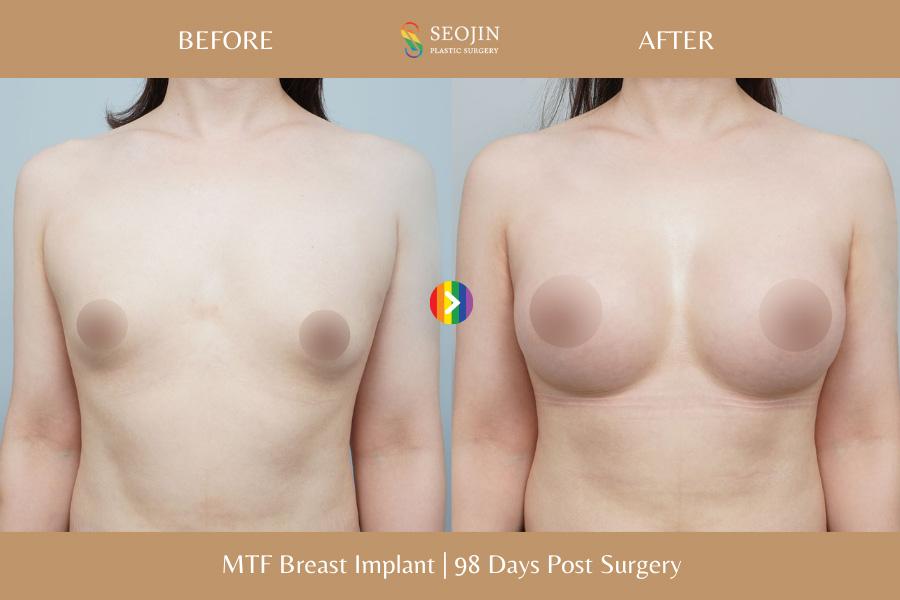
You may consider Seojin Plastic Surgery Clinic for transgender breast implants if you want care specifically described for MTF surgery, including the precise dissection required for male body types and skin layers. Dr. Lee Hyungmin provides end-to-end care as the clinic’s sole doctor, with consultations and breast planning tailored to your individual goals; the clinic also states that it does not add charges for MTF procedures.
- URL: Seojin Plastic Surgery Clinic Website
- Location: Gangnam-gu, Seoul
- Procedure approach:
- Offers specialized transgender breast implant procedures alongside implant-only and hybrid breast augmentation options.
- Hybrid breast augmentation combines implants with fat grafting.
- Uses 3D imaging and high-definition endoscopy as part of its surgical technology.
- Surgeon and care model:
- Dr. Lee Hyungmin has more than 16 years of experience and was recognized among Korea’s 100 Good Doctors.
- The one-doctor model means Dr. Lee provides comprehensive care throughout your treatment journey.
- Relevant services:
- Also offers breast lift, breast reduction, nipple surgery, gynecomastia surgery, liposuction, and hip-dip fat grafting.
- Describes itself as LGBTQ-friendly and focused on personalized service for diverse gender identities.
2. THEPLUS Plastic Surgery
You may consider THEPLUS Plastic Surgery if you are looking for breast augmentation planned around your body type, with implant placement and incision selection guided by full-HD endoscopic visualization. Its breast surgeon, Dr. Lee, uses FDA-approved Motiva Ergonomix® implants and provides individualized planning, structured postoperative monitoring, and English-language support for international visitors; ask during consultation how this approach is adapted to your transgender breast implant goals.
- URL: THEPLUS Plastic Surgery Website
- Location: Gangnam-gu, Seoul
- Breast augmentation planning:
- Dr. Lee tailors implant placement and incision site to your body type.
- Uses FDA-approved Motiva Ergonomix® implants and full-HD endoscopic visualization.
- The clinic emphasizes natural-looking fullness and balanced proportions in its breast implant service.
- Breast surgeon:
- Dr. Lee is a board-certified plastic surgeon specializing in breast augmentation, breast lift, and breast reduction.
- Her experience includes work as a Surgery Specialist at Seoul National University Hospital and clinical training at Seoul Metropolitan Boramae Hospital.
- She is a member of the Korean Society of Plastic and Reconstructive Surgery and the Korean Society of Aesthetic Plastic Surgery.
- Recovery support:
- Provides advanced sterilization protocols, systematic postoperative monitoring, and an aftercare plan tailored to your healing pace.
- Offers end-to-end English-language support and dedicated translator assistance from consultation through recovery for international visitors.
3. Okay Plastic Surgery Clinic
You may consider Okay Plastic Surgery Clinic if you want a clinic with a dedicated Breast Center and a surgeon whose work includes breast augmentation as well as complex breast reduction, lift, and nipple-correction procedures. Dr. Cho’s breast-surgery research and the clinic’s emphasis on individualized planning and comprehensive aftercare may be useful considerations when discussing whether its augmentation options fit your transgender breast implant goals.
- URL: Okay Plastic Surgery Clinic Website
- Location: Gangnam-gu, Seoul
- Breast-focused care:
- The specialized Breast Center offers breast augmentation, reduction, lift procedures for sagging breasts, and nipple correction.
- Breast augmentation options include implants or fat grafting.
- The clinic emphasizes comprehensive aftercare intended to support natural, lasting results.
- Breast surgery expertise:
- Dr. Cho is described as having breast-surgery expertise and has studied and published research papers in this field.
- Dr. Cho’s work includes standard augmentation and severe breast-reduction cases requiring significant volume reduction.
- Related services:
- Offers body-contouring services including liposuction, fat grafting, line-fat treatment, and abdominal or arm lifts.
- Also provides gynecomastia surgery, hairline procedures, facial lifting, rhinoplasty, and scar or keloid care.
Transgender Breast Implants From Start to Finish
- Remote consultation and screening — Send the clinic a full medical history, medication and supplement list, estradiol and antiandrogen regimen, allergies, nicotine status, clotting and family history, previous chest surgery, and relevant breast imaging or biopsy records. Confirm English or interpreter support, expected length of stay, and what postoperative services are included.
- Travel coordination — Book flexible flights and accommodation close to the facility. Arrange an adult companion for discharge and the first night, and identify a clinician at home who can assess a wound or urgent concern after return.
- In-person examination and sizing — The surgeon examines chest width, skin quality, breast development, nipple and fold position, asymmetry, pectoral activity, and soft-tissue coverage. Together, review implant dimensions, filler, surface, pocket plane, incision, achievable cleavage, scars, and the possibility of fat grafting or staged surgery.
- Preoperative assessment — Complete consent, anesthesia review, and indicated blood work or specialist clearance. The surgical and anesthesia teams assess clot risk and coordinate any hormone, anticoagulant, diabetes-medicine, or other prescription plan with the prescribing clinician.
- Anesthesia and augmentation — Under general anesthesia, the surgeon makes the planned incision—often in the inframammary fold—creates the implant pocket, checks symmetry and implant position, places the implants, and closes the incision. The operation commonly lasts 60–90 minutes.
- Recovery and discharge — After monitoring in recovery, patients leave the same day or stay one night when clinically indicated. Expect a support bra or garment, prescribed pain control, incision instructions, and gentle walking from the first day.
- Early Korea follow-up — Attend wound and dressing reviews, discuss pain control and arm mobility, and receive a surgeon-led assessment before flying. The surgeon determines when showering, garment changes, and travel are appropriate.
- Overseas follow-up and long-term surveillance — Continue remote follow-up with the operating team and local wound care when needed. Breasts settle over several months, with a practical result assessment at 3–6 months; retain implant records permanently and follow the recommended imaging plan for silicone devices.
Alternatives to Transgender Breast Implants
Non-surgical choices avoid implant surgery but cannot create the same predictable volume or projection. Surgical alternatives can address specific contour or skin concerns, but each has tradeoffs in volume, scars, repeat treatment, and recovery.
Continued Hormone-Related Development
- Best for — People early in feminizing hormone therapy or those who want to see their natural development before selecting implant dimensions.
- Tradeoff — Breast development is variable and may not provide the desired volume, projection, or cleavage. Hormone decisions belong with the prescribing clinician, not a cosmetic-surgery schedule.
Fat Grafting
- Best for — Modest volume increase, contour refinement, or camouflage of implant edges in patients with adequate donor fat.
- Tradeoff — Breast fat grafting has variable graft retention and often requires repeat sessions; it usually cannot achieve implant-level enlargement in one procedure.
Implant Plus Fat Grafting
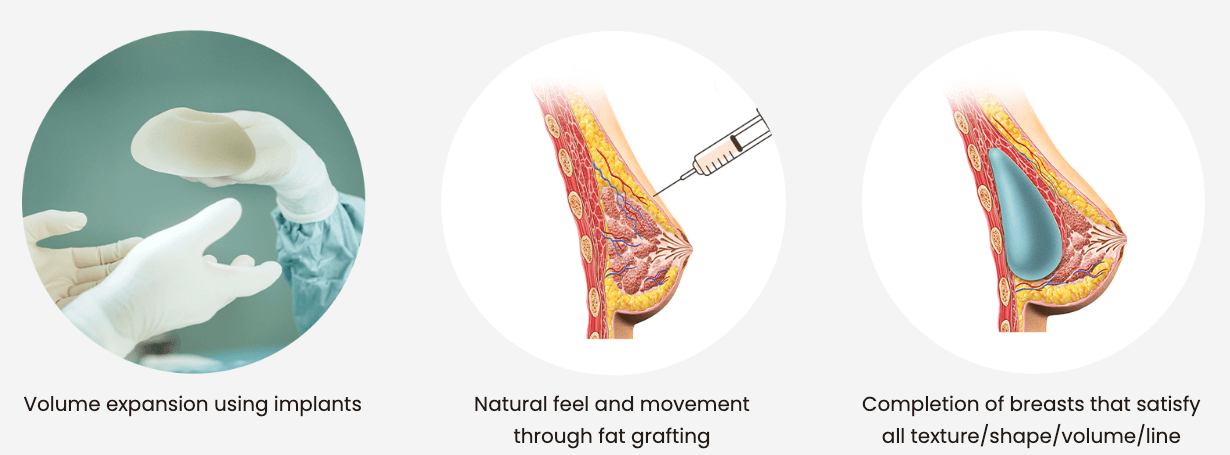
- Best for — Patients seeking implant volume with softer transitions at the upper pole or cleavage area.
- Tradeoff — This combines donor-site liposuction with implant surgery, adding recovery areas and surgical complexity.
Breast Lift
- Best for — Significant breast droop or stretched skin when nipple position is the main concern.
- Tradeoff — A breast lift reshapes and raises breast tissue but does not create implant-like fullness or projection; it leaves additional scars and is sometimes combined with an implant.
External Breast Forms
- Best for — A reversible way to test size, shape, clothing fit, and presentation without surgery.
- Tradeoff — Forms and padded garments do not alter the chest without clothing and require ongoing wear.
How Can I Prepare for Transgender Breast Implants?
- Medical disclosure — Provide every prescription, over-the-counter medicine, supplement, allergy, hormone medication, prior operation, breast imaging result, and history of bleeding, clots, cancer, or anesthesia problems during remote screening and again in person.
- Estradiol and antiandrogens — Do not independently stop, reduce, or restart gender-affirming hormones. WPATH SOC8 notes that available studies have not shown a perioperative VTE increase among people maintained on sex steroids versus those who stopped, but evidence is limited and not implant-specific. Your estradiol plan depends on route, clot history, thrombophilia, smoking, BMI, mobility, procedure duration, and the surgeon-anesthesia protocol.
- Anticoagulants and supplements — Do not stop anticoagulants, antiplatelets, diabetes medicines, or other prescriptions without prescriber direction. Report aspirin, NSAIDs, fish oil, vitamin E, herbal products, and other supplements early so the treating team can specify any hold period.
- Nicotine and alcohol — Stop cigarettes, vaping, hookah, smokeless tobacco, nicotine gum, and patches for the surgeon’s required pre- and postoperative interval; some practices use nicotine testing. Avoid alcohol as directed before anesthesia and while taking opioid pain medicine.
- Fasting and skin preparation — Follow the clinic’s written fasting time exactly. Do not shave, wax, apply lotions, deodorant, perfume, or body products to the chest on the day of surgery unless the clinic specifically instructs otherwise.
- Transport and lodging — Arrange a companion, nearby accommodation, discharge transport, and help with meals, luggage, and medications. Keep the first days free of sightseeing, shopping, spa visits, and long public-transit journeys.
- Flight flexibility — Book at least 10–14 days in Korea and avoid a nonchangeable early flight. Build in time for an additional review if swelling, wound healing, or pain delays clearance.
Travel note: Confirm in writing whether interpretation, preoperative testing, garments, medication, overnight stay, airport transport, companion rules, and urgent after-hours contact are included.
The treating doctor’s individualized instructions take precedence over general guidance. Confirm all medication holds, fasting rules, nicotine requirements, and travel timing directly with the operating practice.
Aftercare Advice
Protect the incisions, support the implant position, and treat sudden swelling or breathing symptoms as urgent—not as routine recovery.
- Movement and lifting — Take short, frequent walks from the first day as cleared. Avoid heavy lifting, pushing, pulling, chest-focused exercise, and strenuous activity for at least 4 weeks or until the surgeon clears progression; restricted arm and chest movement is most important during the first 1–2 weeks.
- Garment and implant position — Wear the surgeon-prescribed support bra or garment exactly as directed. Do not use underwire bras, chest massage, compression, or positioning bands unless the surgeon specifically prescribes them; protocols differ by pocket plane and implant position.
- Incision care — Keep dressings and incisions dry or shower only as instructed. Do not soak in baths, pools, hot tubs, or saunas until wounds are fully healed and the surgeon clears it. Avoid nicotine throughout healing.
- Pain, swelling, and settling — Use prescribed pain medicine as directed and contact the clinic before adding over-the-counter drugs or supplements. High-riding implants, swelling, and upper-chest tightness are common early; implant position and shape typically settle over several months, with results assessed around 3–6 months.
- Urgent warning signs — Seek urgent in-person care for rapidly enlarging one-sided swelling, substantial bleeding, escalating or uncontrolled pain, fever, spreading redness or warmth, pus-like drainage, wound opening, dusky skin, sudden severe asymmetry, calf pain or swelling, chest pain, shortness of breath, fainting, or palpitations.
- Long-term device care — Implants are not lifetime devices. For silicone-gel implants, follow FDA-recommended ultrasound or MRI surveillance at 5–6 years and every 2–3 years thereafter when asymptomatic; tell mammography and other imaging staff about implants and continue screening appropriate to your tissue, age, family history, and hormone exposure.
Follow the treating doctor’s instructions over general advice, attend scheduled reviews, and contact the clinic promptly when anything appears wrong.
Frequently Asked Questions
Related Blogs
Breast Fat Grafting in Korea vs. Global Costs: A Smart Investment for Natural Results
Explore the affordability and benefits of breast fat grafting in Korea, a popular cosmetic procedure known for its natural results. Discover why more individuals are choosing Korea for this innovative, cost-effective solution.
Updated: Sep 26, 2026
Nipple Surgery in Korea: Types, Recovery, Risks, and Travel Planning
Nipple surgery may reduce nipple size or projection, correct benign inversion, revise scars, or reconstruct the nipple–areola complex; technique, anesthesia, and recovery depend on the procedure and any combined breast or chest surgery. International patients should plan at least 7–10 days locally for uncomplicated isolated procedures, attend wound review before flying, arrange follow-up at home,
Updated: Sep 21, 2026
Breast Augmentation in Korea: Implants, Recovery, Travel Planning, and Long-Term Safety
Breast augmentation in Korea may use silicone or saline implants, or fat grafting, with planning based on anatomy, goals, incision, and pocket placement. The article covers candidacy, costs of ₩7,000,000–₩18,000,000, 10–14-day travel planning, recovery, follow-up, and implant records.
Updated: Sep 20, 2026
Capsular Contracture Treatment in Korea: Revision Options, Recovery, and Travel Planning
Capsular contracture treatment may include capsulotomy, partial or total capsulectomy, implant exchange or removal, pocket change, ADM support, breast lift, fat grafting, or autologous reconstruction based on symptoms and tissue condition. International patients should plan at least 10–14 days in Korea, complete local follow-ups, obtain surgeon clearance before flying, and arrange home-country car
Updated: Sep 19, 2026
Clinics offering Transgender Breast Implants

THEPLUS Plastic Surgery Korea | Eye, Nose, Face & Body Surgery
Sinsa

Seojin Plastic Surgery Clinic Korea: Pioneering Advanced Cosmetic Procedures for Personalized Aesthetic Transformation
Apgujeong

Okay Plastic Surgery Clinic in Korea: Comprehensive Aesthetic Procedures with Sincerity and Care
Cheongdam
Evita Clinic Korea: Body Contouring, Breast & Gender-Affirming Surgery in Seoul (Apgujeong)
Apgujeong