
Medical Tourism Blog
Thread Lift in Korea: Candidacy, Recovery, Risks, and Travel Planning
Table of contents
- Thread Lift at a Glance
- What Is a Thread Lift?
- Who Is a Good Candidate for a Thread Lift?
- How Is a Thread Lift Performed?
- Why Visit Korea for a Thread Lift?
- Key Information for International Patients
- Which Are the Best Clinics in Korea for Sagging Neck Skin Treatment?
- Thread Lift From Start to Finish
- Alternatives to a Thread Lift
- How Can I Prepare for a Thread Lift?
- Aftercare Advice
Considering treatment in Korea? Everything you need to know e.g. — how to avoid scams, visas, interpreters, recovery tips — in our Medical Tourism Master Guide. Plan with confidence in minutes, not weeks!
Last updated: September 2026
Thread Lift at a Glance
- What it does — A thread lift places absorbable barbed, cogged, or cone-bearing sutures through small entry points to make a subtle mechanical lift of mild cheek, midface, jawline, brow, or limited neck descent; it is usually an outpatient procedure under local anesthetic.
- Best candidates — The strongest match is mild-to-moderate facial ptosis with supportive tissue and realistic expectations for a modest, temporary change; heavy tissue, thick skin, substantial jowls, excess skin, or a facelift-level goal are poor matches.
- Not a facelift — Threads do not remove excess skin or surgically reposition the deeper SMAS support layer, so they cannot reliably deliver the magnitude or structural durability of a surgical facelift.
- Recovery window — Bruising, swelling, soreness, tightness, dimpling, puckering, and temporary asymmetry are common early effects; allow about 7–14 days before an important event and expect the appearance to settle over roughly 1–3 months.
- Results and longevity — An initial lift may be visible immediately but can be distorted by swelling, and durability varies by anatomy, thread design, area, and technique; long-term efficacy evidence is limited, so repeat sessions should not be booked on a preset schedule.
- Risks to know — A meta-analysis reported pooled rates of swelling at 35%, dimpling at 10%, paresthesia at 6%, visible or palpable threads at 4%, and infection or extrusion at 2% each; rarer reported complications include migration, granuloma, nerve injury, and parotid injury.
- Korea travel planning — Plan at least 5–7 days in Korea for in-person assessment, treatment, and an early review, or 7–10 days if sedation or combined procedures are planned; Korea’s distinction is international-patient infrastructure, not proven better thread-lift outcomes than other countries.
What Is a Thread Lift?
A thread lift uses temporary sutures placed beneath the skin to gently reposition sagging facial tissue. It aims to soften early cheek descent, jowl blurring, selected brow droop, or limited neck laxity for a subtle, temporary refreshed appearance rather than facelift-level change. It is a minimally invasive procedure, usually performed through small entry points under local anesthetic.
Who Is a Good Candidate for a Thread Lift?
- Mild-to-moderate descent — Good candidates have early cheek or midface ptosis, mild jowl blurring, selected brow descent, or limited neck laxity that can be repositioned along a planned vector.
- Realistic goals — A thread lift suits people seeking a subtle, temporary soft-tissue lift rather than excess-skin removal or facelift-level structural correction. It is not a non-surgical equivalent of a facelift; it does not dissect and reposition the deeper SMAS layer or reliably correct major skin excess.
- Supportive anatomy — The best fit is tissue with enough support for barbs or cogs to engage. Skin thickness, fat distribution, facial weight, asymmetry, scars, and prior filler placement all affect whether a lift is feasible.
- Able to manage recovery — Candidates need time for bruising, swelling, dimpling, and an early review, plus a clear plan for complication care after returning home.
Do not proceed with active acne, cellulitis, cold sores, dental or facial infection, or local inflammation near the insertion area. Elective treatment is generally postponed during pregnancy or breastfeeding because adequate safety data are lacking. Uncontrolled diabetes, significant immunosuppression, active autoimmune or inflammatory disease, impaired healing, bleeding disorders, and a history of severe reaction to thread material require individualized medical assessment and can make treatment inappropriate. Marked laxity, heavy tissue, substantial jowls or neck redundancy, thick skin, and expectations of a surgical result are poor anatomical matches; prior threads, facial surgery, fillers, implants, and scars also require examination and disclosure, particularly because limited case-series evidence has described fibrosis and more difficult later facelift dissection after repeated absorbable thread lifts. The evidence cannot quantify this risk for an individual patient. বয়স alone is not a selection rule; facial anatomy and goals matter more.
How Is a Thread Lift Performed?
Thread lifting is defined less by consumer-facing “types” than by the material, thread design, and placement plan. Ask for the exact brand, material, number of threads, vectors, entry points, and whether the clinician will use needles or cannulas.
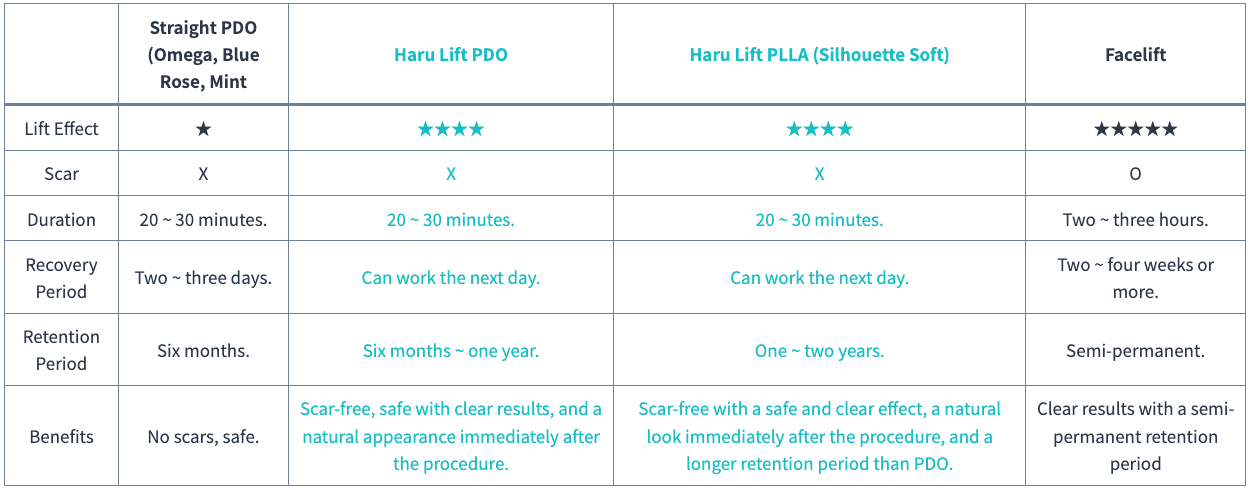
- Thread material — PDO (polydioxanone), PLLA (poly-L-lactic acid), PCL (polycaprolactone), and composite PLLA/PCL-family products are used. Different absorption profiles and laboratory findings do not prove a fixed duration or a universally superior lift in people.
- Smooth versus suspension threads — Smooth monofilament threads are generally selected for skin-quality or collagen-stimulation-oriented treatment. Barbed, cogged, molded, or cone-bearing threads are designed to grip and mechanically reposition soft tissue.
- Needle versus cannula insertion — A sharp needle or blunt cannula can introduce threads through small entry points. The clinician’s chosen plane is safety-critical because it must account for facial vessels, nerve branches, retaining ligaments, and the parotid region.
- Floating versus anchored approaches — Some techniques reposition tissue without a fixed anchor; others use an anchoring or fixation strategy. Neither label alone predicts durability, and the appropriate approach depends on the area and tissue quality.
- Area-specific planning — Midface, jawline, brow/temple, and neck thread lifts need different vectors and carry different anatomical considerations. A “full-face thread lift” is not a standardized procedure.
- Thread quantity — More threads do not automatically create a better result. In a small randomized study of 22 PDO-thread patients, three versus six threads per side of the face showed no significant difference through 60 days, while early changes diminished over time; this does not establish an ideal count for other products or facial areas. Read the study and its limitations.
Why Visit Korea for a Thread Lift?
South Korea can be practical for international thread-lift patients when the provider offers transparent product information, a named clinician, and a workable overseas follow-up plan. Korea’s relevant advantage is its international-patient infrastructure, not proven superiority in thread-lift results. No robust comparative evidence shows that treatment in Korea is safer, longer lasting, or more effective than treatment elsewhere.
- Official verification route — Use the Medical Korea registration system to check institutions and facilitators serving foreign patients. Registration is one verification step; it does not prove that a specific clinician is skilled in thread lifting.
- Provider accountability — Before paying a deposit, obtain the clinician’s name and credentials and confirm who will perform facial markings, anesthetic, thread insertion, tension adjustment, and complication management.
- Device transparency — Request the exact thread brand, material, design, and number of threads, as well as the planned vectors and insertion plane. Product names such as PDO cog threads, Mint Lift, or TESSLIFT do not substitute for an anatomy-based treatment plan.
- Continuity planning — Choose a facility that gives written aftercare, procedure records, product labels or lot details where available, and a direct route for photo or video review after departure.
Key Information for International Patients
- Minimum stay — Plan at least 5–7 days in Korea for final in-person assessment, treatment, and an early review. Stay 7–10 days when combining procedures, traveling alone, receiving oral or IV sedation, or wanting a scheduled review before a long-haul flight.
- Flight timing — No authoritative thread-lift-specific evidence defines a safe commercial-flying interval. Avoid same-day long-haul departure where possible; travel after pain is controlled and there is no concerning bleeding, infection, major swelling, or evolving asymmetry.
- Early appearance — Allow roughly 7–14 days before an important in-person event. Bruising, swelling, soreness, tightness, dimpling, puckering, and temporary asymmetry are common early effects, while the initial lift settles over about 1–3 months.
- Activity and itinerary — Light routine activity can be possible sooner with clinician approval, but avoid strenuous exercise, heavy lifting, heat exposure, facial massage, vigorous facial or neck movement, hard foods, and excessive mouth opening for about 1–2 weeks when directed.
- Sedation and transport — Local anesthetic-only treatment is commonly outpatient. Arrange an adult companion and do not drive when oral anxiolytics, IV sedation, or general anesthesia is used.
- Remote follow-up — Leave Korea with a written contact plan, emergency instructions, and treatment records. Identify a local clinician or urgent-care route at home before traveling, since an overseas clinic cannot physically assess every complication.
Travel note: Schedule treatment early in the trip rather than immediately before departure. Do not stack multiple elective facial treatments simply to maximize a short visit; combined treatments make swelling, recovery, and complication assessment harder.
Which Are the Best Clinics in Korea for Sagging Neck Skin Treatment?
Listed below are some of the best clinics in Korea for sagging neck skin treatment.
1. PangPang Clinic
For sagging neck skin, you may consider PangPang Clinic’s customized thread-lifting approach, which is described as suitable for lifting and rejuvenating the neck as well as the face. Your plan can use specialized lifting, assist, and tightening threads, with ultrasound visual checks and a pre-procedure design intended to tailor thread placement to your concerns.
- URL: PangPang Clinic Website
- Location: Gangnam-gu, Seoul
- Thread-lifting approach:
- Pink Lift is a clinic-exclusive medical thread developed from data from thousands of lifting procedures and is described as providing a stronger hold, longer-lasting effect, and natural-looking lift.
- The clinic uses 31 specialized functional threads and offers unlimited thread customization for individualized lifting plans.
- Thread lifting is stated to take about 30 minutes to one hour, with partial, Airnox, or sleep-anesthesia options; reported results last about one year or longer.
- Comfort and recovery:
- Chill-Lifting uses contact-free cooling anesthesia and is described as minimizing pain, swelling, and bruising while supporting faster recovery.
- A thread aftercare package is available to support and prolong treatment effects.
- Research and planning:
- The clinic collaborates with Seoul National University Bundang Hospital on thread-lifting methods intended to lift tissue, promote collagen regeneration, and improve skin quality.
- PangPang reports operating a Thread Lifting Research Institute and participating in international beauty conferences through lectures and presentations.
- A dedicated consultation center is described as listening to your needs for tailored treatment planning.
- Other relevant services:
- Minute Lifting is a 30-minute, non-invasive lifting option with immediate effects and a stated maintenance period of six months to one year.
- The clinic also offers revision care for unsatisfactory prior thread-lifting results, which may incorporate fillers, Botox, or lasers.
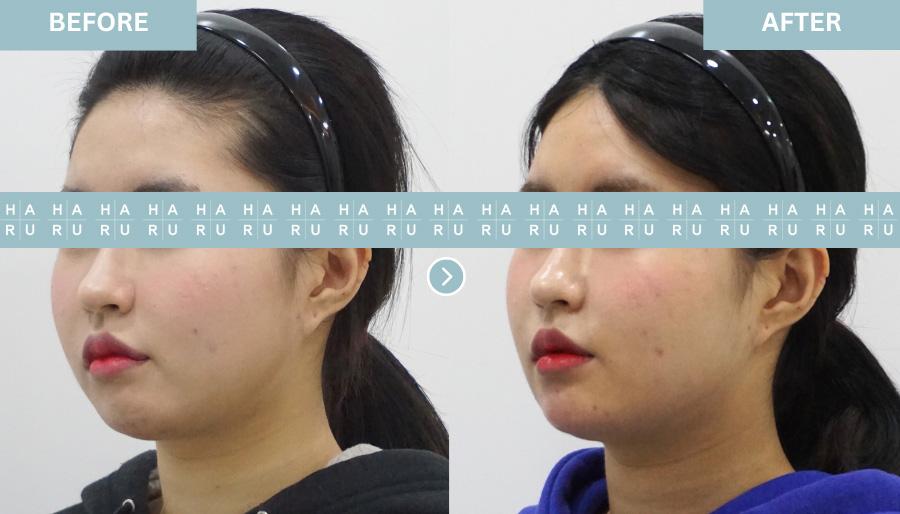
2. Haru Clinic
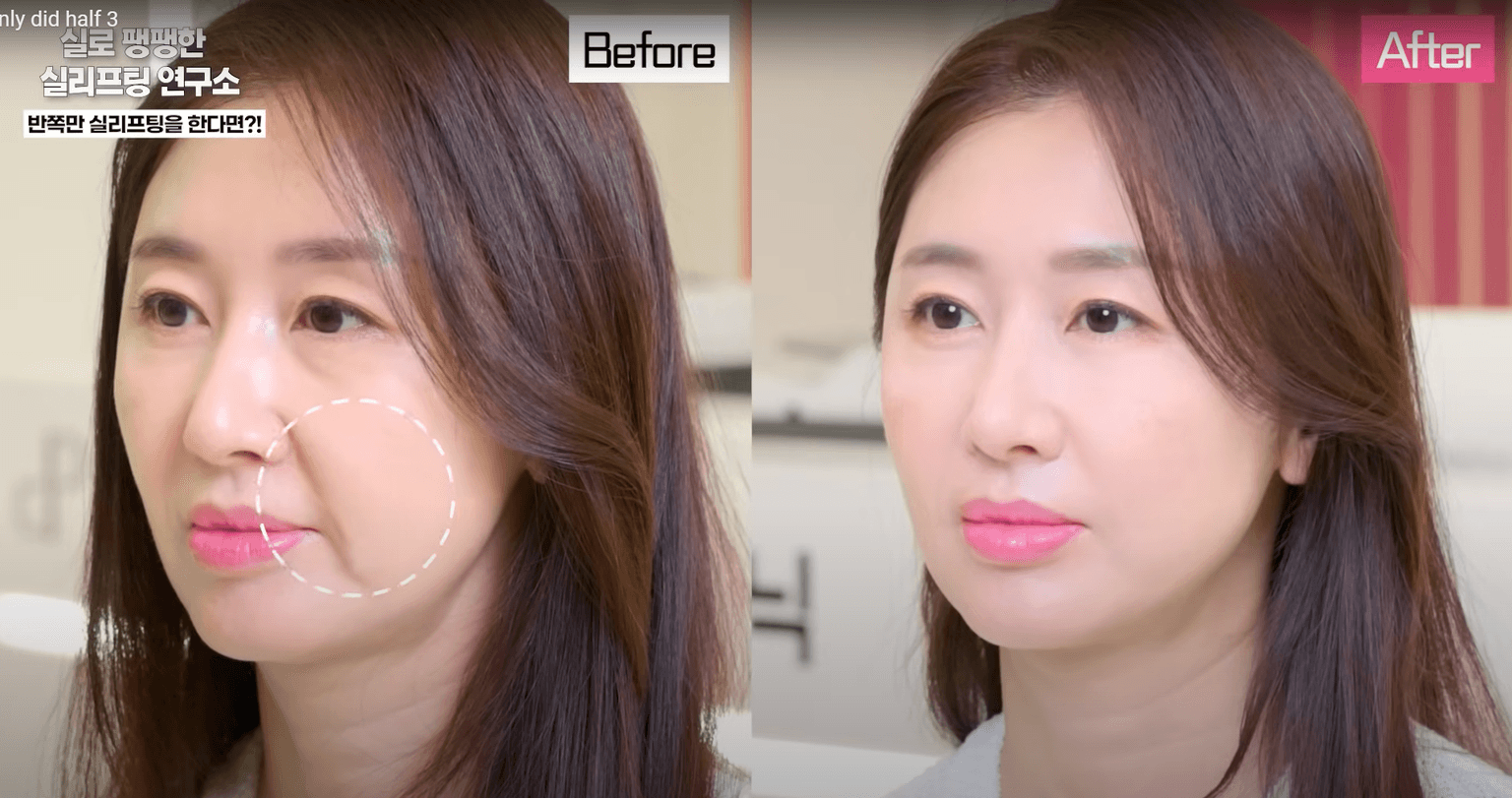
For sagging neck skin, Haru Clinic offers a surgical facelift option that repositions deeper SMAS layers and removes excess skin to address neck laxity and jowls, alongside less invasive contouring approaches. If you prefer a thread-based plan, its thread-lifting technique uses a stable fixed point behind the ear, with treatment design adjusted for your facial contours and volume loss.
- URL: Haru Clinic Website
- Location: Gangnam-gu, Seoul
- Neck and jawline options:
- A surgical facelift is described as repositioning deep SMAS layers and removing excess skin to correct jowls and neck laxity, with a defined recovery period.
- Double Chin Lift options include fat-dissolving injections or thread-based contouring to reduce submental fat, sharpen the jawline, and improve the neck angle with minimal incisions.
- Collagen-tightening treatment uses radiofrequency or ultrasound to heat the dermis, contract tissue, and stimulate new collagen without incisions.
- Thread-lift technique:
- The clinic uses the less mobile, firmly anchored area behind the ear as a fixed point for a stable lift.
- The technique is described as pulling and pressing skin simultaneously to create a powerful lift without facial enlargement.
- Fixed points are selected to avoid large nerves and blood vessels, with the aim of reducing pain, discomfort, and bleeding.
- Dissolvable barbed threads may elevate sagging cheeks and the jawline under local anesthesia, stimulate collagen, and involve short downtime.
- Clinical design:
- Dr. Jeong is identified as an official research physician for Merz and teaches other doctors updated filler techniques.
- Treatment planning is described as focusing on facial harmony and balance through non-invasive techniques, with adjustments when volume loss under the cheekbones is present.
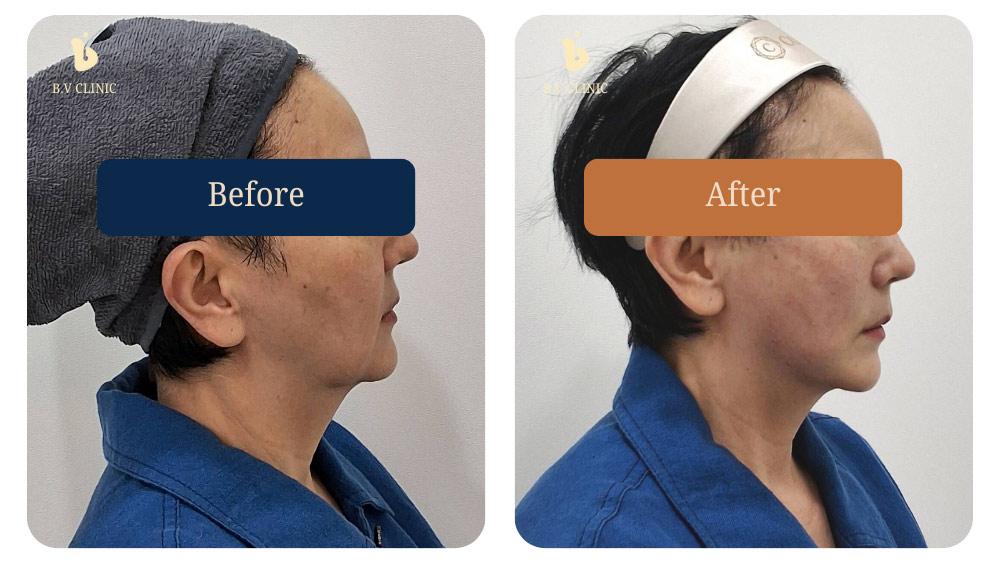
3. B.V Clinic
You may consider B.V Clinic if your assessment suggests thread lifting or energy-based tightening is appropriate for your sagging neck-skin concerns. The clinic’s approach emphasizes PDO barbed threads for anchoring and collagen stimulation, with treatment tailored to your goals; Dr. Suh is reported to have more than 10 years of thread-lifting experience and thousands of clinical cases.
- URL: B.V Clinic Website
- Location: Seoul
- Thread-lifting details:
- MINT Threads used by the clinic are described as FDA and KFDA approved.
- Premium PDO barbed threads are intended to provide anchoring power and a lifting effect while stimulating collagen production for longer-term skin firmness.
- Its 3D thread-lifting approach uses strategically placed threads to lift and firm sagging skin and stimulate collagen.
- Skin-tightening alternatives:
- Shurink Lifting uses high-intensity focused ultrasound to target deeper skin layers and support tightening and elasticity.
- Potenza Lifting uses radiofrequency to support collagen and elasticity and can be tailored to individual skin needs.
- Thor Lifting uses radiofrequency for skin tightening and body contouring.
- Aftercare: Post-treatment care includes skin-regeneration management intended to minimize swelling and improve elasticity, with skincare products and ultrasound-based care to support collagen.
Thread Lift From Start to Finish
- Remote enquiry and screening — Send unfiltered front, oblique, and profile photographs in neutral expression. Request English-language or virtual consultation where available, disclose goals, prior facial procedures, all medicines and supplements, nicotine use, allergies, medical conditions, cold-sore history, and any future facelift plans.
- Pre-travel treatment plan — Ask for the proposed treatment area, thread material and brand, design, number of threads, likely vectors, anesthetic plan, expected downtime, price inclusions, and written complication-contact process. Remote screening is useful, but it cannot replace an in-person facial examination.
- In-person assessment and consent — The clinician assesses skin laxity, facial fat and volume loss, degree and direction of ptosis, asymmetry, scars, skin quality, and prior filler or thread locations. Standardized photographs and informed consent should cover alternatives, limited durability evidence, and possible complications.
- Marking and anesthesia — The clinician usually marks the face while upright to plan the lift vectors. After antiseptic preparation, local anesthetic is injected; some patients also receive oral or IV sedation according to the facility’s protocol and medical suitability.
- Thread insertion and adjustment — Through small needle or cannula entry points, the clinician advances absorbable threads in the planned tissue plane. Barbs, cogs, cones, or molded segments engage tissue; tension and symmetry are adjusted before the ends are trimmed. The procedure is generally performed as an outpatient treatment.
- Discharge and first night — Receive entry-point care instructions, medicine directions where prescribed, activity restrictions, and an emergency contact. Use arranged transport after sedatives and sleep on the back with the head elevated if instructed.
- Early in-person review — Attend review before departure, particularly for notable dimpling, asymmetry, bruising, significant pain, thread visibility, or possible infection. The clinician can decide whether observation, adjustment, medicine, or in-person complication treatment is necessary.
- Overseas follow-up — Send photographs or join video review as directed. Keep procedure notes, product information, and before-and-after photographs, and seek local medical assessment promptly for concerning symptoms rather than waiting for a remote reply.
Alternatives to a Thread Lift
The right alternative depends on whether the main issue is skin laxity, volume loss, fat, dynamic muscle pull, or substantial excess skin. Non-surgical options generally offer a smaller or more gradual change; surgery has greater recovery demands but can address deeper support and excess skin that threads do not remove.
Surgical Facelift
- Best for — Significant jowling, loose facial or neck skin, pronounced descent, or a goal of more durable structural correction.
- Tradeoff — A facelift, SMAS facelift, or deep-plane facelift uses incisions and surgical dissection, with substantially greater downtime and operative risk, but directly addresses skin excess and deeper support layers.
Ultrasound or Radiofrequency Tightening
- Best for — Mild laxity or patients who prefer no thread insertion and accept gradual, modest improvement.
- Tradeoff — Ultherapy lifting and Thermage lifting do not mechanically reposition sagging tissue in the way suspension threads attempt to do.
Facial Filler or Fat Grafting
- Best for — Temple hollowing, cheek volume loss, pre-jowl hollowing, or folds driven mainly by volume deficiency rather than tissue descent.
- Tradeoff — Facial filler and face fat grafting restore volume but do not remove excess skin. Poorly selected volume addition can make a heavy or swollen face look heavier.
Neck-Focused Surgery
- Best for — Major neck skin laxity, platysmal banding, or substantial redundancy below the jawline.
- Tradeoff — A neck lift has surgical recovery but is more appropriate than threads when the neck needs skin removal or deeper structural correction.
How Can I Prepare for a Thread Lift?
- Medical disclosure — Provide a complete list of conditions, allergies, prior threads, fillers, implants, facial surgery, scars, cold sores, and planned future facelift surgery. Report active acne, rashes, dental problems, facial infection, or a herpes outbreak immediately; treatment should be deferred until infection or inflammation resolves.
- Blood-thinning medicines — Tell the clinician and the prescribing doctor about warfarin, apixaban, rivaroxaban, clopidogrel, aspirin, NSAIDs, corticosteroids, diabetes medicines, and isotretinoin. Do not stop prescribed anticoagulant or antiplatelet medicine independently; only the prescriber and treating clinician can decide whether and when treatment is appropriate.
- Supplements — Disclose fish oil, vitamin E, ginkgo, garlic, ginseng, turmeric/curcumin, and St John’s wort. Follow the treating clinician’s specific stop or continue instructions rather than using a universal timetable.
- Nicotine, alcohol, and drugs — Avoid nicotine around elective treatment when possible because it impairs healing. Avoid alcohol and recreational drugs for the clinician’s specified interval because they can increase bruising, interact with sedatives, and impair aftercare decisions.
- Skin preparation — Avoid sunburn, aggressive exfoliation, waxing, facial massage, and unplanned laser or energy-based treatments in the planned area before treatment. Attend with clean skin unless the clinic gives different instructions.
- Fasting and escort — Local-anesthetic-only treatment often does not require fasting, while oral sedation, IV sedation, or general anesthesia changes fasting requirements. Follow the facility’s exact instructions and arrange an escort and transport when sedation is planned.
- Travel logistics — Book flexible flights, accommodation near the clinic, and time for an early review. Do not schedule important events, dental work requiring wide opening, facial treatments, or a long-haul flight immediately after insertion.
Travel note: Bring written medicine information in English, including drug names, doses, and prescribing clinician contact details.
Confirm all clinic-specific medicine, fasting, skin-preparation, transport, and follow-up requirements with the treating doctor; individualized instructions take precedence over general guidance.
Aftercare Advice
Protect the thread paths and entry points during the early healing period; avoid pressure, traction, and unnecessary facial movement until the treating clinician clears them.
- Expected early effects — Soreness, tightness, swelling, bruising, dimpling, puckering, temporary asymmetry, and palpable threads can occur. A 2021 meta-analysis reported pooled rates of swelling of 35%, dimpling of 10%, paresthesia of 6%, visible or palpable threads of 4%, infection of 2%, and extrusion of 2%; these figures are not a personal risk forecast and later evidence found substantial variation across studies. See the complication review.
- Sleep and contact — Sleep on the back with the head elevated for the first nights if instructed. Avoid rubbing, pressing, facial massage, gua sha, and tight pressure over treated areas.
- Activity and heat — Avoid strenuous exercise, heavy lifting, saunas, hot baths, intense heat, vigorous face or neck movement, hard foods, and excessive mouth opening for approximately 1–2 weeks when directed. Do not have facials, microneedling, or intense energy-based treatment until cleared.
- Skin and entry-point care — Cleanse gently and follow the clinic’s directions on dressings, makeup, washing, and prescribed medicines. Protect exposed skin with broad-spectrum SPF 50 when sun exposure is unavoidable, especially while bruising or entry points are healing.
- Urgent warning signs — Contact the clinic urgently and seek local medical care for escalating or severe pain, spreading redness or warmth, pus, fever, significant bleeding, skin blanching or darkening, worsening asymmetry, progressive weakness, persistent numbness, a hard inflammatory nodule, visible or extruding thread, or possible parotid/salivary symptoms. Serious events are uncommon but reported complications include infection, migration, granuloma, nerve injury, and parotid injury. Review reported complications.
- Result timing and repeat treatment — Early swelling can exaggerate or obscure the lift. Appearance usually settles over 1–3 months. Do not commit to preset maintenance sessions: durability varies by anatomy, material, thread design, treatment area, and technique, and a systematic review found inadequate long-term efficacy evidence. Read the review’s evidence limitation.
Follow the treating doctor’s instructions over general advice and contact the clinic promptly when anything appears wrong.
Frequently Asked Questions
Related Blogs
Lifestyle Lift in Korea: Mini-Facelift Methods, Recovery, Risks and Travel Planning
A Lifestyle Lift is a legacy term for a limited-incision lower facelift that uses short incisions around the ears to redrape skin and may tighten SMAS tissue for mild-to-moderate jowling and lower-face laxity. The article covers candidacy, alternatives, preparation, recovery, risks, aftercare, and international travel planning in Korea, including a minimum 14-day postoperative stay and in-person f
Updated: Sep 20, 2026
Thread Lift in Korea: Methods, Recovery, Risks, Travel Planning and Alternatives
Thread lifts use absorbable threads placed under the skin to provide modest lifting for mild-to-moderate facial or neck laxity, with results reassessed after 6–12 weeks. International patients can find guidance on candidate screening, Korea travel planning, procedure steps, recovery restrictions, follow-up, warning signs, and alternatives.
Updated: Sep 19, 2026
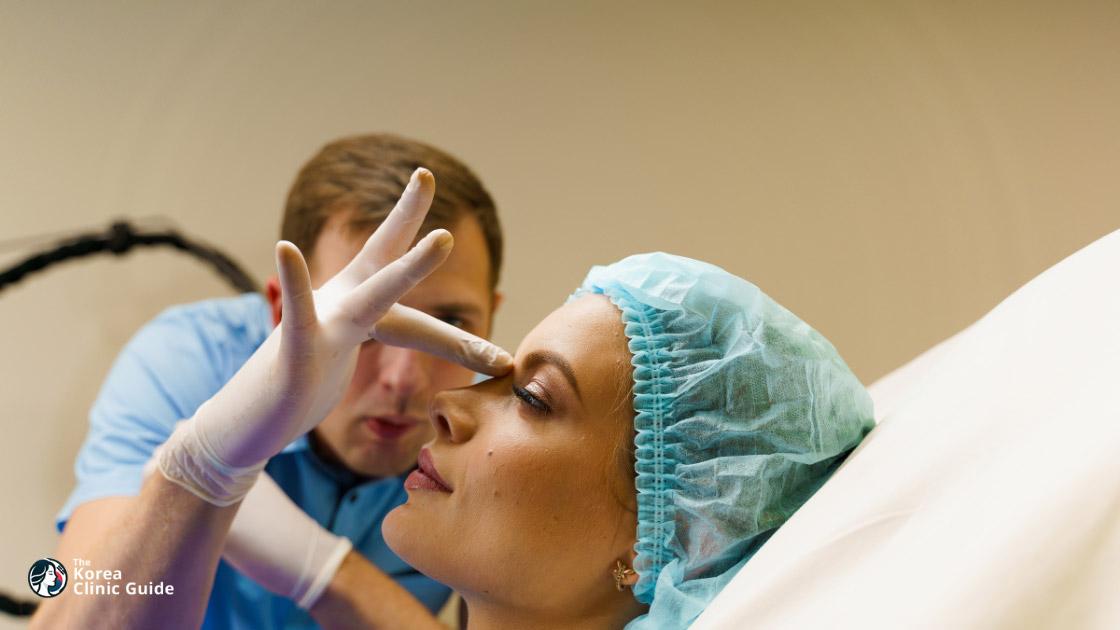
Hiko Nose Thread Lift in Korea: Candidacy, Methods, Recovery, Risks and Travel Planning
A Hiko nose thread lift uses absorbable barbed threads placed through small punctures to create temporary, modest bridge or tip definition without surgical reshaping. The article covers candidacy, procedure variations and filler risks, Korea travel planning, recovery, aftercare, warning signs, and alternatives for structural or functional nasal concerns.
Updated: Sep 15, 2026
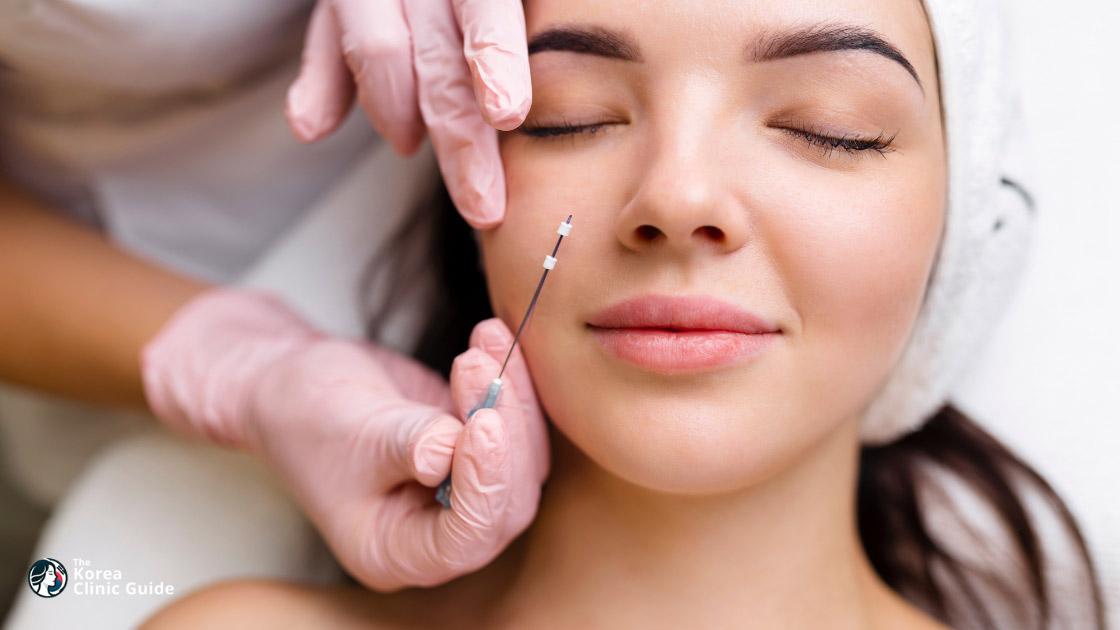
Nose Thread Lift in Korea: Candidacy, Recovery, Risks and Travel Planning
A nose thread lift uses absorbable threads placed along the bridge, tip, or columella to create modest, temporary contour changes, with local anesthetic and early follow-up. The article covers candidate screening, Korea travel planning, recovery, aftercare, warning signs, and alternatives such as filler, rhinoplasty, and septoplasty.
Updated: Sep 12, 2026
Clinics offering Thread Lift
RINE Plastic Surgery Clinic | Facelift and Eye Rejuvenation Surgery
Nonhyeon

SH Clinic: Comprehensive Women's, Men's & Couples' Health Services in Korea
Sinsa

THEPLUS Plastic Surgery Korea | Eye, Nose, Face & Body Surgery
Sinsa

Haru Clinic Korea | Seoul Facelift, Threads, Botox & Fillers
Sinsa