
Medical Tourism Blog
Rolling Acne Scars: Acne Scar Treatment & Stem Cell Acne Scar Procedures in Korea
Table of contents
- A Review of Leading Acne Scar Treatments
- Stem Cell Therapy: An Innovative Solution
- Which Are the Best Clinics in Korea for Rolling Acne Scars?
- Navigating Acne Scar Treatment as a Medical Tourist in South Korea
- Comparing Treatment Costs: South Korea vs. Other Countries
- Patient Results and Satisfaction
- Conclusion
- References
Considering treatment in Korea? Everything you need to know e.g. — how to avoid scams, visas, interpreters, recovery tips — in our Medical Tourism Master Guide. Plan with confidence in minutes, not weeks!
Rolling acne scars are among the most prevalent types of acne scars, showing up as shallow indents or wave-like depressions across the skin. Their hallmark is a smooth but undulating texture, which often gives the skin a rippled appearance. These scars can span several millimeters in width but don’t always match the size of the acne that caused them—much depends on how each individual’s skin heals. Rolling scars are most commonly seen where the skin is thicker, such as on the lower cheeks or jawline.
The reason rolling scars form lies beneath the surface. When deep acne lesions heal, bands of fibrous tissue can develop in the subcutaneous layer, pulling the skin down and creating visible dips on the surface. This anchoring effect is why effective treatment for rolling acne scars must work to release these underlying tethers for meaningful improvement.
Classifying Atrophic Scars
Dermatologists classify acne scars to determine the best treatment strategies. Rolling scars fall into the group of atrophic scars, which are identified by indented or sunken features because of tissue loss. This is the opposite of hypertrophic or keloid scars, which are actually raised due to excess collagen.
Other atrophic scar types include:
- Ice Pick Scars: Deep, narrow pitted scars similar in shape to a sharp object’s puncture.
- Boxcar Scars: Round or oval, with sharp, defined vertical edges—often likened to chickenpox scars.
Knowing exactly which kind of atrophic scar you have matters, as each responds optimally to different procedures. For example, while subcision is ideal for rolling scars, punch techniques are better suited for ice pick and boxcar scars. Accurate identification also helps patients understand why a combination of therapies is often needed to get the best results.
A Review of Leading Acne Scar Treatments
Why Combination Therapy Works Best
Treating rolling acne scars is rarely a one-step process. The prevailing best practice is combination therapy—layering different modalities to address every level of skin affected by scarring. Clinics—especially in South Korea—typically start by releasing deep fibrous bands, then follow with treatments that stimulate collagen and refine the skin surface. Below, we break down these cornerstone treatments and how they work together.
Subcision
Subcision is a widely used, minimally invasive surgical procedure that directly targets the fibrous strands holding down rolling scars. Performed under local anesthesia, a fine or Nokor needle is inserted under the scar and swept back-and-forth to cut the tethers pulling the skin downward.
This immediately helps the skin lift and level out with the surrounding surface. The minor internal bruising that occurs also encourages natural collagen production, which helps prevent the scar from reforming. Subcision is a go-to first-line treatment for rolling scars, setting the stage for further improvement with complementary procedures.
Microneedling and Radiofrequency (RF) Microneedling
Microneedling, sometimes called collagen induction therapy, is a gentle approach that uses tiny needles to create controlled micro-injuries in the skin. This stimulates new collagen and elastin—key ingredients for supple, smooth skin. Over a series of treatments, the new tissue helps fill in depressed scars.
RF microneedling takes this a step further by delivering radiofrequency energy via the needles, which heats the deeper layers and encourages even stronger collagen production. It’s a powerful option for atrophic scars like rolling scars, and typical treatment plans often pair microneedling or RF microneedling with Platelet-Rich Plasma (PRP) for added healing support.
Dermal Fillers
Dermal fillers provide immediate improvement for depressed scars by restoring lost volume. Substances like hyaluronic acid (HA), poly-L-lactic acid (PLLA), or polymethyl-methacrylate (PMMA) are injected beneath a scar’s surface, plumping the area for a smoother look.
Fillers work especially well after subcision—once the fibrous bands are released, adding a filler helps keep the scar from re-tethering and elevates the area right away. HA-based fillers typically last 6 to 18 months, while newer options like Sculptra can last up to two years. Bellafill offers an FDA-approved option for longer-term results.
Laser Resurfacing
Laser resurfacing is a central part of modern scar revision, particularly in South Korea. There are two main types:
Ablative Lasers: Devices like carbon dioxide (CO2) and Erbium YAG lasers remove outer skin layers, prompting robust healing and collagen production. Results can be significant for severe scars, but recovery may last two weeks to several months, with a higher risk of redness or pigmentation issues.
Non-Ablative Lasers: Fractional lasers (like certain Pico or Fraxel systems) heat the lower layers of the skin without removing the surface. This means little to no downtime, though several sessions may be needed and results are more modest—particularly for deeper scars. Pico lasers are especially suitable for those with darker skin tones due to a lower risk of post-inflammatory hyperpigmentation.
Table 1: Key Treatments for Rolling Acne Scars
| Treatment | Key Mechanism | Suitability for Rolling Scars | Typical Sessions Required | Average Downtime/Recovery |
|---|---|---|---|---|
| Subcision | Releases fibrous bands pulling down scars | Highly effective for flattening depressions | 3-6 treatments | 2-3 days swelling, 7-10 days bruising |
| Microneedling | Stimulates collagen via micro-injuries | Smooths and reduces depth | 3-6 treatments | Few days redness/swelling |
| Dermal Fillers | Adds volume beneath depressions | Immediate lift post-subcision | Immediate; repeat every 6-24 months | Minimal to none |
| Ablative Lasers | Resurfaces skin by removing outer layers | Excellent for severe/textured scarring | 1 treatment | 2 weeks to 3 months |
| Non-Ablative Lasers | Boosts deep collagen production without removing skin | Good for mild-to-moderate scarring | 3-5 sessions | Little to none |
Stem Cell Therapy: An Innovative Solution
How Stem Cell Therapy Works
Stem cell therapy for acne scars represents a new frontier in regenerative medicine. Instead of merely resurfacing skin or adding filler, this technique aims to rebuild scarred tissue at the cellular level. It utilizes stem cells—most commonly those from fat tissue (adipose-derived stem cells, ADSCs) or bone marrow—to encourage the growth of new, healthy skin cells like fibroblasts, which make collagen and elastin.
Directly injecting concentrated stem cells into scarred areas jumpstarts collagen production and helps organize tissue remodeling. The treatment also fights inflammation and supports new blood vessel growth, enhancing both the visual improvement of scars and the skin’s strength and resilience. Early research suggests that stem cell therapy can produce significant benefits, especially for severe atrophic scars.
What the Procedure Involves
Stem cell therapy usually follows three basic steps, especially when using your own cells:
- Cell Harvesting: Fat (or sometimes bone marrow) is collected through a minimally invasive technique designed to isolate the most stem-cell-rich portions, termed “nano fat.”
- Laboratory Processing: The collected material is processed in a lab to purify and concentrate the stem cells—sometimes cultured over several weeks.
- Injection: These concentrated stem cells (with or without a bit of fat for volume) are carefully injected into the targeted scarred areas with fine needles.
Patients typically see results develop gradually over weeks to months as new tissue grows and repairs the damaged areas.
Which Are the Best Clinics in Korea for Rolling Acne Scars?
Listed below are some of the best clinics in Korea for rolling acne scars.
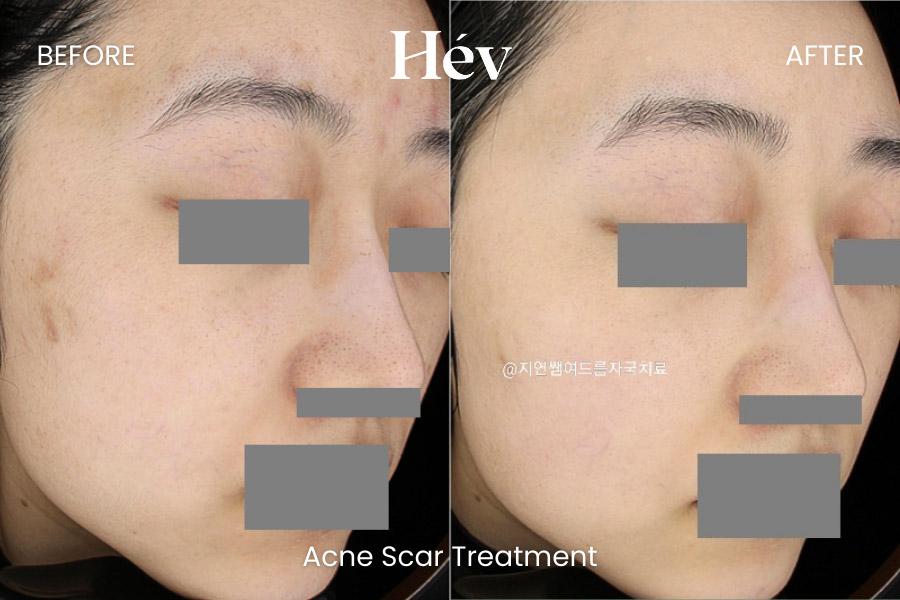
1. Hev Clinic
You may consider Hev Clinic for rolling acne scars if you want a dermatologist-led plan that can combine scar-release and texture-focused treatments—such as subcision, fillers, fractional lasers, microneedling, or RF microneedling—based on a detailed assessment of your skin and scar pattern. The clinic also emphasizes continuity with the same attending dermatologist from consultation through aftercare.
- URL: Hev Clinic Website
- Location: Gangnam-gu, Seoul
- Scar-focused options:
- Rolling, depressed acne scars may be addressed through a staged combination of subcision, fillers, lasers, microneedling, or RF microneedling, depending on your scar pattern and skin assessment.
- Available resurfacing and texture options include Fraxel, fractional CO2 laser, microneedling, RF microneedling, and chemical peels.
- Re2O is listed as a structural skin booster containing human-derived collagen and elastin; the clinic describes using it to support dermal texture and firmness.
- Planning and continuity:
- AI skin analysis is used to assess factors such as skin thickness, aging, and pigment depth before creating a one-to-one plan.
- The same attending board-certified dermatologist oversees consultation, treatment, and aftercare.
- Maintenance timing may be planned around a stated skin-regeneration cycle of about 3–4 weeks.
- Comfort and recovery considerations:
- The clinic describes a non-sedation, pain-controlled anesthesia approach that allows you to communicate during injectable procedures.
- For resurfacing treatments, expected recovery differs by modality: Fraxel may cause several days of roughness and bronzing, while fractional CO2 laser can involve several days of redness and peeling.
- The clinic provides its Repair Barrier Cream as part of its post-treatment care protocol.
2. Xenia Clinic Gangnam
At Xenia Clinic Gangnam, you can expect rolling acne-scar care to center on scar and pore options such as Pico Fraxel, Fraxel, POTENZA, and Juvelook, with tailored pores/scars programs available to address uneven texture. If active breakouts are also contributing to your concerns, the clinic lists separate acne-treatment and prescription options that may be incorporated into your overall care plan.
- URL: Xenia Clinic Gangnam Website
- Location: Seocho-gu, Seoul
- Scar and pore treatments:
- The clinic lists Pico Fraxel, Fraxel, POTENZA, and Juvelook among its scar and pore treatment options.
- Pores/Scars Programs are available for tailored texture-refinement care.
- POTENZA is also listed within the clinic's acne treatment offerings.
- Related skin care:
- Acne care options include Capri Laser, Ethosome Gold PTT, inflammatory shots, prescriptions, and acne packages.
- Peeling and skincare options include PHA, Aladdin, Jessner, Black Peel, and Lhala Peel, as well as pimple and hydration care.
3. Rodam Korean Medicine Clinic - Gangnam
You may consider Rodam Korean Medicine Clinic - Gangnam for rolling acne scars if you are interested in its Saesalchim approach, which uses microneedles to encourage collagen production and skin regeneration with the aim of smoothing acne-scar irregularities. The clinic also offers personalized traditional Korean medicine-based care for active acne and enlarged pores, which may be relevant when ongoing breakouts or texture concerns accompany your scars.
- URL: Rodam Korean Medicine Clinic - Gangnam Website
- Location: Gangnam-gu, Seoul
- Saesalchim for acne scars:
- Saesalchim therapy uses microneedles to stimulate collagen production and support skin regeneration.
- The clinic describes this approach as helping smooth surface irregularities and reduce the appearance of acne scars.
- Related acne and texture care:
- Acne treatment combines herbal medicine, topical applications, and acupuncture, with goals of reducing inflammation, helping prevent future breakouts, and minimizing scarring.
- Pore-tightening care may include herbal peels, microneedling, and traditional methods intended to support skin elasticity and texture.
Navigating Acne Scar Treatment as a Medical Tourist in South Korea
What to Expect: From Consultation to Aftercare
Thanks to its reputation for advanced technology and skilled practitioners, South Korea has become a key destination for global dermatology. Medical tourists benefit from structured, supportive experiences including:
- Virtual Consultations: Patients start with online photos and discussions to outline goals and receive a preliminary plan. Clinics provide translation and support to simplify the process.
- Personalized In-Person Evaluations: Upon arrival, an in-person exam—with advanced 3D imaging—is conducted to map out the scars in detail and finalize a treatment protocol.
- Procedure Day: Treatments are performed under topical anesthesia, usually taking one to two hours per session.
- Recovery: Patients experience redness, swelling, and mild sensitivity for a week or less, before gradual skin improvement. Aftercare kits and ongoing instructions are standard.
- Long-Term Support: Many clinics offer continued remote follow-up to monitor healing and answer questions once patients return home.
The Korean Approach: Custom Combination Protocols
Korean clinics stand out for their emphasis on multi-modal protocols. For rolling scars, a typical sequence involves subcision to sever tethers, dermal fillers to restore volume, and repeated sessions of laser resurfacing or RF microneedling to overhaul the skin’s texture. This highly tailored approach tackles both the cause and visible effect of scars and is a hallmark of Korea’s international reputation in cosmetic dermatology.
Comparing Treatment Costs: South Korea vs. Other Countries
Price Guide for Acne Scar Therapy in South Korea
Treatment fees vary with procedure choice, clinic quality, and whether treatments are bundled. Most cases require multiple sessions.
- Single Sessions:
- Fractional Laser CO₂/Fraxel: $150–$450
- RF Microneedling: $225–$525
- Subcision with Filler: $225–$600
- All-Inclusive Packages: Typically $1,500–$3,500 for combined therapies over several visits.
- Stem Cell Therapy: $3,000–$6,000 per treatment.
It’s important to confirm whether costs include anesthesia, aftercare, and translation to avoid surprises.
International Price Comparison
The cost advantage of getting acne scar treatment in South Korea is striking, with typical savings of 30-60% compared to the US or Europe. Here’s a side-by-side look:
Table 2: Sample International Costs (USD)
| Procedure Type | South Korea | USA | UK | Mexico | Turkey |
|---|---|---|---|---|---|
| Acne Scar Treatment (General) | $30-$991/session | $550-$2,500/session | $820-$3,240/session | $2,500-$3,500/package | $200/package |
| Stem Cell Therapy | $3,000-$6,000 | $5,000-$10,000 | $5,500-$11,000 | $2,500-$3,500/package | $540-$1,620/session |
Even after accounting for travel and lodging, many find South Korea to offer greater value and equal or better quality.
Patient Results and Satisfaction
Most patients who pursue comprehensive rolling acne scar treatments report visible improvements—not just in their skin, but in their overall confidence and well-being. Testimonials often mention dramatic reductions in scar visibility, increased self-esteem, and renewed comfort with their appearance.
One patient described feeling “less self-conscious” and “able to smile again,” while another reported over 80% visible improvement after stem cell therapy. While these treatments can greatly enhance skin appearance, it’s important to remember that scars may not disappear entirely. The best outcomes come to those with realistic expectations and patience, as skin remodeling can take several months through multiple sessions.
Conclusion
Treating rolling acne scars is most successful with a multi-layered strategy, combining key procedures like subcision, microneedling, dermal fillers, and laser resurfacing, or even stem cell therapy. South Korea’s innovative, cost-effective approach and comprehensive patient care have made it a standout destination for medical tourists. While dramatic improvement is well within reach, realistic expectations and adherence to aftercare are essential for truly satisfying outcomes.
References
1, 2, 3, 4, 5, 6, 7, 8, 9, 10, 11, 12, 13, 14, 15, 16, 17, 18, 19, 20, 21, 22, 23, 24, 25, 26, 27, 28, 29, 30, 31, 32, 33, 34, 35, 36, 37, 38, 39, 40, 41, 42, 43, 44, 45, 46, 47, 48, 49, 50, 51, 52
Frequently Asked Questions
Related Blogs
Fraxel Laser in Korea: Treatment Methods, Recovery, Risks and Travel Planning
Non-ablative Fraxel DUAL uses 1550-nm resurfacing for scars, texture and fine lines, 1927-nm treatment for pigment and photodamage, or both with individualized settings. The article covers candidacy, travel planning for Korea, treatment steps, recovery, aftercare, warning signs and alternatives such as CO2 laser, RF microneedling and subcision.
Updated: Sep 17, 2026
IPL in Korea: Uses, Recovery, Safety, and Travel Planning
IPL is a broad-spectrum light treatment for superficial pigment, redness, small vessels, and long-term hair reduction, usually delivered in 3–6 sessions spaced 2–4 weeks apart. The article covers candidate screening, treatment steps, travel planning, preparation, aftercare, expected recovery, warning signs, and alternatives.
Updated: Sep 17, 2026
Oligio Lifting in Korea: Candidates, Results, Recovery, and Travel Planning
Oligio lifting uses monopolar RF to gradually tighten mild-to-moderate facial and neck laxity without incisions or formal downtime. The article covers candidacy, contraindications, treatment steps, Korea travel planning, aftercare, warning signs, and follow-up through six months.
Updated: Sep 17, 2026
Juvelook Collagen Booster in Korea: Treatment Methods, Recovery, Risks, and Travel Planning
Juvelook collagen booster uses PDLLA-HA microinjections or selected cannula placement for gradual improvement in texture, fine lines, pores, mild laxity, and selected shallow acne scars. International patients can plan a 2–3-night Korea stay, obtain product traceability records, follow aftercare guidance, and arrange follow-up for swelling or other concerns.
Updated: Sep 17, 2026
Clinics offering Acne Scar Treatment

SH Clinic: Comprehensive Women's, Men's & Couples' Health Services in Korea
Sinsa

THEPLUS Plastic Surgery Korea | Eye, Nose, Face & Body Surgery
Sinsa
Cellinique Clinic Korea: Advanced Stem Cell and Laser Treatments for Health, Beauty, and Rejuvenation in Gangnam
Apgujeong
Secret Clinic: Unveiling Advanced Skin and Body Treatments in Seongnam, Korea
Sinnonhyeon Station