
Medical Tourism Blog
Stem Cell Acne Scar in Korea: Methods, Evidence, Recovery, and Travel Planning
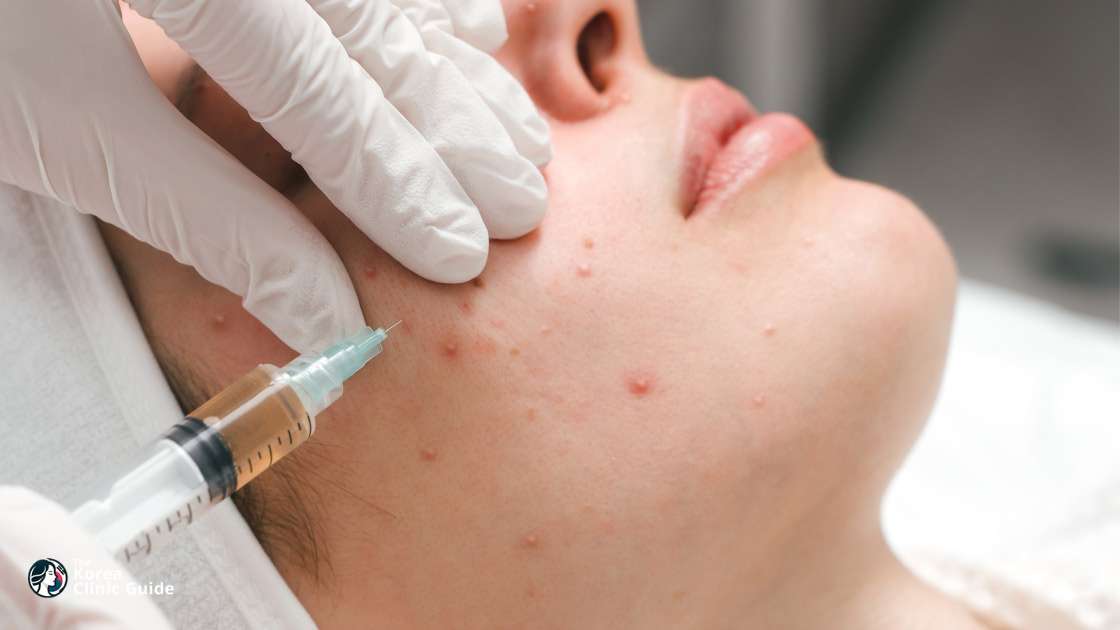
Table of contents
- Stem Cell Acne Scar at a Glance
- What Is Stem Cell Acne Scar Treatment?
- Who Is a Good Candidate for Stem Cell Acne Scar Treatment?
- How Is Stem Cell Acne Scar Treatment Performed?
- Why Visit Korea for Stem Cell Acne Scar Treatment?
- Key Information for International Patients
- Which Are the Best Clinics in Korea for Stem Cell Acne Scar?
- Stem Cell Acne Scar From Start to Finish
- Alternatives to Stem Cell Acne Scar Treatment
- How Can I Prepare for Stem Cell Acne Scar Treatment?
- Aftercare Advice
Considering treatment in Korea? Everything you need to know e.g. — how to avoid scams, visas, interpreters, recovery tips — in our Medical Tourism Master Guide. Plan with confidence in minutes, not weeks!
Last updated: September 2026
Stem Cell Acne Scar at a Glance
- Not one standardized treatment — “Stem cell acne scar treatment” can mean exosome or conditioned-medium gel applied after fractional CO2 laser, or fat-derived SVF, nanofat, or fat-grafting injections; these approaches have different invasiveness, recovery, and evidence.
- Best for depressed scars — Candidates typically have controlled acne and stable atrophic scars such as rolling scars, selected boxcar scars, diffuse texture loss, or volume-deficient depressions; it is not designed for active acne, hypertrophic scars, or keloids.
- Evidence supports specific protocols only — In a Seoul split-face study of 25 patients, three fractional CO2 sessions with one defined exosome gel reduced ECCA scar scores by 32.5% at 12 weeks versus 19.9% with control gel, but this does not validate all exosome products or stand-alone topical use.
- Recovery depends on delivery method — Fractional CO2 commonly causes redness, swelling, oozing, and crusting, with initial healing in about 1–2 weeks; fat-harvest or SVF injection also adds donor-site soreness, bruising, facial swelling, and possible activity restrictions.
- Multiple visits may be necessary — The strongest exosome-related evidence used three monthly CO2 laser sessions, so the complete course cannot usually be finished in one medical-tourism trip; assess the final result around three months after the last treatment.
- Plan travel around early review — Allow about 7–10 days in Korea for a CO2-based protocol and at least 10–14 days for fat harvesting, injection, or sedation, including an in-person postoperative check before long-haul travel.
- Verify Korean protocol status — Korea has an advanced-regenerative-medicine oversight framework, but it does not approve every service marketed as stem cell or exosome care; request the exact product, source, processing, sterility and batch details, regulatory basis, and written treatment protocol before booking.
What Is Stem Cell Acne Scar Treatment?
Stem cell acne scar treatment is a marketing term for cell-based or cell-free treatments used alongside scar procedures, such as laser resurfacing or fat-derived injections. It aims to partially improve depressed acne scars, texture, and scar-related volume loss after acne is controlled. Depending on the protocol, it is minimally invasive or surgical when fat harvesting and injections are involved.
Who Is a Good Candidate for Stem Cell Acne Scar Treatment?
- Controlled atrophic acne scars — Suitable candidates have stable, depressed facial scars after acne is under control, including rolling scars, selected boxcar scars, diffuse textural depression, or scar-related volume loss.
- Realistic treatment goal — The goal is partial improvement in scar depth and texture, not complete scar removal. Mixed scar patterns commonly need more than one technique.
- Suitable resurfacing profile — A fractional CO2 laser plus cell-free adjunct is relevant only when ablative resurfacing is appropriate for the skin type, pigment history, and downtime available.
- Suitable harvest-and-injection profile — Autologous fat, stromal vascular fraction (SVF), or ECM/SVF-gel protocols require adequate donor fat and acceptance of harvesting, injections, bruising, and donor-site recovery.
Active inflammatory acne, pustules, open wounds, cellulitis, and other facial infections must be treated before scar work begins. This treatment pathway is not designed for raised hypertrophic or keloid scars, which require a different plan. Pregnancy or breastfeeding, uncontrolled diabetes, significant immunosuppression, bleeding disorders, poor wound healing, relevant allergies, recent tanning or sunburn, and current or recent isotretinoin use all require individualized medical assessment. Disclose anticoagulants, antiplatelet medicines, supplements, recurrent cold sores, and every prior scar treatment; do not stop prescribed medication without the clinician who prescribed it.
How Is Stem Cell Acne Scar Treatment Performed?
“Stem cell acne scar treatment” is a marketing umbrella, not one standardized intervention. Ask exactly what material is used, whether it contains living cells, its source and processing method, how it is delivered, and why it fits the scar types being treated.
- Fractional CO2 laser with ADSC-conditioned medium or exosome gel — Fractional CO2 laser creates controlled microscopic treatment zones in the skin, then a cell-free preparation is applied to the surface. Exosomes are extracellular vesicles, not stem cells. In a Seoul randomized split-face study of 25 patients, three CO2-laser sessions plus a specific adipose-derived exosome gel reduced ECCA scar scores by 32.5% at 12 weeks, compared with 19.9% with control gel. This supports that studied laser-adjunct protocol, not stand-alone topical exosomes, injected exosomes, or unrelated commercial products.
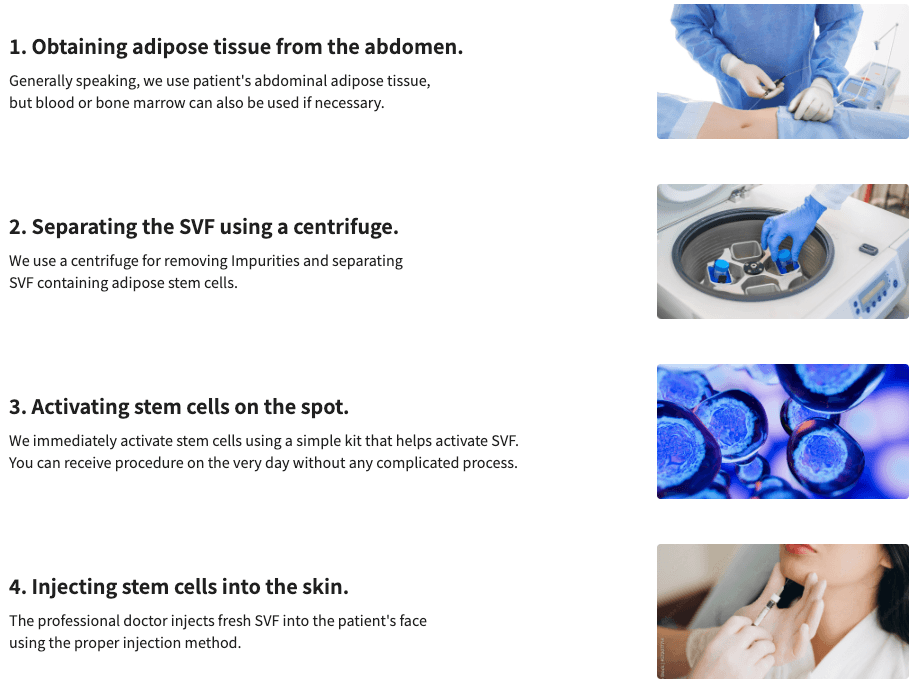
- Autologous SVF or ECM/SVF-gel injection — Fat is harvested from the patient, processed into the intended material, and injected at a defined dermal or subdermal plane beneath depressed scars. A small 2025 split-face trial found greater 24-week scar-score and three-dimensional volume improvement with one ECM/SVF-gel injection than two fractional CO2 sessions, but only 10 participants completed follow-up. The study was single-center and does not establish long-term durability or equivalence between processing methods.
- Nanofat or fat grafting with regenerative labeling — Nanofat and conventional fat grafting are harvest-and-injection procedures used for selected volume-deficient scars. They are not equivalent to topical conditioned medium or exosome gel; volume retention, contour irregularity, and donor-site recovery are central considerations. See body fat grafting for the harvest-and-transfer aspect of this approach.
Why Visit Korea for Stem Cell Acne Scar Treatment?
Korea has a defined advanced-regenerative-medicine legal framework, but that framework does not validate every acne-scar service marketed as “stem cell” or “exosome” treatment. The important advantage is the ability to verify a written protocol and its regulatory basis before travel, rather than relying on broad promotional terminology.
- Regenerative-medicine oversight structure — Korea’s Advanced Regenerative Medicine and Advanced Biological Products Act sets requirements for designated treatment institutions, reviewed treatment plans, records, and safety management when a protocol falls within the regulated framework. Ask whether the proposed service falls under this system and request the institution’s status in writing.
- Product-characterization focus — The Ministry of Food and Drug Safety issued September 2024 guidance on quality, non-clinical, and clinical assessment of extracellular-vesicle therapy products. This is a reason to insist on product identity, source, processing, sterility controls, and lot or batch details where applicable—not evidence that a particular cosmetic exosome product is approved or effective.
- Directly relevant local research — The controlled exosome-gel-after-CO2 study was conducted in Seoul and tested a defined three-session protocol. Its 12-week findings are useful for discussing that narrow protocol, while also showing why results cannot be transferred automatically to a different product, dose, device setting, or route of administration.
- Meaningful consent questions — Korean advanced-regenerative consent rules include disclosure of alternatives and the expected duration of each treatment stage under applicable protocols. Request written English materials that identify whether the intervention is treatment or clinical research, its regulatory basis, and the available conventional scar-treatment alternatives.
Key Information for International Patients
- Minimum stay — Plan 7–10 days in Korea for a fractional-CO2-based protocol so the team can examine early healing before a long-haul journey. Plan at least 10–14 days when fat harvesting, injection, or sedation is involved, including an in-person postoperative review.
- Repeat visits — The best directly relevant exosome evidence used three monthly fractional CO2 sessions. That course cannot be completed on one normal medical-tourism trip; arrange local follow-up or separate return visits before committing.
- Flight timing — No procedure-specific evidence establishes one universally safe day to fly. Do not schedule same-day departure. Get written clearance based on facial healing, donor-site status, bleeding risk, sedation, and whether an early review is satisfactory.
- Itinerary impact — CO2 resurfacing commonly causes redness, swelling, oozing, and crusting, with initial healing around 1–2 weeks. Avoid public-facing events, direct sun, strenuous exercise, saunas, pools, and hot baths during the clinician-directed restriction period.
- Remote follow-up — Arrange an English-language after-hours contact, send standardized makeup-free photographs as requested, and leave with the procedure note, product and batch information where applicable, laser settings or injection details, anesthesia record, and aftercare plan.
Travel note: Book flexible flights and accommodation near the clinic until the first review is complete. For harvest or sedation protocols, confirm whether the clinic requires an escort and overnight observation.
Which Are the Best Clinics in Korea for Stem Cell Acne Scar?
Listed below are some of the best clinics in Korea for stem cell acne scar.
1. Cellinique Clinic
For stem cell acne-scar concerns, you may consider Cellinique’s personalized regenerative-skin approach, which combines its NovaStem concentrated autologous-blood technology with an in-person treatment plan. The available information describes skin elasticity, tissue regeneration, and facial rejuvenation support, but does not specify an acne-scar protocol or expected scar-remodeling results.
- URL: Cellinique Clinic Website
- Location: Gangnam-gu, Seoul
- Regenerative approach:
- NovaStem uses concentrated autologous blood with the stated aim of activating aged cells and supporting damaged-tissue regeneration.
- The clinic also offers stem cell therapy as part of its regeneration-focused services.
- Complementary options:
- Available complementary treatments include PRP, exosomes, Radiesse, Juvelook, laser lifting, dual toning, and LDM micro-massage.
- Radiesse and Juvelook are described as collagen- and elastin-promoting treatments that may be relevant when discussing skin texture or volume concerns.
- Clinical focus:
- Care is described as 100% personalized, with consultation and customized treatment planning.
- Dr. Chris Gunwoo Kim has lectured on blood stem cells, tissue regeneration, and SDF-1alpha injection, and presented the NovaStem Kit at a 2025 KOAT spring conference.
2. THEPLUS Plastic Surgery
For stem cell acne-scar concerns, you may consider THEPLUS Plastic Surgery if you want to discuss a blood-derived regenerative treatment that uses Buffy Coat extraction as part of the clinic’s broader aesthetic and post-procedure care offering. The available information does not describe a dedicated acne-scar treatment protocol, scar outcomes, or a specific treating clinician for this service.
- URL: THEPLUS Plastic Surgery Website
- Location: Gangnam-gu, Seoul
- Stem cell system:
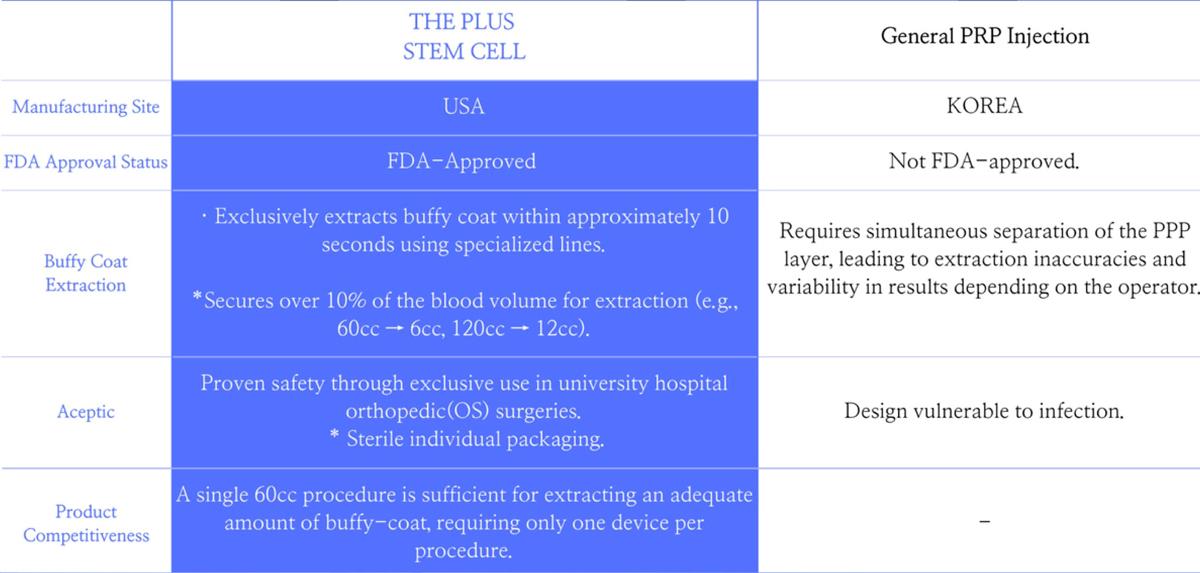
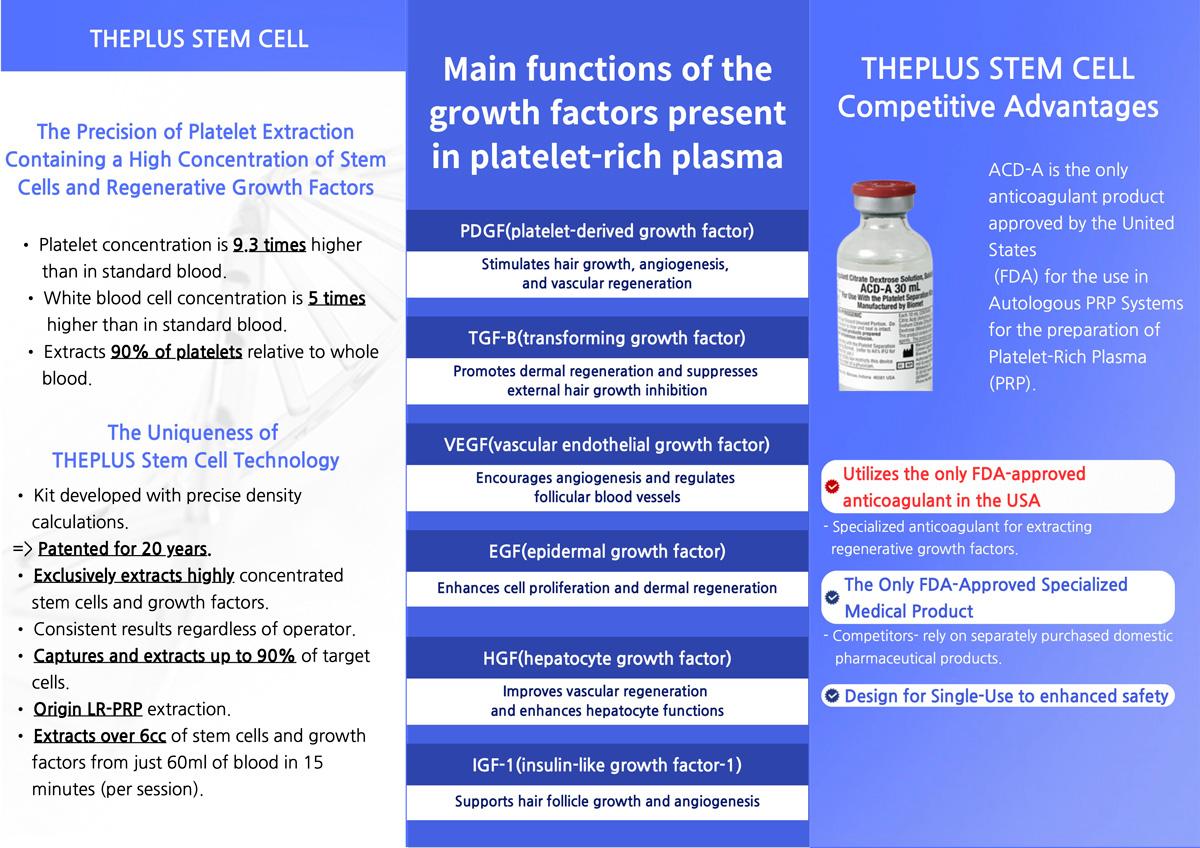
- THE PLUS Stem Cell uses a system intended to extract the Buffy Coat layer from a blood sample.
- The clinic states that its extraction process can secure more than 10% of sampled blood as Buffy Coat and that a complete single application requires 60 cc of blood.
- Each kit is described as including a 30 ml FDA-approved anticoagulant; components are individually sterilized and packaged.
- Related aesthetic care:
- Stem cell treatment is offered within the clinic’s regenerative, aesthetic, and post-procedure care services.
- Other listed facial services include face fat grafting, thread lifting, facelift surgery, and facial contouring procedures.
- Surgical team context:
- The clinic describes Dr. Kim as a board-certified plastic surgeon with research recognition related to 3D implants and expertise in rhinoplasty and facial contouring.
- Dr. Jeong is identified as President of the Korean Society of Plastic Surgeons and has a rhinoplasty-focused practice; the source does not state which clinician provides stem cell treatment.
3. SH Clinic
You may consider SH Clinic for a personalized consultation about stem cell-based skin rejuvenation alongside acne-focused dermatologic care. Its stem cell center offers individualized plans for skin and cosmetic rejuvenation after an in-person examination, though the available information does not identify a specific stem cell acne-scar technique, treatment course, or expected scar results.
- URL: SH Clinic Website
- Location: Seocho-gu, Seoul
- Personalized regenerative care:
- The Wellness & Anti-aging Program is based on personalized stem cell treatments and clinical experience.
- The clinic states that experienced medical staff develop treatment plans after an in-person consultation and examination.
- Its stem cell center covers facial rejuvenation, anti-aging, and skin and cosmetic rejuvenation.
- Acne and skin-care options:
- Physician-guided medical skin care includes peels, facials, and prescriptions targeting acne, pigmentation, and photo-aging.
- Listed aesthetic services also include laser lifting, skin booster injections, Botox, dermal fillers, and thread lifting.
Stem Cell Acne Scar From Start to Finish
- Remote consultation and record review — Send clear, makeup-free photographs in consistent lighting, medical history, medication and supplement list, acne history, herpes history, prior procedures, and travel dates. Confirm that English consultation and written aftercare are available.
- Protocol clarification before booking — Obtain the protocol in writing: product name and source; living-cell, SVF, nanofat, conditioned-medium, or exosome status; autologous or donor-derived status; processing and sterility controls; number of sessions; laser device and planned settings or injection plane; expected downtime; cost inclusions; and after-hours contact.
- In-person scar assessment — The clinician examines rolling, boxcar, and ice-pick scars; checks for tethering, active acne, pigment risk, and skin condition; and decides whether regenerative adjunct treatment is appropriate or whether subcision, focal scar surgery, filler, laser, or RF microneedling would better address the anatomy.
- Medical and anesthesia review — Disclose allergies, bleeding risk, diabetes, immune conditions, pregnancy status, isotretinoin exposure, medicines, and supplements. Laser-only treatment often uses topical anesthetic; harvest or deeper injection protocols can require local anesthesia, sedation, fasting, an escort, and additional testing according to the clinic’s policy and health history.
- Treatment delivery — For a CO2-based protocol, the face is cleansed, anesthetic is applied, and fractional laser passes create microthermal zones before the named cell-free preparation is applied. For SVF, ECM/SVF-gel, nanofat, or fat grafting, fat is harvested, processed, and injected into agreed depressed-scar planes.
- Observation and discharge — The team reviews bleeding, pain, swelling, wound or donor-site care, medications, and emergency contact details. Sedation and harvesting require longer observation than a topical-anesthetic laser session.
- Early in-person review — Attend the planned next-day or early healing review before long-distance travel. The clinician checks re-epithelialization after laser treatment and assesses swelling, bruising, incisions, and contour after injection or harvesting.
- Remote follow-up and reassessment — Send photographs as directed after returning home. Review results around three months after the final intervention rather than automatically repeating a regenerative product; base further treatment on remaining scar morphology.
Alternatives to Stem Cell Acne Scar Treatment
Conventional scar treatments have a clearer role when matched to scar shape and tethering. Cell-based or cell-free adjuncts do not replace focal treatment for deep ice-pick scars or mechanical release for tethered rolling scars; combination care is common.
Subcision
- Best role — Releases fibrous bands pulling down tethered rolling scars.
- Tradeoff — It treats the mechanical cause of depression but can cause bruising, swelling, hematoma, and temporary downtime; selected scars then need volume correction or resurfacing. Explore atrophic scar treatment for a scar-type-led plan.
Fractional Laser or RF Microneedling
- Best role — Improves diffuse textural scarring and selected shallow boxcar scars through collagen remodeling.
- Tradeoff — Fractional CO2 laser generally has more downtime and pigment-management demands than non-ablative fractional laser or RF microneedling. Compare CO2 laser, Fraxel laser, and Secret RF microneedling.
TCA CROSS or Focal Scar Surgery
- Best role — TCA CROSS, punch excision, and punch elevation target narrow deep ice-pick scars and sharply edged boxcar scars that broad resurfacing cannot fully level.
- Tradeoff — These are focal procedures with risks of pigment change, widening, or new scarring, and require careful selection and wound care. See scar removal surgery.
Filler or Conventional Fat Grafting
- Best role — Hyaluronic-acid filler, biostimulatory filler, or fat grafting can lift selected volume-deficient scars, often after subcision.
- Tradeoff — Filler is temporary and can create lumps or vascular complications when injected incorrectly; fat grafting adds donor-site recovery and variable retention. See facial filler and stem cell fat grafting.
How Can I Prepare for Stem Cell Acne Scar Treatment?
- Control active acne first — Report new breakouts, pustules, cold sores, rashes, or open skin before treatment. Reschedule rather than laser or inject through active infection.
- Disclose medicines and supplements early — Provide all prescription drugs, anticoagulants, antiplatelet medicines, isotretinoin, corticosteroids, diabetes medicines, vitamins, herbal products, fish oil, and alcohol or nicotine use during remote consultation. The treating clinician and prescribing doctor must decide whether any medicine needs adjustment; never stop anticoagulants or prescribed treatment independently.
- Prevent herpes reactivation — Report any history of recurrent herpes labialis. The treating clinician decides whether antiviral prophylaxis is needed before ablative resurfacing.
- Avoid tanning and sunburn — Arrive without recent tanning or sunburn and follow the clinic’s sun-avoidance plan. Increased baseline inflammation raises pigment-change risk after resurfacing.
- Follow fasting and transport rules exactly — Laser-only sessions without sedation have clinic-specific eating and drinking rules. Harvesting, injection, or sedation can require fasting, an escort, and longer recovery observation.
- Plan recovery logistics — Bring a wide-brimmed hat, obtain clinician-approved gentle cleanser and barrier products locally, avoid scheduling major events, and reserve flexible travel until after the early review.
Travel note: Ask before arrival whether a companion is mandatory for sedation, whether the clinic provides translated consent documents, and how urgent care will be coordinated after you return home.
Confirm the treating doctor’s clinic-specific preparation requirements, which take precedence over general guidance.
Aftercare Advice
Protect healing skin and donor sites meticulously; early inflammation, infection, and ultraviolet exposure can compromise recovery and worsen pigment change.
- Cleanse and protect only as prescribed — Use the clinic’s approved cleanser, barrier ointment, dressing, and post-laser products. Do not add acids, retinoids, benzoyl peroxide, scrubs, or unapproved serums while the skin is healing.
- Do not pick or cover too early — Leave crusts and flaking skin alone. Avoid makeup until re-epithelialization and clinician clearance; picking increases infection and scarring risk.
- Avoid heat, sweat, water exposure, and friction — Avoid strenuous exercise, saunas, hot baths, hot tubs, and pools until cleared. After fat harvesting or injection, follow any compression, sleeping-position, activity, and incision-care instructions exactly.
- Use strict sun protection — Avoid direct sun and use broad-spectrum SPF 50 once the clinician confirms the skin can tolerate it. Wear a hat outdoors; post-inflammatory hyperpigmentation can persist longer than surface healing.
- Recognize urgent warning signs — Seek urgent assessment for fever, chills, escalating pain, spreading redness, pus, persistent bleeding, new cold sores or blistering, severe allergic symptoms, or visual symptoms. Contact the clinic promptly and use the written contingency plan after returning home.
- Track results appropriately — Take standardized, makeup-free photographs. Initial laser healing commonly takes 1–2 weeks, while redness or pigment alteration can last longer; assess treatment response around three months after the final intervention. Published SVF-gel acne-scar follow-up extends to 24 weeks, not years.
Follow the treating doctor’s individualized instructions over general guidance and contact the clinic whenever healing appears abnormal.
Frequently Asked Questions
Related Blogs
Stem Cell Penis Enlargement in Korea: Evidence, Safety, Travel Planning, and Alternatives
Stem cell penis enlargement is an investigational label; the only direct preliminary evidence involves SVF-enriched autologous fat grafting for shaft girth, with liposuction and subcutaneous injection. The article covers candidate screening, regulatory checks in Korea, travel and follow-up planning, aftercare warning signs, and alternatives such as fat transfer, filler, traction, and ED care.
Updated: Oct 4, 2026
Stem Cell Treatments for Sexual Performance in Korea: Evidence, Safety, Travel Planning, and ED Alternatives
Stem cell approaches for organic erectile dysfunction remain investigational, with assessment, protocol verification, intracavernosal injection, monitoring, and follow-up requirements described. International patients should confirm regulatory status, product details, recovery needs, flight planning, emergency contacts, and records for home-urologist follow-up.
Updated: Sep 28, 2026
Stem Cell IV Therapy in Korea: Regulation, Safety, Travel Planning, and Evidence Limits
Stem cell IV therapy requires diagnosis-specific eligibility, specialist assessment, and verification of an authorized product, approved Korean treatment plan, or clinical trial. The article outlines record review, in-person testing, infusion monitoring, flexible travel, flight clearance, and coordinated overseas follow-up.
Updated: Sep 27, 2026
Stem Cell Injection in Korea: Regulation, Treatment Routes, Recovery and Travel Planning
Stem cell injection varies by cell source, processing, route, and target, requiring a confirmed diagnosis, a documented regulatory or research pathway, specialist assessment, and written follow-up planning. International patients should arrange sufficient time for evaluation and observation, obtain fitness-to-fly clearance, and leave with English treatment records and an overseas follow-up plan.
Updated: Sep 27, 2026
Clinics offering Stem Cell Acne Scar

SH Clinic: Comprehensive Women's, Men's & Couples' Health Services in Korea
Sinsa

THEPLUS Plastic Surgery Korea | Eye, Nose, Face & Body Surgery
Sinsa

Made Young Plastic Surgery: Rejuvenating Aesthetic Excellence in Korea for Face Lifts, Contouring and More
Gangnam Station

Cellinique Clinic Korea: Advanced Stem Cell and Laser Treatments for Health, Beauty, and Rejuvenation in Gangnam
Apgujeong