
Medical Tourism Blog
Lifestyle Lift in Korea: Mini-Facelift Methods, Recovery, Risks and Travel Planning
Table of contents
- Lifestyle Lift at a Glance
- What Is a Lifestyle Lift?
- Who Is a Good Candidate for a Lifestyle Lift?
- How Is a Lifestyle Lift Performed?
- Why Visit Korea for a Lifestyle Lift?
- Key Information for International Patients
- Which Are the Best Clinics in Korea for Lifestyle Lift?
- Lifestyle Lift From Start to Finish
- Alternatives to a Lifestyle Lift
- How Can I Prepare for a Lifestyle Lift?
- Aftercare Advice
Considering treatment in Korea? Everything you need to know e.g. — how to avoid scams, visas, interpreters, recovery tips — in our Medical Tourism Master Guide. Plan with confidence in minutes, not weeks!
Last updated: September 2026
Lifestyle Lift at a Glance
- What it is — A “Lifestyle Lift” is a legacy brand term, not a standardized procedure in Korea; the relevant operation is usually a limited-incision lower facelift or mini-facelift that redrapes lower-face skin and may tighten the SMAS.
- Best candidates — It is most suited to medically fit people with mild-to-moderate early jowling, jawline softening, and elastic skin who want modest lower-face improvement rather than full facial rejuvenation.
- What it cannot fix — A limited lift does not reliably correct marked neck bands, major midface descent, substantial volume loss, brow descent, eyelid excess, pigmentation, or skin texture; these concerns may require a broader or combined plan.
- Recovery timeline — Dressings or compression commonly last 24–48 hours, while bruising and swelling usually remain visible for 1–2 or more weeks; strenuous activity and heavy lifting are often restricted for about 4–6 weeks, and tissue settling continues for months.
- Korea travel plan — International patients should plan at least 14 postoperative days in Korea, with 2–3 weeks preferable after face-and-neck work, general anesthesia, drain use, or long-haul travel; fly only after an in-person clearance examination.
- Important surgical risk — Rapidly enlarging or one-sided swelling after facelift surgery can indicate a hematoma requiring urgent in-person treatment to protect the healing skin flap; bleeding, infection, skin-healing problems, scarring, and nerve injury are other material risks.
- Korea-specific distinction — Do not book an original proprietary “Lifestyle Lift” in Korea: request a written surgeon-specific plan naming the incision pattern, tissue plane, SMAS or neck work, anesthesia team, scar locations, emergency arrangements, and included in-person follow-ups.
What Is a Lifestyle Lift?
Lifestyle Lift is a historical brand term for a limited-incision lower facelift, often called a mini-facelift, rather than a standardized operation. It aims to improve mild to moderate jowling, jawline softening, and loose lower-face skin for a more defined, refreshed appearance. It is a surgical procedure, even when performed through shorter incisions than a full facelift.
Who Is a Good Candidate for a Lifestyle Lift?
- Early lower-face laxity — Good candidates have mild-to-moderate jowling, jawline softening, or loose lower-cheek skin and want a modest improvement rather than a comprehensive facial transformation.
- Elastic skin and stable weight — Reasonably resilient skin and a stable body weight support more predictable redraping after a limited-incision lift.
- Realistic surgical goal — A mini-facelift can address lower-face descent; it does not reliably correct pigmentation, fine texture, major volume loss, brow descent, eyelid excess, or marked neck banding.
- Medically prepared traveler — Candidates can complete in-person reviews, arrange an adult companion for the first night, remain in Korea through early wound checks, and access urgent care after returning home.
A limited-incision lift is not suitable during an active facial, dental, ear, or systemic infection, pregnancy or breastfeeding, or when uncontrolled hypertension, diabetes, bleeding conditions, heart or lung disease, sleep apnea, or anesthesia risk has not been optimized. Current smoking, vaping, nicotine replacement, and nicotine pouches can impair skin-flap blood supply and wound healing; complete the surgeon’s required nicotine-free interval before proceeding. Marked neck laxity, heavy platysmal bands, substantial midface descent, major volume loss, brow descent, or eyelid excess often require a broader or combined plan. Prior facelift surgery, threads, fillers, implants, keloid scars, or facial-nerve symptoms require detailed examination; remote photographs cannot replace it.
How Is a Lifestyle Lift Performed?
“Lifestyle Lift” is a legacy brand term rather than a standardized operation currently offered in Korea. Ask instead which limited-incision facelift method is proposed, which tissue layers will be treated, and what the procedure will not correct.
- Limited-incision lower facelift — Short incisions are generally placed around the ear. The surgeon redrapes skin and may tighten the SMAS, the fibrous layer over facial muscles, through plication, imbrication, or suspension. This approach commonly suits earlier jowling and lower-face laxity.
- SMAS facelift — Skin redraping is combined with repositioning or tightening of the SMAS. It is often considered when greater structural correction is needed than a short-scar approach can reasonably provide. Read about a SMAS facelift.
- Deep-plane facelift — The surgeon works in a deeper anatomical plane, releasing retaining ligaments and repositioning deeper facial tissues. This can be considered for more substantial midface, nasolabial-fold, and jowl descent. See deep-plane facelift information.
- Lower facelift with neck treatment — A submental incision, platysma tightening, submental liposuction, neck skin redraping, or a separate neck lift can be added when neck bands, fullness, or loose neck skin are central concerns.
- Anesthesia and discharge plan — A limited lift can use local anesthesia with sedation or general anesthesia, depending on surgical extent and medical history. Drains may or may not be used; same-day discharge is possible for selected patients, while more extensive procedures can require observation.
Technique names do not guarantee a particular result or durability. A systematic review of limited-incision facelifts found substantial variation in incisions, SMAS handling, anesthesia, associated procedures, and follow-up.
Why Visit Korea for a Lifestyle Lift?
Do not travel to Korea expecting an original, proprietary “Lifestyle Lift.” The former U.S. company ceased operating in 2015, and its small terminated U.S. study does not validate a reproducible protocol. Seek a transparently named limited-incision lower facelift or mini-facelift with a surgeon-specific operative plan.
- Established international-care pathway — Korea operates an international-patient registration system that helps patients identify facilities participating in the regulated pathway for overseas patients.
- High international-patient volume — Seoul reported more than 1 million international medical tourists in 2024, reflecting extensive infrastructure for cross-border care, though volume does not establish facelift quality at an individual clinic. Seoul’s 2024 international-patient report provides this context.
- Procedure transparency matters more than branding — Request the named surgeon, incision pattern, tissue plane, SMAS or platysma work, neck component, anesthesia personnel, scar locations, emergency-transfer arrangement, and included in-person reviews in writing.
- Evidence limitation — No identified comparative evidence shows that limited-incision facelifts in Korea produce better complication rates, satisfaction, longevity, or revision outcomes than those elsewhere. The published evidence base is largely low-level, and validated patient-reported outcomes are uncommon.
Key Information for International Patients
- Minimum local stay — Plan at least 14 days in Korea after surgery. A 2–3 week stay is preferable after combined lower-face and neck work, general anesthesia, drain use, complex medical history, or a long-haul return flight.
- Flight clearance — There is no universal evidence-based day to take a long-haul flight after facelift surgery. The surgeon must examine wounds, flap circulation, swelling, hematoma risk, drain or suture needs, and overall fitness to fly before departure.
- Clot-risk planning — Surgery temporarily increases clotting risk, while prolonged sitting compounds it. The CDC’s medical-tourism guidance advises planning for postoperative and travel-related risks; follow the surgeon’s plan for walking, hydration, compression, medication, and luggage restrictions.
- Early itinerary impact — Dressings or compression are common for roughly 24–48 hours. Bruising and swelling generally last 1–2 or more weeks, so do not schedule tours, business meetings, photographs, or major social events soon after surgery.
- Activity and support — Do not drive or use public transport alone after sedation or general anesthesia. Arrange first-night adult supervision and accommodation near the surgical facility.
- Remote follow-up — Video review can help monitor healing after return home, but it cannot assess an expanding hematoma, impaired flap circulation, infection, or neurologic change adequately. Obtain an emergency contact plan and records before leaving Korea.
Travel note: Keep return flights flexible. Do not book a non-refundable long-haul departure based only on a calendar target; leave after the operating surgeon provides in-person clearance.
Which Are the Best Clinics in Korea for Lifestyle Lift?
Listed below are some of the best clinics in Korea for lifestyle lift.
1. PangPang Clinic
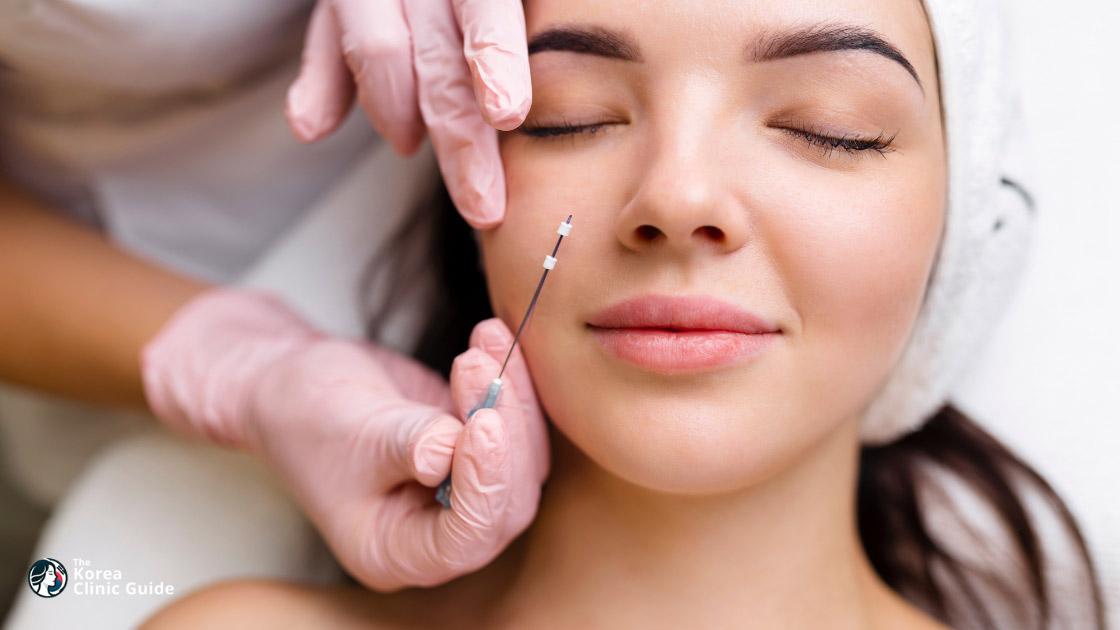
For a Lifestyle Lift-style, non-surgical approach, you can consider PangPang Clinic for customized thread lifting designed around your facial concerns, with thread options intended to lift, tighten, add selected volume, and support collagen production.
- URL: PangPang Clinic Website
- Location: Gangnam-gu, Seoul
- Thread lifting approach:
- Pink Lift is PangPang Clinic’s proprietary medical thread, developed from data from thousands of lifting procedures and intended to provide a strong, natural-looking lift.
- The clinic uses 31 specialized functional threads and can tailor thread selection and placement to your treatment plan.
- Thread lifting may be used for the face, neck, breasts, buttocks, and abdomen; listed treatment time is about 30 minutes to one hour, with results described as lasting about one year or longer.
- Its process includes ultrasonic visual checks, pre-procedure design, a doctor consultation, and aftercare intended to support treatment effects.
- Comfort and research:
- Chill-Lifting uses contact-free cooling anesthesia, which the clinic states is intended to reduce pain, swelling, and bruising and support recovery.
- PangPang Clinic collaborates with Seoul National University Bundang Hospital on thread-lifting techniques focused on lifting, collagen regeneration, and skin quality.
- The clinic states that it has a Thread Lifting Research Institute and that its medical team participates in international beauty conferences.
- Related options:
- Minute Lifting is listed as a 30-minute, non-invasive lifting option with immediate effects and a stated maintenance period of six months to one year.
- PIM Injection combines Ultra Cell, thread lifting, and Botox to address fine wrinkles, volume, elasticity, and complexion.
- A thread-lifting revision service is available for concerns after a previous thread procedure, potentially combined with fillers, Botox, or lasers.
2. Haru Clinic
You may consider Haru Clinic if you want a thread lift that uses a behind-the-ear fixed point to stabilize the lift, elevate sagging cheeks and the jawline, and refine contours with a minimally invasive approach and short downtime.
- URL: Haru Clinic Website
- Location: Gangnam-gu, Seoul
- Thread lift technique:
- The clinic uses the less-mobile skin behind the ear as an anchoring point and states that this can provide a stable, long-lasting lift.
- Its technique pulls and presses the skin simultaneously to lift without adding facial width; placement can be adjusted when volume is reduced below the cheekbones.
- Haru states that its fixed points avoid major nerves and blood vessels to help minimize discomfort, pain, and bleeding.
- Dissolvable barbed threads are used under local anesthesia to elevate the cheeks and jawline and stimulate collagen.
- Treatment planning:
- Dr. Jeong is an official research physician for Merz and teaches other doctors filler techniques.
- Your facial design is planned with attention to harmony and balance, with non-invasive techniques selected for a natural, refreshed result.
- Related facial options include collagen tightening with radiofrequency or ultrasound, double-chin contouring, nose thread lifting, Botox, and fillers.
3. B.V Clinic
You may consider B.V Clinic for a Lifestyle Lift-style treatment if you want non-surgical thread lifting with MINT or PDO barbed threads to lift sagging areas, define facial contours, and stimulate collagen for ongoing firmness.
- URL: B.V Clinic Website
- Location: Seoul
- Thread lifting expertise:
- Dr. Suh has more than 10 years of dedicated thread-lifting experience and has treated thousands of clinical cases.
- The clinic uses MINT Threads, described as FDA and KFDA approved, as well as PDO barbed threads designed for anchoring and lifting.
- 3D Thread Lifting is placed strategically to lift and firm sagging skin, with a focus on natural contours and the SMAS layer.
- Full Face Lifting is intended to restore balance and volume, address forehead wrinkles and nasolabial folds, and improve facial asymmetry without surgery.
- Complementary tightening and aftercare:
- Shurink Lifting uses high-intensity focused ultrasound for deeper skin tightening and contour refinement.
- Potenza and Thor Lifting use radiofrequency for collagen support, elasticity, skin texture, and selected body-contouring concerns.
- Post-treatment care includes skin-regeneration management, nutritional skincare products, and ultrasound-based care intended to reduce swelling and support elasticity.
Lifestyle Lift From Start to Finish
- Initial enquiry and virtual review — Send unfiltered front, oblique, side, and neck photographs along with goals, medical history, prior facial procedures, allergies, medication and supplement lists, smoking or nicotine use, and intended travel dates. An English-language or virtual consultation can screen suitability, but it cannot finalize the operation.
- Written surgical proposal — Confirm the operating surgeon’s name and credentials, planned incision locations, limited versus extended dissection, SMAS or platysma treatment, neck work, anesthesia method, anesthesia personnel, facility, expected scars, included follow-ups, complication contact process, and cancellation terms.
- Travel and support arrangements — Book flexible accommodation close to the facility and arrange an adult companion for the first night. Plan at least 14 postoperative days in Korea rather than treating the procedure as a short cosmetic stopover.
- In-person examination and testing — The surgeon examines skin elasticity, jowls, neck anatomy, asymmetry, hairline, scars, volume loss, and relevant facial-nerve function. Depending on age, health history, and anesthesia plan, testing can include vital signs, blood tests, ECG, medical clearance, and pregnancy testing where appropriate.
- Consent and final plan — Review what the procedure can and cannot improve. Consent should identify bleeding, hematoma, infection, skin-flap healing problems, scars, sensory or facial-motor nerve injury, asymmetry, anesthesia complications, and possible revision.
- Anesthesia and surgery — Local anesthesia with sedation or general anesthesia is used according to the agreed plan. Incisions are commonly around the ear; a submental incision can be added for neck work. The surgeon elevates and redrapes skin and, when planned, tightens or repositions SMAS or platysma tissue. Operative time depends on extent and combined procedures.
- Discharge and first night — Dressings, compression, and sometimes drains are applied. Selected patients leave the same day; observation is appropriate when surgical or medical factors require it. Do not drive after anesthesia or sedation.
- Early in-person reviews — Return for dressing changes, drain management or removal when used, wound checks, suture removal, and assessment for bleeding, hematoma, infection, or compromised flap circulation.
- Departure handoff and overseas follow-up — Before travel, collect the operative report, anesthesia record, medication list, wound-care instructions, dated photographs, and emergency contacts. Arrange video follow-up, while seeking urgent local in-person care for concerning symptoms.
Alternatives to a Lifestyle Lift
A limited-incision facelift offers a smaller operation for selected early lower-face laxity, but it cannot substitute for a broader lift when tissue descent is extensive. Non-surgical options involve less downtime but produce more modest, often temporary changes and do not remove or reposition lax facial tissue.
SMAS Facelift
- Best suited to — More pronounced lower-face laxity and jowls requiring stronger structural correction.
- Tradeoff — More extensive surgery and recovery than a mini-facelift, with a broader treatment plan. Learn about a SMAS facelift.
Deep-Plane Facelift
- Best suited to — Patients with substantial midface, nasolabial-fold, and jowl descent where deeper tissue repositioning is being considered.
- Tradeoff — A more extensive operation than a short-scar lift; surgeon-specific experience and anatomy are critical. See deep-plane facelift.
Neck Lift
- Best suited to — Neck-dominant laxity, platysmal bands, submental fullness, or loose neck skin.
- Tradeoff — It targets the neck and jawline rather than correcting midface descent. Read about a neck lift.
Thread Lift
- Best suited to — Mild laxity in patients seeking a non-excisional option and accepting a more limited, temporary lifting effect.
- Tradeoff — Threads do not replace skin removal or surgical SMAS repositioning. See face thread lift.
Filler or Fat Grafting
- Best suited to — Volume loss in cheeks, temples, or folds rather than excess loose skin.
- Tradeoff — Adding volume does not correct significant jowls or neck laxity and can look overfilled when used to compensate for untreated descent. Consider facial filler or facial fat grafting.
How Can I Prepare for a Lifestyle Lift?
- Medication and supplement review — Give the surgeon and prescribing clinicians a complete list of aspirin, anticoagulants, antiplatelet medicines, ibuprofen, naproxen, diabetes medicines, blood-pressure medicines, hormones, vitamins, and herbal products. Fish oil/omega-3, vitamin E, ginkgo, garlic, ginseng, St John’s wort, and turmeric/curcumin also need review. Do not independently stop prescribed anticoagulants, antiplatelets, or aspirin.
- Nicotine cessation — Stop cigarettes, vaping, nicotine replacement, pouches, and other nicotine exposure for the surgeon’s specified interval. The American College of Surgeons notes that stopping 4–6 weeks before surgery and remaining smoke-free for four weeks afterward reduces wound complications.
- Health optimization — Disclose high blood pressure, diabetes, sleep apnea, previous clotting events, heart or lung disease, infections, allergies, keloid history, prior facial surgery, fillers, threads, implants, and facial-nerve symptoms. Complete requested blood tests, ECG, or medical clearance before travel where possible.
- Alcohol, drugs, and fasting — Avoid alcohol and recreational drugs as directed, particularly around anesthesia and prescribed sedating pain medicine. Follow fasting instructions exactly when sedation or general anesthesia is planned.
- Skin and hair preparation — Do not undergo unapproved facial laser, peel, thread, injection, dental, or skin treatment close to surgery. Arrive with clean facial skin and follow instructions on hair washing or color treatment.
- Transport and accommodation — Bring loose front-opening clothing, medication and allergy lists, chargers, and a translation/contact plan. Arrange a companion and private transport after surgery; do not plan to drive or navigate public transport alone.
- Flexible travel — Reserve lodging for at least 14 postoperative days and choose changeable flights. Combined face-and-neck work or wound-healing concerns can extend this stay.
Travel note: Carry enough routine prescription medication for the full trip plus a buffer, in original labeled containers, and keep it in hand luggage.
Confirm every medication stop period, fasting rule, testing requirement, nicotine interval, and travel plan with the treating surgeon and anesthesia team; their individualized instructions take precedence.
Aftercare Advice
Protect the healing skin flap, control blood-pressure-raising activity, and attend every early review; prompt action is essential when bleeding or circulation problems develop.
- Dressings and incision care — Keep dressings, compression, drains, and incisions exactly as instructed. Use only approved cleansing and wound products; do not pull clothing over the head or apply unapproved creams, makeup, or hair products near incisions.
- Position and activity — Sleep with the head elevated as instructed. Take short, gentle walks once cleared, but avoid bending, straining, heavy lifting, vigorous exercise, and activities that raise blood pressure for roughly 4–6 weeks or until the surgeon clears them.
- Swelling and appearance — Expect bruising and swelling for about 1–2 or more weeks. Tightness, numbness, firmness, and uneven swelling can persist longer while tissues settle; final scar maturation and tissue settling continue for months.
- Heat, sun, and nicotine — Avoid smoking and all nicotine exposure throughout healing. Avoid heat exposure such as saunas, hot baths, and strenuous workouts until cleared. Protect healing scars from sun and use broad-spectrum SPF 50 once the surgeon permits it.
- Urgent warning signs — Seek immediate in-person care for rapidly enlarging or one-sided swelling, escalating pain or pressure, active bleeding, fever, spreading redness, pus, pale, dark, or cool facial skin, sudden facial weakness, chest pain, shortness of breath, or calf swelling. Hematoma can require urgent evacuation to protect the skin flap.
- Follow-up and travel — Attend dressing, drain, and suture reviews before departure. Do not fly until the operating surgeon has examined healing and cleared travel; follow the written plan for movement, hydration, compression, medication, and luggage handling.
Follow the treating doctor’s instructions over general guidance and contact the clinic immediately when healing appears abnormal.
Frequently Asked Questions
Related Blogs
Thread Lift in Korea: Methods, Recovery, Risks, Travel Planning and Alternatives
Thread lifts use absorbable threads placed under the skin to provide modest lifting for mild-to-moderate facial or neck laxity, with results reassessed after 6–12 weeks. International patients can find guidance on candidate screening, Korea travel planning, procedure steps, recovery restrictions, follow-up, warning signs, and alternatives.
Updated: Sep 19, 2026
Thread Lift in Korea: Candidacy, Recovery, Risks, and Travel Planning
Thread lifts use absorbable smooth or suspension threads inserted through small entry points to subtly reposition mild-to-moderate facial or neck laxity, with in-person assessment, local anesthesia, early review, and aftercare. International patients visiting Korea should plan at least 5–7 days, obtain product and clinician details, arrange follow-up, and allow 7–14 days before important events.
Updated: Sep 17, 2026
Hiko Nose Thread Lift in Korea: Candidacy, Methods, Recovery, Risks and Travel Planning
A Hiko nose thread lift uses absorbable barbed threads placed through small punctures to create temporary, modest bridge or tip definition without surgical reshaping. The article covers candidacy, procedure variations and filler risks, Korea travel planning, recovery, aftercare, warning signs, and alternatives for structural or functional nasal concerns.
Updated: Sep 15, 2026
Nose Thread Lift in Korea: Candidacy, Recovery, Risks and Travel Planning
A nose thread lift uses absorbable threads placed along the bridge, tip, or columella to create modest, temporary contour changes, with local anesthetic and early follow-up. The article covers candidate screening, Korea travel planning, recovery, aftercare, warning signs, and alternatives such as filler, rhinoplasty, and septoplasty.
Updated: Sep 12, 2026
Clinics offering Lifestyle Lift

SH Clinic: Comprehensive Women's, Men's & Couples' Health Services in Korea
Sinsa

Haru Clinic Korea | Seoul Facelift, Threads, Botox & Fillers
Sinsa

Made Young Plastic Surgery: Rejuvenating Aesthetic Excellence in Korea for Face Lifts, Contouring and More
Gangnam Station

PangPang Clinic: Korea's Premier Thread Lifting and Skin Rejuvenation Specialist in Gangnam, Seoul
Sinsa