
Medical Tourism Blog
Labia Minora Whitening in Korea: Methods, Safety Limits, Travel Planning, and Aftercare
Table of contents
- Labia Minora Whitening at a Glance
- What Is Labia Minora Whitening?
- Who Is a Good Candidate for Labia Minora Whitening?
- How Is Labia Minora Whitening Performed?
- Why Visit Korea for Labia Minora Whitening?
- Key Information for International Patients
- Which Are the Best Clinics in Korea for Labia Minora Whitening?
- Labia Minora Whitening From Start to Finish
- Alternatives to Labia Minora Whitening
- How Can I Prepare for Labia Minora Whitening?
- Aftercare Advice
Considering treatment in Korea? Everything you need to know e.g. — how to avoid scams, visas, interpreters, recovery tips — in our Medical Tourism Master Guide. Plan with confidence in minutes, not weeks!
Last updated: September 2026
Labia Minora Whitening at a Glance
- What it is — Labia minora whitening is an elective cosmetic attempt to lighten external vulvar tissue using topical agents, chemical peels, lasers, radiofrequency, or combinations; it is not medically necessary and does not treat vaginal or sexual-function concerns.
- Evidence limitation — No standardized method, session schedule, final-result timeline, maintenance plan, or proven degree of lightening exists for labia minora tissue; best-practice guidance found no safety data for laser vulvar bleaching.
- Who may be considered — Potential candidates are adults with stable, diffuse benign pigmentation, healthy intact tissue, realistic expectations, and access to follow-up after an in-person gynecologic or dermatologic examination.
- Diagnosis comes first — New, changing, focal, asymmetric, multicolored, blue-gray, bleeding, ulcerated, painful, or persistently itchy pigmentation needs diagnostic assessment, sometimes including dermoscopy or biopsy, rather than cosmetic treatment.
- Recovery and risks — Topical plans may have little downtime, but peels and energy treatments can cause stinging, redness, swelling, peeling, and friction sensitivity for days, with risks of burns, erosions, infection, scarring, painful urination, and pigment darkening or patchiness.
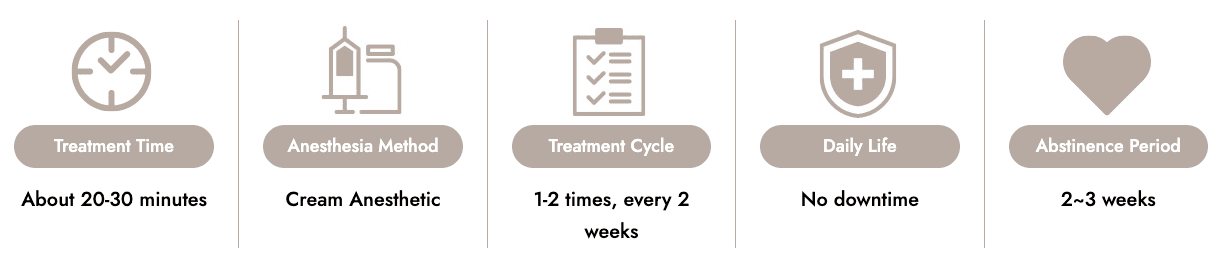
- Korea travel planning — No evidence-based stay or flight interval is established; if an in-office procedure is performed, remain near the clinic through an early review and until walking, urination, pain, and swelling are comfortable—often at least 48–72 hours as a precaution.
- Korea-specific check — Korea’s registered international-patient system can support logistics, but it does not validate whitening outcomes; request an English record listing the diagnosis, exact treatment area, product ingredients or device settings, aftercare, and emergency contact.
What Is Labia Minora Whitening?
Labia minora whitening is an elective cosmetic treatment intended to lighten or even the color of the inner vulvar tissue. It addresses concern about darker labial pigmentation, although natural color variation is common and the degree or durability of lightening is uncertain. It is non-surgical, using topical products, superficial peels, or energy-based treatments rather than an operation.
Who Is a Good Candidate for Labia Minora Whitening?

- Adult with stable diffuse pigmentation — Good candidates are adults concerned by even, longstanding darker color of the external labia who understand that natural labial color variation is common.
- Benign diagnosis confirmed first — An in-person gynecologic or dermatologic examination should establish that the pigmentation is benign. Vulvar melanosis and other benign lesions can resemble more serious conditions.
- Healthy, intact vulvar tissue — The treatment area must be free of infection, open skin, shaving injury, folliculitis, significant dermatitis, and active herpes.
- Realistic expectations — Suitable patients accept that no reliable evidence defines the degree of lightening, durability, number of sessions, or maintenance schedule for labia minora treatment.
- Follow-up access — Patients need a practical plan for early review in Korea and in-person assessment at home if pain, erosion, infection, or pigment worsening develops.
Labia minora whitening is unsuitable when pigmentation is new, focal, asymmetric, multicolored, blue-gray, bleeding, ulcerated, painful, persistently itchy, or changing; dermoscopy and sometimes biopsy take priority over cosmetic treatment. Defer treatment during pregnancy or breastfeeding, active infection, unexplained burning, pain with sex, discharge, bleeding, or an inflammatory vulvar condition. A history of severe contact dermatitis, allergy to the proposed product or anesthetic, poor healing, immunosuppression, uncontrolled diabetes, scarring, or prior pigment irregularity requires specialist assessment. Do not self-treat with unlabelled bleaching products, mercury-containing creams, or over-the-counter hydroquinone; the FDA warns that non-prescription skin-lightening products can cause harm and are not FDA-approved for this use. Do not stop prescribed aspirin, warfarin, apixaban, clopidogrel, or other medicines without the prescribing clinician’s instruction.
How Is Labia Minora Whitening Performed?
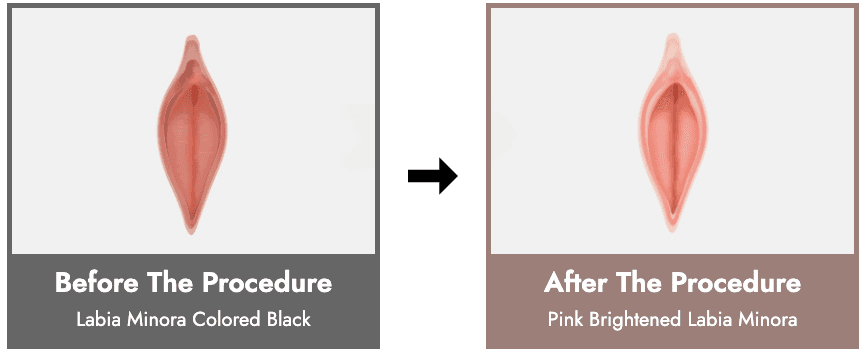
These are clinic-marketed approaches rather than validated patient-facing procedure types. Ask for the exact anatomical target—keratinized external vulvar skin, labia minora mucocutaneous tissue, or vestibule—plus the product ingredients or device settings, planned depth, session number, and complication plan in writing.
- Clinician-directed topical regimen — Clinics may propose ingredients such as azelaic acid, kojic acid, arbutin, tranexamic acid, niacinamide, retinoids, or hydroquinone. Evidence from facial melasma and ordinary skin does not establish effectiveness or mucosal safety for labia minora tissue. Avoid unlabelled products and non-prescribed hydroquinone.
- Superficial chemical peel — Acid-based or proprietary “intimate peel” products are intended to shed superficial cells. No labia-minora-specific evidence establishes a safe acid, concentration, contact time, interval, or expected degree of color change. Irritant dermatitis, chemical burn, erosions, pain, and post-inflammatory darkening are material risks.
- Laser or energy-based treatment — CO2, Er:YAG, Nd:YAG, Q-switched or picosecond lasers, radiofrequency, and combinations are sometimes marketed for intimate lightening. The best-practice consensus found no safety data for laser vulvar bleaching; device approval or use for another indication does not validate whitening of labia minora.
- Combination protocol — Combining a topical product with a peel or device increases the sources of irritation and does not close the evidence gap. Do not accept a package of repeat sessions without reassessment after complete healing.
A small retrospective series of 10 patients treated with bipolar radiofrequency for labial laxity or hypertrophy—not whitening—described clinician-observed pigment distribution changes. It had no control group or validated pigment endpoint, and its authors called for a prospective randomized study. It cannot establish that radiofrequency safely or effectively whitens labia minora.
Why Visit Korea for Labia Minora Whitening?
South Korea has a formal framework for registered international-patient medical institutions and a large international medical-travel sector. Those systems can help with logistics and documentation, but they do not prove that any labia-minora whitening method is safe, effective, or better than treatment elsewhere. Prioritize diagnosis and transparent clinical planning over marketing claims.
- International-patient registration pathway — Patients can check Korea’s registered medical-institution system when researching providers and communication arrangements.
- Device-regulatory oversight — Korea’s Ministry of Food and Drug Safety regulates medical devices, but regulatory status does not establish a genital-depigmentation indication or labia-minora-specific outcome. Ask whether the proposed device is being used for its intended indication and why it is appropriate for the exact tissue being treated.
- Need for evidence-led consultation — The key clinical distinction is not country or device branding. It is whether the clinician first excludes a concerning pigmented lesion and acknowledges the lack of good-quality evidence for cosmetic gynecologic laser use.
- Written records for onward care — International patients should request an English summary naming the diagnosis, anatomical treatment zone, ingredients or device settings, anesthetic, aftercare medicines, and emergency contact. This is especially important because no standard overseas follow-up protocol exists for this procedure.
Key Information for International Patients
- Minimum stay — A consultation or topical plan does not ordinarily require medical travel. No evidence-based minimum stay has been established for in-office peel or energy-based labia minora whitening.
- Conservative travel plan — If an in-office procedure is performed, remain near the clinic until an early review and until urination, walking, swelling, and pain are comfortable. Allow at least 48–72 hours as a travel-safety precaution, not as a validated recovery protocol.
- Flights — Do not schedule treatment immediately before a long-haul flight. Obtain individual flight clearance from the treating clinician, particularly after a peel, ablative treatment, sedation, significant swelling, or pain with urination.
- Recovery and itinerary — A non-irritating topical plan can involve little downtime. Peels and energy-based treatment can cause stinging, redness, swelling, tenderness, dryness, peeling, and friction sensitivity for days; deeper injury can take longer and can darken pigment rather than lighten it. Keep sightseeing, cycling, spa visits, swimming, and sexual activity off the itinerary until the area is comfortable and cleared.
- Repeat visits — Do not book repeat sessions around a short trip. There is no validated session interval, maintenance schedule, or final-result timeline for labia minora whitening.
- Remote follow-up — Confirm whether the clinic offers English-language video follow-up before booking. Remote photos cannot reliably assess infection, erosions, severe dermatitis, or a suspicious lesion; arrange local gynecologic or dermatologic care before travel.
Travel note: Bring loose trousers or skirts and breathable cotton underwear. Choose accommodation close to the clinic, retain flexible flight options, and avoid a treatment plan that leaves no time for an in-person review.
Which Are the Best Clinics in Korea for Labia Minora Whitening?
Listed below are some of the best clinics in Korea for labia minora whitening.
1. SH Clinic
For a labia minora whitening inquiry, SH Clinic offers care within a dedicated gynecology practice that also provides labiaplasty and several vaginal rejuvenation options. Your procedures are performed directly by an experienced board-certified gynecologist, so you can discuss pigmentation concerns alongside any functional or aesthetic labial concerns.
- URL: SH Clinic Website
- Location: Seocho-gu, Seoul
- Gynecology care:
- The clinic provides labiaplasty for elongated or asymmetrical labia minora; the stated approach is an outpatient procedure under local anesthesia.
- Available vaginal rejuvenation options include vaginal fillers, stem cell injections, HIFU laser treatments, vaginal tightening, and implant surgery.
- Clinician credentials: Procedures are performed directly by a board-certified gynecologist who has received a commendation from the Minister of Health and Welfare.
- Additional women’s health services:
- Services include cervical and ovarian cancer screening, with Pap smears, HPV testing, and ultrasound.
- Urinary incontinence care includes pelvic-floor therapy and office-based procedures.
2. Peniel Women's Clinic
For a labia minora whitening inquiry, Peniel Women’s Clinic is centered on intimate-health and vaginal rejuvenation care, with labiaplasty available for aesthetic concerns or discomfort related to the labia. Your consultation can be guided by Dr. Park, a board-certified obstetrics and gynecology specialist, to clarify whether a labial procedure or another treatment fits your goals.
- URL: Peniel Women's Clinic Website
- Location: Haeundae-gu, Busan
- Labial and intimate procedures:
- Labiaplasty is offered to alter the appearance of the labia minora and/or labia majora and may be considered for discomfort from enlarged labia or aesthetic concerns.
- The clinic also offers vaginoplasty, folding vaginoplasty, vaginal rejuvenation, clitoropexy, hymenoplasty, G-spot amplification, and care for stress urinary incontinence.
- Clinical approach:
- Dr. Park is a board-certified specialist in obstetrics and gynecology with experience in vaginal deliveries, repairs, and transvaginal uterine surgery.
- The clinic describes personalized treatment planning and confidential care for sensitive intimate-health concerns.
- Its stated surgical approach uses laser technology and regional anesthesia.
3. Lydia Clinic
For labia minora whitening, Lydia Clinic specifically lists genital-area whitening among its pigmentation treatments. You can also discuss labiaplasty if you have separate aesthetic or functional concerns involving the labia minora, allowing pigmentation and anatomical concerns to be considered within the same women’s-health service range.
- URL: Lydia Clinic Website
- Location: Gangnam-gu, Seoul
- Whitening and pigmentation:
- Genital-area whitening is listed for lightening pigmentation in the genital area.
- Additional pigmentation services include areola/nipple, underarm, and elbow whitening.
- Related intimate procedures:
- Labiaplasty is available for surgical reduction of the labia minora for aesthetic or functional reasons.
- Other vaginal services include laser vaginal tightening, injectable vaginal tightening, vaginal tightening surgery, implant vaginal plasty, clitoral hood reduction, and G-spot augmentation.
- Additional women’s health care: The clinic lists fibroid dissolution for uterine fibroids and surgical treatment for urinary incontinence.
Labia Minora Whitening From Start to Finish
- Initial contact and virtual screening — Send a concise history and ask whether English-language or virtual consultation is available. State when the pigmentation began, whether it is changing, and whether there is itch, pain, bleeding, discharge, burning, or pain with sex. Request the proposed anatomical target, method, clinician qualifications, cost, and follow-up plan.
- Pre-travel clinical review — Provide photographs only if the clinic requests them through a secure route, but do not treat remote images as a diagnosis. Disclose herpes history, vulvar skin disease, allergies, pregnancy or breastfeeding status, prior laser or peel reactions, medical conditions, medicines, and supplements.
- In-person examination and lesion assessment — The clinician examines the vulva before any cosmetic procedure. A focal, irregular, changing, symptomatic, or uncertain lesion requires diagnostic assessment rather than bleaching; biopsy can be necessary when the diagnosis is unclear.
- Decision and informed consent — Review the exact product ingredients, peel concentration and contact time, or device type and settings. Discuss the absence of standardized protocols, possible lack of improvement, darkening, patchy lightening, burns, erosions, scarring, pain, and delayed diagnosis of disease. Postpone treatment for irritation, infection, an outbreak, open skin, or diagnostic uncertainty.
- Treatment-day planning — Topical or superficial procedures do not inherently require general anesthesia. If numbing cream, local anesthetic, oral anxiolysis, IV sedation, or anesthesia is proposed, follow written fasting and transport instructions and arrange an adult escort when required.
- Application or energy treatment — The clinician applies the agreed topical agent, peel, or device treatment only to the documented external target area. Procedure duration depends on the method, but no validated labia-minora-specific treatment duration or settings exist.
- Discharge and early recovery — Leave with written aftercare, a clinic contact number, and a clear plan for pain, swelling, urination problems, and suspected infection. Obtain an English medical summary with the working diagnosis, treatment date, ingredients or device settings, and all medicines used.
- Review and overseas follow-up — Attend the early review before travelling when possible. Do not repeat treatment automatically. After returning home, seek prompt in-person care for worsening pain, blistering, ulcers, fever, discharge, inability to urinate, or pigment changes that concern you.
Alternatives to Labia Minora Whitening
The safest alternative for normal, benign color variation is often no pigment treatment after a proper examination. When pigmentation reflects inflammation, infection, friction, or a defined skin disorder, diagnosis and treatment of that cause take priority. Surgical options alter anatomy rather than reliably treating pigment.
No Treatment and Reassurance
- Best for normal variation — Natural variation in labial color is common and does not require correction.
- Clinical advantage — Avoids chemical, thermal, and friction-related injury to sensitive vulvar tissue.
Diagnostic Evaluation and Condition Treatment
- Best for symptoms or changing pigment — Itch, pain, burning, bleeding, discharge, asymmetry, or a new focal lesion requires gynecologic or dermatologic assessment.
- Underlying cause — Inflammation, including post-inflammatory hyperpigmentation, can affect the inner labia and vestibule; treating the condition is more appropriate than bleaching.
External-Skin Pigmentation Treatment
- Best for a defined diagnosis on keratinized skin — A dermatologist may consider treatment for a diagnosed pigment condition affecting external skin rather than mucosal labia minora.
- Tradeoff — Evidence from facial or body pigmentation cannot be assumed to apply to vulvar tissue. See pigmentation treatment for general approaches that are not a substitute for vulvar assessment.
Labiaplasty
- Best for anatomical concerns, not color — Labiaplasty changes labial size or shape and is not a whitening procedure.
- Tradeoff — It is surgery with wound-healing, scarring, sensation, and recovery considerations; it should not be proposed solely to alter pigmentation.
How Can I Prepare for Labia Minora Whitening?
- Arrange an examination first — Do not book cosmetic treatment until an in-person clinician has assessed the pigmentation and ruled out a lesion or active vulvar condition needing diagnosis.
- Disclose medicines and supplements — Provide a complete list of anticoagulants, antiplatelet medicines, isotretinoin, systemic corticosteroids, immunosuppressants, antibiotics, hormonal medicines, and supplements that affect bleeding or sedation. Do not independently stop prescribed medicines.
- Stop self-treatment — Do not apply bleaching creams, acids, retinoids, fragranced wipes, deodorants, essential oils, unapproved anesthetic creams, or other irritants to the vulva before assessment.
- Prevent hair-removal injury — Avoid shaving, waxing, and depilatory creams until the clinician gives a specific timeframe. Microtrauma can trigger inflammation and post-inflammatory hyperpigmentation.
- Report symptoms and outbreaks — Notify the clinic before travel about herpes symptoms, discharge, odor, burning, new itch, lesions, urinary pain, or skin breakdown. Postpone cosmetic treatment rather than treating through an active problem.
- Follow fasting instructions exactly — Fasting is not routinely required for topical treatment, but it can be required when oral sedation, IV sedation, or anesthesia is planned.
- Plan clothing and transport — Wear loose, breathable clothing and cotton underwear. Arrange transport and a responsible adult companion if sedation is used.
- Keep the itinerary flexible — Avoid booking long-haul travel immediately after treatment and reserve time for an early review.
Travel note: Confirm who will manage a complication after you leave Korea, including the clinic’s after-hours contact and the type of English treatment summary it will provide.
Confirm the treating clinician’s procedure-specific preparation instructions, which take precedence over this general guidance.
Aftercare Advice
Protect the treated tissue from irritation and seek prompt in-person assessment for symptoms that are worsening rather than steadily settling.
- Gentle cleansing — Clean with lukewarm water or only a clinician-approved bland cleanser, then pat dry without rubbing. Use only the ointment or medicine prescribed by the treating clinician.
- Avoid irritants and friction — Do not restart hydroquinone, acids, retinoids, steroids, anesthetic creams, or antibiotics unless the clinician specifically directs it. Avoid tight clothing, rubbing, shaving, waxing, cycling, vigorous exercise, hot baths, saunas, pools, and hot tubs until the tissue is fully comfortable and cleared.
- Pause sexual activity — Avoid intercourse and any activity causing direct vulvar friction until healing is complete and the treating clinician confirms it is safe. No evidence-based universal abstinence interval exists.
- Monitor urination and skin changes — Mild short-term stinging or tenderness can occur after irritating procedures, but worsening pain, rapidly expanding swelling, blistering, ulcers, black or gray tissue, foul discharge, pus, fever, heavy bleeding, spreading rash, inability to urinate, or severe pain with urination requires urgent in-person care.
- Do not judge color early — Inflammation can temporarily darken or lighten tissue. No dependable evidence defines a final color timeline or maintenance schedule; do not repeat treatment until complete healing and a clinical reassessment.
Follow the treating doctor’s written instructions over general advice and contact the clinic immediately when something appears wrong.
Frequently Asked Questions
Related Blogs
G-spot Filler in Korea: Evidence, Safety, Recovery, and Travel Planning
G-spot filler involves nonstandardized anterior vaginal-wall injections, most often temporary hyaluronic acid, with uncertain sexual-function benefits and potential risks. International patients should plan 2–3 days in Korea for assessment and review, obtain treatment records, and arrange follow-up care.
Updated: Sep 28, 2026
PRP Vaginal Rejuvenation in Korea: Evidence, Procedure Steps, Recovery and Travel Planning
PRP vaginal rejuvenation uses a patient’s processed blood plasma for targeted vaginal, vulvar, clitoral, or periurethral injections after pelvic-health assessment, but protocols and evidence of benefit are not standardized. The article covers candidate screening, Korea travel planning, preparation, recovery, warning signs, follow-up, and diagnosis-specific alternatives for dryness, pain, incontine
Updated: Sep 28, 2026
G-spot Amplification in Korea: Evidence, Safety, Recovery and Travel Planning
G-spot amplification involves injecting filler into a patient-identified area of the anterior vaginal wall near the urethra, but no standardized target or proven sexual-function benefit exists. The article covers candidacy, product and clinic verification in Korea, travel planning, aftercare, warning signs, and alternatives such as sexual-health evaluation and pelvic-floor therapy.
Updated: Sep 28, 2026
Viveve Laser in Korea: RF Treatment, Safety, Evidence and Travel Planning
Viveve is a non-incisional, cryogen-cooled monopolar RF treatment—not a laser—used in selected patients after gynecologic assessment, with limited evidence for vaginal-laxity symptoms and no established cure for incontinence. International patients considering treatment in Korea can review candidate criteria, MFDS device verification, outpatient recovery, 10-day intercourse and tampon restrictions
Updated: Sep 22, 2026
Clinics offering Labia Minora Whitening

SH Clinic: Comprehensive Women's, Men's & Couples' Health Services in Korea
Sinsa

Ladyuro Women's Clinic in Korea: Premier Destination for Vaginal Rejuvenation and Aesthetic Enhancements
Sinsa

Trinity Women's Clinic in Korea: Offering Comprehensive Gynecologic Care and Advanced Aesthetic Treatments
Sinsa

Lydia Clinic Korea: Leading Enhancement of Women's Health and Beauty with Specialized Medical Procedures
Gangnam Station