
Medical Tourism Blog
Hydro Injection in Korea: Methods, Results, Recovery and Travel Planning
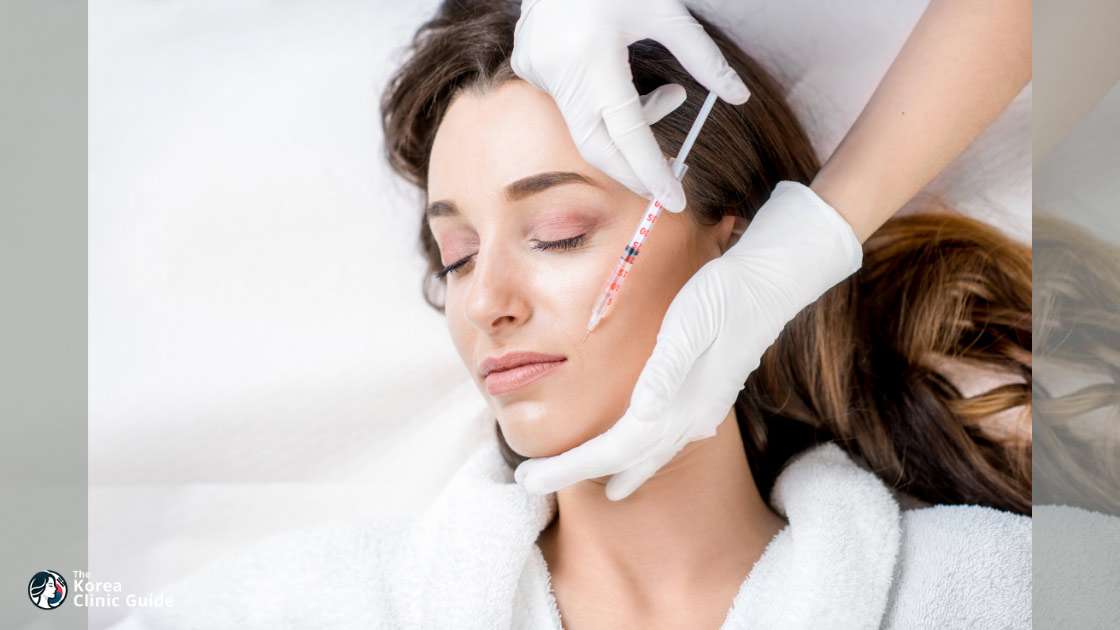
Table of contents
- Hydro Injection at a Glance
- What Is a Hydro Injection?
- Who Is a Good Candidate for a Hydro Injection?
- How Is a Hydro Injection Performed?
- Why Visit Korea for a Hydro Injection?
- Key Information for International Patients
- Which Are the Best Clinics in Korea for Hydro Injection?
- Hydro Injection From Start to Finish
- Alternatives to a Hydro Injection
- How Can I Prepare for a Hydro Injection?
- Aftercare Advice
Considering treatment in Korea? Everything you need to know e.g. — how to avoid scams, visas, interpreters, recovery tips — in our Medical Tourism Master Guide. Plan with confidence in minutes, not weeks!
Last updated: September 2026
Hydro Injection at a Glance
- What it is — Hydro Injection usually means a Korean water-glow treatment: multiple superficial, intradermal injections—often hyaluronic acid (HA)—to improve hydration, radiance, fine texture, and superficial fine lines rather than reshape the face.
- Confirm the exact product — “Hydro Injection” is a marketing umbrella term, not a standardized protocol; obtain the product brand, ingredients, HA concentration, total volume, additives, lidocaine status, injection depth, sites, and technique in writing before consenting.
- Subtle, temporary results — Best suited to adults seeking modest skin-quality improvement rather than volume correction, deep-fold treatment, scar removal, pore elimination, or permanent rejuvenation; assess the true result after swelling settles at about 1–2 weeks, and maintenance or an initial series may be advised.
- Downtime — Treatment commonly takes 20–60 minutes, with small bumps and redness usually improving in 1–3 days; bruising or residual swelling can remain visible for 7–14 days, so avoid scheduling major events for the treatment day or next day.
- Korea travel planning — Stay in Korea at least 2–3 days for access to the original injector if a problem develops, or preferably 5–7 days if bruising matters, multiple treatments are planned, or follow-up at home will be difficult; this is a follow-up precaution, not a formal no-fly rule.
- Korea-specific evidence — Korean trials of certain automated multi-needle HA protocols found improved hydration through 12 weeks, but evidence does not show that automated injection is superior to skilled manual injection or that treatment in Korea is inherently safer, better, or longer-lasting.
- Important safety point — Common effects include tenderness, redness, swelling, bruising, and temporary papules, but severe pain, white or dusky skin, mottled discoloration, rapidly increasing swelling, or any visual or neurologic symptom needs urgent medical assessment because rare vascular injection can cause serious injury.
What Is a Hydro Injection?
A Hydro Injection is a skin-quality treatment that places small amounts of hyaluronic acid into the superficial skin, often called a water-glow injection. It aims to subtly improve hydration, radiance, fine texture, and superficial fine lines rather than reshape the face or restore significant volume. It is a minimally invasive injectable procedure.
Who Is a Good Candidate for a Hydro Injection?
- Skin-quality goals — Good candidates want modest improvement in dehydrated-looking or dull skin, fine texture, superficial fine lines, and radiance rather than facial reshaping.
- Realistic expectations — Hydro Injection suits adults who understand that results are subtle and temporary, and that an initial series or maintenance session can be proposed depending on the named product and treatment plan.
- Healthy treatment area — Skin should be free of active acne pustules, cold sores, open wounds, cysts, dermatitis, hives, or bacterial infection.
- Informed product choice — Suitable patients will accept treatment only after receiving the exact product name, ingredients, concentration, total volume, injection depth, sites, and lidocaine status in writing.
Hydro Injection is a Korean marketing umbrella term for water-glow injections, not one standardized product or protocol. The best available evidence supports specific intradermal HA products and delivery plans, with a systematic review finding promising but heterogeneous results for hydration, texture, radiance, and elasticity. Defer elective treatment during pregnancy or breastfeeding because safety data are insufficient. A clinician must assess immunosuppression, uncontrolled autoimmune or inflammatory disease, a tendency to hypertrophic or keloid scarring, significant pigment disorders, and any previous delayed reaction to filler. Severe allergy, prior anaphylaxis, allergy to lidocaine or gram-positive bacterial proteins where relevant, and a previous HA-filler allergy can rule out particular products; do not stop warfarin, apixaban, rivaroxaban, clopidogrel, aspirin, or other blood-thinning medicines without the prescribing clinician’s advice.
How Is a Hydro Injection Performed?
The delivery method affects how the product is placed, but it does not make different HA formulations or mixed injectable “cocktails” interchangeable. Product identity, depth, facial anatomy, aseptic technique, and the injector’s complication plan matter more than a menu label such as aqua injection or water-glow injection.
- Manual serial microinjection — The injector places multiple small intradermal deposits with a fine needle. This allows the map and depth to be adjusted across areas such as the cheeks, forehead, neck, or selected fine lines.
- Automated multi-needle injector — Stamp-type devices, sometimes with suction to stabilize the skin, deliver repeated intradermal injections. In a Korean 25-person split-face trial, one automated-injector HA treatment improved cheek hydration through 12 weeks, with no serious adverse events reported.
- Repeated automated treatment — A separate Korean randomized, double-blind study of 60 participants found greater hydration after three automatic-injector HA treatments than placebo, but no significant between-group elasticity difference.
- Needle or cannula placement — Selected clinicians use these approaches for a particular product or anatomical site. They are not automatically safer or more effective than microinjections.
- Single-product versus cocktail session — Some menus combine HA with vitamins, amino acids, polynucleotides/PDRN, botulinum toxin, PDLLA, or other substances. These are biologically and regulatorily distinct treatments with different risks and evidence; decline a cocktail unless every ingredient and total volume is disclosed.
Why Visit Korea for a Hydro Injection?
In Korea, Hydro Injection commonly refers to 물광주사, or water-glow injection: multiple superficial injections intended to improve skin quality rather than add structural volume. This is a useful distinction for travelers because the same English menu name can conceal very different products, additives, and treatment maps. Korea-specific evidence supports certain HA and automated-injector protocols, not a universal advantage for every Korean Hydro Injection.
- Direct Korean device research — A Korean evaluator-blinded split-face study found improved treated-cheek hydration at weeks 2 to 12 after a stabilized-HA stamp-type injector protocol, although it enrolled only 25 adults and did not compare the device with skilled manual injection.
- Controlled multi-session data — The Korean 60-participant placebo-controlled study found hydration improvement after three automatic-injector HA sessions, while its elasticity findings were not significantly different from placebo. This supports short-term hydration effects, not broad claims of collagen regeneration or permanent pore reduction.
- Clear terminology opportunity — Korean clinics frequently distinguish water-glow injections from conventional fillers. Confirm that the plan is intradermal HA for skin quality, rather than a volumizing filler, IV hydration drip, shoulder hydrodilatation, or fat-dissolving injection.
- Evidence limitation — There is no credible comparative evidence that treatment in South Korea produces better, safer, or longer-lasting results than the same authentic product and technique delivered by an appropriately qualified clinician elsewhere.
Key Information for International Patients
- Minimum stay — Remain in Korea for at least 2–3 days when Hydro Injection is the only treatment. This is a conservative follow-up precaution, not a proven flight restriction.
- Preferred buffer — Plan 5–7 days when bruising must be less visible, several procedures are scheduled, there is a history of filler reaction, or qualified injectable follow-up will be difficult to arrange at home.
- Flight timing — No strong procedure-specific evidence defines a mandatory no-fly interval after a superficial HA skin booster. Do not board a flight with severe pain, blanching, dusky or mottled discoloration, visual symptoms, or rapidly increasing swelling; obtain urgent assessment first.
- Itinerary impact — Appointment time is commonly 20–60 minutes including cleansing and optional topical anesthetic. Avoid important photographs, presentations, or social events on the day of treatment and the following day because papules and redness often take 1–3 days to settle.
- Bruising contingency — Residual swelling or bruising can remain visible for 7–14 days. In the FDA-reviewed SKINVIVE study, most injection-site reactions resolved within 30 days, though occasional bumps lasted longer; this is product-specific safety evidence, not a prediction for all Hydro Injection menus.
- Remote follow-up — Before departure, obtain an English treatment record listing the facility and clinician contacts, product brand, batch/lot number, expiry date, total volume, additives, lidocaine status, sites, technique, and emergency instructions. Arrange a 24–72-hour remote check-in if leaving early.
Travel note: Identify a qualified clinician at home before traveling. Delayed inflammatory reactions, nodules, or infection need medical assessment; they are not issues to manage through messaging alone.
Which Are the Best Clinics in Korea for Hydro Injection?
Listed below are some of the best clinics in Korea for hydro injection.
1. PangPang Clinic
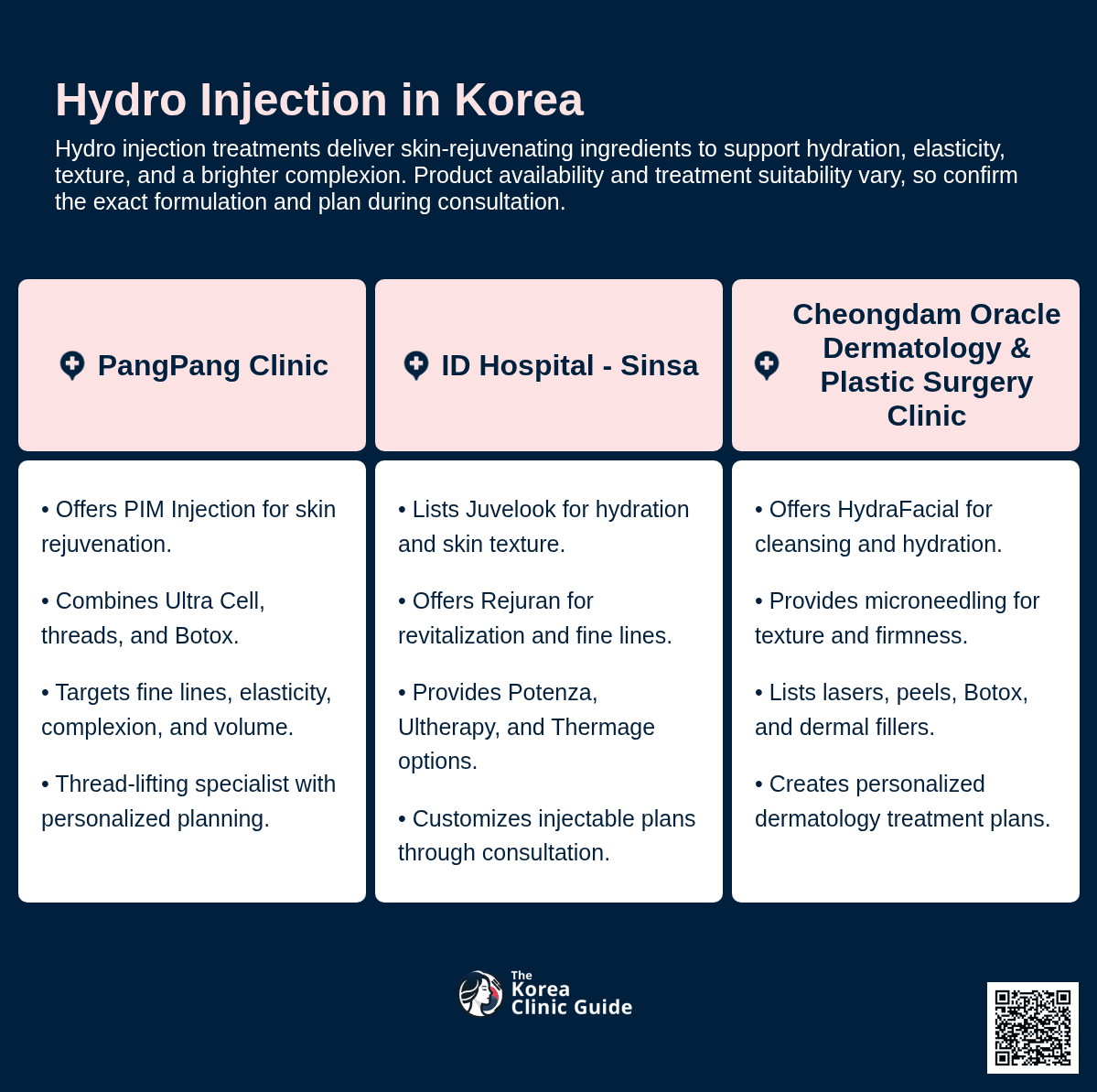
You may consider PangPang Clinic if your Hydro Injection goals overlap with personalized injectable skin-rejuvenation planning: its documented PIM Injection combines Ultra Cell, thread-lifting components, and Botox to address fine wrinkles, elasticity, complexion, and facial volume. The clinic’s primary specialization is thread lifting rather than Hydro Injection specifically, so confirm the exact injectable product, treatment plan, and suitability during consultation.
- URL: PangPang Clinic Website
- Location: Gangnam-gu, Seoul
- Related injectable approach:
- PIM Injection is described as a roughly 30-minute treatment performed with local anesthesia, with minimal pain and no recovery period listed.
- The clinic states that PIM Injection can smooth delicate lines around the eyes and mouth while supporting elasticity, complexion, firmness, and facial volume.
- A monthly series of three to five PIM treatments is recommended in the supplied information for optimal effect.
- Personalized planning:
- A dedicated consultation center is described as listening to your needs for tailored treatment planning.
- PangPang reports using 31 specialized functional threads and individualized treatment design for its lifting work.
- Lifting expertise:
- The clinic focuses exclusively on thread lifting and reports an in-house Thread Lifting Research Institute.
- Its team participates in international beauty conferences through invited lectures and presentations.
- Thread-lifting planning includes ultrasonic visual checks and pre-procedure design, according to the supplied information.
2. ID Hospital - Sinsa
You may consider ID Hospital - Sinsa for Hydro Injection if you are seeking an injectable-focused skin-quality plan, as its listed rejuvenation options include Juvelook for hydration, texture, and fine lines, plus Rejuran treatments for texture and wrinkle concerns. Hydro Injection itself is not specifically listed, so you should confirm whether it is available and which formulation is appropriate for your skin goals.
- URL: ID Hospital - Sinsa Website
- Location: Gangnam-gu, Seoul
- Skin-rejuvenation options:
- Juvelook is listed for skin texture, fine lines, and hydration.
- Rejuran Healer is listed to support skin revitalization while addressing fine lines, wrinkles, and overall texture.
- Rejuran Eye is a targeted option listed for fine lines, elasticity, and texture in the eye area.
- Stem Cell Injection is listed as a regenerative treatment intended to support skin repair, renewal, elasticity, texture, and vitality.
- Complementary treatments:
- Potenza RF microneedling is listed as customizable for texture, pores, acne scars, and elasticity.
- Ultherapy, Thermage, Titanium, and Shuringk Universe are listed among non-surgical lifting and tightening options.
- Botox and fillers are available for wrinkle reduction, volume restoration, and contour enhancement.
- Treatment planning: ID Premium Elanse is described as a consultation service for customizing filler and treatment plans around your individual needs and goals.
3. Cheongdam Oracle Dermatology & Plastic Surgery Clinic
You may consider Cheongdam Oracle Dermatology & Plastic Surgery Clinic if your Hydro Injection interest is part of a broader plan to improve hydration, texture, and visible aging: the clinic lists HydraFacial for cleansing, exfoliation, and hydration, along with microneedling, laser resurfacing, Botox, and dermal fillers. Hydro Injection is not specifically named in the supplied information, so confirm availability and the precise injectable approach at consultation.
- URL: Cheongdam Oracle Dermatology & Plastic Surgery Clinic Website
- Location: Gangnam-gu, Seoul
- Hydration and skin-quality care:
- HydraFacial is listed as a multi-step treatment that cleanses, exfoliates, and hydrates skin while addressing signs of aging and overall skin health.
- Microneedling is listed to stimulate natural healing and collagen production for improved texture and firmness.
- Laser resurfacing is listed for improving texture and reducing wrinkles, scars, and blemishes through collagen formation and new skin growth.
- Chemical peels are listed for sun damage, pigmentation, mild scarring, and smoother-looking skin.
- Injectable and lifting options:
- Botox is listed for temporarily relaxing facial muscles to reduce wrinkles, including forehead and eye-area lines.
- Dermal fillers are listed to add volume and smooth deeper wrinkles and lines in areas such as the lips, cheeks, and nasolabial folds.
- Thread lifting is listed as a non-surgical option to lift and tighten skin with minimal downtime.
- Planning consideration: The clinic states that it provides personalized treatment plans for cosmetic and dermatological procedures.
Hydro Injection From Start to Finish
- First contact and virtual consultation — Request English-language or virtual consultation where available. Send unfiltered photographs in good lighting and state the precise concern: dehydration, fine lines, texture, dullness, pores, scars, pigment, or volume loss.
- Product confirmation — Ask for the product brand, HA concentration, intended total volume, all additives, lidocaine status, injection areas, planned depth, delivery device, and the clinician’s protocol for vascular complications. Do not consent based on “water-glow injection” alone.
- Medical screening — Disclose previous filler or booster treatments, allergies, cold sores, medicines and supplements, anticoagulants, immune conditions, pregnancy possibility, scarring tendency, and planned laser, peel, dental, or surgical work. The clinician examines the skin for infection or inflammation; uncomplicated superficial HA injection does not ordinarily require routine blood tests.
- Arrival and consent — Review the written plan, expected subtle result, risks, aftercare, and contact pathway. Baseline photographs are appropriate before treatment.
- Skin preparation and comfort — The clinician cleanses the skin, applies topical anesthetic if selected, then disinfects the treatment area. General anesthesia, fasting, and a companion are generally unnecessary unless sedation or another procedure is involved.
- Intradermal injection — Multiple small deposits of the disclosed product are placed manually or with an automated multi-needle device. Treatment commonly targets the cheeks and can include other appropriate areas according to the product’s intended use and anatomy.
- Immediate recovery and discharge — Cooling can be used if appropriate. Expect temporary pinpoint bleeding, papules, redness, tenderness, swelling, or bruising, then leave the clinic the same day with written aftercare and emergency contact instructions.
- Result assessment and follow-up — Do not judge the outcome while swelling is present. Reassess after redness and bumps settle, often at 1–2 weeks. Scheduling is product-specific: a 2024 Korean pilot used three sessions at two-week intervals, but it does not establish a universal schedule. Complete the agreed remote check-in after returning home.
Alternatives to a Hydro Injection
Choose the alternative according to the dominant concern. HA skin boosters target modest skin-quality improvement; structural filler treats localized volume loss, while energy devices and surgery address more substantial textural damage or laxity. These treatments are not direct substitutes and can sometimes be combined only after a clinician has set an appropriate sequence.
Named HA Skin Booster
- Best for — Patients who want a clearly identified HA product with a product-specific protocol rather than a generic Hydro Injection menu.
- Tradeoff — Evidence and approved uses remain product- and area-specific. For example, SKINVIVE’s FDA indication is intradermal cheek-smoothness improvement in adults aged 21 and older, not generic full-face rejuvenation.
- Learn more — Skin booster.
Polynucleotide or PDRN Injection
- Best for — Patients considering a non-HA skin-quality injection after discussing the distinct mechanism, product, and evidence base.
- Tradeoff — Polynucleotide/PDRN products are not direct HA equivalents, are not dissolved with hyaluronidase, and should not be represented as interchangeable with a hydration injection.
- Learn more — Rejuran Healer or PDRN injection.
Skin Botox
- Best for — Selected dynamic fine lines or oiliness concerns rather than dehydration alone.
- Tradeoff — Neuromodulator treatment works differently from HA and can affect superficial muscle activity; it does not replace volume or correct laxity.
- Learn more — Skin Botox.
Conventional HA Filler
- Best for — Discrete volume loss or contour concerns in areas such as the cheeks, lips, chin, or nasolabial region.
- Tradeoff — Filler is placed for support or shape, often at deeper planes, and carries different aesthetic and vascular-risk considerations from superficial skin boosting.
- Learn more — Facial filler.
Fractional Laser or RF Microneedling
- Best for — Acne scars, more pronounced texture irregularity, or concerns that need controlled skin remodeling rather than hydration alone.
- Tradeoff — These procedures usually involve more aftercare and downtime than Hydro Injection, and pigment risk depends on skin type, device settings, and sun exposure.
- Learn more — Fraxel laser or Secret RF microneedling.
How Can I Prepare for a Hydro Injection?
- Confirm the exact treatment — Obtain the product name, ingredient list, HA concentration, volume, additives, lidocaine status, injection map, and price before arrival. Do not accept an undefined “cocktail.”
- Disclose medicines and supplements — Tell the clinic about warfarin, apixaban, rivaroxaban, clopidogrel, aspirin, ibuprofen, corticosteroids, immunosuppressants, isotretinoin, previous injectables, and supplements that could affect bruising. Do not stop prescribed anticoagulants or antiplatelets independently; the prescribing clinician must decide whether any adjustment is safe.
- Report relevant history — Declare allergies, anaphylaxis, HA-filler reactions, lidocaine allergy, herpes history, autoimmune or inflammatory disease, immune suppression, pigmentation concerns, and hypertrophic or keloid scarring.
- Arrive well — Eat and drink normally unless the treating clinician gives different instructions. Fasting is generally unnecessary for a superficial injection without sedation. Reschedule for fever, active cold sore, facial infection, acne flare, rash, or open skin.
- Avoid alcohol — Avoid alcohol for at least 24 hours before treatment when feasible to reduce factors that can worsen temporary flushing and bruising.
- Plan around sun and procedures — Avoid arriving with sunburn or irritated skin. Tell the clinic about planned chemical peels, lasers, microneedling, dental treatment, or surgery so the schedule can be adjusted.
- Keep travel flexible — Book accommodation close enough for a review if needed and avoid a same-day departure. A companion is not usually necessary for Hydro Injection alone, but arrange one when combining treatments or using sedation.
Travel note: Keep the final 2–3 days of the trip flexible. The practical reason is access to the original injector if a concerning reaction develops, not a formal physiological ban on flying.
Confirm clinic-specific preparation requirements with the treating doctor; individualized instructions take precedence over general guidance.
Aftercare Advice
Protect the treated skin from pressure, heat, and contamination while puncture sites and early swelling settle.
- Hands off for 24 hours — Do not rub, massage, press, pick, or use home facial devices on treated areas unless the injector specifically instructs otherwise. Use a clean cool compress only when advised.
- Limit heat and exertion — Avoid strenuous exercise, sauna or steam rooms, hot yoga, extensive sun exposure, and alcohol for the first 24 hours because these can worsen redness, swelling, and itching.
- Use gentle skincare — Once puncture sites are closed and the injector permits it, use a mild cleanser, bland moisturizer, and broad-spectrum SPF 50 sunscreen. Delay scrubs, exfoliating acids, retinoids, and abrasive treatments until irritation has resolved.
- Delay additional procedures — Tell future providers about the injected product before laser treatment, chemical peeling, microneedling, or other facial procedures. Inflammatory reactions at previously treated sites have been reported.
- Expect short-term marks — Tiny bumps and redness often improve within 1–3 days; bruising or residual swelling can last 7–14 days. Assess the cosmetic result after swelling settles, usually around 1–2 weeks.
- Recognize urgent warning signs — Contact the injector and obtain same-day medical assessment for severe or worsening pain, white or dusky skin, mottled purple discoloration, rapidly increasing swelling, pus, fever, spreading redness, warmth, or a hard painful nodule. Visual change, facial droop, weakness, numbness, speech difficulty, severe headache, dizziness, or confusion requires emergency evaluation because inadvertent intravascular injection can cause skin injury, visual impairment, or stroke.
Follow the treating doctor’s individual instructions and contact the clinic promptly when anything appears wrong.
Frequently Asked Questions
Related Blogs
Nuviju in Korea: Treatment Process, Recovery, Safety, and Travel Planning
Nuviju is a prescription cholic-acid injection for adults with moderate-to-severe pinchable fat beneath the chin, delivered in a mapped series of preplatysmal-fat injections at least one month apart. The article covers candidacy screening, Korea travel planning, recovery reactions and warning signs, aftercare, and alternatives such as liposuction, neck lift, and deoxycholic acid.
Updated: Oct 13, 2026
Juveacell in Korea: Types, Safety, Recovery, and Travel Planning
Juveacell is a donor-derived hADM skin booster for gradual improvement in hydration, texture, fine lines, pores, elasticity, and dermal density, with 3% and 8% formulations documented by the manufacturer. Learn about candidate screening, injection steps, recovery, aftercare, product verification, and travel planning for treatment in Korea.
Updated: Oct 13, 2026
PRF Injection in Korea: Uses, Evidence, Recovery, and Travel Planning
PRF injections use a patient’s processed blood for facial skin or scalp treatment, typically through a series of superficial injections with short-term redness, swelling, or bruising. International patients should plan 2–3 days in Korea, arrange next-day and remote follow-up, verify the clinic’s processing protocol, and obtain English treatment records and emergency contact details.
Updated: Oct 13, 2026
Milia Under Eyes Treatment: Milia Removal Procedures in Korea for Clearer, Smoother Skin
Discover how Korea leads in safe, effective Milia removal techniques such as manual extraction, electrosurgery, and laser ablation. This blog explores the benefits of choosing Korea for milia treatment, offering advanced technology, skilled dermatologists, and affordable pricing. Perfect for medical tourists seeking quick, professional solutions to benign keratin cysts beneath the eyes and on the
Updated: Oct 12, 2026
Clinics offering Hydro Injection

Haru Clinic Korea | Fully-Customized Full-Face Non-Surgical Rejuvenation With Threads, Botox & Fillers
Sinsa

Made Young Plastic Surgery: Rejuvenating Aesthetic Excellence in Korea for Face Lifts, Contouring and More
Gangnam Station

Three Wishes Clinic - Myeongdong, Korea: Advanced Botox, Fillers, Laser, and Skin Treatments for Confidence and Care
Myeongdong

PangPang Clinic: Korea's Premier Thread Lifting and Skin Rejuvenation Specialist in Gangnam, Seoul
Sinsa