
Medical Tourism Blog
Hip Dip Filler in Korea: Safety, Recovery, Results, and Travel Planning
Table of contents
- Hip Dip Filler at a Glance
- What Is Hip Dip Filler?
- Who Is a Good Candidate for Hip Dip Filler?
- How Is Hip Dip Filler Performed?
- Why Visit Korea for Hip Dip Filler?
- Key Information for International Patients
- Which Are the Best Clinics in Korea for Hip Dip Filler?
- Hip Dip Filler From Start to Finish
- Alternatives to Hip Dip Filler
- How Can I Prepare for Hip Dip Filler?
- Aftercare Advice
Considering treatment in Korea? Everything you need to know e.g. — how to avoid scams, visas, interpreters, recovery tips — in our Medical Tourism Master Guide. Plan with confidence in minutes, not weeks!
Last updated: September 2026
Hip Dip Filler at a Glance
- What it does — Hip dip filler uses temporary cross-linked hyaluronic-acid filler, usually placed under the skin with a blunt cannula, to soften a localized outer-hip hollow; it cannot alter pelvic bone structure, muscle attachments, or reliably create major buttock enlargement.
- Best candidates — The best fit is someone in good general health with stable weight, intact outer-hip skin, adequate soft-tissue coverage, and realistic expectations for subtle-to-moderate temporary contour camouflage rather than a permanent transformation.
- Results and longevity — Volume is visible immediately, but swelling can obscure symmetry; assess the early result at about 2 weeks and consider a touch-up only after 2–4 weeks. HA durability varies, with gluteal imaging studies finding residual gel through 12–24 months.
- Recovery — Tenderness, swelling, bruising, itching, and temporary unevenness are common; in one 91-patient gluteal-HA cohort, these common effects generally settled within 2–3 days and most recorded adverse effects resolved within 1 week.
- Key safety issue — Avoid liquid silicone, unidentified biopolymer, permanent fillers, and nonmedical injections: they may cause severe permanent complications and can be difficult or impossible to remove. Escalating pain, skin-color changes, fever, drainage, or rapid swelling require same-day in-person assessment.
- Korea travel planning — Plan 3–7 days in Korea and remain within reach of urgent filler care and hyaluronidase for at least the first 72 hours; no study defines an exact safe long-haul flight interval after large-volume hip-dip injections.
- Korea-specific check — Korean MFDS communications have warned that cosmetic fillers were authorized for facial wrinkles rather than nonfacial sites such as the buttocks, so request the exact product name, current labeling status, lot number, expiry date, total mL per side, and confirmation of whether lateral-hip use is off-label.
What Is Hip Dip Filler?
Hip dip filler is an injectable treatment that adds temporary volume beneath the skin to soften indentations along the outer hips. It aims to create a smoother hip-to-thigh contour and reduce the appearance of localized hollows without changing underlying bone structure. It is a minimally invasive procedure, most often performed with hyaluronic-acid filler.
Who Is a Good Candidate for Hip Dip Filler?
- Localized lateral hollow — Good candidates want to soften a trochanteric depression at the outer upper thigh or lateral buttock, rather than substantially enlarge the buttocks.
- Stable contour and realistic goal — A stable weight, good general health, adequate soft-tissue coverage, and acceptance of a subtle-to-moderate temporary contour change support a more predictable consultation.
- Intact treatment-area skin — The outer hips should be free of wounds, folliculitis, rash, sunburn, or active inflammation.
- Clear injection history — Candidates can provide details of prior liposuction, fat transfer, implants, fillers, or other injections in the hips and buttocks. Previous procedures in the area were associated with more adverse events in a retrospective gluteal-HA cohort, so this history needs particular scrutiny.
Hip dips are usually normal anatomical indentations shaped by pelvic structure, fat distribution, and gluteal-muscle contour; filler can camouflage the hollow but cannot change bone shape or muscle attachments. Defer elective treatment during pregnancy or breastfeeding because safety data are inadequate. Active infection, a known allergy to the proposed filler or lidocaine, uncontrolled autoimmune or inflammatory disease, significant immunosuppression, and bleeding disorders require deferral or individualized medical assessment. Unexplained lumps, drainage, pain, skin changes, or prior permanent filler, liquid silicone, biopolymer, or unknown injections require specialist assessment and sometimes imaging before another injection. Marked skin laxity, ptosis, or major asymmetry can make filler-only correction unsatisfactory; one study excluded BMI below 18 or above 30, but these were research criteria, not universal cutoffs.
How Is Hip Dip Filler Performed?
The material and injection plan matter more than the marketing term “body filler.” Published evidence most directly concerns temporary cross-linked hyaluronic-acid (HA) filler placed in subcutaneous tissue with a blunt cannula.
- Cross-linked HA filler — This temporary option has the most relevant published gluteal-contouring evidence. HA can sometimes be treated with hyaluronidase when clinically appropriate, but this is not guaranteed reversal and does not replace urgent treatment for vascular compromise or infection.
- Cannula-based subcutaneous placement — Reported protocols use antiseptic preparation, local anesthetic, a blunt cannula, and retrograde fan-shaped deposition beneath the skin. Entry points, injection plane, and volume must be based on the individual’s anatomy rather than copied from a study protocol.
- Staged correction — A conservative plan can intentionally under-correct at the first visit and reassess after swelling settles, reducing the risk of overcorrection. No validated universal dose or touch-up interval exists; a review at about 2 weeks and a decision at 2–4 weeks is practical.
- Permanent or semi-permanent injectables — These are not equivalent to HA and can be difficult or impossible to remove. Avoid liquid silicone, unidentified “biopolymer,” internet-purchased products, and injections outside an appropriately equipped medical facility; Korean safety communications warn of severe, potentially permanent harm from injectable silicone used for body contouring.
Why Visit Korea for Hip Dip Filler?
Korea has infrastructure for international medical visitors, but it does not have proven superior hip-dip-filler outcomes. This treatment demands product verification and complication planning rather than reliance on destination marketing. A small Seoul retrospective series offers locally relevant experience with cross-linked HA gluteal contouring, including lateral hip dips, but its 26 participants and six-month follow-up cannot establish comparative safety or effectiveness.
- International-patient registration check — Verify that the facility is registered to serve foreign patients through the Medical Korea registered-institution system, then separately verify the injector’s license, specialty training, and large-volume body-filler experience.
- Published local experience, with limits — The single-clinic Seoul series described cannula-based, fan-shaped subcutaneous HA injection and lateral-hip contour improvement in selected patients. It did not use ultrasound to confirm injection depth and does not prove Korean results are better than those elsewhere.
- Product-specific documentation — Korean MFDS safety communications have stated that cosmetic fillers were authorized for facial-wrinkle improvement and warned against nonfacial use, including the buttocks. Ask for the exact product name, manufacturer, current MFDS authorization or labeling, lot number, expiry date, total mL per side, and whether lateral-hip use is on-label or off-label; do not accept a generic claim that “body filler” is approved.
- Emergency readiness — Confirm written protocols for pain, infection, skin injury, suspected vascular compromise, and access to hyaluronidase before booking. This is especially important because treatment occurs over a large body area and follow-up may continue after departure.
Key Information for International Patients
- Minimum stay — Plan 3–7 days in Korea for consultation, treatment, and access to an early in-person review before a long-haul flight. This is a cautious planning recommendation, not a validated mandatory stay.
- First 72 hours — Stay within reliable reach of urgent in-person filler care and hyaluronidase access for at least 72 hours. No study establishes a precise flight interval after large-volume hip-dip injections; this precaution is extrapolated from HA-filler consensus guidance.
- Flight plans — Use flexible tickets and do not fly with worsening pain or swelling, skin-color changes, fever, drainage, or significant new asymmetry. Obtain an examination first.
- Itinerary impact — Same-day discharge is usual, but tenderness, bruising, swelling, and temporary unevenness can make tight clothing, long walking days, nightlife, hot baths, and strenuous activities impractical in the first days.
- Remote follow-up — Arrange an English-language urgent contact and video or photo review at about 48–72 hours and again at 1–2 weeks. Before leaving Korea, identify a clinician or urgent-care route at home that can assess complications.
Travel note: Keep product labels, lot numbers, treatment notes, baseline and post-treatment photographs, consent forms, and the clinic’s English emergency contact in both digital and printed form.
Which Are the Best Clinics in Korea for Hip Dip Filler?
Listed below are some of the best clinics in Korea for hip dip filler.
1. Okay Plastic Surgery Clinic
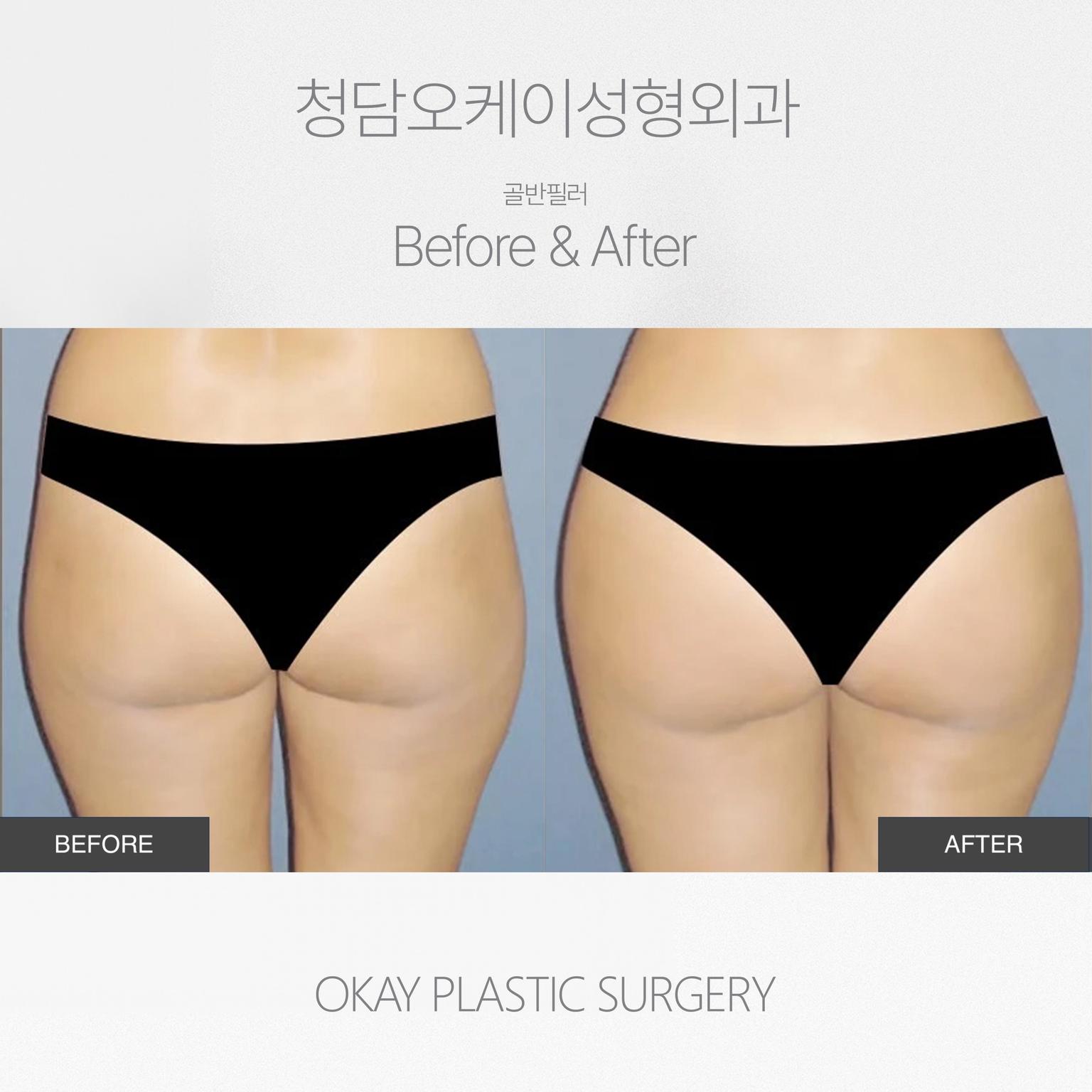
You may consider Okay Plastic Surgery Clinic if you are exploring hip-dip volume enhancement alongside broader body-contouring options, as the clinic lists fat grafting and contouring treatments that may be relevant to creating smoother body lines. Its approach emphasizes individualized planning, and its team includes a female plastic surgeon with extensive experience.
- URL: Okay Plastic Surgery Clinic Website
- Location: Gangnam-gu, Seoul
- Body contouring options:
- Fat grafting is listed for adding volume to areas that need enhancement.
- Line Fat and contouring treatments are offered to help define body lines.
- Liposuction and abdominal or arm lift procedures are also available for patients considering more comprehensive body-shape treatment.
- Injectable and aesthetic care:
- The clinic lists Botox and filler among its petit/skincare services.
- Medical skincare, pigmentation care, and acne/scar treatments are also offered.
2. Modelo clinic
You may consider Modelo Clinic if you want to discuss hip-dip filler within a practice that emphasizes individualized aesthetics and provides filler-based volume treatments. While its listed filler services focus on the face, the clinic’s stated approach centers on tailoring treatment to your own features and aesthetic priorities rather than following trends.
- URL: Modelo clinic Website
- Location: Gangnam-gu, Seoul
- Filler experience listed:
- Fullface filler is offered for volume enhancement in areas including the cheeks, lips, and forehead.
- Baby filler is offered for under-eye hollows and dark-circle concerns.
- Other contouring services:
- Bodytoxin is listed for concerns involving excess fat and cellulite.
- Thread lifting and radiofrequency-based Comfort Thermage are offered for lifting and skin-firming concerns.
- Contour Botox is available for facial reshaping and definition.
3. Haru Clinic
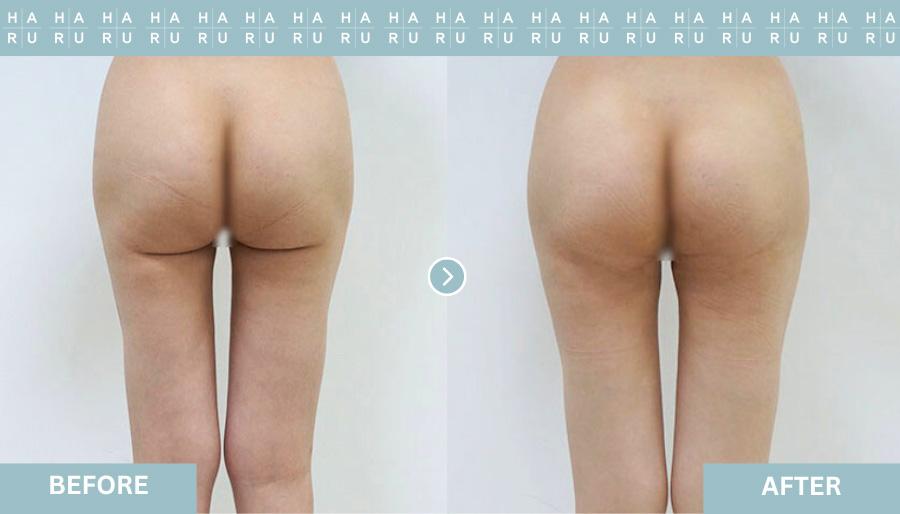
You may consider Haru Clinic for hip-dip filler because it specifically offers non-surgical buttock and hip lifting with volumizing fillers to smooth hip dips, improve projection, and create a rounder, lifted contour with minimal downtime. Its apple-hip approach can combine threads for lift and structure with filler for volume and natural-looking curves.
- URL: Haru Clinic Website
- Location: Gangnam-gu, Seoul
- Hip-dip treatment approach:
- Butt and hip treatment can use volumizing fillers to enhance curves, smooth hip dips, and add fullness.
- Threads may be combined with filler to provide lift and structural support while filler addresses volume.
- The clinic describes this as a non-surgical option for a more sculpted hip contour.
- Filler expertise:
- Dr. Jeong is an official research physician for Merz, the company behind Belotero Filler.
- Dr. Jeong teaches other doctors about current filler techniques.
- The clinic describes a personalized, balance-focused approach to non-invasive contouring.
- Related body services:
- A body lift is available for redundant skin of the abdomen, flanks, back, and thighs after weight change.
- The clinic also provides minimally invasive and surgical aesthetic treatments for the face and body.
Hip Dip Filler From Start to Finish
- Remote inquiry and screening — Send standing front, side, and back photographs only through the clinic’s secure process, along with medical history, medicines, allergies, and details of all previous hip or buttock procedures. Confirm whether an English consultation is available and request the proposed HA product name before travel.
- Pre-travel plan — Discuss the intended contour, limits of filler for skeletal hip dips, estimated total volume, number of stages, current product labeling, injector credentials, complication protocol, after-hours contact, and a 3–7-day Korea itinerary. Do not book a long-haul flight within the first 72 hours.
- In-person assessment — The clinician examines the hips while standing, documents baseline asymmetry and scars, assesses skin laxity and soft-tissue coverage, and reviews prior injections, surgery, allergies, nicotine use, and medicines. Testing is not routine for every healthy HA-filler patient; bleeding, infection, and medical-history concerns determine whether it is needed.
- Consent and marking — Review temporary results, potential need for staged correction, risks, and alternatives. The clinician marks the lateral hollows while standing and records the final treatment plan; in a broader gluteal-HA study, reported volumes ranged from 20–70 mL per side, which is not a recommended target for isolated hip dips.
- Injection — The skin is disinfected, local anesthetic is used, and the clinician introduces a blunt cannula through one or more small entry points to place cross-linked HA in the planned subcutaneous plane. Published gluteal techniques describe retrograde, fan-shaped placement; the treatment duration depends on the planned area, volume, and whether both sides require correction.
- Immediate review and discharge — The clinician checks contour, skin color, pain, and the entry sites before same-day discharge when the patient is stable. Obtain written aftercare, product labels and lot numbers, treatment records, photographs, and urgent contact details in English.
- Early Korea follow-up — Attend the planned early review before departure when possible. Do not judge the final contour immediately because swelling, bruising, itching, tenderness, and early unevenness can obscure the result.
- Overseas follow-up — Complete video or photo follow-up at 48–72 hours and 1–2 weeks. Reassess at 2–4 weeks before considering a touch-up, and seek local urgent care immediately rather than waiting for a remote reply if red-flag symptoms occur.
Alternatives to Hip Dip Filler
Non-surgical HA filler offers temporary, localized camouflage without liposuction or an operation, but it cannot reliably create major volume. Surgical alternatives can produce larger or longer-lasting contour change, with more recovery, scars, and procedure-specific risks.
Hip-Dip Fat Grafting
Uses liposuctioned fat to add volume to the lateral hips and can provide a greater, potentially longer-lasting change than HA filler.
- Best tradeoff — Suitable for patients with usable donor fat who accept surgery, recovery, and variable fat survival.
- Safety consideration — Gluteal fat grafting has important safety risks and needs a surgeon using an established safety-focused technique. See hip dip fat grafting.
Adjacent-Area Liposuction
Selected contouring of the waist, flanks, or thighs can alter the proportions around a hip dip rather than filling the hollow itself.
- Best tradeoff — Useful when excess adjacent fat, rather than a localized volume deficit alone, drives the contour concern.
- Limitation — Poor planning can deepen the indentation. Related options include waist liposuction and thigh liposuction.
Buttock Implants
Implants provide surgical volume for selected patients with limited donor fat or a goal beyond hip-dip camouflage.
- Best tradeoff — Offers structural augmentation without depending on fat survival or repeated HA sessions.
- Limitation — Scars, infection, malposition, and capsular complications are material surgical risks. See buttock implants.
No Procedure
Hip dips are a normal anatomical feature and need no correction.
- Best tradeoff — Avoids injection and surgery risks entirely.
- Limitation — Gluteal resistance training can improve muscle development but cannot reliably remove an indentation driven by pelvic anatomy.
How Can I Prepare for Hip Dip Filler?
- Verify the material — Request the full HA product name, manufacturer, current Korean labeling or authorization information, lot number, expiry date, planned mL per side, and intended injection plane before paying a deposit. Refuse silicone, permanent filler, unidentified biopolymer, or a product supplied outside the clinic.
- Disclose medicines and supplements — Give a complete list of prescriptions, over-the-counter medicines, vitamins, herbs, and supplements. Anticoagulants, antiplatelets, and NSAIDs can increase bruising or bleeding; never independently stop warfarin, apixaban, rivaroxaban, aspirin, clopidogrel, or similar prescribed medicine.
- Report prior treatment — Send records of prior hip or buttock fillers, fat transfer, implants, liposuction, or unknown injections. Ask whether examination or imaging is needed before proceeding.
- Avoid alcohol and nicotine — Avoid alcohol for at least 24 hours before and after treatment if the treating clinician agrees. Report smoking, vaping, nicotine replacement, and recreational-drug use honestly because they affect assessment and healing advice.
- Protect the treatment area — Reschedule for fever, active infection, broken skin, folliculitis, rash, sunburn, or inflammation near the outer hips. Arrive hydrated and fed unless the facility gives different instructions, and wear loose clothing that does not rub or compress the area.
- Arrange practical support — Book nearby accommodation, flexible flights, and ground transport if sedation is planned or discomfort would make driving unsafe. Keep a reachable companion during the first 72 hours when possible.
Travel note: Do not schedule remote excursions, intercity transfers, or an early long-haul flight during the first 72 hours, when rapid assessment must remain accessible.
Confirm the treating doctor’s clinic-specific medication, fasting, transport, and travel requirements; individualized instructions take precedence over general guidance.
Aftercare Advice
Protect the injection sites, avoid pressure or unapproved manipulation, and treat escalating pain or skin changes as urgent—not routine recovery.
- Expect early changes — Volume is visible immediately, but swelling, bruising, tenderness, itching, and temporary unevenness can distort the result. In a 91-patient gluteal-HA cohort, common swelling, bruising, itching, and pain generally settled within 2–3 days; most recorded adverse effects resolved within one week, though nodules, inflammation, infection, or allergy took 1–4 weeks in some cases.
- Avoid massage and pressure — Do not massage the hips, apply compression garments, or use prolonged pressure unless the injector specifically directs it. A published protocol used no prone sleeping for three days, but positioning advice must follow the treating clinician’s plan.
- Keep sites clean and limit activity — Follow the clinic’s dressing and showering instructions exactly. Avoid strenuous exercise, swimming, hot tubs, sauna, steam rooms, tanning, and direct sun for the clinician-specified period; a published gluteal-HA protocol restricted physical activity for at least two weeks and heat or swimming exposure for three weeks, but this is not a universal standard.
- Stay reachable for review — Send requested photographs and complete follow-up at 48–72 hours and 1–2 weeks. Judge symmetry and any need for additional filler at 2–4 weeks, after early swelling has settled.
- Know the red flags — Seek same-day urgent assessment for severe or worsening pain; rapidly expanding swelling; white, gray, blue, purple, cold, blistered, or breaking-down skin; fever; spreading redness or warmth; pus; foul drainage; a hard painful nodule; chest pain; shortness of breath; fainting; or neurologic symptoms. Do not wait for remote follow-up.
Follow the treating doctor’s written instructions over general advice, and contact the clinic immediately when pain, swelling, skin appearance, or discharge seems wrong.
Frequently Asked Questions
Related Blogs

Receded Chin Solutions in Korea: Chin Filler Procedures for a More Balanced Profile
Discover how Korea leads in minimally invasive chin enhancement with expert chin fillers, including hyaluronic acid, Radiesse, and Sculptra. This guide explores treatments for receded chin (retrognathia), comparing costs, procedures, and patient experiences in Korea's top clinics. Achieve a harmonious profile with safe, effective, and reversible options available for medical tourists seeking non-s
Updated: Sep 30, 2026

Chin Filler in Korea: Candidacy, Recovery, Safety and Travel Planning
HA chin filler uses temporary hyaluronic acid injections to improve mild-to-moderate chin retrusion, projection, height, and lower-face balance without surgery. The article covers candidacy, treatment steps, Korea travel planning, recovery, aftercare, complication warning signs, and surgical alternatives.
Updated: Sep 28, 2026

Nose Filler in Korea: Safety, Results, Recovery, and Travel Planning
Nose filler uses small amounts of reversible hyaluronic acid to add temporary bridge, radix, or limited contour camouflage, with a 15–45 minute outpatient procedure and review at 1–2 weeks. International patients should plan 2–3 days in Korea, remain near emergency care overnight, and seek immediate help for severe pain, skin color changes, or visual symptoms.
Updated: Sep 28, 2026

Hand Filler in Korea: Types, Safety, Recovery and Travel Planning
Hand filler uses hyaluronic acid or calcium hydroxylapatite to restore volume on the back of the hands, with assessment, injection, recovery, and follow-up guidance. International patients can find candidate criteria, safety exclusions, Korea travel planning, aftercare, and urgent warning signs.
Updated: Sep 28, 2026
Clinics offering Hip Dip Filler

BongBong Plastic Surgery | Premium Breast and Body Shaping with Innovative Autologous Fat Grafting and Hybrid Techniques
Nonhyeon

Haru Clinic Korea | Fully-Customized Full-Face Non-Surgical Rejuvenation With Threads, Botox & Fillers
Sinsa

Hev Clinic Korea | Premium Sinsa Clinic for Skin, Laser & Injectables
Sinsa

Okay Plastic Surgery Clinic in Korea: Comprehensive Aesthetic Procedures with Sincerity and Care
Cheongdam