
Medical Tourism Blog
Hiko Nose Thread Lift in Korea: Candidacy, Methods, Recovery, Risks and Travel Planning
Table of contents
- Hiko Nose Thread Lift at a Glance
- What Is a Hiko Nose Thread Lift?
- Who Is a Good Candidate for a Hiko Nose Thread Lift?
- How Is a Hiko Nose Thread Lift Performed?
- Why Visit Korea for a Hiko Nose Thread Lift?
- Key Information for International Patients
- Which Are the Best Clinics in Korea for Hiko Nose Thread Lift?
- Hiko Nose Thread Lift From Start to Finish
- Alternatives to a Hiko Nose Thread Lift
- How Can I Prepare for a Hiko Nose Thread Lift?
- Aftercare Advice
Considering treatment in Korea? Everything you need to know e.g. — how to avoid scams, visas, interpreters, recovery tips — in our Medical Tourism Master Guide. Plan with confidence in minutes, not weeks!
Last updated: September 2026
Hiko Nose Thread Lift at a Glance
- What it does — A Hiko nose thread lift uses absorbable barbed threads, usually PDO, placed through small punctures to create modest temporary bridge definition, tip projection, or tip rotation without surgery.
- Best candidates — Healthy adults seeking a subtle, nonpermanent contour change are the best fit; threads cannot remove a hump, narrow the nose, correct major deviation, improve breathing, or provide structural reconstruction.
- Recovery timeline — Contour change is usually visible immediately, but swelling, tenderness, tightness, and pinpoint bruising are most noticeable for 2–7 days; early asymmetry can take 1–2 weeks to settle, with a cautious result review at 2–4 weeks.
- Longevity uncertainty — PDO threads are absorbable, and current Hiko-specific evidence does not establish a dependable duration of visible benefit or a standard interval for repeat treatment.
- Important safety distinction — Thread-only Hiko treatment differs materially from threads plus hyaluronic-acid filler: adding nasal filler introduces risks of vascular occlusion, skin necrosis, and rare visual complications.
- Korea travel planning — Plan 3–5 days in Korea for consultation, treatment, and an early in-person review; 5–7 days is more prudent for combined bridge-and-tip treatment, added filler, substantial bruising, prior nasal surgery, or limited follow-up at home.
- Korea-specific consideration — Korea offers established international-patient infrastructure, but no reliable evidence shows superior Hiko outcomes there; verify Medical Korea registration, the exact thread product and plan, and access to urgent complication care before booking.
What Is a Hiko Nose Thread Lift?
A Hiko Nose Thread Lift uses absorbable threads placed beneath the skin to temporarily refine nasal contour. It aims to create subtle bridge definition or tip lift for people seeking a modest change rather than major reshaping. It is a minimally invasive, non-surgical cosmetic procedure.
Who Is a Good Candidate for a Hiko Nose Thread Lift?
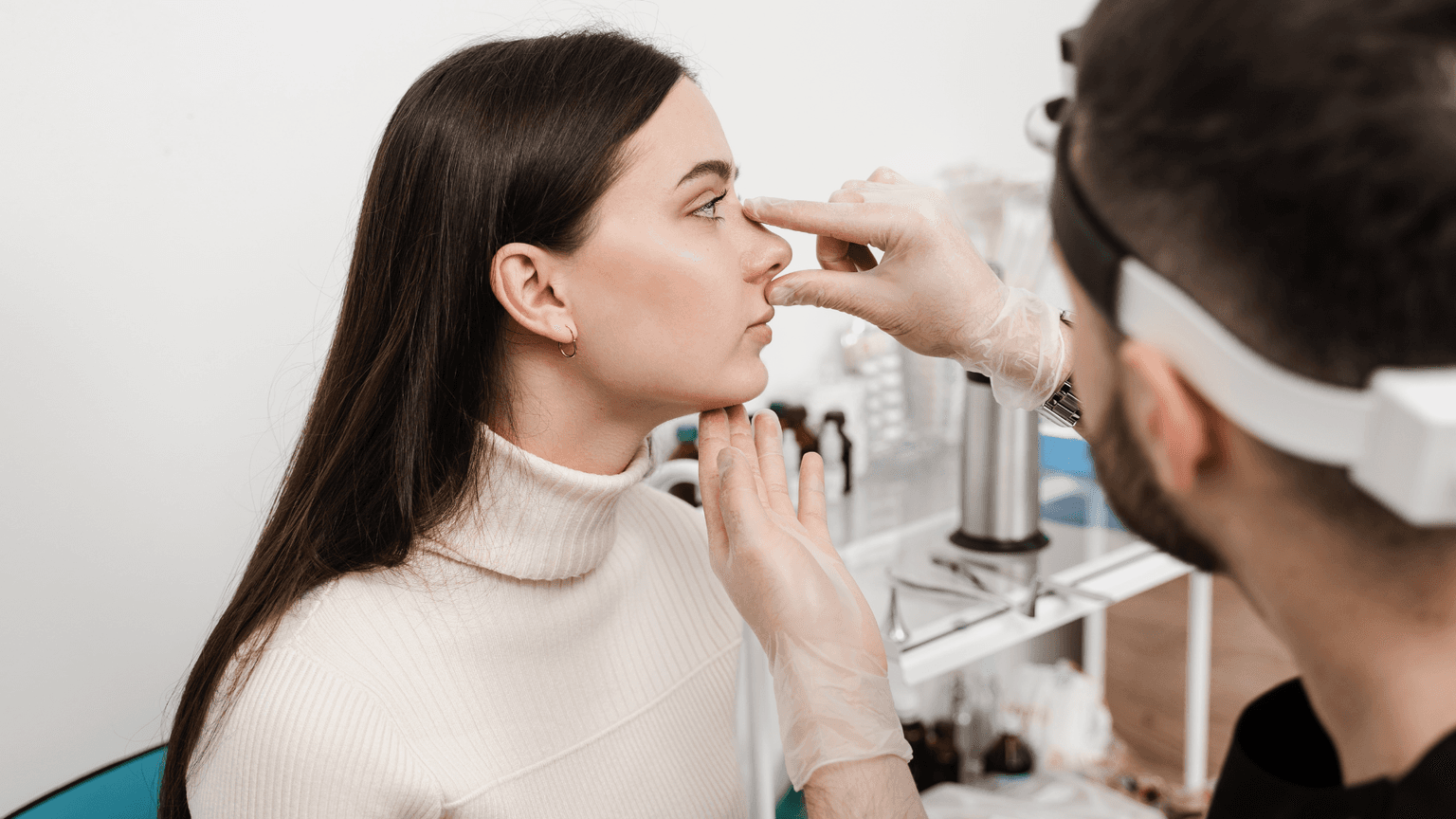
- Subtle bridge or tip goal — Good candidates are healthy adults seeking modest bridge definition, tip projection, tip rotation, or a more open nasolabial angle rather than major reshaping.
- Temporary, non-surgical preference — PDO threads are absorbable and the visible benefit is not reliably permanent; choose this only when a temporary mechanical lift is acceptable.
- Favorable nasal assessment — The clinician must assess skin thickness and quality, existing tip support, baseline asymmetry, scarring, and the condition of the nasal skin.
- No functional or reduction goal — Threads do not remove a hump, narrow nasal bones, correct substantial deviation, repair the septum, or improve nasal obstruction.
Active acne, cellulitis, dermatitis, herpes, open wounds, or suspected infection around the nose require treatment and assessment before elective threads. Pregnancy and breastfeeding, poorly controlled diabetes, significant immunosuppression, uncontrolled hypertension, bleeding or platelet disorders, and medicines that cannot safely be adjusted also require deferral or individualized medical clearance. Prior rhinoplasty, nasal implants, permanent filler, temporary filler, or prior threads are higher-complexity situations, not automatic exclusions; disclose every previous nasal material. A Hiko treatment is unsuitable for goals requiring durable structural reconstruction, meaningful narrowing or reduction, airway surgery, or major crooked-nose correction. Adults are the appropriate group for elective cosmetic treatment because nasal growth and facial development must be complete.
How Is a Hiko Nose Thread Lift Performed?
“Hiko” is an aesthetic-practice term for a non-surgical “high nose” treatment, not one standardized technique. The intended insertion plane, thread number, polymer, barb pattern, and entry points differ between clinicians, and no accepted protocol identifies a best approach.
- Thread-only treatment — Absorbable barbed threads, commonly polydioxanone (PDO), are introduced through small punctures to support the dorsum, columella, tip, or a combination. This approach aims for contour and lift without injectable volume.
- Dorsum-and-columella placement — Dorsal threads target bridge definition; columellar or tip-directed threads target projection or rotation. Combining areas generally creates more swelling and makes a longer Korea stay more prudent.
- Threads with hyaluronic-acid filler — Filler can add limited bridge volume while threads provide support. This is a materially different procedure: nasal filler introduces vascular-occlusion risk, skin necrosis, and rare visual complications, documented in a systematic review of nonsurgical rhinoplasty complications.
- Documentation of the plan — Obtain the thread brand, material, barb configuration, number, entry points, planned insertion plane, anesthetic, and confirmation of whether filler is included in writing.
Why Visit Korea for a Hiko Nose Thread Lift?
South Korea has an established system for international medical care, including a Medical Korea registration framework for providers serving foreign patients. This can make it practical to arrange English-language communication and an early review before departure. Location alone does not demonstrate better Hiko outcomes than treatment elsewhere.
- International-care infrastructure — Verify that the facility is registered through the Medical Korea international-patient system and confirm who will perform the procedure and who handles complications after hours.
- Procedure-specific assessment — Korea has published clinical literature relevant to thread and nonsurgical rhinoplasty, but Hiko techniques remain nonstandardized and the evidence does not establish a superior Korean technique or outcome.
- Written continuity plan — For overseas care, request English aftercare instructions, emergency contact details, procedure records, and a documented pathway for infection, exposure, irregularity, or thread removal.
- Evidence limitation — No high-quality randomized trials establish how Hiko thread rhinoplasty compares with observation, filler alone, or surgical rhinoplasty for defined nasal goals. Choose a clinician based on assessment, sterile practice, exact product disclosure, and complication access—not country branding.
Key Information for International Patients
- Minimum stay — Plan 3–5 days in Korea for consultation, treatment, and an early in-person review of entry points, swelling, symmetry, and infection signs.
- More conservative itinerary — Stay 5–7 days when both dorsum and columella are treated, filler is added, bruising is substantial, there has been prior nasal surgery, or reliable follow-up at home is limited.
- Flight timing — No evidence-based universal post-Hiko flight interval has been identified. Do not book an immediate departure; leave enough time for the early review and follow the treating clinician’s advice if swelling, pain, infection concern, or filler-related symptoms occur.
- Social recovery — Visible contour change is usually immediate, but tenderness, swelling, pinpoint bruising, and tightness are most noticeable for 2–7 days. Residual swelling and early asymmetry can take 1–2 weeks to settle.
- Itinerary restrictions — Avoid pressure on the nose, strenuous exercise, swimming, saunas, facials, and nasal manipulation during early healing. Avoid scheduling photo-critical events during the first 1–2 weeks.
- Remote follow-up — Arrange follow-up using standardized front, oblique, profile, base, and smiling photographs. Keep an identified clinician or urgent-care option at home for in-person assessment if a problem develops.
Travel note: Obtain a treatment summary before leaving Korea. It should state the thread product and number, entry sites, anesthetic, whether filler was used, and the clinic’s complication-contact instructions.
Which Are the Best Clinics in Korea for Hiko Nose Thread Lift?
Listed below are some of the best clinics in Korea for hiko nose thread lift.
1. PangPang Clinic
For a Hiko nose thread lift, you can consider PangPang Clinic’s thread-focused approach, which emphasizes individualized planning, functional thread selection, and ultrasound-guided assessment and pre-procedure design. Its thread-lifting practice also includes options intended to support lifting and collagen-related skin improvement.
- URL: PangPang Clinic Website
- Location: Gangnam-gu, Seoul
- Thread-lifting approach:
- The clinic reports using 31 specialized functional threads, with treatment plans customized to the area and your goals.
- Its lifting system includes barbed lifting threads, complementary assist threads, elastic tightening threads, and volume threads; suitability for nasal shaping should be determined during your consultation.
- Ultrasonic visual checks and pre-operative design are included in its described thread-lifting system.
- Comfort and recovery:
- Chill-Lifting uses contact-free cooling anesthesia, which the clinic says is designed to reduce pain, swelling, and bruising.
- The clinic lists partial, Airnox, and sleep anesthesia among options for its thread-lifting procedures; the appropriate option depends on your treatment plan.
- Research and planning:
- PangPang Clinic describes collaboration with Seoul National University Bundang Hospital on thread-lifting techniques involving lift, collagen regeneration, and skin quality.
- It reports a dedicated Thread Lifting Research Institute and a consultation center for tailored planning.
- Pink Lift is the clinic’s proprietary thread, described as developed from data from thousands of lifting procedures and certified by FDA, CE, and KFDA.
- Related services:
- The clinic offers thread-lifting revision care for concerns after a prior thread procedure, potentially alongside fillers, Botox, or lasers.
- Additional services described include customized filler and Botox treatments, laser treatments, and scar care.
2. Haru Clinic
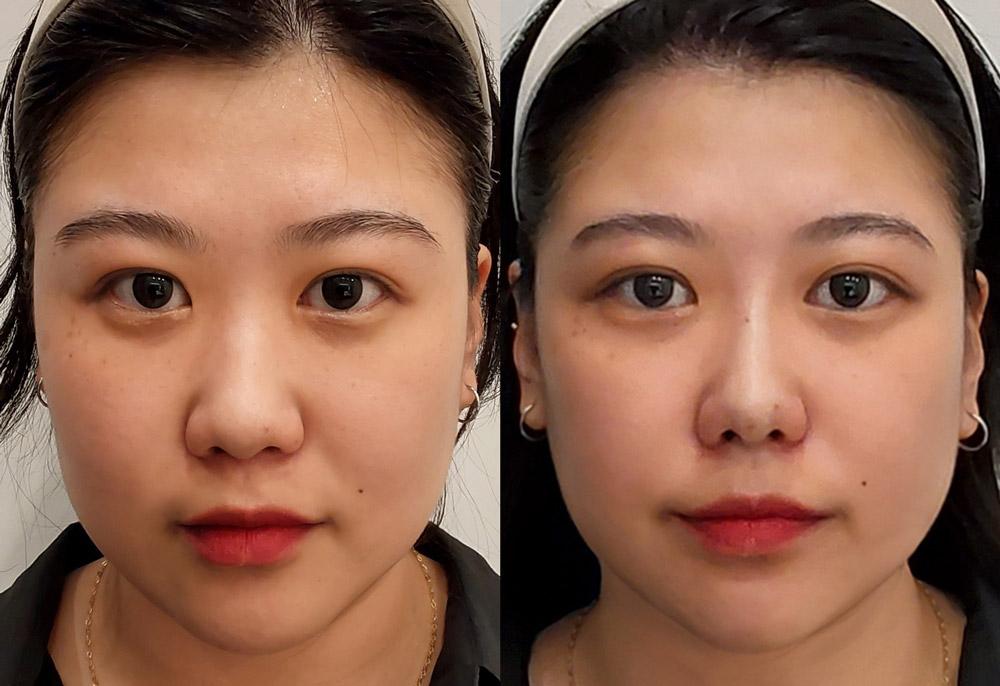
At Haru Clinic, a Hiko nose thread lift can use PDO or PLLA threads placed along your nasal bridge and tip to add definition and lift without implants. The clinic describes immediate effects through small entry points, with treatment planned around facial harmony and balance.
- URL: Haru Clinic Website
- Location: Gangnam-gu, Seoul
- Procedure details:
- PDO or PLLA threads are placed along the bridge and tip for non-implant nasal definition and tip elevation.
- The procedure is described as using small entry points and producing an immediate visible effect.
- Your final shape, thread type, and candidacy should be assessed in a personalized consultation.
- Treatment planning:
- Dr. Jeong designs treatments around your facial proportions, harmony, and balance, with an emphasis on a natural, refreshed appearance.
- Dr. Jeong is described as an official research physician for Merz and teaches other doctors updated filler techniques.
- Related facial options:
- The clinic also provides thread lifts for the cheeks and jawline, as well as double-chin contouring, eyebrow lifting, collagen-tightening treatments, Botox, and fillers.
- Surgical facial procedures, including facelift and philtrum shortening lift, are also listed for concerns that may require a different approach than threads.
3. B.V Clinic
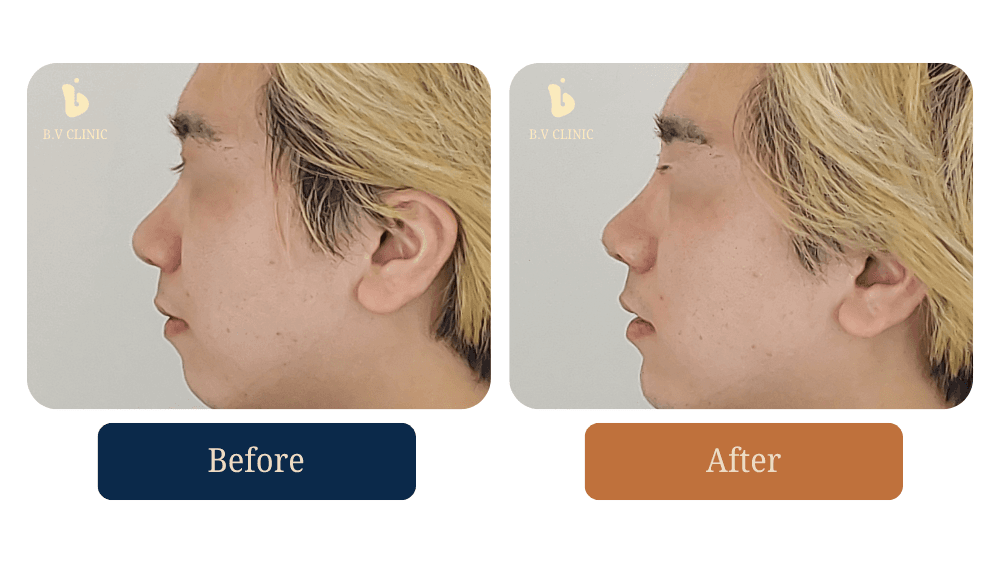
For a Hiko nose thread lift, B.V Clinic offers a non-surgical option intended to refine your nose tip and bridge without incisions. The clinic describes creating a naturally sharper, more elevated nose line with a minimal number of threads, which may suit you if you want an option that fits a busy schedule or prefer to avoid surgery.
- URL: B.V Clinic Website
- Location: Seoul
- Procedure details:
- The treatment is designed to improve the shape of the nasal tip and bridge without incisions.
- The clinic describes using a minimal number of threads to create a sharper, elevated nasal line.
- Your anatomy and desired degree of definition should guide whether this approach is appropriate for you.
- Aftercare and related treatments:
- B.V Clinic describes post-treatment skin-regeneration care intended to help minimize swelling and support elasticity, including skincare products and ultrasound-based care.
- Related aesthetic offerings include facial thread lifting, HIFU, radiofrequency-based tightening, and volume-focused treatments.
Hiko Nose Thread Lift From Start to Finish
- Remote inquiry and screening — Send unfiltered front, oblique, profile, base, and smiling photographs. Ask whether English or virtual consultation is available, and disclose prior surgery, implants, filler, threads, allergies, medical conditions, medicines, smoking or vaping, and nasal breathing symptoms.
- Treatment planning before travel — Confirm whether the proposal is thread-only or threads plus hyaluronic-acid filler. Request a written outline of the product, planned areas, expected limitations, fee inclusions, early review, and complication pathway.
- In-person consultation — The clinician examines skin quality, tip support, asymmetry, scars, previous material, and signs of infection. Standardized photographs and procedure-specific consent should distinguish temporary contour enhancement from structural rhinoplasty.
- Safety review and marking — Report all allergies and medicines. The clinician confirms the planned entry points and whether local anesthetic, an anxiolytic, or sedation is intended; arrange an escort and do not drive when sedating medicine is used.
- Thread placement — In an office-based procedure under local anesthesia, barbed absorbable threads are introduced through small puncture sites in the dorsum, columella, tip, or selected combination to create modest support and contour. If filler is added, it is a separate risk-bearing nasal injection step.
- Immediate assessment and discharge — The team checks contour, swelling, entry sites, and early asymmetry, then provides aftercare and emergency instructions. Do not manipulate the nose to “correct” a perceived irregularity.
- Early in-person review — Return before departure so the clinic can inspect entry sites and assess swelling, symmetry, thread visibility, infection signs, or exposure.
- Overseas follow-up — Send agreed photographs after returning home and contact the clinic promptly for worsening symptoms. A cautious final appearance review is usually at 2–4 weeks, not on the procedure day.
Alternatives to a Hiko Nose Thread Lift
Non-surgical options offer limited augmentation or contour change but do not create the structural change of surgery. Surgical options involve more downtime and planning, yet are the meaningful choice for reduction, narrowing, durable reconstruction, substantial asymmetry, or airway goals.
Nose Filler
- Best suited to — Limited dorsal volume or camouflage of selected contour irregularities without threads.
- Tradeoff — Nasal filler carries distinct vascular risks, including skin injury or necrosis and rare vision loss; serious events have been reported in the nonsurgical rhinoplasty evidence base.
- Learn more — Nose filler.
Surgical Rhinoplasty
- Best suited to — Hump reduction, narrowing, osteotomy, graft-based bridge or tip reshaping, marked deviation correction, and durable structural change.
- Tradeoff — This is surgery with a longer recovery, but threads cannot substitute for its structural capability.
- Learn more — Rhinoplasty.
Tip Plasty
- Best suited to — Selected concerns involving tip cartilage shape, projection, or rotation.
- Tradeoff — Surgical cartilage modification offers more controlled structural change than temporary tip-directed threads.
- Learn more — Tip plasty.
Alar Reduction
- Best suited to — Selected nostril-width or alar-flare concerns.
- Tradeoff — Threads do not reliably reduce alar width; this procedure leaves surgical incisions.
- Learn more — Alar reduction.
How Can I Prepare for a Hiko Nose Thread Lift?
- Photographs and records — Send clear unfiltered nasal photographs before travel. Bring or send records of rhinoplasty, implants, fillers, threads, nasal trauma, infection, and all known allergies.
- Medicine disclosure — List prescription medicines, anticoagulants, antiplatelets, anti-inflammatory medicines, vitamins, herbal products, and supplements. Do not independently stop aspirin, warfarin, direct oral anticoagulants, clopidogrel, or any prescribed medicine; the prescribing clinician must approve any change.
- Nasal-skin health — Report acne, dermatitis, cold sores, redness, drainage, wounds, or persistent swelling before travel. Do not proceed with active infection or unexplained inflammation around the nose.
- Nicotine and alcohol — Follow the clinic’s specific restrictions for smoking, vaping, nicotine replacement, and alcohol, as these can affect bleeding, healing, and infection risk.
- Food, drink, and transport — Follow the facility’s fasting instructions when sedation or an anxiolytic is planned. Arrange a companion and private transport if any sedating medicine is used; do not drive afterward.
- Accommodation and flights — Choose accommodation that allows an early review and keep departure plans flexible. Avoid booking a flight before the clinic has assessed the early result.
Travel note: Confirm in advance how the clinic communicates after hours and what local emergency facility it directs patients to if urgent in-person care is needed.
The treating doctor’s individualized instructions take precedence. Confirm the clinic’s exact medication, fasting, nicotine, alcohol, and travel requirements before treatment.
Aftercare Advice
Protect the nose from pressure and manipulation while swelling settles and entry points heal.
- Hands off the nose — Do not rub, squeeze, massage, pick, or attempt to reposition the nose or threads. Avoid tight glasses or sunglasses, face-down sleeping, and any pressure on the bridge or tip until cleared.
- Activity and heat — Avoid strenuous exercise, contact sports, swimming, saunas, hot baths, facials, gua sha, and invasive facial treatment during early healing. Resume activity only on the treating clinician’s schedule.
- Entry-site care — Keep puncture sites clean and use only clinician-approved dressings, ointments, and pain relief. Do not apply unapproved skincare products to open or irritated entry sites.
- Appearance timeline — Expect the main social-recovery period to last 2–7 days. Swelling and early asymmetry can persist for 1–2 weeks; assess the result cautiously at 2–4 weeks.
- Urgent warning signs — Seek urgent in-person assessment for worsening pain, spreading redness or warmth, pus or foul drainage, fever, rapidly increasing swelling, blanching or dusky skin, an open wound, exposed thread, persistent numbness, major new asymmetry, breathing symptoms, or any visual symptom. When filler was used, severe pain, skin-color change, or visual symptoms are emergencies.
- Follow-up — Attend the in-person Korea review before departure where possible, then send standardized photographs as arranged. Keep the clinic’s contact information and treatment record accessible.
Follow the treating doctor’s instructions over general guidance, and contact the clinic promptly when anything appears wrong.
Frequently Asked Questions
Related Blogs
Lifestyle Lift in Korea: Mini-Facelift Methods, Recovery, Risks and Travel Planning
A Lifestyle Lift is a legacy term for a limited-incision lower facelift that uses short incisions around the ears to redrape skin and may tighten SMAS tissue for mild-to-moderate jowling and lower-face laxity. The article covers candidacy, alternatives, preparation, recovery, risks, aftercare, and international travel planning in Korea, including a minimum 14-day postoperative stay and in-person f
Updated: Sep 20, 2026
Thread Lift in Korea: Methods, Recovery, Risks, Travel Planning and Alternatives
Thread lifts use absorbable threads placed under the skin to provide modest lifting for mild-to-moderate facial or neck laxity, with results reassessed after 6–12 weeks. International patients can find guidance on candidate screening, Korea travel planning, procedure steps, recovery restrictions, follow-up, warning signs, and alternatives.
Updated: Sep 19, 2026
Thread Lift in Korea: Candidacy, Recovery, Risks, and Travel Planning
Thread lifts use absorbable smooth or suspension threads inserted through small entry points to subtly reposition mild-to-moderate facial or neck laxity, with in-person assessment, local anesthesia, early review, and aftercare. International patients visiting Korea should plan at least 5–7 days, obtain product and clinician details, arrange follow-up, and allow 7–14 days before important events.
Updated: Sep 17, 2026
Nose Thread Lift in Korea: Candidacy, Recovery, Risks and Travel Planning
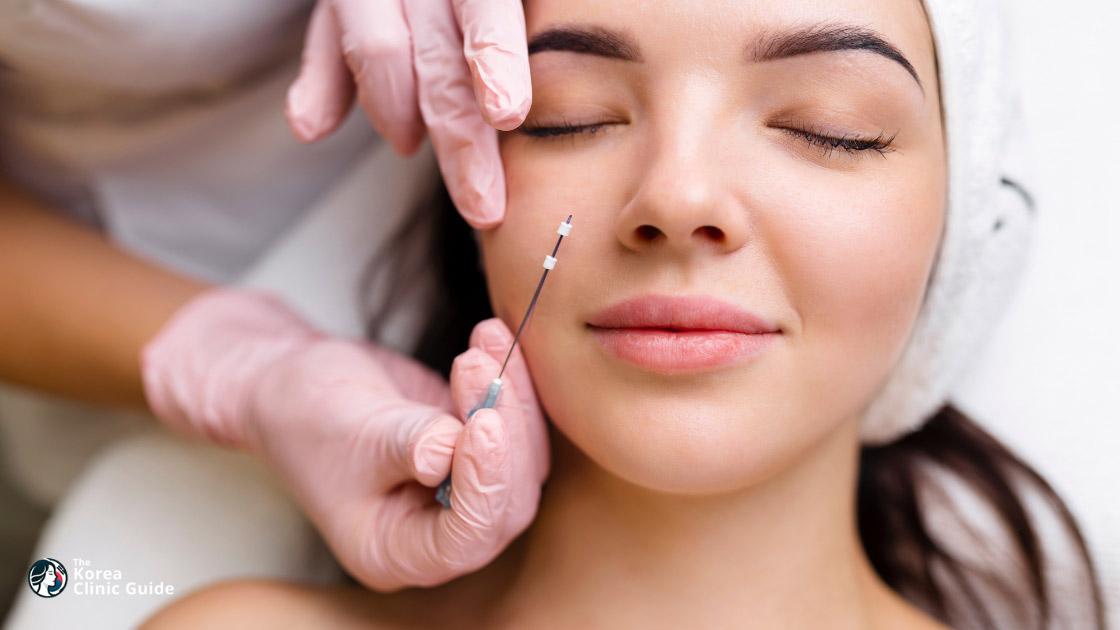
A nose thread lift uses absorbable threads placed along the bridge, tip, or columella to create modest, temporary contour changes, with local anesthetic and early follow-up. The article covers candidate screening, Korea travel planning, recovery, aftercare, warning signs, and alternatives such as filler, rhinoplasty, and septoplasty.
Updated: Sep 12, 2026
Clinics offering Hiko Nose Thread Lift

Haru Clinic Korea | Seoul Facelift, Threads, Botox & Fillers
Sinsa

PangPang Clinic: Korea's Premier Thread Lifting and Skin Rejuvenation Specialist in Gangnam, Seoul
Sinsa

Seojin Plastic Surgery Clinic Korea: Pioneering Advanced Cosmetic Procedures for Personalized Aesthetic Transformation
Apgujeong

B.V Clinic Korea: Advanced Aesthetic Treatments for Natural Beauty Enhancement & Rejuvenation
Sinnonhyeon Station