
Medical Tourism Blog
Nose Filler in Korea: Safety, Results, Recovery, and Travel Planning
Table of contents
- Nose Filler at a Glance
- What Is Nose Filler?
- Who Is a Good Candidate for Nose Filler?
- What Are the Different Types of Nose Filler?
- Why Visit Korea for Nose Filler?
- Key Information for International Patients
- Which Are the Best Clinics in Korea for Nose Filler?
- Nose Filler From Start to Finish
- Alternatives to Nose Filler
- How Can I Prepare for Nose Filler?
- Aftercare Advice
Considering treatment in Korea? Everything you need to know e.g. — how to avoid scams, visas, interpreters, recovery tips — in our Medical Tourism Master Guide. Plan with confidence in minutes, not weeks!
Last updated: September 2026
Nose Filler at a Glance
- What it does — Nose filler is a 15–45-minute nonsurgical injection, usually with hyaluronic acid (HA), that adds volume to raise the bridge or radix, camouflage a small hump, or improve limited asymmetry.
- Best candidates — It suits adults seeking a temporary, modest contour change who understand that filler adds volume; it cannot make a large nose smaller, narrow nasal bones, reliably reduce tip projection, or fix breathing problems.
- Downtime and results — Contour change is visible immediately, but swelling, tenderness, redness, and bruising can take 1–2 weeks to settle; reassessment or refinement is usually delayed until then.
- How long it lasts — A recent observational study found perceived aesthetic benefit for about 6–9 months, although duration varies by filler type, dose, anatomy, technique, metabolism, and prior filler.
- Key safety issue — The nose is a high-risk filler area: rare vascular blockage can cause skin necrosis, permanent vision loss, or stroke, so severe pain, skin blanching or darkening, or any visual or neurologic symptom requires immediate emergency care.
- Korea travel plan — Plan a practical minimum of 2–3 days in Korea, including treatment on day 1 and local access to the clinic and emergency services through the following day before a long-haul flight.
- Korea-specific check — MFDS regulates fillers as medical devices, but approval details are product-specific; confirm the exact HA product, lot number, expiry date, Korean labeling, immediate hyaluronidase access, and emergency transfer plan rather than relying on a generic nose-filler offer.
What Is Nose Filler?
Nose filler, or nonsurgical rhinoplasty, uses injectable filler to add volume and refine selected nasal contours. It can temporarily raise the bridge, camouflage a small hump, or improve limited asymmetry, but it cannot reduce nose size or correct breathing problems. It is a minimally invasive injectable aesthetic procedure, not surgery.
Who Is a Good Candidate for Nose Filler?
- Adults seeking temporary contour change — Good candidates want modest bridge or radix height, camouflage of a small dorsal hump, or correction of limited contour asymmetry without nasal surgery.
- Realistic-volume candidates — Nose filler adds volume; it can improve selected contours but cannot make a large nose smaller, narrow wide nasal bones, reliably deproject the tip, or correct nasal breathing problems.
- First-time HA candidates — For an initial treatment, hyaluronic acid (HA) filler is generally the most defensible option because hyaluronidase can degrade it if needed.
- Carefully selected revision patients — Minor irregularities after rhinoplasty can sometimes be camouflaged with filler, but scar tissue and altered vascular anatomy make a previously operated nose more technically difficult.
Nose filler is unsuitable during an active infection, acne flare, dermatitis, herpes outbreak, open wound, or substantial inflammation near the nose. Defer elective treatment during pregnancy or breastfeeding because adequate safety data are lacking. Previous permanent, unknown, silicone, or biopolymer filler requires assessment by a clinician experienced in retained filler; ultrasound can help clarify uncertain prior material. Review bleeding disorders, diabetes control, immunosuppression, prior severe inflammatory filler reactions, allergies to the proposed filler or lidocaine, recent trauma, and recent rhinoplasty before treatment. Do not independently stop prescribed aspirin, clopidogrel, warfarin, apixaban, rivaroxaban, dabigatran, or other anticoagulants.
What Are the Different Types of Nose Filler?

Patient-facing differences mainly concern whether this is a first augmentation, a complex revision camouflage treatment, and whether the filler is reversible.
- Primary nasal HA filler — First-time treatment in a nose without prior filler or surgery. Small volumes of cross-linked HA are used to build or refine the radix, bridge, or selected tip contours.
- Revision camouflage filler — A limited option for selected irregularities after rhinoplasty. It does not replace revision surgery for major deformity or structural dysfunction, and post-surgical scar planes require heightened caution.
- HA versus non-HA filler — HA filler can be treated with hyaluronidase, whereas non-HA, longer-lasting, and permanent materials are more difficult to reverse or remove. In this high-risk area, “reversible” does not make HA filler risk-free or guarantee prevention of permanent injury after vascular compromise.
Why Visit Korea for Nose Filler?
Korean clinics commonly offer nasal filler as an outpatient aesthetic procedure, but destination alone does not establish safety or a better result. The critical decision is the individual injector’s medical qualifications, command of nasal vascular anatomy, emergency readiness, and willingness to decline an unsuitable case. Ask for the exact filler rather than accepting a generic “nose filler” offer.
- Medical-device oversight — Korea’s Ministry of Food and Drug Safety (MFDS) regulates fillers as medical devices and published an updated technical-document and clinical-investigation guideline for cosmetic fillers in November 2025.
- Product-specific labeling — MFDS safety materials stress that use must follow the individual product authorization. Confirm the exact product name, lot number, expiry date, Korean instructions for use, contraindications, and permitted injection sites before consenting.
- Emergency planning matters more than marketing — The MFDS has warned about serious complications of intravascular injection, including skin injury, visual symptoms, and neurologic emergencies. Verify immediate access to hyaluronidase and a written ophthalmology and emergency-department transfer pathway.
- Evidence limitation — No high-quality comparative evidence establishes that nasal filler in Korea is safer, longer lasting, or more satisfying than treatment in other countries. Select a clinician and emergency system, not a national reputation.
Key Information for International Patients
- Minimum stay — Plan 2–3 days in Korea: consultation and treatment on day 1, availability for an urgent assessment or check on day 2, plus a buffer before a long-haul flight. This is a conservative access-to-care recommendation, not an evidence-based mandatory flying interval.
- Flight timing — There is no validated universal post-filler flight restriction. Do not fly or travel away from prompt medical care with worsening pain, pale or mottled skin, discoloration, visual changes, severe headache, or neurologic symptoms.
- Itinerary impact — Quiet activities are usually possible immediately, but schedule treatment early in the trip. Avoid alcohol, sauna or spa visits, intense exercise, facial massage, laser treatment, chemical peels, and strenuous sightseeing around the appointment.
- Recovery appearance — The contour is visible immediately, although redness, tenderness, swelling, and bruising can obscure the early result for several days. These effects can take 1–2 weeks to settle.
- Review and remote follow-up — Arrange a review at about 1–2 weeks before considering refinement. Leave Korea with product documentation, treatment photographs, the clinic’s secure contact route, and a plan for assessment at home if a delayed issue occurs.
Travel note: Nasal filler is a high-risk injection despite its short appointment time. Remain near the treating clinic and local emergency services for the first night, and keep daytime access to both on the day after treatment.
Which Are the Best Clinics in Korea for Nose Filler?
Listed below are some of the best clinics in Korea for nose filler.
1. Haru Clinic
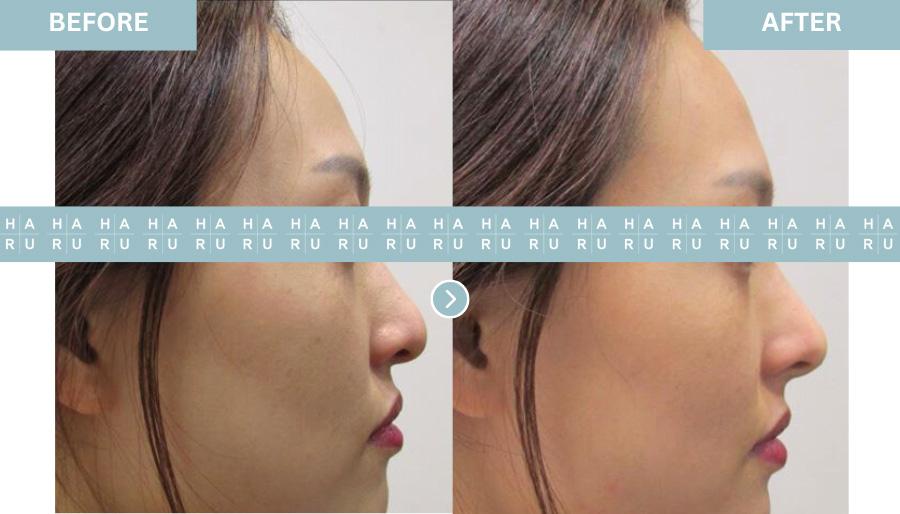
For non-surgical nasal contouring, Haru Clinic offers nose thread lifting with PDO or PLLA threads placed along the bridge and tip for immediate definition and lift through small entry points. If you are considering filler as part of a broader facial-balancing plan, the clinic also provides hyaluronic acid and biostimulatory fillers designed for adjustable, natural-looking contour.
- URL: Haru Clinic Website
- Location: Gangnam-gu, Seoul
- Nasal and facial contouring:
- Nose thread lifting can define and elevate the bridge and tip without implants.
- Filler treatments are available for areas including the cheeks, chin, jawline, lips, and tear troughs, supporting an overall approach to facial proportion.
- Treatment planning emphasizes harmony and balance tailored to your individual features.
- Filler expertise:
- Dr. Jeong is an official research physician at Merz, the company behind Belotero Filler.
- Dr. Jeong teaches other doctors about current filler techniques.
- Related non-surgical options:
- Thread lifting uses dissolvable barbed threads to elevate the cheeks and jawline under local anesthesia while stimulating collagen.
- Collagen-tightening treatments use radiofrequency or ultrasound to promote firmer, more elastic skin without incisions.
2. B.V Clinic
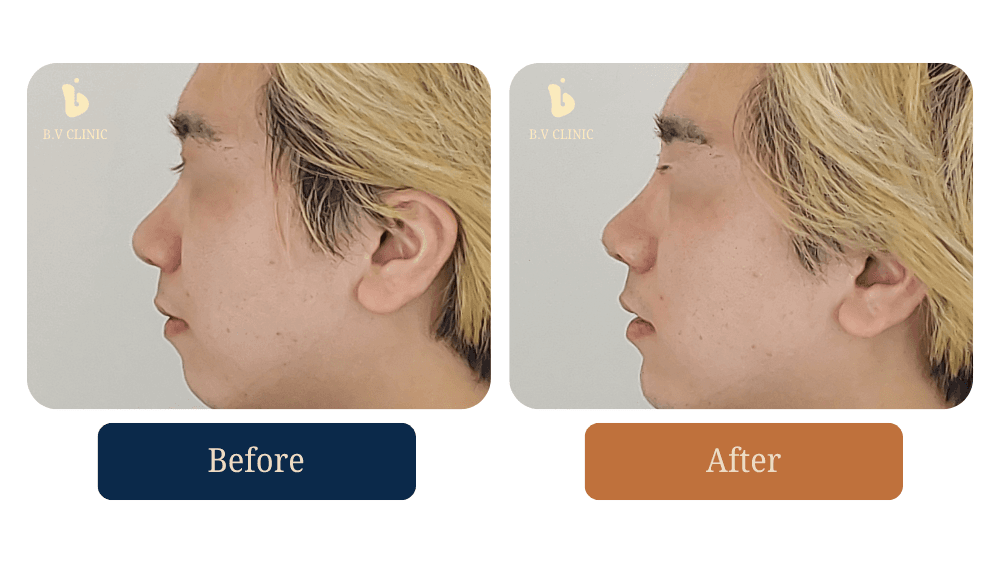
At B.V Clinic, you can discuss a personalized volume-lifting plan intended to restore facial volume and elasticity in depleted areas while maintaining your natural facial balance. The clinic’s stated focus is on tailored rejuvenation, with thread lifting and skin-tightening treatments available when you want to address laxity or contour alongside volume concerns.
- URL: B.V Clinic Website
- Location: Seoul
- Volume and contour planning:
- Volume lifting is intended to support facial structure and resilience in areas affected by volume loss.
- Full-face lifting is described as a non-surgical option that can restore volume and balance while addressing nasolabial folds and facial asymmetry.
- Complementary tightening treatments:
- 3D thread lifting uses strategically placed threads to lift and firm sagging skin while supporting collagen production.
- Shurink Lifting uses high-intensity focused ultrasound for deeper-layer tightening and contour refinement.
- Potenza and Thor treatments use radiofrequency-based approaches for collagen support, elasticity, skin texture, and contouring.
- Aftercare:
- Post-treatment care may include skin-regeneration management intended to help minimize swelling and support elasticity.
- The aftercare program includes nutritional skincare products and ultrasound-based collagen-support treatments.
3. PangPang Clinic
PangPang Clinic can be a relevant option if you want filler considered within a highly customized non-surgical facial plan: it offers personalized filler and Botox treatments for facial structure and wrinkle concerns, alongside a practice focused exclusively on thread lifting. Its planning process includes doctor consultation, pre-operative design, and ultrasonic visual checks for thread-lifting treatments.
- URL: PangPang Clinic Website
- Location: Gangnam-gu, Seoul
- Filler and injectable options:
- Customized filler and Botox treatments are available to enhance facial structure and address wrinkle concerns.
- PIM Injection combines Ultra Cell, thread lifting, and Botox to support facial volume, delicate-wrinkle smoothing, elasticity, and complexion; the stated result duration is 6 months to 2 years.
- Thread-lifting focus:
- The clinic reports using 31 specialized functional threads to tailor lifting plans.
- Its thread-lifting system includes ultrasonic visual checks, pre-operative design, personalized doctor consultation, and unlimited thread customization.
- Thread-lifting treatments may use lifting, assist, tightening, and volume threads; volume threads are described for the under-eye, cheek, and eye-bag areas.
- Research and follow-up:
- The clinic states that it established a Thread Lifting Research Institute and continues to develop procedures based on research and clinical data.
- Its medical team participates in international beauty conferences through invited lectures and presentations.
- A thread-lifting revision center addresses unsatisfactory prior thread-lifting results and may incorporate fillers, Botox, or lasers as appropriate.
- A thread aftercare package is available to support and prolong thread-lifting effects.
Nose Filler From Start to Finish
- First contact and virtual consultation — Send clear, makeup-free front, oblique, and profile photographs if requested. Confirm whether English consultation is available, disclose prior rhinoplasty, trauma, filler, allergies, medicines, and the specific concern to be treated.
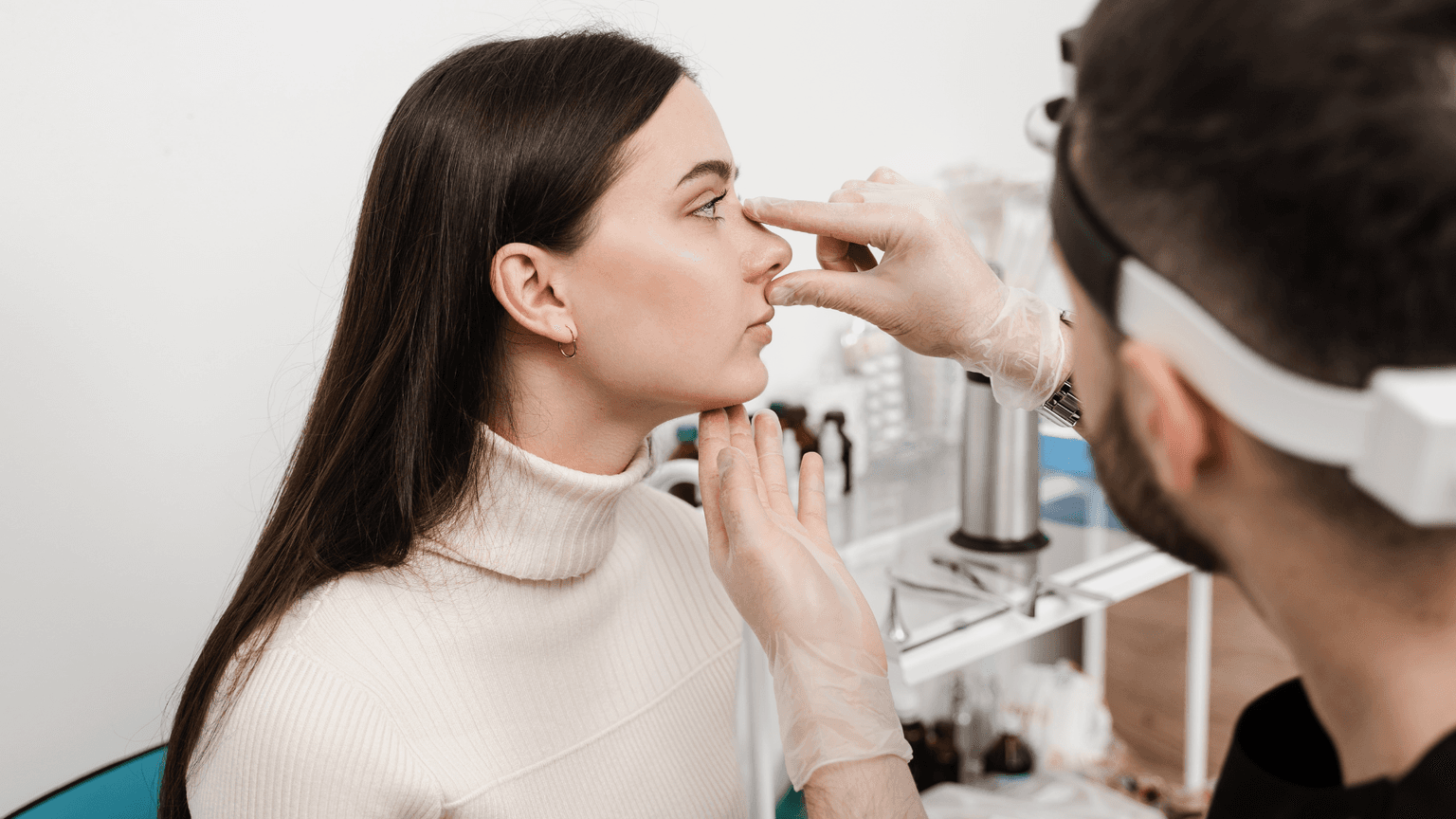
- In-person assessment and consent — The injector examines nasal shape, skin thickness, scar tissue, symmetry, and relevant anatomy. They confirm that filler can only add volume, take standardized photographs, and discuss common reactions plus rare vascular occlusion, skin necrosis, visual loss, and stroke.
- Product and emergency verification — Confirm the exact HA product, lot number, expiry date, and current Korean instructions for use. Ask whether hyaluronidase is immediately available and how urgent ophthalmology or emergency transfer is arranged.
- Skin preparation and anesthesia — The nose is cleansed. Topical anesthetic can be used; some HA fillers also contain lidocaine. Fasting is generally unnecessary when treatment uses topical or local anesthetic alone.
- Conservative injection — The clinician injects small, slow, low-pressure aliquots at an anatomy-specific depth while monitoring pain and skin perfusion. Needles and blunt cannulas are both used in practice; neither device, aspiration, nor any single injection plane eliminates vascular risk.
- Immediate assessment and discharge — The appointment commonly takes 15–45 minutes. The contour is assessed, aftercare and emergency instructions are reviewed, and uncomplicated patients leave the clinic the same day.
- Local recovery window — Avoid pressure and manipulation of the bridge, heat exposure, alcohol, and vigorous activity as instructed. Stay locally available through the following day rather than immediately moving to another city or boarding a long-haul flight.
- Review and overseas follow-up — Reassess at around 1–2 weeks, when swelling has settled, before adding filler. Contact the clinic remotely after returning home and seek emergency care immediately for any vascular or visual warning sign.
Alternatives to Nose Filler
The main tradeoff is temporary volume camouflage versus structural correction. Nonsurgical options do not reduce nasal size or repair internal obstruction, while surgery can reshape bone, cartilage, and the nasal airway but requires more recovery and travel planning.
Surgical Rhinoplasty
- Best for — Reducing size, narrowing nasal bones, major asymmetry, tip reshaping, hump reduction, and structural changes that filler cannot achieve.
- Tradeoff — Provides a durable structural result but involves surgery, swelling, a longer recovery period, and more demanding overseas follow-up. See rhinoplasty.
Revision Rhinoplasty
- Best for — Significant postoperative contour deformity, graft problems, major asymmetry, or functional concerns after prior surgery.
- Tradeoff — Usually more definitive than repeated camouflage filler in a complex operated nose, but technically more demanding than primary surgery. See revision rhinoplasty.
Nose Thread Lift
- Best for — Patients considering a temporary nonsurgical contour procedure but not seeking filler volume alone.
- Tradeoff — Threads have distinct complications and limited comparative evidence; they are not established as a safer replacement for nasal filler. See nose thread lift or HIKO nose thread lift.
Hyaluronidase Filler Dissolver
- Best for — Unwanted HA filler, certain HA-related irregularities, or clinician-managed HA filler complications.
- Tradeoff — It does not dissolve permanent or non-HA material and cannot guarantee reversal of permanent vascular or visual injury. See filler dissolver.
How Can I Prepare for Nose Filler?
- Disclose all medicines and supplements — Report prescription drugs, over-the-counter medicines, injections, and supplements before booking. Aspirin, ibuprofen, naproxen, clopidogrel, warfarin, direct oral anticoagulants, fish oil/omega-3, vitamin E, ginkgo, garlic, ginseng, and St John’s wort can affect bruising or bleeding. Do not stop prescribed antiplatelet or anticoagulant medication unless the prescribing clinician directs it.
- Report prior nasal treatment — List every previous filler, including product name where known, permanent filler, liquid silicone, biopolymer, threads, surgery, trauma, and prior dissolver treatment. Unknown or permanent material needs specialist assessment before another injection.
- Postpone with inflammation or infection — Tell the clinic about fever, active acne, dermatitis, cold sores, dental infection, nasal infection, wounds, or facial inflammation. Do not attend for treatment until the injector confirms it is appropriate.
- Plan anesthesia and meals — Fasting is generally unnecessary for filler under topical or local anesthetic. Follow fasting instructions if sedation or a combined procedure is planned.
- Avoid bruising and heat triggers — Avoid alcohol, sauna, steam rooms, intense exercise, facials, massage, microneedling, laser resurfacing, and chemical peels around treatment for the interval set by the injector. Arrive with clean skin.
- Arrange travel conservatively — Book flexible flights, stay near the clinic and emergency services for the first night, and avoid scheduling treatment immediately before a long-haul departure. Arrange an adult escort and do not drive if sedation is used.
Travel note: Keep the following day unscheduled. A short filler appointment does not justify leaving the city before the period when prompt reassessment is easiest.
Confirm the treating doctor’s clinic-specific medicine, alcohol, nicotine, skincare, fasting, and travel requirements; individualized instructions take precedence over general guidance.
Aftercare Advice
Protect the treated nose from pressure and treat severe pain, skin color change, or any visual symptom as an emergency—not routine swelling.
- Hands off the nose — Do not rub, squeeze, massage, or manipulate the treated area unless the injector specifically instructs it. Use a cool compress only if approved and never apply heavy pressure.
- Avoid pressure and impact — Avoid tight glasses, sunglasses, masks, helmets, or any item pressing on the bridge until the injector clears them. Sleep on the back where practical during the first night.
- Limit heat and exertion — Avoid strenuous exercise, alcohol, sauna, steam, hot yoga, and excessive heat during early recovery for the period set by the injector. Avoid facial massage, laser procedures, microneedling, and chemical peels until cleared.
- Expect early changes — Redness, tenderness, swelling, bruising, temporary numbness, and minor contour irregularity can occur. The shape is visible immediately, but wait about 1–2 weeks for swelling to settle before judging the result or requesting refinement.
- Know the emergency signs — Seek emergency evaluation while contacting the injector for severe or escalating pain; white, gray, dusky, purple, mottled, or rapidly darkening skin; cold skin; blistering; or ulceration. Sudden blurred vision, vision loss, double vision, eyelid droop, eye pain, severe headache, nausea or vomiting, facial weakness, speech difficulty, confusion, or one-sided weakness require immediate emergency care because they can signal vascular or neurologic complications.
- Follow up before further filler — Attend the planned 1–2-week review and retain the product record. One observational study reported perceived aesthetic effect for about 6–9 months, but product, dose, anatomy, metabolism, technique, and previous filler affect duration; do not follow a fixed maintenance schedule without reassessment.
Follow the treating doctor’s instructions over general advice, and contact the clinic promptly when pain, color, vision, or the healing pattern appears wrong.
Frequently Asked Questions
Related Blogs
Chin Filler in Korea: Candidacy, Recovery, Safety and Travel Planning
HA chin filler uses temporary hyaluronic acid injections to improve mild-to-moderate chin retrusion, projection, height, and lower-face balance without surgery. The article covers candidacy, treatment steps, Korea travel planning, recovery, aftercare, complication warning signs, and surgical alternatives.
Updated: Sep 28, 2026
Hand Filler in Korea: Types, Safety, Recovery and Travel Planning
Hand filler uses hyaluronic acid or calcium hydroxylapatite to restore volume on the back of the hands, with assessment, injection, recovery, and follow-up guidance. International patients can find candidate criteria, safety exclusions, Korea travel planning, aftercare, and urgent warning signs.
Updated: Sep 28, 2026
Radiesse Facial Filler in Korea: Types, Safety, Recovery, and Travel Planning
Facial filler uses product-specific injectables to improve localized volume, contours, and static folds, with assessment, planned injection, recovery guidance, and follow-up. International patients can find candidate criteria, travel timing, preparation, aftercare, treatment records, alternatives, and urgent warning signs.
Updated: Sep 28, 2026
Neck Filler in Korea: Methods, Recovery, Safety, and Travel Planning
Neck filler uses HA injections for static horizontal creases, while biostimulatory or combination treatments may address crepiness, laxity, or platysmal bands. International patients should plan a three-day stay in Korea, obtain a complete product record, follow aftercare instructions, and seek urgent care for pain, skin-color changes, or rapidly increasing swelling.
Updated: Sep 27, 2026
Clinics offering Nose Filler

Haru Clinic Korea | Fully-Customized Full-Face Non-Surgical Rejuvenation With Threads, Botox & Fillers
Sinsa

Three Wishes Clinic - Myeongdong, Korea: Advanced Botox, Fillers, Laser, and Skin Treatments for Confidence and Care
Myeongdong

PangPang Clinic: Korea's Premier Thread Lifting and Skin Rejuvenation Specialist in Gangnam, Seoul
Sinsa

Seojin Plastic Surgery Clinic Korea: Pioneering Advanced Cosmetic Procedures for Personalized Aesthetic Transformation
Apgujeong