
Medical Tourism Blog
Hairline Laser Hair Removal in Korea: Methods, Safety, Travel Planning, and Aftercare

Table of contents
- Hairline Laser Hair Removal at a Glance
- What Is Hairline Laser Hair Removal?
- Who Is a Good Candidate for Hairline Laser Hair Removal?
- How Is Hairline Laser Hair Removal Performed?
- Why Visit Korea for Hairline Laser Hair Removal?
- Key Information for International Patients
- Which Are the Best Clinics in Korea for Hairline Laser Hair Removal?
- Hairline Laser Hair Removal From Start to Finish
- Alternatives to Hairline Laser Hair Removal
- How Can I Prepare for Hairline Laser Hair Removal?
- Aftercare Advice
Considering treatment in Korea? Everything you need to know e.g. — how to avoid scams, visas, interpreters, recovery tips — in our Medical Tourism Master Guide. Plan with confidence in minutes, not weeks!
Last updated: September 2026
Hairline Laser Hair Removal at a Glance
- What it does — Hairline laser hair removal uses laser energy to reduce selected pigmented hairs along the frontal or temporal scalp border, creating a cleaner or higher-looking outline; it does not restore density or advance a receding hairline.
- Best candidates — The strongest candidates have stable unwanted dark terminal hairs and want subtle shaping, while white, gray, red, very blond, or fine baby hairs respond poorly and may be important to preserving a soft transition.
- Treatment course — A full result requires multiple sessions spaced several weeks apart because hairs cycle through growth phases; expect long-term reduction rather than guaranteed permanent removal, with occasional maintenance possible.
- Recovery — There is usually no formal downtime: brief warmth, stinging, follicular redness, and mild swelling commonly resolve within hours to 1–2 days, while treated hairs shed over days to weeks.
- Hairline-specific risk — Over-removal can produce an unnaturally sharp border or expose future recession, so upright conservative mapping, photographs, preserved transition hairs, and often a test spot are especially important.
- Facial hair-growth risk — Paradoxical hypertrichosis—denser or coarser-looking hair around a treated area—is an uncommon but relevant facial-border risk; a meta-analysis estimated 3% prevalence overall, with facial and neck sites linked to higher risk.
- Korea travel planning — Plan 1–2 days in Korea for consultation, mapping, a possible test spot, and one outpatient session, but not the complete series; allow 24–48 hours before a first long flight and leave with treatment settings and follow-up instructions.
What Is Hairline Laser Hair Removal?
Hairline laser hair removal uses targeted light energy to reduce selected pigmented hairs along the front or sides of the scalp. It helps create a cleaner, subtly higher-looking hairline while preserving a natural transition and does not restore density in a receding hairline. It is a non-surgical treatment performed in outpatient sessions.
Who Is a Good Candidate for Hairline Laser Hair Removal?
- Best hair type — Good candidates have stable, unwanted, dark terminal hairs at the frontal or temporal scalp border and want a subtly cleaner, higher-looking outline.
- Design goal — Suitable patients accept gradual long-term hair reduction rather than guaranteed complete or permanent removal, and want to preserve a soft, natural transition zone.
- Planning profile — Good candidates can commit to several appointments spaced weeks apart, use standardized photographs to judge regrowth, and accept occasional maintenance.
- Skin and hair assessment — A clinician should assess Fitzpatrick skin type, recent tanning, hair caliber and density, pigment-change history, scalp disease, hair-loss pattern, and the exact hairs to preserve.
Do not treat active sunburn, recent tanning or self-tanner, broken or infected skin, folliculitis, or an active cold-sore outbreak until recovery. Defer elective treatment during pregnancy because hair-removal-specific safety evidence is inadequate. White, gray, red, very blond, and fine vellus “baby hairs” are poor targets; aggressive removal can create a stiff border or expose future recession. A history of keloids, vitiligo, psoriasis, eczema, herpes simplex, post-inflammatory pigment alteration, prior laser complications, or darker/recently tanned skin requires an individualized dermatologist-led assessment and often a conservative test spot. Sudden facial-hair change with acne or irregular menstrual cycles warrants assessment for androgen excess, because laser reduces visible hair but does not treat a hormonal driver.
How Is Hairline Laser Hair Removal Performed?
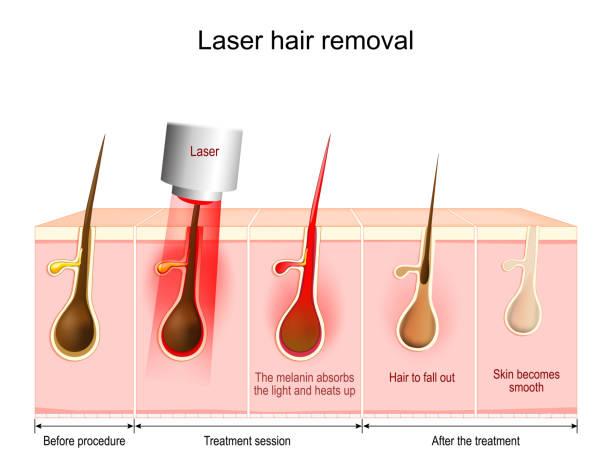
The device and settings should be selected for skin phototype, tanning, hair pigment and caliber, density, zone of the hairline, cooling, and prior reactions—not device branding. The principal laser categories are alexandrite, diode, and Nd:YAG; IPL is broad-spectrum light rather than a laser. Comparative evidence does not establish one best modality for every skin type or hairline.
- Long-pulsed alexandrite, 755 nm — Often used for dark terminal hairs in lighter-to-medium skin tones. Strong melanin absorption can produce effective follicular heating but also requires greater caution with recent tanning or deeper skin pigmentation.
- Diode laser, commonly 810 nm — A common option whose broader hair-reduction outcomes overlap with alexandrite and Nd:YAG. The treating clinician must set conservative parameters for a facial-border area rather than copying body-hair settings.
- Long-pulsed Nd:YAG, 1064 nm — Often considered for darker phototypes because the longer wavelength reduces epidermal melanin absorption. A study using skin-type-adjusted pulse durations and contact cooling found measurable reduction across Fitzpatrick I–VI after three sessions, with mostly transient adverse effects.
- IPL — Intense pulsed light can reduce hair but is not a laser. A systematic review in Fitzpatrick III–VI skin found no definitively optimal modality; lasers tended toward greater reduction than IPL, while long-pulsed Nd:YAG showed less post-inflammatory hyperpigmentation than IPL in included comparisons.
- Conservative mapping and test spot — The clinician maps the border while the patient is upright, photographs it, marks hairs to preserve, and can treat a small area first. This is especially important because post-treatment repair patients have reported dissatisfaction with rigid borders, poor placement, and temporal gaps in hairline-specific retrospective research.
Why Visit Korea for Hairline Laser Hair Removal?
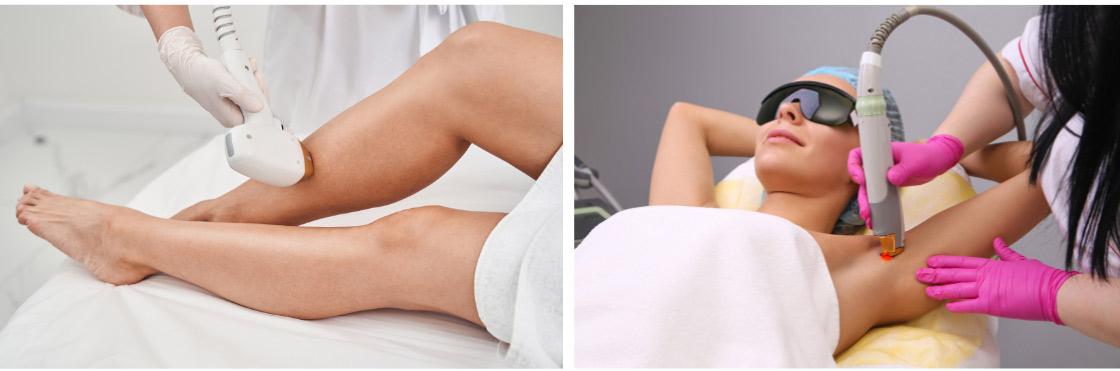
Korea can be practical for a single outpatient hairline session when communication, mapping, documentation, and aftercare planning are clear before travel. It is not evidence that treatment in Korea gives superior hair reduction or lower complication rates. No credible comparative clinical research shows better hairline laser outcomes in Korea than elsewhere.
- International-patient due diligence — Use Korea’s registered medical-institution system as one starting point when checking an overseas provider, then independently confirm who will assess the hairline, operate the device, and handle complications.
- Medical-device oversight — Korea’s Ministry of Food and Drug Safety describes a national medical-device regulatory framework. Regulatory oversight does not prove that a particular device, setting, or clinic is right for a particular skin type.
- What to request before booking — Ask for an English consultation, the proposed laser category and wavelength, mapping photographs, whether a test spot is planned, the policy for delayed reactions, and a written record of settings after treatment.
- Evidence limitation — Hairline laser shaping itself has little controlled research. There is no validated universal hairline template or proven rule for how many fine transition hairs to preserve.
Key Information for International Patients
- Minimum stay — Plan 1–2 days for a consultation, upright conservative mapping, a possible test spot, and one treatment. Admission is not expected.
- Course length — A full course cannot be completed on a short trip. Sessions are generally separated by several weeks because follicles cycle through growth phases; arrange return visits or coordinated treatment and follow-up at home.
- Flight timing — Keep 24–48 hours after a first session before a long flight when possible. This allows assessment of early blistering, marked swelling, or an unexpected pigmentary reaction.
- Downtime and itinerary — There is usually no formal downtime. Warmth, stinging, perifollicular redness, and mild swelling are common immediately after treatment and usually settle within hours to 1–2 days; avoid heat, sun, swimming, and strenuous exercise for 24–48 hours.
- Follow-up record — Leave with treated-zone diagrams, device/model, wavelength, settings, cooling method, baseline and post-treatment photographs, aftercare instructions, complication contact details, and the recommended next-session interval.
- Remote review — Arrange a photo check at about 48–72 hours if the clinic offers one. Seek assessment from a local dermatologist after returning home for significant delayed reactions.
Travel note: A short visit suits one conservative session, not a rushed attempt to complete a series or aggressively reshape the hairline before departure.
Which Are the Best Clinics in Korea for Hairline Laser Hair Removal?
Listed below are some of the best clinics in Korea for hairline laser hair removal.
1. Three Wishes Clinic - Myeongdong
You may consider Three Wishes Clinic - Myeongdong for hairline laser hair removal if you want a laser-based approach to long-term unwanted-hair reduction: the clinic describes laser hair removal as using targeted energy to destroy follicles and notes that it can be used on almost all body areas. Because the hairline is a precise facial area, your treatment plan should confirm suitability and the intended hairline boundaries.
- URL: Three Wishes Clinic - Myeongdong Website
- Location: Jung-gu, Seoul
- Laser hair removal:
- Uses targeted laser energy intended to destroy hair follicles for long-lasting reduction of unwanted hair.
- Described as suitable for almost all body areas; the source does not specify a dedicated hairline protocol.
- Related appearance services:
- Offers hairline and scalp microblading, a semi-permanent pigment technique intended to create the appearance of a fuller hairline or conceal thinning areas.
- Also provides CO2 laser resurfacing, chemical peels, skin care treatments, and Rejuran Healer injections.
2. Cheongdam Oracle Dermatology & Plastic Surgery Clinic
Cheongdam Oracle Dermatology & Plastic Surgery Clinic offers personalized cosmetic and dermatologic treatment plans, with services that include laser resurfacing and hair-restoration options such as hair transplant and scalp micropigmentation. The available information does not specifically confirm hairline laser hair removal, so you should verify whether this treatment is offered and whether it suits your hairline goals.
- URL: Cheongdam Oracle Dermatology & Plastic Surgery Clinic Website
- Location: Gangnam-gu, Seoul
- Relevant hair-focused options:
- Hair transplant relocates follicles to thinning or balding areas.
- Scalp micropigmentation is described as a cosmetic tattoo that creates the look of fuller hair in thinning or balding areas.
- Skin and laser services:
- Laser resurfacing is offered to improve texture and address wrinkles, scars, and blemishes.
- Chemical peels, microneedling, and HydraFacial are also listed among the clinic’s skin treatments.
3. Abijou Clinic - Myeongdong Branch
You may consider Abijou Clinic - Myeongdong Branch if you want laser hair-removal options delivered within a broad non-surgical aesthetic practice: the clinic lists laser hair removal for women and men, including beard-line and shaving-line areas, with combined-treatment packages and soothing follow-up care. Hairline laser hair removal is not specifically listed, so you should confirm availability and whether the clinic can tailor treatment to your desired hairline.
- URL: Abijou Clinic - Myeongdong Branch Website
- Location: Jung-gu, Seoul
- Laser hair-removal services:
- Lists laser hair removal for women and men.
- Named treatment areas include the underarms, upper lip, calves, arms, lower arms, beard line, and shaving line.
- Offers combined-treatment packages and soothing follow-up care.
- Skin care options:
- Provides aqua peel, scaling, vitamin management, laser toning, pico toning, Fraxel, Picoproxel, and acne-focused treatments.
- Offers customizable skin-care packages for concerns such as dead skin cells and blackheads.
Hairline Laser Hair Removal From Start to Finish
- Remote consultation and photos — Send unfiltered, well-lit frontal and temporal photographs. Disclose previous laser, IPL, electrolysis, tanning, pigment changes, scarring or keloids, cold sores, hair-loss history, endocrine symptoms, pregnancy possibility, and all medicines and supplements. Confirm English-language or virtual consultation availability.
- Treatment-goal review — Clarify whether the goal is removal of selected hairs or correction of a genuinely high, receding, or low-density hairline. Laser hair removal does not restore density or advance a receding hairline.
- In-person assessment and mapping — The clinician examines skin type, tanning, hair characteristics, scalp and hair-loss pattern, active skin disease, moles, and the proposed line. Mapping is done upright; photographs and explicit markings identify hairs to preserve.
- Consent and test spot — Discuss incomplete reduction, uneven regrowth, pigment change, burns, scarring, herpes reactivation, paradoxical hypertrichosis, maintenance, and unnatural-border risk. A small test area is reasonable for higher-risk skin or a first hairline treatment.
- Skin preparation — Clip or shave hairs only as directed, cleanse the area, and remove makeup, oils, hair fibers, and styling products from the treatment edge. Local or general anesthesia and fasting are not normally needed; a clinic-directed topical anesthetic can be used.
- Laser treatment — Protective eyewear is mandatory. Cooling is applied as appropriate, then pulses are delivered only inside the agreed border. The sensation is usually brief heat or elastic-band-like snaps. The laser portion is short, while consultation, mapping, photography, and observation add time.
- Same-day discharge — The clinic checks the immediate skin response and provides aftercare. No hospital stay, companion, or special transport is normally necessary after an uncomplicated session.
- Early recovery and remote follow-up — Redness and follicular swelling settle over hours to 1–2 days. Treated hairs shed over days to weeks; this is expected and not immediate treatment failure. Send agreed photographs at 48–72 hours and arrange the next session several weeks later.
Alternatives to Hairline Laser Hair Removal
Laser is a reduction method for pigmented hairs across a defined area. Choose a more precise nonsurgical option for isolated or nonpigmented hairs, and consider surgical or camouflage options when the real goal is adding density, lowering a high hairline, or disguising its appearance.
Electrolysis
- Best use — Useful for a small, highly precise hairline zone and white, gray, red, blond, or fine hairs that lack enough melanin for reliable laser targeting.
- Tradeoff — It is slower and strongly operator-dependent, but can offer follicle-by-follicle control at a delicate transition edge.
Facial Laser Hair Removal
- Best use — Consider facial laser hair removal when unwanted pigmented hair extends beyond the frontal or temporal hairline.
- Tradeoff — Facial and neck locations require particular caution for paradoxical hypertrichosis. A systematic review and meta-analysis estimated pooled prevalence at 3% overall, with facial/neck location associated with risk; the evidence was mostly observational and highly heterogeneous.
Hairline Correction or Transplantation
- Best use — Consider hairline correction when the aim is to add density or advance a genuinely high or receding hairline.
- Tradeoff — This is a surgical density-restoration approach, not hair removal. Future hair loss, donor supply, and the long-term design must be assessed.
Forehead Reduction
- Best use — Forehead reduction is a surgical option for selected patients seeking a lower frontal hairline.
- Tradeoff — It is not interchangeable with laser shaping and involves incision, scar, healing, and surgical recovery considerations.
Hairline Microblading
- Best use — Hairline microblading can camouflage sparse-looking areas without removing hair.
- Tradeoff — It changes appearance through pigment rather than follicle reduction. Discuss existing pigment before laser treatment in the same field.
How Can I Prepare for Hairline Laser Hair Removal?
- Sun and tanning — Avoid deliberate sun exposure, tanning beds, and self-tanner before treatment. Recent tanning can require deferral because it changes pigment-risk assessment.
- Hair removal methods — Stop waxing, plucking, threading, depilatory creams, and electrolysis in the planned area for several weeks unless the treating clinician gives different instructions. These methods remove the hair needed as a laser target.
- Trimming and clean skin — Shave or trim only as instructed. Arrive with clean skin free of makeup, sunscreen residue, oils, fragranced products, hair fibers, and styling products at the hairline.
- Medication disclosure — Provide a complete list of prescription medicines, over-the-counter products, supplements, and topical treatments, especially medicines associated with photosensitivity or healing concerns. Do not independently stop prescribed medicines.
- Isotretinoin review — Discuss current or recent isotretinoin with the prescriber and treating clinician. An ASDS consensus statement found insufficient evidence to require delaying nonablative hair-removal lasers solely because of current or recent isotretinoin exposure.
- Medical disclosure — Report cold sores, eczema, psoriasis, vitiligo, keloid tendency, pigment change after injury, prior laser reactions, suspicious moles, hair loss, pregnancy possibility, and symptoms of hormonal imbalance.
- Fasting and transport — Routine fasting is not required. A companion and special transport are generally unnecessary after an uncomplicated session.
- Flexible travel plan — Keep the first 24–48 hours after a first session free of intensive sun, sauna visits, swimming, or major outdoor activities, and avoid booking an immediate long-haul departure.
Travel note: Send photos and agree on the proposed hairline before flying, but make final mapping decisions in person while upright.
Confirm the treating clinic’s individual preparation requirements; they take precedence over general guidance.
Aftercare Advice
Protect the treated hairline from heat, friction, and sun while the immediate inflammatory response settles.
- Cool and leave intact — Use a cool compress for warmth or swelling; do not place ice directly on skin. Do not scratch, rub, pick, or pull treated hairs.
- First 24–48 hours — Avoid strenuous exercise, very hot water, saunas, steam rooms, swimming, exfoliating acids, retinoids, benzoyl peroxide, fragranced products, and scalp products that can transfer onto the treated edge.
- Sun protection — Avoid direct sun exposure and use broad-spectrum SPF 50 on exposed treated skin once the clinic confirms it is appropriate. Do not tan between sessions.
- Hair management — Do not wax, pluck, thread, or use depilatory creams between treatments. After redness and tenderness settle, gentle shaving or trimming is generally acceptable if the clinic agrees.
- Expected course — Perifollicular redness and swelling usually resolve within hours to 1–2 days. Treated hairs often shed over days to weeks; assess reduction from regrowth and standardized photographs at the next planned interval, not in the first few days.
- Warning signs — Contact the clinic promptly for increasing pain, redness worsening after day one, blisters, crusting, pus, fever, spreading rash, cold-sore outbreak, marked swelling, persistent pigment change, or unexpectedly dense/coarse surrounding hair. Seek urgent local care for eye pain, vision change, light sensitivity, or suspected ocular exposure.
Follow the treating doctor’s specific instructions and contact the clinic promptly when anything appears wrong.
Frequently Asked Questions
Related Blogs
Explore the True Cost: Facial Laser Hair Removal in Korea vs. USA, Turkey, Mexico, and Thailand
Discover the cost-effective world of facial laser hair removal in Korea, known for its advanced technology and competitive pricing. This article explores price ranges, factors influencing costs, and why Korea is a top destination for this popular cosmetic procedure.
Updated: Oct 21, 2026

Discovering Smooth Skin in Korea: A Global Cost Comparison for Body Laser Hair Removal
Discover the affordability and high-quality services of body laser hair removal in Korea, a popular destination for beauty treatments. Explore cost-effective options and advanced technology that provide smooth, long-lasting results.
Updated: Oct 21, 2026
Abdominal Laser Hair Removal in Korea: Methods, Recovery, Sessions and Travel Planning
Abdominal laser hair removal uses laser or IPL pulses with cooling to reduce dark, coarse abdominal hair over 4–8 sessions spaced several weeks apart. The article covers candidate screening, preparation, aftercare, travel planning for Korea, device options, and warning signs requiring clinical assessment.
Updated: Oct 18, 2026
Chest Laser Hair Removal in Korea: Methods, Recovery, Treatment Course, and Travel Planning
Chest laser hair removal uses targeted light pulses to reduce dark, coarse hair over 4–8 sessions spaced about 6–8 weeks apart, with device selection based on skin tone, hair characteristics, and prior reactions. International patients can plan 1–2 days for consultation and treatment, obtain an English treatment summary, and avoid sun, heat, heavy exercise, and friction while the skin recovers.
Updated: Oct 18, 2026
Clinics offering Hairline Laser Hair Removal

Cheongdam Oracle Dermatology & Plastic Surgery Clinic in Korea: Offering Advanced Skin, Anti-Aging, Body Contouring Treatments and More
Seolleung

VandS Dermatology Clinic - Dongtan, Korea: Comprehensive Skin Care and Cosmetic Procedures for Youthful, Radiant Skin
Hwaseong

Ladyuro Women's Clinic in Korea: Premier Destination for Vaginal Rejuvenation and Aesthetic Enhancements
Sinsa

Personal Beauty GU Clinic Ilsan, Korea - Unveiling Hidden Beauty with Tailored Treatments and Advanced Cosmetic Procedures
Ilsan