
Medical Tourism Blog
Facial Laser Hair Removal in Korea: Methods, Recovery, Travel Planning and Risks
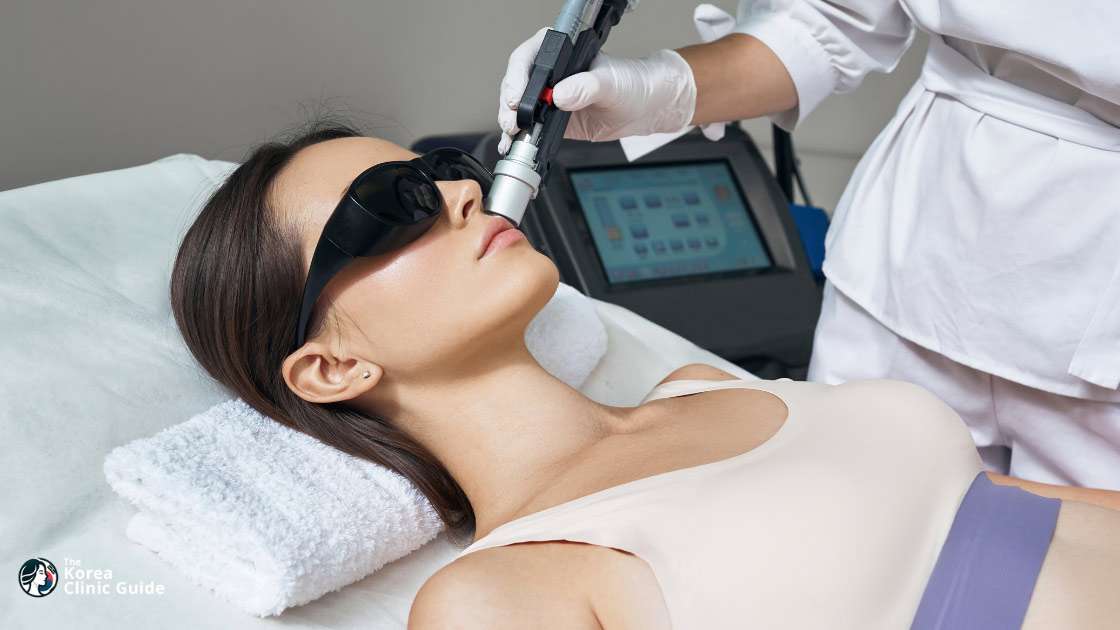
Table of contents
- Facial Laser Hair Removal at a Glance
- What Is Facial Laser Hair Removal?
- Who Is a Good Candidate for Facial Laser Hair Removal?
- How Is Facial Laser Hair Removal Performed?
- Why Visit Korea for Facial Laser Hair Removal?
- Key Information for International Patients
- Which Are the Best Clinics in Korea for Facial Laser Hair Removal?
- Facial Laser Hair Removal From Start to Finish
- Alternatives to Facial Laser Hair Removal
- How Can I Prepare for Facial Laser Hair Removal?
- Aftercare Advice
Considering treatment in Korea? Everything you need to know e.g. — how to avoid scams, visas, interpreters, recovery tips — in our Medical Tourism Master Guide. Plan with confidence in minutes, not weeks!
Last updated: August 2026
Facial Laser Hair Removal at a Glance
- What it does — A non-ablative light treatment that heats pigment in hair follicles to achieve long-term reduction—not guaranteed permanent removal. It works best on dark, coarse terminal hair of the upper lip, chin, jawline, cheeks, neck, or beard area.
- Course and longevity — Most people need at least 6 sessions, timed to visible regrowth and hair cycling. Facial hair can return, particularly when PCOS or other hormonal stimulation is present, so maintenance treatment may be needed.
- Recovery — Redness, warmth, stinging, and follicular swelling are common but usually resolve within hours to 1–2 days; treated hairs typically shed over 1–3 weeks. Burns, blisters, and pigment changes are uncommon but can prolong recovery.
- Key limitation — White, gray, blond, red, and very fine hairs respond poorly because lasers target melanin; electrolysis is usually the more durable option for these hairs. A test spot is particularly useful for Fitzpatrick IV–VI skin, recent tanning, or prior pigment change.
- Travel planning — A consultation and uncomplicated session can fit into 1–2 days, but a single Korea trip will not complete the usual course. For flying, a conservative CDC-cited benchmark is waiting 7–10 days after facial laser or cosmetic procedures, or about 8–11 days in Korea including treatment.
- Korea-specific check — Korea has regulated device categories including 755-nm alexandrite and 1,064-nm Nd:YAG platforms, but destination alone does not establish better outcomes. Confirm in writing whether it is laser or IPL, the wavelength and settings, the responsible clinician, operator role, and complication-contact plan.
What Is Facial Laser Hair Removal?
Facial laser hair removal uses targeted light energy to reduce unwanted facial hair by heating pigment in hair follicles. It aims for long-term reduction of dark, coarse hair and can lessen shaving-related irritation and ingrown hairs, though hormonal regrowth can require maintenance. It is a non-surgical, non-ablative light-based procedure.
Who Is a Good Candidate for Facial Laser Hair Removal?
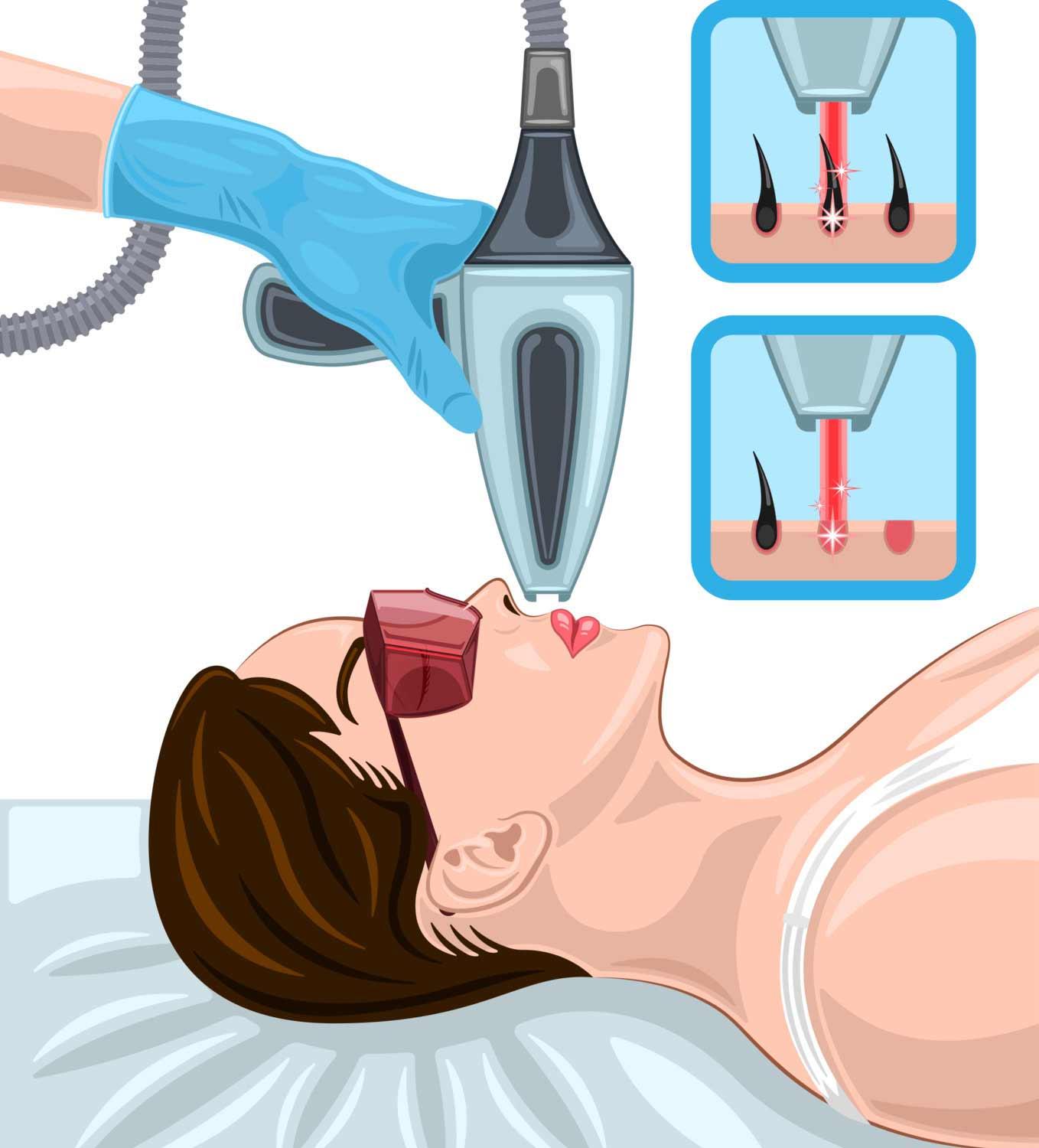
- Dark, coarse facial hair — Best candidates want long-term reduction of dark terminal hair on the upper lip, chin, jawline, cheeks, sideburns, neck, or beard area.
- Shaving irritation or ingrown hairs — Laser reduction can be useful when frequent shaving causes bumps, irritation, or ingrown hairs in the beard or neck.
- Clinically assessed hirsutism — People with PCOS or another assessed androgen-related condition can reduce existing coarse hair, although hormonal stimulation often means more sessions and maintenance.
- Realistic long-term goals — Laser reduces hair over a course of treatment; it does not guarantee permanent removal of every follicle. The AAD notes that six or more treatments are often needed and facial hair can regrow because of hormones.
Defer elective treatment during pregnancy, with a recent tan, sunburn, self-tanner, active infection, open skin, severe dermatitis, active cold sores, or a substantial inflammatory acne flare in the treatment zone. White, gray, blond, red, and very fine vellus hair are poor targets because melanin-dependent devices need pigment in the hair; electrolysis is generally more suitable for these hairs. A history of laser burns, prolonged post-inflammatory pigment change, hypopigmentation, keloids, or an unstable pigmentary disorder requires conservative individual assessment and often a test spot. New, rapidly progressive facial hair—especially with irregular periods, acne, scalp-hair thinning, virilization, galactorrhea, infertility, or androgenic medication use—needs medical assessment for an endocrine cause before or alongside cosmetic treatment.
How Is Facial Laser Hair Removal Performed?
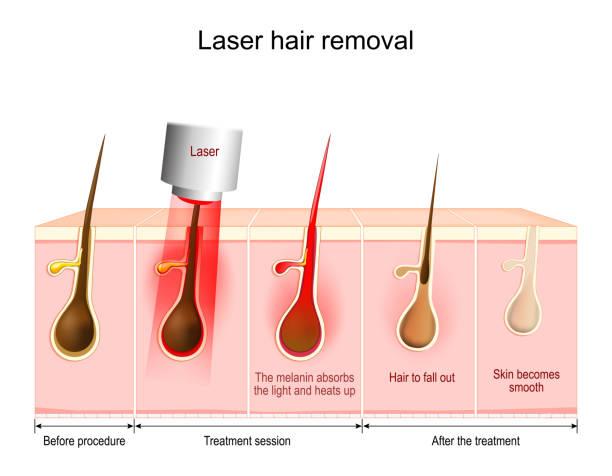
Facial laser hair removal is not one fixed protocol. The wavelength, pulse settings, cooling method, hair caliber, skin pigmentation, and recent sun exposure determine the safest approach.
- Alexandrite laser, 755 nm — Strong melanin absorption can make this an effective choice for coarse dark hair in lighter skin types. Korea's MFDS has documented a hair-removal platform using 755-nm alexandrite and 1,064-nm Nd:YAG wavelengths; this confirms a regulated device category, not a particular clinic's protocol or results.
- Diode laser, about 800–810 nm — A common hair-reduction option balancing follicular penetration and melanin absorption. In a 2024 prospective study of 73 people with facial hirsutism and Fitzpatrick III–V skin, six monthly 805-nm diode sessions significantly reduced measured hair outcomes; pain, redness, and perifollicular swelling were the common effects.
- Long-pulsed Nd:YAG laser, 1,064 nm — Lower epidermal-melanin absorption often makes this a more conservative option when skin pigmentation or recent tanning raises pigment-injury concerns. It can be less efficient for some hair types and more uncomfortable.
- Cooling and test spots — Contact, air, cryogen-spray, or gel cooling helps comfort and epidermal protection but cannot compensate for unsuitable settings. For Fitzpatrick IV–VI skin, recent tanning, or prior pigment change, request a documented test spot and conservative initial settings.
- Laser versus IPL — IPL is broad-spectrum filtered light, not a laser. It can reduce hair for selected patients but is not interchangeable with every laser platform.
Why Visit Korea for Facial Laser Hair Removal?
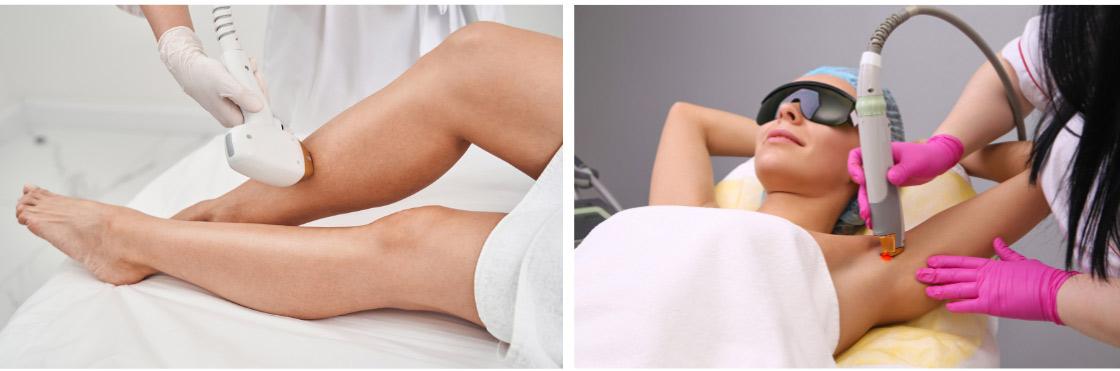
Korea has access to regulated laser-device categories relevant to facial hair reduction. The important clinical question is not the destination alone, but whether the individual clinic selects an appropriate wavelength, documents settings, and provides qualified oversight for your skin and hair profile.
- Relevant wavelength availability — The MFDS documentation of a 755-nm alexandrite/1,064-nm Nd:YAG platform with hair-removal indications supports the availability of clinically relevant device categories in Korea's regulated-device environment.
- Verify operator responsibility — Korea's Medical Service Act prohibits medical acts by people who are not medical personnel, subject to statutory exceptions. The reviewed provision does not give international patients a simple answer on who independently operates every cosmetic laser device or what supervision applies in each facility. Obtain the responsible clinician's name, the operator's role, and the escalation process in writing.
- Continuity matters more than a single visit — Facial laser reduction requires a course, and hormonally influenced hair commonly needs maintenance. Ask each clinic for the device model, laser versus IPL status, wavelength, spot size, fluence, pulse duration, cooling method, treated zones, and written aftercare so a clinician at home can continue treatment if needed.
- Evidence limit — No reliable comparative evidence identified shows that facial laser hair removal in Korea delivers better durability or lower complication rates than treatment elsewhere. A systematic review found only five eligible long-term randomized trials involving 223 participants, with variable outcomes and comparatively lower reductions in facial-hair studies.
Key Information for International Patients
- Minimum stay — A consultation and uncomplicated single session can usually fit into 1–2 days. This is not a complete treatment course: six or more sessions are often needed, and facial hormonal regrowth is common.
- Flight planning — The CDC cites an American Society of Plastic Surgeons recommendation to wait 7–10 days after laser or cosmetic procedures to the face, eyelids, or nose before flying. This is a conservative general facial-procedure benchmark, not laser-hair-removal-specific aviation evidence. Plan about 8–11 days in Korea when following it, particularly after a first session, beard-area treatment, a high-risk skin type, or unexpected swelling.
- Do not fly with complications — Obtain review before departure for blistering, a suspected burn, severe swelling, infection, significant pigment change, eye symptoms, or a need for sedating medicine.
- Itinerary impact — There is usually no formal downtime, but redness, warmth, stinging, and follicular swelling commonly last hours to 1–2 days. Avoid scheduling intense outdoor sightseeing, beach activities, saunas, or strenuous exercise immediately after treatment.
- Remote follow-up — Secure an English-language contact route before treatment and send consistent-lighting photographs if a reaction develops. Carry the treatment record and written aftercare when leaving Korea.
Travel note: A same-day flight is not automatically ideal simply because there is no incision. Keep flexible travel plans until the treated facial skin has settled and the clinic confirms that no complication needs in-person review.
Which Are the Best Clinics in Korea for Facial Laser Hair Removal?
Listed below are some of the best clinics in Korea for facial laser hair removal.
1. Three Wishes Clinic - Myeongdong
If you want facial laser hair removal, you can consider this clinic for a straightforward laser-based approach to long-lasting hair reduction: it uses targeted laser energy to destroy hair follicles, helping you reduce unwanted facial hair with a minimally invasive treatment offered alongside a broad menu of skin-focused care.
- URL: Three Wishes Clinic - Myeongdong Website
- Location: Jung-gu, Seoul
- Procedure details:
- Laser hair removal uses targeted laser energy to destroy hair follicles.
- The treatment is described as providing long-lasting reduction of unwanted hair.
- It is offered for almost all body areas, which supports facial as well as broader hair-removal needs.
- Related skin treatments:
- CO2 laser resurfacing is available for wrinkles, acne scars, and skin texture concerns.
- PDT acne treatment targets acne-causing bacteria and inflammation.
- Facial peels are offered for uneven tone, sun damage, fine lines, and mild scarring.
- Rejuran Healer is available to support skin regeneration and improve texture and elasticity.
- Customized skin care treatments focus on cleansing, hydration, and maintenance.
- Additional notes:
- The clinic emphasizes personalized medical beauty care.
- Safety and satisfaction are presented as core priorities.
- If you are planning a wider facial grooming or aesthetic visit, services also include Botox, fillers, thread lifting, and semi-permanent makeup options such as eyebrow and lip microblading.
2. Cheongdam Oracle Dermatology & Plastic Surgery Clinic
If you are comparing options for facial laser hair removal, this clinic may be worth considering for its dermatology-focused setting, its use of advanced facial laser and skin treatments, and its stated emphasis on personalized treatment plans. The provided information does not specifically list laser hair removal, but it does show experience with facial laser-based care and a broad range of non-surgical aesthetic services.
- URL: Cheongdam Oracle Dermatology & Plastic Surgery Clinic Website
- Location: Gangnam-gu, Seoul
- Related skin treatments:
- Laser resurfacing is offered to improve skin texture and address wrinkles, scars, and blemishes.
- Chemical peels are available for sun damage, pigmentation, and mild scarring.
- Microneedling is used to stimulate healing and collagen production for texture and firmness.
- HydraFacial provides cleansing, exfoliation, and hydration in a multi-step skin treatment.
- Additional notes:
- The clinic states that treatment plans are personalized for each person.
- Its services span dermatology and plastic surgery, which may be useful if you want to combine hair-removal planning with broader facial aesthetic consultation.
- Other non-surgical facial options listed include Botox, dermal fillers, and thread lifting.
3. Mi and Mi Clinic - Gangnam
If you want facial laser hair removal, you can expect a clinic that specifically offers laser treatment for permanent reduction of unwanted hair by targeting the hair follicle, with the added benefit of a broader skin and laser practice if you also want help with pigmentation, acne, scars, or overall skin rejuvenation. The clinic also states that its laser hair removal is suitable for all skin types.
- URL: Mi and Mi Clinic - Gangnam Website
- Location: Seocho-gu, Seoul
- Procedure details:
- Laser hair removal is offered for permanent reduction of unwanted hair.
- The treatment works by targeting the hair follicle to impair future hair growth.
- The clinic states that this service is suitable for all skin types.
- Related skin treatments:
- Laser skin treatments are available for pigmentation, scarring, and overall skin rejuvenation.
- Pigmentation treatment uses laser and light-based therapies to address dark spots and melasma.
- Acne laser therapy targets bacteria and inflammation while helping control oil production.
- Scar treatment uses laser and microneedling techniques to support collagen production and skin renewal.
- Additional notes:
- The clinic describes its care as personalized and technology-driven.
- If you want to combine facial hair removal with other cosmetic treatments, services also include Botox, fillers, lifting procedures, and regenerative options such as exosome therapy and stem cell therapy.
Facial Laser Hair Removal From Start to Finish
- Remote enquiry and screening — Send unfiltered daylight photographs, intended facial zones, hair-removal history, skin-tone and tanning history, pregnancy possibility, cold-sore history, medicines, supplements, topical products, endocrine diagnoses, and prior laser settings when known. Confirm whether English or virtual consultation is available.
- In-person assessment — The clinician distinguishes coarse terminal hairs from fine vellus hairs, reviews pigment-risk factors and current skin conditions, discusses realistic reduction rather than guaranteed permanent removal, and selects the proposed wavelength and settings.
- Test-spot decision — For darker skin, recent sun exposure, prior pigment change, or a previous laser complication, ask for a documented test spot before a full facial session. The clinic should explain when it will assess the spot reaction.
- Treatment-area preparation — Arrive with clean, makeup-free skin and no perfume, fragranced aftershave, or irritating skincare residue. The clinic maps the areas and trims or shaves only as directed; waxing, threading, tweezing, and epilation remove the follicular target and should not be used during the course.
- Eye protection and treatment — Protective eye shields are essential. Awake treatment uses cooling rather than routine anesthesia or sedation. The handpiece delivers pulses across the mapped zones; brief snapping, heat, or stinging is common. Small facial areas generally take minutes rather than hours.
- Discharge — The clinic provides cooling and aftercare. Obtain a written record listing device manufacturer and model, laser versus IPL, wavelength, spot size, fluence, pulse duration, cooling method, areas treated, and any reaction.
- Recovery and repeat-course planning — Redness and perifollicular swelling generally settle within hours to 1–2 days. Treated hairs often shed over 1–3 weeks. Schedule later treatment around visible regrowth and hair cycling rather than assuming one universal interval.
- Overseas follow-up — Photograph the area under consistent lighting and contact the clinic promptly for severe pain, blistering, crusting, pus, expanding redness, persistent pigment change, or any eye symptom. Share your treatment record with the clinician continuing care at home.
Alternatives to Facial Laser Hair Removal
The best alternative depends on hair color, density, speed, and whether the goal is temporary grooming or durable follicle-by-follicle removal. Laser is efficient for broad areas of dark coarse hair; alternatives are often better for light hairs, isolated residual hairs, or when an ongoing laser course is impractical.
Electrolysis
- Best use — Durable follicle-by-follicle treatment for white, gray, blond, red, or isolated residual hairs that lack enough melanin for laser targeting.
- Tradeoff — It is slower than laser for a broad beard, jawline, or cheek area and is highly operator-dependent.
IPL
- Best use — Broad-spectrum filtered light can reduce hair in selected candidates.
- Tradeoff — IPL is not a laser and should not be presented as equivalent to every alexandrite, diode, or Nd:YAG system. Read about IPL.
Medical management of hirsutism
- Best use — Clinician-directed hormonal or anti-androgen management can address ongoing androgen-driven new growth in PCOS or other endocrine conditions.
- Tradeoff — It does not remove existing visible coarse hair and commonly complements laser or electrolysis rather than replacing it.
Temporary hair removal
- Best use — Shaving, trimming, bleaching, threading, waxing, tweezing, and depilatory creams provide short-term control.
- Tradeoff — Avoid root-pulling methods, including waxing, threading, tweezing, and epilation, during an active laser course because they remove the hair target.
How Can I Prepare for Facial Laser Hair Removal?
- Sun and tanning — Avoid tanning beds, sunburn, and self-tanner in the treatment area. Postpone treatment until skin returns to its usual untanned color; extra epidermal melanin raises burn and pigment-change risk.
- Hair removal — Stop waxing, plucking, threading, epilating, and other root-pulling methods before and throughout the active course. Shaving or careful trimming is generally compatible, but follow the clinic's specific timing instructions.
- Medicines and supplements — Disclose every prescription medicine, over-the-counter product, supplement, hormonal treatment, retinoid, acne product, and possible photosensitizer. Do not independently stop anticoagulants, hormone therapy, isotretinoin, or any prescribed medicine; the treating and prescribing clinicians must decide whether a pause or setting change is appropriate.
- Skin condition — Report cold sores around the lips, active acne, dermatitis, infection, open skin, prior laser burns, keloid tendency, and prior hyperpigmentation or hypopigmentation. Ask whether preventive antiviral treatment is appropriate for recurrent herpes labialis.
- Treatment-day skin — Attend with no makeup, sunscreen residue, perfume, fragranced aftershave, or active irritating skincare on the target area.
- Fasting and transport — Routine treatment is performed awake without an incision, so fasting is not normally required and a companion is not usually necessary. Do not drive after sedating anti-anxiety medicine, opioid pain medicine, or another sedating procedure.
- Travel flexibility — Book treatment early enough to allow assessment of the skin reaction before departure, and avoid a fixed same-day flight. Keep accommodation and flight changes flexible if a test spot, swelling, or complication requires review.
Travel note: For Fitzpatrick IV–VI skin, recent sun exposure, or a history of pigment change, request a test-spot plan, written aftercare, documented parameters, and a remote contact method before booking.
Confirm the treating clinic's individualized medicine, skincare, shaving, and travel requirements; those instructions take precedence over general guidance.
Aftercare Advice
Protect the treated facial skin from heat, friction, irritation, and sun while redness or follicular swelling is present.
- Cool and soothe — Use a cool compress and bland fragrance-free skincare only if the clinic recommends them. Redness, warmth, stinging, and perifollicular swelling usually settle within hours to 1–2 days.
- Avoid heat and friction — Avoid strenuous exercise, hot showers, saunas, steam rooms, rubbing, exfoliation, retinoids, exfoliating acids, benzoyl peroxide, and heavy makeup until tenderness and visible irritation resolve.
- Sun protection — Keep the area out of direct sun and use broad-spectrum SPF 50 when exposure cannot be avoided. Mayo Clinic advises avoiding sun exposure to treated skin for six weeks or as directed by the treating professional.
- Shedding and grooming — Hairs can appear to remain initially, then shed over about 1–3 weeks. Do not pluck, wax, thread, or epilate them; shave or trim only once tenderness has settled and the treating clinician permits it.
- Warning signs — Seek prompt medical review for worsening or severe pain, widespread blisters, ulceration, crusting, pus, expanding redness, fever, significant swelling, persistent or worsening pigment change, or any red eye, eye pain, light sensitivity, or vision change.
Follow the treating doctor's specific instructions and contact the clinic promptly when anything appears wrong, especially before international travel.
Frequently Asked Questions
Related Blogs
Abdominal Laser Hair Removal in Korea: Methods, Recovery, Sessions and Travel Planning
Abdominal laser hair removal uses laser or IPL pulses with cooling to reduce dark, coarse abdominal hair over 4–8 sessions spaced several weeks apart. The article covers candidate screening, preparation, aftercare, travel planning for Korea, device options, and warning signs requiring clinical assessment.
Updated: Sep 22, 2026
Chest Laser Hair Removal in Korea: Methods, Recovery, Treatment Course, and Travel Planning
Chest laser hair removal uses targeted light pulses to reduce dark, coarse hair over 4–8 sessions spaced about 6–8 weeks apart, with device selection based on skin tone, hair characteristics, and prior reactions. International patients can plan 1–2 days for consultation and treatment, obtain an English treatment summary, and avoid sun, heat, heavy exercise, and friction while the skin recovers.
Updated: Sep 22, 2026
Arm Laser Hair Removal in Korea: Methods, Results, Travel Timing, and Aftercare
Arm laser hair removal uses selected laser wavelengths and cooling to reduce pigmented, coarse hair over spaced sessions, with maintenance sometimes needed. International patients can plan a 1–2 day stay, prepare by avoiding tanning and follicle-removing methods, and arrange follow-up and later sessions near home.
Updated: Sep 22, 2026
Upper Lip Laser Hair Removal in Korea: Methods, Recovery, Risks, and Travel Planning
Upper lip laser hair removal uses cooling and laser pulses to reduce dark, coarse hair over repeated sessions typically spaced 4–6 weeks apart, with maintenance often needed for facial growth. The article covers candidate screening, device selection, Korea travel planning, preparation, aftercare, warning signs, and alternatives such as electrolysis for light or fine hairs.
Updated: Sep 22, 2026
Clinics offering Facial Laser Hair Removal

Three Wishes Clinic - Myeongdong, Korea: Advanced Botox, Fillers, Laser, and Skin Treatments for Confidence and Care
Myeongdong

Cheongdam Oracle Dermatology & Plastic Surgery Clinic in Korea: Offering Advanced Skin, Anti-Aging, Body Contouring Treatments and More
Seolleung

VandS Dermatology Clinic - Dongtan, Korea: Comprehensive Skin Care and Cosmetic Procedures for Youthful, Radiant Skin
Hwaseong

Ppeum Clinic - Daegu: Superior Skin and Beauty Treatments in Korea for Aesthetic Enhancement
Dongseong-ro