
Medical Tourism Blog
Hairline Correction in Korea: Methods, Recovery, Travel Planning, and Risks
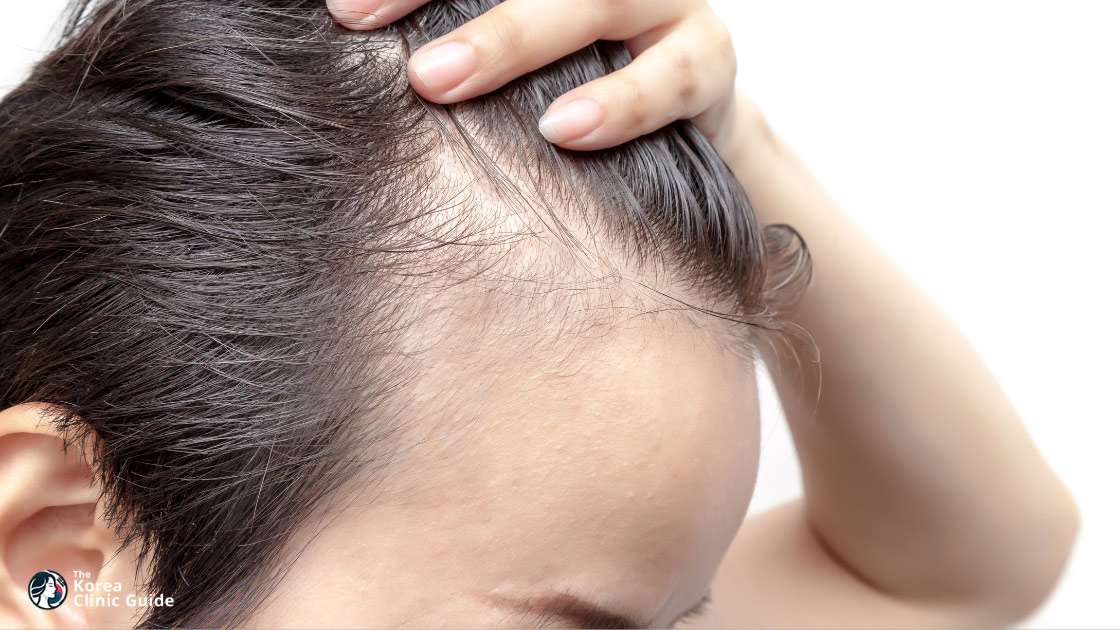
Table of contents
- Hairline Correction at a Glance
- What Is Hairline Correction?
- Who Is a Good Candidate for Hairline Correction?
- How Is Hairline Correction Performed?
- Why Visit Korea for Hairline Correction?
- Key Information for International Patients
- Which Are the Best Clinics in Korea for Hairline Correction?
- How Much Does Hairline Correction Cost in Korea?
- Hairline Correction From Start to Finish
- Alternatives to Hairline Correction
- How Can I Prepare for Hairline Correction?
- Aftercare Advice
Considering treatment in Korea? Everything you need to know e.g. — how to avoid scams, visas, interpreters, recovery tips — in our Medical Tourism Master Guide. Plan with confidence in minutes, not weeks!
Last updated: September 2026
Hairline Correction at a Glance
- Two surgical paths — Hairline correction may use a follicular-unit transplant to add hairs along the frontal edge or scalp advancement (forehead reduction) to move native hair-bearing scalp forward; the latter shortens forehead height immediately but leaves a hairline incision.
- Korea cost — In South Korea, hairline correction typically costs ₩3,500,000–₩9,000,000 (about US$2,600–$6,700), with the method, graft extent, anesthesia, and whether treatment is staged affecting the quote.
- Growth takes time — After a hairline transplant, implanted shafts often shed at 2–8 weeks, regrowth starts around month 3, visible improvement is assessed at 6–9 months, and maturation takes about 12 months; scalp advancement changes forehead height immediately.
- Best candidates — Suitable candidates generally have a stable high or uneven hairline, localized temple recession, stable traction loss or a healed scar, plus adequate donor hair for transplantation or enough scalp laxity for forehead reduction.
- Key limitation — Neither technique stops progressive hair loss or creates unlimited density; active inflammatory or scarring alopecia, active shedding, unstable pattern loss, or poor donor reserve should be stabilized and assessed before surgery.
- Plan the stay — International patients should plan 7–10 days in Korea after FUE transplantation and 10–14 days after FUT or scalp advancement, allowing for the early review, graft or incision teaching, and possible suture or staple removal.
- Korea-specific check — Verify that the facility is registered to treat foreign patients through Medical Korea, and obtain written confirmation of the named physician’s role in design, harvesting, recipient-site creation, graft placement, and follow-up; Korea has no proven universal outcome advantage.
What Is Hairline Correction?
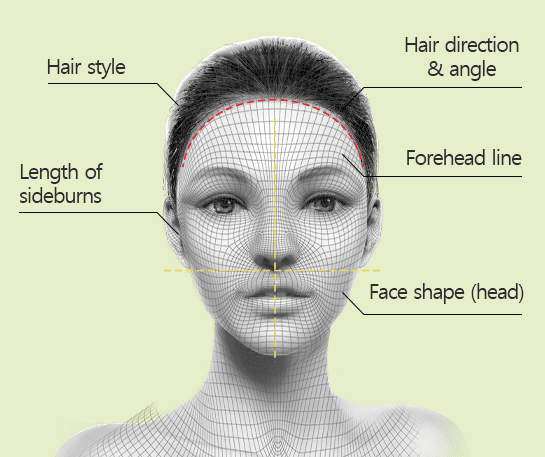
Hairline correction reshapes or lowers the frontal hairline using hair transplantation or, for selected patients, scalp advancement. It addresses a high, uneven, receding, scarred, or less gender-congruent hairline to improve facial balance and restore a natural-looking frame for the face. It is a surgical procedure, whether it involves transplanted follicles or an incision to advance the hair-bearing scalp.
Who Is a Good Candidate for Hairline Correction?
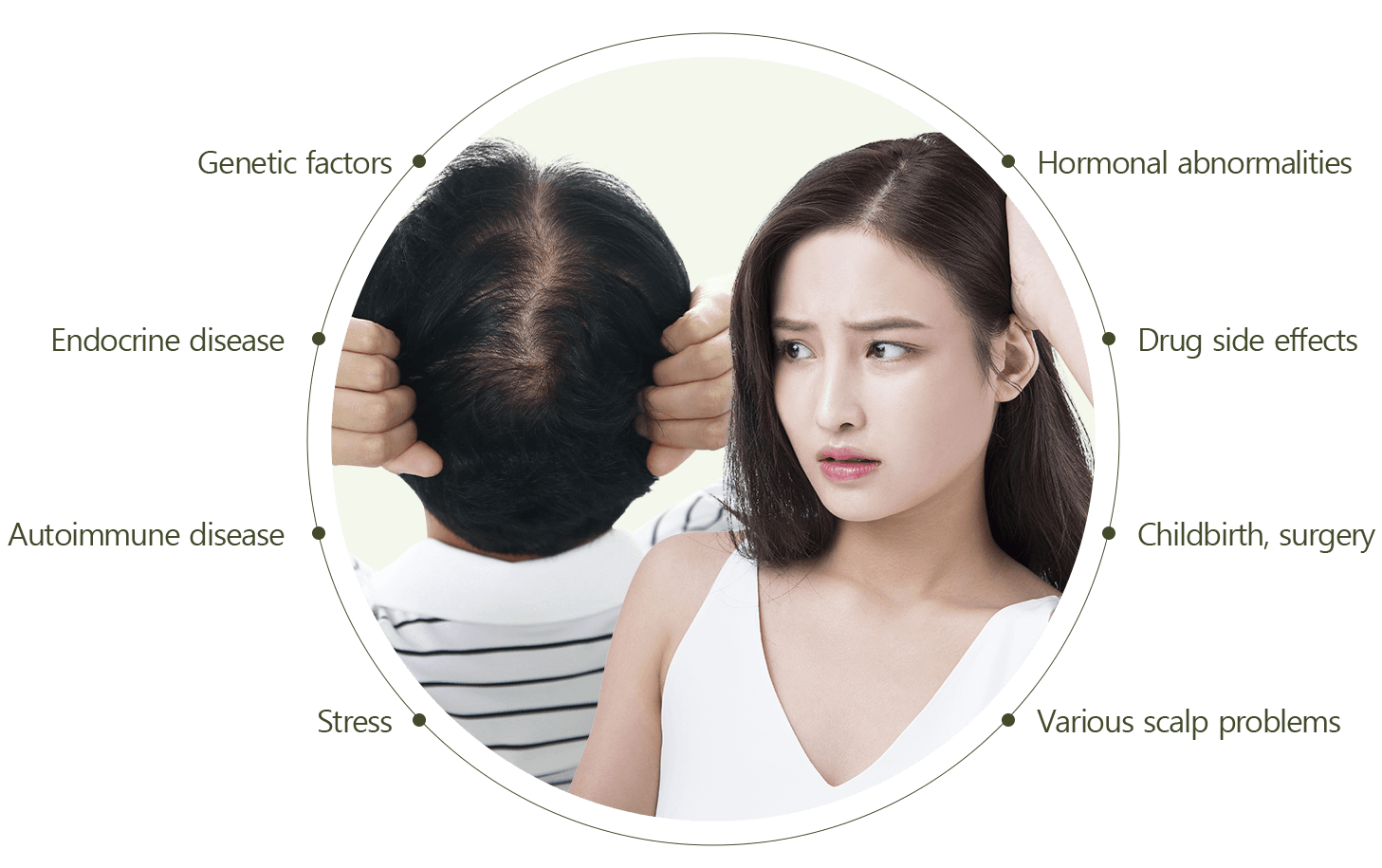
- Stable high or broad forehead — Good candidates want to lower the apparent hair-bearing edge because of a naturally high hairline, with adequate donor hair for transplantation or adequate scalp laxity for forehead reduction.
- Localized temple recession — A hairline transplant can rebuild frontotemporal angles or soften an uneven frontal contour when the surrounding native hair and donor zone are stable.
- Stable traction loss or scalp scar — Selected patients with a well-healed, non-inflamed scar or stable traction alopecia can be assessed for transplantation; scar blood supply and tissue thickness affect graft growth.
- Gender-affirming hairline shaping — Adults seeking a rounder, less recessed or more feminized hairline need an individualized design that considers facial proportions, hair texture, donor reserve, and likely future loss.
Hairline correction is unsuitable during active scarring or inflammatory alopecia, alopecia areata, unresolved acute shedding, active infection, or unstable progressive pattern loss. Diffuse unpatterned alopecia and substantial donor-area miniaturization leave no reliable safe donor zone; active disease should be stabilized and assessed by a dermatologist before surgery. Medical clearance is essential for poorly controlled hypertension or diabetes, cardiopulmonary disease, bleeding disorders, immunodeficiency, and anticoagulant or antiplatelet use. Scalp advancement is also unsuitable with insufficient scalp laxity, high scar risk, or a receding pattern likely to expose the incision; neither approach is appropriate for expectations of an unnaturally low, dense hairline that will not age or change.
How Is Hairline Correction Performed?
Hairline correction is not one standardized operation. Confirm whether the proposed procedure changes the hair-bearing edge with transplanted follicles or physically advances the scalp; these methods differ substantially in recovery, scarring, and when results appear.
- FUE hairline transplant — Follicular unit excision removes individual grafts from a shaved or selectively trimmed donor area using small punches. The surgeon places predominantly fine single-hair units at irregular angles along the frontal edge for a softer transition. FUE avoids a linear strip scar but leaves multiple small dot scars and can cause donor depletion or patchiness when overharvested.
- FUT/strip hairline transplant — Follicular unit transplantation removes a narrow donor strip, which is dissected into grafts and closed as a linear wound. It can efficiently provide grafts but leaves a linear scar and requires attention to wound tension, scar widening, numbness, and planned suture or staple removal.
- Scalp advancement/forehead reduction — The surgeon removes a measured band of forehead skin through a hairline incision and advances native hair-bearing scalp forward. Forehead shortening is immediate, but adequate scalp laxity is essential and the incision can remain visible or need later camouflage. A systematic review of four retrospective studies involving 801 patients reported a mean forehead reduction of 1.6 cm; this is not a guaranteed reduction for an individual patient.
- Staged combination — Scalp advancement followed months later by transplantation can soften an incision, improve temple shape, or camouflage focal incision-line alopecia. Transplantation alone is often preferable when avoiding a forehead incision or preserving flexibility for future hair loss is the priority.
Why Visit Korea for Hairline Correction?
South Korea has a formal system for institutions registered to attract foreign patients, which international visitors can use as a basic verification step. It does not establish that Korea produces better results than other countries. Hairline surgery still depends on diagnosis, conservative design, donor assessment, scalp laxity, and the named clinician’s actual role.
- Foreign-patient registration check — Use the official Medical Korea registered-institution system to verify the facility rather than relying only on a broker, social-media account, or marketing gallery.
- Clear clinician accountability — Before booking, request in writing who performs the consultation, anesthesia, donor harvesting, recipient-site creation, graft placement, early wash, and postoperative review. The International Society of Hair Restoration Surgery’s position statements underscore the importance of appropriate physician oversight in hair-restoration care.
- English documentation for travel care — Ask for an English treatment plan, the proposed graft range or advancement plan, medicine instructions, emergency contact route, and remote-follow-up schedule before arrival.
- Evidence limitation — No high-quality comparative research shows that South Korea universally delivers better hairline-transplant or forehead-reduction outcomes. A 2026 meta-analysis of forehead reduction reported a pooled 5.9% complication rate but stressed heterogeneous methods, mostly retrospective studies, and the need for standardized outcomes; its estimates are not individual risk predictions.
Key Information for International Patients
- Minimum stay — Plan at least 7–10 days in Korea after an FUE hairline transplant for the early review or wash and graft-protection teaching. Plan 10–14 days for FUT or scalp advancement, especially when in-person suture or staple removal is expected.
- Flight timing — There is no universal evidence-based post-procedure flying interval. Remain locally through the first review and fly only after the operating clinician confirms that swelling, the grafts or incision, prescriptions, and self-care plan are suitable for a long-haul flight.
- Early itinerary limits — Keep the first 7–10 days low contact and low effort after transplantation. Avoid beach visits, swimming, saunas, strenuous exercise, helmets, tight hats, and direct sun. Forehead reduction commonly causes bruising and swelling for about 1–2 weeks, making a flexible, quiet itinerary more realistic.
- Companion and transport — Arrange a companion for the first night after sedation or general anesthesia; the facility may require one. Book nearby accommodation, avoid crowded public transport immediately after surgery, and prepare to sleep with the head elevated if instructed.
- Remote follow-up — Obtain a photo-follow-up plan before departure. Transplant follow-up commonly assesses standardized photographs around months 1, 3, 6, 9, and 12; forehead-reduction follow-up should also review scar appearance and scalp sensation.
Travel note: Book changeable flights and accommodation. Fatigue, swelling, accidental head contact, limited ability to wash carefully, and distance from the operating team are practical reasons not to schedule an early departure.
Which Are the Best Clinics in Korea for Hairline Correction?
Listed below are some of the best clinics in Korea for hairline correction.
1. Seojin Plastic Surgery Clinic
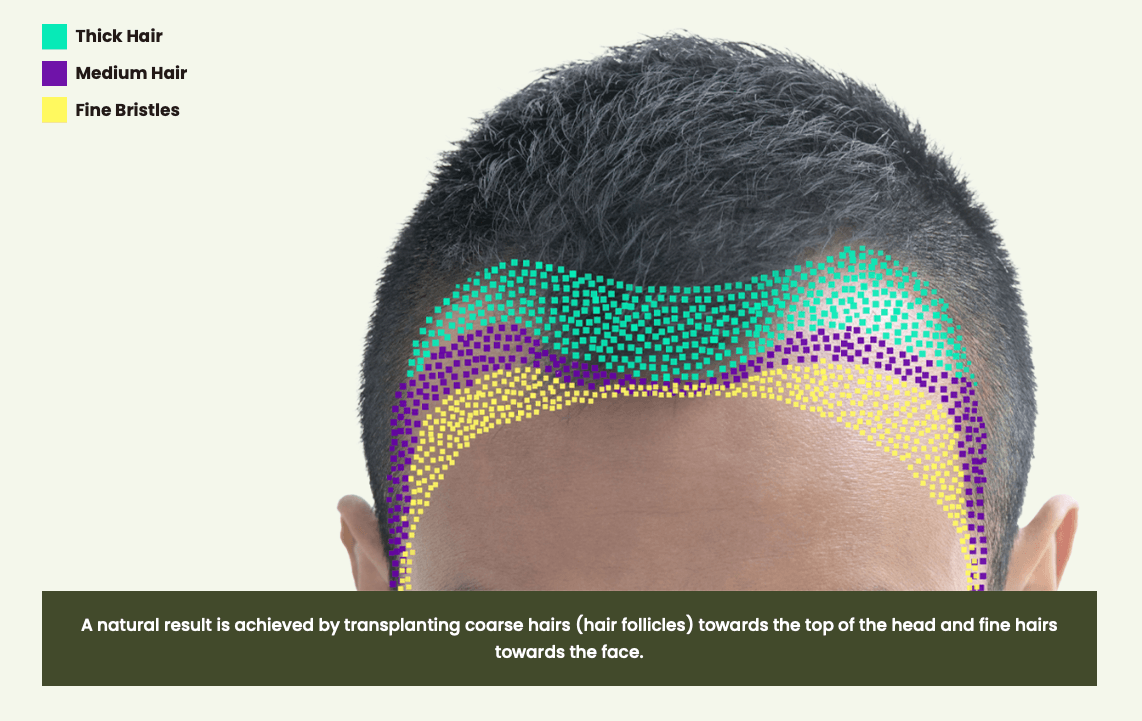
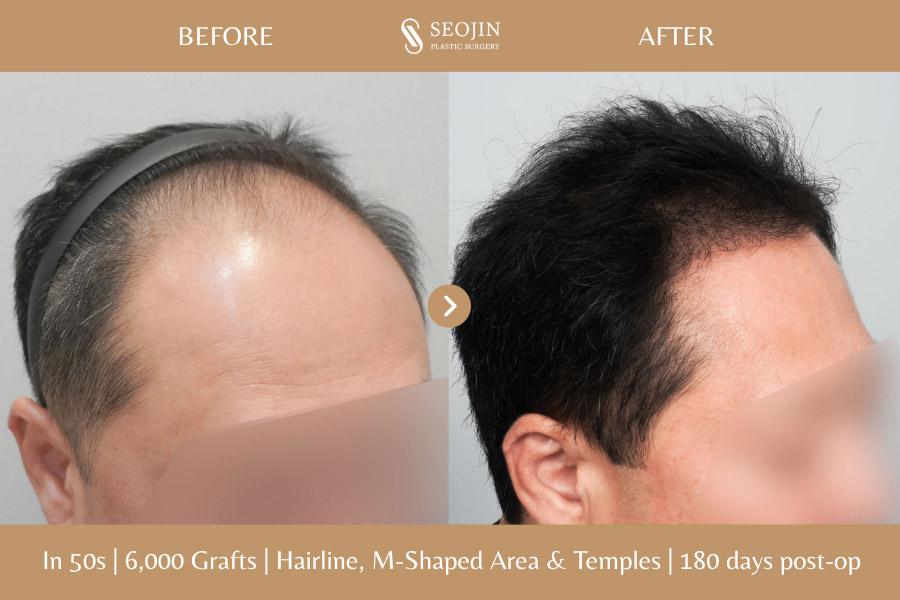
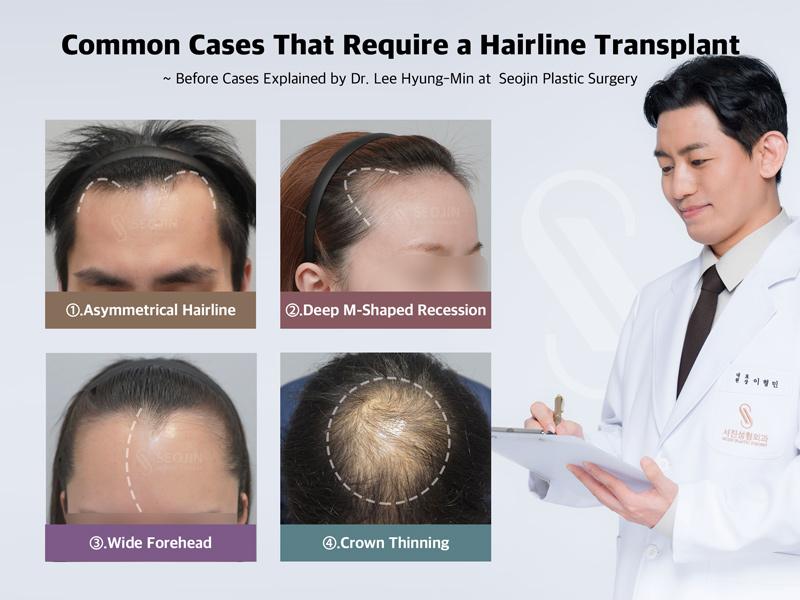
For hairline correction, you can receive a customized gradation transplant designed around your forehead, brow bones, temples, and overall facial balance. Seojin Plastic Surgery Clinic arranges fine, medium, and thicker hairs in sequence to create a softer transition at the front of the hairline, with Dr. Lee Hyungmin providing end-to-end care in its one-doctor model.
- URL: Seojin Plastic Surgery Clinic Website
- Location: Gangnam-gu, Seoul
- Hairline design and placement:
- Your design is tailored for symmetry while considering the forehead, temples, brow bones, midface, and lower face.
- Fine hairs are placed at the leading edge, followed by medium and thicker strands to create graduated density.
- The clinic describes techniques intended to reduce graft “popping” when hairs are implanted close together.
- Surgical approach:
- Available harvesting approaches include line-cut, no-cut, and mixed methods.
- A cold follicle-separation room is used for harvested graft preservation.
- PRP can be transplanted with follicles; the clinic states this is intended to support graft survival and reduce inflammation.
- Experience:
- Dr. Lee Hyungmin is described as having more than 16 years of experience.
- The clinic reports more than 2,100 hair-transplant surgeries performed.
- Dr. Lee was selected as one of the Top 100 Good Doctors in Korea in 2022.
2. Maxwell Hair Clinic
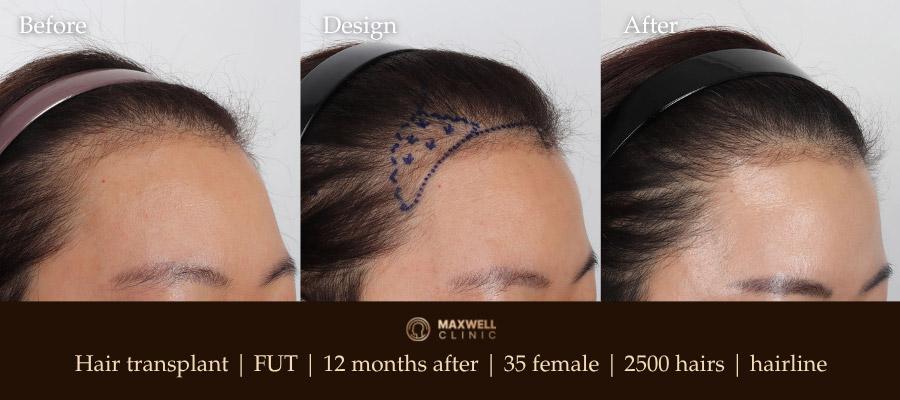
For hairline correction, Maxwell Hair Clinic uses a two-stage design process: a laser-based outline followed by manual adjustment to suit your facial proportions. Its gradation approach places finer hairs at the front and thicker follicular units behind them, while diagnosis of scalp elasticity, density, and hair-loss degree helps determine whether FUE, FUT, or a combination is appropriate for you.
- URL: Maxwell Hair Clinic Website
- Location: Gangnam-gu, Seoul
- Procedure and recovery considerations:
- Ultra-small 0.9–1.2 mm punches and double suturing are used as scar-minimization measures.
- The clinic states that you may shampoo the next day and return to daily activities within two days.
- Growth factors and magnetic-field therapy are described as post-transplant measures to support hair growth.
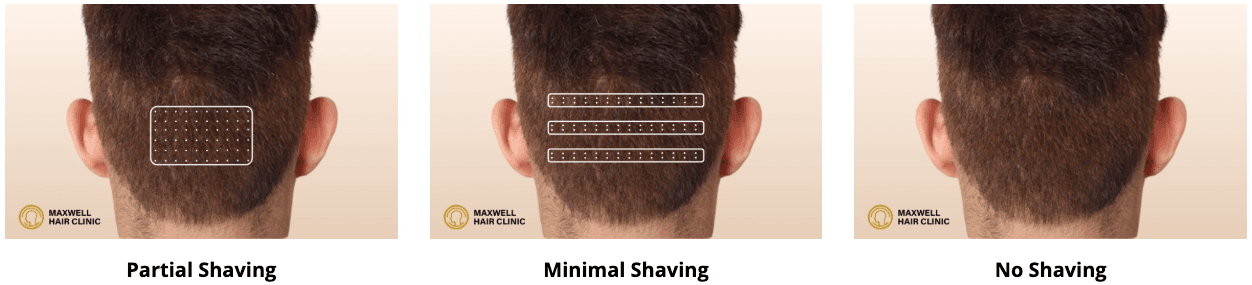
- Partial-shave, minimal-shave, and no-shave surgical options are available.
- Hair restoration services:
- Hairline correction for women, FUE, FUT, revision surgery, scar laser treatment, and nonsurgical hair-loss treatments are listed services.
- Dr. Noh Yoon Woo is identified as the founder and an executive member of the Korean Society of Hair Restoration.
- International support includes online consultations and travel and accommodation arrangements.
3. SH Clinic
You may consider SH Clinic if you are seeking a hair transplant with meticulous hairline design and dense graft placement. The clinic describes advanced FUT-based transplantation to restore thinning areas with natural-looking, permanent results and minimal scarring, while also offering stem-cell hair-loss treatment intended to thicken existing strands without surgical grafting.
- URL: SH Clinic Website
- Location: Seocho-gu, Seoul
How Much Does Hairline Correction Cost in Korea?
Hairline Correction in South Korea is supplied at ₩3,500,000–₩9,000,000 (approximately US$2,600–$6,700). Individual quotes vary because hairline correction can involve materially different surgical methods and treatment requirements.
| Procedure Price | Korean Won (₩) | USD ($) |
|---|---|---|
| Low Price | ₩3,500,000 | $2,600 |
| High Price | ₩9,000,000 | $6,700 |
Exchange rate as of 2026-09-06: 1 KRW = 0.000741 USD.
What Affects the Price?
- Hair transplant versus scalp advancement — A follicular-unit hairline transplant requires donor harvesting, graft preparation, and placement into many small recipient sites. Scalp advancement/forehead reduction instead requires an incision, forehead-skin excision, scalp dissection and advancement, and wound closure; its facility, anesthesia, operating-time, and postoperative requirements differ from transplantation.
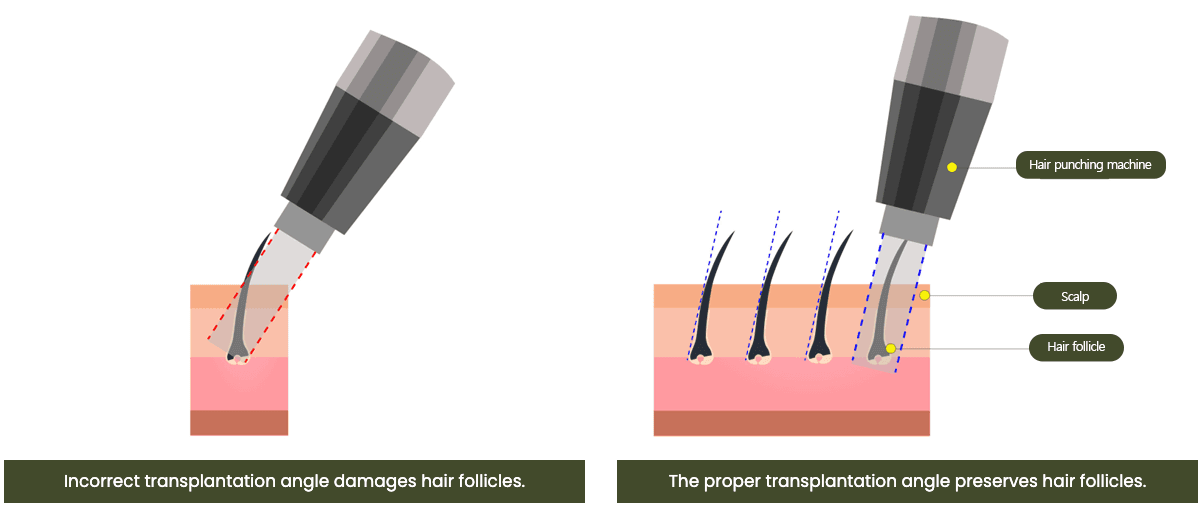
- Extent of hairline design and graft placement — Lowering a broad frontal hairline, rebuilding temple points, correcting frontotemporal recession, or camouflaging a stable scar requires more recipient-area coverage and more precisely angled follicular-unit placement. A larger or more detailed design uses additional donor follicles, recipient-site creation time, and graft-handling resources.
- FUE versus FUT donor harvest — FUE extracts individual follicular units across a shaved or selectively trimmed donor area, while FUT removes and closes a donor strip before follicular dissection. The harvest method changes donor-site surgery, wound management, consumables, and follow-up needs; FUT also commonly requires in-person suture or staple removal.
- Staged or combined correction — Some plans combine scalp advancement with later transplantation to soften an incision, refine the temples, improve density, or camouflage scar alopecia. Separate procedures require additional operative sessions, healing intervals, graft resources, and follow-up rather than a single treatment episode.
Cost tip: Request an itemized written quote stating what is included, with the proposed method, planned treatment extent, anesthesia, facility use, donor harvesting, graft placement or scalp advancement, postoperative reviews, and any planned suture or staple removal clearly identified.
The US$2,600–$6,700 conversion is approximate, based on the exchange rate dated 2026-09-06. Check the exchange rate again when budgeting.
Hairline Correction From Start to Finish
- Remote screening — Send consistent photographs of the front, temples, top, donor area, and hair pulled back. Provide hair-loss history, prior scalp procedures, allergies, all medicines and supplements, nicotine use, and the desired hairline shape. Remote images are screening tools, not a definitive surgical assessment.
- English or virtual consultation — Confirm whether the clinic can provide English communication and ask for the named physician’s role at every surgical stage. Discuss whether the goal calls for FUE, FUT, scalp advancement, or a staged combination rather than accepting the broad term “hairline correction.”
- In-person assessment and design — The clinician examines the scalp for inflammation and miniaturization, assesses donor supply at several sites, evaluates hair caliber and direction, and measures scalp laxity when forehead reduction is considered. Standardized photographs and a conservative hairline design account for facial proportions, ethnicity, age, texture, and future recession.
- Testing and clearance — Requirements depend on anesthesia, age, medical history, and facility protocol. Vital signs, laboratory tests, pregnancy testing when relevant, or medical clearance can be required. Suspected scarring alopecia or unexplained diffuse loss needs dermatology assessment, trichoscopy, and sometimes biopsy before surgery.
- Procedure day — Hair transplantation is generally an outpatient procedure under local anesthesia, with or without oral or IV sedation. FUE or FUT grafts are harvested, prepared, and placed into tiny recipient sites at planned angles and densities. Scalp advancement involves forehead-skin excision, deeper scalp dissection, advancement, and closure or fixation selected by the surgeon.
- Discharge and first review — Leave with written washing, sleeping, medication, activity, and emergency instructions. Return for the planned early wash or wound review; FUT sutures are commonly removed at 7–10 days, while scalp-advancement removal timing depends on the closure method.
- Overseas follow-up — Send agreed photographs after returning home and establish a local clinician for problems that cannot safely wait for remote advice. Transplanted shafts commonly shed at 2–8 weeks, early regrowth starts around month 3, visible improvement is usually assessed at 6–9 months, and maturation takes about 12 months.
Alternatives to Hairline Correction
Surgical options provide either transplanted living hair or immediate forehead shortening, but involve wounds and recovery. Non-surgical options are reversible or lower commitment, yet cannot add living follicles or reliably correct progressive hair loss.
Forehead Reduction
- Best fit — Forehead reduction suits selected patients whose main goal is immediate forehead shortening and who have sufficient scalp laxity.
- Tradeoff — It creates a hairline incision and carries scar, incision-line alopecia, altered sensation, and wound-tension risks. Later transplantation can camouflage an incision when healing is complete.
Hair Transplant
- Best fit — A broader hair transplant can rebuild a high hairline, temporal recession, or a stable scar with design flexibility.
- Tradeoff — It uses finite donor follicles and requires months for growth. It does not halt ongoing androgenetic hair loss.
Hairline Microblading
- Best fit — Hairline microblading can camouflage a sparse or irregular edge without surgery.
- Tradeoff — Pigment does not create hair, can fade or change color, and does not treat active hair loss.
Scalp Micropigmentation
- Best fit — Scalp micropigmentation can reduce scalp-to-hair color contrast and create the visual impression of density.
- Tradeoff — It is camouflage rather than follicle replacement and needs careful pigment selection and maintenance.
Hairline Laser Hair Removal
- Best fit — Hairline laser hair removal addresses an excessively low or irregular hairline.
- Tradeoff — It raises or refines the hairline, the opposite aesthetic direction from hairline lowering, and generally requires multiple sessions.
How Can I Prepare for Hairline Correction?
- Diagnosis and records — Send the clinic complete medical history, hair-loss history, prior procedures, allergies, and clear photographs. Disclose active shedding, scalp itching, scaling, pain, scars, and any past diagnosis of alopecia.
- Medicines and supplements — Provide exact names and doses of aspirin, NSAIDs, warfarin, direct oral anticoagulants, clopidogrel, diabetes and blood-pressure medicines, finasteride, dutasteride, minoxidil, hormone therapy, isotretinoin, corticosteroids, vitamin E, fish oil/omega-3, ginkgo, garlic, ginseng, and other supplements. Do not independently stop prescription medicines; coordinate any change with the prescribing clinician and operating surgeon.
- Nicotine and alcohol — Disclose cigarettes, vaping, nicotine replacement, cannabis, alcohol, and recreational-drug use. Follow the surgeon’s abstinence plan because nicotine exposure can compromise wound healing and graft survival.
- Fasting and scalp preparation — Follow the facility’s written fasting instructions, which differ between local anesthesia alone, sedation, and general anesthesia. Arrive with a clean scalp unless instructed otherwise; do not dye, bleach, chemically treat, or aggressively exfoliate the scalp close to surgery without approval.
- Accommodation and transport — Stay near the clinic for the early review. Arrange low-contact transport, a clean room, head-elevated sleeping arrangements, and a companion after sedation or general anesthesia.
- Flexible schedule — Do not schedule swimming, sauna visits, strenuous touring, helmet-dependent activities, or direct-sun exposure during early recovery. Keep flights and accommodation changeable.
Travel note: Ask before travel whether the planned technique requires suture or staple removal in Korea. This affects the minimum stay more than the procedure’s marketing name.
Confirm all clinic-specific requirements in writing. The treating doctor’s individualized instructions take precedence over general preparation guidance.
Aftercare Advice
Protect transplanted grafts or the forehead incision meticulously during early healing; avoid improvised products and follow only the operating team’s regimen.
- Graft and incision protection — Do not rub, scratch, pick crusts, or press on recipient sites. Use only the clinic-approved saline spray, shampoo, washing method, antibiotic, analgesic, and topical products. For scalp advancement, follow the exact incision-cleaning and scar-care plan.
- Activity and heat — Avoid strenuous exercise, heavy lifting, swimming, sauna or steam exposure, contact sports, tight hats, helmets, wigs, hair fibers, makeup on fresh recipient sites, and styling products until the operating team clears them.
- Sleeping and sun — Sleep with the head elevated during the early swelling period when instructed. Keep grafts and incisions out of direct sun; after the wound is closed and the clinician permits sunscreen, use SPF 50 on exposed forehead skin and physical shade.
- Expected timeline — After transplantation, redness, swelling, crusting, and donor discomfort dominate the first 7–10 days. Shaft shedding at 2–8 weeks is common; early regrowth begins around month 3, visible change is usually seen at 6–9 months, and maturation takes about 12 months. Forehead reduction changes forehead height immediately, while swelling settles over roughly 1–2 weeks and scar or sensory changes can improve for months.
- Warning signs — Contact the clinic urgently for worsening pain, spreading redness or warmth, pus or foul drainage, fever, persistent or increasing bleeding, wound separation, a pale or dark scalp-skin area, marked one-sided swelling, new facial weakness, severe headache, vision symptoms, or signs of medication allergy.
- Follow-up — Attend the early local review before flying and send standardized photographs on the agreed schedule after returning home. Establish a local dermatologist, primary-care clinician, or surgical contact for urgent in-person assessment.
Follow the treating doctor’s instructions over general guidance and contact the clinic promptly when anything appears wrong.
Frequently Asked Questions
Related Blogs
Sideburn Transplant in Korea: Methods, Recovery, Travel Planning, and Alternatives
Sideburn transplantation uses scalp follicular grafts placed at shallow angles to restore sparse, asymmetric, or scar-related sideburns, with FUE or FUT donor harvesting. The article covers candidacy, Korea travel planning, recovery, aftercare, regrowth timelines, and alternatives such as micropigmentation or scar reconstruction.
Updated: Sep 23, 2026
PRP Hair Loss in Korea: Candidacy, Treatment Process, Recovery and Travel Planning
PRP for early-to-moderate pattern hair loss involves drawing blood, preparing platelet-containing plasma, and injecting it into thinning scalp areas, commonly in three monthly sessions with individualized maintenance. The article covers candidate screening, Korea travel planning, preparation, aftercare, follow-up, and alternatives including minoxidil, hair transplant, and scalp micropigmentation.
Updated: Sep 20, 2026
Hair transplant on Scar in Korea: Methods, Recovery, Travel Planning and Results
Hair transplantation on a stable scar uses FUE or FUT grafts to camouflage hairless areas, with treatment planned around scar blood supply, donor hair, realistic density, and possible staged sessions. The article covers candidate screening, Korea travel planning, procedure steps, recovery timelines, aftercare, warning signs, and alternatives such as scalp micropigmentation or reconstructive surger
Updated: Sep 19, 2026
Scalp Tissue Expansion in Korea: Stages, Recovery, Risks and Travel Planning
Scalp tissue expansion is a staged reconstruction for stable localized hair-bearing scalp loss, using saline-filled expanders followed by advancement or rotation of expanded scalp to cover the defect. The article covers candidate screening, serial fills over months, international travel planning, recovery, aftercare, complication warning signs, and alternatives for complex scalp wounds.
Updated: Sep 19, 2026
Clinics offering Hairline Correction
SH Clinic: Comprehensive Women's, Men's & Couples' Health Services in Korea
Sinsa

Seojin Plastic Surgery Clinic Korea: Pioneering Advanced Cosmetic Procedures for Personalized Aesthetic Transformation
Apgujeong
Maxwell Hair Clinic: Korea's Premier Destination for Advanced Hair Restoration and Transplant Services
Gangnam Station

Okay Plastic Surgery Clinic in Korea: Comprehensive Aesthetic Procedures with Sincerity and Care
Cheongdam