
Medical Tourism Blog
Korea Subbrow Lift: Effective Solution for Drooping Upper Eyelid Skin

Table of contents
- Understanding Drooping Upper Eyelid Skin
- The Subbrow Lift Procedure: A Detailed Overview
- Navigating a Subbrow Lift in South Korea: A Medical Tourist's Guide
- Which Are the Best Clinics in Korea for Drooping Upper Eyelid Skin?
- Costs and Value: Subbrow Lift Pricing Comparison
- Patient Outcomes and Satisfaction with Subbrow Lift
- Conclusion
- References
Considering treatment in Korea? Everything you need to know e.g. — how to avoid scams, visas, interpreters, recovery tips — in our Medical Tourism Master Guide. Plan with confidence in minutes, not weeks!
Drooping upper eyelid skin, often described as "excess skin folding over the lash line," is more than just an aesthetic issue—it can also impair vision. This condition, known medically as dermatochalasis, is effectively treated with a Subbrow Lift. This surgery involves an incision just below the eyebrow to remove redundant skin and elevate the brow, resulting in natural-looking outcomes, minimal scarring, and better visual fields.
South Korea is a global leader in Subbrow Lift procedures, celebrated for its advanced techniques, skilled surgeons, and attractive comprehensive packages for international patients. Adequate preparation and understanding of the medical tourism process are crucial for those considering surgery abroad. Patients who undergo a Subbrow Lift typically report high satisfaction, finding resolution for both appearance and vision concerns related to drooping upper eyelid skin.
Understanding Drooping Upper Eyelid Skin
"Drooping upper eyelid skin" refers to the sagging of skin on the upper eyelid, which can be as mild as a slight fold or severe enough to block vision. While it is commonly linked to aging, other factors can also play a role. Knowing the correct medical terms and underlying causes helps in accurately diagnosing and treating the condition.
Common Medical Terms and Pseudonyms
The best medical term for "excess skin folding over the lash line" is dermatochalasis. Dermatochalasis means loose, sagging skin on the upper eyelids, often causing a "hooded" look and sometimes interfering with eyelashes or the pupil. Common alternative names include "baggy eyelids," "drooping eyelids," "heavy eyelids," and "eyelid hooding." Using the right terminology is important, as it ensures patients are directed to the most appropriate interventions, such as the Subbrow Lift.
It's key to differentiate dermatochalasis from ptosis (also called blepharoptosis). Ptosis describes the eyelid drooping due to a weakened or dysfunctional levator muscle. Although it appears similar to dermatochalasis, it’s a muscle problem, not a skin issue. The treatment for ptosis is different—typically muscle-tightening procedures. In some cases, both conditions exist and may require combined treatments.
A less common condition, blepharochalasis, causes intermittent, painless eyelid swelling starting in childhood or puberty, and should not be confused with age-related dermatochalasis.
Causes and Contributing Factors
Several elements contribute to drooping upper eyelid skin:
- Aging: The most common cause; over time, the skin loses elasticity and the supporting tissues weaken.
- Genetics: Family history can predispose someone to eyelid sagging.
- Lifestyle Factors: Sun exposure, UV damage, smoking, and alcohol use can speed up skin aging.
- Chronic Manipulation: Frequent eye rubbing or use of double eyelid tape can stretch eyelid skin.
- Previous Surgery: Sagging sometimes worsens after earlier eyelid surgeries.
- Medical Conditions: Diseases like thyroid eye disease, connective tissue disorders (like Ehlers-Danlos), amyloidosis, and certain eyelid growths (xanthelasma) can also cause or aggravate dermatochalasis.
Symptoms and Impact
The effects of drooping upper eyelid skin are both cosmetic and functional.
- Cosmetic: Patients may notice a droopy look, eyelid puffiness, heaviness, wrinkles, eye bags, and a tired expression.
- Functional: Skin hanging over the eyelid can block vision, especially to the sides ("mechanical ptosis"), making activities like reading, driving, or computer use challenging. Patients often compensate by raising their eyebrows or tilting their heads. The functional impact can justify insurance coverage if vision is demonstrably impaired.
Distinguishing Between Ptosis and Dermatochalasis
Understanding the difference between ptosis and dermatochalasis is critical for selecting the right treatment.
| Characteristic | Ptosis | Dermatochalasis |
|---|---|---|
| Primary Issue | Muscle dysfunction (levator) | Excess, loose, or sagging skin |
| Appearance | Lid margin droops, may cover the pupil | Skin folds over lash line |
| Main Causes | Congenital or acquired muscle/nerve problems | Aging, genetics, sun, surgery, etc. |
| Primary Treatment | Levator muscle tightening/repair | Skin removal (blepharoplasty, Subbrow Lift) |
| Can they co-exist? | Yes; thorough evaluation and sometimes combined treatments needed |
This table emphasizes why correct diagnosis matters; Subbrow Lift targets dermatochalasis and is not the procedure for pure ptosis.
The Subbrow Lift Procedure: A Detailed Overview
The Subbrow Lift (also called Subbrow Excision, Sub-Brow Lift Blepharoplasty, or occasionally Direct Brow Lift) is a precise surgical method to address excess upper eyelid skin and gently raise the brow for natural-looking rejuvenation.
What is a Subbrow Lift? Purpose and Goals
The main aim of a Subbrow Lift is to fix the drooping skin that can make the eyes look hooded or old. The procedure:
- Improves Vision: By clearing the field of view from overhanging skin.
- Refreshes the Appearance: Makes the eyes and face look younger and more energized.
- Boosts Confidence: Restores a balanced, harmonious look.
- Maintains Natural Crease: Focuses on achieving an organic eyelid shape.
- Minimizes Scarring: The incision is hidden just below the eyebrow.
Detailed Surgical Technique
Typically an outpatient procedure:
- Anesthesia: Local anesthesia or conscious sedation for comfort and safe, same-day discharge.
- Incision Placement: Precisely below the eyebrow, using the brow hairs to hide any scar.
- Tissue Removal and Repositioning: The surgeon removes the calculated amount of excess skin (and sometimes fat), may tighten underlying muscles, and ensures long-lasting improvement.
- Closure: Special sutures are used to blend the incision with the natural brow line.
Benefits of a Subbrow Lift
- Minimal, Well-Hidden Scarring: Incision hidden within brow hairs.
- Natural Outcome: Preserves the double eyelid, keeps the look true to the patient’s face.
- Shorter Recovery: Less bruising and swelling compared to other facial surgeries.
- Functional Improvement: Clears the visual field.
- Rejuvenated Appearance: Opens up and brightens the eye area.
Ideal Candidates
This procedure suits:
- Those with sagging upper eyelid skin or heavy outer corners.
- Patients wishing to retain their double eyelid crease.
- Candidates seeking double eyelid surgery but also have significant droopiness.
- People with functional vision issues due to eyelid heaviness.
- Those with eyelid sag after irritation, rubbing, or past surgery.
- Individuals from young adulthood onward with either age-related or genetically determined eyelid droop.
Subbrow Lift vs. Other Surgeries
Understanding how the Subbrow Lift fits with other procedures helps in making the right choice:
| Procedure | Target Area | Incision Location | Main Goal | Scar Visibility | Recovery |
|---|---|---|---|---|---|
| Subbrow Lift | Upper eyelid & subtle brow lift | Below eyebrow | Remove skin, lift brow, define crease, boost vision | Hidden in brow | Quick/minimal |
| Traditional Upper Blepharoplasty | Upper eyelid | Eyelid crease | Remove extra lid skin/fat | Crease of eyelid | Moderate |
| Direct Brow Lift | Brow position | Above eyebrow | Lift brow only | More noticeable | Moderate |
| Endoscopic Forehead Lift | Whole forehead & brow | In hairline | Lift brow, smooth forehead | Hidden in hairline | Longer recovery |
Compared to upper blepharoplasty, the Subbrow Lift uniquely elevates the brow and preserves eyelid shape. Compared to direct brow or endoscopic lifts, it is less invasive and has a shorter recovery.
Navigating a Subbrow Lift in South Korea: A Medical Tourist's Guide
South Korea stands out globally for cosmetic eye surgery, drawing patients for its high standards and advanced care.
Why Choose South Korea?
- Expertise: Korean surgeons are leaders in eye aesthetics.
- Natural Results: Clinics favor subtle, harmonious enhancements.
- Advanced Technology: Clinics use tools like AI and 3D imaging to preview results.
- Specialized Care: Surgeons focus on customized eye solutions.
The Patient Journey
Patients should expect:
- Pre-Trip Planning: Begin with online consultations, send medical forms, and coordinate surgery and travel.
- Visa-Free Entry: Many can enter Jeju Island without a visa; always check requirements well in advance.
- Bring a Caregiver: Recovery is smoother with support.
- Pre-Surgical Prep: Arrive a day (or two) early, complete health checks (including EKG, blood, urine, X-ray as needed), and follow pre-surgery rules—avoid alcohol, smoking, blood thinners, and unapproved supplements for at least six weeks.
- Hygiene: Remove nails, piercings, lash extensions before surgery, and shower thoroughly the day of.
- Procedure: Lasts 1–2 hours; local anesthesia is common. English-speaking staff are usually on site.
- Aftercare: Use cold then warm compresses for swelling, keep the wound clean and dry, avoid contacts and makeup, and follow all activity restrictions. Stitches are removed in two weeks, and visible scars fade within three months.
Choosing the Right Clinic
- Look for Accreditations: International certifications matter more than just good online reviews.
- Request References: Hearing from previous international patients is invaluable.
- Understand Policies: Know the revision and scar management policies up front.
- Language Support: In-house interpreters are crucial.
- Use Available Technology: Virtual consultations and simulations can aid decision-making.
Risks and Considerations
While generally safe, risk of infection, scarring, asymmetry, and dissatisfaction remain. For international patients, arranging and funding follow-up care or potential revisions is often costly and logistically tricky. Factor these possibilities into your plans.
Which Are the Best Clinics in Korea for Drooping Upper Eyelid Skin?
Listed below are some of the best clinics in Korea for drooping upper eyelid skin.
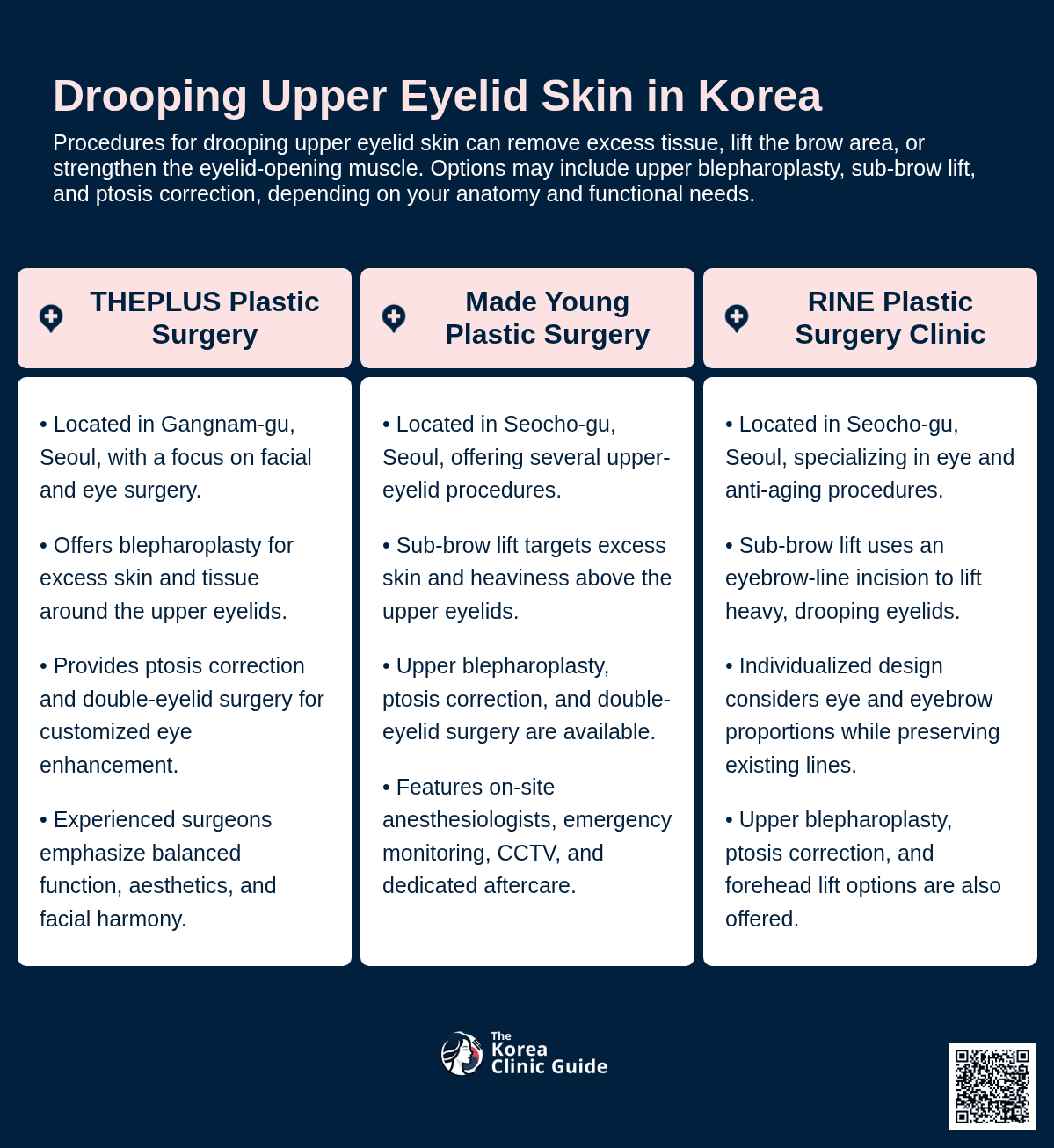
1. THEPLUS Plastic Surgery
For drooping upper-eyelid skin, you can consider THE PLUS Plastic Surgery’s blepharoplasty to remove or adjust excess eyelid skin and tissue, or ptosis correction when the muscles that open your eyes need to be addressed. Its eye-surgery options are described as aiming for a smoother, refreshed eye contour and a brighter appearance while matching your facial features.
- URL: THEPLUS Plastic Surgery Website
- Location: Gangnam-gu, Seoul
- Upper-eyelid options:
- Blepharoplasty addresses excess skin and tissue around the eyelids.
- Ptosis correction lifts drooping upper eyelids by correcting the muscles that open the eyes.
- Double-eyelid surgery is also available for creating a defined upper-eyelid crease.
- Surgical background:
- Dr. Kim is a board-certified plastic surgeon with research recognition for 3D implants and experience in facial contouring.
- Dr. Jeong is President of the Korean Society of Plastic Surgeons and emphasizes combining function and beauty in his practice.

2. Made Young Plastic Surgery
For drooping upper-eyelid skin, you may consider Made Young Plastic Surgery because it offers a sub-brow lift targeted to the area above your eyebrow, as well as upper blepharoplasty to remove excess upper-eyelid skin and fat and ptosis correction to tighten the lifting muscle. Your plan can be based on a direct consultation and diagnosis with the medical team, with on-site board-certified anesthesiologists and dedicated aftercare described by the clinic.
- URL: Made Young Plastic Surgery Website
- Location: Seocho-gu, Seoul
- Upper-eyelid options:
- Sub-brow lift elevates and smooths the upper-eyelid area from just above the eyebrow.
- Upper blepharoplasty removes excess upper-eyelid skin and fat and may improve your field of vision as well as appearance.
- Ptosis correction addresses drooping eyelids by tightening the muscle that lifts the eyelid.
- Incisional and non-incisional double-eyelid surgery are also listed.
- Safety and aftercare:
- Full-time board-certified anesthesiologists are on site.
- The clinic describes one-to-one anesthesiology monitoring and a cross-check system for emergencies.
- A separate aftercare center provides post-procedure care.
- Full CCTV coverage of procedures is described for transparency.
3. RINE Plastic Surgery Clinic
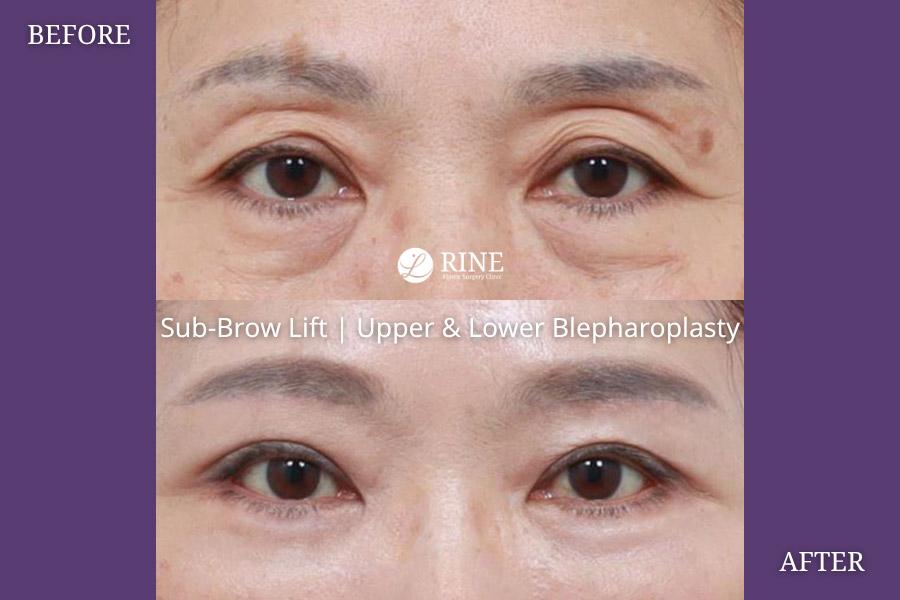
For drooping upper-eyelid skin, you may consider RINE Plastic Surgery Clinic’s sub-brow lift, which removes skin below the brow and lifts heavy eyelids while preserving your existing eye shape and double-eyelid line. The clinic describes a 30-minute-to-one-hour procedure, an eyebrow-line incision designed to be minimally visible, and individualized eye-and-brow proportion analysis by its head director.
- URL: RINE Plastic Surgery Clinic Website
- Location: Seocho-gu, Seoul
- Sub-brow lift details:
- The procedure is intended to lift heavy, drooping eyelids, improve eyelid wrinkles, and relieve a heavy or irritated feeling around your eyes.
- Rather than removing excessive skin, the approach described lifts muscles firmly to improve sagging naturally.
- The incision is concealed along the eyebrow line, with fine suturing and postoperative care intended to minimize scarring.
- The clinic states that recovery is within one week and that one follow-up visit is required.
- Personalized eye care:
- The head director performs one-to-one line design after analyzing your eye and eyebrow proportions.
- Director Jang Nam, a board-certified plastic surgeon, personally handles consultation, surgery, and recovery.
- The clinic specializes in eye surgery and anti-aging procedures and cites more than 15 years of clinical experience.
- Related procedures:
- Upper blepharoplasty is available for excess upper-eyelid skin and fat.
- Ptosis correction strengthens the levator muscle when drooping eyelids limit iris exposure.
- Endoscopic forehead lift is listed for brow descent and forehead lines.
Costs and Value: Subbrow Lift Pricing Comparison
Average Costs in South Korea
The typical Subbrow Lift costs ₩2,000,000–₩3,500,000 KRW ($1,450–$2,550 USD), often bundled to include the surgeon, anesthesia, medications, and sometimes room stay. VAT is frequently refundable for international patients. While not always the lowest globally, the value lies in the comprehensive care and expertise.
| Procedure | Cost Range (KRW) | Approx. USD | Inclusions |
|---|---|---|---|
| Subbrow Lift | ₩2,000,000 – ₩3,500,000 | ~$1,450 – $2,550 | Surgery, anesthesia, meds, care, room, VAT (tax-free) |
Cost Comparisons
- USA: Upper blepharoplasty averages $3,200–$3,359 but often excludes fees for anesthesia, facilities, and medicine.
- Thailand: Direct Brow Lift/Upper Eyelid Lift costs $1,500–$1,770; full brow lifts average up to $4,609.
- Turkey: Brow/Temporal Brow Lifts $1,600–$4,400, often in all-inclusive packages.
- Europe: Upper eyelid correction starts at ~$1,800, with broad price ranges depending on clinic and complexity.
| Country | Procedure | Average Cost (USD) | Typical Inclusions |
|---|---|---|---|
| South Korea | Subbrow Lift | ~$1,450 – $2,550 | Often comprehensive care |
| USA | Upper Blepharoplasty | ~$3,200 – $3,359 | Limited inclusions |
| Thailand | Direct Brow Lift | ~$1,500 – $4,609 | Varies, some all-inclusive |
| Turkey | Brow/Temporal Brow Lift | ~$1,600 – $4,400 | Often all-inclusive |
| Europe | Upper Eyelid Correction | ~$814 – $11,401 | Range; some all-inclusive |
Factors Affecting Cost
- Surgeon Experience: More skilled surgeons charge higher fees.
- Facilities: Premium clinics and advanced tech can raise prices.
- Procedure Complexity: Greater surgical needs mean higher costs.
- Location: City and country influence overall prices.
- Package Inclusions: All-inclusive options may seem expensive but protect against hidden fees.
Patient Outcomes and Satisfaction with Subbrow Lift
Most patients see substantial cosmetic and functional benefits from a Subbrow Lift.
Cosmetic Improvements
Results typically include more open, youthful eyes and a reduction in "hooded" lids. Natural-looking outcomes are common, especially when the double eyelid crease is preserved. Scars fade and are well-hidden, leading to greater confidence and satisfaction.
Enhanced Function
For those whose vision was impaired, the Subbrow Lift often restores clear, unobstructed sight and alleviates heaviness, making everyday activities like reading and driving easier. Clinical studies confirm these dual benefits—aesthetic and functional.
Patient and Clinical Reviews
Reports show high satisfaction, especially for severe dermatochalasis. Techniques that combine Subbrow Lift with double eyelid surgery have proven safe and effective. Patients appreciate both the durable improvement in vision and the refreshed appearance without excessive change to their natural features.
Conclusion
Drooping upper eyelid skin (dermatochalasis) can affect both appearance and vision, making effective treatment important. The Subbrow Lift is a minimally invasive, natural-looking solution that removes excess skin and subtly lifts the brow, improving both function and aesthetics with little visible scarring. South Korea’s advanced expertise and comprehensive care make it a top destination for this procedure, though international patients should plan carefully for preparation and aftercare. Overall, Subbrow Lift achieves high satisfaction for both cosmetic outcomes and improved vision.
References
Frequently Asked Questions
Related Blogs
Renuvion in Korea: Methods, Recovery, Risks, and Travel Planning
Renuvion uses helium-plasma radiofrequency energy beneath the skin, alone or after liposuction, to address mild-to-moderate localized laxity; Dermal resurfacing treats surface wrinkles with an external ablative handpiece. The article covers candidacy, alternatives, preparation, recovery, risks, Korea travel planning, and the need for surgeon clearance before flying.
Updated: Oct 13, 2026
Temporal Lift in Korea: Methods, Recovery, Risks and Travel Planning
A temporal lift elevates the outer brow through temporal scalp incisions, using open, subcutaneous, endoscopic, or combined techniques chosen for brow position, hairline, and eyelid anatomy. The article covers candidate screening, Korea facility and surgeon verification, a 10–14-day stay, recovery restrictions, aftercare, warning signs, and alternatives such as forehead lift, blepharoplasty, and p
Updated: Oct 13, 2026
Premature aging face treatment in Korea: Face Lift options for younger-looking skin
Early onset facial laxity and wrinkles are rising among 30s–40s. Our Korea medical tourism guide explains rhytids and how a rhytidectomy (face lift) can refresh the lower face and neck. Explore options: Deep Plane Facelift, SMAS Facelift, Mini Facelift, Lower Facelift and Neck Lift, plus non-surgical adjuncts. Learn candidacy, recovery timelines, costs, certifications, and tips for planning surger
Updated: Oct 12, 2026
Brow Ptosis in Korea: Forehead Lift and Subbrow Lift Treatment Options
Thinking about Brow Ptosis surgery in Korea? This expert guide explains diagnosis, functional vs cosmetic concerns, and compares a Forehead Lift with a Subbrow Lift—indications, scars, recovery, and costs. It maps the South Korea medical tourism journey (planning, visas, surgery day, follow-ups), highlights surgeon credentials and safety, and shares real outcomes, risks, and patient stories so you
Updated: Oct 12, 2026
Clinics offering Subbrow Lift
RINE Plastic Surgery Clinic | Facelift and Eye Rejuvenation Surgery
Nonhyeon

SH Clinic: Comprehensive Women's, Men's & Couples' Health Services in Korea
Sinsa

THEPLUS Plastic Surgery Korea | Eye, Nose, Face & Body Surgery
Sinsa

Made Young Plastic Surgery: Rejuvenating Aesthetic Excellence in Korea for Face Lifts, Contouring and More
Gangnam Station