Medical Tourism Blog
Sleepy Eyes Treatment in Korea: Canthoplasty & Laser Canthoplasty Procedures for Bright, Awake Eyes
Table of contents
- Medical Procedures for Eye Reshaping: Canthoplasty and Laser Canthoplasty
- Best Clinics in Korea for Sleepy Eyes
- The Process of Undergoing Eye Procedures in South Korea
- Costs and Medical Tourism in South Korea
- Patient Experiences and Outcomes
- Conclusion
- References
Considering treatment in Korea? Everything you need to know e.g. — how to avoid scams, visas, interpreters, recovery tips — in our Medical Tourism Master Guide. Plan with confidence in minutes, not weeks!
Many patients describe the aesthetic concern known as "sleepy eyes" as a noticeable downward slant at the outer corners of their eyes. This look can unintentionally suggest tiredness, disinterest, or sadness, leading people to seek cosmetic solutions. Medically, this slant is called the "palpebral slant," defined by an imaginary line from the inner to the outer eye corner. While some degree of palpebral slant is a normal anatomical variation—especially common among individuals of Asian descent—its prominence can still cause dissatisfaction. In some cases, an abnormal palpebral slant may signal underlying genetic conditions like Down syndrome or Fetal Alcohol Syndrome, so a thorough medical evaluation is important if other symptoms are present.
Patients often use terms like "sleepy eyes" or "sad appearing eyes" rather than formal medical language. In medical literature, "palpebral slant" is the precise term, with "Mongolian slant" sometimes used as well. In cosmetic surgery, procedures correcting this downward tilt are marketed with evocative names such as "down-turned eyes," "Fox Eye Lift," or "Cat Eye Surgery." These terms highlight the goal of achieving an uplifted, alert, and aesthetically pleasing eye shape. Understanding this difference in language helps medical professionals communicate clearly, build trust, and educate patients on the exact medical terms and procedures. It also shows that most patients seek these surgeries for purely aesthetic reasons, even when a medical term exists for the feature being changed.
Often, patients concerned about "sleepy eyes" also have related issues like sagging lower eyelids, weakened eyelid muscles, or under-eye bags and puffiness. These factors can worsen the downward tilt, creating a perpetually tired look. Addressing these concerns through comprehensive eye rejuvenation can greatly improve overall results.
Cultural aesthetics play a big role in the popularity of eye reshaping procedures, especially in places like South Korea. Although a certain palpebral slant and epicanthal folds are normal among Asian populations, procedures like [Laser Canthoplasty](/blog/laser-canthoplasty-korea) are extremely popular there. This is because local beauty standards favor large, almond-shaped eyes. This shows that even typical anatomical features can be altered to meet cultural ideals. Korean surgeons have developed specialized expertise in achieving these looks, making South Korea a top destination for medical tourists seeking advanced eye enhancements.
Medical Procedures for Eye Reshaping: Canthoplasty and Laser Canthoplasty

Canthoplasty: A Detailed Overview
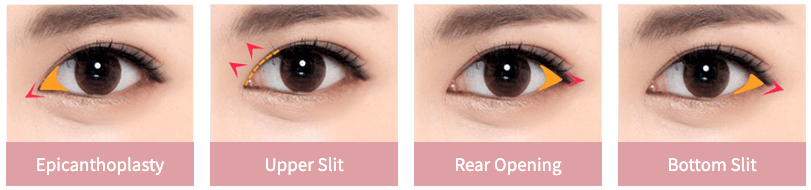
Canthoplasty is a precise surgical procedure focused on reconstructing or reshaping the canthus—the junction where the upper and lower eyelids meet. The surgery tightens muscles, tendons, ligaments, and connective tissues in the eyelid to improve both function and appearance.
Cosmetically, canthoplasty reduces droopy or sagging eyelids, corrects uneven eyelid contours, and changes the eye shape. For "sleepy eyes" with a downward slant, it lifts and repositions the outer eye corners to create a more youthful, open, almond-shaped look, often called a "cat's eye" or "fox eye." Functionally, it can improve vision when sagging eyelids block sight and serves as a reconstructive option for conditions like keratopathy (cornea damage), ectropion (outward eyelid turning), entropion (inward turning), lagophthalmos (inability to close eyes fully), and trauma. Results are generally permanent, though minor adjustments may be needed over time due to aging.
There are two main types of canthoplasty:
- Lateral Canthoplasty: This targets the outer canthus, the eye corner farthest from the nose, and is key for correcting "sleepy eyes." It lifts and repositions the lateral canthus, lengthening the eye opening horizontally to make eyes appear larger and more open. This is especially common in East Asian patients aiming to reduce eye slant and achieve a smoother eye shape.
- Epicanthoplasty: This focuses on the inner canthus near the nose, aiming to reduce or remove the "Mongolian fold" (epicanthal fold), a skin fold covering the inner eye corner. By modifying this fold, the inner eye lengthens, creating a brighter, more defined look. It is often combined with double eyelid surgery for a harmonious eye appearance.
While both are canthoplasty types, lateral canthoplasty directly addresses the outer corner’s position and slant, central to fixing "sleepy eyes." Epicanthoplasty enhances the inner corner and is often done alongside lateral canthoplasty for a complete aesthetic improvement.
The surgery usually starts with local anesthesia, sometimes with mild sedation, or general anesthesia for complex cases. The surgeon makes a small incision near the outer eye corner, often hidden in natural creases like "crow’s feet," to minimize scarring. The lateral canthal tendon (LCT), which supports the lower eyelid, is released and repositioned higher. The tendon and muscles are tightened, and sometimes a small section of eyelid tissue or tarsus (dense connective tissue) is trimmed and reattached to the orbital rim. Fine sutures close the incision, promoting healing and minimal scarring.
Patients can expect a noticeable improvement in sagging eyelids, a more alert almond-shaped eye, and possibly better vision. Recovery involves mild discomfort, swelling, and bruising that usually fade within two to four weeks. Patients should avoid strenuous activity, eye rubbing, makeup, and contact lenses for several weeks. Initial unevenness due to swelling is normal and resolves over time. Incision lines fade over two to three months, with full healing taking several months.
It’s important to distinguish canthoplasty from related procedures:
- Canthopexy: Less invasive, this tightens and reinforces the existing canthal tendon with sutures without cutting or repositioning it. It’s suited for mild eyelid laxity and subtle support without changing eye shape.
- Blepharoplasty: This removes excess skin, muscle, and fat from eyelids to create a younger look but doesn’t alter eye shape or the canthal angle. It’s often combined with canthoplasty for full rejuvenation.
Laser Canthoplasty: An Advanced Approach
Laser Canthoplasty uses laser technology instead of scalpels to reshape the outer eye corners. This technique is especially popular in South Korea, where the goal is often to create larger, almond-shaped eyes.
The main difference is how incisions are made: a specialized laser makes precise cuts while simultaneously cauterizing tissue. This reduces bleeding and inflammation during and after surgery. Benefits include greater precision, less tissue damage, smaller scars, faster healing, and reduced downtime compared to traditional surgery. Patients usually experience less swelling and bruising, allowing quicker return to daily activities.
The results are similar to traditional canthoplasty, achieving a more open, elongated, almond-shaped eye. However, laser canthoplasty often offers a quicker, more comfortable recovery.
Best Clinics in Korea for Sleepy Eyes
Listed below are the best clinics in Korea for sleepy eyes:
| Clinic Name | Key Features | Special Techniques |
|---|---|---|
| Braun Plastic Surgery Clinic | For patients seeking to correct “sleepy eyes” in Korea—often caused by drooping lids, weak eyelid-opening muscles, or age-related sagging—Braun Plastic Surgery Clinic stands out for its self-developed approach built on personal consultation and personal surgery, ensuring that each treatment plan is tailored to the patient’s eye structure, function, and aesthetic goals rather than a one-size-fits-all method. Braun’s strength in sleepy-eye correction is rooted in its dedicated eyelid surgery lineup, including ptosis correction to address true eyelid droop (and improve both vision and eye clarity), double eyelid surgery for a natural crease and brighter expression, anti-aging eyelid surgery to treat lax skin and puffiness, canthoplasty to refine eye shape for a more alert appearance, and revision eyelid surgery for patients needing improvement after prior procedures. Backed by a distinguished medical team that continuously researches safer, more effective techniques and presents innovations at major international academic conferences, Braun combines extensive clinical experience with a strong commitment to surgical precision and risk minimization—key factors when treating the delicate eyelid area where millimeters matter. | Ptosis correction; double eyelid surgery; anti-aging eyelid surgery; canthoplasty; revision eyelid surgery. |
| Mate Plastic Surgery Clinic | Mate Plastic Surgery Clinic, located near Sinnonhyeon Station in Korea, is a specialized plastic surgery center offering cosmetic and reconstructive procedures designed to enhance both appearance and confidence. For patients concerned about “sleepy eyes,” the clinic provides double eyelid surgery options that can help create a clearer, more defined eyelid crease and a brighter overall eye impression, with careful attention to safety and natural-looking balance. In addition to eyelid procedures, Mate Plastic Surgery Clinic offers a full spectrum of facial and body treatments, including facial contouring (V-Line surgery, cheekbone reduction), rhinoplasty (nose augmentation and reduction), fat grafting (facial and breast), breast surgery (augmentation and reduction), body contouring (liposuction, tummy tuck), and anti-aging care (facelift, Botox). These procedures are meticulously performed by experienced surgeons with an emphasis on individualized planning and optimal outcomes. | Double eyelid surgery options to create a clearer, more defined eyelid crease and a brighter overall eye impression; facial contouring (V-Line surgery, cheekbone reduction); rhinoplasty (nose augmentation and reduction); fat grafting (facial and breast); breast surgery (augmentation and reduction); body contouring (liposuction, tummy tuck); anti-aging care (facelift, Botox). |
Braun Plastic Surgery Clinic
For patients seeking to correct “sleepy eyes” in Korea—often caused by drooping lids, weak eyelid-opening muscles, or age-related sagging—Braun Plastic Surgery Clinic stands out for its self-developed approach built on personal consultation and personal surgery, ensuring that each treatment plan is tailored to the patient’s eye structure, function, and aesthetic goals rather than a one-size-fits-all method. Braun’s strength in sleepy-eye correction is rooted in its dedicated eyelid surgery lineup, including ptosis correction to address true eyelid droop (and improve both vision and eye clarity), double eyelid surgery for a natural crease and brighter expression, anti-aging eyelid surgery to treat lax skin and puffiness, canthoplasty to refine eye shape for a more alert appearance, and revision eyelid surgery for patients needing improvement after prior procedures. Backed by a distinguished medical team that continuously researches safer, more effective techniques and presents innovations at major international academic conferences, Braun combines extensive clinical experience with a strong commitment to surgical precision and risk minimization—key factors when treating the delicate eyelid area where millimeters matter.
Find more about this clinic here: Braun Plastic Surgery Clinic Website
Mate Plastic Surgery Clinic
Mate Plastic Surgery Clinic, located near Sinnonhyeon Station in Korea, is a specialized plastic surgery center offering cosmetic and reconstructive procedures designed to enhance both appearance and confidence. For patients concerned about “sleepy eyes,” the clinic provides double eyelid surgery options that can help create a clearer, more defined eyelid crease and a brighter overall eye impression, with careful attention to safety and natural-looking balance.
In addition to eyelid procedures, Mate Plastic Surgery Clinic offers a full spectrum of facial and body treatments, including facial contouring (V-Line surgery, cheekbone reduction), rhinoplasty (nose augmentation and reduction), fat grafting (facial and breast), breast surgery (augmentation and reduction), body contouring (liposuction, tummy tuck), and anti-aging care (facelift, Botox). These procedures are meticulously performed by experienced surgeons with an emphasis on individualized planning and optimal outcomes.
Find more about this clinic here: Mate Plastic Surgery Clinic Website
The Process of Undergoing Eye Procedures in South Korea

Having canthoplasty or laser canthoplasty in South Korea follows a well-structured process to ensure safety, comfort, and excellent results.
It begins with an extensive pre-procedure consultation where a board-certified plastic surgeon assesses the patient’s eye shape and facial features. The patient’s goals are discussed, and the surgeon recommends canthoplasty or laser canthoplasty accordingly. Many Korean clinics use advanced digital morphing technology to simulate post-op results, helping patients visualize changes and set realistic expectations. This personalized approach is a hallmark of Korean cosmetic surgery.
South Korea is known for advanced medical facilities, especially in Seoul’s Gangnam district, which hosts many state-of-the-art cosmetic surgery clinics. These clinics maintain strict hygiene standards and use cutting-edge technology. For laser canthoplasty, advanced laser systems ensure precision, minimize tissue damage, and speed recovery. Korean surgeons’ extensive experience from high procedure volumes contributes to excellent care and outcomes.
On the day of surgery, patients are welcomed by a skilled medical team. Local anesthesia or mild sedation is given for comfort. The surgeon uses a laser to make precise incisions at the lateral canthus, adjusting the eye corner’s angle and position to enlarge or almond-shape the eyes. Laser use minimizes bleeding and swelling. The procedure usually lasts 30 minutes to an hour, depending on complexity and additional treatments. Patients typically go home the same day, as these are outpatient surgeries.
Post-operative care and recovery focus on healing and optimal results. Laser canthoplasty’s minimally invasive nature means less downtime, swelling, and bruising than traditional surgery. Recovery usually takes one to two weeks. Patients receive detailed care instructions on managing discomfort, medications, and activity restrictions. Follow-up visits monitor healing and address concerns. Korean surgeons emphasize natural, balanced looks that blend Western and Asian beauty ideals, making their clinics popular with international patients.
Costs and Medical Tourism in South Korea
South Korea has become a top medical tourism destination for cosmetic procedures due to competitive pricing and high-quality care.
For traditional Canthoplasty (Cat Eye Surgery), the average cost in Seoul is about $3,573 USD, ranging from $2,144 to $5,003.
Laser Canthoplasty costs typically range from $1,000 to $3,000 USD (approximately 1,453,000 to 4,363,000 KRW). This pricing makes Korea an attractive option for these procedures.
Compared internationally:
- United States: Cosmetic eye surgeries are much more expensive due to higher operational costs and anesthesia fees. Upper Blepharoplasty ranges from $5,000 to $6,200, Lower Blepharoplasty around $6,500, and combined upper and lower can reach $10,000. Fractional CO2 Laser Resurfacing costs about $4,000, and lower eyelid CO2 resurfacing around $2,000.
- Australia: Laser procedures range from about $27 to $635 AUD ($20 to $440 USD), with possible extra out-of-pocket costs depending on insurance and specifics.
- Turkey and Mexico: Known for affordable cosmetic surgery, though exact laser canthoplasty costs are less available. Patients should be cautious about care quality, legal protections, and post-op support in these countries.
South Korea offers a strong balance of affordability and quality for canthoplasty and laser canthoplasty. Costs are competitive compared to Western countries, with a more regulated and advanced medical environment than some lower-cost destinations, making Korea a favored choice for medical tourists.
Medical tourists should also budget for additional expenses like flights, accommodation, local transport, and daily living costs. These non-surgical expenses can be significant and must be included in overall planning to ensure a smooth experience.
Patient Experiences and Outcomes
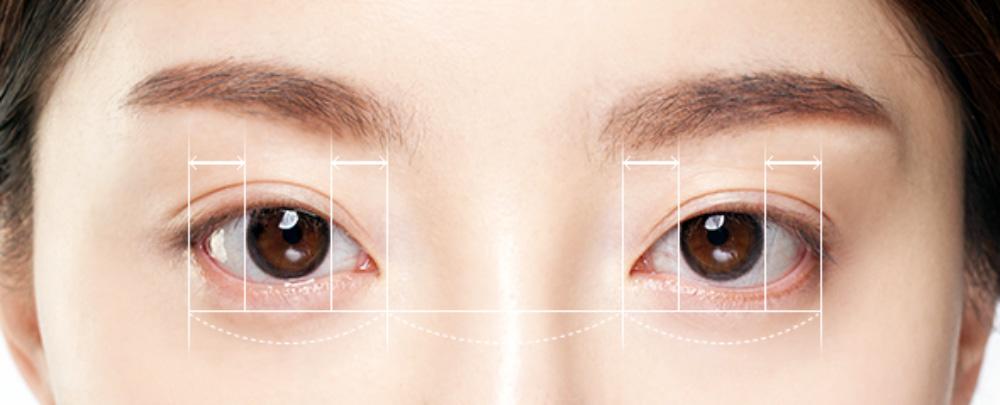
Canthoplasty and Laser Canthoplasty effectively address "sleepy eyes" by lifting and tightening the outer eye corners, creating a more open, alert, almond-shaped eye. This transformation counters the tired or sad look that motivates many patients, replacing it with a refreshed, vibrant appearance.
These aesthetic improvements often bring significant psychological benefits. Patients report increased self-confidence, fewer comments about looking tired, and greater comfort with their appearance—even without makeup. Many describe feeling "like a new person" or "refreshed and vibrant," highlighting the positive impact on quality of life.
Testimonials frequently praise the natural-looking results, with friends and family often unaware surgery was done unless told. The minimal downtime, especially with laser canthoplasty, is also appreciated. Patients say the surgery "greatly improved [their] confidence" and was "the best money [they] ever spent." Specific accounts mention how tired eyes transformed into brighter ones, with more visible irises and smoother contours.
While results are generally permanent, minor adjustments may be needed over time due to aging. Advances in surgical techniques, particularly in South Korea, have improved durability. Methods like modified Z-plasty and deep-tissue anchoring reduce revision rates and enhance long-term stability. Studies now show stable results lasting over a decade for many patients, challenging older beliefs about a five-year limit.
Despite high satisfaction, canthoplasty and laser canthoplasty carry risks like mild discomfort, swelling, bruising, pain, scarring, asymmetry, temporary vision issues, and rarely, difficulty closing the eyes. Individual healing varies, influenced by genetics affecting collagen and scar quality. Some clinics offer pre-surgical tissue response testing to optimize sutures and care, reducing hypertrophic scarring. Choosing a skilled, experienced oculoplastic surgeon is crucial to minimize risks and achieve the best outcomes.
Conclusion
"Sleepy eyes," marked by a downward slant at the outer corners, are a common aesthetic concern that can make people look tired or sad. While medically called "palpebral slant," patients often use terms like "down-turned eyes," highlighting the need for clear communication between doctors and patients.
Canthoplasty and Laser Canthoplasty effectively lift and reshape the outer eye corners to create a more alert, almond-shaped look. Laser Canthoplasty, popular in South Korea, offers added precision, less bleeding, and faster recovery thanks to advanced laser technology. These procedures improve both appearance and function, sometimes enhancing vision.
South Korea stands out as a leading destination for these surgeries due to cultural beauty ideals, advanced facilities, and expert surgeons. The thorough consultation, cutting-edge techniques, and competitive pricing attract many medical tourists, though travel and living costs should be considered.
Beyond physical changes, these procedures boost patients’ confidence and well-being. Ongoing surgical innovations, especially in Korea, are improving long-term results and patient satisfaction. For those considering these surgeries, thorough consultations and choosing experienced surgeons are key to a successful transformation.
References
1, 2, 3, 4, 5, 6, 7, 8, 9, 10, 11, 12, 13, 14, 15, 16, 17, 18, 19, 20, 21, 22, 23, 24, 25, 26, 27, 28, 29