
Medizintourismus-Blog
Doppellid-OP: Was ist die Natural-Adhesion-Methode und warum ist sie so beliebt? Mit Dr. Park von MadeYoung
Table of contents
- Ein natürlicher wirkendes Doppellid – ohne den Eindruck von „operiert“
- Was „Natural Adhesion“ bei der Doppellid-Operation bedeutet
- Inzisionsmethode vs. nichtinzisionale Methode vs. Natural Adhesion: Worin liegen die Unterschiede?
- Warum Natural Adhesion so beliebt ist: die tatsächlichen Vorteile
- Wie der Eingriff durchgeführt wird (praktisch erklärt)
- Fallbeispiel 1: Asymmetrie und schwerere Lider auf natürliche Weise korrigieren
- Fallbeispiel 2: Eine definierte Linie, ohne zu hoch zu gehen
- Für wen ist die Natural-Adhesion-Doppellid-Operation geeignet?
- Wie man die richtige Klinik für Natural-Adhesion-Ergebnisse auswählt
- Fazit: Dezente Verfeinerung, mehr Selbstvertrauen
- Mehr über Made Young Plastic Surgery
Planen Sie eine Behandlung in Korea? Alles, was Sie wissen müssen, z. B. wie Sie Betrug vermeiden, Visa, Dolmetscher und Tipps für die Erholung, finden Sie in unserem Master Guide für Medizintourismus. Planen Sie mit Vertrauen in Minuten statt in Wochen!
Haftungsausschluss: Der folgende Beitrag ist ein Gastbeitrag. Die darin geäußerten Informationen und Meinungen stammen nicht von koreaclinicguide.com, sondern von Made Young Plastic Surgery
Ein natürlicher wirkendes Doppellid – ohne den Eindruck von „operiert“
Wenn jemand das Gefühl hat, dass die Augen müde, asymmetrisch oder einfach weniger definiert wirken als gewünscht, ist eine Doppellid-Operation oft der erste Eingriff, der in Betracht gezogen wird. Gleichzeitig ähneln sich die häufigsten Sorgen, die ich in Beratungsgesprächen höre, sehr: „Was, wenn sich mein Aussehen zu stark verändert?“ und „Was, wenn mein Gesichtsausdruck am Ende unnatürlicher wirkt als vorher?“

Genau aus diesen Gründen ist die Natural-Adhesion-Doppellid-Operation in den letzten Jahren so beliebt geworden. Mein Ziel bei dieser Methode ist es nicht, Ihren Augen einen völlig neuen Stil zu geben. Stattdessen konzentriere ich mich darauf, eine Doppellidlinie zu schaffen, die sich harmonisch in Ihre eigene Anatomie einfügt – sodass das Ergebnis wirkt, als hätte es schon immer zu Ihnen gehört, und nicht wie ein neues Merkmal, das Ihrem Gesicht hinzugefügt wurde.
Was „Natural Adhesion“ bei der Doppellid-Operation bedeutet
Bei der Natural-Adhesion-Doppellid-Operation entsteht die Lidfalte durch Gewebeadhäsion während der Heilungsphase. „Adhäsion“ bedeutet hier einfach, dass zwei getrennte Gewebeschichten im Verlauf der Regeneration auf natürliche Weise miteinander verkleben – ähnlich wie bei einer kleinen Hautverletzung, die verheilt und wieder zusammenwächst.
Am Augenlid geht es darum, die richtigen Gewebe – etwa die Haut und tiefere Strukturen, die an der Lidöffnung beteiligt sind – so miteinander verheilen zu lassen, dass sie entlang der geplanten Falte zusammenhaften. Wenn diese Adhäsion korrekt erzeugt wird, entsteht eine Lidfalte, die der natürlichen Struktur Ihres Auges folgt und dadurch weicher und weniger „gemacht“ wirkt.
Inzisionsmethode vs. nichtinzisionale Methode vs. Natural Adhesion: Worin liegen die Unterschiede?
Um zu verstehen, warum Natural Adhesion eine gute Option sein kann, lohnt sich ein Vergleich mit den beiden Methoden, die vielen Patientinnen und Patienten besser bekannt sind.
Bei der inzisionalen Methode wird die Haut des Augenlids eingeschnitten und anschließend vernäht, um die Doppellidlinie zu formen. Dieser Ansatz kann sehr wirkungsvoll und vielseitig sein, insbesondere bei bestimmten anatomischen Voraussetzungen. Manche Patientinnen und Patienten sorgen sich jedoch vor einer deutlicher sichtbaren Veränderung oder einer stärker definierten, schärfer wirkenden Linie.
Bei der nichtinzisionalen (Naht-)Methode wird die Falte mithilfe von Fäden fixiert, ohne einen klassischen Hautschnitt zu setzen. Das bedeutet in der Regel weniger sichtbare Narben. Ein bekannter Nachteil ist jedoch, dass sich die Linie im Laufe der Zeit leichter lockern oder abschwächen kann – abhängig von der Dicke des Augenlids, den Hauteigenschaften und anderen anatomischen Faktoren.
Die Natural-Adhesion-Methode wurde entwickelt, um wesentliche Vorteile beider Verfahren zu verbinden. Sie fördert eine stabile Falte durch kontrollierte Adhäsion, verwendet dabei jedoch kleine Öffnungen statt eines langen Schnitts – sodass die Narbenbildung minimal sein kann und die Linie oft beständiger bleibt als bei einer reinen Fadenfixierung.
Warum Natural Adhesion so beliebt ist: die tatsächlichen Vorteile
Einer der wichtigsten Gründe, warum sich Patientinnen und Patienten für Natural Adhesion entscheiden, ist, dass sich damit das Risiko einer zu scharfen oder künstlich wirkenden Lidfalte verringern lässt. Da die Linie durch natürliche Heilung und Adhäsion entsteht und der inneren Struktur des Augenlids folgt, harmoniert das Endergebnis in der Regel besser mit der ursprünglichen Augenform.
Ein weiterer großer Vorteil ist die langfristige Stabilität der Linie. Im Vergleich zu herkömmlichen nichtinzisionalen Techniken kann Natural Adhesion ein geringeres Risiko des Nachlassens bieten, weil Haut und Muskulatur auf natürlichere Weise in der richtigen Ebene anhaften können.
Und schließlich gilt: Da die Adhäsion über kleine Öffnungen erzeugt wird (typischerweise nur wenige Millimeter groß), sind Narben meist kaum zu erkennen, selbst bei geschlossenen Augen – insbesondere sobald die Schwellung abgeklungen ist und sich die Haut vollständig beruhigt hat.
Wie der Eingriff durchgeführt wird (praktisch erklärt)
Auch wenn der Ansatz „natürlich“ genannt wird, entsteht das Ergebnis nicht zufällig. Es beruht auf sorgfältiger Planung und präziser Technik.
Nach der Planung der Lidfalte auf Grundlage der Augenform der Patientin oder des Patienten und des gewünschten Stils setze ich entlang der vorgesehenen Linie mehrere kleine Öffnungen (oft etwa 2–3 mm). Durch diese Öffnungen kann ich bei Bedarf eine angemessene Menge überschüssigen Fetts entfernen und anschließend wichtige innere Strukturen – etwa den Lidhebermuskel (Levator-Muskel), der am Öffnen des Augenlids beteiligt ist – mit der Haut verbinden, um eine stabile Adhäsion zu fördern. Ziel ist eine Lidfalte, die glatt, ausgewogen und passend zu den Gesichtszügen wirkt.
Fallbeispiel 1: Asymmetrie und schwerere Lider auf natürliche Weise korrigieren
Im ersten Fall war ich der Ansicht, dass eine hoch angesetzte Linie mit einer inzisionalen Methode nicht zur bestehenden Augenform der Patientin passen würde. Gleichzeitig hätte die ausschließliche Anwendung einer nichtinzisionalen Methode zu geringerer Zufriedenheit führen können, da ihre Lidhaut relativ dick war – etwas, das eine reine Fadenlinie weniger stabil machen kann.
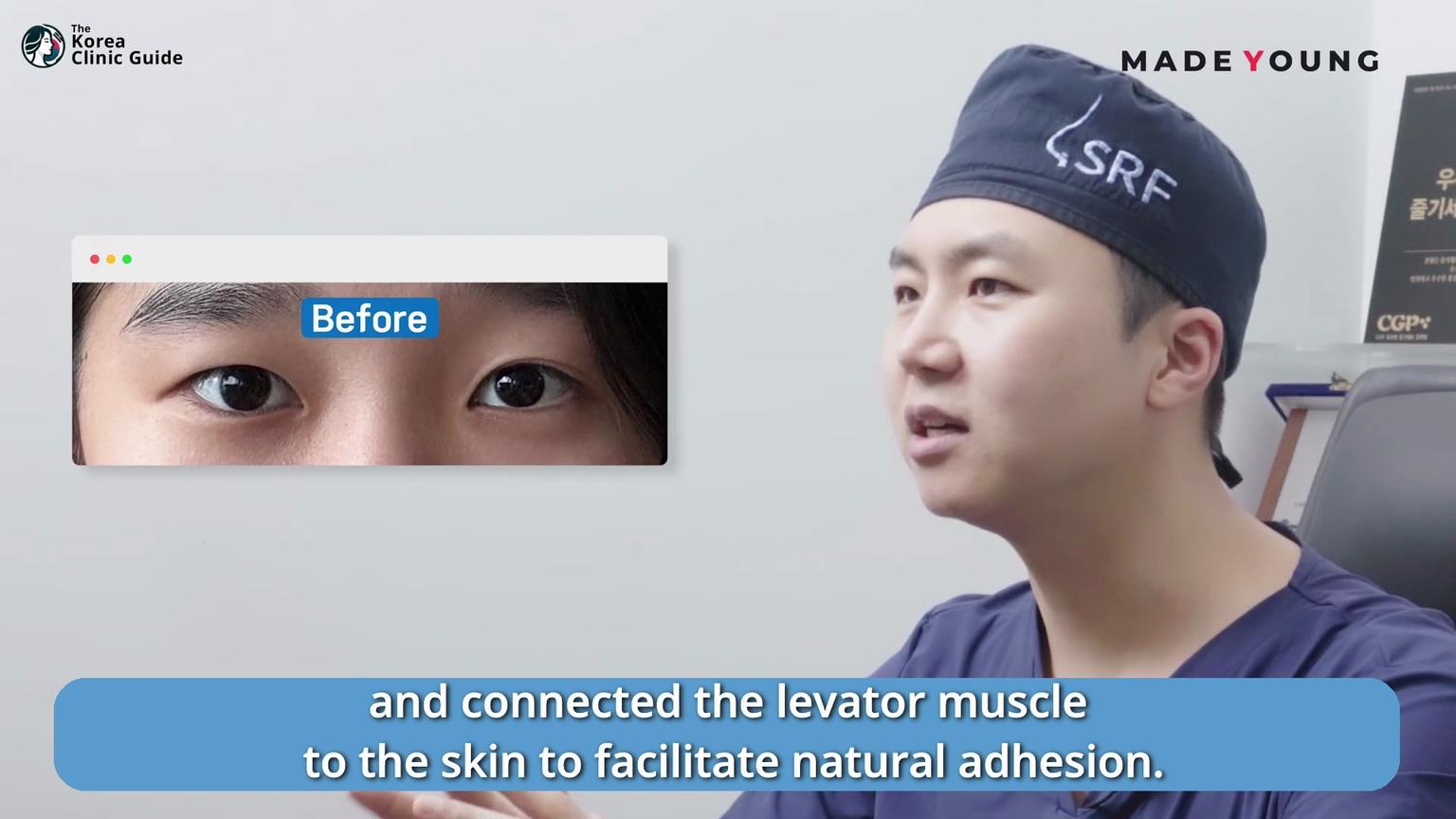
Außerdem bestand eine deutliche Asymmetrie zwischen beiden Augen, und das rechte Oberlid bedeckte die Pupille leicht. In solchen Situationen empfehle ich häufig, die Doppellid-Operation mit einem Eyelid Contouring zu kombinieren, weil die Verbesserung der gesamten Lidform für mehr Symmetrie und einen helleren, offeneren Ausdruck entscheidend sein kann.
Sie wünschte sich eine Lidfalte im „Outline“-Stil, daher plante ich die Linie in einer angemessenen Höhe, die zu ihrer natürlichen Anatomie passte und gleichzeitig das Ungleichgewicht zwischen linker und rechter Seite ausglich. Über kleine Öffnungen entlang der markierten Linie entfernte ich eine angemessene Menge Fett und verband anschließend den Levator-Muskel mit der Haut, um eine natürliche Adhäsion zu fördern.
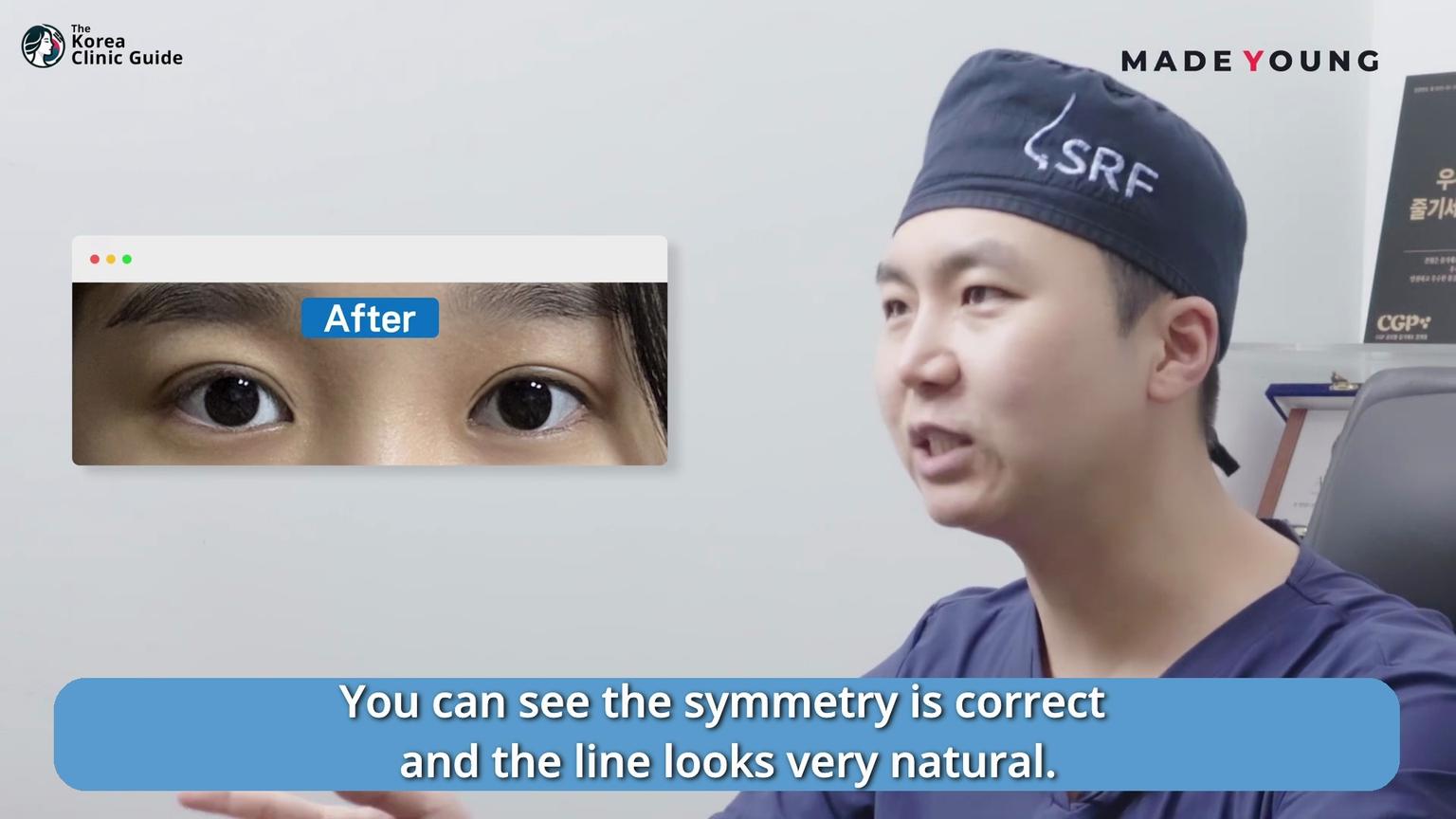
Auf ihren postoperativen Fotos fällt besonders auf, dass sich ihr Gesamteindruck nicht dramatisch verändert hat – und ihre Augen dennoch klar schöner, frischer und ausgewogener wirken. Genau diese Art von Verbesserung suchen viele Patientinnen und Patienten: ein verfeinertes Ergebnis, das sich immer noch wie „ich“ anfühlt – nur optimiert.
Fallbeispiel 2: Eine definierte Linie, ohne zu hoch zu gehen
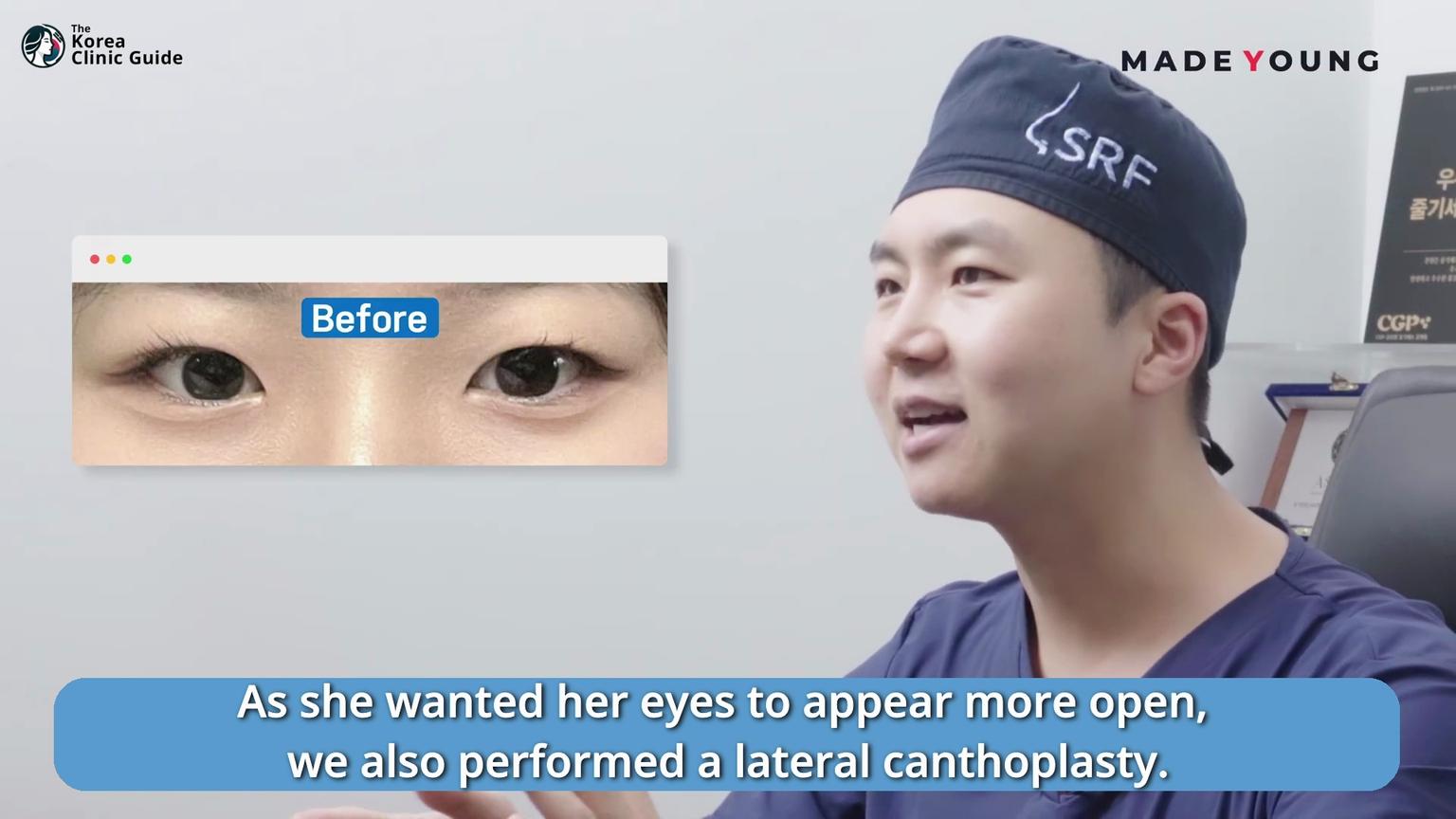
Die zweite Patientin hatte eine innere Doppellidfalte. Sie wünschte sich eine stärker definierte Linie, wollte aber nicht, dass sie zu hoch angesetzt wird – ein sehr häufiger Wunsch, insbesondere bei Patientinnen und Patienten, die eine klare Lidfalte möchten und dabei einen weichen, natürlichen Ausdruck bewahren wollen.
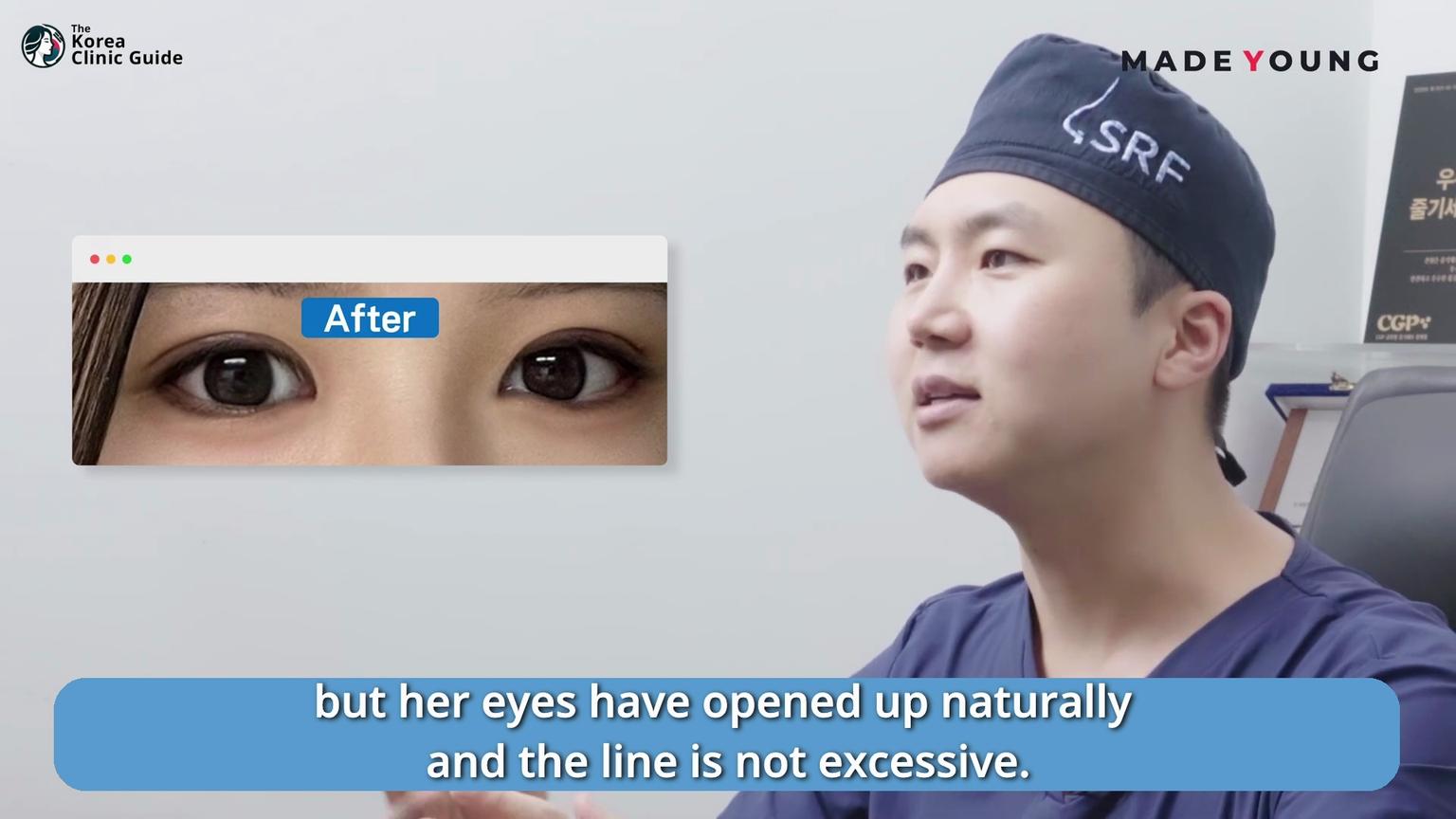
Zudem bestand bei ihr ein leichtes Maß an Ptosis (Herabhängen des Lids), allerdings nicht in ausgeprägter Form. Wie im ersten Fall war ich der Meinung, dass das Ergebnis harmonischer ausfallen würde, wenn Eyelid Contouring mit der Natural-Adhesion-Doppellid-Operation kombiniert wird.
Da sie sich außerdem offenere Augen wünschte, ergänzten wir den Eingriff um eine laterale Kanthoplastik. Auf ihren Nachher-Fotos bleibt ihr Ausdruck vertraut und in seinem Charakter unverändert, doch ihre Augen wirken auf natürliche Weise offener, und die Lidfalte ist klar definiert, ohne übertrieben zu erscheinen. Das ist ein wichtiger Punkt: Ein erfolgreiches Ergebnis ist nicht zwangsläufig eines, das „größer“ wirkt, sondern eines, das ausgewogen, wach und zum Gesicht der Patientin passt.
Für wen ist die Natural-Adhesion-Doppellid-Operation geeignet?
Natural Adhesion kann eine ausgezeichnete Option für Patientinnen und Patienten sein, die sich eine Lidfalte wünschen, die dezent und realistisch wirkt – besonders für Menschen, die sensibel auf den Gedanken reagieren, „zu gemacht“ auszusehen. Es kann auch eine sehr gute Wahl sein, wenn die Haltbarkeit der Linie Priorität hat, vor allem in Fällen, in denen bei einer einfachen nichtinzisionalen Methode ein höheres Risiko des Nachlassens besteht.
Dennoch gilt: Auch wenn der Eingriff von außen einfach erscheinen mag, erfordert das richtige Ergebnis eine sorgfältige Beurteilung. Augenlänge und -breite, Hautdicke, Fettvolumen und feine Asymmetrien spielen dabei eine Rolle. Es geht nicht darum, einfach „eine Linie“ zu schaffen, sondern Ihre Linie – eine, die mit Ihren Gesichtszügen, Ihrer Gesichtsform und Ihrer Augenstruktur harmoniert.
Wie man die richtige Klinik für Natural-Adhesion-Ergebnisse auswählt
Da die Natural-Adhesion-Doppellid-Operation immer beliebter wird, wird sie inzwischen von mehr Kliniken angeboten – doch der Name allein garantiert noch nicht dieselbe Herangehensweise, Analyse oder chirurgische Sorgfalt.
Bei der Wahl einer Klinik empfehle ich Patientinnen und Patienten darauf zu achten, ob sie eine wirklich individuelle 1:1-Beratung erhalten können, bei der ihre Augenstruktur eingehend analysiert wird, anstatt eine Lidfalte nach einem allgemeinen Standard empfohlen zu bekommen. Das Ziel sollte eine Lidfalte sein, die nicht nur zum Augenlid, sondern auch zum gesamten Gesichtsausdruck passt.
Wichtig ist außerdem das System der Klinik für die postoperative Nachsorge, denn eine gute Unterstützung in der Heilungsphase kann sowohl die Zufriedenheit als auch das Endergebnis beeinflussen. Eine sorgfältige Betreuung in Bezug auf Schwellung, Narbenpflege und die Kontrolle des Adhäsionszustands gibt Patientinnen und Patienten während der Genesung mehr Sicherheit und unterstützt stabilere Langzeitergebnisse.
Fazit: Dezente Verfeinerung, mehr Selbstvertrauen
Die Natural-Adhesion-Doppellid-Operation ist deshalb immer beliebter geworden, weil sie genau das anspricht, was viele Patientinnen und Patienten wirklich möchten: eine Lidfalte, die natürlich wirkt, zu den eigenen Gesichtszügen passt und nicht sofort erkennen lässt, dass ein Eingriff durchgeführt wurde. Durch präzise Planung, kontrollierte Gewebeadhäsion und – wenn nötig – die Kombination mit Verfahren wie Eyelid Contouring oder lateraler Kanthoplastik lassen sich Augen formen, die definierter und offener wirken, ohne den ursprünglichen Ausdruck der Patientin oder des Patienten zu verändern.
Wenn Sie eine Doppellid-Operation in Erwägung ziehen, aber eine allzu dramatische Veränderung vermeiden möchten, könnte Natural Adhesion die Methode sein, die am besten zu Ihren Zielen passt – insbesondere dann, wenn sie auf einer sorgfältigen anatomischen Analyse basiert und durch eine gründliche postoperative Betreuung begleitet wird.
Mehr über Made Young Plastic Surgery
Made Young Plastic Surgery im Seouler Stadtteil Gangnam ist eine Premium-Klinik für Patientinnen und Patienten, die in Korea eine Natural-Adhesion-Doppellid-Operation suchen. Die Klinik verbindet ein verfeinertes ästhetisches Urteilsvermögen mit einem starken Anti-Aging-Fokus sowie einem klaren Bekenntnis zu Sicherheit und Transparenz. Einer ihrer wichtigsten Unterschiede ist ein verifiziertes medizinisches Team, das ausschließlich aus hochqualifizierten Ärztinnen und Ärzten mit durchschnittlich mehr als 15 Jahren Erfahrung besteht. Vor jedem Eingriff erfolgen direkte Beratung und Diagnostik durch das medizinische Fachpersonal, damit der Behandlungsplan zur Anatomie der Patientin oder des Patienten und zum gewünschten Lidfaltenstil passt. Die Sicherheit wird durch ein umfassendes System gestärkt, das fest angestellte, fachärztlich zertifizierte Anästhesistinnen und Anästhesisten vor Ort, ein dediziertes 1:1-Monitoring-Modell (eine Anästhesistin bzw. ein Anästhesist überwacht kontinuierlich eine Patientin bzw. einen Patienten), ein Cross-Check-System für schnelle koordinierte Reaktionen in Notfällen sowie eine vollständige CCTV-Abdeckung der Eingriffe für maximale Transparenz umfasst. Nach der Operation profitieren Patientinnen und Patienten von einem separaten, spezialisierten Nachsorgezentrum, das ein vollständiges, systematisches Management nach dem Eingriff bietet. Die Glaubwürdigkeit der Klinik wird zusätzlich durch bedeutende Auszeichnungen und Anerkennungen gestützt, darunter der 2022 Korea No.1 Award, der 1. Platz bei der Korea Customer Satisfaction 2022, die Auswahl als herausragendes Mitglied der Korean Society of Plastic and Reconstructive Surgeons sowie die Zertifizierung durch die Minimally Invasive Aesthetic Surgery Society.
Mehr über diese Klinik finden Sie hier: Made Young Plastic Surgery
Häufig gestellte Fragen
Verwandte Blogbeiträge
Fox Eye Surgery in Korea: Methods, Recovery, Risks and Travel Planning
Fox eye surgery may involve lateral canthopexy, canthoplasty, or a brow lift, selected after assessment of eyelid support, ocular surface health, and facial anatomy. The guide covers candidacy, recovery, travel planning for Korea, aftercare, alternatives, and urgent symptoms requiring in-person care.
Aktualisiert: Oct 21, 2026
Oberlidstraffung in Korea: Top-Kliniken, Kosten, Eingriffsarten & mehr
Erfahren Sie mehr über die Oberlidstraffung in Korea – von Ablauf und Vorteilen des Eingriffs über die Genesung bis hin zu den Gründen, warum Korea zu den führenden Destinationen für Lidchirurgie zählt. Erfahren Sie, was Sie von der Beratung bis zum Endergebnis erwarten können und wie Sie die passende Klinik für natürlich wirkende Resultate auswählen.
Aktualisiert: Oct 13, 2026
Unterlidkantoplastik in Korea | Beste Kliniken, Kosten, Verfahren und mehr
Erfahren Sie alles Wissenswerte über die Unterlidkanthoplastik in Korea – vom Eingriff und seinen Vorteilen über die Erholungsphase bis hin zu dem, was Sie von führenden Kliniken und Chirurgen erwarten können. Erfahren Sie, warum Korea zu den führenden Reisezielen für Unterlidkanthoplastiken zählt und wie Sie den passenden Behandlungsplan für eine natürliche, harmonische Verschönerung der Augen wä
Aktualisiert: Oct 13, 2026
Obere Kanthoplastik in Korea | Beste Kliniken, Kosten, Eingriffsarten und mehr
Entdecken Sie die obere Kanthoplastik in Korea – einen spezialisierten Eingriff zur Verfeinerung des äußeren Augenwinkels, der eine weichere, länglichere Augenform erzielen kann. Erfahren Sie mehr über den Ablauf, die Genesung, die Vorteile und darüber, warum Korea zu den führenden Destinationen für moderne ästhetische Augenoperationen zählt.
Aktualisiert: Oct 13, 2026
Kliniken für Double Eyelid Surgery

RINE Plastic Surgery Clinic | Facelift and Eye Rejuvenation Surgery
Nonhyeon

SH Clinic: Comprehensive Women's, Men's & Couples' Health Services in Korea
Sinsa

THEPLUS Plastic Surgery Korea | Eye, Nose, Face & Body Surgery
Sinsa

Haru Clinic Korea | Fully-Customized Full-Face Non-Surgical Rejuvenation With Threads, Botox & Fillers
Sinsa