Medical Tourism Blog
Restore Lost Facial Volume with Deep Plane Face Lift in Korea: Expert Solutions for Youthful Appearance
Table of contents
- Introduction: Navigating Solutions for Lost Facial Volume
- Understanding "Lost Facial Volume": Causes, Symptoms, and Common Terms
- The Deep Plane Facelift: A Comprehensive Medical Overview
- Your Journey to a Deep Plane Facelift in South Korea: A Step-by-Step Guide
- Deep Plane Facelift Costs: A Medical Tourist's Comparison (South Korea vs. Global)
- Patient Perspectives: Addressing Lost Facial Volume with Deep Plane Facelift
- Conclusion
- References
Considering treatment in Korea? Everything you need to know e.g. — how to avoid scams, visas, interpreters, recovery tips — in our Medical Tourism Master Guide. Plan with confidence in minutes, not weeks!
This guide is designed for anyone dealing with lost facial volume—a common sign of aging marked by the deflation and descent of facial fat pads. We’ll break down the causes and symptoms of this condition, then dive into the Deep Plane Facelift, a leading surgical solution. You’ll find a clear explanation of the procedure, its benefits, and a practical step-by-step guide for those considering treatment in South Korea. We’ll also compare costs across countries and share real patient experiences, showing how the Deep Plane Facelift can restore confidence and a refreshed look.
Introduction: Navigating Solutions for Lost Facial Volume
As we age, our faces change in ways that can make us look older or more tired. One of the most noticeable changes is "lost facial volume," which happens when the fat pads in our face deflate and shift downward. This guide aims to help you understand your options, focusing on the advanced Deep Plane Facelift and what to expect if you’re considering medical tourism in South Korea.
Understanding "Lost Facial Volume": Causes, Symptoms, and Common Terms
Lost facial volume is more than just wrinkles—it’s about deeper changes in the face’s structure.
Definition and Underlying Anatomical Changes
Facial volume loss happens as fat layers and collagen decrease over time, causing the skin to sag and features to droop. Imagine a grape turning into a raisin: as internal moisture and volume disappear, the skin wrinkles and sags. This process involves not just fat loss, but also changes in bone structure, muscle tone, and a drop in collagen and elastin production. That’s why the best treatments go beyond tightening the skin—they address these deeper changes for more natural results.
Aging is the main cause, as our bodies make less collagen and elastin, leading to skin that looks tired and saggy. The bones in our face also shrink and change shape, which causes the soft tissues above to shift. CT scans show that the midface flattens and the area around the eyes can look more sunken—a condition called senile enophthalmos.
Other factors can speed up facial volume loss, including lifestyle choices, stress, genetics, sun exposure, weight loss, smoking, certain medications, and physical trauma like injuries or burns.
Common Symptoms and Affected Facial Areas
Signs of lost facial volume include fine lines, sagging cheeks, shrinking lips, hollowness under the eyes, sunken temples, and loose skin along the jawline (jowls). Vertical lines may appear around the mouth, and the skin can look drier and less firm. The most affected areas are under the eyes, lips, cheeks, jawline, forehead, and temples, sometimes giving a gaunt or skeletal look.
Common Pseudonyms and Medical Terms
You might hear "facial volume loss," "soft-tissue atrophy," or "skin laxity" used to describe this condition. A newer term, "Ozempic Face," refers to facial volume loss after rapid weight loss, especially from medications like semaglutide. This shows that volume loss isn’t just about aging—lifestyle changes and medical treatments can also play a role, affecting people of all ages.
The grape-to-raisin analogy helps people visualize what’s happening beneath the skin. Beyond the physical changes, facial aging can impact self-esteem and social interactions, making effective solutions even more important.
The Deep Plane Facelift: A Comprehensive Medical Overview
The Deep Plane Facelift is a major step forward in facial rejuvenation, offering more natural and lasting results than older facelift methods.
Definition and Distinction from Traditional Facelifts
The Deep Plane Facelift is an advanced surgery that lifts the Superficial Musculoaponeurotic System (SMAS), subcutaneous fat, and skin together as one unit. This is why it’s sometimes called a "Composite Facelift." Unlike traditional facelifts, which mostly tighten the skin and superficial tissues, the Deep Plane Facelift works beneath the SMAS and releases the retaining ligaments, allowing deeper tissues to be repositioned. This makes it especially effective for the midface, where aging often shows first.
Anatomical Layers Targeted and Surgical Technique
This procedure targets the SMAS layer, which is key for facial movement. Surgeons work within natural, avascular planes—spaces with fewer blood vessels—to minimize trauma and speed up recovery. The face has five layers: skin, subcutaneous tissue, SMAS, deep fat, and periosteum. The Deep Plane Facelift focuses on the SMAS and deeper layers, lifting them as a unit.
Incisions are made along natural creases near the ear and hairline to hide scars. The surgeon lifts and repositions the deeper tissues, trims excess skin, and redrapes the skin for a smooth, natural look. This approach reduces swelling and bruising, making recovery easier.
Key Benefits and Expected Results
- Natural-Looking Results: The Deep Plane Facelift avoids the "pulled" look of older facelifts, restoring youthful contours while preserving natural expressions.
- Longer-Lasting Outcomes: By correcting the deeper structures, results can last 10 to 15 years or more—much longer than traditional facelifts.
- Comprehensive Rejuvenation: It reshapes the jawline, cheekbones, and neck, and restores volume in the cheeks. It can be combined with other procedures for a full facial refresh.
- Less Visible Scarring: Tension is placed on deeper tissues, so skin incisions heal with minimal scarring.
- Shorter Recovery Time: Working in natural planes means less trauma, swelling, and bruising, so most people can return to work within two weeks.
Your Journey to a Deep Plane Facelift in South Korea: A Step-by-Step Guide
South Korea is a top destination for aesthetic surgery, offering advanced techniques and excellent care for international patients.
Pre-Operative Phase
- Initial Consultation and Evaluation: Your journey starts with a detailed consultation, where the surgeon assesses your face and discusses your goals. Many clinics use 3D imaging to preview results.
- Medical History Review and Candidacy Assessment: The surgeon reviews your health and determines if you’re a good candidate—usually ages 45 to 65, but sometimes younger or older if you have significant volume loss.
- Pre-Operative Guidelines: You’ll get instructions to stop smoking, avoid certain medications, and follow dietary recommendations to ensure a smooth recovery.
- International Patient Specifics (Online Consultation): Many clinics offer online consultations, where you submit photos and medical history for a remote assessment and quote.
The Surgical Procedure
- Anesthesia: Most Deep Plane Facelifts are done under general anesthesia, though local anesthesia with sedation is sometimes used.
- Duration of Surgery: The procedure takes 3 to 5 hours, depending on the extent and any additional procedures.
- Key Surgical Steps:
- Incision Placement: Incisions are made around the hairline and ears to hide scars.
- Accessing Deep Plane: The skin is separated to reach the SMAS.
- Tissue Repositioning: Deeper tissues are lifted and repositioned as a unit.
- Excess Skin Removal and Closure: Extra skin is trimmed, and the rest is redraped for a natural finish.
Post-Operative Care and Recovery
- Immediate Post-Operative Care: After surgery, you’ll be monitored and may go home the same day or after one night. Rest and keep your head elevated to reduce swelling.
- Managing Swelling, Bruising, and Discomfort: Swelling and bruising peak around day three and fade over one to three months. Pain is usually mild and managed with medication.
- Suture Removal and Wound Care: Sutures are removed after about a week, and you’ll need to keep incisions clean.
- Gradual Return to Activities: Light activity is fine after a week; most people return to work in one to two weeks. Avoid strenuous exercise for 3-4 weeks.
- Typical Recovery Timeline for International Patients: Many stay in Korea for one to two weeks for follow-ups. Full results develop over six months to a year, with scars fading over time.
- Follow-up Appointments: Regular check-ins with your surgeon are important for the best results.
Deep Plane Facelift Costs: A Medical Tourist's Comparison (South Korea vs. Global)
Cost is a big factor for many patients, and South Korea offers a strong balance of quality and value.
Best Clinics in Korea for Lost Facial Volume
Listed below are the best clinics in Korea for lost facial volume:
| Clinic Name | Key Features | Special Techniques |
|---|---|---|
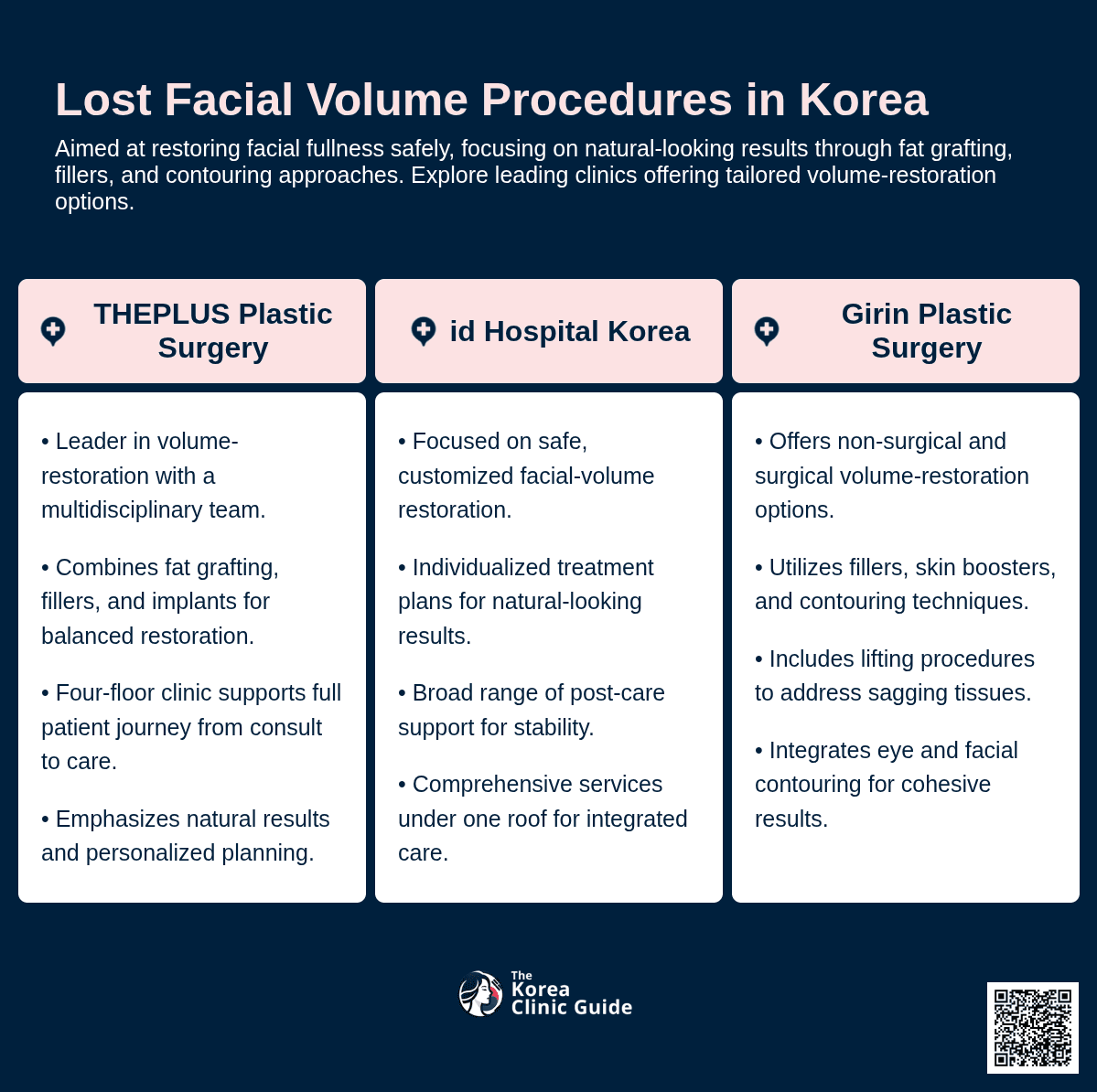
| THEPLUS Plastic Surgery | THEPLUS Plastic Surgery is widely regarded as a top destination in Korea for addressing lost facial volume because it combines research-driven expertise, leadership-level surgeons, and a clinic system designed for safe, natural-looking restoration. Located in Garosu-gil, Gangnam, Seoul, THEPLUS spans four floors built to support the entire journey from detailed consultation to surgery and post-operative care, with an emphasis on close, individualized communication. Dr. Kim, a board-certified plastic surgeon recognized internationally through society memberships and awards for his 3D implant research, brings an advanced understanding of how structural support and volume interact with facial contouring, guided by his philosophy of achieving a harmonious balance that enhances a patient’s existing features rather than changing them unnaturally; his role as an annual educator for other surgeons further reflects his standing in the field. Dr. Jeong, President of the Korean Society of Plastic Surgeons, adds exceptional authority and global academic presence through frequent conference lectures and panels, applying his principle of uniting function and beauty to individualized treatment planning. Supported by Dr. Lee’s strong hospital-based experience and commitment to natural, long-lasting outcomes, the team offers a full range of volume-restoring options—such as face fat grafting, fillers, and facial implants—while maintaining a standard of safety and continuous advancement reflected in their ongoing research publications and participation in domestic and international symposiums. | Face fat grafting, fillers, and facial implants; volume-restoring options; safe, natural-looking restoration; four-floor clinic designed to support the full journey from consultation to post-operative care; emphasis on close, individualized communication; ongoing research publications and participation in domestic and international symposiums. |
| id Hospital Korea | ID Hospital Korea is a leading clinic in Korea dedicated to facial treatments, with a clear goal of delivering plastic surgery outcomes that are both safe and beautifully refined. For patients concerned about lost facial volume, ID Hospital emphasizes customized treatment planning based on individual facial structure and balance, prioritizing patient safety at every step. With a broad range of facial and aesthetic services delivered under one roof, the clinic supports patients from consultation through treatment and systematic post-care, helping restore volume in a natural-looking way while maintaining overall harmony of the face. | Focused on facial treatments, emphasizing facial balance and harmony; Customized plastic surgery plans tailored to each patient’s features and goals, supporting natural-looking volume restoration; Patient safety-oriented treatment; Systematic post-care program; Comprehensive range of related treatment options for lifting, skin clinic services, and petit plastic surgery; Advanced surgical capabilities for complex facial cases including orthognathic surgery and facial contouring; Full spectrum of aesthetic care including eye/nose plastic surgery, dentistry support, and breast surgery. |
| Girin Plastic Surgery | Girin Plastic Surgery, located near Gangnam Station, is a destination clinic for patients concerned about lost facial volume and overall facial aging. Led by some of Korea’s most prestigious plastic surgeons, Girin focuses on safe, professional care with results designed to look balanced and satisfying, whether the goal is subtle rejuvenation or a more noticeable transformation. For volume-related concerns, Girin offers both non-surgical and surgical options that can be tailored to the areas that commonly appear hollow or tired over time. Non-surgical treatments such as filler and skin booster can help restore contours and improve skin quality, while lifting procedures like Ulthera, Inmode, Oligio, AirJet, mini facelift, or facelift can support sagging tissues that contribute to a deflated look. When volume loss is accompanied by structural aging changes, Girin’s expertise across eye procedures (such as under eye fat repositioning, lower blepharoplasty, and ptosis correction) and facial contouring procedures can be integrated into a comprehensive plan for a refreshed, more youthful appearance. | Non-surgical and surgical volume-restoration options; non-surgical treatments such as filler and skin booster; lifting procedures including Ulthera, Inmode, Oligio, AirJet, mini facelift, facelift; eye procedures like under eye fat repositioning, lower blepharoplasty, ptosis correction; facial contouring. |
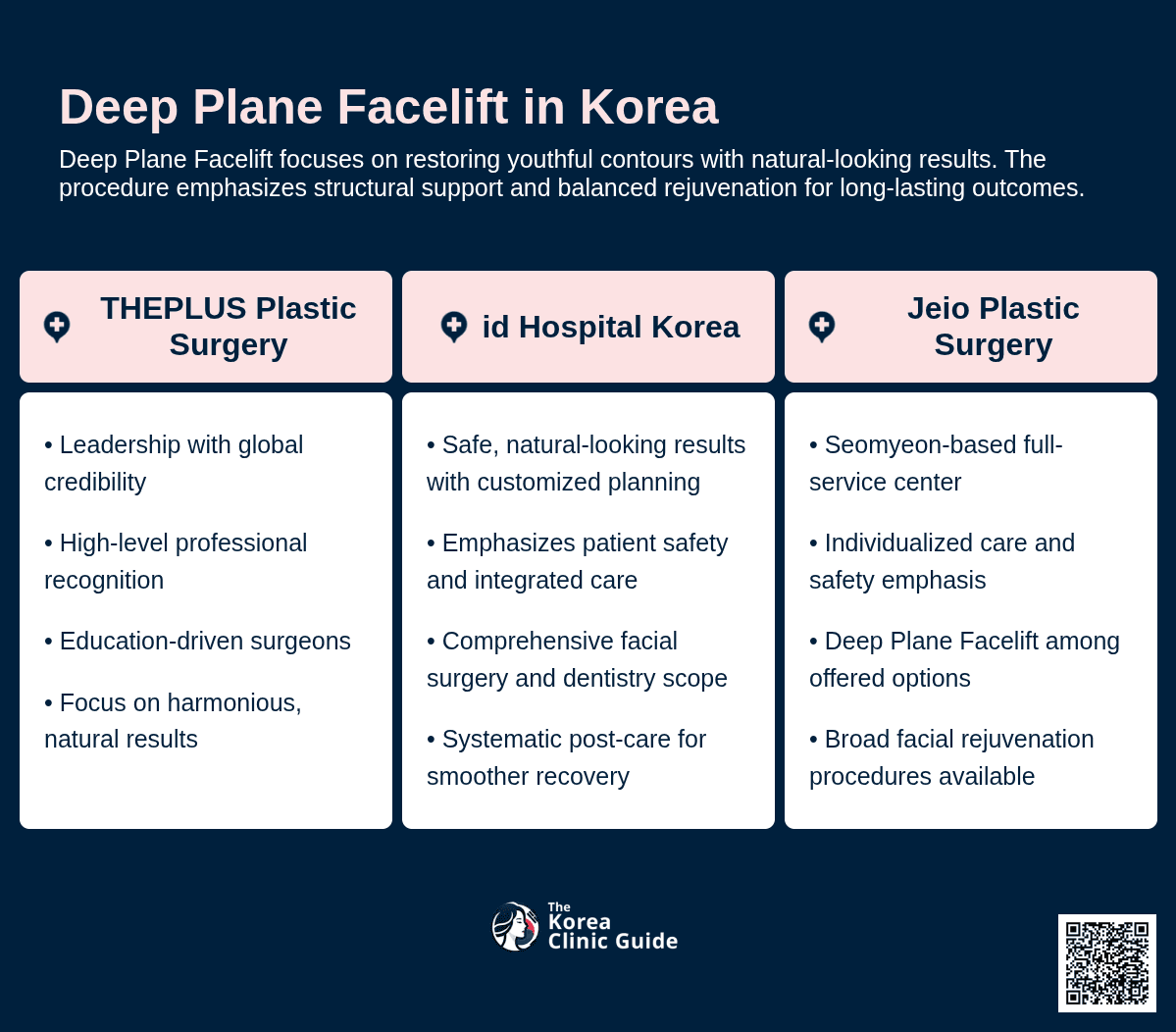
THEPLUS Plastic Surgery
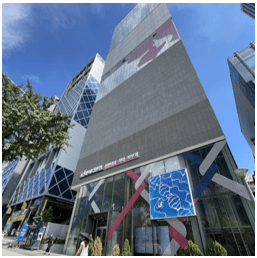
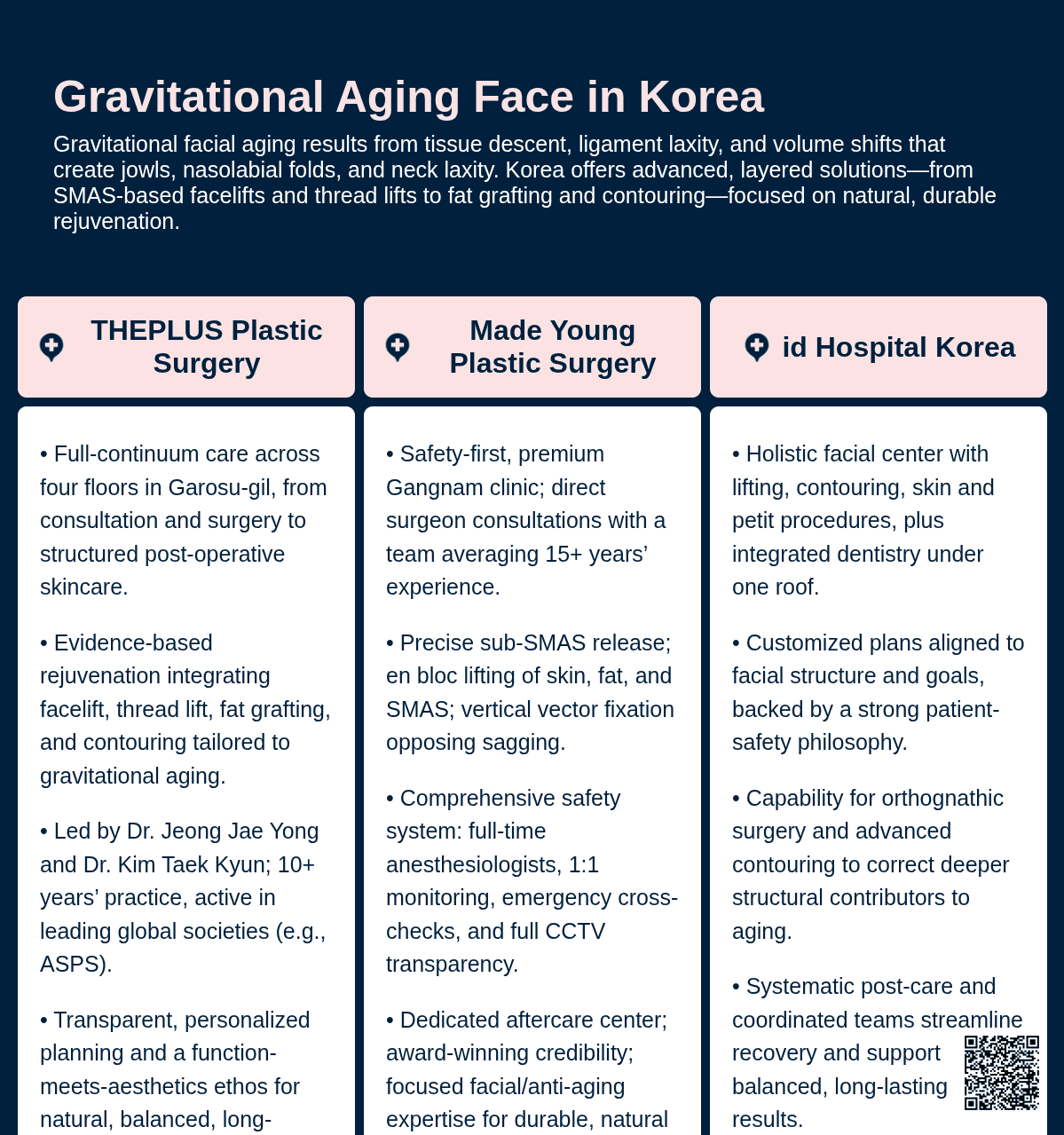
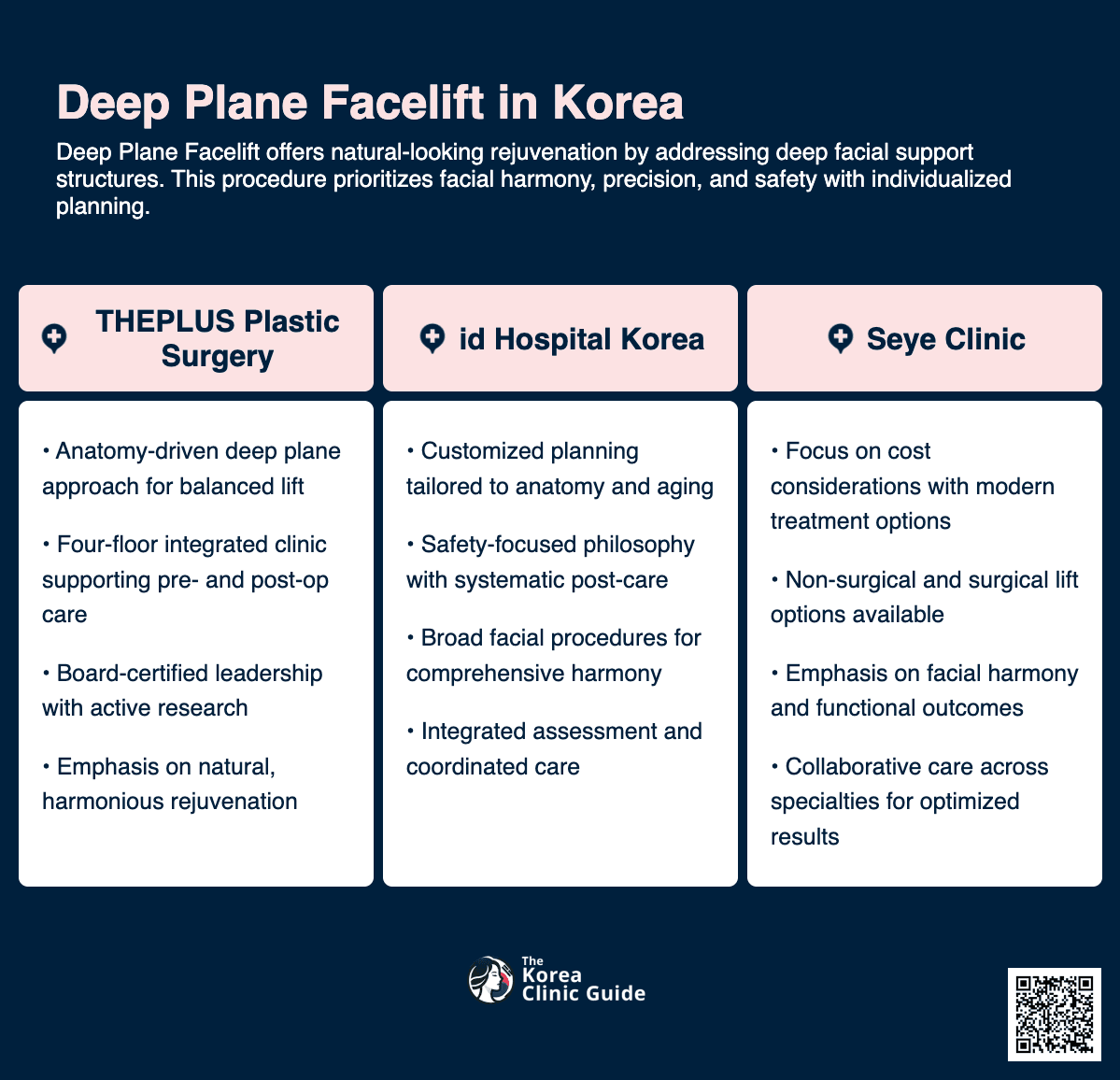
THEPLUS Plastic Surgery is widely regarded as a top destination in Korea for addressing lost facial volume because it combines research-driven expertise, leadership-level surgeons, and a clinic system designed for safe, natural-looking restoration. Located in Garosu-gil, Gangnam, Seoul, THEPLUS spans four floors built to support the entire journey from detailed consultation to surgery and post-operative care, with an emphasis on close, individualized communication. Dr. Kim, a board-certified plastic surgeon recognized internationally through society memberships and awards for his 3D implant research, brings an advanced understanding of how structural support and volume interact with facial contouring, guided by his philosophy of achieving a harmonious balance that enhances a patient’s existing features rather than changing them unnaturally; his role as an annual educator for other surgeons further reflects his standing in the field. Dr. Jeong, President of the Korean Society of Plastic Surgeons, adds exceptional authority and global academic presence through frequent conference lectures and panels, applying his principle of uniting function and beauty to individualized treatment planning. Supported by Dr. Lee’s strong hospital-based experience and commitment to natural, long-lasting outcomes, the team offers a full range of volume-restoring options—such as face fat grafting, fillers, and facial implants—while maintaining a standard of safety and continuous advancement reflected in their ongoing research publications and participation in domestic and international symposiums.
You can check out their website here: THEPLUS Plastic Surgery Website
id Hospital Korea
ID Hospital Korea is a leading clinic in Korea dedicated to facial treatments, with a clear goal of delivering plastic surgery outcomes that are both safe and beautifully refined. For patients concerned about lost facial volume, ID Hospital emphasizes customized treatment planning based on individual facial structure and balance, prioritizing patient safety at every step. With a broad range of facial and aesthetic services delivered under one roof, the clinic supports patients from consultation through treatment and systematic post-care, helping restore volume in a natural-looking way while maintaining overall harmony of the face.
- Focused on facial treatments, making it a strong choice for addressing lost facial volume with an emphasis on facial balance and harmony
- Customized plastic surgery plans tailored to each patient’s features and goals, supporting natural-looking volume restoration
- Patient safety-oriented treatment approach, designed to reduce risk and support confident decision-making
- Systematic post-care program to support recovery and help maintain results
- Comprehensive range of related treatment options for integrated facial improvement, including lifting, skin clinic services, and petit plastic surgery
- Advanced surgical capabilities for complex facial cases when needed, including orthognathic surgery and facial contouring
- Full spectrum of aesthetic care available, including eye/nose plastic surgery, dentistry support, and additional services such as breast surgery for broader aesthetic needs
Find more about this clinic here: id Hospital Korea Website
Girin Plastic Surgery
Girin Plastic Surgery, located near Gangnam Station, is a destination clinic for patients concerned about lost facial volume and overall facial aging. Led by some of Korea’s most prestigious plastic surgeons, Girin focuses on safe, professional care with results designed to look balanced and satisfying, whether the goal is subtle rejuvenation or a more noticeable transformation.
For volume-related concerns, Girin offers both non-surgical and surgical options that can be tailored to the areas that commonly appear hollow or tired over time. Non-surgical treatments such as filler and skin booster can help restore contours and improve skin quality, while lifting procedures like Ulthera, Inmode, Oligio, AirJet, mini facelift, or facelift can support sagging tissues that contribute to a deflated look. When volume loss is accompanied by structural aging changes, Girin’s expertise across eye procedures (such as under eye fat repositioning, lower blepharoplasty, and ptosis correction) and facial contouring procedures can be integrated into a comprehensive plan for a refreshed, more youthful appearance.
Find more about this clinic here: Girin Plastic Surgery Website
Summary of Deep Plane Facelift Costs in South Korea
A Deep Plane Facelift in South Korea costs between ₩8,000,000 and ₩15,000,000 (about $6,000 to $11,000 USD). Prices vary by clinic, surgeon, and technique. Many clinics offer packages that include accommodation and local transportation.
Comparison with Other Countries from a Medical Tourist's Perspective
- United States / United Kingdom: $17,000 to $48,000 USD for a general facelift (Deep Plane Facelift may cost more).
- Thailand: $5,500 to $11,800 USD for Deep Plane Facelift.
- Turkey: $6,000 to $14,000 USD.
- Mexico: $5,500 to $13,000 USD.
Choosing medical tourism in these countries can save you up to 70-80% compared to the US or UK. Many clinics offer all-inclusive packages covering surgery, consultations, post-op care, accommodation, and transfers. Quality is high, with many surgeons trained internationally and hospitals accredited by global organizations.
Consideration of Additional Travel-Related Expenses (for South Korea)
Don’t forget to budget for:
- Flights: $700 to $1,500 USD round-trip from the US/Europe; $100 to $500 USD from nearby countries.
- Accommodation: $25 to $60 USD per night for budget options; $120+ USD for luxury hotels.
- Local Transportation: Subway/bus fares under $1.50 USD; taxis from $2.50 USD.
- Food and Miscellaneous: $25 to $40 USD per day.
Total trip costs, including surgery and travel, range from $6,460 to $13,650 USD.
Table 1: Deep Plane Facelift Cost Comparison (South Korea vs. Key Countries)
| Country | Average Deep Plane Facelift Cost Range (USD) | Typical Inclusions (Beyond Surgery) | Potential Savings (vs. US/UK) |
|---|---|---|---|
| South Korea | $6,000 – $11,000 | Consultations, surgery, anesthesia, post-op care, some packages include accommodation & transfers | Up to 70% |
| USA | $17,000 – $48,000 (General Facelift) | Surgeon fees, anesthesia, operating room | N/A |
| UK | $13,300 – $18,000 (General Facelift) | Surgeon fees, anesthesia, operating room | N/A |
| Thailand | $5,500 – $11,800 | Consultations, surgery, anesthesia, hospitalization, medications, post-op care, accommodation, transfers | Up to 75% |
| Turkey | $6,000 – $14,000 | Consultations, surgery, anesthesia, hospitalization, medications, post-op care, accommodation, transfers | Up to 80% |
| Mexico | $5,500 – $13,000 | Consultations, surgery, anesthesia, hospitalization, medications, post-op care, accommodation, transfers | Up to 70% |
Note: US/UK costs are for general facelifts; Deep Plane Facelift costs may be higher. Actual prices vary by surgeon, clinic, and case complexity.
Patient Perspectives: Addressing Lost Facial Volume with Deep Plane Facelift
Patients who choose the Deep Plane Facelift for lost facial volume often report dramatic improvements in appearance and confidence.
How Deep Plane Addresses Lost Facial Volume and Sagging
The Deep Plane Facelift is especially effective for sagging skin, deep wrinkles, and lost facial volume. By lifting deeper tissues, it restores fullness to the cheeks and midface, corrects jowls and neck laxity, and creates a more youthful contour. Sometimes, fat grafting is added for even better volume restoration.
Aesthetic Improvements and Natural Results
Patients love that the Deep Plane Facelift delivers a refreshed, natural look—never "overdone." It smooths deep folds, improves skin texture, and restores definition. For example, a 52-year-old woman with volume loss and sagging achieved fuller cheeks, a sharper jawline, and a rested appearance without looking "wind-blown." This natural transformation boosts self-esteem and social confidence.
Longevity of Results and Patient Satisfaction
Results from a Deep Plane Facelift typically last 10 to 15 years or more. Patients often feel more confident and satisfied, with minimal discomfort during recovery. Many return to social activities within 10 days and describe feeling like the best version of themselves.
Conclusion
Lost facial volume is a complex aging issue involving fat, bone, and collagen changes. The Deep Plane Facelift offers a highly effective, natural-looking, and long-lasting solution by targeting the deeper facial layers. South Korea stands out as a top destination for this procedure, offering advanced care and competitive pricing. For the best results, thorough research and consultation with a qualified surgeon are essential.
References
1, 2, 3, 4, 5, 6, 7, 8, 9, 10, 11, 12, 13, 14, 15, 16, 17, 18, 19, 20, 21