Medical Tourism Blog
Korea Hair Transplant on Scar: Effective Solutions for Large Scalp Scar Treatment
Table of contents
- The Medical Procedure: Hair Transplantation on Scar Tissue
- Best Clinics in Korea for Large Scalp Scar
- Medical Tourism in Korea: A Patient's Guide
- Costs and Financial Logistics
- The Patient Experience and Realistic Outcomes
- Conclusion
- References
Considering treatment in Korea? Everything you need to know e.g. — how to avoid scams, visas, interpreters, recovery tips — in our Medical Tourism Master Guide. Plan with confidence in minutes, not weeks!
This guide explores solutions for individuals with a "large scalp scar," typically arising after surgery, trauma, or certain medical conditions. It focuses on hair transplantation as the main treatment, highlighting specific challenges when dealing with scarred tissue. The report covers the medical and surgical complexities, logistics for medical tourism in South Korea, and concludes that while hair transplantation can be life-changing, the best results depend on skilled surgeons, realistic expectations, and a careful, tailored approach.
Clinical Terminology and Pseudonyms
The phrase "large scalp scar" often points to cicatricial alopecia, also called "scarring alopecia." This condition involves permanent hair loss, as hair follicles are replaced by fibrous scar tissue.
There are two main types:
- Primary Cicatricial Alopecia (PCA): Here, inflammation specifically targets and destroys follicles (examples include lichen planopilaris, central centrifugal cicatricial alopecia (CCCA), and folliculitis decalvans). These require stabilization of the underlying condition before surgery.
- Secondary Cicatricial Alopecia: This form results from external causes—like trauma, burns, infection, or surgery—making the tissue stable but biologically different.
Recognizing the distinction helps shape an effective treatment plan. While primary types need medical management to quiet inflammation, secondary scars require different considerations due to changed tissue characteristics.
Pathophysiology of Scar Tissue and Hair Loss
Hair can’t regrow on scarred skin primarily because injury or illness destroys both follicles and their stem cells. This destruction is permanent. The body replaces them with dense, fibrous connective tissue that lacks vital elements like blood vessels and sebaceous glands, key for healthy hair. Because of this transformation, hair transplantation faces its greatest challenge—restoring hair to a "barren" area.
The Medical Procedure: Hair Transplantation on Scar Tissue
FUE vs. FUT: A Comparative Analysis for Scarred Scalps
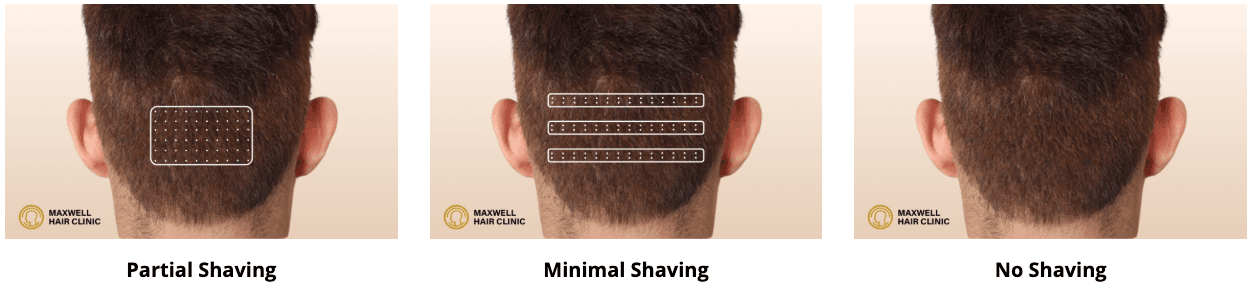
Deciding between Follicular Unit Extraction (FUE) and Follicular Unit Transplantation (FUT) is crucial. Both have distinct pros and cons, especially for scarred scalps.
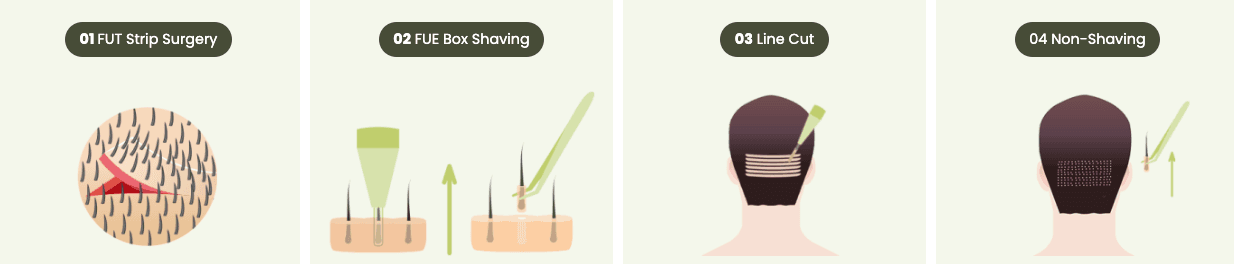
- Follicular Unit Extraction (FUE): This approach extracts individual grafts from the donor area, creating barely visible, dot-like scars. FUE is generally preferred for patients with scalp scars, as it avoids producing a new, linear scar.
- Follicular Unit Transplantation (FUT): Also known as strip surgery, this method removes an entire strip of scalp, which is then dissected for grafts. It's efficient for large cases and usually less expensive, but leaves a visible linear scar.
For those with a large scalp scar, FUE is often favored because it avoids adding more noticeable scarring, aligning with the goal of natural restoration.
Unique Challenges and Clinical Considerations
Transplanting onto scar tissue is far more challenging than standard procedures:
- Poor Blood Supply: Scar tissue is less vascular, risking lower graft survival due to limited nutrients and oxygen.
- Tissue Stiffness: Scarred skin is hard and less flexible, making precise incisions and graft placement difficult.
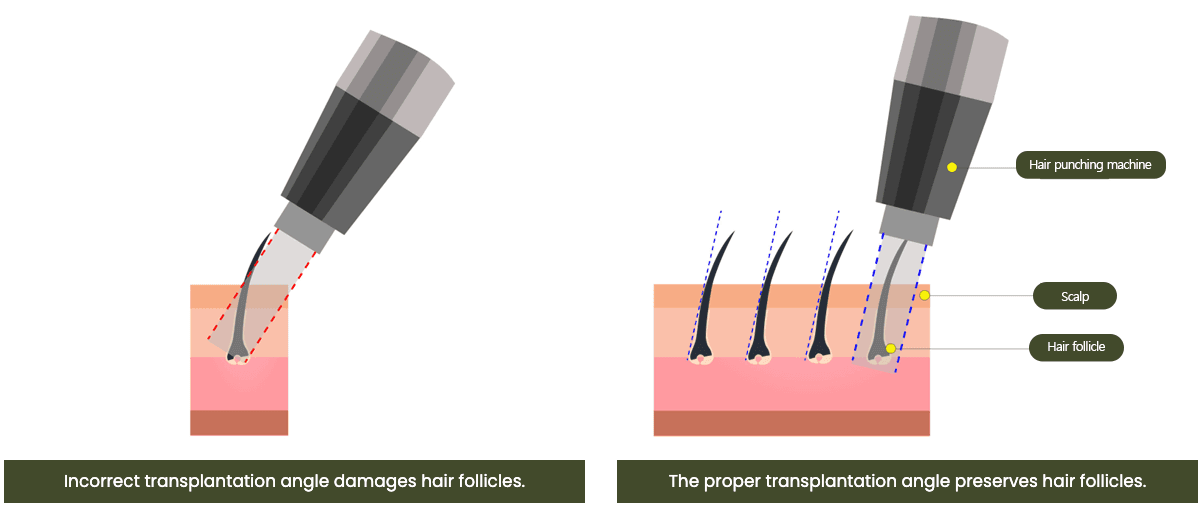
- Lack of Follicle Pattern: Unlike regular scalp surgery, there’s no natural guide for angle or direction, demanding more from the surgeon’s artistic and technical abilities.
To address these issues, experienced surgeons may use:
- Multiple Sessions: Since graft survival is lower and high density is harder to achieve in one sitting, several procedures might be needed.
- Adjunctive Therapies: PRP therapy can boost blood flow, while treatments like non-ablative fractional laser or microfat injections help improve scar tissue, increasing graft survival.
Interestingly, results vary by scar type; hair grows better in burn scars than deeper incision scars, likely due to the superficial nature of burn damage.
The Surgical Process: From Consultation to Recovery
The hair transplantation journey starts with assessment of the scar’s size, type, and blood flow. Sometimes a biopsy checks for ongoing inflammation. On surgery day, local anesthesia is used, and grafts are harvested (via FUE or FUT) from healthy areas, then carefully placed in the scarred region.
Procedures take 4–8 hours and detailed aftercare instructions follow, covering scalp washing, medications, and restrictions. It’s normal for transplanted hair to shed initially, with visible regrowth taking several months to a year.
Best Clinics in Korea for Large Scalp Scar
Listed below are the best clinics in Korea for large scalp scar:
| Clinic Name | Key Features | Special Techniques |
|---|---|---|
| Maxwell Hair Clinic | Maxwell Hair Clinic, a top-tier international hair restoration center in Korea since 2007, is widely recognized for advanced, natural-looking solutions to complex hair loss challenges—including large scalp scars. With more than 60,000 successful hair transplants and over 500,000 total treatment cases, Maxwell has been honored as Korea’s best clinic consecutively since 2011. Led by founder Dr. Noh Yoon Woo—voted Korea’s top hair transplant doctor in 2010, recipient of the “best of the best Doctor award,” listed among the top 1 percent of plastic surgeons in 2012, and an executive member of the Korean Society of Hair Restoration—the clinic blends rigorous diagnosis, scientific precision, and aesthetic artistry. Patients benefit from a compassionate, long-term care philosophy; tailored options across FUT, FUE, or combined approaches; and seamless support for international visitors. By focusing on the follicle cell “engine” rather than superficial care, Maxwell consistently delivers durable outcomes with refined design and minimal scarring. | - Natural design process: a two-stage plan starts with precise laser-guided mapping and is refined by personalized manual adjustment for the most natural hairline and seamless transitions over scarred areas. - Gradation transplantation: finer hairs are placed at the front and denser bundles behind, creating a hyper-natural blend that helps camouflage large scars. - Facial design enhancement: customized hairline and forehead ratio planning to create a smaller, more attractive face while strategically softening the visual impact of scars. - Tailored surgical method: comprehensive diagnosis of scalp elasticity, donor density, and hair loss pattern guides the choice of FUT, FUE, or a combined approach for optimal coverage of large defects. - Scar minimization techniques: ultra-small punches (0.9–1.2 mm) and meticulous double suturing make procedure-related scars barely visible, crucial when correcting pre-existing scarring. - Expertise in revision and scar care: dedicated revision surgery and scar laser treatment improve prior outcomes and reduce scar visibility. - Rapid recovery with high survival: next-day shampooing and return to daily life within two days; an experienced surgical team supports high graft survival for reliable density over scar tissue. - Post-transplant growth optimization: growth factors applied to the transplanted area and specialized magnetic field therapy enhance graft take and maturation. - Proven experience and data-driven planning: insights from 500,000+ treatment cases and 60,000+ transplants enable precise, personalized strategies for complex scar patterns. - Treatment philosophy centered on follicle biology: a focus on follicle cells—the “engine” of hair production—promotes long-term graft health rather than short-lived cosmetic fixes. - FUT and FUE versatility: FUT efficiently harvests grafts for large-area coverage, while FUE offers targeted refinement and flexibility around scarred zones; combined strategies maximize outcomes for extensive scars. - International patient support: comprehensive services, including online consultations and travel coordination, streamline care for global patients seeking specialized scar correction. - Natural aesthetics that last: the combination of laser-guided design, manual artistry, and gradation implantation yields hairlines and densities that look natural from every angle—even across large scars. - Patient-centered care: a strong doctor–patient bond ensures transparent planning, no unnecessary procedures, and attentive aftercare tailored to scar healing and hair growth stages. |
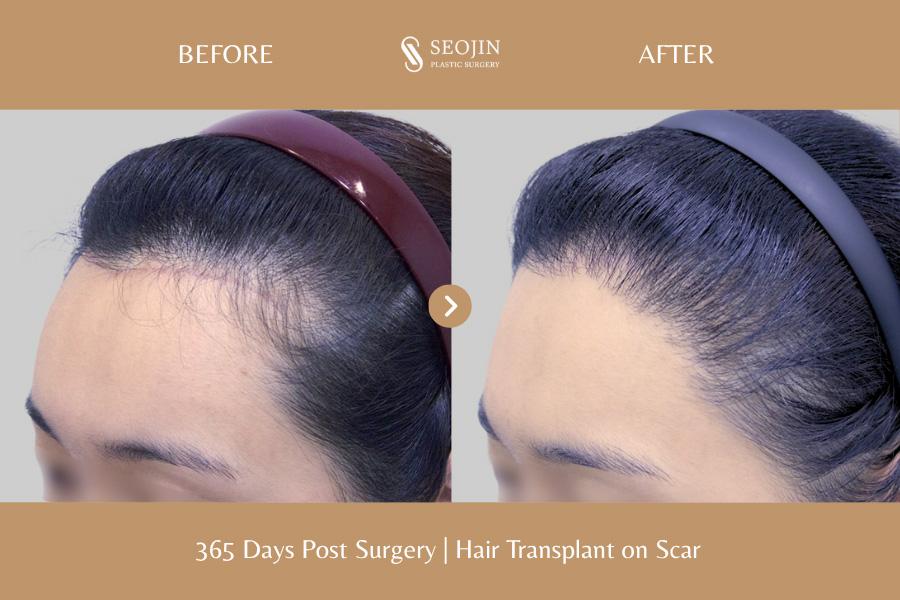
| Seojin Plastic Surgery Clinic | Seojin Plastic Surgery Clinic, located in the heart of Gangnam, Seoul, is a leading destination for complex hair restoration, including large scalp scar repair. Led by Dr. Lee Hyungmin—honored as one of Korea’s Top 100 Good Doctors in 2022—with more than 16 years of experience and over 2,100 hair transplant surgeries performed, the clinic delivers true one-doctor, end‑to‑end care. Recognized as No. 1 in the Hair Transplant category at the KBS N Korea Broadcasting Brand Awards in 2025, Seojin combines proven outcomes with attentive, personalized treatment planning. For extensive scar coverage, Seojin offers a breadth of techniques uncommon at many centers, including line cut (FUT), no‑cut (FUE), and hybrid approaches, allowing customized strategies based on scar characteristics, scalp laxity, and donor availability. The clinic performs large‑scale sessions of approximately 6,000–10,000 hairs using combined methods, and employs Hairline Gradation Transplant design to blend fine, medium, and thick follicles for the most natural transition across scar borders. A cold follicle separation room safeguards graft vitality, while PRP is transplanted with follicles to support survival and reduce inflammation—especially valuable where graft take is critical or for international patients with limited follow‑up. With meticulous placement techniques to minimize the “popping” phenomenon and adjunct options like scalp micropigmentation for additional camouflage, Seojin focuses on durable, natural‑looking results that respect facial balance and symmetry. | - Line cut (FUT) and no-cut (FUE) and hybrid approaches for extensive scar coverage. - Hairline Gradation Transplant design to blend fine, medium, and thick follicles for natural transition across scar borders. - Large-scale sessions of approximately 6,000–10,000 hairs using combined methods. - Cold follicle separation room safeguards graft vitality. - PRP transplanted with follicles to support survival and reduce inflammation. - Meticulous placement techniques to minimize the “popping” phenomenon. - Scalp micropigmentation as adjunct for camouflage. - Durable, natural-looking results that respect facial balance and symmetry. |
| Okay Plastic Surgery Clinic | Okay Plastic Surgery Clinic is a trusted destination in Korea for patients seeking advanced solutions for large scalp scars. Rooted in sincerity, precision, and individualized treatment, the clinic takes a transformative, patient-centered approach led by a team of specialized professionals, including a renowned female plastic surgeon with extensive experience. With over 3,000 successful cases and a commitment to cutting-edge techniques, the team delivers tailored care that aligns with each patient’s unique needs and aesthetic goals. For large scalp scars, the clinic’s Hairline Center offers hairline correction, hair transplant, and forehead reduction—specialized procedures that require a surgeon’s expertise and skill to restore natural balance and coverage. Complementing these services, the dedicated Scar and Keloid Clinics provide comprehensive evaluation and management to optimize both function and appearance, ensuring a seamless journey from consultation through recovery. | - Hairline Center offers hairline correction, hair transplant, and forehead reduction. - Scar and Keloid Clinics provide comprehensive evaluation and management to optimize both function and appearance. - Patient-centered approach with sincerity, precision, and individualized treatment. |
Maxwell Hair Clinic
Maxwell Hair Clinic, a top-tier international hair restoration center in Korea since 2007, is widely recognized for advanced, natural-looking solutions to complex hair loss challenges—including large scalp scars. With more than 60,000 successful hair transplants and over 500,000 total treatment cases, Maxwell has been honored as Korea’s best clinic consecutively since 2011. Led by founder Dr. Noh Yoon Woo—voted Korea’s top hair transplant doctor in 2010, recipient of the “best of the best Doctor award,” listed among the top 1 percent of plastic surgeons in 2012, and an executive member of the Korean Society of Hair Restoration—the clinic blends rigorous diagnosis, scientific precision, and aesthetic artistry. Patients benefit from a compassionate, long-term care philosophy; tailored options across FUT, FUE, or combined approaches; and seamless support for international visitors. By focusing on the follicle cell “engine” rather than superficial care, Maxwell consistently delivers durable outcomes with refined design and minimal scarring.
Why Maxwell Hair Clinic is the best choice for large scalp scars
- Natural design process: a two-stage plan starts with precise laser-guided mapping and is refined by personalized manual adjustment for the most natural hairline and seamless transitions over scarred areas.
- Gradation transplantation: finer hairs are placed at the front and denser bundles behind, creating a hyper-natural blend that helps camouflage large scars.
- Facial design enhancement: customized hairline and forehead ratio planning to create a smaller, more attractive face while strategically softening the visual impact of scars.
- Tailored surgical method: comprehensive diagnosis of scalp elasticity, donor density, and hair loss pattern guides the choice of FUT, FUE, or a combined approach for optimal coverage of large defects.
- Scar minimization techniques: ultra-small punches (0.9–1.2 mm) and meticulous double suturing make procedure-related scars barely visible, crucial when correcting pre-existing scarring.
- Expertise in revision and scar care: dedicated revision surgery and scar laser treatment improve prior outcomes and reduce scar visibility.
- Rapid recovery with high survival: next-day shampooing and return to daily life within two days; an experienced surgical team supports high graft survival for reliable density over scar tissue.
- Post-transplant growth optimization: growth factors applied to the transplanted area and specialized magnetic field therapy enhance graft take and maturation.
- Proven experience and data-driven planning: insights from 500,000+ treatment cases and 60,000+ transplants enable precise, personalized strategies for complex scar patterns.
- Treatment philosophy centered on follicle biology: a focus on follicle cells—the “engine” of hair production—promotes long-term graft health rather than short-lived cosmetic fixes.
- FUT and FUE versatility: FUT efficiently harvests grafts for large-area coverage, while FUE offers targeted refinement and flexibility around scarred zones; combined strategies maximize outcomes for extensive scars.
- International patient support: comprehensive services, including online consultations and travel coordination, streamline care for global patients seeking specialized scar correction.
- Natural aesthetics that last: the combination of laser-guided design, manual artistry, and gradation implantation yields hairlines and densities that look natural from every angle—even across large scars.
- Patient-centered care: a strong doctor–patient bond ensures transparent planning, no unnecessary procedures, and attentive aftercare tailored to scar healing and hair growth stages.
You can check out their website here: Maxwell Hair Clinic Website
Seojin Plastic Surgery Clinic
Located in the heart of Gangnam, Seoul, Seojin Plastic Surgery Clinic is a leading destination for complex hair restoration, including large scalp scar repair. Led by Dr. Lee Hyungmin—honored as one of Korea’s Top 100 Good Doctors in 2022—with more than 16 years of experience and over 2,100 hair transplant surgeries performed, the clinic delivers true one-doctor, end‑to‑end care. Recognized as No. 1 in the Hair Transplant category at the KBS N Korea Broadcasting Brand Awards in 2025, Seojin combines proven outcomes with attentive, personalized treatment planning.
For extensive scar coverage, Seojin offers a breadth of techniques uncommon at many centers, including line cut (FUT), no‑cut (FUE), and hybrid approaches, allowing customized strategies based on scar characteristics, scalp laxity, and donor availability. The clinic performs large‑scale sessions of approximately 6,000–10,000 hairs using combined methods, and employs Hairline Gradation Transplant design to blend fine, medium, and thick follicles for the most natural transition across scar borders. A cold follicle separation room safeguards graft vitality, while PRP is transplanted with follicles to support survival and reduce inflammation—especially valuable where graft take is critical or for international patients with limited follow‑up. With meticulous placement techniques to minimize the “popping” phenomenon and adjunct options like scalp micropigmentation for additional camouflage, Seojin focuses on durable, natural‑looking results that respect facial balance and symmetry.
You can check out their website here: Seojin Plastic Surgery Clinic Website
Okay Plastic Surgery Clinic
Okay Plastic Surgery Clinic is a trusted destination in Korea for patients seeking advanced solutions for large scalp scars. Rooted in sincerity, precision, and individualized treatment, the clinic takes a transformative, patient-centered approach led by a team of specialized professionals, including a renowned female plastic surgeon with extensive experience. With over 3,000 successful cases and a commitment to cutting-edge techniques, the team delivers tailored care that aligns with each patient’s unique needs and aesthetic goals.
For large scalp scars, the clinic’s Hairline Center offers hairline correction, hair transplant, and forehead reduction—specialized procedures that require a surgeon’s expertise and skill to restore natural balance and coverage. Complementing these services, the dedicated Scar and Keloid Clinics provide comprehensive evaluation and management to optimize both function and appearance, ensuring a seamless journey from consultation through recovery.
Find more about this clinic here: Okay Plastic Surgery Clinic Website
Medical Tourism in Korea: A Patient's Guide
The South Korean Medical Tourism Ecosystem
South Korea is a global hub for cosmetic surgery, including hair restoration. Its clinics are recognized for:
- Specialized Expertise: Clinics feature renowned surgeons with extensive case histories.
- Technological Advancement: Advanced gadgets, sometimes even robots, enhance results.
- Ethical Practices: Clinics maintain safe and sustainable harvesting approaches.
- Concierge Service: Many offer bundled packages including transportation, translation, accommodation, and aftercare, ensuring a worry-free patient experience.
Step-by-Step Process for the International Patient
International patients typically follow this process:
- Initial Online Consultation: Share photos and fill out a questionnaire for a preliminary plan and quote.
- Secure Your Date: Confirm with a deposit, usually 10% of the cost.
- Travel and In-Person Consultation: Clinics help with airport pickups. A face-to-face meeting finalizes the treatment plan.
- The Procedure: Under local anesthesia, surgery proceeds—all with translator support.
- Post-operative Check-ups: Clinics conduct checks after surgery. Stitch removal (for FUT) happens a week or two later.
- Departure and Aftercare: Patients leave with a care kit and instructions, plus remote support as needed.
Verifying Credentials and Choosing a Clinic
Selecting the right specialist matters most. Questions to ask include:
- How many scar hair transplants have you performed?
- What parts of the surgery do you personally handle?
- What treatments are used to boost graft survival?
- Are before-and-after photos for similar cases available?
Look for board certifications (e.g., ABHRS, ISHRS, IAHRS), which reflect required case minimums and recognized expertise.
Costs and Financial Logistics
Cost of Hair Transplants in South Korea
Costs depend on graft numbers, procedure type, and clinic. On average, hair transplants cost $6,880 (ranging $3,900–$11,200). Per graft, prices are usually around $1.50 to $5.00. For reference, 2,000 grafts cost $1,500–$4,500, and 5,000 grafts can reach $8,900. FUE often costs more than FUT.
A Global Cost Comparison
Here’s how South Korea compares globally:
| Country | Average Cost (USD) | Cost per Graft (USD) | Package Inclusions | Value Proposition |
|---|---|---|---|---|
| South Korea | $4,000 - $10,500 | $1.50 - $5.00 | Consults, surgery, aftercare, transportation, translation, lodging | High quality, advanced tech, personalized attention |
| Turkey | $1,500 - $4,500 | $0.55 - $2.50 | Usually all-inclusive | Low cost, high volume |
| Mexico | $2,600 - $5,000 | N/A | Varies | Convenient for US, affordable, high quality |
| USA/UK | $8,000 - $20,000+ | $3.00 - $10.00 | Often charged separately | Top-tier, premium pricing |
While Turkey offers lower prices, South Korea justifies its costs with higher-quality, individualized care and greater technical expertise—factors that matter most with complex cases like scarred scalps.
The Value Proposition of Korean Medical Tourism
For patients with scalp scars, South Korea’s "quality over quantity" model means each case receives careful attention. Full-service packages and a skilled surgeon’s focus make the investment worthwhile, especially when tackling complicated scar tissue.
The Patient Experience and Realistic Outcomes
The Psychological Impact of Scalp Scars
Scalp scars often affect more than appearance; they can deeply impact self-confidence and emotional well-being. Many patients describe feeling transformed—or even "reborn"—after successful treatment. However, unmet expectations or poor results can worsen psychological distress, emphasizing the need for realistic, honest discussions from the outset.
Setting Realistic Expectations for Results
Recovery is gradual, with final results visible around one year post-surgery. Graft survival on scars is lower (60–90%) compared to healthy scalps (90%+), so perfect density may require multiple procedures.
Table 2: Graft Survival Rates and Challenges on Scar Tissue
| Challenge on Scar Tissue | Impact | Reported Graft Survival Rates |
|---|---|---|
| Poor Blood Supply | Lower graft survival | FUE on scarring alopecia: ~81% |
| Tissue Stiffness | Hinders precise placement | Traumatic scars: 78% |
| Lack of Follicle Pattern | Requires extra surgical artistry | Burn vs. incision: burns do better |
| Need for Multiple Sessions | Often needed for best results | Multiple sessions common |
Non-Surgical Treatments and Patient Stories
In addition to hair transplants, Scalp Micropigmentation (SMP) can camouflage scars by replicating the look of hair follicles using pigment—often reducing visibility by up to 80%. This can be used alone or alongside transplantation.
Other helpful treatments:
- Topical Treatments: Silicone, retinoids, or certain oils to soften scars.
- Laser Therapy and Microneedling: For improved texture and collagen.
- Scalp Massage: To promote blood flow and soften tissue.
Success stories abound, with patients successfully hiding all sorts of scalp scars, from burns to failed transplants. The key is a careful plan and a skilled surgeon.
Conclusion
Hair transplantation for large scalp scars is effective but more complex than standard treatments. The best results come from choosing an experienced surgeon, having realistic expectations, and considering both surgical and non-surgical options. South Korea’s medical tourism offerings stand out for those seeking high-quality care for challenging cases.