Medical Tourism Blog
Say Goodbye to Dark Armpits: Armpit Whitening Procedures in Korea for Smooth, Even Skin
Table of contents
- Why Do Underarms Darken? Main Causes
- First Steps and Deciding When to Consult an Expert
- "Armpit Whitening": Professional Medical Procedures
- Best Clinics in Korea for Dark Armpits
- Why South Korea Is Popular for Armpit Whitening
- Cost of Armpit Whitening: South Korea vs. Other Countries
- Patient Experiences and What to Expect
- Conclusions
- References
Considering treatment in Korea? Everything you need to know e.g. — how to avoid scams, visas, interpreters, recovery tips — in our Medical Tourism Master Guide. Plan with confidence in minutes, not weeks!
Darker underarm skin, often called "dark armpits," is a very common cosmetic issue affecting self-confidence and daily comfort for many people. Medically known as axillary hyperpigmentation, this discoloration is sometimes more than just a skin-deep problem—it can indicate underlying health issues. This guide aims to explain axillary hyperpigmentation, the reasons behind it, and available treatment options, especially for those considering procedures in South Korea. Remember, while this overview can help empower your decisions about skin health, only a qualified dermatologist can provide an accurate diagnosis and appropriate, individualized care.
Everyday Terms and Medical Language
Most people describe this issue with terms like "dark underarms" or "underarm darkening," reflecting how widespread the concern is. In the medical world, this is precisely referred to as "axillary hyperpigmentation"—a darkening of the underarm skin compared to nearby areas.
Why Does Skin Darken? Melanin and Melanocytes
All skin color is determined by melanocytes, cells that produce melanin, our body’s natural pigment. When melanocytes make extra melanin or multiply, the skin gets darker. Treatments for dark underarms often focus on reducing melanin production or removing excess pigment.
Why Do Underarms Darken? Main Causes
Axillary hyperpigmentation can result from a mix of health-related and lifestyle factors. Understanding the cause is essential for choosing the right treatment.
Underlying Medical Conditions (Internal Factors)
Acanthosis Nigricans (AN): Major Culprit
Acanthosis Nigricans commonly causes underarm darkening, forming dry, velvety, and thick patches (sometimes itchy or smelly) in skin folds. While not dangerous itself, AN can signal deeper health problems:
- Insulin Resistance and Diabetes: Increased insulin can boost melanin production, causing darker patches. Treating the insulin imbalance can help fade AN.
- Obesity: Overweight individuals have a much higher risk—more than half of people very overweight develop darkened underarms.
- Hormonal Disorders: Conditions like Polycystic Ovary Syndrome (PCOS), Cushing syndrome, acromegaly, and hypothyroidism raise the risk.
- Medication-Induced AN: Some drugs, including certain birth controls, steroids, insulin, niacin, and some antipsychotics, can trigger AN.
- Malignant Acanthosis Nigricans: Rarely, sudden darkening can signal internal cancers, especially in the stomach, liver, or colon. Rapid skin changes always require immediate medical attention.
Other Skin Disorders
- Tinea Versicolor (fungal infection): Causes patchy discoloration, sometimes in armpits.
- Seborrheic Dermatitis, Psoriasis, Eczema, Lichen Planus: These inflammatory skin issues often cause post-inflammatory hyperpigmentation (PIH), especially in people with skin of color. Treating the root disease is crucial.
External Factors and Lifestyle Influences
- Friction and Irritation: Shaving, waxing, tight clothes, and rough scrubbing can irritate skin, stimulating melanin production.
- Irritating Products: Certain deodorants, antiperspirants, and fragrances can provoke inflammation, leading to darkening.
- Post-Inflammatory Hyperpigmentation (PIH): Injury or repeated irritation triggers excess melanin during healing, especially in darker-skinned individuals. PIH is generally more responsive to cosmetic treatments than AN.
Genetic and Racial Factors
Sometimes, genetically driven ‘constitutional hyperpigmentation’ means a person’s underarms are naturally darker, particularly among people with Native American, African American, or Hispanic backgrounds. These cases are hard to treat cosmetically, with minimal improvement expected. Managing expectations is key.
First Steps and Deciding When to Consult an Expert
Not all darkening is serious, but some cases call for medical help.
Self-Care for Mild Cases
- Use gentle cleansers (like Cetaphil or CeraVe) and fragrance-free moisturizers.
- Consider less-frequent shaving/waxing or switch to laser hair removal to limit irritation.
- Choose deodorants for sensitive skin or go fragrance-free, and wear looser clothing.
- If linked to weight or insulin issues, focus on healthy eating and weight management.
- Be cautious with home remedies; avoid lemon juice (known to irritate). While potato juice or coconut oil are sometimes suggested, always avoid anything abrasive.
When to Seek a Dermatologist
- New or worsening discoloration or texture change.
- Thickened, velvety, itchy, or odorous patches—classic for AN.
- Sudden rapid darkening—get a medical evaluation fast.
- Possible underlying health conditions (diabetes or hormone issues).
- No improvement with self-care.
"Armpit Whitening": Professional Medical Procedures
Several effective treatments can address axillary hyperpigmentation, particularly when self-care isn't enough.
Topical Lightening Agents
Topical creams are a gentle, non-invasive first-line professional treatment.
Key Ingredients
- Hydroquinone: Blocks melanin production; strictly regulated and usually short-term.
- Tretinoin: Retinoid boosting skin turnover.
- Corticosteroids: Combat inflammation.
- Other actives: Kojic acid, licorice extract, vitamin C, niacinamide, azelaic acid, arbutin, tranexamic acid.
They require consistent use over weeks to months. Main risks are irritation and sun sensitivity—never self-prescribe strong agents.
Chemical Peels
Chemical peels use acids to exfoliate pigmented outer skin, revealing lighter layers below.
- Light peels: Glycolic, salicylic, or lactic acids—good for mild cases, quick recovery.
- Medium/Deep peels: TCA or phenol for tougher hyperpigmentation—longer recovery, redness may last weeks.
- Effectiveness: Good for PIH, less so for Acanthosis Nigricans.
Table: Chemical Peel Recovery Timeline and Considerations
| Peel Type | Key Ingredients | Recovery/Healing Time | Makeup Allowed | Aftercare |
|---|---|---|---|---|
| Light | Glycolic, Salicylic, Lactic | 1-7 days | Next day | Sun protection, moisturize |
| Medium | TCA | 7-14 days | 5-7 days post-peel | Use ointments, avoid picking |
| Deep | Phenol | ~2 weeks (skin), months (redness) | ~2 weeks | Surgical dressing, strict aftercare |
Laser Therapy
Laser treatments target melanin for precise, gradual lightening—often the best option for persistent cases.
How Lasers Work
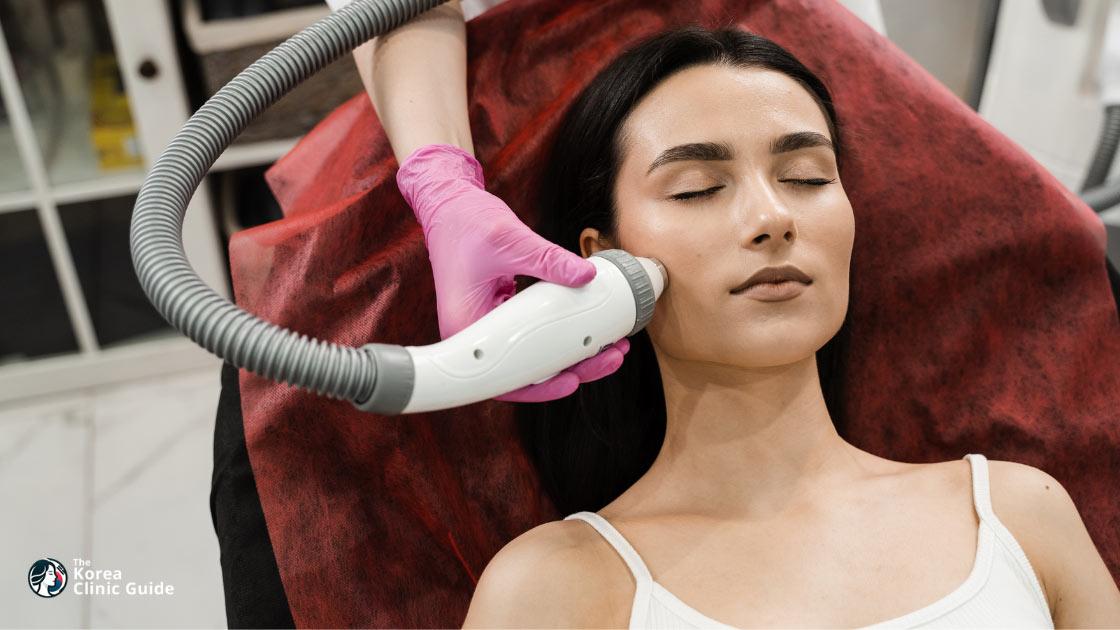
Lasers like Q-Switched Nd:YAG, PicoSure, or fractional lasers break down pigment, while often reducing hair growth and irritation. Each laser type addresses different depths and types of pigmentation. Treatments are quick (15–30 min per session) and spaced out across 4–8 sessions for full effect.
Aftercare
After laser treatment, follow detailed aftercare: avoid hot showers, keep the area clean, skip harsh products, and use sun protection. Temporary redness or sensitivity is expected.
Table: Laser Treatment Aftercare Instructions
| When | Key Steps |
|---|---|
| 0-24 hours | Avoid hot showers, keep area clean/dry, no deodorant |
| 24-48 hours | Continue avoiding products and sweating |
| Weeks-Months | No picking, use recommended skincare, stay sun-safe |
Side Effects
Lasers are usually safe but may sometimes cause temporary hyper- or hypopigmentation, rare scarring, or infection—especially if aftercare is ignored.
Microdermabrasion and Dermabrasion
These exfoliation procedures mechanically remove surface layers. Microdermabrasion is gentle and safe for all skin types, with no downtime. Several sessions may be needed for best results.
Other Options
- Mesotherapy: Micro-injections of brightening ingredients like tranexamic or kojic acid.
- HydraFacial: Exfoliates and nourishes, great as a complementary therapy.
What to Keep in Mind
- Always get a dermatologist’s assessment before starting treatment.
- Some causes (like PIH) respond well to procedures, but AN or genetic cases are stubborn.
- Most treatments need multiple sessions and ongoing maintenance for sustained improvement.
Best Clinics in Korea for Dark Armpits
Listed below are the best clinics in Korea for dark armpits:
| Clinic Name | Key Features | Special Techniques |
|---|---|---|
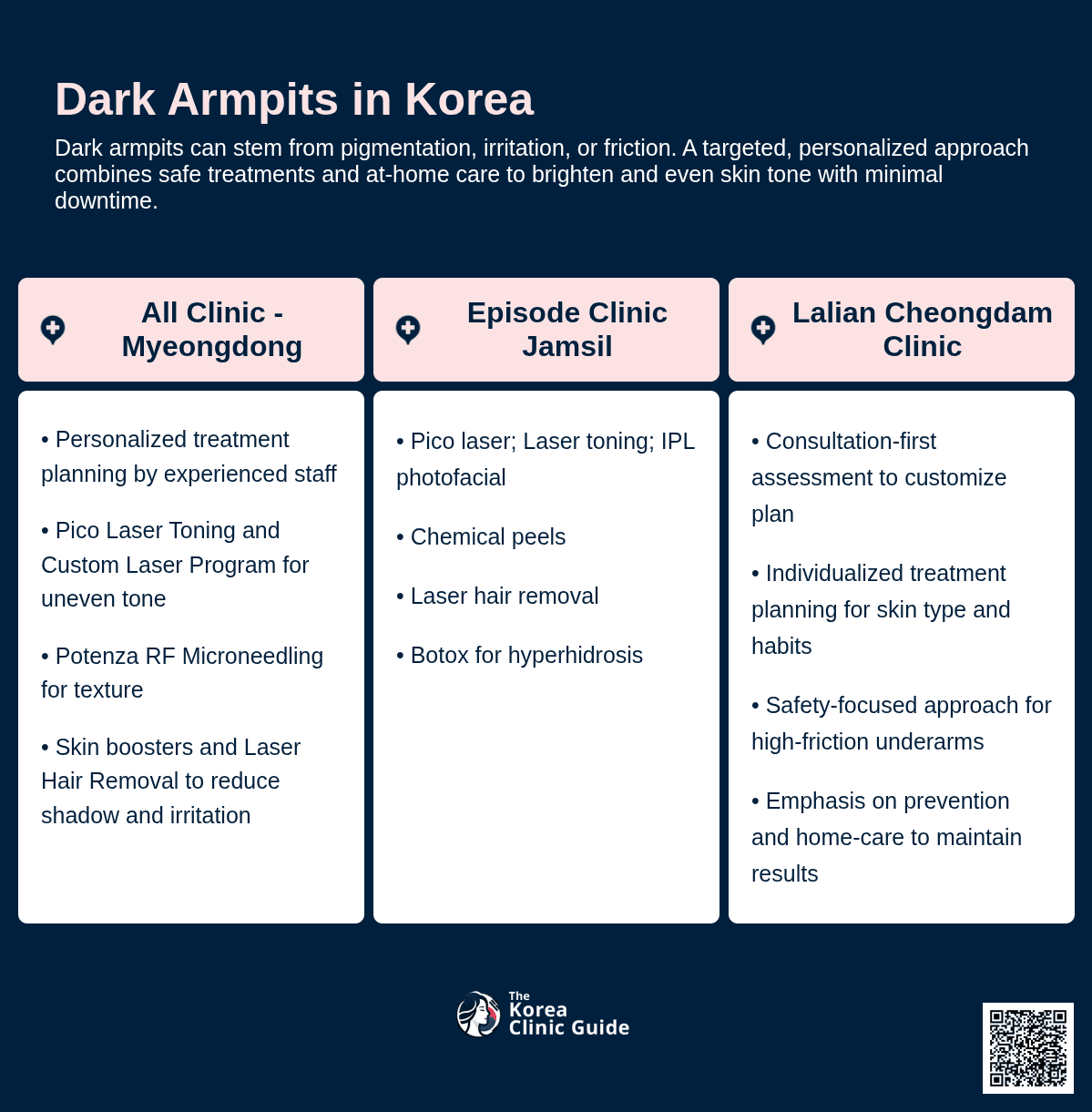
| All Clinic | Personalized treatment planning by experienced medical staff, supporting careful selection of energy settings and techniques for delicate underarm skin; Pigmentation-focused laser options such as Pico Laser Toning and Custom Laser Program to help address uneven tone and discoloration with minimal downtime; Texture and skin-quality improvement tools like Potenza RF Microneedling to refine roughness and support smoother-looking underarms when appropriate; Skin boosters (Hyaluronic Acid Skin Booster, Rejuran Healer, Exosome Skin Booster) that can enhance hydration, resilience, and recovery—especially helpful when underarms are prone to dryness or irritation; Medical-grade Laser Hair Removal to reduce hair and stubble shadow that can make underarms appear darker, while also minimizing shaving-related irritation over time; Comprehensive non-surgical capabilities in one clinic, allowing combination approaches and planned sequencing of treatments for more balanced, natural-looking results | Pico Laser Toning; Custom Laser Program; Potenza RF Microneedling; Hyaluronic Acid Skin Booster; Rejuran Healer; Exosome Skin Booster; Medical-grade Laser Hair Removal |
| Episode Clinic Jamsil | Episode Clinic Jamsil offers a comprehensive, non-surgical dermatology approach that targets the most common drivers of underarm discoloration—pigment buildup, irritation from hair removal and friction, post-inflammatory marks, and even sweat-related inflammation—using a customizable mix of evidence-based procedures. For pigmentation and uneven tone, options such as pico laser, laser toning, and IPL photofacial can help break up and gradually fade discoloration while improving overall clarity, and chemical peels can further brighten and smooth texture by accelerating healthy cell turnover. If shadowing or recurring irritation from shaving is a key contributor, laser hair removal helps reduce regrowth long term, lowering ongoing friction and inflammation that can worsen darkening. For patients whose underarm sweating contributes to irritation and staining, Botox for hyperhidrosis can significantly reduce sweat production for several months, supporting a calmer skin environment that’s easier to keep bright and even. Because Episode Clinic Jamsil focuses on face, skin, and body enhancement with a broad portfolio of injectables, lasers, and skin rejuvenation treatments, it is well-positioned to tailor a realistic, stepwise plan for underarm tone and texture rather than relying on a one-size-fits-all solution; if you can share Episode Clinic Jamsil’s official procedure list, the treatment names and recommendations can be matched precisely to their current offerings. | Pico laser; Laser toning; IPL photofacial; Chemical peels; Laser hair removal; Botox for hyperhidrosis |
| Lalian Cheongdam Clinic | Consultation-first approach: Dark armpit discoloration has multiple causes, and a careful evaluation helps avoid “one-size-fits-all” treatments that can worsen irritation or rebound pigmentation. Choosing a clinic that prioritizes assessment and tailored planning is often what leads to better, safer results. | Not specified; emphasis on assessment, diagnosis, and individualized planning |
| Individualized treatment planning: Effective underarm brightening usually requires adjusting the plan to your skin type, sensitivity, hair-removal habits, and friction triggers. A clinic that personalizes parameters and aftercare is better positioned to improve tone while minimizing downtime and recurrence. | ||
| Focus on safety in a high-friction, high-sensitivity area: The underarm is prone to irritation, contact dermatitis, and post-inflammatory hyperpigmentation, so conservative technique and appropriate aftercare matter as much as the procedure itself. A clinic that treats underarms as a special area (not “just like the face”) is typically a better fit for dark armpit concerns. | ||
| Willingness to address contributing habits: Long-term improvement often depends on reducing triggers such as shaving irritation, tight clothing friction, and harsh deodorants, not just performing a single in-clinic session. A clinic that counsels on prevention and maintenance tends to deliver more stable results. | ||
| Clear explanation of realistic outcomes and timeline: Underarm pigmentation commonly improves gradually over several weeks to months, often requiring multiple sessions and consistent home care. A clinic that sets expectations clearly and explains risks (including temporary darkening or irritation) helps patients make safer, more informed decisions. | ||
| Find more about this clinic here: Lalian Cheongdam Clinic Website |
All Clinic
All Clinic in Myeongdong is a personalized, non-surgical aesthetic clinic where experienced medical staff tailor each treatment plan to the individual—an important advantage for dark armpits, since underarm discoloration can be caused or worsened by multiple factors such as pigmentation, irritation, texture changes, and hair-related shadowing. With a wide range of device-based and injectable options, the clinic can build a targeted, step-by-step program aimed at brightening, smoothing, and improving overall underarm appearance while prioritizing safety in this sensitive area.
- Personalized treatment planning by experienced medical staff, supporting careful selection of energy settings and techniques for delicate underarm skin
- Pigmentation-focused laser options such as Pico Laser Toning and Custom Laser Program to help address uneven tone and discoloration with minimal downtime
- Texture and skin-quality improvement tools like Potenza RF Microneedling to refine roughness and support smoother-looking underarms when appropriate
- Skin boosters (Hyaluronic Acid Skin Booster, Rejuran Healer, Exosome Skin Booster) that can enhance hydration, resilience, and recovery—especially helpful when underarms are prone to dryness or irritation
- Medical-grade Laser Hair Removal to reduce hair and stubble shadow that can make underarms appear darker, while also minimizing shaving-related irritation over time
- Comprehensive non-surgical capabilities in one clinic, allowing combination approaches and planned sequencing of treatments for more balanced, natural-looking results
Find more about this clinic here: All Clinic Website
Episode Clinic
Episode Clinic Jamsil stands out as a top choice for treating dark underarms in Korea because it offers a comprehensive, non-surgical dermatology approach that targets the most common drivers of underarm discoloration—pigment buildup, irritation from hair removal and friction, post-inflammatory marks, and even sweat-related inflammation—using a customizable mix of evidence-based procedures. For pigmentation and uneven tone, options such as pico laser, laser toning, and IPL photofacial can help break up and gradually fade discoloration while improving overall clarity, and chemical peels can further brighten and smooth texture by accelerating healthy cell turnover. If shadowing or recurring irritation from shaving is a key contributor, laser hair removal helps reduce regrowth long term, lowering ongoing friction and inflammation that can worsen darkening. For patients whose underarm sweating contributes to irritation and staining, Botox for hyperhidrosis can significantly reduce sweat production for several months, supporting a calmer skin environment that’s easier to keep bright and even. Because Episode Clinic Jamsil focuses on face, skin, and body enhancement with a broad portfolio of injectables, lasers, and skin rejuvenation treatments, it is well-positioned to tailor a realistic, stepwise plan for underarm tone and texture rather than relying on a one-size-fits-all solution; if you can share Episode Clinic Jamsil’s official procedure list, the treatment names and recommendations can be matched precisely to their current offerings.
Find more about this clinic here: Episode Clinic Website
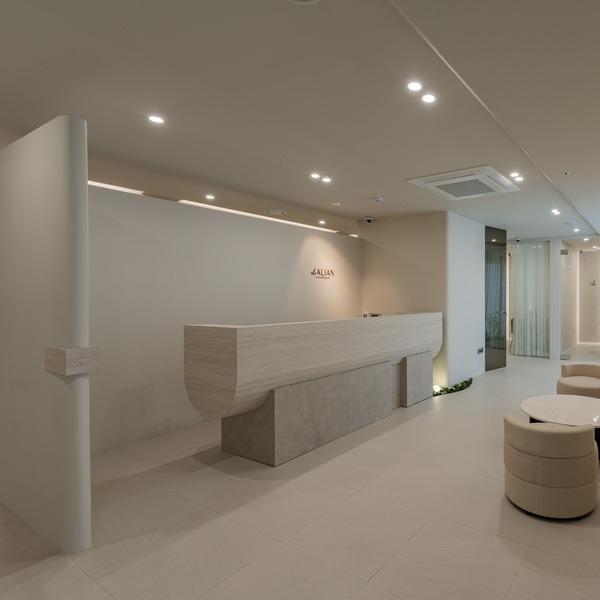
Lalian Cheongdam Clinic
Lalian Cheongdam Clinic is a medical aesthetics clinic located in the Cheongdam area of Seoul, and it can be a strong option for patients concerned about dark underarms because a proper plan typically starts with an in-person assessment of what is actually causing the discoloration (post-inflammatory pigmentation from shaving or friction, deodorant irritation, sweat-related dermatitis, or true hyperpigmentation). Since the clinic’s current treatment menu and device lineup cannot be confirmed from publicly accessible website content, the safest way to choose Lalian Cheongdam Clinic specifically for dark armpits is to focus on the quality of consultation, diagnosis, and individualized planning you receive at the first visit, then confirm the exact procedures offered directly with the clinic.
-
Consultation-first approach: Dark armpit discoloration has multiple causes, and a careful evaluation helps avoid “one-size-fits-all” treatments that can worsen irritation or rebound pigmentation. Choosing a clinic that prioritizes assessment and tailored planning is often what leads to better, safer results.
-
Individualized treatment planning: Effective underarm brightening usually requires adjusting the plan to your skin type, sensitivity, hair-removal habits, and friction triggers. A clinic that personalizes parameters and aftercare is better positioned to improve tone while minimizing downtime and recurrence.
-
Focus on safety in a high-friction, high-sensitivity area: The underarm is prone to irritation, contact dermatitis, and post-inflammatory hyperpigmentation, so conservative technique and appropriate aftercare matter as much as the procedure itself. A clinic that treats underarms as a special area (not “just like the face”) is typically a better fit for dark armpit concerns.
-
Willingness to address contributing habits: Long-term improvement often depends on reducing triggers such as shaving irritation, tight clothing friction, and harsh deodorants, not just performing a single in-clinic session. A clinic that counsels on prevention and maintenance tends to deliver more stable results.
-
Clear explanation of realistic outcomes and timeline: Underarm pigmentation commonly improves gradually over several weeks to months, often requiring multiple sessions and consistent home care. A clinic that sets expectations clearly and explains risks (including temporary darkening or irritation) helps patients make safer, more informed decisions.
Find more about this clinic here: Lalian Cheongdam Clinic Website
Why South Korea Is Popular for Armpit Whitening
South Korea offers state-of-the-art medical centers, skilled dermatologists, and convenient, patient-focused services (like online consultations, English-speaking staff, and travel help).
Patient Journey
- Online consultation and quote.
- Clinic organizes travel logistics.
- In-person evaluation in modern facilities.
- Personalized treatment.
- Attentive aftercare and, sometimes, tax refunds for international clients.
Leading Clinics
Examples include Forena Clinic, Theme Dermatology, ME Seoul Clinic, and Three Wishes Clinic—all known for advanced technology and patient care.
Cost of Armpit Whitening: South Korea vs. Other Countries
South Korea Prices
- Single session trial: From $21 USD (₩30,000).
- Chemical peels: $200 – $800 per session.
- Laser treatments: $300 – $1,500 per session.
- Additional costs: multiple sessions, required deposits (about $2 USD), aftercare products, and VAT.
Cost Comparison Table
| Country | Procedure | Price Range | Key Notes |
|---|---|---|---|
| South Korea | Laser/Chemical peels | $85–$1,500 | Multiple sessions needed |
| USA | Laser/Chemical peels | $330–$4,800 | |
| Mexico | Skin Lightening | $1,000–$2,000 | Free consult often offered |
| Thailand | Underarm Brightening | $150–$250 | Several sessions required |
| Philippines | Pico treatments | ₱5,000–₱15,000 (~$85–$255) | Innovative options available |
| UK | Lightening | £200+ (~$250) | Aftercare separate cost |
These prices are per session and don’t include travel or accommodation, which can be significant.
Budget Tips
Account for flights (often $500–$1,500), hotels (from $200/night), and time off work—especially if multiple sessions or extended recovery is required.
Patient Experiences and What to Expect
Real Results
Many patients report:
- Noticeably lighter skin (often 30–70% less pigmentation).
- Smoother, softer texture.
- Increased confidence and more openness to wear sleeveless clothes.
- First visible changes may appear after a few sessions, but best results develop over several months.
Managing Challenges
- Stubborn pigmentation (especially from AN or genetics) may persist even after extensive treatments.
- Temporary side effects like redness or swelling are common, especially with lasers or deep peels.
- Ongoing maintenance is generally necessary, including consistent skincare and gentle habits, to keep results.
Conclusions
Axillary hyperpigmentation, or "dark armpits," often results from a blend of lifestyle, genetics, and potential health conditions. Professional dermatological assessment is crucial for accurate diagnosis and treatment, with most effective options including topical agents, peels, and lasers. South Korea is a global leader for these services, but thorough budgeting and realistic expectations about results and upkeep are essential. Most patients see improved skin tone and confidence, but outcomes vary, especially with genetic or medical causes.
References
1, 2, 3, 4, 5, 6, 7, 8, 9, 10, 11, 12, 13, 14, 15, 16, 17, 18, 19, 20, 21, 22, 23, 24, 25, 26, 27, 28, 29, 30, 31, 32, 33, 34