Medical Tourism Blog
Change Eye Shape in Korea: Canthoplasty and Laser Canthoplasty Procedures for Eye Reshaping
Table of contents
- Core Procedures: An In-Depth Look at Canthoplasty and Laser Canthoplasty
- Best Clinics in Korea for Change Eye Shape
- The Medical Tourist’s Journey: Navigating the Process in South Korea
- Economic Landscape: Costs and Value for the Medical Tourist
- Patient-Reported Outcomes and the Psychological Dimension
- Risks, Due Diligence, and Safety Protocols
- Conclusion
- References
Considering treatment in Korea? Everything you need to know e.g. — how to avoid scams, visas, interpreters, recovery tips — in our Medical Tourism Master Guide. Plan with confidence in minutes, not weeks!
This guide explores the world of surgical procedures designed to change the shape of the human eye, focusing on Canthoplasty and its innovative counterpart, Laser Canthoplasty. It aims to help patients navigate the medical, logistical, and social considerations of eye reshaping surgery. Clear definitions of terms and distinctions between key procedures—including Canthoplasty, Canthopexy, and Blepharoplasty—are provided. The report also walks readers through the medical tourism journey in South Korea, including cost assessments and patient experiences, and discusses both the psychological benefits and cultural conversations surrounding these aesthetic trends. Practical safety guidelines and steps for verifying surgeon credentials are included to empower patients to make well-informed choices and reduce risks.
Anyone interested in changing their eye shape, whether for cosmetic or functional reasons, needs a clear understanding of the anatomy and available surgeries. Many prospective patients run into confusion due to a mix of terminology online, so getting the basics straight is essential. The main area of focus is the canthus, especially the lateral canthus—the outer corner where the eyelids meet. The lateral canthal tendon, anchoring this corner to the orbital bone, is central to altering eye shape.
When it comes to surgery, the following procedures are commonly mentioned:
- Canthoplasty (Almond Eye Surgery): This reconstructive surgery alters the canthus by cutting and repositioning or tightening the lateral canthal tendon to lift, elongate, or create a more almond-shaped eye. It’s used for major eyelid concerns, such as drooping or to achieve notable cosmetic results.
- Canthopexy: Less invasive than canthoplasty, canthopexy simply tightens and supports the canthal tendon with sutures without cutting it. It's best for slight improvements like correcting a mild downward tilt or offering subtle support—often performed along with lower blepharoplasty.
- Blepharoplasty: This classic eyelid lift removes excess skin, muscle, and fat from the eyelids, mainly to correct drooping or puffiness, rather than change eye shape. Blepharoplasty is often paired with canthoplasty or canthopexy for a more comprehensive result.
Understanding how these surgeries differ helps patients choose the right option. The decision between a canthoplasty and canthopexy, for example, shapes the entire surgical plan, invasiveness, recovery, and the final look.
Core Procedures: An In-Depth Look at Canthoplasty and Laser Canthoplasty
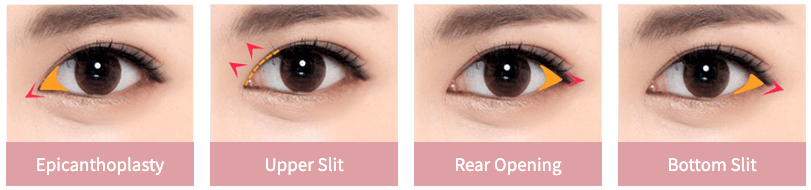
Canthoplasty is a specialized surgery to reconstruct and reshape the outer corner of the eye. It can be performed traditionally with surgical tools or with laser technology—a rapidly growing trend.
Traditional Canthoplasty: The Foundations
Traditional canthoplasty is ideal for people with downward-slanting eyes, a tired look, or specific conditions like ectropion or entropion. The procedure also appeals to those seeking a more almond-shaped eye.
Steps include:
- Consultation: The surgeon evaluates your eye structure, medical history, and goals, then creates a personalized plan.
- Preparation: Medical tests may be needed; patients are advised to stop certain medications and sometimes fast.
- Anesthesia: Local anesthesia with sedation is standard, though general anesthesia may be used in complex cases.
- Surgery: A small incision is made at the outer eye corner. The lateral canthal tendon is cut and repositioned; excess tissue may be trimmed.
- Suturing: Fine stitches secure the new contour for optimal healing.
Laser Canthoplasty: The Advanced Approach
Laser Canthoplasty uses precision lasers for incisions, simultaneously cutting and cauterizing tissue. Particularly popular in South Korea, this technique reduces bleeding and swelling and generally allows for a quicker, more comfortable recovery.
The key advantages of Laser Canthoplasty for patients include minimal damage to surrounding tissues, smaller or less visible scars, and faster return to daily routines. While both traditional and laser approaches result in a more open, almond-shaped eye, laser methods often make recovery easier.
Comparative Analysis: Canthoplasty vs. Laser Canthoplasty

| Characteristic | Traditional Canthoplasty | Laser Canthoplasty |
|---|---|---|
| Surgical Tool | Surgical scalpel | Specialized laser |
| Technique | Incision, tendon reposition | Laser incision/cauterize |
| Invasiveness | More invasive | Less invasive |
| Bleeding | Usual bleeding | Reduced |
| Inflammation/Swelling | Standard post-op swelling | Reduced |
| Recovery Timeline | 7-10 days or more | Quicker, less swelling |
| Scarring | May leave fading scars | Often less visible scars |
South Korea’s popularity for Laser Canthoplasty highlights a global move toward minimally invasive, time-efficient cosmetic solutions.
Best Clinics in Korea for Change Eye Shape
Listed below are the best clinics in Korea for change eye shape:
| Clinic Name | Key Features | Special Techniques |
|---|---|---|
| Mate Plastic Surgery Clinic | Specialized center for cosmetic and reconstructive procedures focused on safety; meticulous technique; personalized surgical planning to achieve balanced, natural-looking changes; eye shape refinement options including incisional and non-incisional double eyelid surgery; full range of facial and body treatments (V-line surgery, cheekbone reduction, rhinoplasty, fat grafting, breast surgery, liposuction, tummy tuck, facelift, Botox). | Incisional double eyelid surgery; non-incisional (suture) double eyelid surgery; V-line surgery; cheekbone reduction; rhinoplasty; fat grafting; breast surgery; liposuction; tummy tuck; facelift; Botox. |
| Braun Plastic Surgery Clinic | Reputation built on self-developed techniques, thorough one-on-one consultations, and surgeon-led care from consultation through surgery; prioritizes aesthetic precision and patient safety; comprehensive and customizable eyelid/eye-shape procedures; strong ongoing research and notable leaders. | Double eyelid surgery (natural crease); ptosis correction; anti-aging eyelid surgery; canthoplasty; revision double eyelid surgery. |
Mate Plastic Surgery Clinic
Mate Plastic Surgery Clinic, located near Sinnonhyeon Station in Seoul, is a specialized center for cosmetic and reconstructive procedures designed to enhance both appearance and confidence. Known for meticulous technique and a strong focus on safety, the clinic provides personalized surgical planning to help patients achieve balanced, natural-looking changes—an important consideration for anyone exploring change eye shape in Korea.
For eye shape refinement, Mate Plastic Surgery Clinic offers double eyelid surgery options tailored to individual anatomy and goals, including incisional double eyelid surgery for a more permanent, defined crease and non-incisional (suture) double eyelid surgery for those seeking a less invasive and potentially reversible approach. In addition to eye procedures, the clinic provides a full range of facial and body treatments—such as V-line surgery, cheekbone reduction, rhinoplasty, fat grafting, breast surgery, liposuction, tummy tuck, facelift, and Botox—supporting comprehensive aesthetic harmony when patients want eye shape changes to match overall facial proportions.
Find more about this clinic here: Mate Plastic Surgery Clinic Website
Braun Plastic Surgery Clinic
For patients seeking Change Eye Shape in Korea, Braun Plastic Surgery Clinic stands out because its reputation is built on a system of self-developed techniques, thorough one-on-one consultations, and surgeon-led care from consultation through surgery, prioritizing both aesthetic precision and patient safety. Braun’s eyelid and eye-shape procedures are comprehensive and customizable, including double eyelid surgery for a natural crease, ptosis correction to address drooping lids and improve eye opening, anti-aging eyelid surgery for a refreshed periocular look, and canthoplasty to refine the outer corner for a wider, more defined eye shape, with strong expertise in revision double eyelid surgery for patients needing correction or enhancement after a prior operation. Underpinning these offerings is a distinguished medical team that continuously researches to achieve more satisfactory results and safer, more effective outcomes; leaders such as Chief Dr. Kim Tae-gyu, CEO Lee Ji-won, and Dr. Ryu Dong-wan actively present at major international academic conferences and contribute to the field through awards and publications. This combination of individualized planning, refined surgical execution, and ongoing clinical innovation is why Braun is widely regarded as a top choice for eye-shape change surgery in Korea.
Find more about this clinic here: Braun Plastic Surgery Clinic Website
The Medical Tourist’s Journey: Navigating the Process in South Korea

South Korea is a global leader in plastic surgery, offering a seamless experience for international patients. The pathway for canthoplasty, from start to finish, is built around convenience and support.
Typical process:
- Consultation: This can start online, with the surgeon reviewing your case and creating a tailored plan.
- Pre-Op: Patients receive guidance on medication, fasting, and travel.
- Surgery Day: Usually done outpatient in 30 minutes to two hours, under local (or sometimes general) anesthesia.
- Post-Op Care: Aftercare instructions are thorough. Patients need a companion to take them home. Typical aftercare includes:
- Avoiding strenuous activities for weeks
- Keeping your head elevated while resting
- Gently cleaning with saline and using antibiotic ointment
- No makeup, contact lenses, or face creams for two weeks (or until cleared by the surgeon)
- Avoiding swimming/hot tubs for three weeks Stitches usually come out after a week; initial swelling and bruising resolve in one to two weeks, but final results take months.
A major plus for medical tourists in South Korea is the language support and hands-on coordination. Many clinics offer English-speaking staff and dedicated coordinators who help with everything from travel to recovery, making the process smooth and stress-free.
Economic Landscape: Costs and Value for the Medical Tourist
For patients looking to balance cost and quality, South Korea stands out for affordable pricing and abundant expertise.
Costs of Canthoplasty in South Korea
Prices can vary depending on clinic, canthoplasty type (epi, lateral, or vertical), and whether additional procedures are included. On average:
- Local currency: ₩1,000,000 to ₩3,000,000
- USD: Around $1,700 (some sources estimate $2,162 to $5,044, average $3,602)
Global Cost Comparison
| Country | Eyelid Surgery (General) | Canthoplasty (Estimated) |
|---|---|---|
| South Korea | $1,000 - $3,000 | $1,700 - $5,044 |
| United States | $3,000 - $5,000 | ~$5,000 - $10,000 (combined) |
| Europe | $2,500 - $4,500 | Not specified |
| Australia | Not specified | ~$20 - $440 (laser only) |
| Thailand | $1,500 - $2,500 | Not specified |
| Turkey | $1,500 - $2,500 | Not specified |
South Korea routinely undercuts the US and Europe on price without sacrificing quality, largely due to high case volumes and specialized surgeons. While other nations also offer bargains, South Korea pairs reasonable pricing with world-class expertise and cutting-edge procedures, which is why it remains a top choice for cosmetic surgery tourists.
Patient-Reported Outcomes and the Psychological Dimension
Undergoing canthoplasty is often about more than aesthetics. Many patients report an increase in self-esteem and improved self-image after surgery, stating that their appearance feels more refreshed and confident.
For some, these positive outcomes counter a lifelong dissatisfaction with their natural eye shape. However, it’s important to recognize the sensitive conversations around trends like the "fox eye" lift. While the look is fashionable, it's layered with cultural implications—many individuals of Asian descent recall being bullied for features now emulated in beauty trends, leading to complex feelings about the procedure and its social implications.
For those considering canthoplasty, it’s crucial to be aware of the broader cultural story while weighing personal motivations.
Risks, Due Diligence, and Safety Protocols
While canthoplasty is generally safe in skilled hands, all surgery carries some risk. Patients should be educated about both common side effects and rare complications.
Potential Risks
- Common: Temporary soreness, swelling, bruising, dry eyes, blurred vision, excess tearing—mostly resolve in 2-4 weeks.
- Serious: Infection, heavy bleeding, visible scarring, eye asymmetry, over- or under-correction. The most difficult to fix is a distorted canthal angle, making it crucial to choose a highly skilled surgeon.
Verifying Surgeon Credentials in South Korea
Given South Korea’s volume of plastic surgery clinics, it's essential to ensure your surgeon is fully certified. Here’s how:
- Doctor’s ID: Confirm membership and licensure through an official ID card.
- Clinic Signage: Only "Plastic Surgery Clinic" is legal; beware of similar-sounding names.
- National Certificates: These should be displayed in the clinic, showing plastic surgery as the specialty.
- Online Research: Check the doctor’s credentials and affiliations online.
- Official Portals: Use the Korean Association of Plastic Surgeons' websites to find qualified professionals.
This rigorous approach helps safeguard patients from uncertified practitioners, ensuring safety and optimal results.
Conclusion
Canthoplasty offers patients the chance to dramatically or subtly reshape their eyes, combining advanced surgical options with a high level of specialization in destinations like South Korea. Patients benefit not only from potential cosmetic enhancement and increased confidence but also from a cost-effective medical tourism experience. However, success hinges on understanding both personal motivations and the broader social context—along with careful selection of a qualified surgeon through thorough due diligence.
References
1, 2, 3, 4, 5, 6, 7, 8, 9, 10, 11, 12, 13, 14, 15, 16, 17, 18, 19, 20, 21, 22, 23, 24, 25, 26, 27, 28, 29, 30, 31, 32, 33