Medical Tourism Blog
Asymmetric Brows Solutions: Forehead Lift Procedures in Korea for Balanced, Beautiful Eyebrows
Table of contents
- Forehead Lift Surgery: A Detailed Medical Overview
- Best Clinics in Korea for Asymmetric Brows
- Navigating a Forehead Lift in South Korea: A Medical Tourist's Journey
- Cost Analysis: Forehead Lift in South Korea vs. Global Destinations
- Patient Outcomes and Experiences: Addressing Asymmetric Brows with Forehead Lift
- Conclusion
- References
Considering treatment in Korea? Everything you need to know e.g. — how to avoid scams, visas, interpreters, recovery tips — in our Medical Tourism Master Guide. Plan with confidence in minutes, not weeks!
Eyebrow asymmetry—when one brow sits higher or lower than the other—is more common than most people think. While minor differences are typical and inherent in facial structure, some individuals may feel self-conscious and seek corrective solutions.
Defining Asymmetric Brows: More Common Than You Think
Most people have some degree of brow asymmetry. This isn’t unusual—in fact, striving for perfect symmetry may lead to disappointment. Instead, the goal of any treatment is to create facial harmony, subtly enhancing balance without erasing natural uniqueness.
Common Pseudonyms and Terminology
Asymmetric brows go by several names, including “uneven eyebrows,” “irregular eyebrows,” and “brow asymmetry.” Medically, “brow ptosis” specifically describes a drooping or low brow, which can be one-sided (unilateral) or affect both sides (bilateral). The phrase “Eyebrows are sisters, not twins” is a reminder that a bit of difference is natural. Terms like “furrowed brows” or “knitted brows” refer to expressions, not fixed asymmetry.
| Term | Description | Context |
|---|---|---|
| Asymmetric Brows | Brows that differ in height, shape, or position | Common usage, medical |
| Uneven Eyebrows | Noticeable difference between eyebrows | Common usage |
| Irregular Eyebrows | Lacking uniformity | Common usage, medical |
| Brow Asymmetry | Disproportion or lack of symmetry | Medical |
| Brow Ptosis | Abnormally low/drooping brow | Medical |
| Eyebrows are sisters, not twins | Emphasizes natural differences | Colloquial, patient advisory |
| Furrowed/Knitted Brows | Temporary expression-related change, not structural | Colloquial, descriptive |
Etiology of Asymmetric Brows: Why Do They Occur?
Brow asymmetry results from a blend of genetics, muscle activity, aging, medical conditions, external factors, and even foundational bony differences.
Natural Facial Asymmetry and Genetics
No human face is perfectly symmetrical—genetics often make one side differ subtly from the other in brow position, arch, or shape. Recognizing and accepting this natural variation is crucial when considering any correction.
Dynamic Muscle Movement and Habits
Facial muscles—like the frontalis, orbicularis oculi, and corrugator supercilii—pull the brows in various directions. Imbalances in these muscles (sometimes due to habitual expressions or stronger muscle tone on one side) can increase asymmetry. Dynamic (muscle-based) asymmetry often responds to treatments like Botox, while static (structural) asymmetry may require surgery.
Age-Related Changes and Skin Elasticity Loss
Aging can cause the skin and underlying muscles to weaken, sometimes making one brow droop more than the other. When makeup or non-surgical fixes are no longer enough, surgical brow lift procedures become an option.
Medical Conditions, Nerve Damage, and Facial Paralysis
Issues such as Bell’s palsy, strokes, or nerve damage can cause noticeable drooping on one side—brow ptosis. Sometimes, odd elevating movements may also occur due to compensatory muscle reactions. Addressing the medical cause is essential before considering cosmetic treatments.
External Factors
Over-plucking, uneven waxing or threading, constant pressure on one side of the face (like habitual sleeping), and past injuries can all influence long-term brow shape.
Bony Anatomy Differences
Differences in skull shape beneath each brow can alter their position and account for asymmetry not correctable by soft tissue interventions alone.
Non-Surgical and Minimally Invasive Solutions for Asymmetric Brows
Before considering surgery, several non-surgical options may improve mild or temporary brow asymmetry.
Cosmetic Grooming and Makeup Techniques
Makeup, tinting, and expert grooming can camouflage minor unevenness. Tools like brow pencils, gels, and eyelid tapes offer instant but temporary fixes.
Injectables: Botox (Neuromodulators) and Dermal Fillers
Botox is particularly effective for dynamic asymmetry, relaxing specific brow depressor or elevator muscles to recalibrate brow height with precision. Dermal fillers can restore lost volume, especially under the brow’s tail, but don’t address muscle-related height differences.
Regenerative Treatments: Platelet-Rich Plasma (PRP)
For patchy eyebrow hair or thinning due to alopecia, PRP injections can stimulate regrowth and support a fuller, more symmetric brow.
Hair Growth Serums and Microblading
Growth serums (with minoxidil, peptides, or biotin) strengthen brow hairs over time, while microblading offers a semi-permanent pigment-based reshaping technique that lasts for several months.
Thread Lifts: A Minimally Invasive Option
Thread lifts use absorbable sutures to subtly lift and reshape the brow. Though less invasive than surgery and with quick recovery, results may not be perfectly symmetrical and typically last up to two years.
Addressing Underlying Medical Conditions
Treating the root medical cause—whether alopecia, nerve injury, or other health conditions—should precede or accompany cosmetic approaches. A holistic medical evaluation is essential.
Forehead Lift Surgery: A Detailed Medical Overview
If non-surgical approaches aren’t effective, a forehead lift (brow lift) may be the answer, especially for structural issues or age-related sagging. This surgery repositions the brows for a refreshed, balanced upper face.
What is a Forehead Lift (Brow Lift)?
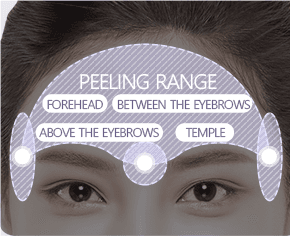
A forehead lift aims to elevate and reshape brows while smoothing the upper facial skin, addressing deep forehead wrinkles, brow ptosis, and hooded eyelids.
Goals and Candidacy for the Procedure
Brow lifts smooth lines, correct droopy brows, and enhance eye appearance. Ideal for patients with persistent brow asymmetry or excess skin from aging, this surgery shifts focus from temporary fixes to long-lasting improvement.
Surgical Techniques for Forehead Lift
Various brow lift techniques are chosen based on individual needs, anatomy, and desired outcomes.
Endoscopic Brow Lift: Minimally Invasive Approach
A few small incisions behind the hairline allow for internal reshaping with cameras and specialized instruments—resulting in minimal scarring and faster recovery. While effective for moderate brow ptosis and rejuvenation, this technique removes no skin and may not address severe asymmetry.
Coronal (Classic) Brow Lift: Traditional and Comprehensive
A longer incision across the scalp (hidden by hair) allows for more extensive lifting and muscle resculpting. This technique corrects marked asymmetry and deep wrinkles but involves more healing and the risk of changes in hairline or scalp numbness.
Pretrichial (Hairline) Brow Lift: Addressing High Hairlines
Here, the incision sits just below the hairline—ideal for high or receding hairlines as it can lower the hairline slightly but runs a higher risk of visible scars.
Direct and Mid-Forehead Brow Lifts: Specific Indications
Older techniques involving incisions above the brow or mid-forehead mainly target severe unevenness from injury or paralysis but pose a higher risk of noticeable scars.
Temporal (Lateral) Brow Lift: Outer Brow Focus
Short temple incisions lift only the outer brow—quicker recovery, but less dramatic results.
Internal (Transblepharoplasty) Brow Lift / Browpexy: Combined Approach
Done alongside eyelid surgery, this uses the eyelid crease to lift the brow, offering minimal scarring but limited in effect and best for mild brow droop.
| Technique Name | Incision Location | Invasiveness Level | Primary Benefits | Suitability/Indications | Key Disadvantages |
|---|---|---|---|---|---|
| Endoscopic Brow Lift | 3-5 small incisions behind hairline | Minimally invasive | Minimal scarring, quicker recovery | Moderate-severe brow ptosis | No skin removed, not for severe laxity |
| Coronal (Classic) Brow Lift | Ear-to-ear scalp, behind hairline | Extensive | Comprehensive results, dramatic asymmetry fixes | Major asymmetry, deep lines | Longer recovery, higher hairline |
| Pretrichial (Hairline) Brow Lift | Just below hairline | Moderate | Maintains/lowers hairline, unobtrusive for bald/high hairline | High/receding hairline, men | More visible scar |
| Direct/Mid-Forehead Brow Lift | Directly above brow or mid-forehead | Moderate | Best for functional correction after injury | Severe injury/paralysis | Prominent scarring |
| Temporal (Lateral) Brow Lift | Behind hairline above temples | Minimally invasive | Lifts outer brow, short downtime | Outer brow droop | Less dramatic/limited scope |
| Internal (Transblepharoplasty) Browpexy | Eyelid crease (during blepharoplasty) | Minimally invasive | Small scars, enhances eyelid surgery | Mild droop, concurrent eyelid surgery | Not a full brow lift; limited effect |
The Surgical Process: From Incision to Closure
After anesthesia—either local with sedation or general—the surgeon makes carefully planned incisions. The underlying muscles are sculpted, tissues redraped, and the new brow position is anchored with fixation devices or sutures. Closure is meticulous, using fine layers and supportive dressings for best healing.
Post-Operative Recovery and Considerations
Recovery comes in phases:
- Days 1-7: Swelling (peaks day 3), bruising, tightness; rest, head elevation, gentle ice packs, and ointments are recommended.
- Weeks 1-2: Swelling improves; light makeup and gentle activities are allowed. Sutures out by week one. Avoid strenuous activity.
- Weeks 2-3: Resume light work and driving if pain is managed.
- Weeks 3-4: Light daily tasks, but still no heavy activity.
- Weeks 6-12: Gradual return to strenuous activity with medical approval.
- Months 3-6: Final results become visible as scars fade and numbness resolves.
| Timeframe | Symptoms | Activities/Restrictions | Key Milestones |
|---|---|---|---|
| Days 1-7 | Swelling, bruising, tightness | Rest, head elevation, gentle care | Peak swelling, heal incisions |
| Weeks 1-2 | Improving swelling/bruising | Light makeup, gentle walking, no strenuous tasks | Suture removal, light routines |
| Weeks 2-3 | Continued improvement | Driving, return to desk job | Mobility returns |
| Weeks 3-4 | Minimal restrictions | No heavy activity | Light daily activities |
| Weeks 6-12 | Healing advances | Resume exercise gradually | Strenuous activity returns |
| Months 3-6 | Finalizing results | Consult for sensitive scalp/hair salon visits | Results, numbness resolve |
Common sensations include numbness (often resolves in 12 months), tightness, and itching. Complications are rare but may include nausea, hematoma, hair loss near the incision, or nerve injury. Technique choice and surgical expertise matter greatly in minimizing these risks.
Best Clinics in Korea for Asymmetric Brows
Listed below are the best clinics in Korea for asymmetric brows:
| Clinic Name | Key Features | Special Techniques |
|---|---|---|
| THEPLUS Plastic Surgery | Located in Seoul’s Garosu-gil, Gangnam, THE PLUS Plastic Surgery is a four-floor, full-service clinic where consultation, surgery, and post-operative skincare are integrated under one roof. The team’s academic leadership—spanning publications, book authorship, and active participation in domestic and international symposiums—translates directly into precise, evidence-based care. With safety and clear communication as cornerstones, the clinic approaches asymmetric brows through the broader lens of periorbital and facial harmony, offering tailored plans that may incorporate eyelid procedures such as ptosis correction and canthoplasty, as well as non-surgical options like Botox and fillers, to achieve balanced, natural-looking results. | Ptosis correction; canthoplasty; Botox; fillers |
| Made Young Plastic Surgery | Made Young Plastic Surgery Clinic in Seoul’s Gangnam district is a premium center devoted to facial and anti-aging procedures, with a verified medical team averaging over 15 years of experience and offering direct, doctor-led consultations for every case. For asymmetric brows, the clinic employs a Full HD endoscopic system that enables precise, delicate dissection around nerves, vessels, and muscles, followed by comprehensive lifting of skin, periosteum, and muscle to correct brow height and shape while softening forehead and glabellar wrinkles and improving drooping eyelids; when indicated, procerus muscle resection is performed to balance the glabella, and authentic Endotine devices are used for secure fixation and stable symmetry. | Full HD endoscopic browlift; dissection around nerves, vessels, and muscles; lifting of skin, periosteum, and muscle; procerus muscle resection; Endotine devices |
| SH Clinic Website | SH Clinic in Sinsa, Seoul is Korea’s best destination for asymmetric brows because it unites stem-cell science, aesthetic dermatology, and modern plastic surgery to correct imbalance with precision and longevity. The SH Stem Cell Center creates personalized facial rejuvenation plans that optimize skin and soft-tissue quality—an essential foundation for symmetrical brows—while the dermatology team fine-tunes eyebrow height and muscle pull using Botox, dermal fillers to harmonize volume in the brow–temple complex, and laser lifting to firm lax skin. For patients who need mechanical elevation or definition, minimally invasive thread lifts and, when appropriate, surgical solutions coordinated with upper blepharoplasty or facelift provide durable, natural correction, guided by 3‑D planning that prioritizes facial balance. | Stem cell–assisted planning; Botox; dermal fillers; laser lifting; thread lifts; upper blepharoplasty; facelift; 3-D planning |
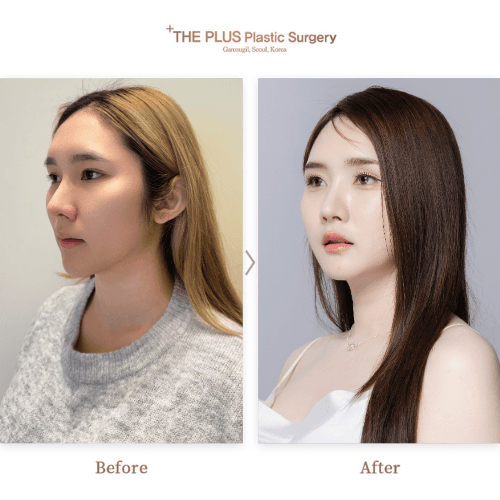
THEPLUS Plastic Surgery
Located in Seoul’s Garosu-gil, Gangnam, THE PLUS Plastic Surgery is a four-floor, full-service clinic where consultation, surgery, and post-operative skincare are integrated under one roof. The team’s academic leadership—spanning publications, book authorship, and active participation in domestic and international symposiums—translates directly into precise, evidence-based care. With safety and clear communication as cornerstones, the clinic approaches asymmetric brows through the broader lens of periorbital and facial harmony, offering tailored plans that may incorporate eyelid procedures such as ptosis correction and canthoplasty, as well as non-surgical options like Botox and fillers, to achieve balanced, natural-looking results.
THE PLUS is led by director surgeons Dr. Jeong Jae Yong and Dr. Kim Taek Kyun, internationally recognized authorities particularly in rhinoplasty and facial contouring. Dr. Jeong, President of the Korean Society of Plastic Surgeons, emphasizes the integration of function and beauty, while Dr. Kim—an award-winning researcher in 3D implants and an educator who runs annual sessions for peers—prioritizes harmonious balance of facial features to enhance each individual’s natural aesthetics. Board-certified breast specialist Dr. Lee brings extensive experience from top national hospitals and active roles in leading societies. Together, their decade-plus expertise, global society involvement, and ongoing educational outreach ensure a meticulous, personalized pathway for clients seeking refined correction of asymmetric brows within the context of overall facial balance.
You can check out their website here: THEPLUS Plastic Surgery Website
Made Young Plastic Surgery
Made Young Plastic Surgery Clinic in Seoul’s Gangnam district is a premium center devoted to facial and anti-aging procedures, with a verified medical team averaging over 15 years of experience and offering direct, doctor-led consultations for every case. For asymmetric brows, the clinic employs a Full HD endoscopic system that enables precise, delicate dissection around nerves, vessels, and muscles, followed by comprehensive lifting of skin, periosteum, and muscle to correct brow height and shape while softening forehead and glabellar wrinkles and improving drooping eyelids; when indicated, procerus muscle resection is performed to balance the glabella, and authentic Endotine devices are used for secure fixation and stable symmetry.
Patient safety and continuity of care underpin every step at Made Young: full-time board-certified anesthesiologists provide 1:1 dedicated monitoring, a cross-check system enhances rapid, accurate responses, and full procedural CCTV ensures transparency, while a separate aftercare center delivers complete, systematic follow-up. Recognized with the 2022 Korea No.1 Award and 2022 Korea Customer Satisfaction 1st Place, and honored as an Outstanding Member of the Korean Society of Plastic and Reconstructive Surgeons with certification from the Minimally Invasive Aesthetic Surgery Society, Made Young offers an expert, safety-first pathway to restoring eyebrow symmetry in Korea.
You can check out their website here: Made Young Plastic Surgery Website

SH Clinic
SH Clinic in Sinsa, Seoul is Korea’s best destination for asymmetric brows because it unites stem-cell science, aesthetic dermatology, and modern plastic surgery to correct imbalance with precision and longevity. The SH Stem Cell Center creates personalized facial rejuvenation plans that optimize skin and soft-tissue quality—an essential foundation for symmetrical brows—while the dermatology team fine-tunes eyebrow height and muscle pull using Botox, dermal fillers to harmonize volume in the brow–temple complex, and laser lifting to firm lax skin. For patients who need mechanical elevation or definition, minimally invasive thread lifts and, when appropriate, surgical solutions coordinated with upper blepharoplasty or facelift provide durable, natural correction, guided by 3‑D planning that prioritizes facial balance. As a multi-specialty medical center, SH Clinic seamlessly coordinates care under one roof, offering comprehensive consultation, staged treatments, and outcome monitoring that ensure subtle, harmonious results rather than overcorrection. Supported by robust women’s health expertise and a culture of safety and comfort, the clinic delivers meticulous, patient-centered care for every stage of asymmetric brow management—from noninvasive refinement to definitive correction.
You can check out their website here: SH Clinic Website
Navigating a Forehead Lift in South Korea: A Medical Tourist's Journey
South Korea has emerged as a destination of choice for cosmetic surgery, including forehead lifts, due to its skilled surgeons, innovation, and tailored medical tourism support.
Why South Korea for Cosmetic Surgery?
Korean surgeons are at the forefront of surgical innovation, setting trends for new techniques and using advanced technology like 3D Full-HD endoscopy. Clinics feature state-of-the-art facilities, often outpacing Western nations in tech adoption.
The country’s strong medical tourism infrastructure includes multilingual staff, aftercare clinics, detailed safety protocols (such as 1:1 anesthesia care and CCTV-monitored operating rooms), as well as privacy and cultural sensitivity.
The Process of Undergoing a Forehead Lift in South Korea
- Consultations: Begin with virtual meetings for assessment and estimates. On arrival, in-person consultations and medical checks confirm plans.
- Pre-op Assessments: Determine specific surgical needs and customize plans to your anatomy.
- Surgery: Under anesthesia, the procedure is done with modern techniques (like endoscopic guidance and secure fixation devices). Most don’t require hospital stays.
- Aftercare: Daily checks, pain management, and advanced therapies (like light therapy and oxygen chamber treatments) promote healing. Recovery kits are often provided.
- Follow-ups: Regular in-person and virtual check-ins support recovery, even after you return home.
Recommended Stay Duration for Medical Tourists
Plan for at least 7–14 days in Seoul to allow for initial recovery, swelling resolution, and suture removal. Arriving two days before surgery helps acclimate and rest.
Key Considerations for International Patients
- Visas: Most nationalities don’t need a visa, but always check current requirements.
- Accommodation: Stay near your clinic—some packages bundle this in.
- Travel Health Prep: Bring medical records, insurance, comfortable clothes, and any compression garments. Transportation is often arranged through packages.
Cost Analysis: Forehead Lift in South Korea vs. Global Destinations
South Korea offers globally competitive pricing for forehead lift procedures, with quality often surpassing that of pricier Western counterparts.
Average Costs of Forehead Lift in South Korea
In 2025, expect to pay from $2,290–$5,300 USD for standard cases in Seoul ($7,000+ for advanced endoscopic methods, up to $10,300 USD for highly specialized cases).
Breakdown by Surgical Technique
- Endoscopic Forehead Lift: $3,500–$7,000 USD, with some introductory or specialized packages from $2,385, comprehensive packages up to $5,900+.
- Traditional (Coronal) Forehead Lift: $4,000–$8,000 USD; complex cases at higher rates.
More advanced, precision-driven, or less invasive methods may cost more due to technology and expertise involved.
Factors Influencing the Total Cost
- Surgeon’s Skills and Clinic Reputation: Highly qualified experts in premium clinics command higher fees.
- Anesthesia and Services Included: General anesthesia increases costs. Clarify if the quote includes tests, medications, and follow-ups.
- Case Complexity and Combo Procedures: Combined surgeries or unique anatomical needs drive up prices.
Comparative Cost Analysis for Medical Tourists
| Country/Region | Average Cost (USD) | Key Points |
|---|---|---|
| South Korea (Seoul) | $2,290–$10,300 | High quality, advanced tech, strong packages |
| United States | $3,000–$20,000+ | Large regional variation, higher in major cities |
| Philippines | ~$1,100 | Low; basic facilities |
| Thailand | ~$1,500 | Low; competitive, strong tourism market |
| Mexico | ~$2,200 | Lower cost, close to US |
| Turkey | Highly competitive | Great value for European/UK/US patients |
Reports suggest South Korea costs up to 75% less than similar Western procedures while maintaining high safety and quality standards.
Understanding All-Inclusive Packages and Additional Expenses
Many South Korean clinics offer bundled packages covering:
- Pre- and post-operative consultations (virtual/in-person),
- Surgery and anesthesia,
- Wound care, medication, and follow-up,
- Accommodation, airport transfers, translation, and recovery kits.
Always check for possible extras like upgraded stays, advanced aftercare therapies, specialized meals, or tourism add-ons.
| Category | Services | Notes |
|---|---|---|
| Pre-Op | Consultations, tests, planning | Often included |
| Surgical | Surgery, anesthesia | Core package components |
| Post-Op | Medications, wound care, aftercare therapy | Specialized therapies often extra |
| Logistics & Support | Translator, transfers, accommodation | Check for upgrades/amenities |
| Optional Add-ons | VIP care, tours, recovery therapies | At extra cost |
Patient Outcomes and Experiences: Addressing Asymmetric Brows with Forehead Lift
Expected Results: Achieving Facial Harmony and Rejuvenation
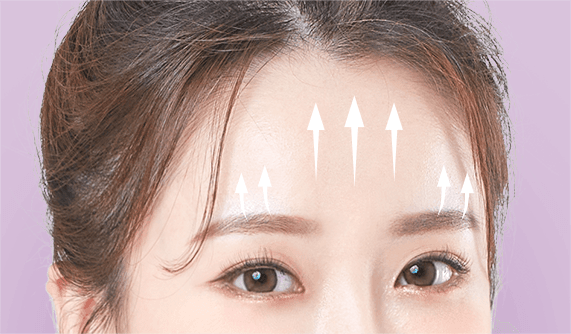
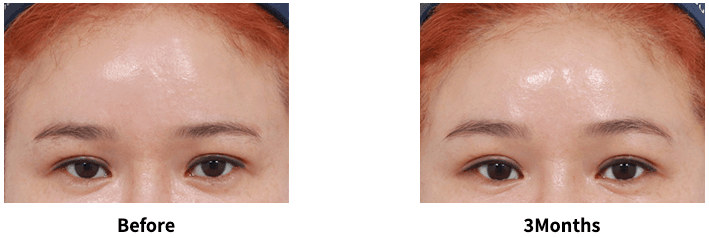
Forehead lifts are highly effective for rejuvenating the upper face, smoothing deep wrinkles, and correcting brow ptosis. Many patients enjoy both an improved appearance and easier eyelid function.
Addressing Pre-Existing Asymmetry
A common cause of uneven brows is eyelid ptosis, where “fixing the eyelid” also corrects the brow. While surgery often creates a far more balanced look, some degree of asymmetry may persist or even be slightly enhanced, so expectations must remain realistic.
Navigating Post-Operative Asymmetry: Temporary vs. Permanent
Swelling may make post-op brows look temporarily uneven. This usually resolves by six months. Sometimes, technical factors or rare nerve injury cause lasting results, which might be managed with revision surgery or Botox for minor imbalances.
The Role of Revision Surgery and Long-Term Maintenance
Most mild asymmetries can be tweaked with injections; more significant issues may call for revision surgery. Always ask about your clinic’s revision policy before proceeding.
Patient Testimonials and Real-World Perspectives
While detailed patient stories specifically about correcting longstanding asymmetry are limited, most testimonials highlight satisfaction with improved appearance and care quality. However, rare cases of persistent asymmetry after surgery underscore the importance of clear expectations and follow-up care.
Conclusion
Asymmetric brows are a common concern with a spectrum of solutions—from Botox for muscle-based issues to forehead lift surgery for structural correction. South Korea stands out for its skilled surgeons, advanced technology, and comprehensive support, delivering high-quality, cost-effective care. Achieving perfect symmetry is rare, but significant improvement and enhanced facial harmony are realistic and attainable goals.
References
1, 2, 3, 4, 5, 6, 7, 8, 9, 10, 11, 12, 13, 14, 15, 16, 17, 18, 19, 20, 21, 22, 23, 24, 25, 26, 27, 28, 29, 30, 31, 32, 33, 34, 35, 36, 37, 38, 39, 40, 41, 42, 43, 44