
Medical Tourism Blog
Midface Ptosis Solutions: Face Thread Lift Procedures in Korea for Youthful Facial Rejuvenation

Table of contents
- The Face Thread Lift Procedure: A Detailed Overview
- Navigating a Face Thread Lift in South Korea: Your Step-by-Step Guide
- Which Are the Best Clinics in Korea for Midface Ptosis?
- Costs and Medical Tourism: A Global Comparison
- Patient Experiences and Expected Outcomes
- Conclusion: Making an Informed Decision
- References
Considering treatment in Korea? Everything you need to know e.g. — how to avoid scams, visas, interpreters, recovery tips — in our Medical Tourism Master Guide. Plan with confidence in minutes, not weeks!
Midface ptosis refers to the sagging or drooping of the mid-cheek fat pads—a common issue that can make people look tired or older than they feel. This condition mainly affects the central part of the face, stretching from just below the lower eyelids down to the upper lip, often highlighting nasolabial folds and leading to a hollowed look beneath the eyes.
It’s important to differentiate midface ptosis from other types of ptosis, such as eyelid drooping (blepharoptosis), which requires different treatments. When searching for solutions, focusing on mid-cheek fat pad droop (midface ptosis) helps patients find precise and relevant information.
Common Pseudonyms and Related Terms
Patients will encounter various synonyms when researching midface ptosis and its treatment:
- Cheek Lift / Midface Lift: Surgical procedures to address signs of aging in the midface; when done using an endoscope, they’re called endoscopic midface lifts or endoscopic cheek lifts.
- Malar Descent / Malar Fat Pad Descent: Refers to the vertical drop of the primary mid-cheek fat pad, a key factor in midface ptosis.
- SOOF Lift: Targets the sub-orbicularis oculi fat (SOOF) just above the cheek and beneath the lower eyelid.
A grasp of these terms empowers patients to communicate more accurately with their doctors and understand treatment options.
Table 1: Common Terms for Midface Sagging/Ptosis
| Term | Description |
|---|---|
| Midface Ptosis | Drooping or sagging of the mid-cheek fat pads |
| Cheek Lift | Cosmetic surgery to lift and smooth cheeks and surrounding areas |
| Midface Lift | Cosmetic surgery targeting the midface area, synonymous with cheek lift |
| Endoscopic Midface Lift / Endoscopic Cheek Lift | Midface lift performed with the aid of an endoscope |
| Malar Descent | Vertical descent of the malar fat pad |
| Malar Fat Pad Descent | Specific term for the downward movement of the malar fat pad |
| SOOF Lift | Lifting of the sub-orbicularis oculi fat, fatty tissue in the uppermost cheek |
Why Midface Ptosis Occurs
Midface ptosis typically results from the aging process, which triggers changes in bone structure, repositioning or shrinking of facial fat pads, muscle alterations, and thinner skin. Gravity and daily facial expressions further stretch and weaken facial ligaments, accelerating fat pad descent. This means that fixing midface ptosis usually involves addressing multiple layers of facial aging, which is why a combination of cosmetic treatments may be necessary for best results.
The Face Thread Lift Procedure: A Detailed Overview
Face thread lifts offer a less invasive alternative to surgical facelifts, lifting and tightening sagging midface tissues without extensive downtime. This procedure has gained popularity for its convenient, “lunchtime” appeal and immediate results, making it a favorite among those seeking rejuvenation but not ready for surgery.
Thread lifts work by physically lifting the skin with special threads and by stimulating collagen production, which helps firm and support the skin even after the threads dissolve.
Types of Threads and Materials Used
Threads for these lifts are made from biocompatible, typically biodegradable materials, each with unique properties:
- Polydioxanone (PDO) Threads: The gold standard, especially in Korea, these dissolve in 6–9 months, though the effects often last 6–18 months thanks to collagen regrowth.
- Poly-L-lactic Acid (PLLA) Threads: These last longer, potentially up to two years, encouraging continuous collagen synthesis.
- Polycaprolactone (PCL) Threads: These break down even more slowly—over 18–24 months—providing a more prolonged lifting effect.
Thread designs also vary:
- Mono Threads: Smooth, non-barbed threads for gentle tightening and texture improvement, not strong lifts.
- Cog Threads: Threads with barbs, specifically designed for stronger lifting, ideal for cheeks and jawlines.
- Screw Threads: Twisted or coiled, primarily used to add volume to hollow areas.
Table 2: Common Thread Types and Materials for Face Thread Lifts
| Thread Type/Material | Key Characteristics | Absorption Period | Typical Longevity of Results | Primary Use |
|---|---|---|---|---|
| Polydioxanone (PDO) | Biodegradable, stimulates collagen, "gold standard" | 6-9 months | 6-18 months | General lifting, skin tightening, texture |
| Mono Threads (PDO) | Smooth, no barbs, support structure | 6-9 months | 6-18 months | Skin tightening, forehead/neck texture |
| Cog Threads (PDO) | Barbed/notched, grasp skin | 6-9 months | 6-18 months | Stronger lift (cheeks, jawline) |
| Screw Threads (PDO) | Coiled/twisted | 6-9 months | 6-18 months | Volume restoration in sunken areas |
| Poly-L-lactic Acid (PLLA) | Biocompatible, biodegradable, collagen stimulator | Longer than PDO | Up to 2 years | Long-lasting lift, elasticity |
| Polycaprolactone (PCL) | Biodegradable, very slow to degrade | 18-24 months | Long-term rejuvenation | Prolonged collagen/elastin stimulation |
How the Procedure Works
A face thread lift is typically done under local anesthesia, sometimes with mild sedation. The surgeon creates small punctures in the skin, then slides the threads into place with a fine needle or cannula. By gently pulling these threads, the surgeon lifts the sagging tissues into a higher, more youthful position. The barbs on the threads anchor the skin, and any excess thread is trimmed.
After insertion, the body reacts by producing more collagen around the threads—a process called neocollagenesis—which helps maintain smoother, firmer skin for months beyond the life of the threads themselves. Procedures last about 30 minutes to an hour.
Benefits and Limitations of Thread Lifts
Benefits:
- Minimally invasive with low risk and nearly no downtime; suitable for many adults, even those with health concerns.
- Immediate lift with further skin improvements developing gradually as collagen increases.
- Natural look—refreshed and subtly enhanced results.
- Collagen stimulation for prolonged skin firmness.
- If necessary, threads can be removed.
- Customizable to personal cosmetic goals.
Limitations:
- Results are not permanent, with effects generally lasting 1–3 years.
- Changes are subtle—not as dramatic or long-lasting as surgical facelifts; ideal for mild to moderate sagging.
- Less effective for severe skin laxity or advanced aging.
- Minor side effects, such as bruising or soreness, are possible; rare complications include temporary asymmetry.
Thread lifts find their niche between non-invasive techniques (like fillers) and full surgical lifts, ideal for individuals not ready—or suitable—for major surgery.
Navigating a Face Thread Lift in South Korea: Your Step-by-Step Guide
South Korea is a leading destination for face thread lifts, with medical tourism packages and clinics designed to support international patients from consultation through recovery.
Pre-Procedure: Consultation and Preparation
The process starts with a consultation at a reputable clinic, during which goals and expectations are discussed and a personalized treatment plan is set. Patients may bring photos for clarity. Necessary medical tests are conducted—these can be brought from home if performed within a month, or completed in Korea. Important preparation steps include avoiding blood-thinning medications like Aspirin or Ibuprofen for two weeks and fasting for six hours before surgery. Arranging someone to assist with transport post-procedure is recommended.
During the Procedure: What to Expect
On surgery day, the surgical area is marked and last-minute checks are performed by a medical coordinator. Local anesthesia is administered (occasionally with sedation), and the procedure begins. Some gentle securing of arms and legs may be used to prevent movement during the treatment.
After the threads are placed and tightened, tapes are applied to puncture sites, which usually fall off on their own in 2–3 days. The entire process takes 20–60 minutes, and patients recover in a post-op room soon after.
South Korea’s attention to detail and care coordination—often involving a medical coordinator—adds peace of mind for international patients.
Post-Procedure Care and Recovery
After surgery, a compression bandage might be used to protect the lift—this may be uncomfortable but shouldn’t be removed. Mild swelling, bruising, soreness, or tightness can be expected, as well as a crackling sensation when opening the mouth wide. Slight puckering or dimpling is normal and fades within a week or two.
Key aftercare includes:
- Applying a cold compress
- Avoiding face washing for 24 hours
- Skipping strenuous activity or facial massages for several weeks
- Sleeping on your back with the head elevated
- Abstaining from smoking, alcohol, and makeup for a specified period
Most patients are able to resume normal activities within a day or two. The use of absorbable threads means there’s usually no need for stitch removal. Recovery is quick, helping minimize travel and accommodation costs—an advantage for medical tourists.
Which Are the Best Clinics in Korea for Midface Ptosis?
Listed below are some of the best clinics in Korea for midface ptosis.
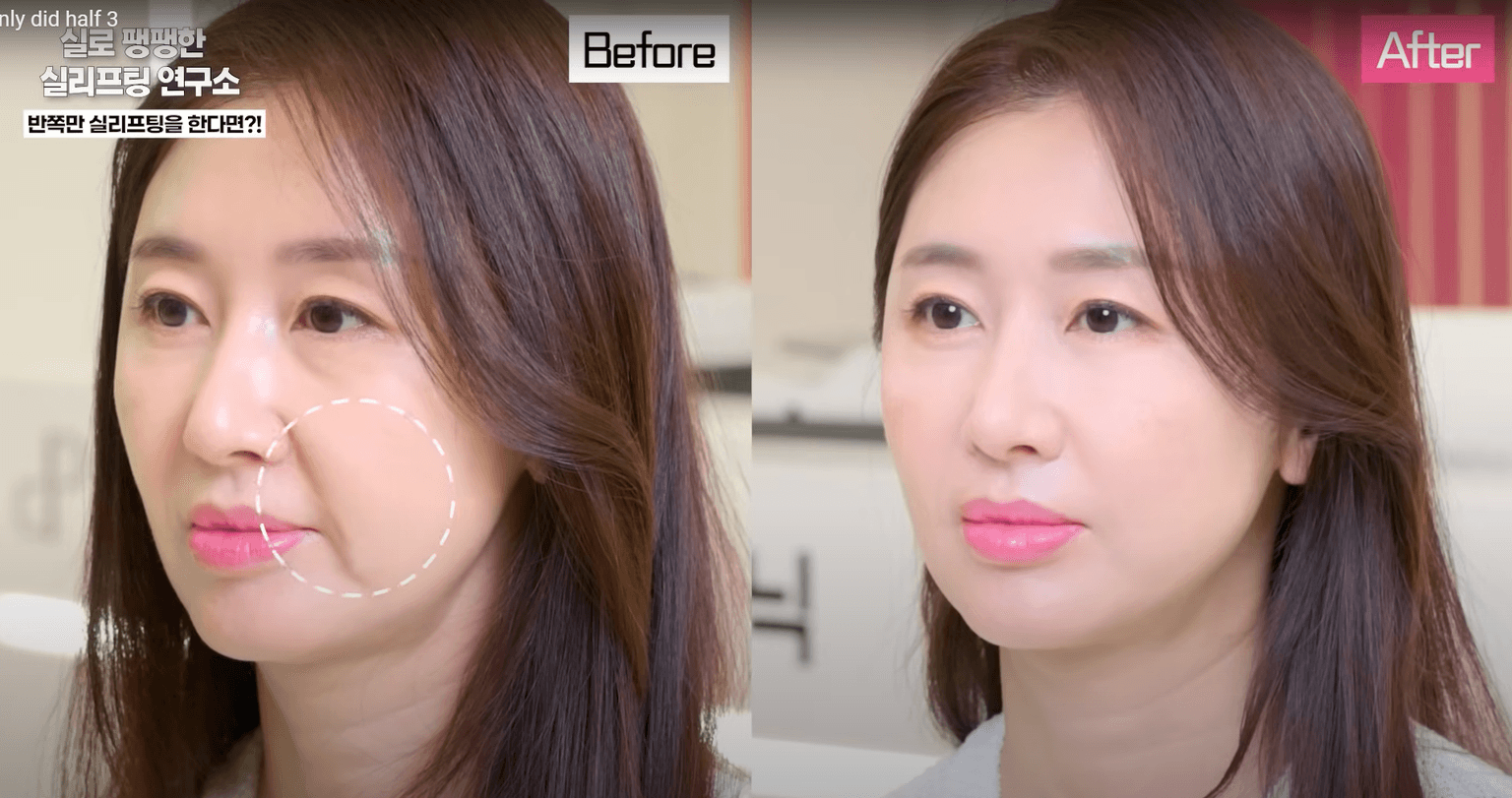
1. PangPang Clinic
For midface ptosis, you may consider PangPang Clinic if you are seeking a non-surgical thread-lift plan aimed at elevating descended cheek tissue while supporting skin firmness. Its Pink Lift thread system and individualized thread selection are presented as options for creating a natural-looking lift, with planning tailored to your facial concerns.
- URL: PangPang Clinic Website
- Location: Gangnam-gu, Seoul
- Thread-lift approach:
- Pink Lift is a clinic-exclusive medical thread developed from data from thousands of lifting procedures and is described as providing a stronger hold and natural lift.
- The clinic uses 31 specialized thread types, including barbed lifting threads, elastic tightening threads, and volume threads for areas such as the cheeks and under-eyes.
- Treatment planning can include ultrasonic visual assessment and pre-procedure design, followed by a personalized doctor consultation.
- Thread lifting is described as taking about 30 minutes to one hour, with partial, Airnox, or sleep-anesthesia options.
- Skin-quality focus:
- The clinic states that it collaborates with Seoul National University Bundang Hospital on thread-lifting techniques intended to promote collagen regeneration and skin-quality improvement.
- Chill-Lifting uses contact-free cooling anesthesia and is described as intended to reduce discomfort, swelling, and bruising.
- Related options and follow-up:
- A Thread Lifting Revision Center addresses concerns following previous thread-lift procedures and may combine threads with fillers, Botox, or lasers.
- Minute Lifting is described as a 30-minute, non-invasive option with immediate lifting effects and a stated maintenance period of six months to one year.
- An aftercare package is available to support and prolong thread-lift effects.
2. Haru Clinic
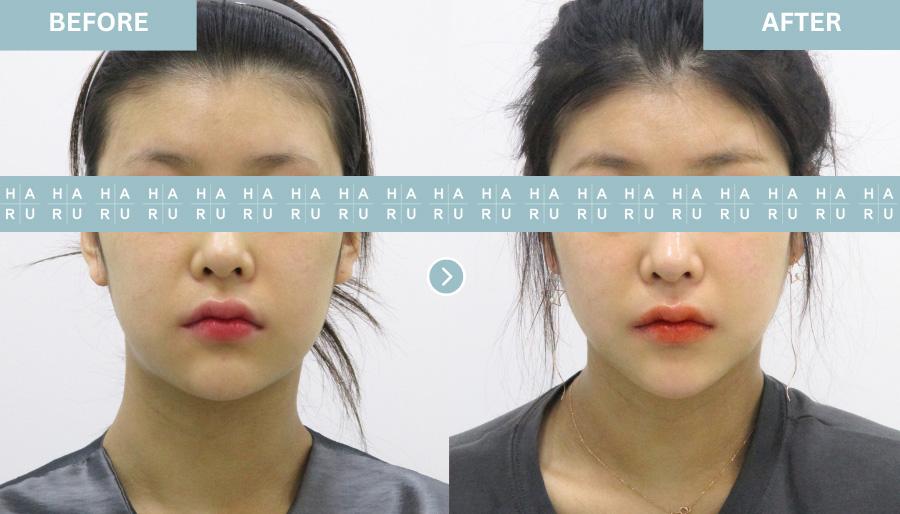
For midface ptosis, Haru Clinic may suit you if you want a thread lift designed around a stable fixation point behind the ear. The approach is intended to elevate sagging cheeks while pressing and contouring the tissue to avoid an enlarged facial appearance, with adjustments when you have volume loss below the cheekbones.
- URL: Haru Clinic Website
- Location: Gangnam-gu, Seoul
- Midface thread-lift technique:
- Dissolvable barbed threads are used to elevate sagging cheeks and the jawline under local anesthesia.
- The clinic describes using the less-mobile, firmly anchored area behind the ear as a fixed point for stability and longer-lasting lift support.
- Fixed points are selected to avoid major nerves and blood vessels, with the stated aim of reducing pain, bleeding, and discomfort.
- Thread lifting is described as stimulating collagen and involving short downtime.
- Treatment planning:
- Dr. Jeong designs treatment around facial harmony and balance using non-invasive techniques.
- Dr. Jeong is described as an official research physician for Merz and as teaching other doctors updated filler techniques.
- When appropriate, cheek-volume loss can be considered in the lift design to support smoother contours.
- Complementary treatments:
- Fillers can restore or define areas including the cheeks, jawline, chin, and tear troughs.
- Collagen-tightening treatments use radiofrequency or ultrasound to tighten tissue and stimulate collagen without incisions.
- A surgical facelift option that repositions deeper SMAS layers is also listed for jowls and neck laxity.
3. B.V Clinic
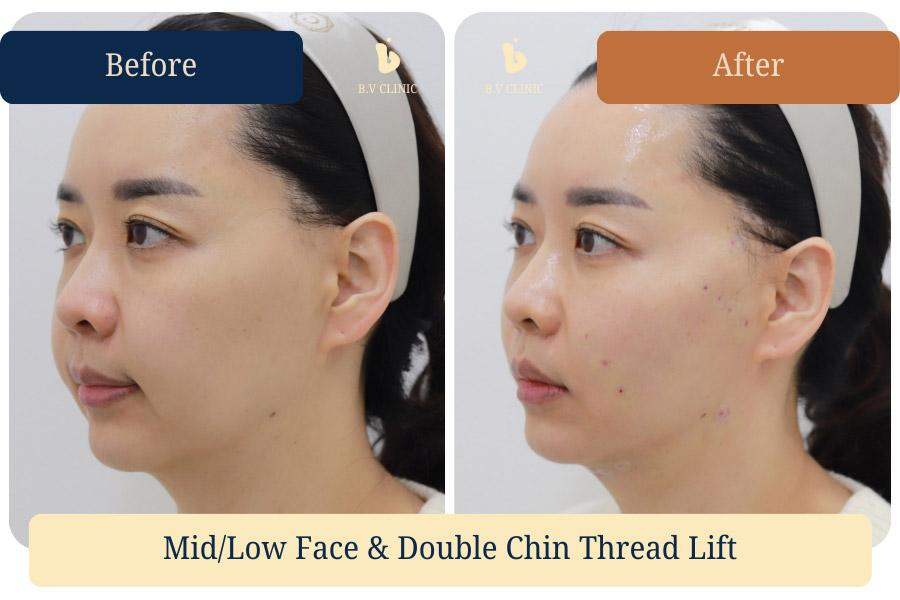
For midface ptosis, you may consider B.V Clinic for a thread-lift approach that places threads strategically to lift sagging midface skin and support your natural facial contours. Its 3D thread-lifting treatment is described as reaching the SMAS layer, while PDO barbed threads provide anchoring and are intended to stimulate collagen for ongoing firmness.
- URL: B.V Clinic Website
- Location: Seoul
- Thread-lifting experience and materials:
- Dr. Suh is described as having more than 10 years of dedicated thread-lifting experience and thousands of clinical cases.
- The clinic uses MINT Threads, which the clinic states are FDA and KFDA approved.
- Premium PDO barbed threads are described as providing strong anchoring power while promoting collagen production.
- Procedure options:
- 3D Thread Lifting is designed to lift and firm sagging skin while supporting facial contours.
- Full Face Lifting is a non-surgical option described as addressing volume balance, nasolabial folds, forehead wrinkles, and facial asymmetry.
- Volume lifting is available for areas affected by age-related volume and elasticity loss.
- Skin tightening and aftercare:
- Shurink Lifting uses high-intensity focused ultrasound for deeper-layer tightening and contour refinement.
- Potenza and Thor Lifting use radiofrequency to support collagen, elasticity, skin texture, and tightening.
- Post-treatment care may include skin-regeneration management, nutritional skincare products, and ultrasound treatments intended to help manage swelling and support elasticity.
Costs and Medical Tourism: A Global Comparison
Face thread lifts are especially cost-effective in South Korea and are often more affordable than in Europe or North America.
Cost of Face Thread Lifts in South Korea
Procedures typically range from KRW 1,800,000 to 3,800,000 (around $700–$4,000 USD), depending on factors like:
- Clinic reputation and location (Seoul clinics often charge a premium)
- The expertise and credentials of the surgeon
- Type and quantity of threads used
- Complexity of the lift
- Package inclusions like consultations, medications, and follow-up care
- Whether the procedure is a primary or revision treatment
Comparative Costs: South Korea vs. Other Popular Medical Tourism Destinations
Thread lifts in South Korea cost substantially less than in the US, UK, and other Western countries, with savings often between 40%–65%.
Table 3: Estimated Face Thread Lift Cost Comparison by Country
| Country | Estimated Cost Range (USD) | Key Factors Influencing Cost | Potential Savings vs. US/UK |
|---|---|---|---|
| South Korea | $700 - $4,000 | Clinic/surgeon, thread type, procedure complexity, package | 40%-65% on overall packages |
| United States | $1,500 - $6,000+ | Provider, location, thread type, area treated | N/A |
| United Kingdom | $1,000 - $3,000 | Type/brand/number of threads | N/A |
| Thailand | $1,500 - $3,500 | Scope of procedure, surgeon, hospital fees | Up to 75% off some facelift types |
| Turkey | $800 - $3,300 | Area treated, doctor experience, thread type/brand | Up to 80% off some facelift types |
| Mexico | $2,000 - $4,000 | All-inclusive packages | Up to 70% off some facelift types |
| Australia | $2,500 - $5,000 | Various factors | N/A |
| Switzerland | $3,300 - $6,600 | Various factors | N/A |
Understanding Medical Tourism Packages and Potential Savings
South Korea’s competitive pricing is a result of industry competition, efficient operations, and procedure volumes—not a compromise in quality. Medical tourism packages often bundle procedures, tests, aftercare, accommodation, sometimes even translation services, making them especially attractive. Substantial savings can be achieved, sometimes up to 70–80% compared with US or UK prices, though extras like private transfers or premium accommodation may not always be included by default.
Patient Experiences and Expected Outcomes
Expectations shape satisfaction with thread lift procedures, and it’s important to know both the potential improvements and the common short-term effects.
Immediate and Long-Term Results
After a thread lift for midface ptosis, most patients see an immediate tightening or lift—sometimes dramatically so, such as an “instant V line” for the jaw. However, the most significant improvements come gradually as new collagen forms. Peak results are usually seen within 6–12 weeks, and depending on the thread type and personal factors, results last around 12–18 months, with maintenance treatments possible every couple of years.
Common Side Effects and Potential Complications
Side effects are generally mild, such as swelling, redness, bruising, or mild discomfort. Temporary puckering or crackling when moving the mouth is not unusual. Minor complications like asymmetry, bruising, redness, or numbness occur infrequently, especially in the hands of experienced practitioners. Severe complications are very rare but highlight the need to choose a well-qualified, skilled surgeon.
Patient Satisfaction and Realistic Expectations
Most patients (89% in some studies) are pleased with the subtle lifting and natural rejuvenation thread lifts deliver, often describing a fresher or more youthful appearance. However, thread lifts do not match the dramatic results of surgery. Managing expectations through clear communication is critical—patients seeking surgical-level changes are likely to be disappointed with the more understated results of a thread lift. Researching a practitioner’s expertise, examining before-and-after photos, and seeking reviews or patient testimonials are strongly recommended for anyone, but especially for medical tourists.
Who is an Ideal Candidate for a Thread Lift for Midface Ptosis?
The best candidates are usually in their late 30s to early 50s, experiencing mild to moderate sagging, with good skin elasticity, and in overall good health. Those with significant aging changes or seeking dramatic results may need additional or alternative treatments. Thread lifts are also a good option for patients who cannot undergo surgery due to other health concerns.
Conclusion: Making an Informed Decision
Midface ptosis is a common sign of aging marked by sagging mid-cheek fat pads and a tired appearance. Face thread lifts offer a minimally invasive approach that provides both immediate lift and gradual skin improvement through collagen regeneration. Results are subtle and temporary, best suited for mild to moderate sagging, and can be repeated as needed.
South Korea stands out for its high-quality, affordable thread lifts packaged for medical tourists, with expert practitioners and efficient care at significant savings. Choosing a skilled, credentialed surgeon and having clear expectations remain the most important steps for safety and satisfaction.
References
1, 2, 3, 4, 5, 6, 7, 8, 9, 10, 11, 12, 13, 14, 15, 16, 17, 18, 19, 20, 21, 22, 23, 24
Frequently Asked Questions
Related Blogs
Abdominal Thread Lift in Korea: Candidacy, Evidence, Recovery, and Travel Planning
Abdominal thread lifts place absorbable threads in superficial abdominal tissue for subtle tightening, but methods, durability, and outcomes are not standardized. The article covers candidate screening, procedure planning, Korea travel and follow-up, preparation, aftercare warning signs, and alternatives for fat, excess skin, diastasis, or hernia.
Updated: Oct 13, 2026
Breast Thread Lift in Korea: Candidacy, Safety, Recovery, and Travel Planning
Breast thread lift uses absorbable threads placed through small entry points for modest contour improvement, but techniques, durability, and complication rates are not standardized. The article covers candidacy, preparation, travel planning for Korea, aftercare, warning signs, follow-up, and surgical alternatives for significant sagging.
Updated: Oct 13, 2026
Lip Thread Lift in Korea: Methods, Recovery, Risks and Travel Planning
Lip thread lifts use absorbable smooth or barbed threads to soften upper-lip lines or provide subtle traction, with suitability based on tissue quality, goals, and medical assessment. The article covers treatment planning, recovery, aftercare, risks, alternatives, and travel guidance for international patients in South Korea.
Updated: Oct 13, 2026
Filling Threads in Korea: Types, Recovery, Risks and Travel Planning
Filling threads are absorbable volumizing thread configurations placed under local anesthesia to soften minor static lines and localized hollows in appropriately assessed patients. The article covers candidate screening, device documentation, Korea travel planning, recovery, aftercare, complications, and alternatives such as filler, fat grafting, thread lifts, and facelift surgery.
Updated: Oct 12, 2026
Clinics offering Face Thread Lift

SH Clinic: Comprehensive Women's, Men's & Couples' Health Services in Korea
Sinsa

Haru Clinic Korea | Fully-Customized Full-Face Non-Surgical Rejuvenation With Threads, Botox & Fillers
Sinsa

Lydian Plastic Surgery Clinic in Korea: Superior Cosmetic Procedures by World-Renowned Expert Dr. An Kyung Chun
Apgujeong

PangPang Clinic: Korea's Premier Thread Lifting and Skin Rejuvenation Specialist in Gangnam, Seoul
Sinsa