
Medical Tourism Blog
Eyebrow Microblading in Korea: Methods, Healing, Travel Planning, and Safety
Table of contents
- Eyebrow Microblading at a Glance
- What Is Eyebrow Microblading?
- Who Is a Good Candidate for Eyebrow Microblading?
- How Is Eyebrow Microblading Performed?
- Why Visit Korea for Eyebrow Microblading?
- Key Information for International Patients
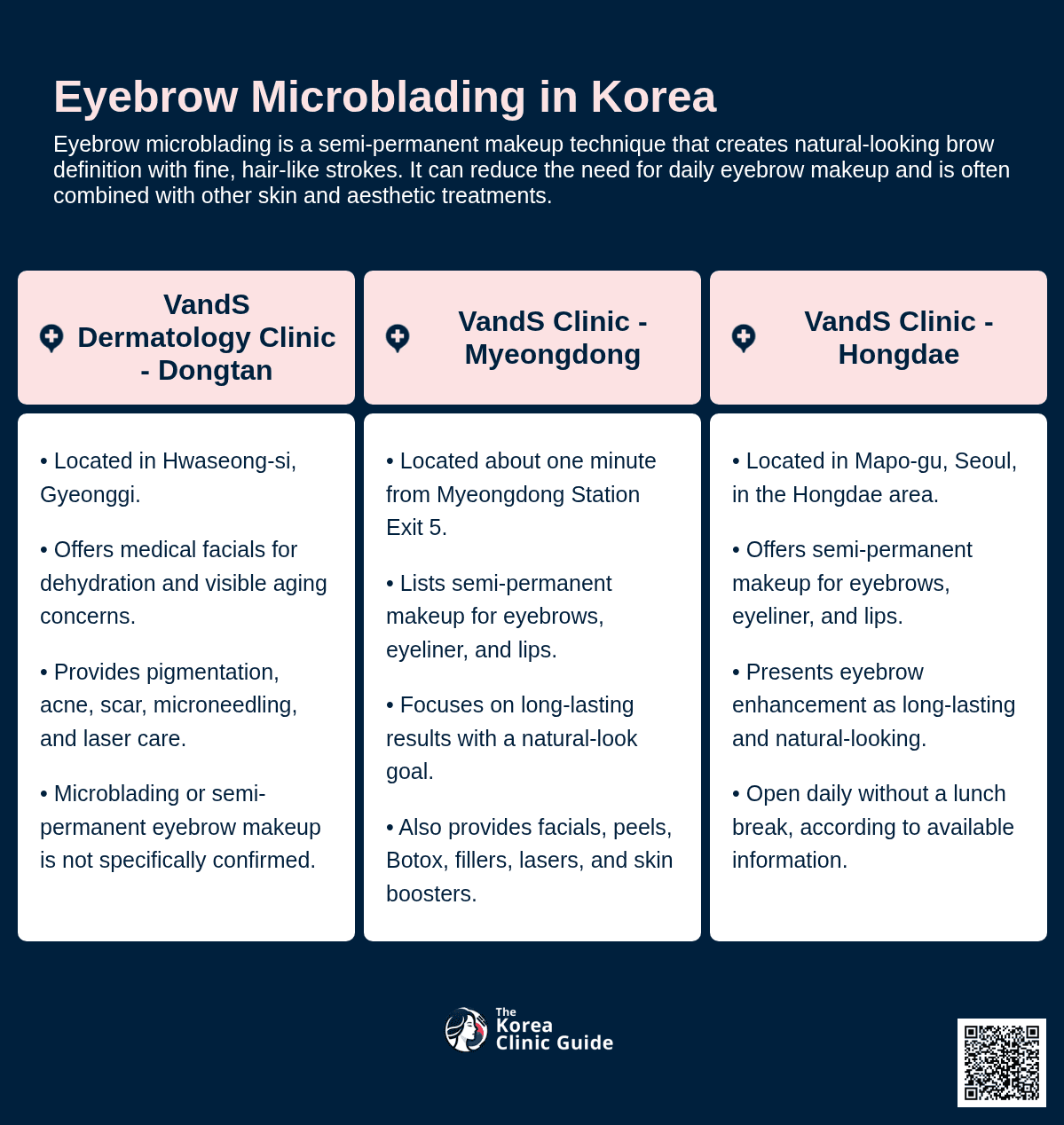
- Which Are the Best Clinics in Korea for Eyebrow Microblading?
- Eyebrow Microblading From Start to Finish
- Alternatives to Eyebrow Microblading
- How Can I Prepare for Eyebrow Microblading?
- Aftercare Advice
Considering treatment in Korea? Everything you need to know e.g. — how to avoid scams, visas, interpreters, recovery tips — in our Medical Tourism Master Guide. Plan with confidence in minutes, not weeks!
Last updated: September 2026
Eyebrow Microblading at a Glance
- What it does — Eyebrow microblading is semi-permanent cosmetic tattooing that uses fine pigment strokes to create the look of fuller or more balanced brows; it does not regrow hair, treat alopecia, or lift a low brow.
- Healing timeline — Brows look darker and may be red or tender at first, commonly flake on days 3–5 and seem patchy by days 7–10; surface healing takes about 1–2 weeks, while the result should be judged at 4–6 weeks.
- Touch-up planning — Pigment retention, color, and symmetry are assessed after 4–6 weeks, when a refinement may be considered; using the same practitioner for both stages usually means staying 4–6 weeks or making a second trip.
- Travel impact — Avoid swimming, saunas, steam rooms, heavy sweating, brow makeup, waxing, and facial treatments over the brows for about 7–14 days; for long-haul travel, a conservative planning interval is 7–10 days after treatment, not a formal flight restriction.
- Who should defer — Do not book with infected, sunburned, wounded, or actively inflamed brow skin, or during pregnancy or breastfeeding; blood-thinning medicines, poorly controlled diabetes, immunosuppression, recent isotretinoin, and keloid history need individualized medical assessment.
- Safety priority — Choose a practitioner who can document sterile single-use blades or cartridges, fresh gloves, traceable pigments, written aftercare, and a clear local medical escalation route, since infection, allergy, scarring, and difficult-to-remove pigment are possible.
- Korea distinction — Korea’s future Tattooist Act licensing framework does not take effect until October 29, 2027, so as of September 2026 visitors should verify a practitioner’s current business status, training, hygiene practices, and insurance rather than rely on a future license system.
What Is Eyebrow Microblading?
Eyebrow microblading is semi-permanent cosmetic tattooing that places pigment in fine strokes to create the appearance of fuller or more balanced eyebrows. It addresses sparse-looking brows or desired shape and definition, but does not regrow hair or lift the brow. It is a minimally invasive cosmetic procedure.
Who Is a Good Candidate for Eyebrow Microblading?
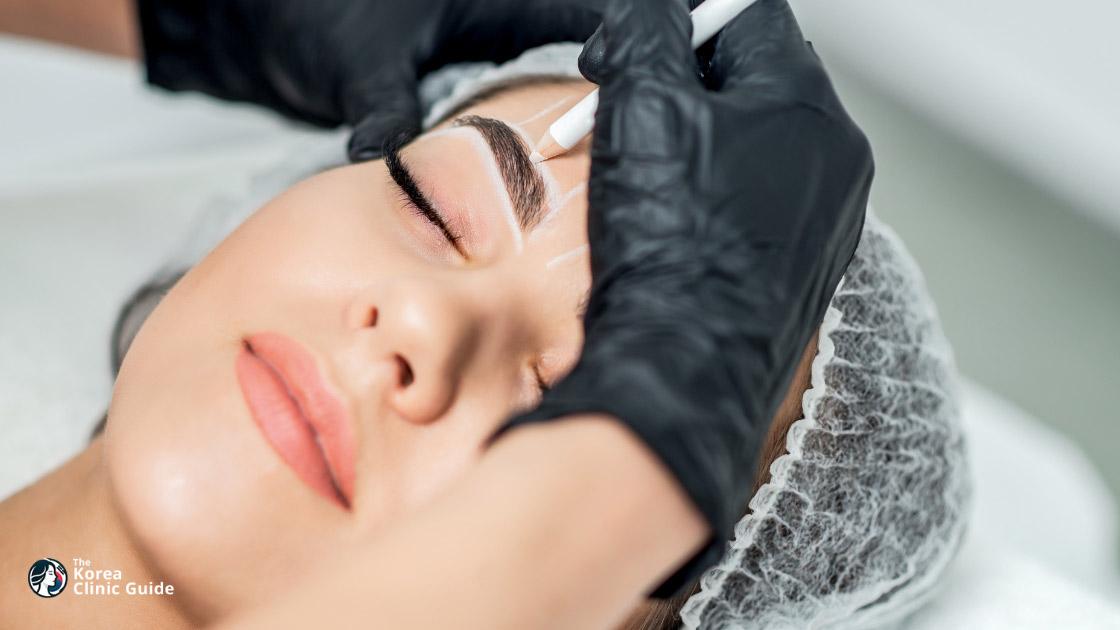
- Healthy brow skin — Good candidates have intact skin across the eyebrows and want pigment that creates the appearance of fuller, reshaped, or more balanced brows.
- Realistic expectations — Microbladed brows are implanted pigment, not new hair follicles. The procedure does not treat eyebrow alopecia, restore hair, or elevate a low brow.
- Commitment to healing and revision — Candidates accept an initially dark appearance, flaking, temporary patchiness, fading, and the possibility of a refinement assessment at 4–6 weeks.
- Stable aesthetic goal — Choose microblading only after approving the mapped shape while sitting upright and reviewing the practitioner’s healed—not only fresh—results on people with similar skin and natural brow density.
Avoid treatment with an active brow or eyelid infection, open wound, sunburn, herpes outbreak, or active eczema, dermatitis, psoriasis, or unexplained rash in the treatment area. Pregnancy and breastfeeding are reasons to defer elective cosmetic tattooing because direct safety evidence is inadequate. Anticoagulant or antiplatelet medicines, bleeding disorders, poorly controlled diabetes, recent isotretinoin, chemotherapy, radiotherapy, significant immunosuppression, keloid history, and unstable vitiligo or inflammatory skin disease require medical assessment before booking; skin trauma can provoke disease activity or abnormal scarring. Do not independently stop warfarin, apixaban, rivaroxaban, clopidogrel, aspirin, or another prescribed medicine.
How Is Eyebrow Microblading Performed?
Technique should reflect skin quality and oiliness, existing hair, old pigment, desired finish, and the practitioner’s demonstrated healed work. There are no robust randomized trials showing one brow-tattoo technique is universally best for retention, satisfaction, scarring, or safety.
- Manual hair-stroke microblading — A hand-held grouped needle blade makes superficial linear strokes intended to resemble individual hairs. This is the traditional microblading approach.
- Machine-assisted nano or digital strokes — A motorized tattoo device creates fine hair-like strokes. “Nanoblading” is used inconsistently as a marketing term, so ask which device and needle cartridge will be used rather than assuming it is the same as manual microblading.
- Powder or ombré brows — Machine-applied shading creates a soft, filled-in makeup effect instead of separate hair strokes. This suits people who prefer defined density over a purely hair-stroke appearance.
- Combination brows — Hair strokes are combined with shading where sparse native hair or a stronger brow shape calls for more visual density.
Why Visit Korea for Eyebrow Microblading?
Korea does not have evidence of inherently better microblading outcomes or lower complication risk than other countries. For an overseas visitor, practitioner-specific hygiene, clear consent, pigment documentation, and access to medical care matter more than destination. Korea’s regulatory position is also changing, so confirm the practitioner’s current credentials and operating arrangements before travel.
- Current legal context — A May 21, 2026 Korean Supreme Court en banc decision found that the ordinary cosmetic tattooing at issue did not constitute unlicensed medical practice under the former Medical Service Act. Read the Supreme Court decision notice rather than assuming cosmetic tattooing is a medical procedure.
- Future licensing framework, not a current one — Korea’s Tattooist Act was enacted but does not take effect until October 29, 2027. Its licensing, training, business-registration, and hygiene framework is therefore not yet operational as of September 2026.
- What to verify now — Ask for current business status, training, hygiene inspection history where available, single-use blade or cartridge policy, pigment traceability, English-language consent and aftercare, insurance or compensation arrangements, and a defined medical escalation route. Do not rely on a future Tattooist Act licence-verification system before it exists.
Key Information for International Patients
- Minimum stay — Microblading is an outpatient treatment and does not routinely require a medical stay in Korea. Build in time to obtain written aftercare, check the first 24–48 hours of healing, and access local care if a problem develops.
- Flying home — No microblading-specific evidence establishes an exact safe interval before long-haul flying. The CDC Yellow Book cites an American Society of Plastic Surgeons recommendation to wait 7–10 days after facial cosmetic procedures; this is a conservative travel-planning interval, not a formal flight restriction for microblading.
- Refinement visit — Assess retained pigment, color, and symmetry only after 4–6 weeks. Completing a touch-up with the same practitioner requires either a 4–6 week stay or a second trip.
- Itinerary impact — Plan for 7–14 days without swimming, sauna, steam rooms, heavy sweating, brow makeup, waxing, threading, exfoliation, or facial treatments directly over the brows. Avoid scheduling beach, spa, hiking, or intensive gym activities during this period.
- Remote follow-up — Arrange a messaging route before treatment and send clear, well-lit photographs around days 2–3, days 7–10, and weeks 4–6. Escalating pain, spreading redness, pus, eyelid swelling, fever, eye pain, or visual symptoms need local medical assessment rather than remote cosmetic reassurance.
- Transport and companions — A companion is usually unnecessary with topical anesthetic alone. Arrange independent transport if an oral sedative is used or if there is a history of fainting or vasovagal episodes.
Travel note: Fresh brows often look darker, warmer, and more defined than the healed result. Do not schedule passport photographs, major events, or a refinement decision during the first 1–2 weeks.
Which Are the Best Clinics in Korea for Eyebrow Microblading?
Listed below are some of the best clinics in Korea for eyebrow microblading.
1. VandS Dermatology Clinic - Dongtan
You may consider VandS Dermatology Clinic - Dongtan if you want eyebrow microblading alongside a broad menu of dermatologic and cosmetic care, but the available clinic information does not specifically confirm that it performs semi-permanent eyebrow makeup or describe its microblading technique.
- URL: VandS Dermatology Clinic - Dongtan Website
- Location: Hwaseong-si, Gyeonggi
- Related skin care:
- Offers tailored medical facials for concerns such as dehydration and visible aging signs.
- Provides pigmentation-focused care for dark spots and melasma, with approaches that may include topical treatment, laser therapy, and chemical peels.
- Offers acne and scar care, including microneedling and laser-based treatments.
- Other aesthetic services:
2. VandS Clinic - Myeongdong
You can expect VandS Clinic - Myeongdong to offer semi-permanent makeup for eyebrows, eyeliner, and lips, making it a relevant option when you are seeking long-lasting eyebrow enhancement with a natural-look goal. The clinic is described as being a one-minute walk from Myeongdong Station Exit 5 and also provides skin and facial-aesthetic treatments that may be useful if you are planning other cosmetic care.
- URL: VandS Clinic - Myeongdong Website
- Location: Jung-gu, Seoul
- Semi-permanent makeup:
- Semi-permanent makeup is listed for eyebrows, eyeliner, and lips.
- The stated aim is a long-lasting, natural look that reduces the need for daily makeup.
- Complementary services:
- Customized skincare may include facials, peels, and treatments for texture and skin health.
- Pigmentation, freckles, redness, and uneven tone are among the listed skin concerns addressed.
- Facial options include Botox, contour injections, fillers, thread lifting, laser lifting, and skin boosters.
3. VandS Clinic - Hongdae
You may consider VandS Clinic - Hongdae for eyebrow microblading because it lists semi-permanent makeup for eyebrows, eyeliner, and lips, with long-lasting, natural-looking results as its stated focus. The branch is conveniently located in Hongdae and is described as open every day without a lunch break.
- URL: VandS Clinic - Hongdae Website
- Location: Mapo-gu, Seoul
- Semi-permanent makeup:
- Offers long-lasting semi-permanent makeup solutions for eyebrows, eyeliner, and lips.
- The service is presented as an option for a natural look that stays in place.
- Skin and facial services:
- Customized skincare treatments are available for a range of skin concerns.
- Offers care for pigmentation, melasma, redness, acne, and moles.
- Facial-aesthetic options include Botox, contour injections, fillers, thread lifting, laser lifting, and skin boosters.
- Practical note: Open every day without a lunch break, according to the provided clinic information.
Eyebrow Microblading From Start to Finish
- Remote inquiry and screening — Send unfiltered, well-lit photographs of the brows and disclose prior brow tattooing, removal attempts, allergies, skin disease, medicines, supplements, pregnancy or breastfeeding, keloid history, immune status, and fainting history. Confirm whether English or virtual consultation is available.
- Travel and contingency planning — Schedule treatment early enough in the trip to monitor healing and identify a local clinic or hospital option for urgent symptoms. Confirm the after-hours contact route before arrival.
- In-person assessment and brow mapping — The practitioner assesses native brow hair, skin condition, facial symmetry, old pigment, and the suitability of the requested design. Approve the outline, arch, thickness, tail, and pigment family while upright before implantation begins.
- Consent and hygiene check — Review risks including imperfect retention, color change, asymmetry, infection, allergy, scarring, granulomatous reaction, and difficult removal. Confirm fresh gloves, cleaned tools, identifiable pigment, and a new sterile single-use blade or needle cartridge; reused needles or blades are unacceptable.
- Pigment implantation — The brow skin is cleansed and topical anesthetic is commonly used. With manual microblading, fine superficial strokes are made using a hand-held needle array and pigment is placed into those strokes; machine methods use a motorized device instead. General anesthesia and hospital admission are not routine.
- Discharge documentation — Leave with written aftercare, a contact route for concerns, photographs of the fresh brows, and exact pigment and product details where available. Tell MRI staff about permanent makeup in the future because pigments can rarely cause local discomfort, swelling, or imaging artifact.
- Early healing and remote review — Redness, tenderness, slight swelling, and a darker initial color are common. Flaking often begins on days 3–5, while apparent fading or patchiness around days 7–10 is common; surface healing usually takes 1–2 weeks.
- Stabilization and refinement decision — Judge color, symmetry, and retention at 4–6 weeks, not during peeling. Do not undergo a touch-up while skin remains scabbed, inflamed, infected, or unhealed.
Alternatives to Eyebrow Microblading
Non-surgical options range from completely reversible cosmetics to longer-lasting tattoo techniques. Surgical options address hair loss or brow position but involve different recovery, cost, and medical assessment requirements.
Temporary Brow Cosmetics
- Pencils, powders, gels, and fibers — Fully reversible options for testing shape, density, and color before committing to tattoo pigment.
- Tinting or lamination — Temporary enhancement for people with adequate natural brow hair who do not need implanted pigment.
Other Cosmetic Tattoo Methods
- Nano, powder, or combination brows — Machine-created strokes, shading, or both can better match a desired finish than manual hair strokes. They carry the same broad tattoo-related issues of pigment retention, allergy, infection, and difficult revision.
Eyebrow Transplant
- Real-hair restoration — Eyebrow transplantation can be considered for stable eyebrow hair loss or fully healed scars. It is surgery, requires assessment of donor hair and cause of hair loss, and transplanted hairs need ongoing trimming.
Laser Pigment Removal
- Correction of previous work — Laser microblading removal can address unwanted old pigment, but often requires multiple sessions and may not remove all color. Obtain an assessment before placing new pigment over an existing tattoo.
Eyebrow Lift
- Brow-position correction — An eyebrow lift addresses a descended brow position. It does not restore eyebrow hairs or replace sparse areas with pigment.
How Can I Prepare for Eyebrow Microblading?
- Medical and pigment history — Provide a complete list of prescribed medicines, over-the-counter medicines, vitamins, herbals, supplements, prior tattoos or removals, pigment reactions, topical-anesthetic reactions, latex sensitivity, skin conditions, immune conditions, and history of keloids or fainting.
- Bleeding-risk medicines and supplements — Discuss aspirin, nonsteroidal anti-inflammatory drugs, fish oil, vitamin E, ginkgo, garlic supplements, and alcohol with the practitioner before treatment. Do not stop prescribed warfarin, apixaban, rivaroxaban, clopidogrel, aspirin, or similar medicines without instruction from the prescribing clinician.
- Skin-active treatments — Disclose isotretinoin, prescription retinoids, benzoyl peroxide, exfoliating acids, recent chemical peels, laser treatments, botulinum toxin, and fillers. Arrive without sunburn, peeling, active acne-like inflammation, or irritation across the brow region.
- Recent brow grooming — Tell the practitioner about recent waxing, threading, tinting, lamination, or other brow treatments so the skin can be assessed before pigment implantation.
- Food and hydration — Fasting is not usually required when topical anesthetic alone is planned. Eat normally and hydrate before the appointment to reduce light-headedness.
- Travel logistics — Keep flights flexible, arrange a reachable local medical option, and avoid booking the procedure immediately before a long-haul departure. Pack a hat that does not rub the brows and products specified by the practitioner.
Travel note: A negative patch test does not reliably exclude delayed pigment or anesthetic reactions. Discuss any past tattoo, metal, antiseptic, latex, or topical-anesthetic reaction before treatment.
Confirm the treating practitioner’s individualized preparation requirements, which take precedence over general guidance.
Aftercare Advice
Protect the healing eyebrow skin from friction, contamination, water exposure, heat, sweat, and picking until it has settled.
- Hands and cleansing — Keep hands away from the brows. Use only the cleanser and aftercare product specifically recommended by the practitioner, and do not apply unapproved ointments, makeup, or active skincare.
- Water, heat, and exercise — For approximately 7–14 days, avoid shower spray and shampoo directly on the brows, pools, hot tubs, saunas, steam rooms, heavy sweating, and facial treatments over the area. Follow the treating practitioner’s exact washing protocol.
- Flaking and appearance — Do not scratch, peel, or pull flakes. Flaking commonly begins around days 3–5, and fading or patchiness around days 7–10 does not establish treatment failure; wait 4–6 weeks to judge retention and color.
- Cosmetics and sun — Avoid brow makeup, waxing, threading, exfoliation, retinoids, acids, and benzoyl peroxide over the treated skin during initial healing. Once the skin is fully healed, protect the area from UV exposure with SPF 50 to limit fading.
- Infection and allergy warning signs — Obtain prompt medical care for spreading redness, worsening pain, marked warmth, pus or foul drainage, blisters, fever, swollen eyelids, eye pain, difficulty opening the eye, visual changes, widespread hives, facial swelling, or breathing symptoms. Infections are uncommon but can be serious; published reports include a 12-person Mycobacterium haemophilum outbreak following permanent eyebrow makeup and case reports of preseptal cellulitis after microblading.
- Delayed reactions and follow-up — Seek medical review for persistent firm red-brown, yellow-orange, or raised papules or plaques, including months or years later, because delayed allergic and granulomatous tattoo reactions are documented. Do not use preventive oral antibiotics unless prescribed for a specific clinical reason.
Follow the treating doctor’s or qualified practitioner’s instructions, and contact the clinic promptly when healing appears abnormal.
Frequently Asked Questions
Related Blogs

Scalp Tattoo in Korea: SMP Types, Sessions, Recovery, Risks, and Travel Planning
Scalp micropigmentation uses layered tattoo dots to camouflage baldness, diffuse thinning, or stable scars rather than restore hair growth. The article covers candidate screening, three-session travel planning in Korea, aftercare, provider verification, risks, and alternatives.
Updated: Oct 1, 2026
Microblading in Korea: Methods, Healing, Risks, and Travel Planning
Microblading is cosmetic eyebrow tattooing that uses manual strokes, shading, combination work, or machine techniques to camouflage sparse brows; it does not regrow hair or treat eyebrow loss. In Korea, costs range from ₩600,000–₩2,000,000 (about US$400–$1,500), with guidance on provider verification, healing, travel planning, aftercare, and touch-up timing.
Updated: Sep 28, 2026
Laser Microblading Removal: Why Korea Excels and How Costs Compare Globally
Discover the costs and intricacies of laser microblading removal in Korea, a popular procedure for those seeking to erase semi-permanent eyebrow tattoos. Learn about the factors influencing pricing, the latest technology, and what to expect during the removal process.
Updated: Sep 26, 2026
Lip Microblading in Korea: Methods, Recovery, Risks, and Travel Planning
Lip microblading, also called lip blushing or cosmetic lip tattooing, uses a needle-driven device to place pigment for longer-lasting lip color or border definition. The article covers candidacy, Korea travel planning, provider verification, healing timelines, aftercare, warning signs, and alternatives.
Updated: Sep 23, 2026
Clinics offering Eyebrow Microblading

Seojin Plastic Surgery Clinic Korea: Pioneering Advanced Cosmetic Procedures for Personalized Aesthetic Transformation
Apgujeong

VandS Dermatology Clinic - Dongtan, Korea: Comprehensive Skin Care and Cosmetic Procedures for Youthful, Radiant Skin
Hwaseong
VandS Clinic - Pangyo: Leading Advanced Medical Procedures in Korea for Enhanced Beauty and Health
Pangyo
VandS Clinic - Hongdae: Comprehensive Beauty and Skincare Procedures in Korea for Radiant Skin and Confident You
Hongdae