
Medical Tourism Blog
Stretch Marks Thighs: Butt Thread Lift Options in Korea
Table of contents
- Understanding Striae: A Dermatological Overview of Linear Dermal Tears
- The Butt Thread Lift Procedure: A Detailed Clinical Breakdown
- Which Are the Best Clinics in Korea for Stretch Marks Thighs?
- Medical Tourism: The Patient's Journey in South Korea
- Comparative Cost Analysis: South Korea vs. Other Medical Tourism Destinations
- Critical Efficacy Review: Butt Thread Lifts for Stretch Marks
- Conclusion
- Final Recommendations
- References
Considering treatment in Korea? Everything you need to know e.g. — how to avoid scams, visas, interpreters, recovery tips — in our Medical Tourism Master Guide. Plan with confidence in minutes, not weeks!
Considering a butt thread lift for linear dermal tears on the thighs raises a key question: will a skin-lifting procedure meaningfully improve stretch marks? This guide explains the condition, the procedure, what to expect in South Korea as a medical tourist, costs, and realistic outcomes—especially for striae.
Understanding Striae: A Dermatological Overview of Linear Dermal Tears
Stretch marks are common and harmless but can cause cosmetic distress. Medically, they are linear dermal scarring from rapid skin stretch that disrupts connective tissue—not just “stretched skin.”
Terminology, Classification, and Etiology
The umbrella term is striae distensae. Subtypes include:
- Striae atrophica: Thinned skin, often linked to Cushing's syndrome or prolonged corticosteroid use.
- Striae gravidarum: Occurs during pregnancy on the abdomen, breasts, and thighs.
- Striae rubrae: Early stage; pink/red/violaceous, sometimes slightly raised and itchy.
- Striae albae: Mature stage; scar-like, hypopigmented, and faded/white.
- Striae nigrae and Striae caerulea: Dark grey/black and dark blue/purplish marks, typically in darker skin tones.
Common triggers include rapid weight change, growth spurts, and pregnancy. Risk also rises with obesity and certain steroid creams or tablets. Rarely, striae signal underlying conditions such as Cushing's syndrome, Ehlers-Danlos syndrome, or abnormal collagen formation.
Pathophysiology and the Challenge of Treatment
Striae involve damage to dermal collagen and elastin. Over time, striae rubrae evolve into striae albae, which are atrophic and hypopigmented—making them harder to treat.
Topicals often overpromise. Options like tretinoin cream, laser therapy, and microdermabrasion may stimulate collagen and improve texture, but seldom erase marks. Importantly, “linear dermal tears” are scars. A thread lift lifts lax skin and stimulates collagen; it does not repair pre-existing scars. Patients should clearly understand this difference before pursuing a thread lift.
The Butt Thread Lift Procedure: A Detailed Clinical Breakdown
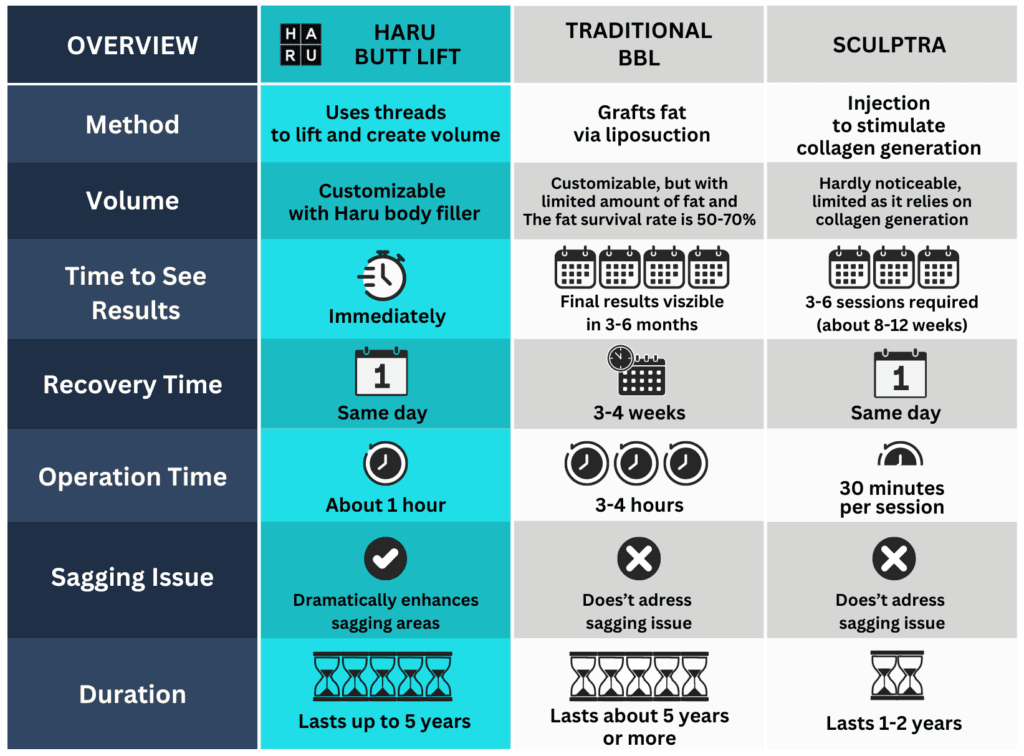
A butt thread lift is a minimally invasive, non-surgical option to lift and reshape the buttocks using dissolvable threads. It targets mild to moderate skin laxity with less downtime than surgery.
Principle and Mechanism of Action
- Immediate mechanical lift: Polydioxanone (PDO) threads—sometimes PLLA or PCL—are placed via needles or blunt cannulas. Barbed or cog threads “grip” tissue to lift and contour.
- Ongoing collagen stimulation: Threads trigger a controlled healing response (neocollagenesis). PDO threads absorb in ~4–6 months (PLLA/PCL can last longer), yet the collagen scaffold can support results for 8–24 months. Many patients experience 1–3 years of improved firmness before maintenance.
Procedural Overview and the Patient Experience
- Consultation and planning: A skin assessment identifies vector points for thread placement. To reduce bleeding risk, patients are often advised to avoid Aspirin and Ibuprofen for two weeks pre-procedure.
- In-clinic procedure: Under local anesthesia, treatment takes 45–120 minutes. A common plan uses 4–6 threads per buttock (more may be needed for certain goals). Skin is gently massaged to set threads; ends are trimmed and buried.
- Recovery: Most people go home the same day and resume daily activities in 24–48 hours. Avoid strenuous exercise, direct pressure, and heavy activity for 1–3 weeks. Results are immediate and continue to improve over weeks as collagen builds.
- Medical tourism note: “Minimal downtime” refers to physical recovery—not total time investment. Traveling to South Korea usually means securing a visa, planning logistics, and staying 10–14 days for healing and follow-up.
Which Are the Best Clinics in Korea for Stretch Marks Thighs?
Listed below are some of the best clinics in Korea for stretch marks thighs.
1. PangPang Clinic
You may consider PangPang Clinic if your thigh concerns include skin laxity or contour changes that could be assessed for a thread-based body-lifting approach: it is highly focused on thread lifting and describes collagen-supporting techniques, customized thread selection, and cooling anesthesia. However, the supplied information does not specifically list a dedicated treatment for thigh stretch marks, so you should confirm whether your marks and thigh skin quality are suitable for its approach.
- URL: PangPang Clinic Website
- Location: Gangnam-gu, Seoul
- Body thread-lifting approach:
- The clinic lists thread lifting for the breasts, buttocks, and abdominal area, using lifting, assist, tightening, and volume threads according to the treatment goal.
- Ultrasonic visual checks and pre-procedure design are described as part of its thread-lifting system, with individualized consultation and thread selection.
- Pink Lift is a clinic-exclusive thread described as designed for hold and a natural lift; the clinic states it has FDA, CE, and KFDA certifications.
- Comfort and research:
- Chill-Lifting uses contact-free cooling anesthesia, which the clinic says is intended to minimize pain, swelling, and bruising and support recovery.
- The clinic states that it collaborates with Seoul National University Bundang Hospital on research into thread-lifting techniques and collagen-related skin-quality improvement.
- Its Thread Lifting Consultation Center and 31 specialized thread types may be relevant if you are seeking a tailored thread-based body-treatment plan.
2. Haru Clinic
You may consider Haru Clinic if your thigh stretch marks occur alongside loose skin or contour changes, particularly after weight change: it lists a surgical body lift that includes the thighs and non-incisional collagen-tightening options for skin firmness. The clinic does not specifically describe a stretch-mark protocol for the thighs, so you should confirm which treatment, if any, is appropriate for the type of marks and degree of skin laxity you have.
- URL: Haru Clinic Website
- Location: Gangnam-gu, Seoul
- Body contouring options:
- The clinic lists a non-surgical buttock and hip lift using threads or volumizing fillers to improve lift, projection, hip dips, and curves with minimal downtime.
- Its Apple Hip Lift combines threads for lift and structure with filler for volume and smoother curves; the clinic describes immediate results and no concern about fat survival rates.
- A surgical body lift is also listed for excess skin of the abdomen, flanks, back, and thighs after weight change.
- Skin-tightening context:
- Collagen-tightening treatment using radiofrequency or ultrasound is listed to heat the dermis and support firmer, more elastic skin without incisions.
- The supplied information does not identify a specific thigh stretch-mark treatment, so an assessment would be needed to determine whether a body lift, energy-based tightening, or another option is relevant to your marks.
- Clinician information: Dr. Jeong is described as an official research physician for Merz and an instructor on filler techniques for other doctors.
3. THEPLUS Plastic Surgery
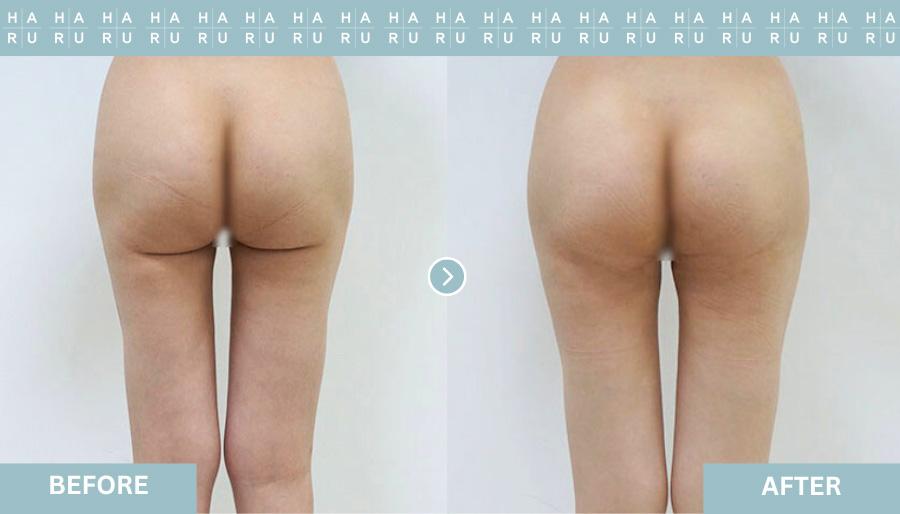
You may consider THEPLUS Plastic Surgery if your thigh concerns also involve localized contouring, as it lists liposuction for shaping specific body areas and has board-certified plastic-surgery expertise. However, the supplied information does not describe a dedicated treatment for thigh stretch marks, so you should verify whether the clinic offers a suitable skin-quality or scar-focused option for your specific concern.
- URL: THEPLUS Plastic Surgery Website
- Location: Gangnam-gu, Seoul
- Relevant body service:
- Liposuction is listed for removing localized fat deposits and shaping body contours; it is described as contouring rather than weight-loss treatment.
- The clinic does not list a dedicated treatment for thigh stretch marks or a thigh-specific skin-resurfacing procedure in the supplied information.
- Surgical expertise:
- Dr. Kim is described as a board-certified plastic surgeon with research awards related to 3D implants and educational roles for other plastic surgeons.
- Dr. Lee is described as a board-certified plastic surgeon with prior experience as a Surgery Specialist at Seoul National University Hospital.
Medical Tourism: The Patient's Journey in South Korea
South Korea is a major destination for cosmetic procedures, known for advanced infrastructure, skilled providers, and innovation.
Pre-Trip Planning and Research
- Start with online consultations to clarify goals and get estimates.
- Verify credentials: KHIDI registration, KSPRS board certification, and ideally JCI accreditation.
- Visa and travel: Many visitors use a short-stay tourist visa (C-3) or travel visa-free. Plan 4–6 weeks ahead for travel, accommodation, and scheduling.
The On-Site Experience
- Final consultation confirms the plan; clinics may run pre-op tests (blood, urine, chest X-ray) if not supplied.
- On procedure day, the provider marks the area and administers local anesthesia. After treatment, clinics often offer recovery monitoring, a continuous painkiller IV kit, skincare support, and daily checks for swelling and bruising.
- A 10–14 day stay is commonly recommended before returning home.
Post-Trip Follow-Up and Support
- Request detailed medical records to share with your local physician.
- Ask about virtual follow-ups and revision policies.
- Keep an open communication channel with the clinic during recovery.
Comparative Cost Analysis: South Korea vs. Other Medical Tourism Destinations
Marketing language often blurs different procedures and price points, so clarity matters.
The Critical Distinction: Butt Thread Lift vs. Buttock Augmentation (BBL)
A Brazilian Butt Lift (BBL) is major surgery: fat is liposuctioned from one area and transferred to the buttocks. It costs more and requires a longer recovery than a thread lift.
| Procedure | Primary Mechanism | Cost in South Korea | Recovery Period |
|---|---|---|---|
| Butt Thread Lift | Implants dissolvable threads to lift and stimulate collagen | ₩2,000,000 - ₩8,000,000 ($1,400 - $5,500) | Minimal (1-3 weeks) |
| Brazilian Butt Lift (BBL) | Surgically transfers purified fat to the buttocks | ₩7,700,000 - ₩11,000,000 ($5,300 - $7,600) | Extensive (2-4 weeks) |
Pricing and Cost Structures in South Korea
Butt thread lift pricing varies by clinic reputation, number/type of threads, and treatment area. Typical range: ₩2,000,000–₩8,000,000 (~$1,400–$5,500). Some offer packages (e.g., a HERSHE non-surgical lift around $4,700).
Potential add-ons:
- Consultation fees: ~$50–$200
- Anesthesia fees: ~$200–$500 for local anesthesia
- Facility fees
- Additional treatments: for example, Sculptra Aesthetic injections to boost collagen
Global Cost Comparison for Medical Tourists
Some destinations (e.g., Turkey, Mexico) advertise lower entry prices for “threads lifting” (around $1,600). South Korea often balances competitive pricing with advanced care and comprehensive service. Average pricing for a buttock lift in Korea (surgical and non-surgical options) is about $5,300, with a minimum near $3,900—comparable to or slightly below U.S. minimums (around $4,000). Many Korean clinics bundle post-op care, language assistance, and transport for a smoother experience.
Critical Efficacy Review: Butt Thread Lifts for Stretch Marks
The key question: do butt thread lifts treat stretch marks themselves?
The “Halo Effect”: Mechanism vs. Efficacy
A butt thread lift can indirectly improve how stretch marks look by firming and smoothing the surrounding skin through neocollagenesis. However, it does not directly repair dermal tears or the atrophic, hypopigmented features of striae albae. Evidence that thread lifts specifically treat stretch marks is limited; most improvements relate to overall skin quality and contour, which may still boost confidence.
Limitations, Longevity, and Maintenance
Results are subtle and temporary, typically lasting 1–3 years. Early lift can include swelling which subsides over months. Maintenance sessions are needed to sustain results. A thread lift does not replace butt augmentation surgery; it won’t significantly increase volume. Some reports suggest dissolving PDO threads may create scar tissue that could affect future treatments or contribute to skin thickening or looseness after dissolution.
Patient Outcomes and Realistic Expectations
Patient satisfaction is often high due to minimal invasiveness and quick recovery. Any stretch mark improvement is usually a byproduct of better skin quality and firmness. If your primary goal is treating stretch marks, view a butt thread lift as one part of a multi-modal plan—potentially combined with fractional lasers, RF microneedling, or Platelet-Rich Plasma (PRP).
Conclusion
A butt thread lift safely lifts mild to moderate skin laxity and stimulates collagen with short downtime, and South Korea offers strong value for medical tourists. Stretch marks are permanent dermal scars, so improvements from a thread lift are indirect and temporary—the “halo effect” of better surrounding skin. Expect subtle changes, not erasure of striae, and plan maintenance if you want to preserve results.
Final Recommendations
- Educate on Pathophysiology: striae albae are atrophic scars; a non-surgical lift is not a cure.
- Manage Expectations Transparently: the primary goal is lifting and skin quality; any stretch mark change is subtle and temporary.
- Encourage a Holistic Approach: consider pairing a butt thread lift with evidence-based therapies like fractional lasers or microneedling.
References
1, 2, 3, 4, 5, 6, 7, 8, 9, 10, 11, 12, 13, 14, 15, 16, 17, 18, 19, 20, 21, 22, 23, 24, 25, 26, 27, 28, 29, 30, 31, 32, 33, 34, 35, 36, 37, 38, 39, 40, 41, 42, 43, 44
Frequently Asked Questions
Related Blogs
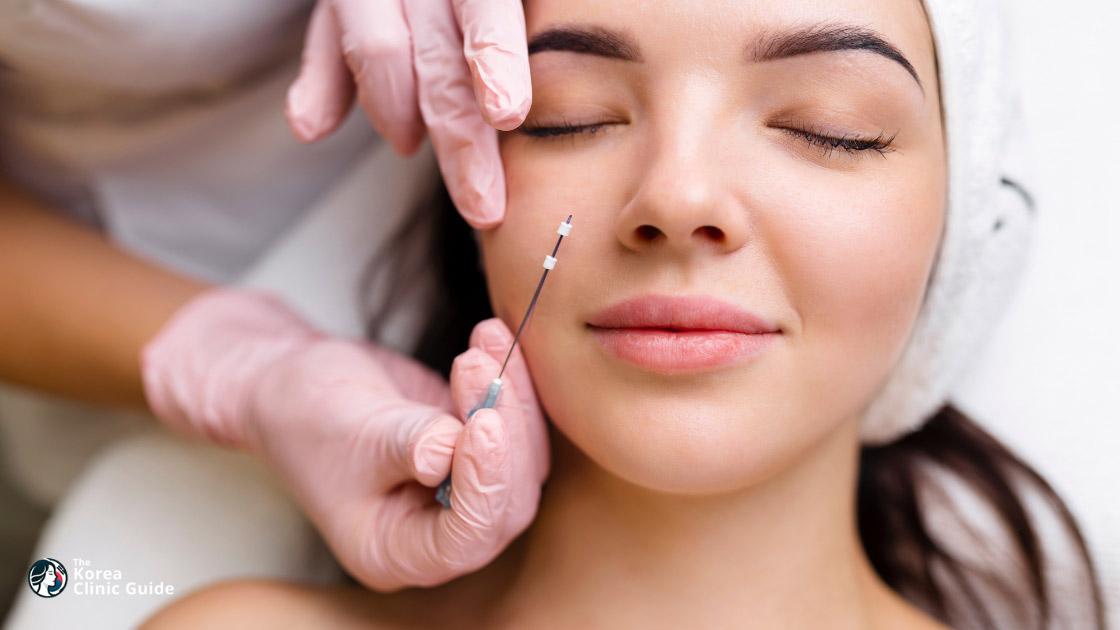
Nose Thread Lift in Korea: Candidacy, Recovery, Risks and Travel Planning
A nose thread lift uses absorbable threads placed along the bridge, tip, or columella to create modest, temporary contour changes, with local anesthetic and early follow-up. The article covers candidate screening, Korea travel planning, recovery, aftercare, warning signs, and alternatives such as filler, rhinoplasty, and septoplasty.
Updated: Sep 12, 2026
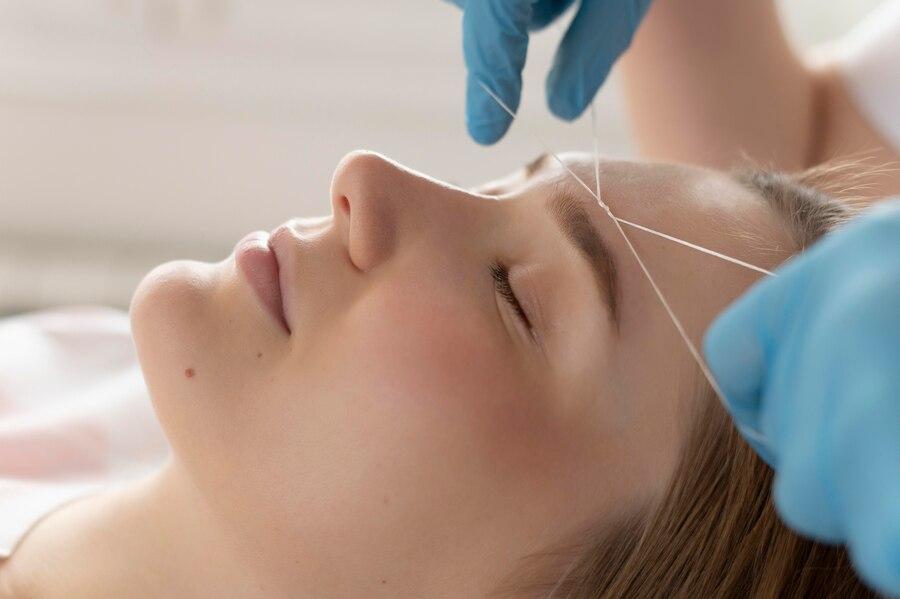
Thread Lift in Korea: Types, Recovery, Risks, and Travel Planning
A facial thread lift uses absorbable barbed, cogged, cone, or smooth threads to provide modest temporary tissue repositioning or collagen support for mild-to-moderate laxity. International patients can find guidance on candidacy, procedure steps, 5–7-day Korea stays, recovery restrictions, follow-up planning, and warning signs requiring urgent assessment.
Updated: Sep 9, 2026
Korea’s Forehead Thread Lift for Droopy Eyebrows: Effective Solution for Youthful Look
Discover how Korea leads in treating "droopy eyebrows" through advanced procedures like the forehead thread lift. This minimally invasive treatment tightens sagging skin, lifts brows, and stimulates collagen for a natural, youthful look. Known for cutting-edge techniques and affordable prices, Korea offers top-quality care for patients seeking effective solutions for brow ptosis. Explore the proce
Updated: Sep 8, 2026
Korea's Hiko Nose Thread Lift Procedures for Correcting Bulbous Nose Tip
Discover how Korea's pioneering Hiko Nose Thread Lift offers a non-surgical solution for bulbous nose tips. This innovative procedure lifts and contours the nose, creating better facial harmony with minimal downtime. Ideal for refining rounded or full noses, the Korea-based Hiko technique stimulates collagen for lasting results. Learn about costs, patient experiences, and why Korea is the top dest
Updated: Sep 8, 2026
Clinics offering Butt Thread Lift

THEPLUS Plastic Surgery Korea | Eye, Nose, Face & Body Surgery
Sinsa

Haru Clinic Korea | Seoul Facelift, Threads, Botox & Fillers
Sinsa

PangPang Clinic: Korea's Premier Thread Lifting and Skin Rejuvenation Specialist in Gangnam, Seoul
Sinsa
Bonjung Korean Medicine Clinic Korea | Recovery, Contouring & Weight Care
Jongno