
Medical Tourism Blog
Face Liposuction in Korea: Candidacy, Techniques, Recovery, and Travel Planning
Table of contents
- Face Liposuction at a Glance
- What Is Face Liposuction?
- Who Is a Good Candidate for Face Liposuction?
- How Is Face Liposuction Performed?
- Why Visit Korea for Face Liposuction?
- Key Information for International Patients
- Which Are the Best Clinics in Korea for Sagging After Facial Liposuction?
- How Much Does Face Liposuction Cost in Korea?
- Face Liposuction From Start to Finish
- Alternatives to Face Liposuction
- How Can I Prepare for Face Liposuction?
- Aftercare Advice
Considering treatment in Korea? Everything you need to know e.g. — how to avoid scams, visas, interpreters, recovery tips — in our Medical Tourism Master Guide. Plan with confidence in minutes, not weeks!
Last updated: September 2026
Face Liposuction at a Glance
- What it does — Face liposuction uses fine cannulas to remove localized superficial fat—most commonly beneath the chin and in the upper neck—to sharpen the jawline and cervicomental angle.
- Typical cost in Korea — Face liposuction is listed at ₩3,000,000–₩4,000,000, approximately US$2,200–$3,000; anesthesia type, treated areas, and any combined surgery can change the quote.
- Best candidates — The strongest candidates have a stable weight, pinchable submental fat causing a double chin, reasonable skin elasticity, and realistic contouring goals rather than a desire for weight loss.
- Recovery and results — Desk work often resumes in several days to 1 week, but swelling and bruising can remain visible; contour improves over weeks, with final settling typically taking about 3–6 months.
- Key limitation — Liposuction cannot reliably fix major loose skin, platysmal bands, deep neck fat, prominent glands, or a weak chin; a neck lift, platysmaplasty, or chin procedure may better address those causes.
- Korea travel plan — Arrive at least 1 day before surgery and stay at least 7–10 days afterward for early and pre-flight checks; a 10–14-day itinerary is more conservative after sedation, general anesthesia, or combined procedures.
- Korea-specific check — No robust evidence shows better face-liposuction outcomes in Korea than elsewhere, so verify the clinic’s international-patient registration, surgeon credentials, anesthesia plan, emergency process, and postoperative contact.
What Is Face Liposuction?
Face liposuction is a cosmetic operation that removes small deposits of superficial fat from beneath the chin, upper neck, or selected lower-face areas. It aims to reduce a double chin and create a more defined jawline and neck contour when localized fat, rather than loose skin or deeper structures, is the main concern. It is a surgical procedure performed through small incisions using fine suction instruments.
Who Is a Good Candidate for Face Liposuction?
- Localized neck fullness — Good candidates have a double chin or upper-neck fullness caused mainly by localized, pinchable superficial fat and want a sharper cervicomental angle or jawline.
- Reasonable skin recoil — Younger patients and older adults with elastic skin tend to be better suited to suction alone; the procedure removes fat but does not reliably remove significant loose skin.
- Stable weight and realistic goals — Face liposuction is contour surgery, not weight-loss treatment. Removed fat cells do not regenerate, but weight gain enlarges remaining fat cells and aging continues to affect skin laxity.
- Conservative jowl treatment — Selected lower-cheek or jowl fullness can be treated, but this area needs deliberately limited fat removal to avoid hollowing and contour deformity; the published evidence here is far thinner than for submental surgery.
Face liposuction is unsuitable for generalized weight gain or when fullness comes primarily from deep subplatysmal fat, submandibular glands, platysmal bands, a low hyoid position, chin retrusion, or marked skin excess. A face or neck lift, platysmaplasty, chin procedure, or no surgery can be more appropriate when these structures drive the appearance. Defer elective surgery during pregnancy or breastfeeding, active facial, dental, respiratory, or systemic infection, substantial weight change, or uncontrolled medical illness. Bleeding or clotting disorders, anticoagulants or antiplatelet medicines, nicotine exposure, obstructive sleep apnea, previous facial or neck surgery, medication allergies, problematic scarring, body dysmorphic disorder, or inability to arrange postoperative care require individualized surgical and anesthesia assessment.
How Is Face Liposuction Performed?
Face liposuction is an umbrella term rather than one standardized operation. The established application is submental and upper-neck liposuction; jowl or lower-cheek treatment is a separate, more conservative decision based on anatomy.
- Conventional microcannula liposuction — The surgeon infiltrates tumescent fluid, then uses a fine cannula through tiny access incisions, commonly in the submental crease. This is the reference method for localized submental fat.
- Jowl and lower-cheek liposuction — Carefully selected jowl fat may require additional access points near or behind the ears. A small 71-patient series emphasized that jowl fat should be removed more conservatively than neck fat and should not be treated as interchangeable with it.
- Power-assisted liposuction (PAL) — A powered cannula oscillates to assist fat aspiration. It is a technical variation, not evidence that it produces a better facial result for every patient.
- Ultrasound- or laser-assisted liposuction — UAL uses ultrasound energy and laser-assisted lipolysis uses heat before or during aspiration. A small randomized study of 36 women found better two-month submental fat-thickness reduction and satisfaction with a specific 980-nm diode laser technique, but this does not establish long-term superiority across devices, operators, or facial areas. Heat-based devices also introduce thermal-injury and burn risk.
- Anesthesia plan — Tumescent local anesthesia can be used alone or with oral or IV sedation; some treatment plans use general anesthesia. The extent of treatment, combined procedures, medical history, and airway assessment determine the appropriate plan.
Why Visit Korea for Face Liposuction?
Korea can be a practical destination when a clinic’s international-patient authorization, surgeon credentials, anesthesia arrangements, and postoperative support are verified individually. Do not choose a country on claims of inherently better face-liposuction results: no robust head-to-head evidence shows superior Korean complication rates, recovery, or aesthetic outcomes. A Korean-affiliated study of laser-assisted lower-face liposuction combined with facelift surgery cannot establish an advantage for isolated face liposuction or for Korea as a treatment location.
- International-patient verification — Korea operates a government registration system for institutions serving foreign patients; confirm the facility’s current status through the official registered medical-institution system.
- Anatomy-led planning — A credible consultation separates superficial suctionable fat from deep neck fat, gland prominence, platysmal banding, skin laxity, and chin projection. This matters more than a device name or a marketed “V-line” outcome.
- Clear technology claims — Conventional suction remains the core technique. Ask why PAL, UAL, or laser assistance is proposed for the specific anatomy, and do not accept an energy-device claim as a guarantee of skin tightening.
- Continuity of care — Confirm a named postoperative contact, emergency-transfer process, early in-person checks, and an English operative record before booking. Distance from the operating team can make routine follow-up and complication management harder after returning home, as ASPS guidance on traveling for surgery stresses.
Key Information for International Patients
- Minimum stay — Arrive at least 1 day before surgery for an in-person examination, consent, photographs, and any indicated testing. For uncomplicated isolated submental or face liposuction, stay at least 7–10 days after surgery for an early review and pre-departure assessment.
- Return-flight timing — The American Society of Plastic Surgeons advises waiting 7–10 days before flying after facial cosmetic surgery. Plan 10–14 days for a more conservative long-haul itinerary when sedation or general anesthesia is used, procedures are combined, mobility is limited, drains or wound issues are present, or clot risk is elevated. Do not fly without specific clearance from the operating surgeon.
- Repeat visits — Expect at least an early postoperative wound and swelling check plus a review before departure. Further in-person visits are necessary if healing is delayed or a complication develops.
- Itinerary impact — Desk work and light routine activity often resume after several days to about 1 week, but bruising and facial swelling can remain visible. Do not schedule important photographs, business meetings, strenuous tours, sauna visits, or demanding travel in the first postoperative week.
- Sedation support — Arrange a responsible adult to escort you to accommodation and remain available overnight after sedation or general anesthesia. Do not drive, use public transport alone, operate machinery, or make important financial or legal decisions immediately afterward.
- Remote follow-up — Before departure, obtain an English operative report, anesthesia record, medication list, discharge instructions, direct emergency contact details, and an agreed video or photo follow-up schedule.
Travel note: Keep accommodation near the surgical facility, with elevator access and a flexible extension option. Bleeding, infection, pronounced swelling, or airway concerns can require a longer stay or urgent treatment.
Which Are the Best Clinics in Korea for Sagging After Facial Liposuction?
Listed below are some of the best clinics in Korea for sagging after facial liposuction.
1. LABOM Plastic Surgery
If you are concerned about sagging after facial liposuction, you can discuss LABOM’s approach of pairing micro-cannula cheek and under-chin fat removal with V-line contour lifting in the same treatment plan. The clinic describes this combination as a way to refine the jawline while addressing skin laxity rather than relying on fat removal alone.
- URL: LABOM Plastic Surgery Website
- Location: Gangnam-gu, Seoul
- Procedure approach:
- Micro-cannula liposuction is used to remove carefully controlled amounts of fat from the cheeks and submental area.
- V-line contour lifting is performed alongside liposuction to tighten the skin and reduce the risk of a loose contour after fat removal.
- The clinic states that micro-cannula treatment also stimulates underlying tissue, intended to support collagen production and firmer skin.
- Treatment is described as taking about one hour under sleep sedation, with same-day discharge.
- Planning and recovery:
- Your facial proportions, anatomy, and degree of aging are considered in a one-to-one surgical design rather than using a standard V-line target.
- Suture removal is described at about seven days; the stated initial recovery window is about two to three days.
- Post-procedure care includes regular progress checks and structured swelling, bruising, and scar-management programs.
- Related options:
- Facial fat grafting may be considered when you need volume restoration in other areas of the face while reducing fullness in the cheeks or under the chin.
- The clinic also offers its Triple Lift, a three-layer face and neck lifting technique that addresses skin, SMAS, and deep fat layers for more significant facial or neck sagging.
2. Seojin Plastic Surgery Clinic
If mild looseness is a concern after liposuction, you can ask Seojin about combining liposuction with Velody2 laser lifting, which the clinic uses to support skin elasticity and firmness. Its three-step micro-liposuction process also includes manual refinement of the subcutaneous fat layer to help create an even, smooth surface after suctioning.
- URL: Seojin Plastic Surgery Clinic Website
- Location: Gangnam-gu, Seoul
- Procedure approach:
- Preparation is described as separating fat from nearby blood vessels, nerves, and tissues before removal.
- Cannula selection is tailored to your body type and fat volume.
- Following device-assisted suction, a small syringe is used for manual refinement to support smooth contouring and even fat distribution.
- Velody Lifting may be added when slight sagging occurs after liposuction.
- Clinical care:
- As a one-doctor clinic, Dr. Lee Hyungmin provides end-to-end care.
- The clinic states that Dr. Lee has more than 16 years of experience and was recognized among the 100 Good Doctors in Korea.
3. 365mc Hospital
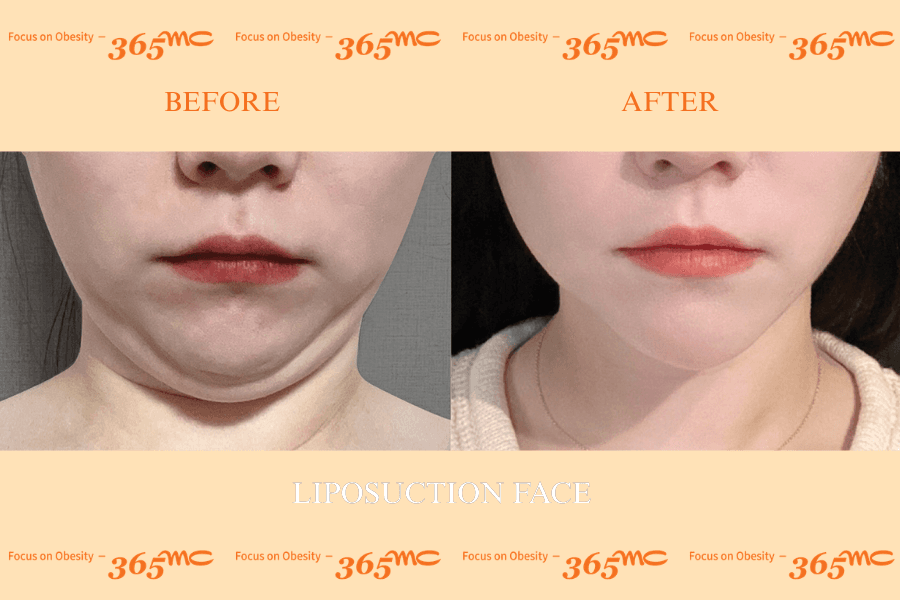
If you are considering further fat reduction after liposuction and want structured recovery support, 365mc offers hospital-based liposuction care and a dedicated Recovery Center on the day of surgery. Its programs focus on fat reduction and contouring, including the neck, with a seven-week post-operative care pathway; the supplied information does not specify a dedicated treatment for facial skin sagging.
- URL: 365mc Hospital Website
- Location: Gangnam-gu, Seoul
- Liposuction and contouring:
- The clinic specializes in obesity treatment, body contouring, and fat reduction, with liposuction offered for areas including the neck.
- Its M.A.I.L. system uses motion-capture and artificial-intelligence-assisted real-time surgical feedback.
- LAMS is a local-anesthetic, minimally invasive option combining fat extraction with fat-dissolving injections for targeted reduction.
- Recovery support:
- You receive one-to-one intensive care at the dedicated Recovery Center on the day of surgery.
- The clinic describes a structured seven-week post-operative program that can include hyperbaric oxygen chamber therapy and personalized dietary consultations.
- Dietary counseling and a meal-diary app are available to support longer-term weight-management habits.
How Much Does Face Liposuction Cost in Korea?
Face Liposuction is supplied at ₩3,000,000–₩4,000,000 (approximately US$2,200–$3,000). Individual quotes vary because the operative plan can range from isolated submental suction to treatment of additional lower-face areas and may require different anesthesia or surgical methods.
| Procedure Price | Korean Won (₩) | USD ($) |
|---|---|---|
| Low Price | ₩3,000,000 | $2,200 |
| High Price | ₩4,000,000 | $3,000 |
Exchange rate as of 2026-09-06: 1 KRW = 0.000741 USD.
What Affects the Price?
- Treatment area and extent — Isolated submental and upper-neck liposuction generally requires a narrower treatment field than a plan that also includes jowl or lower-cheek fat. Adding jowl treatment can require additional concealed access sites and highly conservative contouring to avoid hollowing or irregularity, increasing operative planning and treatment time.
- Suction technique — Conventional microcannula suction is the reference method, while power-assisted, ultrasound-assisted, or laser-assisted liposuction adds device-specific equipment and consumables. Energy-assisted treatment also requires technique-specific safety measures because heat can cause thermal injury.
- Anesthesia plan — Tumescent local anesthesia alone uses a different clinical setup from oral or IV sedation or general anesthesia. Sedation or general anesthesia requires additional anesthesia resources, monitoring, recovery observation, and potentially greater facility use.
- Combined structural surgery — When skin laxity, platysmal banding, deeper subplatysmal fullness, or chin deficiency makes suction alone inadequate, a neck lift, platysmaplasty, facelift-type procedure, or chin surgery may be proposed. These are more extensive operations with longer operating time, broader facility and anesthesia requirements, and more involved postoperative care.
Cost tip: Request an itemized quote stating exactly what is included, particularly the treated areas, technique, anesthesia plan, facility use, compression garment, postoperative assessments, medications, and any planned follow-up.
The US$2,200–$3,000 conversion is approximate, based on the 0.000741 exchange rate dated 2026-09-06. Check the exchange rate again when budgeting.
Face Liposuction From Start to Finish
- Remote inquiry and consultation — Send clear front, profile, and three-quarter photographs only through the clinic’s secure process. Confirm whether English consultation, interpreter support, virtual planning, the operating surgeon’s role, and an in-person assessment are available.
- Pre-travel review — Disclose medical conditions, previous operations, obstructive sleep apnea, allergies, nicotine use, alcohol or recreational-drug use, and all prescription, non-prescription, and supplemental products. The team reviews whether isolated submental suction, jowl treatment, or a structural alternative better matches the anatomy.
- Arrival and in-person assessment — Attend at least 1 day before surgery for examination, photographs, facial and neck markings, consent, and any indicated tests. The surgeon assesses skin recoil, superficial versus deep fat, platysma, glands, chin projection, and asymmetry.
- Anesthesia and preparation — The team confirms local tumescent anesthesia, local anesthesia with oral or IV sedation, or general anesthesia. The face and neck are cleaned and draped, and the planned access sites are marked.
- Fat removal — Tumescent solution is infiltrated to numb the area and reduce bleeding. The surgeon makes tiny concealed incisions, commonly under the chin, and aspirates superficial fat with a fine cannula; jowl treatment, when appropriate, can use access sites near or behind the ears. Procedure length depends on treatment area, technique, and combined surgery.
- Dressing and discharge — Incisions are dressed and a chin/neck compression garment is commonly fitted. After sedation or general anesthesia, recover under observation until discharge criteria are met and leave with a responsible adult.
- Early recovery in Korea — Attend the scheduled early review for incision assessment, garment instructions, and evaluation of swelling, bruising, numbness, drainage, or asymmetry. Keep travel plans flexible until the surgeon confirms healing is suitable for departure.
- Pre-departure and remote follow-up — Obtain flight clearance, written records, and a plan for remote image review. Contact the operating clinic promptly about concerning changes after returning home, and seek local emergency care for urgent symptoms rather than waiting for an online reply.
Alternatives to Face Liposuction
Non-surgical options avoid cannula incisions and anesthesia but usually require repeated treatments and offer less predictable fat reduction. Surgical lifting procedures address skin and muscle problems that liposuction cannot correct; they involve larger operations and longer recovery.
Deoxycholic-Acid Injections
- Best suited to — Modest isolated submental fat in patients who want to avoid surgery.
- Tradeoff — Multiple sessions are generally required, swelling can be substantial, and the treatment does not correct marked loose skin or platysmal banding. Read about fat-dissolving injections.
Energy-Based Tightening
- Best suited to — Mild skin laxity with modest expectations for tightening rather than major fat removal.
- Tradeoff — Energy-based devices do not replace suction for a distinct fat pocket and do not correct deeper neck anatomy. See HIFU laser treatment or BodyTite.
Neck Lift or Platysmaplasty
- Best suited to — Marked skin laxity, vertical platysmal bands, deeper structural neck fullness, or anatomy poorly suited to suction alone.
- Tradeoff — A neck lift addresses skin and muscle more directly but has longer recovery and more extensive incisions than liposuction. Learn more about a neck lift.
Facelift
- Best suited to — Jowling and lower-face descent accompanied by substantial skin laxity.
- Tradeoff — Facelift surgery repositions and tightens tissue rather than simply removing fat, making it a different operation with more recovery. See face lift surgery.
Chin Augmentation or Genioplasty
- Best suited to — A weak or retruded chin that contributes to the appearance of a double chin.
- Tradeoff — Structural chin correction changes projection; it is not a substitute for removing a true superficial fat deposit. In selected patients, liposuction can be combined with chin advancement rather than replacing it.
Buccal Fat Removal
- Best suited to — This is generally not an alternative for a double chin or upper-neck fullness.
- Tradeoff — Buccal fat removal targets the mid-cheek, not the submental area, and can worsen midface hollowing in unsuitable patients. See buccal fat removal.
How Can I Prepare for Face Liposuction?
- Medication and supplement review — Give the surgeon and anesthesia team a complete list of medicines, vitamins, fish oil, herbal products, nicotine products, alcohol, and recreational drugs well before travel. Do not independently stop prescribed anticoagulants or antiplatelet medicines; obtain an individualized plan for blood thinners, NSAIDs, and supplements that affect bleeding or anesthesia.
- Nicotine cessation — Stop smoking, vaping, and all nicotine products for the period specified by the surgical team. Nicotine compromises blood flow and wound healing.
- Medical disclosure — Report infections, dental treatment, respiratory symptoms, prior facial or neck procedures, obstructive sleep apnea, allergies, bleeding history, and prior anesthesia problems. Postpone surgery for an active facial, dental, upper-respiratory, or systemic infection.
- Fasting — Follow the clinic’s exact fasting instructions when sedation or general anesthesia is planned. Do not assume local-anesthesia rules apply to sedated surgery.
- Skin and sun care — Avoid sunburn, skin injury, and unapproved active skincare on the face and neck before surgery. Arrive with clean skin unless the clinic directs otherwise.
- Accommodation and companion — Book nearby accommodation with elevator access and arrange an adult escort for discharge and overnight availability after sedating medicine. Pack loose, front-opening clothing that does not pull over the face or compression garment.
- Flights and schedule — Book flexible return travel and do not plan departure before the pre-flight surgical review. Leave room for a 10–14-day stay when flying long-haul after sedation, general anesthesia, or combined surgery.
Travel note: Carry copies of prescriptions in original labeled containers and ensure travel insurance does not exclude planned surgery or postoperative complications.
Confirm every clinic-specific requirement with the treating doctor; individualized surgical and anesthesia instructions take precedence over general guidance.
Aftercare Advice
Protect the healing neck and follow the operating surgeon’s garment, incision, and activity plan exactly; early swelling is not the final contour.
- Compression garment — Wear the chin and neck garment on the exact schedule prescribed. Garment duration depends on suction extent, skin quality, swelling, and whether other surgery was performed.
- Swelling and recovery — Expect swelling, bruising, tightness, temporary numbness, and sometimes fluid leakage from small incisions. Swelling is often most visible in the first several days; early contour changes appear over weeks, while residual firmness, scar-tissue remodeling, and final contour take roughly 3–6 months.
- Activity and positioning — Keep the head elevated while sleeping and take gentle walks once cleared. Avoid heavy lifting, strenuous exercise, bending, straining, and activities that raise blood pressure until the surgeon clears them.
- Incision, heat, and skin care — Keep incision sites and dressings clean as directed. Do not apply makeup, exfoliants, retinoids, acids, silicone products, ointments, or scar products directly to incisions unless approved. Avoid swimming, hot tubs, saunas, and direct heat until cleared; use SPF 50 on healed exposed areas.
- Alcohol and nicotine — Avoid nicotine throughout healing and do not drink alcohol while taking sedating pain medicine or antibiotics that carry alcohol restrictions.
- Urgent warning signs — Seek urgent in-person care for rapidly expanding facial or neck swelling, breathing or swallowing difficulty, chest pain, shortness of breath, fainting, one-sided leg pain or swelling, fever, pus or foul drainage, worsening redness or warmth, uncontrolled pain, new facial weakness, skin blistering or darkening, or abrupt major asymmetry. Rapid neck swelling can threaten the airway.
Follow the treating doctor’s instructions over this general guidance, attend scheduled reviews, and contact the clinic promptly when anything appears wrong.
Frequently Asked Questions
Related Blogs
Discovering Luxury in Body Transformation: The True Cost of Mommy Makeover in Korea vs. Global Markets
Discover the cost of a Mommy Makeover in Korea, where advanced medical techniques and world-class facilities make it an attractive destination for body contouring procedures. Explore the factors that influence pricing and learn why Korea is becoming a popular choice for mothers seeking comprehensive post-pregnancy transformations.
Updated: Oct 24, 2026
Korean Emsculpt: Unveiling Global Cost Differences and Travel Insights for This Body Contouring Experience
Discover the cost and benefits of Emsculpt in Korea, a leading destination for advanced cosmetic treatments. Explore how this innovative procedure can help you achieve your body contouring goals at competitive prices.
Updated: Oct 24, 2026
Explore Global Mini Liposuction Costs: Why Korea Leads in Quality and Innovation Compared to the USA, Turkey, and Thailand
Discover the cost and benefits of mini liposuction in Korea, where advanced techniques meet competitive pricing. Explore how this popular cosmetic procedure offers an effective solution for targeted fat reduction, enhancing contours without breaking the bank.
Updated: Oct 24, 2026
Discover How Diet IV Therapy Costs Compare: Korea vs. Global Hotspots for Wellness Seekers
Explore the cost of Diet IV therapy in Korea with our detailed guide, highlighting affordability, benefits, and what to expect from this popular wellness trend. Discover if this innovative treatment is the right fit for your health goals and budget.
Updated: Oct 24, 2026
Clinics offering Face Liposuction

365mc Hospital: Korea's Leading Liposuction and Body Contouring Clinic with Innovative AI Technologies and Comprehensive Patient Care
Gyodae

THEPLUS Plastic Surgery Korea | Eye, Nose, Face & Body Surgery
Sinsa

Made Young Plastic Surgery: Rejuvenating Aesthetic Excellence in Korea for Face Lifts, Contouring and More
Gangnam Station

Seojin Plastic Surgery Clinic Korea: Pioneering Advanced Cosmetic Procedures for Personalized Aesthetic Transformation
Apgujeong