
Medical Tourism Blog
Protruding Jaw Correction in Korea: Double Jaw Surgery Solutions for a Balanced Facial Profile
Table of contents
- Double Jaw Surgery: A Detailed Medical Overview
- The Patient Journey: Getting Double Jaw Surgery in South Korea
- Which Are the Best Clinics in Korea for Protruding Jaw?
- Costs and Value: Double Jaw Surgery in South Korea vs. Other Countries
- Life After Double Jaw Surgery: Patient Experiences and Outcomes
- Conclusion
- References
Considering treatment in Korea? Everything you need to know e.g. — how to avoid scams, visas, interpreters, recovery tips — in our Medical Tourism Master Guide. Plan with confidence in minutes, not weeks!
A "protruding jaw," medically known as prognathism, occurs when the lower jaw (mandible) extends farther forward than the upper jaw (maxilla), leading to an improper bite and facial misalignment. The name is rooted in Greek, translating directly to "forward jaw." This condition can arise from true mandibular prognathism, where the lower jaw grows excessively, or from pseudo-prognathism (maxillary hypoplasia), where the upper jaw is underdeveloped, making the lower jaw appear more prominent. Some individuals may even have a mix of both issues. Identifying the specific skeletal problem requires expert diagnostic evaluation with detailed imaging and facial analysis. This step is crucial because it ensures that surgical treatment targets the right bone(s) rather than just addressing surface symptoms.
Common Medical Terms and Pseudonyms
Several terms are used to describe a protruding lower jaw:
- Prognathism: Describes any jaw that juts forward beyond the normal facial plane.
- Mandibular Prognathism: Specifies that the lower jaw is protruding.
- Class III Malocclusion: Orthodontically, this means the lower teeth are in front of the upper teeth, creating an "underbite."
- Underbite: A widely recognized term for this appearance.
- Extended Chin: A non-medical phrase for the look of a prominent lower chin or jaw.
Causes and Contributing Factors
Prognathism commonly results from multiple overlapping causes.
- Genetics: Family history plays a major part. Inherited conditions or genetic syndromes like Crouzon syndrome or basal cell nevus syndrome frequently include prognathism.
- Developmental Issues: The jaw shape can develop abnormally either from birth or due to conditions affecting bone growth, such as gigantism or acromegaly.
- Environmental Factors: Especially in pseudo-prognathism, factors like poor dental extractions, missing teeth, or a cleft palate can lead to an apparent protruding jaw.
Impacts and Symptoms (Functional and Aesthetic)
A protruding jaw affects both daily function and appearance. While cosmetic concerns often lead patients to seek help, the condition is considered a disorder mostly when key functions like chewing, speech, and social interactions are disrupted.
Functional Issues:
- Malocclusion: An incorrect bite that can trigger other problems.
- Eating Difficulties: Impaired biting and chewing, possibly causing dietary concerns.
- Speech Issues: Difficulty pronouncing certain sounds or a lisp.
- Jaw Pain or Discomfort: Misalignment can cause persistent pain and even teeth grinding.
- Breathing Issues: Sometimes links to obstructive sleep apnea.
- Tooth Wear: Misaligned bites wear teeth down unevenly, risking dental complications.
Aesthetic Concerns:
- Unbalanced Appearance: The lower jaw may look overly large, affecting facial harmony.
- Aggressive Expression: A pronounced jawline could be perceived as harsh.
- Receding Upper Jaw: Adds to midface imbalances.
Comprehensive treatment aims to restore both natural function and harmony, not just improve looks.
Double Jaw Surgery: A Detailed Medical Overview
What is Double Jaw Surgery (Bimaxillary Osteotomy)?
Double jaw surgery, or Bimaxillary Osteotomy, is a specialized orthognathic surgery designed to reposition both the upper (maxilla) and lower (mandible) jaws at the same time. This comprehensive approach is reserved for complex situations—including severe underbites, overbites, or facial asymmetry—where correcting just one jaw cannot achieve lasting, functional, and aesthetic improvements. The procedure’s three-dimensional precision makes it best suited for challenging jaw discrepancies.
Purpose of the Procedure (Functional and Aesthetic Corrections)
The surgery aims to address both health and appearance:
Functional Corrections:
- Correcting malocclusion, including severe bite problems.
- Restoring efficient chewing, biting, and swallowing.
- Improving speech and eliminating impediments.
- Reducing jaw pain and TMJ-related discomfort.
- Enhancing breathing and relieving sleep apnea.
- Protecting teeth from uneven wear.
Aesthetic Corrections:
- Achieving optimal facial symmetry.
- Balancing the facial profile for natural appearance.
- Enabling comfortable lip closure.
- Refining chin proportions, sometimes with additional genioplasty.
Key Surgical Techniques Involved
Performed under general anesthesia in a hospital, the procedure usually lasts three to four hours or longer for complex cases.
- Incisions: Made almost exclusively inside the mouth to avoid visible scarring.
- Upper Jaw Correction (Le Fort I Osteotomy): The maxilla is cut, separated, then repositioned forward, backward, up, down, shortened, lengthened, or rotated for best fit and facial harmony. Sometimes bone above molars is shaved away to correct an open bite.
- Lower Jaw Correction:
- Sagittal Split Osteotomy (BSSO): Diagonal cuts in the lower jaw allow for backward or forward movement, followed by rigid fixation with titanium screws and plates, often minimizing the need for the jaw to be wired shut afterward.
- Intra-oral Vertical Ramus Osteotomy (IVRO): Vertical jaw cuts for backward repositioning.
- Fixation: Repositioned jaws are fixed internally with titanium plates and screws for stability.
- Intermediate Splint: A custom device ensures precise upper jaw placement before moving the lower jaw.
Advanced tools, including 3D modeling and virtual planning, ensure predictable outcomes and high safety—key reasons clinics in places like South Korea see high success rates.
The Patient Journey: Getting Double Jaw Surgery in South Korea
Choosing double jaw surgery involves a multi-phase process over several years, with orthodontists and oral surgeons working closely together. Success depends on patient commitment to every phase.
Initial Consultation and Assessment
Everything begins with consultations between the patient, orthodontist, and surgeon. International patients can often start with virtual consultations (submitted photos or video calls) to determine initial suitability. Upon arrival in Korea, further in-depth diagnostics—advanced X-rays, 3D CT scans, plaster molds of teeth, and facial analysis—are performed. 3D modeling and virtual designs help create precise, personalized surgical plans.
Pre-Surgical Orthodontic Treatment
Patients wear braces or aligners for 12 to 18 months to align teeth and undo compensations, so the arches fit together perfectly after surgery.
Preparing for Surgery
Preparation includes:
- Full disclosure of medical history.
- Avoiding smoking or alcohol (especially near the surgery date).
- Transitioning to a liquid diet pre-surgery.
- Removing jewelry and nail products the day of, and dressing comfortably for hospital stay.
The Surgical Procedure
Under general anesthesia, oral incisions are made for jaw access. The upper jaw is corrected via Le Fort I Osteotomy and the lower with either BSSO or IVRO, as planned. Jaws are secured with titanium plates and screws. If needed, bone grafts may be used to aid healing. After surgery, patients are monitored in a recovery unit.
Post-Surgical Recovery and Hospital Stay
Patients stay in the hospital for 1 to 4 days. Swelling peaks after 48 hours then decreases. Medication, cold packs, and later warm packs help manage swelling and pain.
Diet is liquid for weeks, progressing slowly to soft food. Lying with the head elevated and walking gently aid recovery, while strenuous activity, smoking, and alcohol are off-limits for weeks.
Essential Aftercare and Follow-up Appointments
Care includes oral hygiene with special rinses, ongoing orthodontic work for bite refinement, and regular surgical follow-ups. Top Korean clinics often offer advanced therapies like lymph drainage and laser treatments to speed healing. Most initial jaw healing takes about six weeks, with full recovery stretching to several months. International patients should stay in Korea for 2 to 4 weeks for early follow-ups.
Potential Risks and Recovery Challenges
Recovery is often more difficult than patients expect. Potential risks include:
- Nerve trauma (temporary or permanent numbness).
- Changes in hearing.
- Jaw relapse (rare with modern fixation).
- Surgical complications such as bone fractures or bleeding.
- Exacerbation of TMJ problems.
- Other side effects like constipation and drooling.
- The need for strong caretaker support in the first weeks.
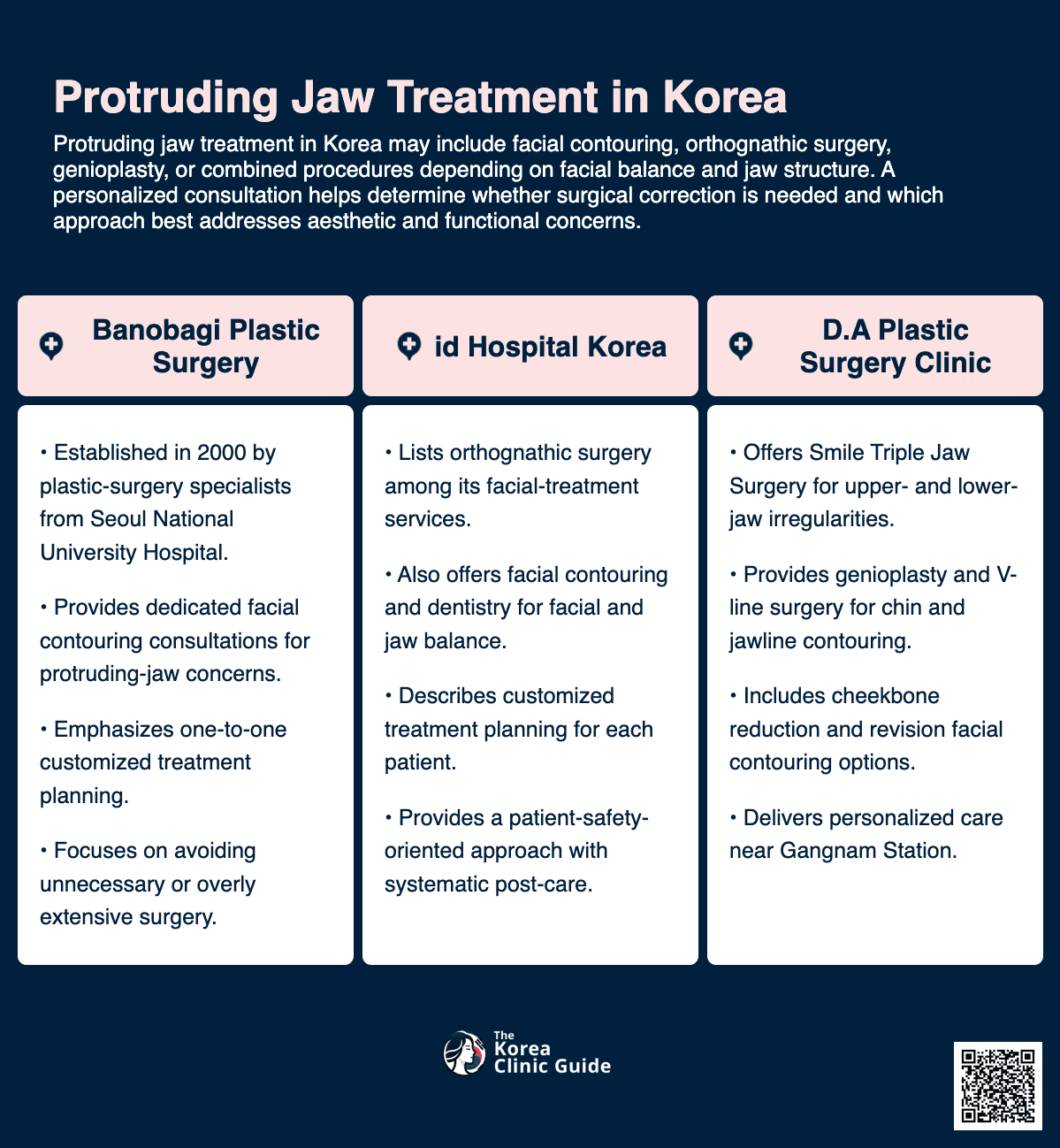
Which Are the Best Clinics in Korea for Protruding Jaw?
Listed below are some of the best clinics in Korea for protruding jaw.
1. Banobagi Plastic Surgery
For a protruding-jaw concern, you can expect an individualized consultation within Banobagi Plastic Surgery’s facial contouring service, with treatment recommendations intended to avoid unnecessary or excessive surgery. The clinic was established in 2000 by plastic-surgery specialists from Seoul National University Hospital.
- URL: Banobagi Plastic Surgery Website
- Location: Gangnam-gu, Seoul
- Facial contouring care:
- Facial contouring is one of the clinic’s dedicated service areas.
- The clinic describes providing one-to-one customized treatment and field-specific medical equipment.
- Clinic approach:
- Its stated approach emphasizes careful treatment planning and avoiding recommendations for unnecessary or overly extensive procedures.
- Banobagi operates from a six-story main building and a five-story annex with multiple specialized treatment centers.
2. id Hospital Korea
For a protruding jaw, id Hospital Korea lists orthognathic surgery among its facial-treatment services, so you can explore surgical jaw correction as part of a customized treatment plan. The clinic describes a patient-safety-oriented approach with systematic post-care.
- URL: id Hospital Korea Website
- Location: Gangnam-gu, Seoul
- Jaw-related treatment:
- Orthognathic surgery is listed among the clinic’s treatment items.
- Facial contouring and dentistry are also listed services, which may be relevant when your concern involves facial balance or dental-jaw considerations.
- Care approach:
- The clinic describes customized plastic surgery planning.
- It states that treatment is patient-safety-oriented and includes systematic post-care.
- Other listed services: Eye and nose plastic surgery, breast surgery, lifting, skin-clinic treatments, and petit plastic surgery are also available.
3. D.A Plastic Surgery Clinic
For a protruding jaw or broader jaw irregularity, D.A Plastic Surgery Clinic lists Smile Triple Jaw Surgery, a procedure described as correcting irregularities involving both the upper and lower jaws with potential aesthetic and functional benefits. You can also discuss related chin and facial-contouring options when determining which approach fits your facial structure.
- URL: D.A Plastic Surgery Clinic Website
- Location: Gangnam-gu, Seoul
- Jaw and chin procedures:
- Smile Triple Jaw Surgery is described as addressing jaw irregularities involving the upper and lower jaws, with aesthetic and functional goals.
- Genioplasty is offered for surgical chin enhancement or reduction and may be combined with other contouring procedures.
- V-line surgery contours the jawline toward a slimmer, V-shaped facial structure and may be combined with chin surgery.
- Facial balance options:
- Turning zygoma reduction reduces and repositions prominent cheekbones for a more balanced profile.
- Revision facial contouring is available to address unsatisfactory results from prior contouring surgery.
- Clinic approach:
- The clinic describes personalized services delivered by surgeons and staff in a safe, comfortable environment.
- It is located at Gangnam Station.
Costs and Value: Double Jaw Surgery in South Korea vs. Other Countries
Average Cost of Double Jaw Surgery in South Korea
Typical prices are $11,000 to $25,000 USD, averaging around $12,833 USD. A 10% deposit is customary for booking procedures.
What's Typically Included in the Cost
- Pre-operative consultations.
- Hospitalization (2-4 days).
- General anesthesia.
- Medications for pain and infection.
- Follow-up appointments.
- Compression bandage.
Factors Influencing the Cost
Final costs vary by:
- Surgeon’s expertise.
- Clinic location and reputation.
- Case complexity.
- Combined procedures (like genioplasty).
- Orthodontic treatment (usually a separate cost).
- Accommodation and travel for foreigners.
Table 1: Cost Comparison of Double Jaw Surgery Across Key Medical Tourism Destinations
| Destination | Procedure Type | Cost (USD) Range / Average | Notes |
|---|---|---|---|
| South Korea | Double Jaw Surgery (Orthognathic) | $7,000 - $25,330 (Avg: $12,833) | Advanced expertise, competitive pricing |
| USA | Orthognathic Surgery (Double Jaw) | $18,000 - $56,000 | Much higher compared to other countries |
| Mexico | Double Jaw Orthognathic Surgery | $9,000 - $13,300 | Cost-effective option |
| Turkey | Double Jaw Surgery | $2,200 - $15,000 | Rapidly growing destination, lower prices |
| Thailand | Orthognathic Surgery | $4,200 - $14,799 | Popular medical tourism location |
| United Kingdom | Orthognathic Surgery (Double Jaw) | $19,200 - $51,000 | Higher end pricing |
| Australia | Bi-maxillary Surgery | $6,880 - $9,632 | Subject to exchange rate fluctuations |
| Europe | Orthognathic Surgery | $8,800 - $18,700 | Mid-range pricing |
Note: Prices are estimates subject to case details and exchange rates.
Why South Korea is a Competitive Choice for Medical Tourists
South Korea offers world-class care, with prices often 30-60% lower than in the US or Europe, yet equal or superior in quality. High procedure volume brings experience, while technology like 3D planning ensures safety and predictability. Korean clinics also provide comprehensive international support, from virtual consults to accommodation help.
Life After Double Jaw Surgery: Patient Experiences and Outcomes
Double jaw surgery profoundly improves both function and appearance, usually changing lives for the better.
Addressing Functional Issues
Patients commonly experience:
- Dramatically better chewing and biting ability.
- Improved speech clarity, boosting confidence.
- Enhanced breathing, often alleviating sleep apnea.
- Relief from jaw pain and TMJ issues.
Achieving Aesthetic Transformations
The surgery rebalances facial features:
- Achieving facial symmetry.
- Creating more natural and appealing profiles.
- Enabling comfortable lip closure.
- Refining chin contours, sometimes with added procedures.
Psychological Benefits
- Greater self-esteem and confidence.
- Enhanced quality of life—patients often wish they’d pursued surgery sooner.
- More comfort in social and professional settings.
Common Patient Experiences During Recovery
- Swelling and numbness, improving slowly.
- Liquid then soft-food diet, which can be tough.
- Temporary drooling and occasionally constipation.
- A high need for supportive care and motivation during this period.
Overall Success Rates and Long-Term Outlook
Success rates are high—typically 93.9% to 95%—with most patients reporting better function and life satisfaction. Continued orthodontic care post-surgery is important for maintaining results.
Conclusion
A protruding jaw, or prognathism, is a complex issue that affects both function and facial appearance, often requiring more than cosmetic improvement. Double jaw surgery (bimaxillary osteotomy) offers a reliable, comprehensive solution that brings lasting functional, aesthetic, and psychological benefits. South Korea stands out for its expertise, cost-effectiveness, advanced technology, and robust patient support, making it a top choice for medical tourists. For those considering this life-changing procedure, understanding the commitment involved and the broad spectrum of benefits is key to making the best decision for their health and well-being.
References
1, 2, 3, 4, 5, 6, 7, 8, 9, 10, 11, 12, 13, 14, 15, 16, 17, 18, 19, 20, 21, 22, 23, 24, 25, 26, 27, 28, 29, 30, 31
Frequently Asked Questions
Related Blogs
Receding Chin Solutions: Chin Surgery Procedures in Korea for Enhanced Facial Contour
Discover how Korea leads in chin augmentation for receding chins and posteriorly positioned chin profiles. This guide explores non-surgical fillers, chin implant surgeries, and sliding genioplasty procedures, highlighting Korea’s advanced medical tourism infrastructure. Learn about cost benefits, expert clinics, and patient outcomes—empowering you to choose the best solution for your facial harmon
Updated: Nov 23, 2026
Open Bite Solutions: Double Jaw Surgery in Korea for Effective Open Bite Correction
Discover how Korea leads in open bite correction through advanced double jaw (orthognathic) surgery. This comprehensive guide covers the diagnosis, surgical procedures like Le Fort I and BSSO, and the seamless medical tourism process in Korea. Perfect for those seeking functional and aesthetic improvements, Korea offers world-class surgeons, cutting-edge technology, and cost-effective treatment op
Updated: Nov 23, 2026
Korea Sad Smile Lines Solutions: Corner Mouth Lift Procedure for Rejuvenated Smiles
Discover how Korea leads in cosmetic solutions for sad smile lines, including the Corner Mouth Lift procedure. This minimally invasive surgery offers permanent results to lift downturned mouth corners and improve facial expression. With Korea’s advanced technology, expert surgeons, and affordable costs, medical tourism here provides a safe, efficient option for lasting rejuvenation. Enjoy comprehe
Updated: Nov 22, 2026
Nasolabial Fold Hollowing Solutions: Paranasal Implant Procedures in Korea
Explore the benefits of nasal and midface enhancement with paranasal implants in Korea. This advanced surgical procedure addresses deep nasolabial folds and hollowing caused by skeletal insufficiency. In Korea, leading clinics offer expert consultations, state-of-the-art techniques, and lasting results for facial rejuvenation. Discover how paranasal implants in Korea can transform your appearance,
Updated: Nov 22, 2026
Clinics offering Double Jaw Surgery

Banobagi Plastic Surgery: A Pioneering and Trusted Plastic Surgery Clinic in Korea
Seolleung
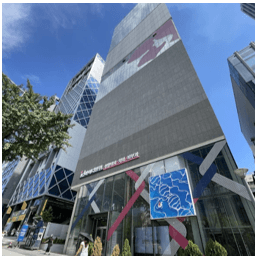
ID Hospital - Main Branch in Korea: Specializing in Safe & Customized Facial Plastic Surgery and Post-Care Services
Sinsa

D.A Plastic Surgery Clinic in Korea: Advanced Cosmetic Procedures for Natural Beauty Enhancement
Gangnam Station

Nana Plastic Surgery Clinic in Korea: Advanced Aesthetic Procedures for Face, Body, and Breast Enhancement
Sinnonhyeon Station