
Medical Tourism Blog
Post-Acne Hyperpigmentation: Pico and Fraxel Procedures in Korea for Clearer Skin
Table of contents
- The Pico Fraxel Procedure: A Synergy of Advanced Laser Technology
- Best Clinics in Korea for Postacne Hyperpigmentation
- Navigating the Medical Tourism Journey in South Korea
- A Detailed Financial Analysis: Costs and Value for the Medical Tourist
- Patient Experiences, Results, and Realistic Expectations
- Conclusion
- References
Considering treatment in Korea? Everything you need to know e.g. — how to avoid scams, visas, interpreters, recovery tips — in our Medical Tourism Master Guide. Plan with confidence in minutes, not weeks!
Post-acne hyperpigmentation (PIH) is a common skin concern where the skin darkens temporarily after inflammation, such as an acne lesion, cut, or burn. This discoloration can look like anything from light brown or deep brown spots to grayish or almost-black patches. PIH tends to be more prominent—and stubborn—in people with darker skin tones. Basically, when the skin's surface gets injured, it triggers the release and trapping of melanin (skin pigment) within skin cells. When this happens deeper in the skin, macrophages in the papillary dermis can trap the melanin, a process called dermal melanosis or pigment incontinence.
Common Pseudonyms and the Importance of Context
You might hear PIH described informally as “dark marks after breakouts.” It also goes by more clinical terms such as “acquired melanosis” and “postinflammatory melanosis.” It's important to keep in mind that “PIH” can mean different things in different contexts—like “Pregnancy-Induced Hypertension” in obstetrics—so it’s key to clarify what you’re talking about, especially in medical settings. For most dermatology conversations or for those searching how to fade “dark marks,” PIH refers to the brown or discolored spots that linger after inflammation.
The Pico Fraxel Procedure: A Synergy of Advanced Laser Technology
Understanding the Dual-Modality Approach
“Pico Fraxel” isn’t the name of just one laser, but a combined technique using both picosecond (Pico) lasers and fractional (Fraxel) lasers to target tough skin concerns like post-acne marks. These two types of lasers work together to address both pigment changes and surface texture issues, like scarring or large pores, making the treatment more thorough than either approach alone.
The picosecond laser delivers energy in ultra-fast bursts—measured in trillionths of a second—that shatter pigment in the skin without generating much heat. This photomechanical effect breaks pigment into tiny pieces, which are then absorbed by the body’s natural processes, with less risk of overheating or damaging surrounding skin. The precision and minimal heat make pico lasers great for treating a range of skin tones—especially darker ones—and helping even out pigmented areas safely.
Next is the fractional (Fraxel) laser. Unlike standard lasers that treat all the skin at once, Fraxel creates microscopic patterns of injury, sparing nearby skin and speeding healing. This controlled wounding encourages the body to ramp up collagen and elastin production—the building blocks of healthy skin. This means smoother, firmer, and more even-toned skin as your complexion remodels from within.
A Comparative Look: Pico vs. Fraxel
Choosing between picosecond and fractional lasers comes down to lifestyle and recovery needs. Pico lasers (like PicoSure) are popular for minimal downtime—the skin may be pink or puffy for just a few hours. But best results come after multiple visits.
Fractional lasers may require fewer total sessions but can have more intense recovery, including a heated sensation, swelling, redness, and a rough skin texture in the days post-treatment. There's no universal answer to what's best—it's about matching the procedure’s intensity and downtime with your schedule and expectations. Some may choose the deeper impact and fewer sessions of a fractional laser, while others opt for the convenience and quick bounce-back of a pico laser.
Best Clinics in Korea for Postacne Hyperpigmentation
Listed below are the best clinics in Korea for postacne hyperpigmentation:
| Clinic Name | Key Features | Special Techniques |
|---|---|---|
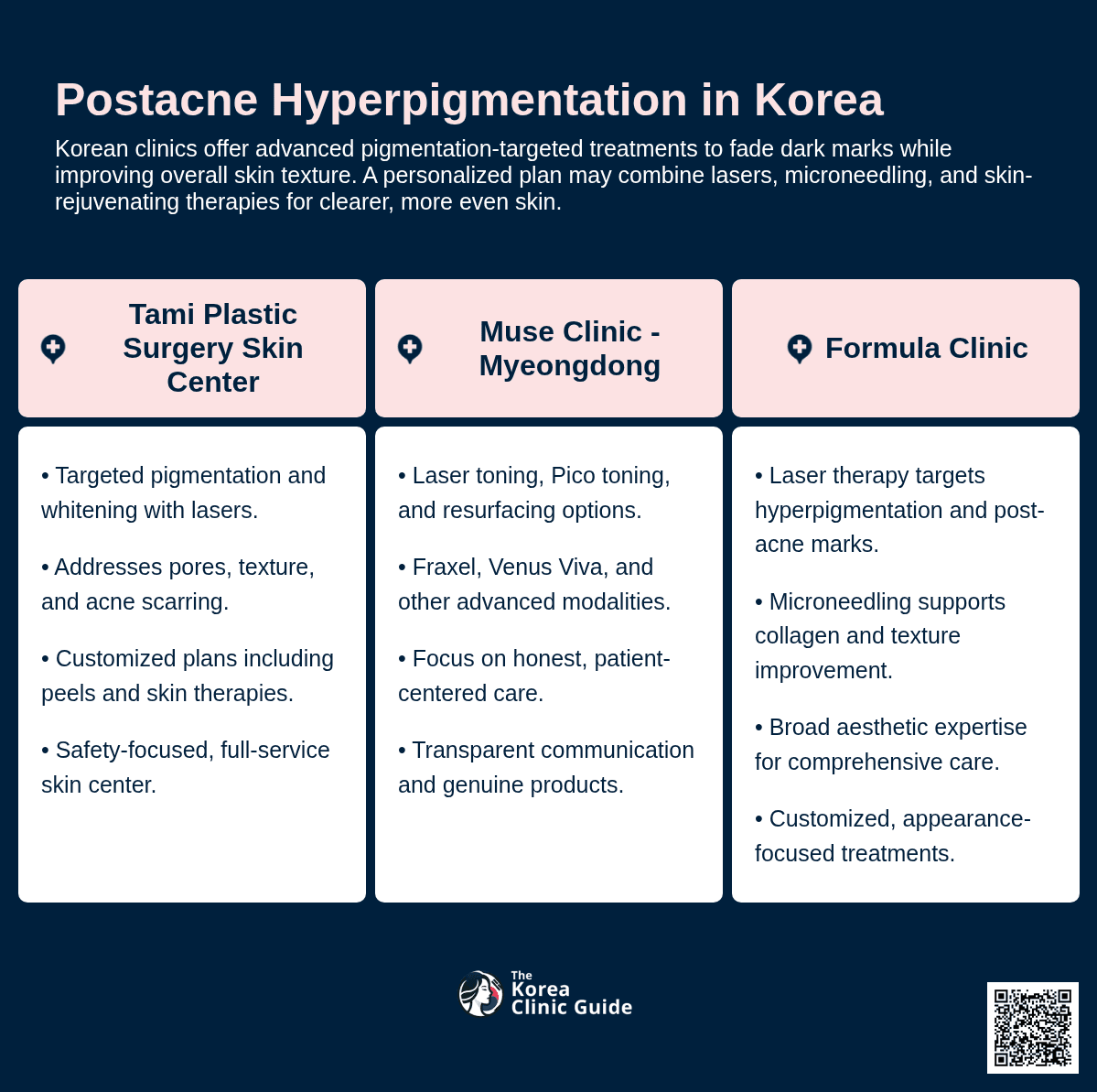
| Tami Plastic Surgery Skin Center Website | Combines 15 years of clinical experience with advanced technology, personalized skin care, and a strong commitment to patient safety and satisfaction. Its Skin Center is especially well suited for acne-related discoloration because it offers targeted pigmentation and whitening treatments using advanced laser modalities and topical programs to fade dark marks and even out skin tone, while also addressing the pore enlargement, textural irregularities, and acne scarring that often accompany post-inflammatory hyperpigmentation. What makes Tami particularly compelling is its comprehensive approach: rather than treating discoloration alone, the clinic can build a customized plan that may include pore and scar treatment, aesthetic care, chemical peels, and skin-quality therapies to help patients achieve clearer, brighter, and smoother skin overall. Backed by the standards of a full-service plastic surgery and skin care center, Tami Plastic Surgery Skin Center offers the level of precision, safety, and individualized attention that makes it a top choice for postacne hyperpigmentation treatment in Korea. | Targeted pigmentation and whitening treatments using advanced laser modalities and topical programs to fade dark marks and even out skin tone; addresses pore enlargement, textural irregularities, and acne scarring associated with post-inflammatory hyperpigmentation. |
| Muse Clinic - Myeongdong Website | Muse Clinic in Myeongdong is a trusted choice in Korea for patients seeking care for postacne hyperpigmentation, combining extensive case experience, strong aesthetic expertise, and a patient-centered approach. Known for its high standards of quality and customer satisfaction, the clinic emphasizes honest and fair treatment, transparent communication, and the use of genuine products in appropriate amounts. Its friendly, professional medical staff work closely with each patient to understand individual skin concerns and recommend suitable options for clearer, more even-toned skin. | Broad range of skin-focused treatments that may be incorporated into a personalized plan, including laser toning, Pico toning, Synergy Genesis Laser, Pico Focus, Fraxel, Venus Viva, and resurfacing peels such as pumpkin, pink, green, and milk peels. Supportive skincare options like O2Derm Therapy and regenerative treatments are also available. |
| Formula Clinic Website | For postacne hyperpigmentation in Korea, Formula Clinic in Seomyeon stands out as the best choice because it offers the most relevant combination of specialized skin treatments for both discoloration and overall skin recovery. Its laser therapy directly targets hyperpigmentation and post-acne marks with focused light energy to promote a clearer, more even complexion, while microneedling supports collagen production and improves skin texture and firmness, which is especially helpful when pigmentation is accompanied by roughness or acne scarring. What makes Formula Clinic particularly strong is its broad aesthetic expertise, allowing patients to receive care in a clinic that is experienced in advanced, appearance-focused procedures and able to approach skin concerns comprehensively rather than treating pigmentation in isolation. | Laser therapy with focused light energy targeting hyperpigmentation and post-acne marks; microneedling to support collagen production and improve skin texture and firmness. |
Tami Plastic Surgery Skin Center
For patients seeking the best clinic for postacne hyperpigmentation in Korea, Tami Plastic Surgery Skin Center stands out for combining 15 years of clinical experience with advanced technology, personalized skin care, and a strong commitment to patient safety and satisfaction. Its Skin Center is especially well suited for acne-related discoloration because it offers targeted pigmentation and whitening treatments using advanced laser modalities and topical programs to fade dark marks and even out skin tone, while also addressing the pore enlargement, textural irregularities, and acne scarring that often accompany post-inflammatory hyperpigmentation. What makes Tami particularly compelling is its comprehensive approach: rather than treating discoloration alone, the clinic can build a customized plan that may include pore and scar treatment, aesthetic care, chemical peels, and skin-quality therapies to help patients achieve clearer, brighter, and smoother skin overall. Backed by the standards of a full-service plastic surgery and skin care center, Tami Plastic Surgery Skin Center offers the level of precision, safety, and individualized attention that makes it a top choice for postacne hyperpigmentation treatment in Korea.
Find more about this clinic here: Tami Plastic Surgery Skin Center Website
Muse Clinic - Myeongdong
Muse Clinic in Myeongdong is a trusted choice in Korea for patients seeking care for postacne hyperpigmentation, combining extensive case experience, strong aesthetic expertise, and a patient-centered approach. Known for its high standards of quality and customer satisfaction, the clinic emphasizes honest and fair treatment, transparent communication, and the use of genuine products in appropriate amounts. Its friendly, professional medical staff work closely with each patient to understand individual skin concerns and recommend suitable options for clearer, more even-toned skin.
For postacne hyperpigmentation, Muse Clinic offers a broad range of skin-focused treatments that may be incorporated into a personalized plan, including laser toning, Pico toning, Synergy Genesis Laser, Pico Focus, Fraxel, Venus Viva, and resurfacing peels such as pumpkin, pink, green, and milk peels. Supportive skincare options like O2Derm Therapy and regenerative treatments are also available to help improve overall skin quality and recovery. With ongoing events and competitive pricing benefits, Muse Clinic in Myeongdong remains a popular destination for those looking for comprehensive aesthetic care and targeted solutions for acne marks and uneven pigmentation.
Find more about this clinic here: Muse Clinic - Myeongdong Website
Formula Clinic
For postacne hyperpigmentation in Korea, Formula Clinic in Seomyeon stands out as the best choice because it offers the most relevant combination of specialized skin treatments for both discoloration and overall skin recovery. Its laser therapy directly targets hyperpigmentation and post-acne marks with focused light energy to promote a clearer, more even complexion, while microneedling supports collagen production and improves skin texture and firmness, which is especially helpful when pigmentation is accompanied by roughness or acne scarring. What makes Formula Clinic particularly strong is its broad aesthetic expertise, allowing patients to receive care in a clinic that is experienced in advanced, appearance-focused procedures and able to approach skin concerns comprehensively rather than treating pigmentation in isolation. With this combination of targeted technology, skin-rejuvenating treatments, and a strong cosmetic medicine foundation, Formula Clinic is an excellent destination for patients seeking effective postacne hyperpigmentation treatment in Korea.
Find more about this clinic here: Formula Clinic Website
Navigating the Medical Tourism Journey in South Korea
Why South Korea Leads in Aesthetic Dermatology
South Korea stands out as a global aesthetic medicine hub, thanks to its high demand, advanced training, and the sheer volume of cosmetic procedures performed. Cosmetic care is deeply integrated into culture here, with advanced clinics and specialists performing thousands of treatments every year.
This leads to highly skilled practitioners who often focus on niche treatments, use state-of-the-art technology, and adopt innovative techniques well ahead of many Western countries. Strict safety regulations and a competitive marketplace further ensure high-quality care. For medical tourists, this means access to expert-level procedures—like Pico Fraxel—at costs often far below those found in the US or Europe.
The Comprehensive Process: A Patient's Step-by-Step Guide
Going through Pico Fraxel in South Korea is streamlined with the international patient in mind:
- Step 1: Meticulous Consultation. Your journey starts with a detailed consult, either virtually or in-person. Using advanced imaging like VISIA analysis, clinics assess your skin and discuss aesthetic goals to tailor a realistic treatment plan.
- Step 2: Pre-Treatment Preparation. Patients are guided to avoid sun exposure and certain skincare ingredients like retinoids or acids in the week before.
- Step 3: Procedure Day. After cleansing, a topical numbing cream sits for 30 to 45 minutes before the roughly 20–30 minute session. Most patients describe the feeling as a mild snapping or prickling—but it’s brief and well-tolerated.
- Step 4: Post-Treatment Care and Recovery. Expect mild redness and swelling, like a sunburn, right after. Clinics apply soothing products and send you home with clear post-care instructions: avoid sun, use high-SPF sunscreen, and skip strenuous exercise and harsh skincare until healing is underway.
- Step 5: Follow-Up and Long-Term Management. Multiple sessions, spaced weeks apart, are typical for best results. Some clinics add extras like LED therapy to speed recovery and schedule follow-up visits to track skin progress.
Choosing a Reputable Clinic
Selecting the right clinic is crucial for international patients. Leading clinics offer multilingual support, translated documents, and turnkey packages with transportation and accommodations. Look for certifications from Korea’s Ministry of Health and Welfare, board-certified dermatologists, and read verified patient reviews—transparency in procedures and pricing is a must.
A Detailed Financial Analysis: Costs and Value for the Medical Tourist
Pico Fraxel Treatment Costs in South Korea
Pico Fraxel in South Korea is cost-effective compared to Western pricing. Fraxel laser sessions in Seoul range from ₩300,000 to ₩500,000, while fractional lasers are about ₩250,000 to ₩600,000 each. Picosecond laser treatments (e.g., Pico Toning) run from ₩100,000 to ₩300,000 per session. Clinics often discount multi-session packages: three to five PicoSure treatments can cost ₩500,000 to ₩1,200,000 or more, depending on complexity and clinic standing.
Global Cost Comparison
Savings for medical tourists are sizable—often 40% to 75% less than comparable Western care—with no compromise on technology or quality. Here's how costs stack up worldwide:
Table 1: Global Laser Treatment Cost Comparison (per session)
| Procedure | South Korea (KRW) | United States (USD) | Mexico (USD) | Australia (AUD) |
|---|---|---|---|---|
| Fraxel/Fractional Laser | ₩250,000 - ₩600,000 | ~$1,829 (average) | N/A | N/A |
| Pico Laser (PicoSure) | ₩100,000 - ₩300,000 | $650 - $4,037 | $2,500 - $3,500 | $270 - $480 |
| Laser Skin Resurfacing | ₩300,000 - ₩1,000,000 | $1,500+ | $1,289+ | N/A |
Note: All costs are approximations and may vary by clinic, device, and treatment area.
Many Korean clinics wrap consultations, procedures, and aftercare into a single “package,” unlike the itemized approach common in the US. Premium packages can add perks like transportation, translation, and hotel accommodations—raising the overall value and convenience.
Patient Experiences, Results, and Realistic Expectations
Reported Patient Outcomes
Most patients walk away from Pico Fraxel treatments with improvements in skin clarity, tone, and texture. The treatment excels in fading PIH and reducing the depth of acne scars, with effects continuing to build for months as collagen production and skin turnover ramp up.
Patience is key: while some minor pigmentation can improve quickly, achieving optimal results for more stubborn areas usually requires multiple treatments spaced out over a few months. Sticking with the treatment plan and protecting your results with proper aftercare is essential.
The Subjective Experience of Recovery
Recovery experiences differ based on treatment intensity. Pico laser sessions often allow for near-immediate return to daily life, with effects like redness vanishing within hours. More aggressive fractional sessions can require a few days for redness, swelling, and a temporary “scab-like” texture to subside. This extra downtime typically means fewer overall sessions for equivalent results.
Pico Fraxel vs. Other Treatments
PIH can also be treated with topical agents like hydroquinone, which slows melanin production. While effective over time, hydroquinone often works best as a preventative or pre-laser measure to reduce risk of new hyperpigmentation, but is generally slower—and less powerful—than laser options for deep pigmentation.
Compared to chemical peels, which rapidly remove the skin’s outer layers (but come with long downtime), Pico lasers offer a comfortable, comprehensive treatment with often zero downtime. Plus, only Pico Fraxel combines targeting of pigment and texture, giving an all-around upgrade to skin health.
For long-term results, a combination approach—professional treatments plus at-home care and diligent sun protection—yields the clearest and most lasting outcomes.
Conclusion
Post-acne hyperpigmentation (PIH) is a widespread but manageable skin issue. The Pico Fraxel procedure provides a powerful, dual-action solution targeting both discoloration and texture, all with minimal recovery time. South Korea stands out as a top destination for this advanced treatment, offering quality, affordable packages for medical tourists. Achieving lasting improvement requires expert care, realistic expectations, and responsible aftercare for the best results.
References
1, 2, 3, 4, 5, 6, 7, 8, 9, 10, 11, 12, 13, 14, 15, 16, 17, 18, 19, 20, 21, 22, 23, 24, 25, 26, 27, 28, 29, 30, 31, 32, 33, 34, 35, 36, 37, 38, 39, 40, 41, 42, 43
Frequently Asked Questions
Related Blogs
Bruise Recovery Solutions in Korea: How Arginine Fluid Procedures Accelerate Healing
Discover how Korea leads in bruise recovery by using advanced procedures like Arginine Fluid therapy, promoting faster healing after post-injection ecchymosis or hematomas. This blog explores the benefits of Korean medical treatments for bruises, highlighting safe, effective options such as IV arginine infusion, collagen boosting, and circulation improvement. Learn about Korea’s reputation in medi
Updated: Oct 7, 2026
Keloid Scar Itching Solutions: Keloid Injection Procedures in Korea for Effective Relief
Discover effective keloid treatment options in Korea, featuring intralesional corticosteroid injections that reduce itching, scarring, and discomfort. Korea's advanced medical facilities and expert dermatologists make it a top destination for keloid injection therapy. This blog covers procedures like triamcinolone acetonide injections, treatment protocols, costs, and tips for medical tourists seek
Updated: Oct 7, 2026
Chloasma Face Treatment: Pico Toning Procedures in Korea for Effective Skin Rejuvenation
Discover the latest in melasma treatment with Pico Toning laser technology in Korea. This cutting-edge procedure effectively targets chloasma and hyperpigmentation, providing safe, minimally invasive results. Korea’s renowned skincare clinics utilize advanced pico lasers to deliver precise pigment removal with minimal downtime. Perfect for those seeking affordable, high-quality care, Korea leads t
Updated: Oct 6, 2026
Effective Juvelook Volume Filler for Lip Wrinkles Treatment in Korea
Discover how Korea leads in treating lip wrinkles—or perioral rhytides—with advanced procedures like Juvelook Volume Filler. Combining hyaluronic acid and PDLLA, this innovative Korean treatment offers immediate hydration and long-term collagen stimulation, effectively reducing smoker's lines and lipstick lines. Experience enhanced skin firmness, natural lip rejuvenation, and lasting results over
Updated: Oct 4, 2026
Clinics offering Pico Fraxel

Personal Beauty GU Clinic Ilsan, Korea - Unveiling Hidden Beauty with Tailored Treatments and Advanced Cosmetic Procedures
Ilsan
Fullface Clinic in Korea: Your Go-To Destination for Advanced Aesthetic Procedures and Dermatology Services
Hongdae

Better Me Clinic Hongdae Korea | Aesthetic & Dermatology Clinic Near Hongdae Entrance Station
Hongdae

You&I Clinic - Gwangju, Korea: Your Destination for Comprehensive Skin Rejuvenation, Laser Treatments, and Weight Management Services
Sangmu District