
Medical Tourism Blog
Philtrum Reduction Surgery in Korea: Techniques, Recovery, Scars, and Travel Planning

Table of contents
- Philtrum Reduction Surgery at a Glance
- What Is a Philtrum Reduction Surgery?
- Who Is a Good Candidate for a Philtrum Reduction Surgery?
- How Is a Philtrum Reduction Surgery Performed?
- Why Visit Korea for a Philtrum Reduction Surgery?
- Key Information for International Patients
- Which Are the Best Clinics in Korea for Philtrum Reduction?
- Philtrum Reduction Surgery From Start to Finish
- Alternatives to a Philtrum Reduction Surgery
- How Can I Prepare for a Philtrum Reduction Surgery?
- Aftercare Advice
Considering treatment in Korea? Everything you need to know e.g. — how to avoid scams, visas, interpreters, recovery tips — in our Medical Tourism Master Guide. Plan with confidence in minutes, not weeks!
Last updated: September 2026
Philtrum Reduction Surgery at a Glance
- What it does — Philtrum reduction is usually a subnasal upper-lip lift: the surgeon removes a measured strip of skin beneath the nose and lifts the upper lip to shorten the white upper lip and increase vermilion show.
- Best candidates — Suitable candidates are healthy adults with a genuinely long cutaneous upper lip, limited upper-lip or incisor show, adequate lip closure, and willingness to accept a permanent scar at the nasal base.
- Permanent scar trade-off — A subnasal scar is unavoidable, even if it fades over time; other risks include asymmetry, too little or too much shortening, nostril distortion, altered sensation, wound-healing problems, and possible revision.
- Recovery timeline — This is usually an outpatient procedure, with swelling, bruising, tightness, and temporary numbness most noticeable for 1–2 weeks; sutures, if non-absorbable, are commonly removed around days 5–7, while scar maturation takes months.
- Long-lasting results — The structural shortening is intended to last, but final appearance continues to settle for months and can be affected by aging, scar contracture, tissue relaxation, nasal-base changes, or under- or overcorrection.
- Korea travel plan — International patients should plan to remain in Korea at least 7–10 days after surgery for wound review and flight clearance, or preferably 10–14 days if sutures need removal, procedures are combined, or healing risks are higher.
- Korea-specific consideration — Korea offers established foreign-patient services, but there is no credible evidence that it delivers superior philtrum-reduction outcomes; verify the named surgeon, incision design, anesthesia plan, revision policy, and remote follow-up rather than choosing by destination alone.
What Is a Philtrum Reduction Surgery?
Philtrum reduction surgery, usually called an upper-lip lift, shortens the skin between the nose and upper lip by lifting the upper lip. It addresses a long white upper lip and can increase visible upper-lip fullness and tooth show for more balanced facial proportions. It is a surgical cosmetic procedure.
Who Is a Good Candidate for a Philtrum Reduction Surgery?
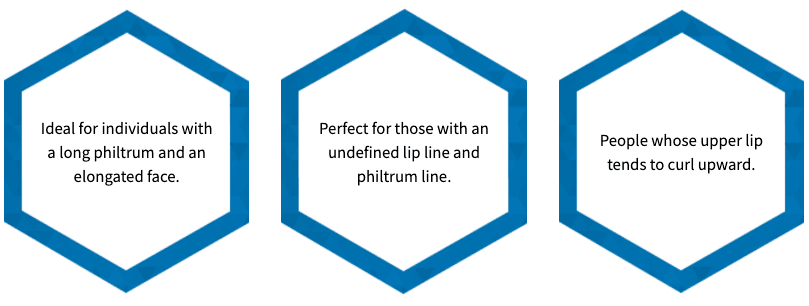
- Adults with a long cutaneous upper lip — Good candidates want to shorten the white skin between the nose and upper vermilion, rather than simply make the lips fuller.
- Limited vermilion or incisor display — Surgery can increase upper-lip show and, in selected anatomy, upper-incisor show at rest.
- Realistic scar acceptance — Candidates understand that a subnasal lift creates a permanent scar at the base of the nose, even when it fades well.
- Stable facial and dental anatomy — Assessment should confirm adequate lip closure, appropriate nostril anatomy, and that the concern is not primarily caused by tooth position or jaw structure.
- Good general health — Patients need medical and anesthesia risks to be suitable for elective outpatient surgery.
This procedure is for adults; facial proportions, dentition, and skeletal development should be mature before planning permanent lip shortening. Postpone surgery for active acne, cold sores, dermatitis, open wounds, or infection around the nostrils and upper lip. Current smoking, vaping, or other nicotine exposure is a major concern because impaired healing can worsen a conspicuous subnasal scar. Uncontrolled diabetes, bleeding disorders, unstable heart or lung disease, immunosuppression, pregnancy, problematic scar history, or inability to accept a permanent scar require postponement or individualized specialist assessment. Marked nostril asymmetry, a short upper lip, poor lip competence, prior nasal-base surgery, and suspected dental or skeletal causes of limited tooth show can make shortening inappropriate or redirect treatment toward dental, jaw, or nasal evaluation.
How Is a Philtrum Reduction Surgery Performed?

The operation is usually a surgical upper-lip lift rather than a simple “philtrum reduction.” It removes measured skin beneath the nose and advances the upper lip upward; technique selection depends on nasal-base shape, existing scars, lip mobility, and the amount of shortening that preserves lip closure.
- Classic subnasal bullhorn lift — The surgeon removes a bullhorn-shaped strip of skin at the nasal base, then closes the wound in layers. This is the predominant approach in published literature and aims to shorten the cutaneous upper lip while increasing vermilion show.
- Modified subnasal patterns — Wavy-ellipse, central/Italian, lateral, and alar-base designs alter where tension and scar are distributed. They are selected to address specific nostril-sill, central-lip, or lateral-lip anatomy.
- Deep-layer or muscle-suspension modifications — Some surgeons add deeper fixation or muscle-related support to reduce closure tension or support lip position. Comparative evidence does not establish a consistently superior method for long-term scar quality, nasal change, sensation, or revision.
- Endonasal or hidden-scar approaches — These place more of the incision inside the nostrils. They can be appropriate for selected anatomy, but do not remove the need to discuss visibility, achievable lift, and nostril-shape effects.
- Direct vermilion advancement — This advances the red lip at its border and is more relevant to vermilion deficiency than a long white lip. It leaves a scar along the vermilion border and is less commonly reported than subnasal lifting.
Why Visit Korea for a Philtrum Reduction Surgery?
Korea has established infrastructure for international medical visitors and formal systems for foreign-patient services. It does not, however, have credible comparative evidence proving better philtrum-reduction results, scar quality, safety, or revision rates than other countries. Choose the surgeon and follow-up plan, not the destination alone.
- International-patient infrastructure — Korea’s official Medical Korea platform provides information on registered medical institutions and foreign-patient services, which can support due diligence before booking.
- High international patient volume in Seoul — Seoul reported 1 million international medical tourists in 2024. This indicates broad access to multilingual administrative support, not a surgeon-specific outcome guarantee.
- Practical verification steps — Confirm the named surgeon’s specialty credentials, who performs each operative step, anesthesia arrangements, emergency-transfer protocols, the exact incision design, and written policies on scars, revision, and remote follow-up.
- Evidence limitation — Reviews of upper-lip lift research describe mostly retrospective cohorts and case series with inconsistent measurements and outcome reporting. The current literature does not justify a universal “ideal” philtrum length or a Korea-specific superiority claim.
Key Information for International Patients
- Minimum stay — Plan to remain in Korea for at least 7–10 days after surgery for early wound assessment and individualized flight clearance. Prefer 10–14 days when non-absorbable sutures need removal, surgery is combined with another operation, or healing, clotting, and anesthesia risks are elevated.
- Suture and wound review — Non-absorbable sutures are commonly reviewed or removed around day 5–7. Do not schedule departure before the operating team confirms that the incision and recovery are appropriate.
- Flight timing — Long-haul travel soon after surgery adds practical challenges, including swelling management and access to care. The surgeon must approve the return date; consider CDC medical-tourism guidance when planning travel after an operation.
- Downtime and itinerary — Bruising, swelling, upper-lip tightness, and temporary altered sensation are most noticeable during the first 1–2 weeks. Plan a quiet itinerary, avoid public-facing commitments, and do not combine surgery with strenuous sightseeing.
- Remote follow-up — Before leaving, obtain an English operative summary, medication list, wound-care instructions, emergency contact details, and a scheduled photo or video follow-up plan. Confirm how the clinic handles wound concerns once you are abroad.
- Result timeline — Social recovery commonly takes 1–2 weeks, but redness and firmness of the subnasal scar last longer. Lip settling and scar maturation take months; published follow-up periods vary substantially rather than defining one standard recovery timetable.
Travel note: Book flexible return flights and accommodation close to the clinic. Arrange an adult escort for the first night when IV sedation or general anesthesia is used.
Which Are the Best Clinics in Korea for Philtrum Reduction?
Listed below are some of the best clinics in Korea for philtrum reduction.
1. Haru Clinic
You may consider Haru Clinic if you are seeking philtrum reduction through either a surgical upper-lip lift or a minimally invasive approach: its Philtrum Shortening Lift uses an incision beneath the nose to shorten the philtrum and increase upper-tooth show at rest, while its described thread-and-filler approach is intended to lift the area without a scar or downtime.
- URL: Haru Clinic Website
- Location: Gangnam-gu, Seoul
- Procedure options:
- Philtrum Shortening Lift (upper-lip lift) uses a small incision under the nose to shorten the philtrum, refine lip proportions, and enhance facial harmony.
- The clinic also describes a minimally invasive combination of thread lifting and subtle lip-corner filler to lift the philtrum area without scars or downtime.
- Clinician approach:
- Dr. Jeong is identified as an official research physician at Merz, the company behind Belotero Filler, and teaches other doctors about filler techniques.
- Treatment planning is described as individualized, with attention to facial harmony and balance.
- Related facial services:
- Thread lifting is offered for cheek and jawline elevation using dissolvable barbed threads under local anesthesia.
- Lip asymmetry correction may use precise hyaluronic-acid filler placement or minor surgical adjustment.
- Collagen-tightening treatments using radiofrequency or ultrasound are also available.
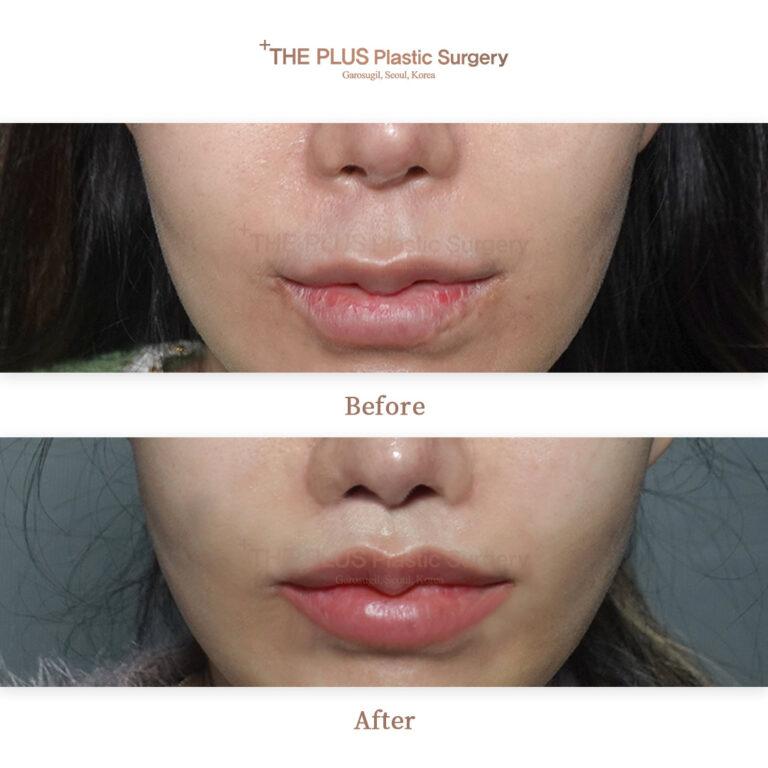
2. THEPLUS Plastic Surgery
You may consider THEPLUS Plastic Surgery if your philtrum-reduction planning is part of a broader surgical discussion about lip, nose, chin, and overall facial proportions. The supplied information emphasizes rhinoplasty and facial-contouring expertise, but it does not specifically confirm that philtrum reduction is offered, so you should verify procedure availability and the appropriate surgeon during consultation.
- URL: THEPLUS Plastic Surgery Website
- Location: Gangnam-gu, Seoul
- Facial-balance focus:
- Rhinoplasty is offered with attention to facial balance and structural harmony.
- Chin surgery can adjust chin size or projection in relation to the nose, lips, and jawline.
- Full-face contouring, cheekbone surgery, square-jaw surgery, and facial implants are listed options for refining facial proportions.
- Surgical expertise:
- Dr. Kim is described as a board-certified plastic surgeon with research awards related to 3D implants, with expertise in rhinoplasty and facial contouring.
- Dr. Jeong is identified as President of the Korean Society of Plastic Surgeons and as a rhinoplasty specialist who presents at professional forums and educational sessions.
- The clinic describes an approach that considers both function and appearance in rhinoplasty planning.
- Related services:
- Facelift, thread lift, and facial fat grafting are offered for lifting or volume restoration.
- Revision rhinoplasty is available for concerns following previous nose surgery.
3. Okay Plastic Surgery Clinic
You may consider Okay Plastic Surgery Clinic if you want to discuss philtrum reduction in the context of individualized facial aesthetic planning and access to related facial procedures. The supplied information does not specifically list philtrum reduction or an upper-lip lift, so you should confirm whether it is available and whether it suits your facial proportions and scar considerations.
- URL: Okay Plastic Surgery Clinic Website
- Location: Gangnam-gu, Seoul
- Related facial services:
- Rhinoplasty services include nose-tip surgery, nose-bridge surgery, nostril reduction, and revision procedures.
- Facial lifting options include facelift surgery, mini lift surgery, endoscopic forehead lift, thread lifting, and laser lifting.
- Botox and filler treatments are listed for wrinkles, volume loss, and facial contouring.
- Scar considerations:
- A dedicated Scar Clinic and Keloid Clinic are listed, with evaluation and treatment planning for scars and keloids.
- If you are considering an incision-based upper-lip procedure, you can ask how your individual scar history would factor into planning.
- Planning approach:
- The clinic describes its care as individualized and tailored to your needs and aesthetic goals.
- Its team includes a female plastic surgeon with extensive experience, according to the supplied information.
Philtrum Reduction Surgery From Start to Finish
- Remote consultation and screening — Send clear, unfiltered front, profile, smiling, and relaxed photographs along with medical history, medication and supplement lists, prior facial surgery, cold-sore history, and scar history. Ask whether an English-speaking or virtual consultation is available.
- Surgical planning — The surgeon evaluates facial proportions, upper-incisor show at rest and smiling, vermilion height, lip mobility, lip closure, nostril shape, dental occlusion, skeletal relationships, and previous scars. No single millimeter target suits every face; published measurement methods remain inconsistent.
- In-person assessment and consent — Attend an in-person examination before surgery. Review the proposed incision pattern, expected shortening, scar trade-off, possible nasal-base change, asymmetry, undercorrection, overcorrection, altered sensation, wound problems, and revision policy.
- Preoperative clearance — The clinic confirms nicotine status, allergies, medical conditions, anticoagulant or antiplatelet plans, and anesthesia suitability. Testing depends on age, medical history, sedation choice, and combined procedures.
- Marking and anesthesia — The surgeon marks the subnasal excision with the patient upright. The procedure is commonly performed under local anesthesia with or without sedation; general anesthesia is more relevant when it is combined with other facial surgery.
- Tissue removal and lift — A measured strip of skin, sometimes with selected subcutaneous tissue, is removed beneath the nose. The upper lip is advanced upward and the wound is closed in layers, with the surgeon controlling tension to protect lip function and nasal-base shape.
- Same-day discharge — This is usually an outpatient procedure. Receive prescribed medicines, incision-care instructions, dietary and activity restrictions, and emergency contact information before leaving with an escort when sedation or general anesthesia was used.
- Early clinic follow-up — Return for wound assessment and, when applicable, suture removal at about 5–7 days. The operating team decides when flying is appropriate.
- Overseas follow-up — Send photos or attend video reviews as arranged after returning home. Delay revision discussions until scars, swelling, and facial proportions have stabilized unless a wound complication requires earlier assessment.
Alternatives to a Philtrum Reduction Surgery
Non-surgical options can add volume or alter the appearance of the upper lip, but they do not reliably shorten excess cutaneous upper-lip skin. Surgical lifting is more durable but requires accepting an incision and permanent scar.
Hyaluronic-Acid Filler or Fat Grafting
- Best for — Patients whose main issue is low vermilion volume, dehydration lines, or mild inward rolling of the upper lip.
- Tradeoff — Filler is temporary and fat retention varies. Neither reliably corrects a long white lip, and excessive filler can create disproportionate projection.
- Related option — Read about lip fillers or lip augmentation.
Corner-Mouth Lift
- Best for — Downturned oral commissures that create a sad or tired resting expression.
- Tradeoff — It targets the mouth corners, not central philtrum length, and creates scars at the oral commissures.
- Related option — Consider a corner mouth lift.
Direct Vermilion Advancement
- Best for — Selected patients with inadequate red-lip height who accept a vermilion-border scar.
- Tradeoff — It can increase visible vermilion but does not offer the same nasal-base lift pattern as a subnasal approach.
Rhinoplasty or Alar-Base Assessment
- Best for — Concerns driven by nostril shape, nasal-base width, columella position, or prior nasal surgery.
- Tradeoff — Nasal surgery does not automatically shorten a long cutaneous upper lip; combined planning increases recovery and risk.
- Related option — Explore rhinoplasty.
Orthodontic or Orthognathic Evaluation
- Best for — Limited incisor show related to tooth position, bite problems, maxillary structure, or jaw relationships.
- Tradeoff — Dental or jaw treatment addresses the underlying anatomy but is more involved and does not substitute for a lip lift when true skin excess is the concern.
How Can I Prepare for a Philtrum Reduction Surgery?
- Medication and supplement review — Provide every prescription medicine, over-the-counter product, vitamin, herbal supplement, and allergy well before surgery. The surgeon and prescribing clinician must create an individualized plan for anticoagulants and antiplatelets; never stop prescribed blood thinners independently.
- Nicotine cessation — Stop smoking, vaping, and nicotine products for the surgeon-specified period before and after surgery. Nicotine impairs healing and raises the risk of an unfavorable nasal-base scar.
- Skin and infection check — Report cold sores, acne, dermatitis, nasal irritation, or any open skin around the upper lip and nostrils. Postpone elective surgery until active infection or inflammation resolves; ask whether antiviral prophylaxis is appropriate for recurrent herpes.
- Fasting and alcohol — Follow the anesthesia provider’s fasting instructions exactly. Requirements differ for local anesthesia, oral sedation, IV sedation, and general anesthesia. Avoid alcohol for the interval specified by the surgical team.
- Travel logistics — Stay near the clinic through the early review. Bring loose front-opening clothing so garments do not catch on the nose or upper lip, and arrange an escort after sedation or general anesthesia.
- Documents and continuity — Carry medical records, insurance details, emergency contacts, and sufficient regular prescription medication for the trip. Request English discharge documents and a remote follow-up schedule before surgery.
Travel note: Keep return flights flexible. A fixed departure before suture review or surgeon clearance creates avoidable risk and complicates treatment of wound problems.
Confirm the treating doctor’s individualized medication, fasting, skin-preparation, and travel requirements; these take precedence over general guidance.
Aftercare Advice
Protect the incision and avoid mechanical tension on the healing upper lip; early care has a direct effect on wound separation and scar quality.
- Incision care — Clean the incision and apply ointment only as prescribed. Do not use exfoliants, retinoids, acids, bleaching agents, makeup, or unapproved scar products near the wound until the surgeon permits them.
- Lip movement and food — Avoid forceful smiling, puckering, wide yawning, straws, and hard-to-chew foods until cleared. These movements can pull on a fresh subnasal closure.
- Swelling management — Sleep with the head elevated and use cold compresses only as directed, without pressure on the incision. Swelling, bruising, tightness, and temporary numbness are commonest during the first 1–2 weeks.
- Activity and heat — Avoid strenuous exercise, swimming, sauna or steam rooms, and direct sun until the surgeon approves return. After the incision has closed, use broad-spectrum SPF 50 sun protection and surgeon-approved silicone scar care when recommended.
- Warning signs — Contact the clinic urgently for rapidly increasing swelling, worsening pain, persistent bleeding, wound separation, fever, spreading redness or warmth, foul drainage, dusky or black skin, breathing difficulty, chest pain, fainting, or calf pain and swelling.
- Follow-up and final appearance — Attend the early wound review and suture appointment, then complete photo or video follow-up after travel. Scar maturation and stable lip position take months; revision is generally deferred until tissues stabilize.
Follow the treating doctor’s instructions over general advice, and contact the clinic promptly whenever the wound or recovery appears abnormal.
Frequently Asked Questions
Related Blogs
Effective Solutions for Nasal Crusting in Korea: Septoplasty Procedure Options
Discover how Korea’s top-tier medical facilities and expert surgeons provide effective Septoplasty procedures to treat nasal crusting caused by deviated septum or nasal dryness. This comprehensive guide explores symptoms, treatment options, costs, and recovery for patients seeking durable relief from nasal crusting and breathing issues. With Korea's reputation for excellence in ENT surgery and med
Updated: Oct 1, 2026
Effective Tip Plasty Procedures in Korea for Correcting a Bulbous Nasal Tip
Discover how Korea leads in cosmetic surgery with expert Tip Plasty procedures targeting bulbous nasal tips. This blog explores the causes of bulbous noses, detailed surgical approaches like cartilage reshaping and suturing, and why Korea is a top choice for international patients seeking natural, refined results. Learn about costs, recovery timelines, and real patient experiences, highlighting Ko
Updated: Oct 1, 2026
Korea Medical Tourism: Alar Reduction Procedures for Thick Alar Lobule Correction
Discover how Korea's advanced alar reduction (alarplasty) procedures effectively address thick alar lobules and wide nostril wings. This cosmetic surgery refines nasal appearance by reshaping cartilage and soft tissue, resulting in a natural, balanced look. Korea's expert surgeons, state-of-the-art facilities, and comprehensive patient support make it the top destination for nostril narrowing and
Updated: Oct 1, 2026
Revise Your Short Nose with Revision Rhinoplasty in Korea: Effective Solutions for Nose Aesthetics
Discover effective solutions for short nose correction through revision rhinoplasty in Korea. This advanced procedure uses techniques like open rhinoplasty and cartilage grafting—often rib cartilage—to improve nasal length, shape, and function. Korea’s top clinics offer expert surgeons, cutting-edge diagnostics, and tailored treatments for complex cases. Learn about costs, patient outcomes, and wh
Updated: Oct 1, 2026
Clinics offering Philtrum Reduction Surgery

THEPLUS Plastic Surgery Korea | Eye, Nose, Face & Body Surgery
Sinsa

Haru Clinic Korea | Fully-Customized Full-Face Non-Surgical Rejuvenation With Threads, Botox & Fillers
Sinsa

Okay Plastic Surgery Clinic in Korea: Comprehensive Aesthetic Procedures with Sincerity and Care
Cheongdam
ID Hospital - Main Branch in Korea: Specializing in Safe & Customized Facial Plastic Surgery and Post-Care Services
Sinsa