
Medical Tourism Blog
Rejuvenate Hooded Eyes in Korea: Eyebrow Lift & Eye Thread Lift Procedures
Table of contents
- The Eyebrow Lift Procedure: A Detailed Look
- Getting an Eyebrow Lift in South Korea: A Step-by-Step Guide
- Why Choose South Korea for Your Eyebrow Lift?
- Real-Life Transformations: How Eyebrow Lifts Address Hooded Eyes
- Which Are the Best Clinics in Korea for Hooded Eyes?
- Conclusion: Making an Informed Decision about Eyebrow Lift for Hooded Eyes
- Comparison of Eyebrow Lift Techniques
- Pros and Cons of Getting an Eyebrow Lift in South Korea
- Key Steps for Getting an Eyebrow Lift in South Korea
- References
Considering treatment in Korea? Everything you need to know e.g. — how to avoid scams, visas, interpreters, recovery tips — in our Medical Tourism Master Guide. Plan with confidence in minutes, not weeks!
Hooded eyes are a common facial feature where excess skin from the brow bone droops down to the lash line, partially or fully covering the upper eyelid and often hiding the eyelid crease. This eye shape can make the eyes look smaller and less open, sometimes giving a tired or sleepy appearance. The degree of hooding varies—some people have a slight fold of skin, while others experience more pronounced coverage.
This condition goes by several names, such as saggy or droopy eyelids, heavy-lidded eyes, folded eyelids, or simply hooding of the eyelids. While these terms are often used interchangeably, it’s important to differentiate hooded eyes from other eyelid conditions. For example, dermatochalasis refers to drooping eyelid skin, which can occur with or without hooded eyes. Ptosis, or blepharoptosis, involves upper eyelid drooping severe enough to affect vision. Hooded eyes are primarily defined by the fold of skin originating from the brow bone, which can create a feeling of heaviness but is distinct from these other conditions.
Several factors contribute to the development of hooded eyes. Genetics play a major role—if one or both parents have hooded eyes, you’re more likely to have them too. Aging is another common cause; as muscles supporting the eyebrows weaken, the brows can sag, and combined with loss of skin elasticity and collagen, the forehead skin droops, creating the hooded effect. Facial trauma near the eyes can also alter skin positioning, leading to hooding. Certain medical conditions like thyroid eye disease and myasthenia gravis may worsen the appearance. Treatments such as chemotherapy and radiation can accelerate skin aging and eyebrow drooping. Even habits like frequent eye rubbing or significant weight changes can stretch the skin and contribute to hooded eyes.
Hooded eyes can impact people in different ways. Many are concerned about the cosmetic effects—hooded eyes can make the eyes look smaller, more wrinkled, and perpetually tired, affecting facial balance and self-confidence. Applying eye makeup can be tricky since the skin fold hides eyeshadow and complicates eyeliner application. Functionally, severe hooding can block the upper field of vision, interfering with activities like reading, driving, or computer work, sometimes causing eye strain and headaches. Some also feel heaviness or fatigue around their eyes. Understanding these causes and effects is key for those exploring solutions for hooded eyes.
The Eyebrow Lift Procedure: A Detailed Look
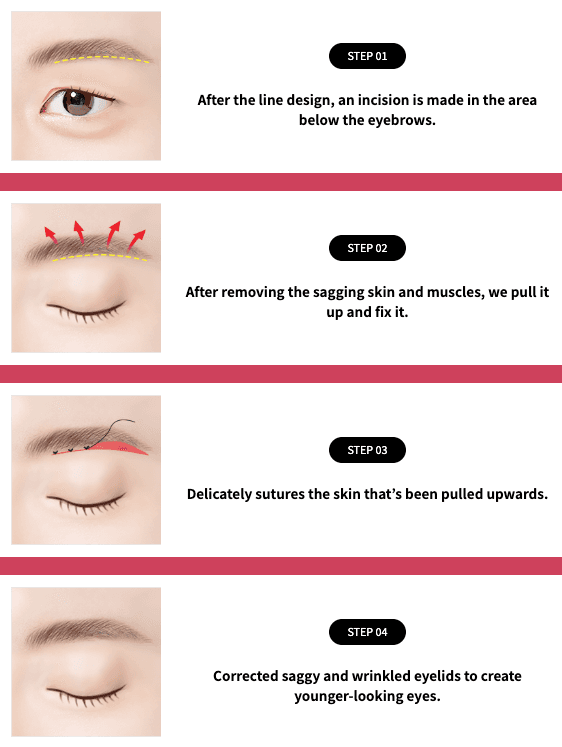
For those seeking a lasting fix for hooded eyes, an eyebrow lift (also called a forehead lift) is a surgical option that can make a big difference.
The main goal of an eyebrow lift is to raise the eyebrows. Lifting the brows also lifts the sagging forehead skin, reducing the excess skin on the upper eyelids that causes hooding. This creates a more open, refreshed, youthful, and alert eye appearance. Besides improving hooded eyes, an eyebrow lift smooths forehead wrinkles and vertical frown lines between the brows, enhancing overall rejuvenation. For people with vision problems from severe hooding, lifting the brows can clear the obstructed field of vision.
There are several surgical techniques for eyebrow lifts, each with unique benefits:
-
Endoscopic Brow Lift: This minimally invasive method uses several small incisions behind the hairline. A thin tube with a camera (endoscope) helps the surgeon see beneath the skin. Specialized tools lift the forehead tissues, which are secured higher with sutures or small screws. This approach causes minimal scarring, less pain, and a quicker recovery, making it ideal for mild to moderate sagging.
-
Temporal Brow Lift (Lateral Brow Lift): Small incisions near the temples lift the outer third of the eyebrows, often the first area to droop and cause hooding at the eye corners. Usually done under local anesthesia, it has a shorter healing time and is often combined with [upper blepharoplasty](/blog/upper-blepharoplasty-korea) to address both eyelids and outer brows.
-
Coronal Brow Lift (Open or Classic Brow Lift): This traditional technique involves a long incision across the top of the head behind the hairline. The forehead skin is lifted, underlying tissues adjusted, and excess skin removed. It’s effective for significant sagging but is more invasive, with longer recovery and a higher risk of scalp numbness. Due to newer methods, it’s less commonly performed today.
-
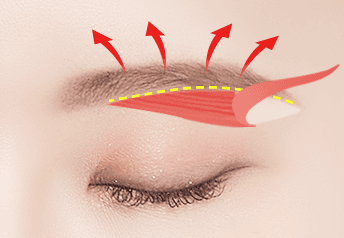
Direct Brow Lift: An incision is made directly above the eyebrows to remove a strip of skin. This offers precise brow elevation and is often chosen by people with thick eyebrows where scars can be hidden. It’s a shorter procedure done under local anesthesia but may leave visible scars.
-
Trichophytic Brow Lift (Hairline or Pretrichial Brow Lift): The incision is made at or just behind the hairline, allowing removal of excess forehead skin and brow lifting. This is great for patients with high foreheads or receding hairlines, as it can lower the hairline while lifting brows. Hair grows through the incision to hide scars.
Other less common techniques include the limited incision brow lift (combining temporal and endoscopic methods), trans-blepharoplasty brow lift (lifting brows through upper eyelid incisions), and the endotine brow lift (using bio-absorbable implants to hold lifted tissue).
An eyebrow lift can be done under general anesthesia (patient fully unconscious) or intravenous sedation with local anesthesia (patient relaxed but numb in the surgical area). Surgery usually lasts 1 to 2 hours.
After surgery, incisions are closed with sutures or clips, and sometimes a drainage tube is placed. Bandages protect the area. Patients are advised to rest with their head elevated and use cold compresses to reduce swelling. Pain medication helps manage discomfort. Swelling and bruising are common for 1–2 weeks. Recovery varies by technique: endoscopic lifts often allow light activity within a week, while others may require about two weeks. Non-dissolvable stitches are removed within 1–2 weeks. Avoid strenuous activity, heavy lifting, and bending during early recovery. Some numbness or itching around incisions may occur but usually fades over time. Final results can take weeks to months to fully appear.
Though generally safe, eyebrow lifts carry risks like scarring, bleeding, infection, poor healing, anesthesia reactions, temporary or permanent numbness or itching, asymmetry, hair loss along incisions, and possible need for revision surgery. Discussing these risks with a qualified surgeon is essential.
Getting an Eyebrow Lift in South Korea: A Step-by-Step Guide
South Korea is a top destination for medical tourism, especially plastic surgery. Known for advanced techniques, skilled surgeons, and competitive prices, it attracts many international patients seeking eyebrow lifts and other cosmetic procedures.
The first step is to research and choose a reputable clinic and experienced surgeon. Look for board-certified plastic surgeons specializing in facial procedures with proven success in eyebrow lifts. Many clinics catering to international patients provide online resources, including surgeon credentials and before-and-after photos. Reading patient reviews helps gauge quality and experience. Online consultations are often available, allowing you to discuss your needs remotely before traveling. Clinics with English-speaking staff or translators can ease communication.
Next, schedule an initial consultation, often starting online to discuss your goals, medical history, and questions. After arriving in South Korea, you’ll have an in-person consultation where the surgeon examines your face, assesses hooding, and explains the surgical plan, including recommended techniques and expected results. This is a good time to ask questions and request additional before-and-after photos.
After deciding to proceed, arrange your visa and travel plans. Check visa requirements early, book flights and accommodation near the clinic, and consider medical tourism packages. Travel insurance covering medical procedures abroad is recommended.
Before surgery, you’ll undergo a pre-operative assessment, including medical history review and tests like blood work or chest X-rays to ensure fitness for surgery. Providing recent medical records from home, preferably in English, can avoid repeat tests. Follow all pre-op instructions, such as medication restrictions and lifestyle changes like quitting smoking.
On surgery day, arrive at the clinic fasting as instructed. You’ll meet your surgeon for a final review and marking of incision sites. Anesthesia is administered, and the eyebrow lift is performed using the chosen technique.
Post-surgery, you’ll recover under medical supervision until stable for discharge. The medical team will give detailed care instructions, pain management advice, and activity restrictions. Follow-up visits will monitor healing and remove stitches within 1–2 weeks. Many clinics offer comprehensive post-op care, including wound checks, swelling treatments, and accommodation options for convenience.
Before returning home, confirm with your surgeon when it’s safe to travel and any precautions during your journey. Understand ongoing healing expectations and incision care. Clinics often encourage ongoing contact and may provide virtual follow-ups.
Why Choose South Korea for Your Eyebrow Lift?
Choosing South Korea for an eyebrow lift offers several advantages:
-
Cost-effectiveness: Procedures are often much cheaper than in the US, Canada, or Europe, even after travel and accommodation costs, making cosmetic surgery more accessible.
-
High medical standards and technology: South Korea has many skilled surgeons at the forefront of innovative techniques. Clinics invest in cutting-edge equipment and follow strict safety regulations. Many have international accreditations like Joint Commission International (JCI).
-
Global reputation: Known as the "cosmetic surgery capital of the world," South Korea performs a high volume of procedures, giving surgeons extensive experience and refined skills. The culture embraces cosmetic surgery, focusing on natural, harmonious results.
-
Comprehensive support for international patients: Clinics and medical tourism agencies offer all-inclusive packages covering surgery, accommodation, airport transfers, translation services, and post-op care, simplifying the experience and reducing stress.
-
High patient satisfaction: Many patients report excellent surgical outcomes and positive experiences, thanks to thorough consultations and attentive care tailored to individual goals.
Real-Life Transformations: How Eyebrow Lifts Address Hooded Eyes
An eyebrow lift effectively improves hooded eyes by raising sagging forehead and brow skin, which lifts the excess skin creating the "hood" over the eyelids. This reveals a more defined eyelid crease.
Patients often see their eyes appear larger, more open, and brighter, giving a youthful, alert look. The procedure can reduce tiredness or heaviness around the eyes, common concerns with hooded eyelids.
For those with vision obstruction from hooding, eyebrow lifts can improve peripheral vision, making daily tasks like reading, driving, and screen use easier and less straining.
Beyond physical changes, many patients experience a boost in self-confidence and satisfaction with their appearance. Makeup application becomes easier, and they feel less self-conscious about looking tired or older. Results typically last many years, though natural aging continues.
Which Are the Best Clinics in Korea for Hooded Eyes?
Listed below are some of the best clinics in Korea for hooded eyes.
1. THEPLUS Plastic Surgery
For hooded eyes, you may consider THE PLUS Plastic Surgery if you want an upper-eyelid assessment that can distinguish between excess eyelid tissue, eyelid drooping, and the desire for a more defined crease. Its listed eye-surgery options include blepharoplasty, ptosis correction, and double-eyelid surgery, allowing your plan to be oriented around a smoother, more open-looking eye area while considering your overall facial balance.
- URL: THEPLUS Plastic Surgery Website
- Location: Gangnam-gu, Seoul
- Eye-surgery options:
- Upper blepharoplasty is listed to remove or adjust excess skin and tissue around the eyelids, which may be relevant when upper-lid skin contributes to a hooded appearance.
- Ptosis correction is offered to address drooping upper lids by correcting the muscles involved in opening the eyes.
- Double-eyelid surgery is available to create a defined upper-eyelid crease matched to your facial features.
- Surgical approach:
- The clinic describes a personalized aesthetic approach focused on harmonious facial proportions and natural-looking changes.
- Dr. Kim is described as a board-certified plastic surgeon with research recognition for 3D implants and experience educating other plastic surgeons.
- Dr. Jeong is described as President of the Korean Society of Plastic Surgeons and as regularly involved in professional education and conference presentations.
2. Made Young Plastic Surgery
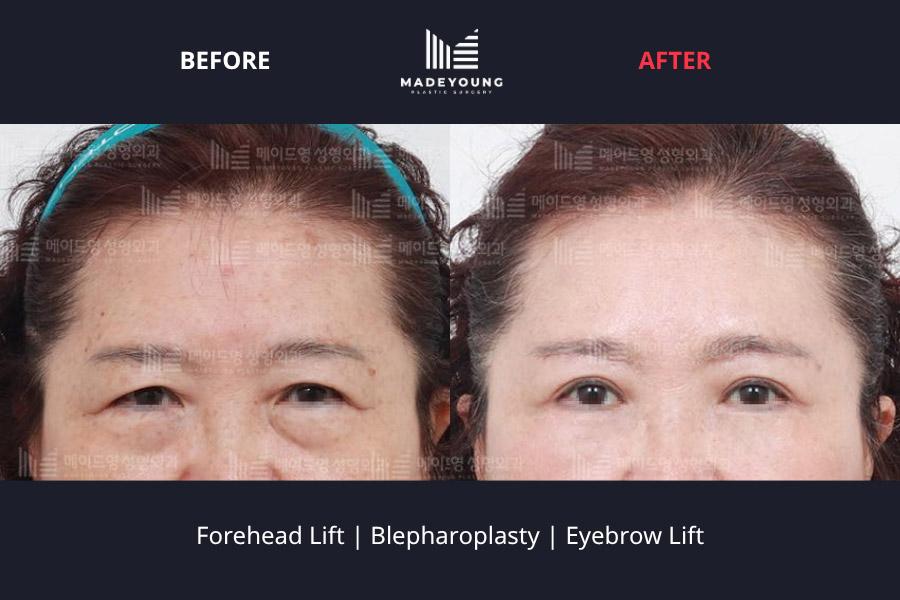
At Made Young Plastic Surgery, you can explore hooded-eye treatment with Dr. Park Byung-Chan, who is described as having 15 years of experience exclusively in eye surgery. Your evaluation can be tailored to eyelid thickness, incision design, crease height, and your intended overall eye shape, with surgical options that include upper blepharoplasty, ptosis correction, and incisional or non-incisional double-eyelid surgery.
- URL: Made Young Plastic Surgery Website
- Location: Seocho-gu, Seoul
- Hooded-eye options:
- Upper blepharoplasty is offered to remove excess upper-eyelid skin and fat, addressing heaviness around the eye area.
- Ptosis correction is available when drooping related to the eyelid-lifting muscle is a concern.
- Both incisional and non-incisional double-eyelid techniques are listed; the incisional approach can allow tissue removal or rearrangement, while the non-incisional option uses sutures to form a crease.
- A sub-brow lift is also listed, targeting tissue just above the eyebrow to elevate and smooth the upper-eyelid area.
- Planning and care:
- Dr. Park's approach is described as customizing incision lines, double-eyelid height, eyelid thickness, and overall image for a natural-looking eye shape.
- The clinic states that its medical team provides direct consultation and diagnosis before a procedure.
- Full-time board-certified anesthesiologists, one-to-one anesthetic monitoring, emergency cross-checking, and a dedicated aftercare center are listed as part of its care system.
3. SH Clinic
You may consider SH Clinic for hooded eyes if excess upper-eyelid skin is your primary concern, as the clinic lists upper blepharoplasty (double-eyelid surgery) to remove excess lid skin and create a defined crease. This may help make the eye area appear brighter and reduce the sense of upper-lid heaviness.
- URL: SH Clinic Website
- Location: Seocho-gu, Seoul
- Relevant procedure:
- Upper blepharoplasty is listed as removing excess eyelid skin while forming a defined eyelid crease.
- The clinic also lists lower blepharoplasty for under-eye fat or loose lower-lid skin, if separate lower-eye concerns are part of your consultation.
- Clinic scope:
- SH Clinic describes itself as a multi-specialty center that includes cosmetic plastic surgery, aesthetic dermatology, stem-cell medicine, and women’s healthcare.
- Other listed aesthetic services include thread lifting, laser lifting, skin boosters, Botox, dermal fillers, facelift surgery, and facial contouring surgery.
Conclusion: Making an Informed Decision about Eyebrow Lift for Hooded Eyes
Hooded eyes, caused by excess skin folding over the upper eyelids, can affect appearance and sometimes vision. An eyebrow lift surgically elevates the eyebrows and forehead skin, reducing hooding and creating a more open, youthful look. South Korea offers a compelling option for this procedure, combining affordability, expert surgeons, advanced technology, and strong support for international patients. Careful research, consultation with a qualified surgeon, and understanding the risks and benefits are essential for making an informed choice that fits your goals and circumstances.
Comparison of Eyebrow Lift Techniques
| Technique | Incision Location | How it Addresses Hooded Eyes | Recovery Time | Potential Advantages | Potential Disadvantages |
|---|---|---|---|---|---|
| Endoscopic Brow Lift | Several small incisions behind hairline | Lifts forehead tissues, indirectly lifting upper eyelid skin | Shorter | Minimally invasive, less scarring, faster recovery | May not be suitable for significant sagging |
| Temporal Brow Lift | Small incisions near temples behind hairline | Lifts outer brow, reducing hooding at outer eye corners | Shorter | Less extensive, can be done under local anesthesia | Limited to outer brow area |
| Coronal Brow Lift | Long incision across top of head | Lifts entire forehead and brow, addressing significant sagging | Longer | Effective for significant sagging | More invasive, longer recovery, potential scalp numbness |
| Direct Brow Lift | Directly above eyebrows | Removes skin above brows, directly lifting them | Relatively short | Most direct elevation | Potential for visible scars above eyebrows |
| Trichophytic Brow Lift | Just behind or at hairline | Lifts brows by removing excess forehead skin, can lower high hairline | Variable | Addresses brow sagging and high hairline | Potential for scarring along hairline |
| Trans-Blepharoplasty Lift | Through upper eyelid incision | Anchors brow tissue to prevent/correct brow descent after eyelid surgery | Similar to blepharoplasty | Can be combined with blepharoplasty, avoids separate brow incisions | Modest lift, mainly prevents brow drop after blepharoplasty |
| Endotine Brow Lift | Small hairline incisions | Uses bio-absorbable implants to lift and hold forehead tissue | Shorter | Less invasive, targeted improvement | Requires sufficient skin elasticity |
Pros and Cons of Getting an Eyebrow Lift in South Korea
| Pros | Cons |
|---|---|
| Cost-effective compared to many other countries | Travel to a foreign country |
| High medical expertise and advanced techniques | Potential language barrier (often mitigated) |
| Reputation as a global cosmetic surgery leader | Time difference and communication challenges |
| Comprehensive support for international patients | Need for proper follow-up care after returning home |
| High patient satisfaction rates | Cultural differences and unfamiliar healthcare system |
| Opportunity to combine surgery with travel | Potential unexpected costs if complications arise |
Key Steps for Getting an Eyebrow Lift in South Korea
| Step | Description |
|---|---|
| Research and Select Clinic/Surgeon | Find reputable clinics and board-certified surgeons specializing in brow lifts; check reviews and photos; consider online consultations. |
| Initial Consultation | Discuss goals, medical history, and questions during online and in-person consultations; ensure clear communication. |
| Visa and Travel Arrangements | Check visa requirements, book flights and accommodation near the clinic, consider medical tourism packages. |
| Pre-Operative Assessment and Preparation | Provide medical history, undergo necessary tests or share recent records, and follow pre-op instructions. |
| The Surgery Day | Arrive at clinic, meet surgeon for final review and marking, undergo brow lift under anesthesia. |
| Post-Operative Care and Recovery in Korea | Follow care instructions, attend follow-ups, and use post-op services offered by the clinic. |
| Returning Home and Continued Care | Know when it’s safe to travel, take precautions, and maintain contact with surgeon for ongoing care. |
References
1, 2, 3, 4, 5, 6, 7, 8, 9, 10, 11, 12, 13, 14, 15, 16, 17, 18, 19, 20, 21, 22, 23, 24, 25, 26, 27, 28, 29, 30, 31, 32, 33, 34, 35, 36, 37, 38, 39, 40, 41, 42, 43, 44, 45, 46, 47, 48, 49, 50, 51, 52, 53, 54, 55, 56, 57, 58, 59, 60, 61, 62, 63, 64, 65, 66, 67, 68, 69, 70, 71, 72
Frequently Asked Questions
Related Blogs
Uneven Eyelids: Canthoplasty, Laser Canthoplasty, and Revision Eye Surgery Solutions in Korea
Discover how Korea leads in eyelid asymmetry correction with advanced procedures like canthoplasty, laser canthoplasty, and revision eye surgery. This comprehensive guide explores causes, emotional impacts, and how Korea's expert surgeons deliver natural-looking results. Learn about the surgical techniques, costs, and benefits of choosing Korea for your eyelid correction, emphasizing safety, affor
Updated: Oct 10, 2026
Sunken Eyes Solutions in Korea: Under Eye Fat Grafting and Eyelid Fat Grafting Procedures Explained
Discover how Korea leads in treating sunken eyes with advanced procedures like autologous fat grafting and eyelid fat transfer. This comprehensive guide highlights causes, symptoms, and the benefits of Korea’s top clinics, offering natural, long-lasting results. Perfect for medical tourists, learn why Korea is the ideal destination for under-eye rejuvenation, combining cutting-edge technology, exp
Updated: Oct 10, 2026
Injury to Eyelid: Ptosis Correction Procedures in Korea for Effective Eyelid Injury Treatment
Discover expert eyelid injury and ptosis correction procedures in Korea. This blog covers eyelid laceration treatments, approaches to traumatic and congenital ptosis, and advanced surgery options like external levator advancement and frontalis sling techniques. Learn why Korea is a top destination for affordable, high-quality eyelid surgeries, offering rapid recovery, aesthetic improvements, and f
Updated: Oct 9, 2026
Bulging Eyes Solutions: Canthoplasty, Laser Canthoplasty & Eyelid Fat Grafting in Korea
Discover how Korea leads in treating bulging eyes (exophthalmos) with advanced procedures like orbital decompression, Canthoplasty, and Eyelid Fat Grafting. Whether caused by Thyroid Eye Disease or trauma, these expert surgeries in Korea improve vision, reduce discomfort, and enhance appearance. Benefit from Korea’s renowned medical expertise, affordable pricing, and comprehensive care. If you’re
Updated: Oct 9, 2026
Clinics offering Eyebrow Lift

SH Clinic: Comprehensive Women's, Men's & Couples' Health Services in Korea
Sinsa

THEPLUS Plastic Surgery Korea | Eye, Nose, Face & Body Surgery
Sinsa

Haru Clinic Korea | Fully-Customized Full-Face Non-Surgical Rejuvenation With Threads, Botox & Fillers
Sinsa

Made Young Plastic Surgery: Rejuvenating Aesthetic Excellence in Korea for Face Lifts, Contouring and More
Gangnam Station