
Medical Tourism Blog
Flank Liposuction in Korea: Methods, Recovery, Travel Planning, and Alternatives
Table of contents
- Flank Liposuction at a Glance
- What Is Flank Liposuction?
- Who Is a Good Candidate for Flank Liposuction?
- How Is Flank Liposuction Performed?
- Why Visit Korea for Flank Liposuction?
- Key Information for International Patients
- Which Are the Best Clinics in Korea for Flank Liposuction?
- Flank Liposuction From Start to Finish
- Alternatives to Flank Liposuction
- How Can I Prepare for Flank Liposuction?
- Aftercare Advice
Considering treatment in Korea? Everything you need to know e.g. — how to avoid scams, visas, interpreters, recovery tips — in our Medical Tourism Master Guide. Plan with confidence in minutes, not weeks!
Last updated: September 2026
Flank Liposuction at a Glance
- What it treats — Flank liposuction surgically removes localized subcutaneous fat from the lateral waist and lower back (“love handles”) to reshape the waist-to-back contour; it does not cause weight loss or treat visceral abdominal fat.
- Best candidates — Ideal candidates are at a stable, sustainable weight with persistent flank fat, reasonably elastic skin, realistic contour goals, and the ability to stop nicotine and follow compression and follow-up requirements.
- Recovery timeline — Soreness, drainage, bruising, numbness, and swelling are common for 1–2 weeks; desk work and gentle walking may be possible within several days to about 1 week, while final contour is usually assessed after 2–6 months.
- Korea stay requirement — International patients should plan to remain in Korea for at least 10–14 days after uncomplicated standalone treatment for an in-person review, with longer stays possible after larger-volume, multi-area, or general-anesthetic surgery.
- Flying after surgery — Do not commit to an early long-haul return flight, because surgery plus prolonged travel can increase blood-clot risk; the operating surgeon must clear fitness to fly based on healing and mobility.
- Key limitation and risks — Liposuction cannot reliably tighten substantial loose skin and may leave rippling or contour irregularity; other risks include infection, bleeding, altered sensation, asymmetry, blood clots, and possible revision.
- Korea-specific check — Verify that the clinic is registered to treat foreign patients in Korea and obtain the named surgeon, anesthesia plan, device, treatment areas, emergency-transfer arrangements, and post-return follow-up plan in writing; no Korea-specific outcomes registry proves superior flank-liposuction results.
What Is Flank Liposuction?
Flank liposuction is a body-contouring operation that removes localized fat from the sides of the waist and lower back. It aims to reduce love handles and create a smoother waist-to-back contour rather than produce weight loss. It is a surgical procedure.
Who Is a Good Candidate for Flank Liposuction?
- Localized flank fat — Good candidates have persistent subcutaneous fat at the lateral waist and lower back (“love handles” or a “muffin top”) despite stable diet and activity habits.
- Stable weight and realistic goals — Flank liposuction reshapes the waist-to-back transition; it is not weight-loss surgery and does not remove visceral fat around internal organs.
- Adequate skin recoil — Firmer, reasonably elastic skin is more likely to redrape over the reduced fat layer. The consultation should identify pre-existing asymmetry, cellulite, scars, loose skin, abdominal-wall laxity, or a hernia.
- Ability to recover locally — Candidates need to stop nicotine as required, wear compression, walk regularly after surgery, attend early reviews, and remain in Korea until the surgeon clears international travel.
Elective surgery should be deferred during pregnancy, recent postpartum recovery, active infection, uncontrolled illness, or any condition that makes anesthesia or wound healing unsafe. Poor skin elasticity or marked skin excess can leave rippling or laxity more visible after fat removal; an abdominal skin-tightening operation can be more appropriate when that is the main concern. Previous deep-vein thrombosis (DVT) or pulmonary embolism, clotting disorders, active cancer, limited mobility, obesity, significant heart or lung disease, and estrogen-containing contraception or hormone therapy require an individualized surgical and travel-risk assessment. Adults should be at a sustainable weight and not planning major weight change or pregnancy soon, since later body changes alter the contour result.
How Is Flank Liposuction Performed?
Flank liposuction is a localized application of liposuction, not a separate standardized operation. Technique selection depends on fat density, planned treatment extent, anesthesia plan, surgeon training, and the specific device—not on a marketing label.
- Tumescent suction-assisted liposuction (SAL) — The surgeon infiltrates a dilute solution, commonly saline with lidocaine and epinephrine, then removes fat through narrow cannulas. Lidocaine dosing and monitoring matter because absorption can be delayed.
- Power-assisted liposuction (PAL) — A vibrating cannula assists movement through fat and can reduce the manual force required during aspiration.
- Ultrasound-assisted liposuction (UAL/VASER) — Ultrasound energy emulsifies fat before suction. It adds device-specific heat and thermal-injury risks when energy is poorly controlled. In a small randomized comparison of VASER and conventional suction-assisted liposuction, VASER showed greater measured skin retraction per liter, but there were no significant six-month differences in pain, swelling, appearance, or patient and physician preference. The trial included mixed body sites rather than flanks alone, so it does not establish a universally better method.
- Laser-assisted liposuction — Laser energy liquefies fat before aspiration. As with ultrasound, thermal injury is a distinct risk.
- Water-assisted liposuction — A pressurized saline stream helps loosen fat before removal. Its appropriateness still depends on the operative plan and surgeon experience.
Comparative evidence does not identify a best platform for every flank shape, skin quality, or recovery goal. Ask for the named technique and device, why it fits the planned areas, and how the team manages its specific risks.
Why Visit Korea for Flank Liposuction?
Korea has established infrastructure for international medical visitors, but destination popularity does not prove better flank-liposuction outcomes. Safety and contour quality depend on the operating surgeon, anesthesia team, facility, planned aspirate volume, and follow-up arrangements. Verify each of these directly before booking.
- International-patient registration system — Korea operates a registered foreign-patient medical institution system. Confirm that the institution is authorized to serve international patients before paying a deposit.
- Established international-patient access in Seoul — Seoul reported more than one million international medical tourists in 2024, which supports the availability of services for overseas visitors, not a comparative safety or satisfaction claim for liposuction.
- Pre-travel coordination — Ask whether the clinic offers English-language or virtual consultations, written English consent and discharge instructions, an identified anesthesia clinician, and a direct postoperative contact route.
- Need for individual verification — Obtain the surgeon’s name, exact areas to be treated, planned aspirate volume, anesthesia plan, device, facility emergency-transfer arrangements, and revision policy in writing. No reliable Korea-specific registry was identified for flank-liposuction complications, revisions, satisfaction, or long-term outcomes in international patients.
Key Information for International Patients
- Minimum stay — Plan at least 10–14 days in Korea after uncomplicated standalone flank liposuction, including an in-person early postoperative review. Larger-volume treatment, multiple areas, general anesthesia, drains, delayed healing, or a complication require a longer stay.
- Flight timing — Do not book a fixed early long-haul return. Surgery and prolonged travel can compound venous-thromboembolism risk; long-distance travel is a recognized blood-clot risk context, especially with recent surgery and individual risk factors. The operating surgeon must make the final fitness-to-fly decision.
- Activity and itinerary — Expect soreness, drainage, bruising, numbness, and swelling for the first 1–2 weeks. Desk work and gentle walking are often feasible within several days to about one week, but postpone strenuous sightseeing, heavy luggage, long shopping days, intense core exercise, twisting, and gym activity until cleared.
- Post-anesthesia support — Do not drive after anesthesia or while taking sedating prescription pain medicine. Arrange an adult escort after surgery, overnight help for the first night, nearby lodging, and assistance with luggage.
- Remote follow-up — Arrange video or photo check-ins before travel. Leave Korea with an operative report, anesthesia record, medication list, relevant test results, wound-care instructions, and the clinic’s emergency contact details; identify a clinician at home in advance.
Travel note: Treat the 10–14-day stay as a planning minimum, not automatic flight clearance. Keep return flights flexible until the early examination confirms appropriate healing and mobility.
Which Are the Best Clinics in Korea for Flank Liposuction?
Listed below are some of the best clinics in Korea for flank liposuction.
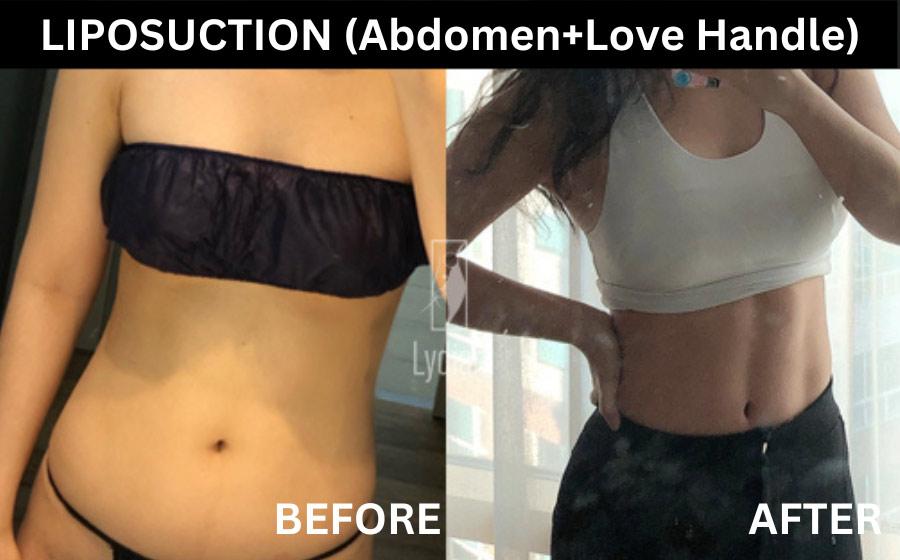
1. Lydian Plastic Surgery Clinic
For flank liposuction, you may consider Lydian Plastic Surgery Clinic if your priorities include contouring that accounts for your waist, pelvis, and overall proportions while limiting access points. The clinic describes using anatomy-based planning and more than 30 custom cannula types to shape areas such as the abdomen and back, which can be relevant when refining the flanks as part of a broader waistline contour.
- URL: Lydian Plastic Surgery Clinic Website
- Location: Gangnam-gu, Seoul
- Procedure approach:
- The clinic reports using 1–2 small incisions for liposuction, placed in less conspicuous areas such as the navel or pubic region when appropriate.
- More than 30 custom-made cannula types are used to adapt fat removal to differing body shapes and treatment areas.
- Quantificare 3D imaging is used for preoperative design and to document results with 3D video imaging.
- Aftercare and skin concerns:
- Its four-part aftercare program addresses swelling reduction, irregularity correction, skin-elasticity recovery, and residual-fat contouring.
- The clinic states it has devices intended to address stretch marks and skin sagging alongside liposuction.
- Surgeon and related services:
- Dr. An Kyung Chun is described as having more than two decades of body-sculpting experience and as Director of the 5D Liposculpture Academy.
- Available body-contouring services listed in the source include high-definition/5D liposculpture, tummy tuck, fat grafting, and Brazilian butt lift.
2. Seojin Plastic Surgery Clinic
You may consider Seojin Plastic Surgery Clinic for flank liposuction if you want a three-stage technique that pairs cannula-based fat removal with manual syringe refinement of the superficial fat layer. This approach is intended to support even fat distribution, refined waistline shaping, and a smooth skin surface; Velody2 laser lifting may also be added when mild postoperative laxity is a concern.
- URL: Seojin Plastic Surgery Clinic Website
- Location: Gangnam-gu, Seoul
- Procedure approach:
- Preparation is described as separating fat from blood vessels, nerves, and surrounding tissue before liquefying it for removal.
- Cannula selection is tailored to your body type and fat volume.
- After device-assisted suction, manual refinement with a small syringe is used to smooth and shape the subcutaneous fat layer.
- Skin-firmness option: Velody2 lifting laser may be combined with liposuction to support skin elasticity and address slight sagging.
- Surgeon care:
- As a one-doctor clinic, Dr. Lee Hyungmin is described as providing end-to-end care.
- Dr. Lee is reported to have more than 16 years of experience and to have been named among Korea's 100 Good Doctors.
3. 365mc Hospital
For flank liposuction, 365mc Hospital offers a body-contouring-focused setting with hospital-level surgical care, individualized recovery support on the day of surgery, and a structured seven-week postoperative program. Its liposuction services include the back and abdomen, which may be relevant if you are considering flank contouring as part of a more continuous waistline treatment plan.
- URL: 365mc Hospital Website
- Location: Gangnam-gu, Seoul
- Procedure and technology:
- 365mc focuses exclusively on obesity treatment, body contouring, and fat reduction.
- The clinic describes its liposuction as preserving essential fat for contouring rather than pursuing indiscriminate removal.
- Its M.A.I.L. system uses motion capture and artificial intelligence to provide real-time surgical feedback.
- LAMS is listed as a local-anesthetic, minimally invasive alternative combining targeted fat extraction and fat-dissolving injections; it is presented for smaller-area fat reduction rather than conventional surgical liposuction.
- Recovery and ongoing support:
- A dedicated Recovery Center provides one-to-one intensive care on the day of surgery.
- The postoperative program lasts seven weeks and may include hyperbaric oxygen chamber therapy, dietary consultation, and tailored care.
- Personalized nutrition guidance and meal-diary app support are available for longer-term weight-management planning.
- Experience and scope:
- The source reports more than 20 years in body contouring, 18 clinics in Korea, 22 main doctors, and more than 3,000 surgical liposuctions.
- Liposuction treatment areas listed include the abdomen, back, chest, hips, neck, thighs, and arms.
Flank Liposuction From Start to Finish
- Remote inquiry and screening — Send the clinic unedited standing photographs if requested, current weight and weight history, medical conditions, allergies, all medicines and supplements, nicotine use, prior operations or anesthesia issues, and intended return-flight date. Confirm whether English or virtual consultation is available.
- Plan confirmation before travel — Ask who will perform the operation and administer anesthesia, whether treatment includes flanks alone or adjacent abdomen/lower back, the proposed technique and device, estimated recovery needs, and the plan for complications after departure.
- In-person consultation in Korea — The surgeon examines skin recoil, fat distribution, asymmetry, scars, and possible abdominal-wall or hernia concerns. Standing markings define the flank boundaries and incision locations.
- Preoperative assessment and consent — Vital signs, laboratory tests, and medical or anesthesia review are ordered according to age, health history, anesthetic plan, and operative extent. Consent should cover scars, residual loose skin, asymmetry, contour irregularity, revision, anesthesia risks, and clot prevention.
- Anesthesia and operation — Anesthesia ranges from tumescent local anesthesia, with or without IV sedation, to general anesthesia. After wetting-fluid infiltration, the surgeon makes small incisions in less conspicuous locations, uses controlled cannula passes to loosen and aspirate fat, then applies dressings and compression. Incisions are either closed or temporarily left for drainage according to the surgeon’s protocol.
- Recovery and discharge — Localized standalone treatment is often outpatient surgery, but discharge depends on treated volume, anesthesia, pain and nausea control, vital signs, and ability to walk. Leave with a responsible adult rather than alone.
- Early local review — Attend the scheduled wound, drainage, and compression-garment review before leaving Korea. The surgeon determines driving, exercise, showering, drain management, and flight timing from the actual recovery.
- Overseas follow-up — Continue photo or video reviews as arranged. Contact the Korean clinic promptly for concerns and seek urgent local care for serious symptoms rather than waiting for a remote reply.
Alternatives to Flank Liposuction
Non-surgical options avoid incisions and anesthesia but generally produce subtler fat reduction over a longer course and can require repeat treatment. Surgery removes a larger localized fat volume in one session but involves anesthesia, scars, compression, recovery time, and a meaningful travel plan.
Cryolipolysis
CoolSculpting cools selected fat deposits without surgery.
- Best fit — Small, pinchable localized deposits in patients willing to accept gradual, more modest change.
- Tradeoff — Repeat sessions can be needed, and it has different risks, including paradoxical adipose hyperplasia, where the treated fat enlarges rather than shrinks.
Injectable or Energy-Based Fat Reduction
Fat-dissolving injections and body fat-dissolving laser treatment are offered for selected small deposits.
- Best fit — People seeking a non-surgical approach for limited fullness.
- Tradeoff — Products and devices have different indications, evidence, risks, and treatment schedules. They are not like-for-like replacements for surgical flank debulking.
Radiofrequency-Assisted Contouring
BodyTite combines fat removal with radiofrequency energy in selected cases.
- Best fit — Mild skin laxity alongside a limited fat-removal goal.
- Tradeoff — It remains an invasive procedure with energy-related risks and cannot replace skin excision when loose skin is substantial.
Abdominoplasty
A tummy tuck removes excess lower-abdominal skin and can repair abdominal-wall laxity, sometimes with liposuction.
- Best fit — Significant skin excess, abdominal-wall separation, or laxity that liposuction alone cannot correct.
- Tradeoff — This is a larger operation with a longer scar, more restrictive recovery, and greater travel demands.
Medical Weight Management
- Best fit — Generalized adiposity, metabolic obesity, or visceral abdominal fat.
- Tradeoff — It addresses the health and weight issue that flank liposuction cannot treat, but does not selectively sculpt the lateral waist.
How Can I Prepare for Flank Liposuction?
- Medical disclosure — Provide every prescription and non-prescription medicine, anticoagulant, antiplatelet, diabetes treatment, steroid, hormone, injectable weight-loss medicine, vitamin, herbal product, recreational substance, allergy, and previous anesthesia record. Do not stop anticoagulants, antiplatelets, hormones, steroids, or diabetes medicines independently; the surgeon and prescribing clinician must direct changes.
- Nicotine cessation — Stop smoking, vaping, nicotine pouches, patches, and other nicotine exposure for the exact interval required by the surgeon. Nicotine reduces tissue blood flow and raises healing and infection risk.
- Fasting and alcohol — Follow the anesthesia team’s instructions exactly. Fasting and alcohol restrictions differ between local-only, sedated, and general-anesthetic procedures.
- Skin and health check — Report sunburn, rash, open wounds, skin infection, new illness, fever, or a substantial weight change before surgery. Elective treatment can need postponement.
- Travel logistics — Book nearby accommodation, flexible flights, airport and clinic transport, and an adult companion for the first night. Pack loose clothing that does not rub incisions and arrange help with bags.
- Documents and continuity of care — Bring medication and allergy lists, relevant test results, prior operative and anesthesia records, and contact details for a clinician at home. Confirm remote follow-up and how urgent concerns will be handled outside Korean business hours.
Travel note: Avoid scheduling surgery at the end of a packed holiday. Reserve the full recovery window for walking, reviews, garment care, and the possibility that the surgeon asks you to delay flying.
Confirm the treating surgeon’s individualized medication, nicotine, fasting, compression, companion, and travel requirements; these instructions take precedence over general guidance.
Aftercare Advice
Protect healing incisions and circulation first; early swelling and unevenness are not the final contour.
- Walking and activity — Take short walks as soon as permitted to support circulation. Avoid strenuous exercise, heavy lifting, intense core training, twisting, swimming, baths, and friction over incisions until the surgeon clears them.
- Compression and incision care — Wear the compression garment exactly as prescribed. Keep incisions and the garment clean, inspect the skin during garment changes, and follow the clinic’s instructions for showering, dressings, drainage, and scar care.
- Normal early effects — Drainage from small incisions, soreness, bruising, numbness, firmness, swelling, and temporary unevenness are common during the first 1–2 weeks. Compression is commonly required for several weeks.
- Result timeline — Early contour changes often appear at 2–4 weeks. Residual swelling can take several months to settle, and final contour is commonly assessed around 2–6 months; do not plan revision while swelling is still resolving.
- Urgent warning signs — Seek urgent local medical care for chest pain, shortness of breath, fainting, coughing blood, a fast or irregular heartbeat, one-sided leg pain or swelling, rapidly worsening swelling, severe escalating pain, fever, spreading redness, pus or foul drainage, darkening skin, uncontrolled bleeding, confusion, ringing in the ears, metallic taste, tingling around the mouth, severe dizziness, seizure, or palpitations.
- Follow-up and weight stability — Attend all local and remote reviews. Removed fat cells do not return, but remaining fat cells can enlarge after substantial weight gain and change the result.
Follow the treating doctor’s instructions over this general guidance, and contact the clinic promptly when healing appears abnormal or symptoms worsen.
Frequently Asked Questions
Related Blogs
Reduce Inner Knee Fat with Knee Liposuction in Korea: Effective Medical Solutions
Discover effective solutions for inner knee fat with knee liposuction in Korea. This comprehensive guide explores causes, advanced Korean techniques, recovery, and costs—highlighting Korea as a premier destination for cosmetic and medical tourism. Experience expert surgeons, innovative procedures like VASER and SmartLipo, and affordable prices. Achieve beautifully contoured knees and enhanced conf
Updated: Oct 3, 2026
Midface Volume Loss Solutions in Korea: PRP Fat Grafting & Cheekbone Implant Procedures
Discover effective solutions for midface volume loss in Korea, including PRP Fat Grafting and Cheekbone Implants. Aging, weight loss, and environmental factors can cause hollow cheeks and sunken contours, impacting appearance and confidence. Korea’s advanced clinics offer safe, innovative procedures that restore youthful volume, enhance facial harmony, and provide long-lasting results. Whether opt
Updated: Oct 3, 2026
Effective Back Liposuction for Lower Back Fat Pad Removal in Korea: Sculpt Your Perfect Silhouette
Discover effective solutions for "lower back fat pad" or "love handles" in Korea. This guide covers back liposuction procedures—such as tumescent, ultrasound-assisted, laser-assisted, and radiofrequency liposuction—highlighting techniques, benefits, and recovery. Learn why Korea is a top destination for body contouring, with advanced technology, skilled surgeons, and cost-effective packages. Under
Updated: Oct 3, 2026
Buccal Fat Hypertrophy Solutions: Buccal Fat Removal Procedure in Korea for Facial Contouring
Discover the essentials of buccal fat hypertrophy and how Korea's renowned buccal fat removal procedures can help you achieve a sculpted, mature facial look. This guide covers the condition’s causes, surgical options like buccal lipectomy, and key tips for medical tourists seeking safe, high-quality Korea-based treatment. Learn about costs, recovery, and patient satisfaction to make an informed de
Updated: Oct 2, 2026
Clinics offering Flank Liposuction
BongBong Plastic Surgery | Premium Breast and Body Shaping with Innovative Autologous Fat Grafting and Hybrid Techniques
Nonhyeon

365mc Hospital: Korea's Leading Liposuction and Body Contouring Clinic with Innovative AI Technologies and Comprehensive Patient Care
Gyodae

THEPLUS Plastic Surgery Korea | Eye, Nose, Face & Body Surgery
Sinsa

Lydian Plastic Surgery Clinic in Korea: Superior Cosmetic Procedures by World-Renowned Expert Dr. An Kyung Chun
Apgujeong