
Medical Tourism Blog
Body Fat Dissolving Laser in Korea: Methods, Results, Recovery, and Travel Planning
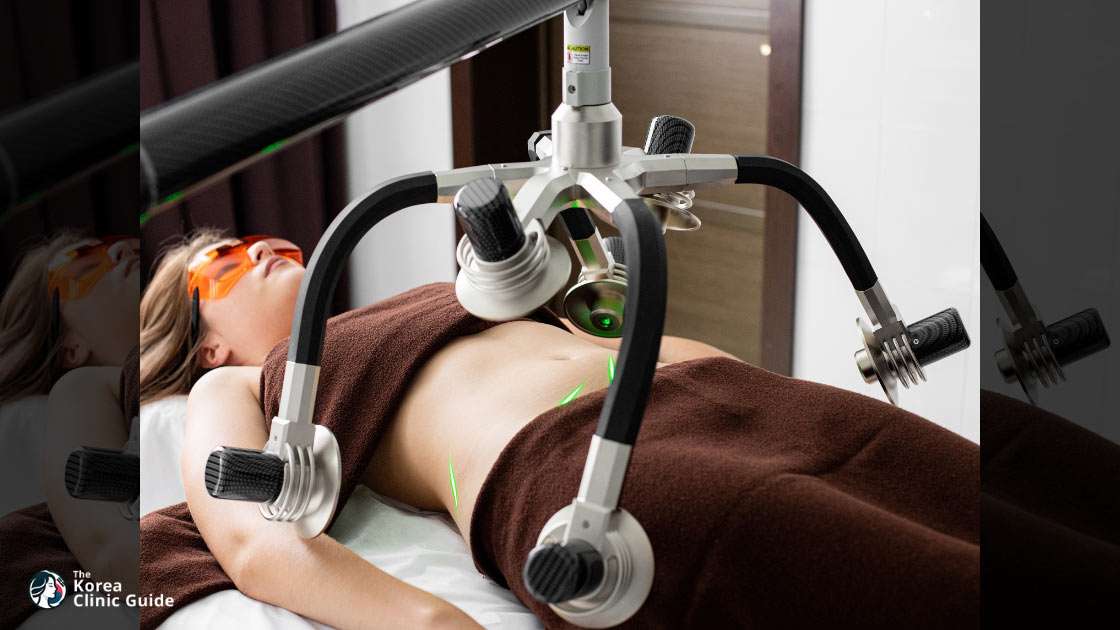
Table of contents
- Body Fat Dissolving Laser at a Glance
- What Is Body Fat-Dissolving Laser?
- Who Is a Good Candidate for Body Fat-Dissolving Laser?
- How Is Body Fat-Dissolving Laser Performed?
- Why Visit Korea for Body Fat-Dissolving Laser?
- Key Information for International Patients
- Which Are the Best Clinics in Korea for Body Fat Dissolving Laser?
- Body Fat Dissolving Laser From Start to Finish
- Alternatives to Body Fat-Dissolving Laser
- How Can I Prepare for Body Fat-Dissolving Laser?
- Aftercare Advice
Considering treatment in Korea? Everything you need to know e.g. — how to avoid scams, visas, interpreters, recovery tips — in our Medical Tourism Master Guide. Plan with confidence in minutes, not weeks!
Last updated: September 2026
Body Fat Dissolving Laser at a Glance
- What it is — Usually a non-invasive laser lipolysis treatment that heats small subcutaneous fat pockets through intact skin; however, the same label can also mean fiber-based laser-assisted liposuction, which is surgery.
- Best candidates — Adults at a stable weight with a small, pinchable fat bulge on the abdomen, flanks, back, or thighs and relatively firm skin are the best fit; some 1060-nm devices specify BMI 30 or below.
- Modest delayed results — This is contouring rather than weight loss or large-volume fat removal. In a small study, one 25-minute abdominal session reduced the ultrasound-measured fat layer by a mean 8.55% at 12 weeks.
- Recovery and timing — External treatment has no formal downtime, but tenderness, redness, swelling, bruising, or firmness can last about 1–3 weeks; early change may appear around 6 weeks and the main result is assessed at 12 weeks.
- Korea travel plan — For a genuinely external, unsedated session, plan 2–3 days in Korea for assessment, treatment, and early observation; arrange remote symptom follow-up at 1–2 weeks and photographs at 6 and 12 weeks.
- Critical distinction — Confirm the device model and whether a fiber, incision, tumescent anesthetic, suction, or sedation is involved: these indicate laser-assisted liposuction, requiring surgical recovery, postoperative review, and individualized flight clearance.
- Korea-specific check — Verify that the clinic is registered to treat international patients through Korea’s official Medical Korea system, but do not assume Korea offers superior fat reduction or lower complication rates because comparative evidence has not established this.
What Is Body Fat-Dissolving Laser?
Body fat-dissolving laser usually refers to external laser lipolysis, which uses controlled heat through intact skin to treat small pockets of fat; the term can also describe fiber-based laser-assisted liposuction. It aims to gradually improve the contour of a localized bulge rather than cause weight loss or large-volume fat removal. External laser lipolysis is non-surgical, while fiber-based treatment is minimally invasive surgery.
Who Is a Good Candidate for Body Fat-Dissolving Laser?
- Localized, pinchable fat — Good candidates are adults at a stable weight with a small subcutaneous fat pocket on the abdomen, flanks, back, or thighs rather than a goal of overall weight loss.
- Modest contour goal — External laser lipolysis is designed to improve the appearance of a visible bulge gradually, not to produce immediate or large-volume fat removal. In one small, nonrandomized study of a single 25-minute abdominal treatment, mean ultrasound-measured fat-layer reduction was 8.55% at 12 weeks.
- Good skin and realistic anatomy — Best prospects have relatively firm skin and a concern that is clearly beneath the skin. The clinician should assess scars, skin quality, and whether abdominal prominence is caused by fat rather than muscle separation or a hernia.
- Appropriate device indication — Some FDA-cleared 1060-nm external-laser systems are indicated for the abdomen, flanks, back, and thighs in people with a BMI of 30 or below, but the exact device determines eligible areas and treatment protocol.
Pregnancy and breastfeeding are reasons to defer elective treatment because adequate safety evidence is lacking. Postpone treatment over sunburn, dermatitis, infection, open skin, or significant irritation. External laser treatment is unlikely to correct visceral abdominal fat, marked loose skin, diastasis recti, or a hernia. Heat sensitivity, reduced sensation in the target area, uncontrolled illness, impaired healing, bleeding disorders, and medicines affecting bleeding require individual medical review; these issues become substantially more important when the clinic is actually proposing invasive laser-assisted liposuction.
How Is Body Fat-Dissolving Laser Performed?
“Body fat-dissolving laser” does not identify one standardized procedure. Get the device manufacturer and model in writing, and confirm whether treatment remains entirely outside the skin or involves a fiber, anesthetic, suction, or incision.
- External contact 1060-nm diode laser — Surface applicators deliver controlled heat through intact skin, commonly with cooling. The best-described abdominal protocol used one 25-minute session; patients remain awake, and routine anesthesia or incisions are not required.
- External non-contact laser — Some devices deliver laser energy without a contact applicator and can use different wavelengths. Their indications, treatment maps, safety features, and clinical evidence are not interchangeable with 1060-nm contact treatment.
- Fiber-based laser-assisted liposuction — A laser fiber is placed beneath the skin after local or tumescent anesthetic, sometimes followed by suction. This is minimally invasive surgery, with incision, thermal-injury, infection, fluid collection, contour-irregularity, anesthesia, and thrombosis considerations. Evidence for this approach is separate; a recent systematic review of arm treatment found only seven eligible studies and described the evidence as limited.
Why Visit Korea for Body Fat-Dissolving Laser?
Korea has a formal system for institutions registered to attract international patients. This can help overseas visitors verify a provider before booking, but it does not prove that a clinic’s laser results are better than those available elsewhere. No Korea-specific comparative evidence in the available research establishes superior fat reduction or lower complication rates for this procedure.
- Provider verification — Use the official registered medical-institution system to check international-patient registration rather than relying on a marketing label alone.
- Clear treatment identification — Ask the Korean clinic to document the exact device/model, wavelength, mapped areas, planned session length, operator credentials, and whether any fiber, tumescent anesthetic, sedation, or suction is involved.
- English documentation — Request an English treatment record with device settings, area map, pre-treatment photographs, medicines given, clinician contact details, and a written post-departure escalation plan.
- Evidence-led expectations — Device indication, candidacy assessment, informed consent, and remote follow-up planning are more meaningful selection criteria than country-based claims. Published evidence across non-invasive energy devices still needs better-designed trials to clarify long-term effectiveness and safety.
Key Information for International Patients
- Minimum stay for external treatment — Plan 2–3 days in Korea for in-person assessment, treatment, and observation for escalating pain or a burn-like reaction. This is a practical buffer, not an evidence-based medical minimum.
- Different plan for invasive treatment — A fiber beneath the skin, tumescent anesthetic, suction, sedation, or incisions means laser-assisted liposuction, not a quick external session. Remain for an in-person postoperative review; the surgeon should determine flight timing based on treatment extent and clot risk.
- Flight timing — For a no-sedation external session, flying is mainly a comfort and logistics issue. Do not depart with increasing pain, blisters, altered skin sensation, or a burn-like patch. Do not book non-refundable long-haul flights soon after invasive treatment.
- Itinerary impact — External treatment ordinarily has no formal downtime, although tenderness, redness, swelling, bruising, or firmness can last about 1–3 weeks. Schedule strenuous exercise, saunas, hot baths, and close-contact activities around discomfort rather than assuming the area will look or feel normal immediately.
- Remote review — Arrange symptom review at 1–2 weeks and standardized photographs at about 6 and 12 weeks. The delayed result is not fairly assessed before the 12-week review point.
Travel note: Obtain the exact procedure name before paying a deposit. An external laser applicator over intact skin and fiber-based laser-assisted liposuction have fundamentally different recovery, insurance, escort, and flight-clearance requirements.
Which Are the Best Clinics in Korea for Body Fat Dissolving Laser?
Listed below are some of the best clinics in Korea for body fat dissolving laser.
1. 365mc Hospital
For targeted body-fat reduction, you can discuss 365mc’s LAMS approach, which combines fat extraction with fat-dissolving injections as a minimally invasive alternative to conventional liposuction. The supplied information does not specifically confirm a body fat dissolving laser, but it does describe a body-contouring program with structured recovery and dietary support.
- URL: 365mc Hospital Website
- Location: Gangnam-gu, Seoul
- Targeted fat reduction:
- LAMS is described as a four-step process involving tunneling, fat extraction, fat-dissolving-solution injection, and post-procedure management.
- The clinic describes LAMS as a non-incisional option intended to minimize scarring and downtime.
- Surgical liposuction is offered for areas including the abdomen, back, chest, hips, neck, thighs, and arms.
- Technology and care:
- The M.A.I.L. system uses motion capture and artificial-intelligence-assisted real-time surgical feedback for liposuction.
- The clinic describes 1:1 intensive care in a dedicated Recovery Center on the day of surgery.
- Post-procedure support includes a structured program of about six to seven weeks, with services such as hyperbaric oxygen chamber therapy and personalized dietary consultations.
- Weight-management support:
- Dietary consultations are tailored to your lifestyle, habits, and nutritional needs.
- A meal-diary app is used for ongoing monitoring and dietary guidance.
2. Haru Clinic
You may consider Haru Clinic if your concern is a double chin or jawline contouring: its described options include fat-dissolving injections and thread-based contouring designed to reduce submental fullness with minimal incisions. The provided information does not confirm that a body fat dissolving laser is offered, so you would need to clarify whether a laser-based body treatment is available for your specific area.
- URL: Haru Clinic Website
- Location: Gangnam-gu, Seoul
- Relevant contouring options:
- Double Chin Lift treatment may use fat-dissolving injections or thread-based contouring to refine the neck angle and jawline.
- Body-focused services described include buttock and hip lifting with non-surgical threads or volumizing fillers, as well as surgical body lift procedures for redundant skin after weight change.
- Clinical approach:
- Dr. Jeong is described as an official research physician for Merz and an educator on filler techniques.
- The clinic emphasizes individualized design, minimally invasive options, and natural-looking balance.
3. Cellinique Clinic
Cellinique may be relevant if you are looking for a personalized aesthetic clinic with laser-based skin treatments and regenerative medicine options, but the supplied information does not identify a body fat dissolving laser or a body-fat reduction procedure. You can use a consultation to determine whether its available laser services are appropriate for your goals.
- URL: Cellinique Clinic Website
- Location: Gangnam-gu, Seoul
- Laser and aesthetic services:
- Listed laser services include laser lifting for skin tightening and dual toning for skin tone, texture, pigmentation, and collagen support.
- Other aesthetic treatments include Radiesse, Juvelook, thread lifting, Botox, and fillers.
- Regenerative medicine focus:
- The clinic describes personalized care centered on stem cell research, with services including NovaStem, PRP, exosomes, NK cell therapy, and stem cell fat grafting.
- Dr. Chris Gunwoo Kim has presented on blood-cell and stem-cell-related regenerative approaches at dermatology, obesity, and aesthetic medicine conferences.
Body Fat Dissolving Laser From Start to Finish
- Remote inquiry and record review — Send unfiltered photographs of the target area, height and weight, previous procedures and scars, medical conditions, allergies, full medicine and supplement list, and travel dates. Request English or virtual consultation options.
- Procedure confirmation — Obtain written confirmation of the manufacturer, model, wavelength, intended sites, number of sessions proposed, session duration, and whether treatment includes no incision or instead a fiber, cannula, tumescent anesthetic, suction, sedation, or general anesthesia.
- In-person assessment — The clinician examines whether the bulge is a discrete subcutaneous fat deposit, reviews skin laxity and sensation, checks relevant scars, and excludes a potentially surgical cause such as hernia. Standardized photographs and measurements establish a baseline.
- Consent and treatment mapping — Review expected modest, delayed contour change, alternatives, device-specific risks, and the clinic’s complication plan. The provider marks the treatment field and confirms that the skin is free of active irritation, infection, or sunburn.
- External laser session — For external 1060-nm treatment, applicators are positioned over intact skin and deliver controlled heating, often with cooling. A commonly studied abdominal session lasted 25 minutes. No routine anesthesia, incision, or sedation is expected for this version.
- Discharge and early observation — Return to normal light activity after external treatment. Report increasing pain, persistent numbness, blistering, or a burn-like patch before leaving Korea. Invasive laser-assisted liposuction instead requires surgical recovery instructions, wound care, compression, mobilization, and an in-person review.
- Delayed result review — Arrange remote symptom follow-up at 1–2 weeks and submit comparable photographs around 6 and 12 weeks. Early contour change can appear near week 6; assess the principal result at about 12 weeks rather than immediately after treatment.
Alternatives to Body Fat-Dissolving Laser
Non-surgical alternatives avoid incisions but generally produce gradual, limited contour change and have device-specific evidence and adverse effects. Surgical fat removal is more suitable when a larger, more predictable reduction is needed, but it requires anesthesia planning, compression, wound care, and a longer recovery.
Cryolipolysis
- Approach — Cryolipolysis uses controlled cooling rather than heat to target a localized fat bulge.
- Tradeoff — It remains non-invasive, but its risk profile differs from laser treatment and should be discussed device by device.
Conventional Liposuction
- Approach — Abdominal liposuction, waist liposuction, or thigh liposuction removes accessible subcutaneous fat through surgery.
- Tradeoff — It generally offers more predictable removal for larger-volume concerns, with materially greater recovery demands and surgical risk.
Minimally Invasive Energy Contouring
- Approach — BodyTite and laser-assisted techniques use energy beneath the skin, often with local anesthetic and sometimes suction.
- Tradeoff — These options can address selected patients beyond surface-only treatment, but they require a surgical consent, incision care, and individualized travel clearance.
Fat-Dissolving Injection
- Approach — Fat-dissolving injections use injectable agents rather than thermal energy.
- Tradeoff — Suitability depends on the anatomical site, active ingredient, local regulatory status, and available evidence; body use can be off-label or evidence-limited.
Electromagnetic Muscle Stimulation
- Approach — Emsculpt is directed toward muscle-focused body-contouring goals.
- Tradeoff — It is not a direct substitute for reducing a distinct, pinchable fat pocket.
How Can I Prepare for Body Fat-Dissolving Laser?
- Confirm the procedure category — Do this before travel. Ask directly whether there will be any incision, fiber, cannula, tumescent anesthetic, suction, sedation, or general anesthesia.
- Provide full medical disclosure — Send conditions, prior operations, scars, allergies, history of deep-vein thrombosis or pulmonary embolism, pregnancy or breastfeeding status, and complete prescription, over-the-counter, vitamin, and herbal supplement lists.
- Do not stop prescribed medicines independently — Anticoagulants, antiplatelet drugs, diabetes medicines, and GLP-1 medicines need a coordinated plan from the surgeon or anesthesia team and the original prescriber if invasive treatment is planned.
- Protect the treatment area — Arrive without sunburn, rash, broken skin, active dermatitis, or infection. Avoid intentional tanning and new irritating body products before assessment.
- Eat and hydrate normally for external treatment — Fasting, a driver, overnight observation, and compression garments are not usually required when treatment is genuinely external and unsedated. Follow fasting and escort instructions if any sedation or surgery is planned.
- Avoid alcohol on treatment day — Alcohol can worsen flushing or dehydration and make it harder to report discomfort clearly.
- Keep travel flexible — Arrange accommodation close enough for an early review and avoid tightly scheduled onward flights. For invasive treatment, bring a companion if the surgical team requires an escort and allow a substantially longer stay.
Travel note: Keep body weight stable during the 6–12-week result-development period. Weight gain can obscure a localized contour change.
Confirm the treating doctor’s device-specific and anesthesia-specific requirements; individualized instructions take precedence over this general guidance.
Aftercare Advice
Treat persistent or increasing symptoms seriously: external laser contouring is low-downtime, not risk-free.
- Normal short-term effects — Warmth, tenderness, redness, swelling, bruising, or firmness can occur. In the studied 1060-nm abdominal protocol, edema, tenderness, and induration generally resolved within about 1–3 weeks.
- Activity and heat — Resume comfortable light activity, but avoid strenuous exercise, vigorous massage, saunas, hot baths, and heat exposure while the area is red, swollen, or tender unless the treating clinician directs otherwise.
- Skin protection — Keep irritated skin clean and avoid unapproved active topicals or friction. Use broad-spectrum SPF 50 on exposed treated skin to reduce further irritation and pigment change risk.
- Warning signs — Contact the clinic promptly for blistering, a burn-like patch, increasing or severe pain, spreading redness or warmth, drainage, fever, persistent numbness, marked asymmetry, or a hard tender area that does not improve. Seek urgent local care for chest pain, shortness of breath, coughing blood, fainting, or one-sided leg swelling, especially after invasive treatment or prolonged travel.
- Result timing — Do not judge the outcome immediately. Early change can appear around 6 weeks; review comparable photographs and the result at approximately 12 weeks. No universal evidence-based repeat-session interval has been established across devices.
Follow the treating doctor’s instructions, particularly if any invasive component was used, and contact the clinic promptly when something appears wrong.
Frequently Asked Questions
Related Blogs
CoreSculpt in Korea: Treatment Process, Safety, Recovery and Travel Planning
CoreSculpt uses magnetic coil probes over the abdomen or gluteal area to trigger muscle contractions for modest conditioning and tightening, without incisions, anesthesia, or routine recovery time. The article covers candidate screening, device verification, session planning, travel considerations, preparation, aftercare, risks, and alternatives for fat reduction or surgical concerns.
Updated: Sep 18, 2026
Face Liposuction in Korea: Candidacy, Techniques, Recovery, and Travel Planning
Face liposuction removes localized superficial submental or upper-neck fat through small incisions using a fine cannula, with conservative jowl treatment only for selected anatomy. In Korea, it is listed at ₩3,000,000–₩4,000,000 (about US$2,200–$3,000); international patients should allow at least 7–10 days after surgery for review before flying.
Updated: Sep 17, 2026
Experience Effective Removal of Excess Skin After Weight Loss in Korea: A Comprehensive Guide
Discover how Korea is leading the way in body-contouring procedures for removal of excess skin after drastic weight loss. Learn about the advanced surgical techniques and world-renowned medical expertise that deliver impressive results for patients.
Updated: Sep 17, 2026
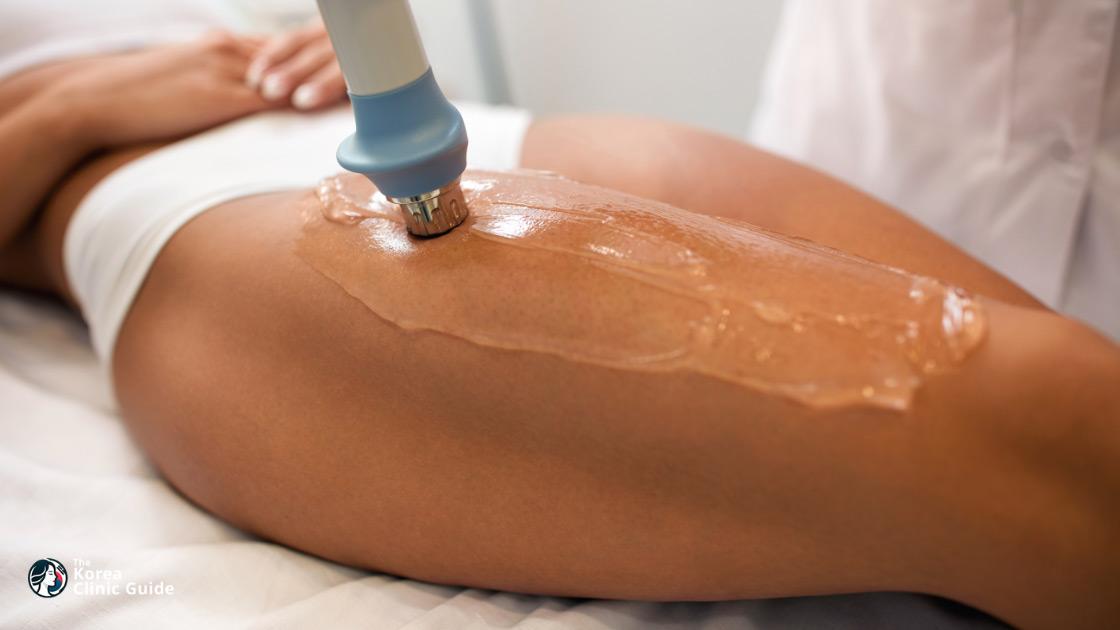
Shockwave Therapy for Fat Dissolving in Korea: Methods, Results, Safety, and Travel Planning
Shockwave therapy uses focused or radial acoustic pulses over areas such as the buttocks and thighs to target cellulite appearance, typically through multiple sessions rather than proven fat-cell destruction or weight loss. The article covers candidate screening, treatment schedules, travel planning, device verification, preparation, aftercare, warning signs, and alternatives for localized fat or
Updated: Sep 16, 2026
Clinics offering Body Fat Dissolving Laser

365mc Hospital: Korea's Leading Liposuction and Body Contouring Clinic with Innovative AI Technologies and Comprehensive Patient Care
Gyodae

Haru Clinic Korea | Seoul Facelift, Threads, Botox & Fillers
Sinsa

Cellinique Clinic Korea: Advanced Stem Cell and Laser Treatments for Health, Beauty, and Rejuvenation in Gangnam
Apgujeong

Seojin Plastic Surgery Clinic Korea: Pioneering Advanced Cosmetic Procedures for Personalized Aesthetic Transformation
Apgujeong