
Medical Tourism Blog
Cheekbone Flattening Solutions in Korea: Face Thread Lift for Contoured, Balanced Facial Features

Table of contents
- The Face Thread Lift: A Minimally Invasive Solution
- Navigating the Journey: A Medical Tourist's Guide to South Korea
- Which Are the Best Clinics in Korea for Cheekbone Flattening?
- The Financial Landscape: Costs and Value for the Medical Tourist
- Patient Experiences and Outcomes: Beyond the Clinical Data
- Conclusion
- References
Considering treatment in Korea? Everything you need to know e.g. — how to avoid scams, visas, interpreters, recovery tips — in our Medical Tourism Master Guide. Plan with confidence in minutes, not weeks!
When people talk about "cheekbone flattening," they're usually describing changes in their face shape as they age, but in medical terms, this is known as malar flattening, zygomatic flattening, hypotrophic malar bone, or malar hypoplasia. While these symptoms can sometimes signal a rare genetic syndrome like Cleidocranial dysplasia or alpha-mannosidosis, most cases are actually part of the natural aging process. It’s important to understand and use these clinical names when researching or discussing your concerns with a doctor.
So, what causes this change in facial contours? It’s a three-dimensional problem where the loss of both soft tissue and bone volume leads to a less youthful appearance. In younger faces, fullness and contours mostly come from plump subcutaneous fat pads, and supportive proteins like collagen and elastin. Over time, our bodies produce less of these, weakening the skin’s support structure. Research confirms that facial aging is linked to a notable loss of midface fat volume—especially in the deeper fat compartments.
The malar fat pad—a triangular area of fat over your cheekbone—is central to a youthful look. As you age, this fat pad can lose volume or slide down (ptosis), which removes support and leaves the mid-face hollow, often exaggerating nasolabial folds and marionette lines.
Beneath the soft tissue, facial bones (like the zygomatic or cheek bones, jaw, and orbital bones) shrink and recede through a process called resorption. As this bony framework dissolves, the face loses even more support, making aging changes in the mid-face even more visible. These combined processes—the descent of soft tissue and bone loss—are responsible for "cheekbone flattening," meaning successful correction generally requires restoring volume and lifting tissues, not just tightening the skin.
The Face Thread Lift: A Minimally Invasive Solution
The face thread lift is a non-surgical cosmetic treatment created to subtly lift and rejuvenate sagging facial features. It works in two key ways. First, it delivers an immediate physical lift: A plastic surgeon places temporary, medical-grade threads beneath the skin with a needle or cannula, then gently tugs sagging tissue into a more youthful position.
Second, the procedure stimulates collagen production. The body treats these threads as a harmless foreign presence and sends growth factors and collagen to the area. This response naturally firms and hydrates the skin—a benefit that continues for months, even after the threads dissolve.
Choosing the right thread isn’t random. Plastic surgeons decide based on your anatomy and goals. There are three main thread types: Polydioxanone (PDO), Poly-L-Lactic Acid (PLLA), and Polycaprolactone (PCL)—all biocompatible and dissolvable. PDO threads are the most affordable and versatile, lasting for 6-8 months, but with visible results for up to a year due to collagen buildup. PLLA threads, which last 1-2 years, are stronger stimulators of collagen and can actually add volume, but come with a slightly higher risk of side effects like granuloma formation. PCL threads persist for over two years, offering the strongest and longest-lasting lift and collagen stimulation, especially suited to heavier facial tissue.
Shape also matters. Mono threads are smooth and mostly tighten skin, while barbed (cog) threads use tiny hooks for a stronger lift. Cone-based threads, like in the Silhouette InstaLift, use small cones to gather tissue, offering a dramatic lift to cheeks and jowls. The best choice depends on your skin type, the degree of sagging, and which facial area needs treatment. In short, good outcomes rely on highly personalized treatment plans.
The thread lift is often called the “lunchtime facelift” because it’s quick, low-risk, and requires little recovery. It’s best for people in their late 30s to early 50s with early signs of sagging or those who can’t have traditional facelift surgery for health reasons. Still, it’s important to recognize its limits: results last about one to three years and are subtle, not as dramatic as surgical facelifts. The so-called “lunchtime facelift” offers quick results, but only moves tissues by a few millimeters—so expectations should be realistic.
Navigating the Journey: A Medical Tourist's Guide to South Korea
South Korea stands at the forefront of cosmetic and aesthetic medicine, making it a top choice for those seeking advanced procedures like face thread lift. The country’s allure isn’t just about cost savings; it’s also about unparalleled practitioner skill, a unique focus on specific techniques, and a seamless infrastructure for international patients.
Korean surgeons tend to specialize in particular procedures and perform them hundreds of times per year, resulting in a level of expertise and technical mastery that’s difficult to match elsewhere. Clinics frequently update their technology, adopting the latest equipment well before many in the West. For medical tourists, the journey is made easier with English-speaking consultants and all-inclusive packages that simplify both finances and logistics.
The typical process for a medical tourist is straightforward. It kicks off with an online consultation—patients complete a questionnaire and send photos for assessment, receiving a preliminary plan and cost estimate. After arriving in Korea, an in-person consultation with the surgeon fine-tunes the approach to match the patient’s needs. Pre-procedure prep includes pausing medications like Aspirin and Ibuprofen for two weeks to reduce bleeding risk.
On the day of the procedure, the surgeon marks treatment areas and administers local anesthesia or IV sedation. The thread placement itself usually takes just 20-45 minutes. Once the threads are in, the entry points are cleaned and bandaged.
Recovery is fast—patients can go home on the same day, though they may feel sore, swollen, or experience a “pulling” sensation for several days. Opening the mouth wide might be uncomfortable; small food bites are a must. Patients should skip strenuous activities, avoid excessive facial movements, and hold off on massages for several weeks to ensure threads settle and collagen-building starts. Korean clinics provide thorough post-op care, including instructions and pain management—reassuring for travelers far from home.
Which Are the Best Clinics in Korea for Cheekbone Flattening?
Listed below are some of the best clinics in Korea for cheekbone flattening.
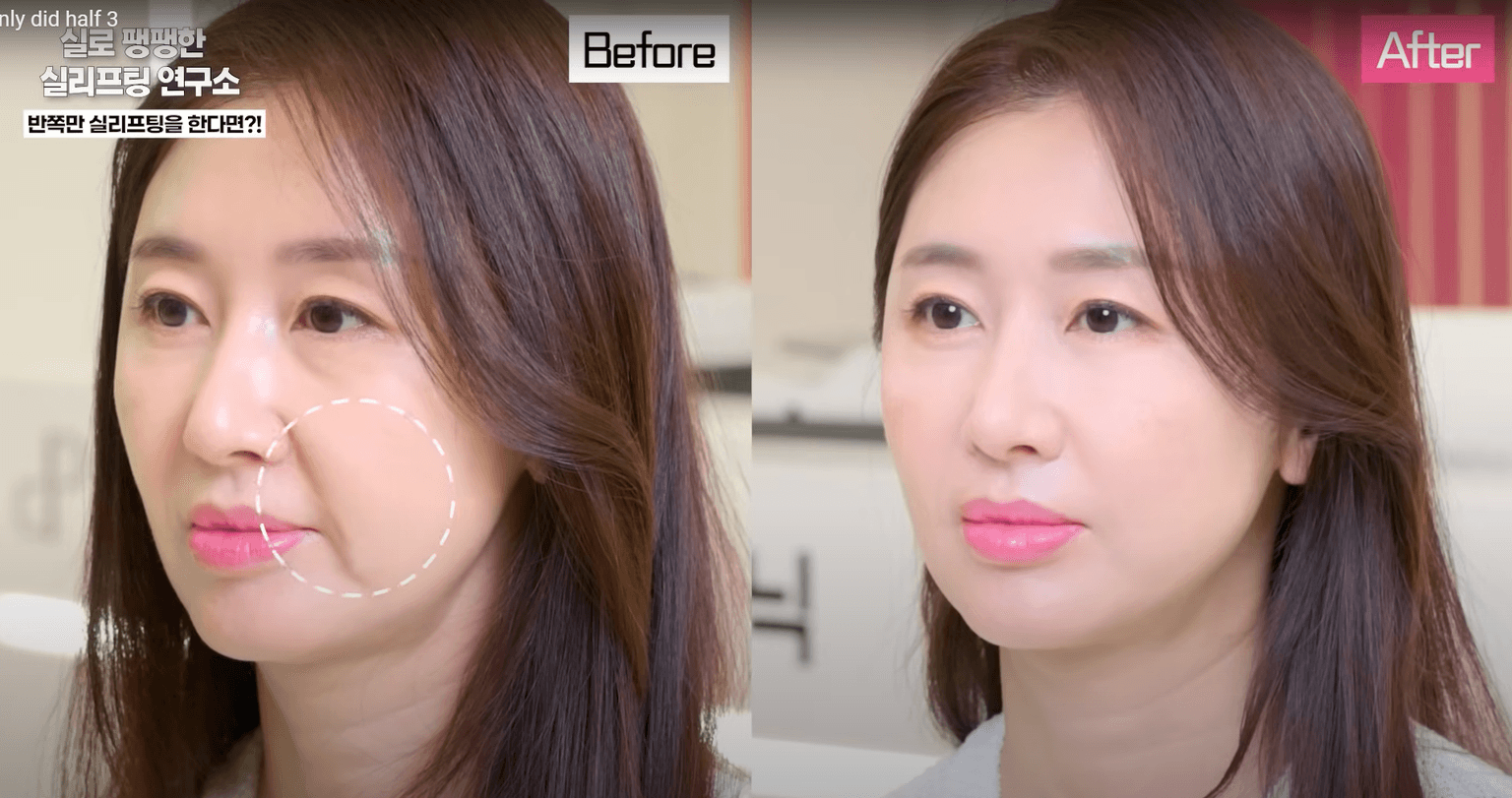
1. PangPang Clinic
For cheekbone-area contour concerns, you may consider PangPang Clinic if your goal is a non-surgical lift or soft-tissue refinement rather than reduction of the cheekbone bone itself. Its thread-lifting approach can be customized for the cheek area, with volume threads listed for the cheeks and planning supported by ultrasound checks and individualized design.
- URL: PangPang Clinic Website
- Location: Gangnam-gu, Seoul
- Thread-lifting approach:
- Uses lifting, assist, tightening, and volume threads; volume threads are described for cheek-area volume support.
- Thread-lifting treatment is listed as taking about 30 minutes to one hour, with partial, Airnox, or sleep-anesthesia options.
- The clinic describes pre-operative design with ultrasonic visual checks, personalized consultation, and customizable thread selection.
- Research and technology:
- Pink Lift is a clinic-exclusive thread developed from data from thousands of lifting procedures and is described as having FDA, CE, and KFDA certifications.
- The clinic states that it collaborates with Seoul National University Bundang Hospital on thread-lifting techniques intended to support collagen regeneration and skin quality.
- Chill-Lifting uses contact-free cooling anesthesia and is described as aiming to reduce discomfort, swelling, and bruising.
- Related contour options:
- Customized filler and Botox treatments are available for facial structure and wrinkle concerns.
- A thread-lifting revision service is described for addressing unsatisfactory prior thread-lift results, potentially alongside fillers, Botox, or lasers.
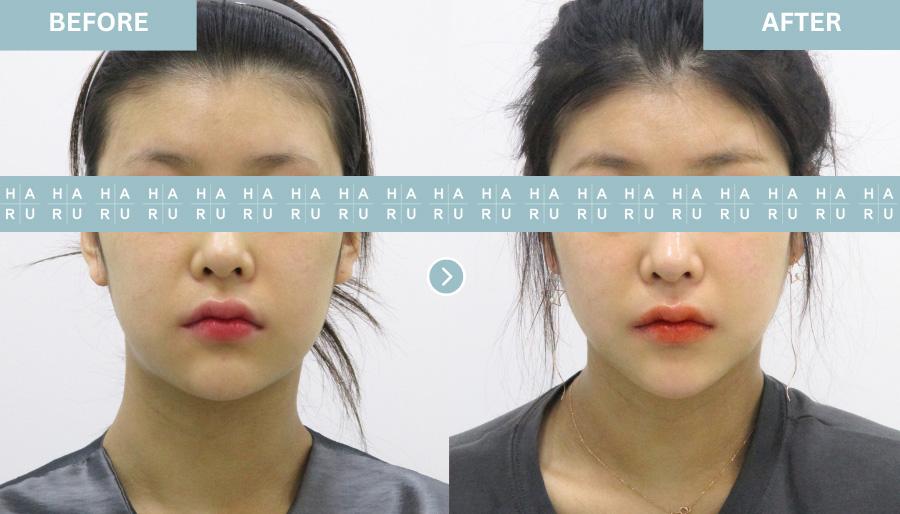
2. Haru Clinic
You may consider Haru Clinic for a non-surgical approach to cheekbone-area contouring when your concern is sagging or volume loss around the cheeks, not surgical flattening of the cheekbone bone. Its thread lift is designed around a behind-the-ear anchoring point and can be adjusted when there is volume loss beneath the cheekbones to help create a smoother facial contour.
- URL: Haru Clinic Website
- Location: Gangnam-gu, Seoul
- Thread-lift technique:
- Uses dissolvable barbed threads to elevate sagging cheeks and the jawline under local anesthesia, with short downtime described.
- The clinic uses the less-mobile, firmly anchored area behind the ear as a fixed point for its thread lift.
- Its approach is described as pulling and pressing the skin simultaneously to provide lift without facial enlargement.
- Fixed points are selected to avoid large nerves and blood vessels, with the aim of reducing discomfort, pain, and bleeding.
- Contour and volume treatments:
- Fillers are available for cheek, chin, jawline, lip, and tear-trough definition or volume restoration.
- Collagen-tightening treatments using radiofrequency or ultrasound are available for non-incisional skin-firming support.
- Physician background:
- Dr. Jeong is described as an official research physician at Merz and as teaching other doctors updated filler techniques.
- Treatment planning is described as focusing on facial harmony and balance through non-invasive techniques.
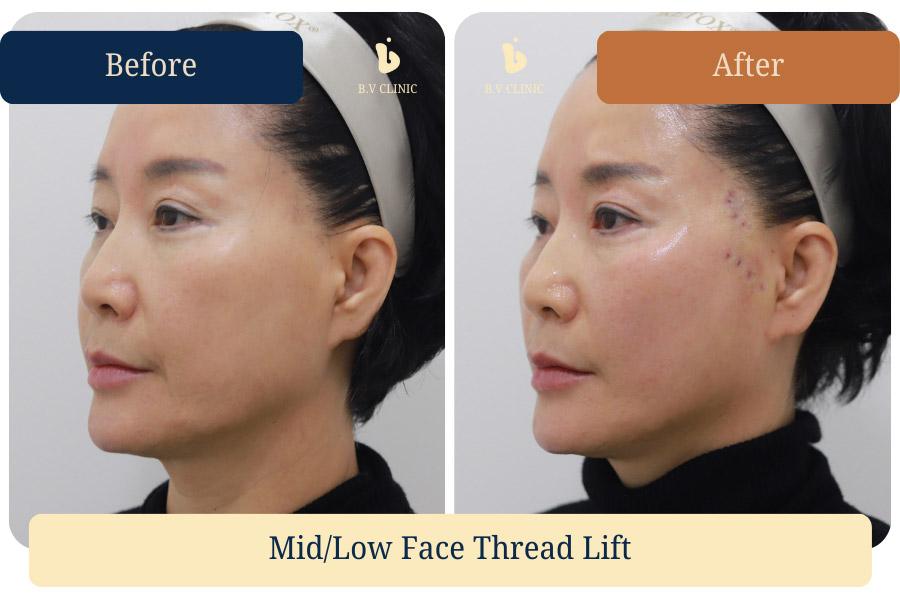
3. B.V Clinic
For cheekbone-area contour concerns caused by soft-tissue laxity rather than prominent cheekbone bone structure, you may consider B.V Clinic's non-surgical thread-lifting options. The clinic uses strategically placed threads to lift and firm the face, support natural contours, and stimulate collagen for ongoing skin-firmness benefits.
- URL: B.V Clinic Website
- Location: Seoul
- Thread-lifting options:
- 3D Thread Lifting is described as placing threads strategically to lift and firm sagging skin while enhancing natural facial contours.
- Full Face Lifting is intended to restore volume and balance, address facial asymmetry, and provide an immediate non-surgical lifting effect.
- Premium PDO barbed threads are described as providing strong anchoring power and collagen stimulation.
- Clinical experience and materials:
- Dr. Suh is described as having more than 10 years dedicated exclusively to thread lifting and thousands of clinical cases.
- The clinic uses MINT Threads, described as FDA and KFDA approved.
- Skin-tightening and aftercare:
- Shurink Lifting uses high-intensity focused ultrasound for deep-layer skin tightening and contour refinement.
- Potenza and Thor treatments use radiofrequency technologies for collagen and elasticity support.
- Post-treatment care includes skin-regeneration management, nutritional skincare products, and ultrasound treatments intended to help minimize swelling and support elasticity.
The Financial Landscape: Costs and Value for the Medical Tourist
Cost is a key factor drawing medical tourists to South Korea for a face thread lift. Prices depend on the clinic’s reputation, the surgeon’s background, the number of threads used, and which part of the face is treated. Basic PDO thread lifts generally cost $500 to $1,500. More premium options with PCL or PLLA threads run between $1,500 and $3,500, while a full-face thread lift might land in the $2,500 to $5,000 range. A mid-face lift typically costs 1,300,000–2,200,000 KRW, and nasolabial fold lifts range from 900,000 to 1,400,000 KRW.
A big difference between Korea and Western practice is that many Korean clinics offer all-inclusive pricing—covering consultations, tests, surgery, aftercare, medication, and translation. This contrasts with Western clinics’ itemized billing, meaning costs in Korea are generally more transparent and predictable.
Globally, Korea’s value proposition stands out. Other countries may have lower sticker prices, but Korea’s combination of affordability and advanced specialization makes it unique.
| Country | Average Price Range (USD) | Key Value Proposition |
|---|---|---|
| South Korea | $1,000 - $4,000 | High specialization, advanced technology, patient-centric infrastructure |
| USA | $1,500 - $6,000+ | High practitioner fees, high cost of living |
| Turkey | $750 - $1,800 | Cost savings, but less data on specialization and technology |
| Mexico | $450 - $2,200 | Significant cost savings, but variable standards and technology |
As shown above, while Mexico or Turkey offer cheaper thread lifts, South Korea balances reasonable prices with high quality and advanced medical technology, creating the best compromise between cost and results.
Patient Experiences and Outcomes: Beyond the Clinical Data
Feedback from patients who have had face thread lifts is generally positive—especially when their expectations match what the procedure can deliver. Many patients are “thrilled” with improvements, noting firmer jowls and a generally more youthful look. Some say it gave them “facelift results” without the need for surgery or lengthy downtime.
There are, however, a few accounts of negative outcomes, like skin puckering that took months to fade. Most dissatisfaction ties back to the practitioner’s experience and communication. Happier patients often mention feeling heard and well-informed by their surgeon, while less positive experiences usually relate to lack of skill or poor rapport. This reinforces the importance of working with a knowledgeable, communicative practitioner who personalizes each treatment and manages expectations.
While recovery is quick, temporary swelling, tightness, soreness, and a pulling sensation are common in the first week. One patient reported being “very sore and swollen” and needed to “take small bites” of food due to mouth discomfort. Swelling or bruising usually resolves in a few days, but patients should avoid heavy activity or exaggerated facial expressions for a couple of weeks.
It’s vital to know that a thread lift improves appearance gradually: The first lift is visible right away, but the biggest skin improvements happen over weeks and months as collagen builds up. Understanding this progression helps patients appreciate steady, natural results—making the investment feel more worthwhile.
Conclusion
Malar flattening, or “cheekbone flattening,” is an age-related change resulting from both soft tissue descent and bone loss in the mid-face. The face thread lift is a minimally invasive procedure that offers dual benefits: an instant mechanical lift and longer-term collagen regeneration. South Korea is a leading destination for this treatment, combining high expertise, modern technology, and patient-focused care—all at competitive prices. Patients should prioritize choosing experienced practitioners and have clear, realistic expectations for the subtle, progressive improvements a thread lift provides.
References
1, 2, 3, 4, 5, 6, 7, 8, 9, 10, 11, 12, 13, 14, 15, 16, 17, 18, 19, 20, 21, 22, 23, 24, 25, 26, 27, 28, 29, 30, 31, 32, 33, 34, 35, 36, 37, 38, 39, 40, 41, 42, 43
Frequently Asked Questions
Related Blogs

Lifestyle Lift in Korea vs. USA, Turkey, and More: A 2023 Cost Guide to Your Perfect Look
Explore the cost of Lifestyle Lift procedures in Korea and discover how this cosmetic option offers affordable and high-quality results. Learn about factors influencing pricing and why Korea is becoming a popular destination for those seeking rejuvenating facial treatments.
Updated: Oct 23, 2026
Abdominal Thread Lift in Korea: Candidacy, Evidence, Recovery, and Travel Planning
Abdominal thread lifts place absorbable threads in superficial abdominal tissue for subtle tightening, but methods, durability, and outcomes are not standardized. The article covers candidate screening, procedure planning, Korea travel and follow-up, preparation, aftercare warning signs, and alternatives for fat, excess skin, diastasis, or hernia.
Updated: Oct 13, 2026
Breast Thread Lift in Korea: Candidacy, Safety, Recovery, and Travel Planning
Breast thread lift uses absorbable threads placed through small entry points for modest contour improvement, but techniques, durability, and complication rates are not standardized. The article covers candidacy, preparation, travel planning for Korea, aftercare, warning signs, follow-up, and surgical alternatives for significant sagging.
Updated: Oct 13, 2026
Lip Thread Lift in Korea: Methods, Recovery, Risks and Travel Planning
Lip thread lifts use absorbable smooth or barbed threads to soften upper-lip lines or provide subtle traction, with suitability based on tissue quality, goals, and medical assessment. The article covers treatment planning, recovery, aftercare, risks, alternatives, and travel guidance for international patients in South Korea.
Updated: Oct 13, 2026
Clinics offering Face Thread Lift

SH Clinic: Comprehensive Women's, Men's & Couples' Health Services in Korea
Sinsa

Haru Clinic Korea | Fully-Customized Full-Face Non-Surgical Rejuvenation With Threads, Botox & Fillers
Sinsa

Lydian Plastic Surgery Clinic in Korea: Superior Cosmetic Procedures by World-Renowned Expert Dr. An Kyung Chun
Apgujeong

PangPang Clinic: Korea's Premier Thread Lifting and Skin Rejuvenation Specialist in Gangnam, Seoul
Sinsa