Medical Tourism Blog
Post Pregnancy Breast Deflation: Breast Fat Grafting Solutions in Korea for Natural Restoration
Table of contents
- Breast Fat Grafting: Medical and Procedural Insights
- The South Korean Medical Tourism Journey: A Patient Guide
- Best Clinics in Korea for Post Pregnancy Breast Deflation
- Financial Analysis: Costs and Value
- Patient Outcomes and Psychological Impact: Real Stories
- Conclusion
- References
Considering treatment in Korea? Everything you need to know e.g. — how to avoid scams, visas, interpreters, recovery tips — in our Medical Tourism Master Guide. Plan with confidence in minutes, not weeks!
Clinical Definition and Patient Language
Post-pregnancy breast deflation is a common physiological change resulting from childbirth and breastfeeding. This condition is seen as a natural outcome of hormonal changes and tissue remodeling during and after pregnancy, rather than a medical illness. Online forums and patient communities refer to it as "deflated breasts," "saggy boobs," "flat breasts," and "pancake breasts," which reflects both the aesthetic and emotional aspects of this experience.
Understanding Physical and Anatomical Breast Changes
Breast tissue undergoes dramatic changes during pregnancy as hormones cause the milk ducts to develop. This leads to larger, firmer breasts, which persist throughout nursing. Once breastfeeding ends, milk cells shrink, and the body introduces new fat cells. However, this new fat often isn’t enough to restore the original breast shape and size. The cycle of breast growth and shrinkage can stretch the skin and supportive structures, frequently resulting in sagging (breast ptosis), upper breast volume loss, a flatter appearance, and sometimes enlarged or color-changed areolas.
Broader Context and Foundational Patient Insights
The post-pregnancy transformation often leaves people feeling as if their breasts resemble a "deflated balloon." For many, the emotional impact includes lower self-esteem and a loss of body confidence. Recognizing this strong connection between physical changes and psychological effects is important for providers and patients alike. A nuanced approach is crucial: breast fat grafting is primarily designed to restore volume, not to correct significant sagging. Patients with both volume loss and notable ptosis usually benefit most from a breast lift combined with fat grafting. Setting realistic expectations from the beginning supports patient satisfaction and trust.
Breast Fat Grafting: Medical and Procedural Insights
The Science and Steps of Autologous Fat Transfer
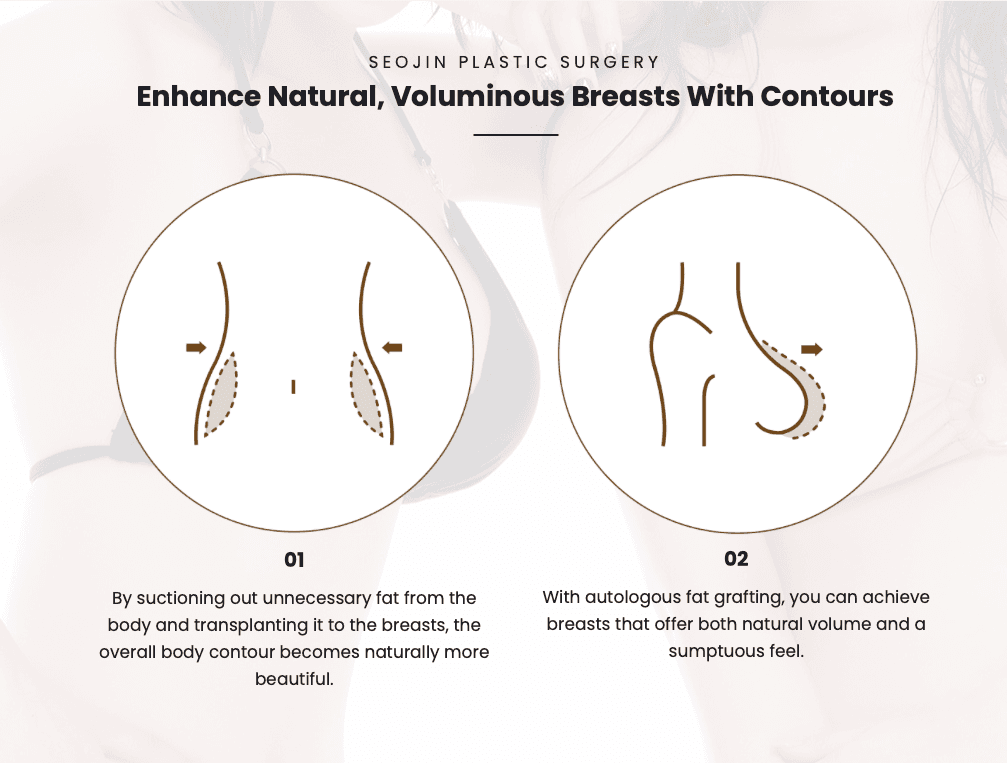
Breast fat grafting, technically referred to as autologous fat transfer or lipomodelling, involves three main steps:
Consultation and Planning: The process begins with an in-depth consultation about health history, breast anatomy, and desired outcomes. Surgeons prepare a detailed surgical blueprint, mapping targeted fat harvesting sites and breast enhancements.
Fat Harvesting and Preparation: Under anesthesia, fat is removed (usually via liposuction) from areas like the abdomen, thighs, or "love handles." This step also slims the donor areas. The harvested fat is processed—often with a centrifuge—to remove unwanted components and improve the viability of the fat cells. Techniques such as cooling fat to 4°C can boost cell survival.
Precise Fat Placement: Using a fine cannula, the purified fat is injected into the breasts in tiny, layered passes. This meticulous technique helps ensure better fat cell survival and natural-looking results. The entire operation generally takes between two and five hours, depending on its complexity.
Benefits and Suitability for Patients
Fat grafting uses the patient’s own tissue, creating a natural look and feel without foreign materials or risk of rejection. A unique benefit is that it contours donor areas while augmenting the breasts, addressing multiple post-pregnancy concerns. Results are typically permanent after the initial healing period since transplanted fat cells that “take” will remain for years. Unlike implants, which often require periodic replacement, well-integrated fat graft results don’t usually need future surgery.
Risks, Complications, and Limitations
Although considered safe, breast fat grafting has risks, including bleeding, bruising, infection, fat necrosis, and cyst or calcification formation. Calcifications are almost always benign but can complicate future mammograms. The achievable size increase with fat grafting is modest (usually up to one or one-and-a-half cup sizes), since the breast can only accommodate and vascularize a limited amount of fat at one time. Importantly, fat grafting alone does not lift sagging breasts; patients with significant drooping typically need a breast lift with or without added fat grafting.
Comparing Breast Fat Grafting to Breast Implants
| Metric | Breast Fat Grafting | Breast Implants |
|---|---|---|
| Aesthetics & Feel | Natural feel; blends with tissue | May feel less natural; possible edges |
| Size Increase | Modest (1-1.5 cups) | Significant (multiple cups) |
| Dual Benefit | Yes: breast and body contouring | No: augmentation only |
| Longevity | Permanent for surviving fat | May require replacement in 10-15 years |
| Risks | Fat reabsorption, cysts, calcification, necrosis | Capsular contracture, rupture |
| Incisions | Minimal; tiny (3 mm) | Larger, more visible incisions |
Fat grafting is best for those seeking subtle, natural enhancement, while implants offer more dramatic changes. Each option should be weighed according to the individual's goals, anatomy, and tolerance for maintenance.
The South Korean Medical Tourism Journey: A Patient Guide
South Korea is a leading destination for cosmetic surgery, offering sophisticated and streamlined experiences for overseas patients.
Best Clinics in Korea for Post Pregnancy Breast Deflation
Listed below are the best clinics in Korea for post pregnancy breast deflation:
| Clinic Name | Key Features | Special Techniques |
|---|---|---|
| Lydian Plastic Surgery Clinic Website | Stem cell–enhanced fat grafting elevates typical fat survival from 20–30% to approximately 50–60% by extracting and concentrating high‑viability stem cells with advanced centrifuges operated at the optimal 4°C, then grafting uniformly sized fat using the Edinizer to reduce necrosis, surface irregularities, swelling, and enable denser, longer‑lasting take; Safety and quality are safeguarded in Ministry of Health and Welfare–approved, double‑door sealed cleanrooms (Clean Class 10,000 with HEPA filtration) that minimize exposure to contaminated air or viruses during cell processing. | Edinizer-assisted grafting; 4°C processing of high-viability stem cells; high-definition 5D liposculpture; 4-step aftercare system (swelling reduction, irregularity correction, skin elasticity recovery, residual fat contouring) |
| THEPLUS Plastic Surgery Website | Best clinic in Korea for post-pregnancy breast deflation by uniting top-tier breast expertise with academic rigor and a seamless, safety-first care system; board-certified Dr. Lee anchors the program with techniques and implant choices—including Motiva implants—designed to achieve natural, long-lasting results tailored to postpartum anatomy, while her active roles in leading Korean plastic surgery societies ensure care aligned with the latest standards. | Motiva implants; anatomy-based design for natural proportions; precision planning by Dr. Kim (3D implant researcher); Dr. Jeong’s leadership; integrated care pathway from consultation to post-op skincare |
| Seojin Plastic Surgery Clinic Website | Seojin Plastic Surgery Clinic in the heart of Gangnam, Seoul, offers highly individualized solutions for post-pregnancy breast deflation under the direct care of Dr. Lee Hyungmin. As a one-doctor clinic with more than 16 years of experience, Dr. Lee provides comprehensive, end-to-end management—from consultation to recovery—using state-of-the-art tools such as 3D imaging and high-definition endoscopy to plan precisely and operate safely. Recognized as one of the 100 Good Doctors in Korea, he combines advanced technique with meticulous attention to detail to address the unique aesthetic and functional changes that follow pregnancy and breastfeeding. | One-doctor clinic with 16+ years of experience; state-of-the-art tools such as 3D imaging and high-definition endoscopy; comprehensive, end-to-end management from consultation to recovery; recognized as one of the 100 Good Doctors in Korea |
Lydian Plastic Surgery Clinic
For mothers seeking to restore volume, softness, and youthful contour after breastfeeding, Lydian Plastic Surgery Clinic in Cheongdam, Gangnam stands as Korea’s best destination by uniting stem cell science, precision artistry, and hospital-grade sterility under the leadership of Dr. An Kyung Chun. Our stem cell–enhanced fat grafting elevates typical fat survival from 20–30% to approximately 50–60% by extracting and concentrating high‑viability stem cells with advanced centrifuges operated at the optimal 4°C, then grafting uniformly sized fat using the Edinizer to reduce necrosis, surface irregularities, swelling, and enable denser, longer‑lasting take. Safety and quality are safeguarded in Ministry of Health and Welfare–approved, double‑door sealed cleanrooms (Clean Class 10,000 with HEPA filtration) that minimize exposure to contaminated air or viruses during cell processing. Recognized among Korea’s Top 18 Aesthetic Plastic Surgery Experts and the World’s Top 100 in Stem Cell Aesthetic Medicine, Dr. An applies anatomy‑based design for natural proportions, leverages high‑definition 5D liposculpture for discreet donor fat harvest with minimal scarring and no hospitalization, and leads a boutique, single‑specialist model for personalized care. Continuous investment in the latest devices and a 4‑step aftercare system—swelling reduction, irregularity correction, skin elasticity recovery, and residual fat contouring—complete a comprehensive pathway to safe, natural, and durable post‑pregnancy breast rejuvenation.
You can check out their website here: Lydian Plastic Surgery Clinic Website
THEPLUS Plastic Surgery
For mothers seeking to restore volume, shape, and confidence after childbirth, THEPLUS Plastic Surgery in Garosu-gil, Gangnam stands out as the best clinic in Korea for post-pregnancy breast deflation by uniting top-tier breast expertise with academic rigor and a seamless, safety-first care system. Board-certified Dr. Lee, a breast augmentation specialist and former Surgery Specialist at Seoul National University Hospital, anchors the program with techniques and implant choices—including Motiva implants—designed to achieve natural, long-lasting results tailored to postpartum anatomy, while her active roles in leading Korean plastic surgery societies ensure care aligned with the latest standards. She is supported by a board-certified team whose surgeons each bring more than a decade of experience and a strong research profile: Dr. Kim, an award-winning 3D implant researcher and global educator, enhances precision planning and predictability, and Dr. Jeong, President of the Korean Society of Plastic Surgeons, sets an institutional culture of excellence that blends function and beauty. The clinic’s four-floor, fully integrated pathway—from thorough consultation through surgery to attentive post-operative skincare—together with its surgeons’ publications, international symposium participation, and membership in societies such as the American Society of Plastic Surgeons, translates into meticulous customization, clear communication, and reliable recovery support, delivering refined outcomes that look and feel naturally yours.
You can check out their website here: THEPLUS Plastic Surgery Website
Seojin Plastic Surgery Clinic
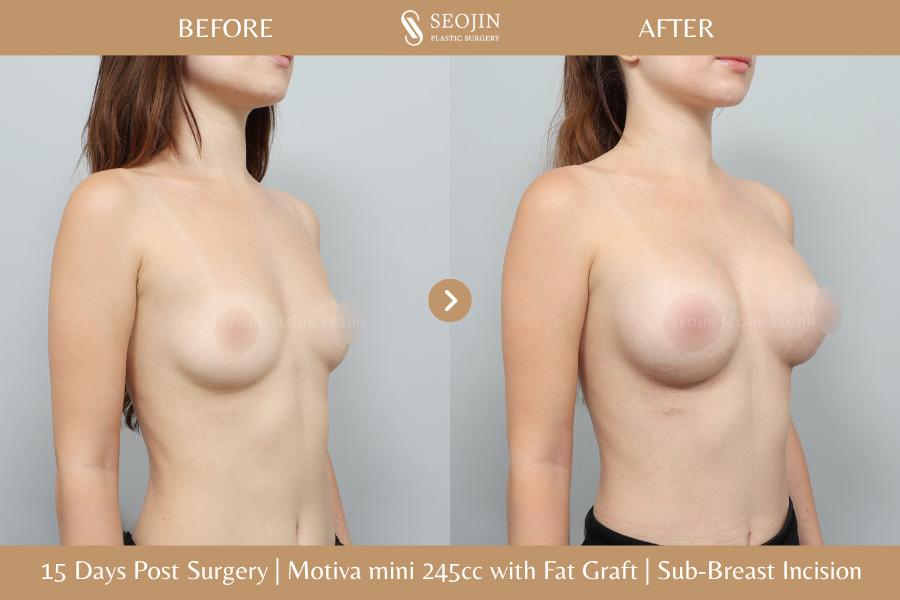
Seojin Plastic Surgery Clinic in the heart of Gangnam, Seoul, offers highly individualized solutions for post-pregnancy breast deflation under the direct care of Dr. Lee Hyungmin. As a one-doctor clinic with more than 16 years of experience, Dr. Lee provides comprehensive, end-to-end management—from consultation to recovery—using state-of-the-art tools such as 3D imaging and high-definition endoscopy to plan precisely and operate safely. Recognized as one of the 100 Good Doctors in Korea, he combines advanced technique with meticulous attention to detail to address the unique aesthetic and functional changes that follow pregnancy and breastfeeding.
For mothers seeking to restore volume, shape, and symmetry, Seojin offers a full spectrum of breast procedures tailored to individual anatomy and goals, including breast lift to correct sagging, breast augmentation with implants, and hybrid augmentation that blends implants with fat grafting for a softer, more natural contour. Fine refinements such as nipple and areolar correction are available to complete the result. Each treatment plan is crafted through a thorough, personalized consultation, with clear visualization of expected outcomes and attentive follow-up to support a comfortable, confident recovery.
You can check out their website here: Seojin Plastic Surgery Clinic Website
Undergoing Fat Grafting in South Korea
The journey typically starts with a virtual consultation through clinic websites or platforms like Bookimed, where patients discuss their needs and receive expert guidance. After arrival, routine health checks (including blood and urine tests and chest X-rays) confirm fitness for surgery. Procedures are usually done under general anesthesia. Some clinics include hospital stays and intensive aftercare, such as IV pain control and daily check-ups. Most patients return to daily activities within one to two weeks, though full results appear after four to six months as swelling recedes and fat cells stabilize.
Selecting Clinics and Surgeons
The right clinic and surgeon are crucial for safety and success. Many top clinics are located in Seoul’s Gangnam district, including Lydian Plastic Surgery Clinic, THEPLUS Plastic Surgery, Okay Plastic Surgery Clinic, and Bbae Clinic—some with dedicated breast centers. It’s critical to verify a surgeon’s board certification and track record. Practitioners like Dr. An Kyung Chun and Dr. Kim Young Eun (both with over 20 years of experience) exemplify high standards, but prospective patients must confirm credentials directly to ensure quality care.
What Sets Korean Medical Tourism Apart
South Korea’s clinics often provide high-touch experiences, featuring airport transfers, accommodation, robust aftercare, and language support. This coordinated service reduces patient stress and creates a premium, worry-free recovery environment, helping explain why many international patients choose Korea for cosmetic procedures.
Financial Analysis: Costs and Value
The Cost of Breast Fat Grafting in Korea
The typical cost ranges from $3,445 to $11,024 USD (₩5,000,000–₩16,000,000 KRW), varying by clinic reputation, location, surgeon experience, and procedure complexity. Most packages are all-inclusive, bundling pre-surgery checks, anesthesia, any necessary hospital stay, and aftercare, offering transparency and reducing the risk of surprise fees.
Cost Comparison: Korea vs. Other Destinations
| Country | Price Range (USD) |
|---|---|
| South Korea | $3,445 - $11,024 |
| USA | $4,400 - $17,500 |
| Mexico | $1,500 - $6,500 |
| Turkey | $2,460 - $7,550 |
| Thailand | $2,200 - $4,745 |
While countries like Mexico or Thailand are more affordable, Korea’s appeal stems from its advanced technology, high safety standards, and comprehensive packages. Patients often find that the peace of mind and quality justify the higher price.
Patient Outcomes and Psychological Impact: Real Stories
Personal Experiences and Key Lessons
Patients who opt for breast fat grafting post-pregnancy often report a “win-win,” with restored breast volume and improved body contours (“mummy tummy” or flanks). Those with only minor sagging consistently describe the results as subtle, natural-looking, and confidence-boosting. Across forums, the advice is clear: fat grafting offers a gentle, natural change and is not meant for major lifting or dramatic size increases.
Frequently Asked Questions
- Will fat grafting help with sagging? No—while it restores volume, it does not lift; patients with significant sagging should consider adding a breast lift.
- Will I still be able to breastfeed? Current evidence suggests fat transfer shouldn’t affect breastfeeding because incisions are small and don’t interfere with milk ducts. However, long-term data is still evolving.
When to Consider the Procedure and Psychological Benefits
Doctors and patients agree: it’s best to wait at least three to six months after finishing breastfeeding or a recent pregnancy before pursuing breast fat grafting. This stabilizes hormone levels and ensures that the final breast shape is settled before surgical intervention. For many patients, the most profound benefit is regaining self-confidence and a sense of restored identity after the dramatic physical changes of motherhood.
Conclusion
Breast fat grafting offers a natural, subtle solution to post-pregnancy breast deflation, with the added bonus of body contouring. While not effective for lifting, it excels at restoring lost volume for those with minimal sagging. Korea’s medical tourism sector distinguishes itself with advanced care and premium service, making it a top destination for those seeking quality cosmetic surgery and supportive patient experiences.
References
1, 2, 3, 4, 5, 6, 7, 8, 9, 10, 11, 12, 13, 14, 15, 16, 17, 18, 19, 20, 21, 22, 23, 24, 25, 26, 27, 28, 29, 30, 31, 32, 33, 34, 35, 36, 37, 38, 39, 40