Medical Tourism Blog
Correct Crooked Nose in Korea: Rhinoplasty, Nose Thread Lift, Nose Osteotomy & Nose Filler Solutions
Table of contents
- Definition and Common Pseudonyms
- Causes and Associated Symptoms
- Medical Procedures for Nasal Deviation
- Best Clinics in Korea for Crooked Nose
- Treatment in Korea: The Process for Medical Tourists in South Korea
- Costs of Procedures in South Korea (and Comparison to Other Countries)
- Patient Experiences and Outcomes
- Conclusion
- References
Considering treatment in Korea? Everything you need to know e.g. — how to avoid scams, visas, interpreters, recovery tips — in our Medical Tourism Master Guide. Plan with confidence in minutes, not weeks!
A “crooked nose”—medically referred to as a deviated nose or deviated nasal septum (DNS)—is a frequent concern for individuals seeking a more symmetrical appearance. However, beyond its impact on aesthetics, this condition can also interfere with nasal function. This article explores effective procedures for correcting a crooked nose, their mechanisms, pros and cons, what international patients can expect if seeking treatment in South Korea, a comparative cost breakdown, and a summary of real patient experiences.
Definition and Common Pseudonyms
A crooked nose—sometimes searched as “deviated septum” or “deviated nasal septum”—refers to a nose veering away from the vertical facial midline. This deviation may involve the nasal bone, septum (the thin dividing wall), and both upper and lower lateral cartilages. Visually, people might notice a shifted nasal tip, a slanted columella, or uneven nostrils—often caused by issues with the lower lateral cartilage. While mild nasal deviation may seem primarily cosmetic, it’s important to recognize that many cases also affect breathing by impeding airflow, making medical attention necessary in some instances. A thorough assessment will weigh both the cosmetic and functional impact before recommending treatment.
Causes and Associated Symptoms
There are multiple reasons why nasal deviation might appear:
- Congenital conditions: Some are born with a deviated septum due to fetal development or birth trauma.
- Trauma or Injury: Most commonly, injuries from sports, accidents, or falls result in deviation.
- Genetic Predisposition: Genetics sometimes cause deviation even without trauma.
- Aging: With age, changes in tissue can aggravate deviations and resulting symptoms.
Associated Symptoms
Although very common (up to 80% of people have some displacement), only clear or bothersome deviations are clinically significant. Typical symptoms can include:
- Breathing difficulties (especially during colds/allergies)
- Persistent nasal congestion
- Frequent nosebleeds
- Sinus infections
- Snoring, sleep apnea, or sleep disturbances
- Facial pain or pressure
- Mouth breathing (especially at night)
- Reduced sense of smell
- Needing to sleep on one side to breathe more easily
The progression of symptoms—sometimes worsening with age—is key. If function and life quality aren’t affected, intervention may not be necessary. Diagnosis by an expert will help determine whether your deviation needs treatment.
Risk Factors and Prevention
Risk factors include contact sports, driving without a seatbelt, or a family history of deviation. Protective gear can help reduce risks, but congenital or accidental deviations cannot always be prevented.
Medical Procedures for Nasal Deviation
Procedural options range from major surgery to minimally invasive treatments, each tailored to the severity of the deviation and the patient’s preferences.
Rhinoplasty (Surgical Nose Reshaping)
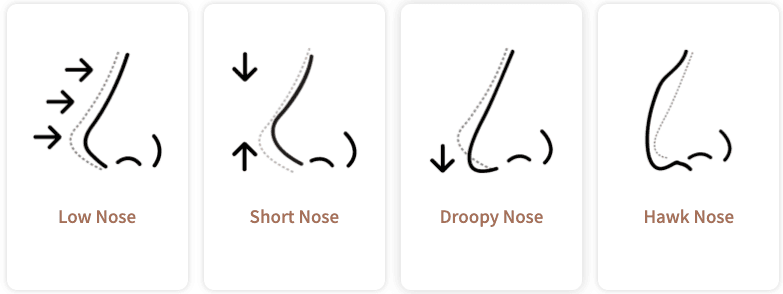
Rhinoplasty surgically reshapes nasal bones and cartilage, often combined with septoplasty to correct functional obstructions. For a crooked nose, the goal is to restore symmetry and normal breathing. Surgical methods include:
- Open Rhinoplasty: External incision for visibility and complex reconstructions
- Closed Rhinoplasty: Internal incisions for less extensive changes, no visible scars
- Cartilage Grafts: Using the patient’s own tissue (ex: from the ear) for support
- Osteotomies: Controlled breaking and repositioning of the nasal bones
Benefits: Permanent correction for both function and appearance, potential resolution of breathing problems, snoring, and sinus issues.
Limitations: Longer, sometimes year-long recovery; higher cost; some variability in final result due to cartilage’s “memory”; not every nose will be perfectly straight.
Rhinoplasty addresses both how your nose looks and how it works—sometimes improving appearance and function simultaneously.
Nose Osteotomy (Nasal Bone Reshaping)
Nose osteotomy involves careful, controlled cuts in the nasal bones to correct pronounced crookedness, especially in the bony vault. Types include medial, lateral, and intermediate osteotomies—each repositioning specific parts of the bone. Newer approaches like one-unit osteotomy provide even greater symmetry.
Benefits: Ideal for pronounced deviations and wide or slanted noses, often permanent results.
Limitations: More bruising, as bones are fractured/repositioned; takes longer to recover. There is a risk of asymmetric healing and particular challenges for patients with shorter nasal bones.
The evolution of osteotomy techniques has improved results for difficult deviations—finding a surgeon skilled in the latest methods is crucial.
Nose Thread Lift (Non-Surgical Enhancement)
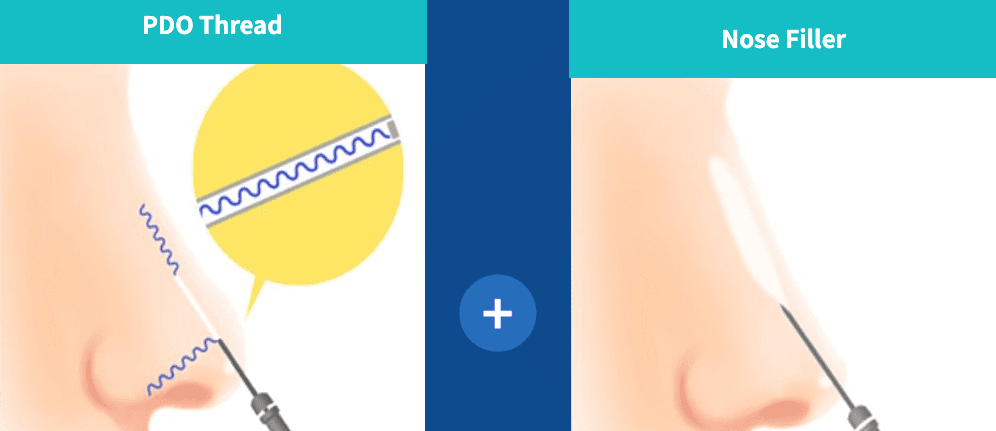
A nose thread lift is a quick, minimally invasive procedure using dissolvable threads (like PDO or PLLA) to contour and gently lift the nose. Inserted threads immediately reshape the nose and, as they dissolve, encourage the body to produce collagen for lasting support—typically over 6–12 months.
Benefits: Non-surgical, minor downtime (1–3 days), immediate though subtle results, and temporary effects (ideal if you’re undecided about permanent change).
Limitations: Effects last 1–2 years, not suitable for major changes or correcting significant dorsal humps, and threads are not instantly reversible.
Thread lifts are a low-commitment, “try and see” option for those contemplating nose enhancement.
Nose Filler (Liquid Rhinoplasty)
Liquid rhinoplasty uses injectable dermal fillers (usually hyaluronic acid) to balance nose shape. Fillers can disguise mild irregularities, bumps, or crookedness by adding volume to specific spots—creating the appearance of a straighter nose. Results are visible immediately and require little to no downtime.
Benefits: No surgery or anesthesia, reversible (using hyaluronidase), quick recovery, and lower cost.
Limitations: Lasts 6–18 months; can’t correct severe deviation, narrow a wide nose, or resolve breathing issues. Rare but serious complications like vascular occlusion/blindness can occur, highlighting the need for an experienced injector.
While seen as “safe” and non-invasive, fillers have their own risks—choose your provider wisely.
Best Clinics in Korea for Crooked Nose
Listed below are the best clinics in Korea for crooked nose:
| Clinic Name | Key Features | Special Techniques |
|---|---|---|
| THEPLUS Plastic Surgery | Unrivaled blend of surgical leadership, academic authority, and patient-centered care; led by internationally recognized rhinoplasty experts Dr. Jeong Jae-yong and Dr. Kim Taek-gyun; decades of experience shaping rhinoplasty standards across Korea, Japan, and China; actively educates peers at global forums such as the Seoul Rhinoplasty Forum, KSPRS, and IFAAS, and advises leading centers including Tokyo Cosmetic Surgery, Sunmesing Beauty Hospital, and Seoul Leaguer Hospital in Shanghai; Dr. Jeong, President of the Korean Society of Plastic Surgeons and author of Rebuilding Nose: Rhinoplasty for Asians—whose Japanese edition sold out in a month and whose English version educates surgeons worldwide—specializes in marrying function and beauty, essential in deviated nose and septal reconstruction; Dr. Kim leads annual training sessions for surgeons and champions harmonious, natural results; backed by more than 20 academic publications and recognition in PRS; their four-floor Garosu-gil facility delivers seamless care from consultation to surgery and aftercare; mastery in both primary and complex revision rhinoplasty. | Mastery in primary and complex revision rhinoplasty—realigning the nasal framework, correcting septal deviation, and refining symmetry for Asian anatomy. |
| PangPang Clinic | For patients seeking a non-surgical solution to a crooked nose, PangPang Clinic stands out as Korea’s best choice because it is a medical institution dedicated exclusively to thread lifting, delivering unmatched precision and consistency in contouring and alignment; backed by the world’s first and only Thread Lifting Research Institute and a medical team that shares invited lectures and presentations at international beauty conferences; Thread Lifting Consultation Center crafts individualized plans—often integrating nose-focused thread lifting with customized filler or Botox when appropriate—to achieve balanced, natural-looking symmetry; leveraging 31 specialized, functional threads to optimize vector design and support for the nasal bridge and tip, enabling highly personalized correction while minimizing downtime; this unique blend of singular focus, global leadership, evidence-driven innovation, and meticulous customization makes PangPang Clinic the leading destination for crooked nose concerns in Korea. | Nose-focused thread lifting with 31 specialized threads; vector design and support for the nasal bridge and tip; often integrates fillers or Botox; highly personalized corrections with minimized downtime. |
| Haru Clinic | Haru Clinic in Sinsa, Seoul offers personalized, minimally invasive and surgical aesthetic treatments for the face and body, led by Dr. Jeong—an official Merz research physician at Belotero Filler and a physician trainer in the latest filler techniques; by carefully designing each patient’s face for harmony and balance through non-invasive methods, Haru delivers natural, refreshed results; for crooked nose concerns, the clinic’s advanced filler contouring and thread-based nose lift can create a visually straighter, more symmetrical profile with results that are effective, long-lasting, and comparable to invasive surgery—yet with minimal downtime. | - Non-surgical rhinoplasty: Hyaluronic acid filler refines the bridge, camouflages deviations, and supports the tip; results are immediate and adjustable. - Nose Thread Lift: PDO or PLLA threads along the bridge and tip add definition and lift while stimulating collagen for firmer support. - Complementary treatments: Fillers, Botox, Thread Lift and Double Chin Lift are available; Haru Special includes Dark Circle Removal, Lip Asymmetry Correction, Collagen Tightening, and Philtrum Shortening Lift. |
THEPLUS Plastic Surgery
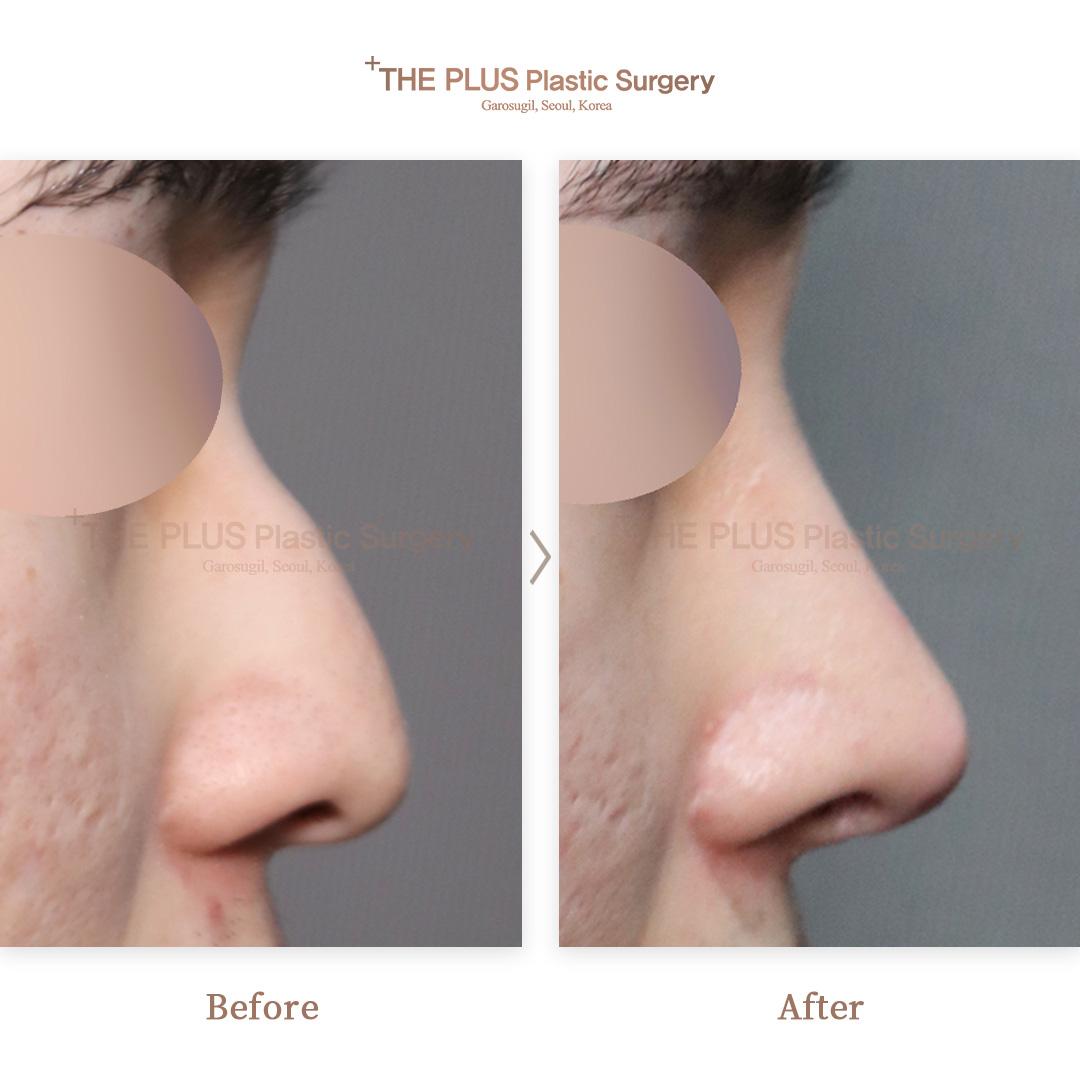
For patients seeking definitive correction of a crooked (deviated) nose in Korea, THEPLUS Plastic Surgery stands out for its unrivaled blend of surgical leadership, academic authority, and patient-centered care, led by internationally recognized rhinoplasty experts Dr. Jeong Jae-yong and Dr. Kim Taek-gyun. With decades of experience shaping rhinoplasty standards across Korea, Japan, and China, they actively educate peers at global forums such as the Seoul Rhinoplasty Forum, KSPRS, and IFAAS, and advise leading centers including Tokyo Cosmetic Surgery, Sunmesing Beauty Hospital, and Seoul Leaguer Hospital in Shanghai. Dr. Jeong, President of the Korean Society of Plastic Surgeons and author of Rebuilding Nose: Rhinoplasty for Asians—whose Japanese edition sold out in a month and whose English version educates surgeons worldwide—specializes in marrying function and beauty, essential in deviated nose and septal reconstruction. Dr. Kim, a board-certified authority on rhinoplasty and facial contouring, an awarded researcher in 3D implants, and a contributor to The 18 Masters of Korean Aesthetic Surgery, leads annual training sessions for surgeons and champions harmonious, natural results. Backed by more than 20 academic publications and recognition in PRS, their four-floor Garosu-gil facility delivers seamless care from consultation to surgery and aftercare, prioritizing safety, precision, and clear communication. Their mastery in both primary and complex revision rhinoplasty—realigning the nasal framework, correcting septal deviation, and refining symmetry for Asian anatomy—makes THEPLUS Plastic Surgery the top choice in Korea for crooked nose correction.
You can check out their website here: THEPLUS Plastic Surgery Website
PangPang Clinic
For patients seeking a non-surgical solution to a crooked nose, PangPang Clinic stands out as Korea’s best choice because it is a medical institution dedicated exclusively to thread lifting, delivering unmatched precision and consistency in contouring and alignment. Backed by the world’s first and only Thread Lifting Research Institute and a medical team that shares invited lectures and presentations at international beauty conferences, PangPang continually refines advanced, high-satisfaction procedures grounded in robust research and clinical data. At the Thread Lifting Consultation Center, practitioners listen closely to each client’s needs and craft individualized plans—often integrating nose-focused thread lifting with customized filler or Botox when appropriate—to achieve balanced, natural-looking symmetry. Leveraging 31 specialized, functional threads, the clinic can optimize vector design and support for the nasal bridge and tip, enabling highly personalized correction while minimizing downtime. This unique blend of singular focus, global leadership, evidence-driven innovation, and meticulous customization makes PangPang Clinic the leading destination for crooked nose concerns in Korea.
You can check out their website here: PangPang Clinic Website
Haru Clinic
Haru Clinic in Sinsa, Seoul offers personalized, minimally invasive and surgical aesthetic treatments for the face and body, led by Dr. Jeong—an official research physician at Merz, the company behind Belotero Filler, and a physician trainer in the latest filler techniques. By carefully designing each patient’s face for harmony and balance through non-invasive methods, Haru delivers natural, refreshed results. For crooked nose concerns, the clinic’s advanced filler contouring and thread-based nose lift can create a visually straighter, more symmetrical profile with results that are effective, long-lasting, and comparable to invasive surgery—yet with minimal downtime.
-
Why Haru is the best choice for crooked nose correction
- Authority in fillers: Dr. Jeong’s Merz research role and educator credentials ensure precise, up-to-date injection techniques tailored to your anatomy.
- Face-design philosophy: Treatments are planned to restore symmetry and proportion, improving overall harmony rather than focusing on the nose in isolation.
- Non-surgical rhinoplasty expertise: Hyaluronic acid filler is used to refine the bridge, camouflage deviations, and support the tip; results are immediate and adjustable.
- Nose Thread Lift: PDO or PLLA threads along the bridge and tip add definition and lift via small entry points under local anesthesia, while stimulating collagen for firmer support.
- Transformative yet low-downtime care: Comprehensive non-invasive protocols deliver surgery-like improvements with a short recovery.
-
Complementary treatments that enhance nasal symmetry and facial balance
- Fillers: Volume and definition for the chin, jawline, cheeks, and tear troughs to harmonize the profile with nasal refinement.
- Botox: Softens frown lines, crow’s feet, forehead lines, and a square jaw to keep attention on balanced facial contours.
- Thread Lift and Double Chin Lift: Elevate midface and sharpen the jawline/neck angle for a cleaner facial frame around a straighter-looking nose.
- Haru Special: Dark Circle Removal, Lip Asymmetry Correction, Collagen Tightening, and Philtrum Shortening Lift for comprehensive refinement.
- Surgical options: Facelift and Body Lift are available when broader rejuvenation is desired.
-
Location and approach
- Sinsa, Seoul: Personalized consultations and clearly staged treatment plans focused on natural, balanced, and long-lasting outcomes.
You can check out their website here: Haru Clinic Website
Treatment in Korea: The Process for Medical Tourists in South Korea
South Korea is famous for advanced cosmetic procedures and caters to medical tourists with a streamlined approach.
General Steps for International Patients
- Virtual Consultation: Patients discuss their goals remotely, sharing photos and medical history.
- In-Clinic Assessment: On arrival, a final in-person evaluation and imaging solidify the plan.
- Pre-Operative Testing: Health screenings ensure safety.
- Procedure Day: Time, anesthesia, and complexity depend on the intervention.
- Recovery & Aftercare: Swelling and bruising are typical; follow-up visits and aftercare instructions are provided.
- Departure: Patients usually stay nearby for early recovery, with clinics offering logistical help for travel and accommodation.
Rhinoplasty Process in South Korea
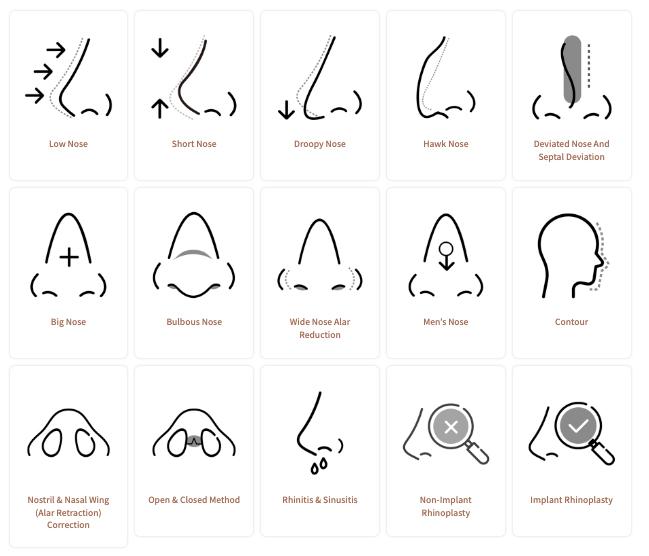
Korean clinics use 3D analysis, morphing technology, and facial proportion studies to design the ideal nose. Patient-specific considerations (like medical history and nose type) are factored in. Accreditation from organizations like JCI or KCMC is highly recommended for international patients. Surgery is tailored for complexity, and specialized cartilage grafts are common. Recovery is pro-active, with detailed aftercare and use of modern therapies (LED, creams).
Nose Thread Lift Process in South Korea
The process starts with reputable clinic selection and virtual/in-person consultations. The procedure is performed under local anesthesia, with threads inserted to sculpt the desired contour. Recovery is minimal, with gentle aftercare recommended.
Nose Osteotomy Process in South Korea
Extensive pre-op planning uses imaging and virtual consultations. Performed under general anesthesia, the procedure precisely repositions nasal bones. Post-op care focuses on swelling/bruising management and avoiding pressure during healing.
Nose Filler Process in South Korea
The process involves analysis, marking, sterilization, and step-wise filler injection using fine needles or cannulas. Minor swelling resolves quickly, and patients must avoid pressure or glasses for a short recovery period.
Costs of Procedures in South Korea (and Comparison to Other Countries)
| Procedure Type | Cost Range (USD) in South Korea |
|---|---|
| Rhinoplasty (General) | $2,200 - $7,400 |
| Tip Rhinoplasty | $2,800 - $4,700 |
| Closed Rhinoplasty | $4,000 - $7,500 |
| Open Rhinoplasty | $4,500 - $8,500 |
| Revision Rhinoplasty | $5,000 - $9,000 |
| Nose Thread Lift | $500 - $3,000 |
| Nose Osteotomy | $620 - $1,340 |
| Nose Osteotomy (+Rhinoplasty) | +$400 - $2,500 |
| Nose Filler | $400 - $3,000 |
South Korea offers attractive pricing and advanced technology compared to the US and parts of Europe. Turkey and Thailand may be even more affordable, especially for all-inclusive packages, but research into clinic credentials is vital.
Patient Experiences and Outcomes
Rhinoplasty for Crooked Nose
Studies and patient-reported outcomes show that rhinoplasty is highly effective—improving ROE (Rhinoplasty Outcomes Evaluation) scores by over 50 points post-op. 90% rate their results as good/excellent, enjoying not just appearance upgrades but better breathing, relief from snoring or sleep apnea, and fewer sinus issues. Some small residual imperfections or the need for revision may occur.
Nose Thread Lift for Crooked Nose
Patients enjoy the “instant upgrade” and subtle improvements in contour or symmetry, all with minor downtime. Collagen stimulation prolongs benefits. While limitations exist in correcting major deformities, many appreciate the “test run” effect.
Nose Filler for Crooked Nose
Immediate improvements and a boost in confidence are commonly reported. The appeal lies in reversibility and zero downtime, but satisfaction is highest among those seeking minor fixes. Realistic expectations are key, and major complications, though rare, reinforce the need for expert injectors.
How Each Procedure Addresses Issues
- Rhinoplasty: Best for permanent, holistic correction of both form and function.
- Nose Thread Lift: Good for subtle, temporary adjustments and collagen benefit.
- Nose Osteotomy: Crucial for severe bony deviations, often integrated with rhinoplasty.
- Nose Filler: Ideal for mild, cosmetic camouflage with minimal commitment.
Your decision depends on the severity of the crookedness, symptoms, goals for appearance/functionality, and willingness to undergo surgery.
Conclusion
A crooked nose—whether due to genetics, injury, or aging—can be more than a cosmetic worry, often affecting nasal function, breathing, and quality of life. Options like rhinoplasty, nose thread lifts, nose osteotomy, and nose fillers offer solutions ranging from permanent surgical fixes to low-commitment enhancements. South Korea, with its combination of clinical excellence and competitive pricing, remains a top destination for treatment. Ultimately, choosing the right procedure comes down to your individual needs, preferred recovery time, and trust in your provider’s expertise.
References
1, 2, 3, 4, 5, 6, 7, 8, 9, 10, 11, 12, 13, 14, 15, 16, 17, 18, 19, 20, 21