Medical Tourism Blog
Sofwave Lifting in Korea: Candidacy, Treatment Process, Recovery, and Travel Planning
Table of contents
- Sofwave Lifting at a Glance
- What Is Sofwave Lifting?
- Who Is a Good Candidate for Sofwave Lifting?
- How Is Sofwave Lifting Performed?
- Why Visit Korea for Sofwave Lifting?
- Key Information for International Patients
- Which Are the Best Clinics in Korea for Sofwave Lifting?
- Sofwave Lifting From Start to Finish
- Alternatives to Sofwave Lifting
- How Can I Prepare for Sofwave Lifting?
- Aftercare Advice
Considering treatment in Korea? Everything you need to know e.g. — how to avoid scams, visas, interpreters, recovery tips — in our Medical Tourism Master Guide. Plan with confidence in minutes, not weeks!
Last updated: October 2026
Sofwave Lifting at a Glance
- What it is — Sofwave Lifting uses the branded Sofwave System’s cooled, non-focused parallel ultrasound to create controlled heat in the dermis and stimulate gradual collagen remodeling; it is non-incisional and not a surgical facelift.
- Best candidates — It is best suited to adults aged 22 or older with mild-to-moderate facial, neck, or submental laxity, fine lines, or subtly lowered brows who want modest, gradual tightening rather than dramatic tissue repositioning.
- Recovery and results — Redness, swelling, and tenderness usually resolve within hours to a few days, with normal light activity often possible the same day; early tightening may appear at 4–12 weeks, results are commonly assessed around 3 months, and remodeling can continue to 6 months.
- Treatment comfort — Treatment can be moderately uncomfortable: a 15-person prospective study reported average procedure pain of 5.6 out of 10, so topical numbing and, when appropriate, clinician-directed pain control should be discussed beforehand.
- Important limitation — Sofwave does not remove excess skin, restore lost facial volume, or reliably correct pronounced jowls, deep tissue descent, strong neck bands, or major neck laxity; threads, injectables, or facelift/neck-lift surgery may fit those concerns better.
- Korea travel planning — International patients should usually allow 2–3 days in Korea for an in-person assessment, treatment, and one overnight observation period; next-day flying is often practical after topical anesthetic only if symptoms are mild and the clinic clears travel.
- Korea-specific distinction — Sofwave has been authorized for marketing in South Korea since 2021, but this does not prove superior Korean outcomes; verify that the clinic uses an authentic SofWave device and recommends it based on anatomy rather than pulse-count packages.
What Is Sofwave Lifting?
Sofwave Lifting is a noninvasive ultrasound treatment that uses controlled heat beneath the skin surface to encourage collagen remodeling and gradual tightening. It targets mild to moderate facial, brow, neck, and under-chin laxity or fine lines for people seeking subtle improvement without a facelift. It is non-surgical, with no incisions or removal of excess skin.
Who Is a Good Candidate for Sofwave Lifting?
- Early laxity — Good candidates have mild-to-moderate facial or neck looseness, fine lines, reduced dermal firmness, subtly lowered brows, or mild fullness-and-looseness beneath the chin.
- Gradual-result goals — This treatment suits adults who want non-incisional tightening and accept that collagen remodeling develops over weeks to months rather than producing a surgical facelift result.
- Target areas — The SofWave System has US-cleared adult indications for facial lines and wrinkles, eyebrow lifting, and lifting lax submental and neck tissue; adults must be at least 22 for these indications. FDA clearance documentation does not mean every concern or facial area is appropriate.
- Realistic anatomy — Best prospects have skin-quality and dermal-laxity concerns rather than pronounced jowls, major excess neck skin, strong platysmal bands, substantial volume loss, or deeply descended facial tissue.
Avoid or postpone treatment over open wounds, severe or cystic acne, active cold sores, infection, dermatitis, eczema, or psoriasis in the treatment zone. Pregnancy, planned pregnancy, breastfeeding, or giving birth within the previous three months requires delay and clinician clearance. A pacemaker or relevant electronic implant near the treatment area is a contraindication; metal implants, significant local scarring, and existing dermal filler require a clinician-specific assessment because treatment over implanted materials has not been fully evaluated and treatment directly over filler is not recommended in the manufacturer safety information. Isotretinoin or another systemic retinoid within six months, and antiplatelet or anticoagulant medicines within two weeks, also need prescribing-clinician and treating-clinician review; never stop prescribed medication independently.
How Is Sofwave Lifting Performed?
Sofwave Lifting is a branded Sofwave System treatment, not a generic name for HIFU or every ultrasound lifting device. It uses Synchronous Ultrasound Parallel Beam technology: non-focused ultrasound creates controlled thermal zones principally in the dermis, while contact cooling protects the skin surface. FDA technical documentation describes 10–12 MHz ultrasound and active cooling.
- Treatment-area plan — Coverage can focus on the brow and upper face, full face, lower face and jawline, submental area, neck, or selected wrinkle-prone zones. The clinician should explain whether the proposed target is within the device’s locally authorized use.
- Coverage and energy plan — Mapped zones, pulse distribution, energy, and cooling settings are selected according to tissue thickness, skin condition, tolerance, and the desired degree of tightening. A higher pulse count is not inherently a better treatment.
- Pain-control plan — Topical anesthetic is common; some clinics offer clinician-directed oral pain relief or anxiolytics. Treatment is not painless: a 15-person prospective study reported mean procedural pain of 5.6 out of 10. Published clinical findings support planning pain control before arrival.
- Single or staged course — Published protocols include both single treatment and two-treatment courses. Evidence does not establish one ideal session number, energy plan, or maintenance interval for every face and neck.
Why Visit Korea for Sofwave Lifting?
The branded Sofwave platform has been available in South Korea since the manufacturer announced MFDS authorization in 2021. That supports local access to the technology, not superior Korean results. Confirm that a clinic is using an authentic SofWave device and that the operator has assessed anatomy rather than selling treatment by pulse count alone.
- Branded-device availability — Sofwave’s Korean market-authorization announcement documents manufacturer-reported authorization to market the system in South Korea.
- Relevant Asian-population data — A prospective Hong Kong study of 42 participants—not a Korean study—reported improvement at three months after one full-face, neck, and submental treatment in 83.3% for submental/neck laxity, 28.6% for eyebrow elevation, and 38.1% for facial wrinkles. The study was open-label, non-randomized, self-controlled, and industry-supported, so these figures do not predict an individual outcome.
- Anatomy-led comparison — Korean aesthetic clinics commonly offer several energy-based and procedural options, allowing an in-person clinician to compare Sofwave with microfocused ultrasound, radiofrequency, injectables, threads, or surgery when laxity is not the only cause of the concern.
- Important evidence limit — No robust randomized head-to-head trial has established that Sofwave outperforms Ultherapy-type microfocused ultrasound, Thermage-type radiofrequency, Liftera, Shurink, or other Korean ultrasound platforms for matched facial or neck concerns. Choose based on anatomy, risks, and recovery tolerance rather than claims of universal superiority.
Key Information for International Patients
- Minimum stay — Plan 2–3 days in Korea: an in-person assessment and treatment day, plus one local overnight period to confirm that pain, redness, or swelling are settling. This is practical travel planning, not a formal regulatory requirement.
- Treatment-day commitment — This is an outpatient, non-incisional procedure. Blood tests, imaging, fasting, admission, stitches, and general anesthesia are not ordinarily intrinsic to treatment; allow time for consultation, photographs, numbing if used, mapping, treatment, and discharge instructions.
- Flight timing — There is no incision, drainage, or compression requirement that inherently prevents flying. Next-day travel is often practical after topical anesthetic-only treatment when symptoms are mild, but obtain the clinic’s clearance before booking.
- Sedating medication — Do not drive, travel alone, or make important decisions after oral anxiolytics, opioid pain medicine, or another sedating drug. Arrange a responsible adult companion and follow the clinic’s airline and transport advice.
- Itinerary impact — Ordinary non-strenuous activity is generally possible the same day, but do not schedule intense exercise, sauna visits, hot baths, or prolonged sun exposure immediately after treatment. Visible redness or tenderness can last hours to several days.
- Remote follow-up — Before departure, obtain a direct contact route and ask whether the clinic wants standardized photographs at 1–2 weeks and around three months. Remote contact does not replace urgent in-person assessment for serious symptoms.
Travel note: Keep flights and major activities flexible for at least 24–48 hours. Remain in Korea longer and seek assessment if swelling, pain, or skin changes are more than mild.
Which Are the Best Clinics in Korea for Sofwave Lifting?
Listed below are some of the best clinics in Korea for sofwave lifting.
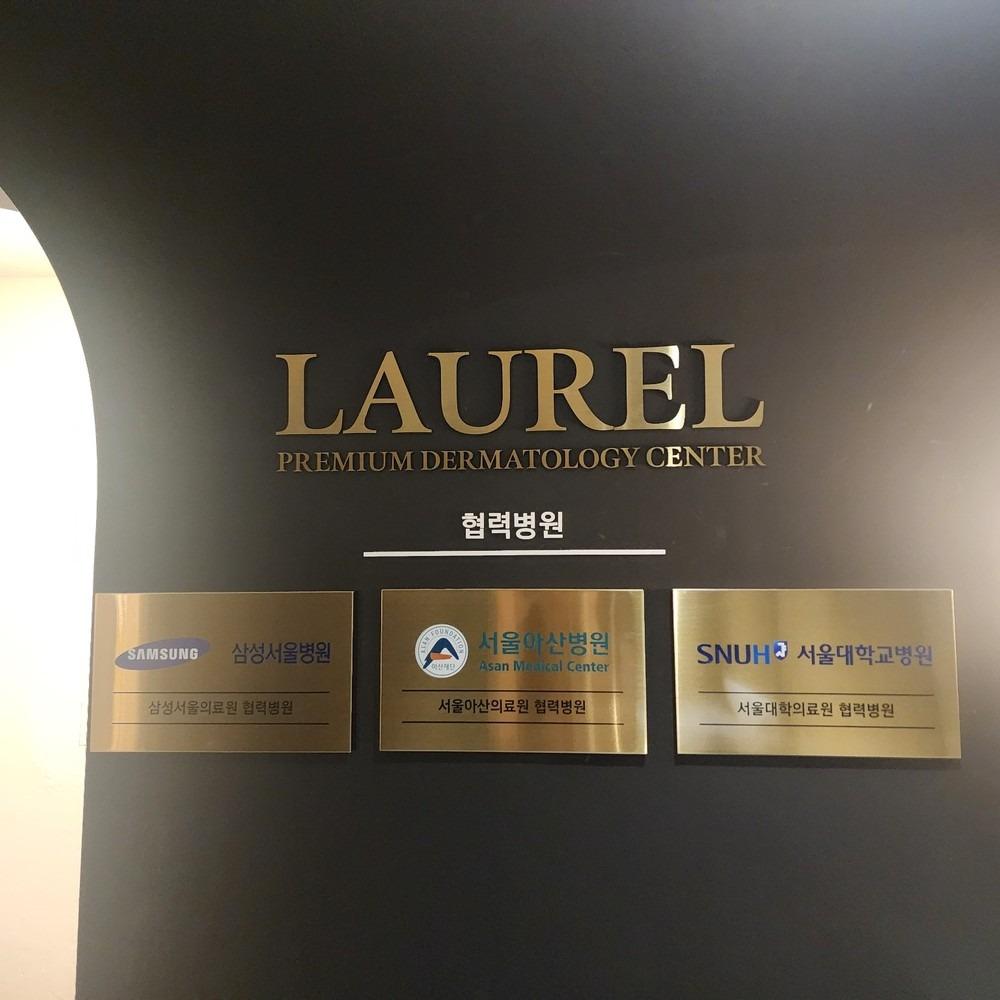
1. Laurel Clinic
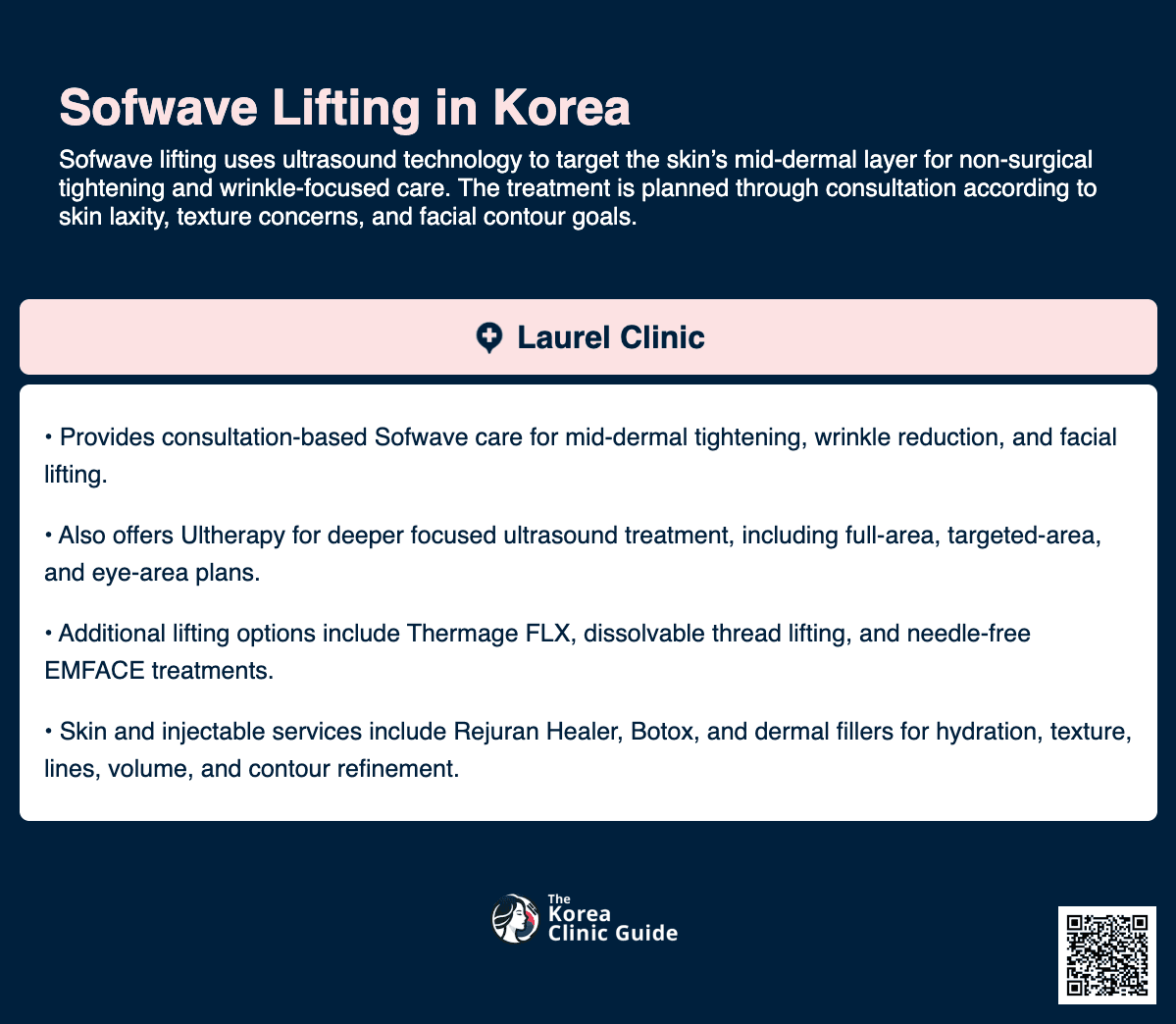
You may consider Laurel Clinic for Sofwave Lifting if you want a non-surgical ultrasound treatment aimed at mid-dermal skin tightening, wrinkle reduction, and facial lifting. Your plan is consultation-based, allowing the treatment to be considered alongside your degree of laxity, skin texture concerns, and contour goals.
- URL: Laurel Clinic Website
- Location: 7F, 17, Seolleung-ro 152-gil, Gangnam-gu, Seoul, Republic of Korea
- Procedure details:
- Sofwave uses ultrasound technology to treat the skin’s mid-dermal layer for tightening and wrinkle-focused care.
- It is included in the clinic’s non-surgical facial lifting options.
- Related lifting options:
- Ultherapy is available for focused ultrasound treatment of deeper skin-supporting layers, with full-area, focused-area, and eye-area plans.
- Thermage FLX is offered for radiofrequency-based firming and contour refinement.
- Thread lifting may be considered when dissolvable thread support and facial-tissue repositioning are appropriate for your treatment area and laxity.
- EMFACE provides a needle-free option combining radiofrequency energy with facial muscle stimulation.
- Skin and injectable care:
- Skin boosters, including Rejuran Healer, are available for hydration, texture, fine lines, and overall skin-quality concerns.
- Botox and dermal fillers are available for expression lines, volume restoration, and contour refinement in areas such as the cheeks, lips, chin, jawline, and under-eye region.
Sofwave Lifting From Start to Finish
- Remote consultation and booking — Send clear unfiltered photographs, a complete medical and medication history, details of prior facial procedures or implants, history of pigment change or scarring, and pregnancy or breastfeeding status. Ask whether an English-speaking consultation or virtual pre-screening is available; remote review cannot replace an in-person examination.
- In-person assessment — The clinician examines facial volume, brow position, skin laxity, neck and submental anatomy, and active skin conditions. Standardized photographs, a contraindication screen, realistic-goal discussion, and consent should occur before treatment.
- Safety and medication review — Disclose wounds, acne, eczema, cold sores, infection, electronic or metal implants, filler, substantial scarring, systemic retinoid use, anticoagulants, antiplatelets, allergies, liver disease, and all sedatives. The clinician decides whether to delay, modify, or decline treatment.
- Skin preparation and analgesia — Remove makeup, sunscreen, and skincare from the treatment area. Topical numbing cream may be applied, then removed; conductive ultrasound gel is placed on the skin. Confirm transport arrangements before accepting any sedating medication.
- Mapped ultrasound treatment — The provider marks planned zones and applies the cooled handpiece in a systematic pattern. Non-focused parallel ultrasound energy creates controlled thermal injury in the dermis to stimulate remodeling; there are no incisions. Treatment must avoid unsafe areas around the eye/orbit and thyroid-tracheal region.
- Immediate check and discharge — The team removes gel and checks for excessive pain, redness, swelling, blistering, or other unexpected reactions. Most patients leave on the same day with written aftercare instructions and an emergency contact route.
- Recovery and result review — Redness, tenderness, swelling, or sensitivity usually settle within hours to a few days. Early tightening can emerge over weeks 4–12; assess results around three months, with continued remodeling potentially seen to six months in published follow-up. Available Sofwave studies remain small and do not establish a universal maintenance schedule.
- Overseas follow-up — Send requested photographs after returning home. Seek urgent local medical care rather than relying on messages alone for severe pain, blistering, ulceration, spreading redness, fever, discharge, numbness, facial weakness, or eye or vision symptoms.
Alternatives to Sofwave Lifting
Non-surgical options can improve selected forms of laxity with limited downtime but do not remove excess skin or reposition deep facial structures. Surgical lifting produces a stronger correction for advanced tissue descent and skin excess, with scars, anesthesia considerations, and a longer recovery.
Ultherapy and Microfocused Ultrasound
- How it differs — Ultherapy lifting and related microfocused-ultrasound platforms use deeper discrete focal points rather than Sofwave’s parallel dermal-beam approach.
- Best tradeoff — Consider it when deeper energy delivery or ultrasound visualization better matches the anatomy; it is not technically interchangeable with Sofwave.
Radiofrequency Tightening
- How it differs — Thermage lifting and InMode lifting heat tissue with radiofrequency rather than ultrasound.
- Best tradeoff — Selection depends on skin quality, laxity pattern, tolerance, prior procedures, and whether the treatment plan needs to address more than dermal laxity.
Korean Ultrasound Platforms
- How it differs — Liftera lifting and Shurink lifting are Korean-market ultrasound options with differing energy geometry, treatment depths, visualization features, and locally permitted uses.
- Best tradeoff — Do not treat brand names as equivalent. Ask which device is proposed, why it suits the target area, and what result is realistic for the anatomy.
Thread Lift
- How it differs — A face thread lift uses needles or cannulas to mechanically reposition selected tissue.
- Best tradeoff — It can offer more immediate repositioning in selected patients, but introduces risks of asymmetry, infection, thread visibility or palpability, and possible revision or removal.
Facelift and Neck Lift
- How it differs — A face lift addresses substantial jowls, loose skin, and descended tissues through surgery.
- Best tradeoff — Surgery generally provides the most substantial correction for advanced laxity, but requires incisions, anesthesia planning, local recovery time, and in-person postoperative follow-up.
How Can I Prepare for Sofwave Lifting?
- Medication disclosure — Send the clinic a complete list of prescription and non-prescription products well before travel: aspirin, NSAIDs, anticoagulants, antiplatelets, isotretinoin, other retinoids, corticosteroids, fish oil or omega-3, vitamin E, herbal products, weight-loss injections, and sedatives. Do not stop prescribed anticoagulants, antiplatelets, psychiatric medication, or other medicines without direction from the prescriber and treating clinician.
- Six-month retinoid review — Report isotretinoin or another systemic retinoid taken within the past six months. Delay or obtain explicit clinician clearance rather than assuming a topical-skincare protocol applies to systemic medicine.
- Skin condition — Arrive without sunburn, tanning-related inflammation, self-tanner, active acne flare, cold sore, rash, or irritation in the intended treatment area. Tell the clinic promptly if any develops before the appointment.
- Active skincare — Confirm the clinic’s instructions for topical retinoids, exfoliating acids, vitamin C, bleaching agents, and scrubs. Do not use strong exfoliants or irritating products on the treatment area immediately before treatment unless the clinic specifically permits them.
- Cold-sore history — Report previous herpes labialis, especially when facial areas near a prior outbreak site are planned. A clinician can decide whether antiviral prevention is appropriate; do not self-start prescription medicine.
- Food and alcohol — Fasting is usually unnecessary with topical anesthetic only. Confirm requirements if oral pain medicine or an anxiolytic is planned, and avoid alcohol when the clinic instructs because it can complicate medication use and increase flushing.
- Transport and accommodation — Arrange accommodation near the clinic for the treatment night. A companion is usually optional after topical anesthetic alone but is necessary when sedation or sedating oral medication is used.
Travel note: Book changeable flights and avoid scheduling treatment immediately before a long-haul departure. This leaves time to manage unexpected tenderness, swelling, or a need for reassessment.
Confirm the treating clinic’s written requirements before treatment; individualized instructions take precedence over general guidance.
Aftercare Advice
Protect treated skin from irritation and heat while redness and tenderness settle, and treat unexpected symptoms as a reason to contact the clinic rather than self-treat aggressively.
- Activity and heat — Resume gentle daily activity as tolerated, but avoid strenuous exercise, sauna, hot tubs, hot yoga, and heat-heavy activity for 24–48 hours when redness or heat sensitivity is present.
- Gentle skincare — Cleanse gently and use a bland moisturizer if needed. Avoid rubbing, aggressive facial massage, exfoliants, retinoids, hydroxy acids, bleaching agents, and other irritating products until the skin feels normal—often 2–3 days, but follow the clinic’s protocol.
- Sun protection — Use broad-spectrum SPF 50 and physical protection such as a hat. Avoid intentional UV exposure while the skin remains red, sensitive, or irritated.
- Do not self-medicate — Do not apply ice, strong topical products, steroids, or anti-inflammatory medicines for unexpected swelling or pain unless the treating clinician instructs it. Do not stop essential prescribed medication because of a routine clinic protocol.
- Warning signs — Contact the clinic promptly for escalating pain, blistering, erosion or ulceration, persistent or worsening redness or swelling, marked bruising, pigment change, discharge, fever, numbness, facial weakness, or any eye or vision concern. These are among the potential adverse events listed in the manufacturer’s safety information.
- Results and review — Take standardized photographs if requested. Visible recovery is usually quick, but collagen remodeling is gradual: evaluate at around three months and understand that improvement and durability are not uniform between patients.
Follow the treating doctor’s individualized instructions and contact the clinic promptly when anything appears wrong.
Frequently Asked Questions
Related Blogs

Comparing Global Costs of Pico Fraxel: Why Korea is a Top Choice for Skin Rejuvenation Without Compromise
Discover the affordability of Pico Fraxel laser treatments in Korea, where cutting-edge technology meets competitive pricing. Explore why many are choosing Korea for their skincare journey and how it compares to global costs.
Updated: Oct 21, 2026

Optimize Your Wellness: See Why Vitamin Injections in Korea Offer Value Beyond Costs Compared to the USA & More
Discover the latest trends in the cost of vitamin injections in Korea, exploring factors affecting pricing and popular clinics. Learn how these wellness treatments can boost your energy and overall health.
Updated: Oct 21, 2026
Laser Tattoo Removal Costs: Is Korea Your Best Option Compared to the USA, Turkey, and Beyond?
Discover the factors influencing the cost of laser tattoo removal in Korea, from technology and expertise to session frequency. Explore why Korea is becoming a popular destination for this effective and advanced cosmetic procedure.
Updated: Oct 21, 2026

Unlock Radiant Skin: Comprehensive Cost Analysis of Steroid Injections for Scars in Korea vs USA, Turkey & More
Explore the cost of steroid injections for scars in Korea, a popular cosmetic procedure aimed at minimizing the appearance of scar tissue. This article breaks down the pricing, factors influencing cost, and potential savings compared to other countries.
Updated: Oct 21, 2026